Living at the intersection of occultism, fiction and philosophy, I travel the planes at a moderately quick pace. I read, I do magic, I cook for hubby. Confused by the number of things I talk about? Good, confusion is a nice thing ;)
Wen Wang Gua is such a fun oracle. It is rather cerebral in its functioning, not unlike horary astrology, but it is incredibly accurate. In fact, I think the I Ching (in its Wen Wang Gua or Plum Blossom forms) is to Chinese Astrology what horary astrology is to Western astrology. There are some limitations to the analogy, but it is a good one, as far as it goes.
Some days ago, I asked the I Ching when it would rain, just for kicks. Being the end of August, some rain wouldn’t be bad.
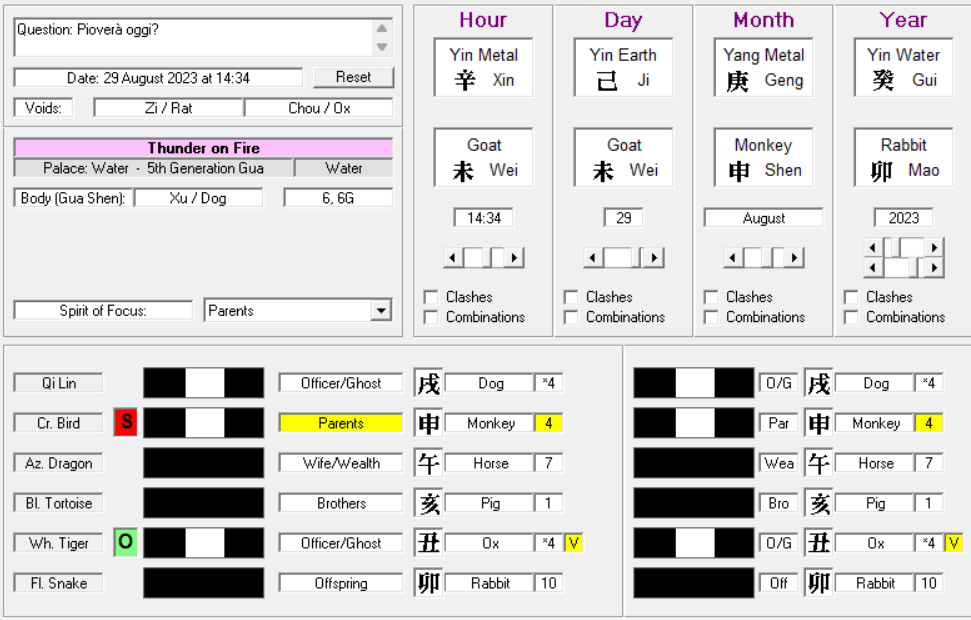
Subject: Here Object: the Weather Focus: Parents line (represents rain, because it is life-giving)
“When will it rain?” answered with Wen Wang Gua (I Ching). Software used: Four Pillars & Feng Shui
Parents hold the Object line with Shen (Monkey, metal.) It also holds the Month branch, therefore not only is it vibrant: it is also useful. But it doesn’t move. Furthermore, the Subject, Wealth Snake, moves to restrict it, and while it is untimely at the Month branch, it is supported by being at the Day branch which is also Snake (although Metal is born at Snake). The Day Branch holds the Parents up in a combination. It is a very uncertain picture, and indeed we’ve been having a very changeable weather, with clouds and sun, but not rain. It is complicated by the fact that this is a six-combination Hexagram, which doesn’t favor change.
But the situation should change on Goat day, that is, in two days, when the Goat Wei clashes the void Ox line from void to compact to drain away the restricting Snake energy and generate the Parents line. It is more likely to rain in Wei or Shen hours (1pm-5pm). However it probably won’t last very long as the resulting Hexagram is an all-clash.
(Note: these are my notes on the reading taken on the day of the reading)
Flashforward to two days later
I asked again. This time the question was if it would rain that day
“Will it rain today?” answered with Wen Wang Gua (I Ching) Software used: Four Pillars & Feng Shui
The Hexagram is still. Technically this would mean that there are no changes, but this is not necessarily the case, as change can happen in many ways. For instance, in this case we have the Parents line still represented by the Monkey Shen at Subject and, again, at the Month Branch, while the Object is void, which usually is said to indicate unpredictable weather. Voids prelude to change. In this case, Goat at the Day Branch clashes the Ox from void to compact to generate the Monkey. It will probably rain in Goat or Monkey hours.
Result: it rained in Monkey hour, at 15:30, but it lasted less than an hour, as predicted by the six clash Gua. I’m wondering if there is something I was missing that would have allowed me to narrow down the hour to just Monkey and not Goat in the prediction.
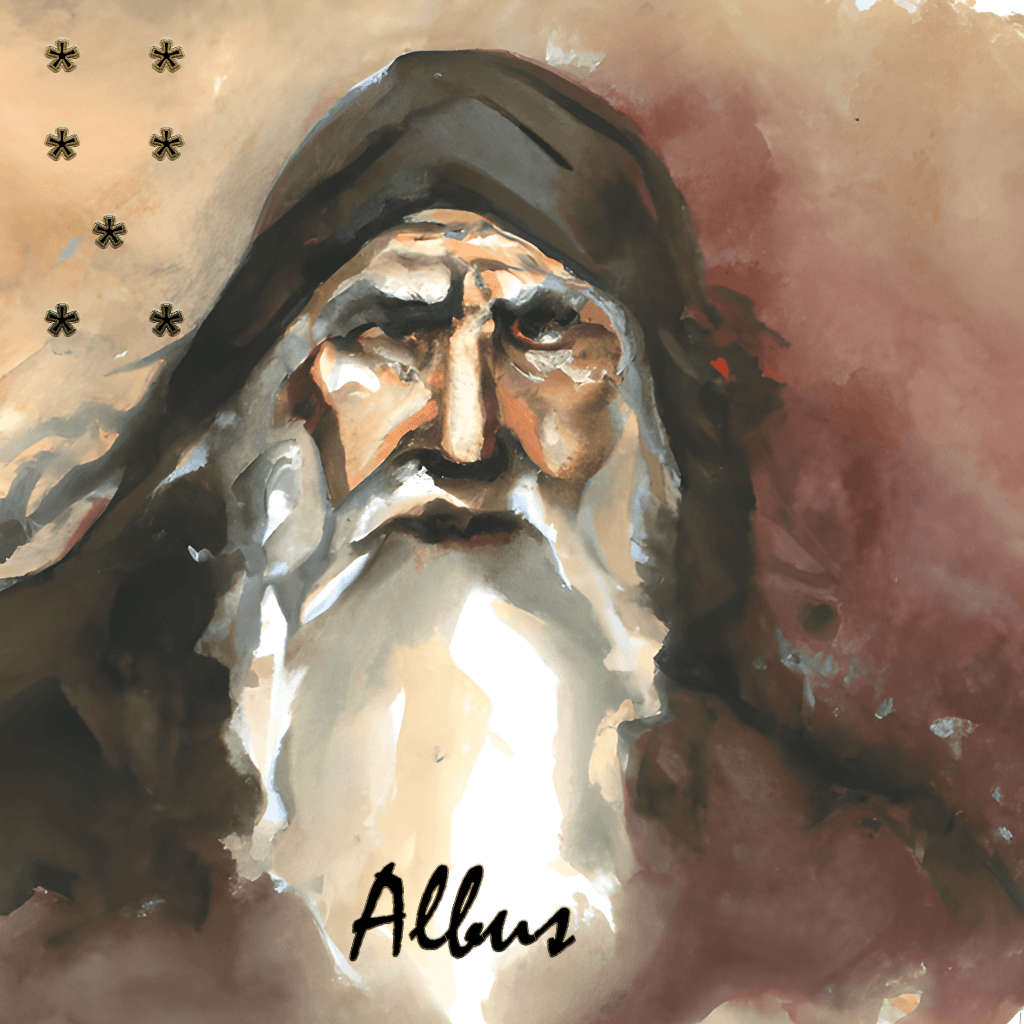
Name of the Figure: Albus (White) Element: Water Planet: Mercury (direct) Sign: Cancer Quality: Common Fortune: Mixed (mostly good)
Albus is a figure of Mercury. It is formed by three couples of points plus a single point in the Water line. If we take odd points to mean the element is active, then Water is the only active element here, with nothing else to stirr it. Therefore, one could take it to symbolize the calm waters of the stilled mind. Also, it is customary to see the shape of an upright cup or goblet in the elemental configuration of Albus. This could link it further to the idea of holding in your thoughts and energies and let them decant.
Illustration of the geomantic figure Albus
Broadly, especially in a more modern interpretation, Albus is often linked to wisdom, knowledge and reflection. It represents the intelligence-aspect of Mercury, and after all, one of the many traditional images of Mercury or Hermes was of an old man. It can stand for all situations where the querent (or someone else) reflects or studies or plans a lot. Nothing will be rushed and instincts are not to be followed without first thinking about what we are doing.
Other common associations of Mercury also come to the fore. Albus is said to be a very good figure for commerce and wealth. Broadly it could show investments. Furthermore, it is obviously a figure of communication, and can therefore be linked to messages, letters, phone calls, etc. It also rules books and sciences.
The idea of whiteness can also indicate purity, honesty (which is not always a given with Mercury) and chastity. Some old manuscripts also link it to women and to old people, possibly due to this connection with chastity which was supposed to be the virtue of (especially) women and the destiny of old people. I’m more inclined to see the connection with old people than with women.
Common Keywords: Old people, wisdom, maturity or maturation, study, learning, communication, knowledge, reflection, meditation, medicine, healing, purity, honesty, water
Albus in the Geomantic Houses (these are only examples. Use context to guide your interpretation)
House
Possible Meanings
First
Old person, Honest person, reflective, studious, good news
Second
Merchandise, Commerce, Money, Financial planning
Third
Communication, Letters, Messages, Good relationship with siblings
Fourth
Old relatives, Good lineage, Gain, Inheritance, Watery places
Fifth
Good messanger, Good ambassador, Good children, Twins, Writing
Sixth
Good medication, Good servants who know what they are doing
Seventh
Commercial partnership, honest relationship
Eighth
Tears, Gloominess, Money from other people
Ninth
Good for travel, Inner journey, Reflection, Study, Good science
Tenth
Generally good news, Wise rulers or boss
Eleventh
Money from above, Helpful friends, Serious hopes
Twelfth
Long imprisonment, gain through large animals
Thirteenth
Ability to reflect, Good business sense, Chastity, Talent, Study
Fourteenth
Lack of reflection or business sense, There will be gain or study
Fifteenth
Albus cannot be Judge
Possible meanings of Albus in the various geomantic houses. Note that this is not meant to be exhaustive and it only serves to jog your interpretive muscles
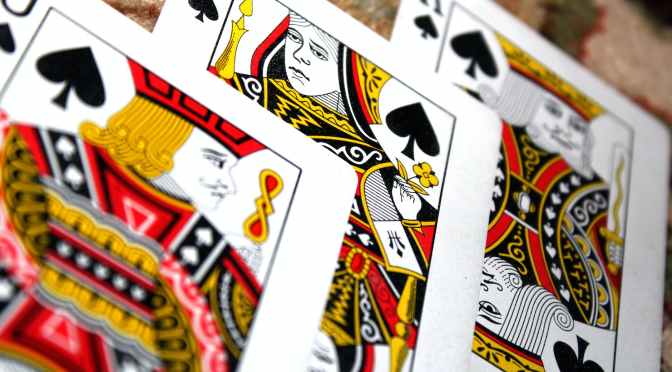
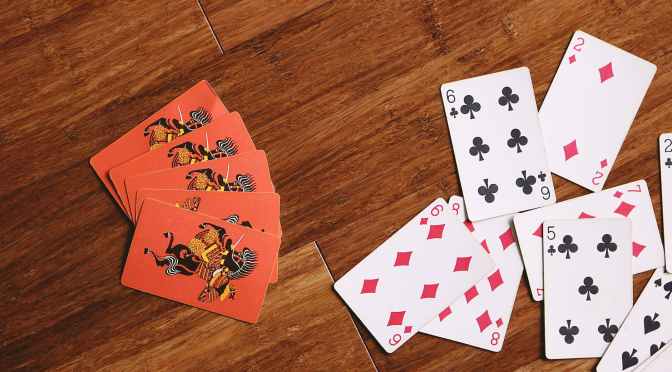
In playing card divination, a lot of emphasis is given to the two colors and the four suits. The two aspects must not be separated from one another as they give us valuable information. However, since the two colors are a binary distinction without much refinement, they tend to describe general trends that can be easily overruled by other considerations. It’s best to leave them out unless they strike you.
In general, red cards indicate life and movement, but an excess of red can show instability. On the other hand, black cards show inertia and slowness, but when there’s too many of them they create obstruction. A good mix of red and black shows a balanced situation. This is especially true if we are describing a situation rather than predicting an outcome. For instance, I remember once doing a reading for a friend on the beach. She had just met a new guy. The spread was:
2♥ – 7♥ – 8♥ – J♥ – 3♥
Obviously, this spread consists only of Hearts and it is only red. This is consistent with the newness of the relationship, but it also shows us that there is nothing except some infatuation going on. The cards don’t predict a breakup, but they show that the relationship won’t last after the initial excitement has gone. We would need some black cards to anchor the red ones. We don’t even need to interpret the single cards, although we could. This is a fun summertime romance. Let’s leave it at that. Result: they broke up in winter.
Here is another example. A woman was asking if there would be reconciliation with her husband.
3♣ – 2♠ – 4♣ – 6♣ – 5♣
The Three of Clubs is the marriage and the Two of Spades is the argument. My question to the querent was how long ago the breakup had happened. She said it had been less than a week. The cards are obviously predominantly Clubs and all black. Therefore, they show that inertia will prevail. They don’t show reconciliation proper. They simply show that the breakup wasn’t really a break so much as an argument. The situation is unsatisfactory, and there is no love, but the cards show that it will go on.
Now, suppose that the same question had been asked by the same person and that she had gotten the same cards, but this time the breakup had happened three months ago. There is no reconciliation in the cards, and a new status quo has set in, which will tend to preserve itself (black color)
Red and black
Let us now analyze the suits. Suits tend to reinforce their particular meaning: Spades bring sorrow and blockage, Hearts feelings and joy, Clubs work and toil, Diamonds money and energy. In the first example, we only have Hearts, which shows feelings. It would be helpful to get Clubs, because Clubs show effort, and we all know that true love is a full time job. In fact, in a larger spread, it would even be nice to see some Spades in the past position, together with positive cards showing that the couple has gone through a lot and now has reached a point of stability.
In the second example, however, we have mostly Clubs. Here there is no fun left, and the situation goes on simply because it has been going on for a while, but it remains just drudgery.
Another important thing to take notice of is when a card that symbolizes either a person or a significator for a specific question shows up surrounded by cards of the same suit, or at least by cards that give us a coherent picture.
Here’s an example. A man asked about his relationship.
4♠ – Q♣ – 5♠ – 3♣ – K♦
The woman shows up as the Queen of Clubs, surrounded by two Spades. We don’t care about which Spades. The point is that she cannot move. She is impeded in some way. The reason is given by the Three of Clubs and the King of Diamonds: she is married.
Here is another example: a man asked if his new business venture would flourish.
K♣ – J♥ – 5♣ – 8♦ – 6♣
We don’t need to spend much time fiddle-farting with card meanings. The Eight of Diamonds, the card of business, is hemmed in by Clubs. No, the business will not flourish. It won’t go belly up, but at least for a very long time it will be just toil with little rewards. Yes, we could add that that Jack of Hearts shows he’s naive, but let’s not complicate things, for now. Sometimes the prediction is just obvious.
As I’m currently dabbling in Chinese philosophy and metaphysics, I have inevitably come into contact with an incredible system of reading the I Ching that I had never heard of. In the Western world, the I Ching (or Yi Jing) is mostly associated with tossing coins and reading passages in an old book.
However, a couple of other different systems of interpretation exist, including Mei Hua Yi Shu, or Plum Blossom, and my new favorite, Wen Wang Gua, or King Wen Oracle. Plum Blossom is essentially a form of Horary Astrology (another huge interest of mine.) You don’t really cast a hexagram: you deduce it from the time the question is asked (although there are other methods as well.)
Wen Wang Gua, on the other hand, is a mix of Horary and regular divination. Like horary, it takes into account the current astrological climate (using Chinese astrology in the form of Ba Zi, the eight characters or four pillars.) However, it also involves using coins or yarrow stalks to cast a Hexagram with a varying number of changing lines. The answer is not read in a book, but deduced almost mathematically by applying a set of interpretive rules.
I am by no means a master of anything in life, and even less of Wen Wang Gua, whose rules I still struggle to keep in mind (there’s way too many,) let alone apply coherently. However, I tried making a prediction today on a soccer match. Now, I couldn’t give a rat’s behind about soccer, and the match I chose to predict I picked at random from an online newspaper. I know nothing about the teams.
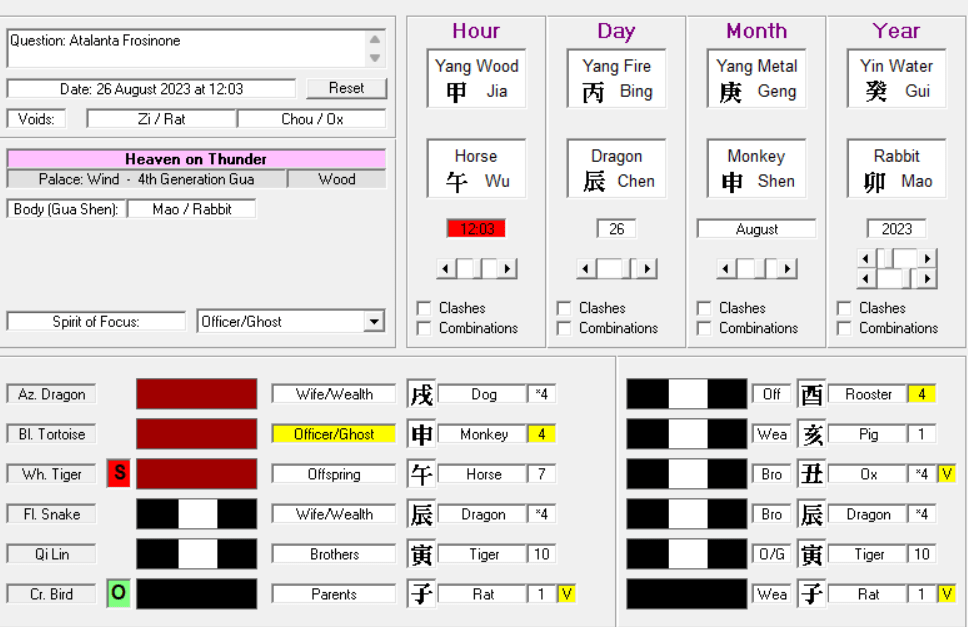
It was Frosinone versus Atalanta, two Italian teams. In order to predict a competition in Wen Wang Gua, we need to assign a Subject and an Object. In this case it doesn’t really matter which team is assigned to what, as long as this is done beforehand. I cannot go into the subtleties of the system. I will start talking about it once I’ve managed to get the basics down. This is my Hexagram (original plus resulting Hexagram) and my line of reasoning.
Subject: Atalanta Object: Frosinone Focus line: Officer (because it is a fight) although I’m doubtful that a Focus line was needed. After all, the objective of a match is to beat the opponent, not to win something else
Subject (Wu, Horse) is extremely weak, being jailed by the Month Branch and exhausted by the Day Branch. Furthermore, the line moves to become void. Object Zi controls Subject Wu (Water controls Fire.)
Object (Zi, Rat) is technically void, but because it is generated by a moving line, it is not. It is also generated by the Month Branch and forms two Water Triangles, one with the Officer and the Day Branch Dragon and one with the Wealth Dragon and the Month Branch Monkey. This strengthens it. Officer also moves to generate it. Line 6, the Dog, moves to attack it, but it is dispersed by a clash with the Day Branch.
However, the Hexagram is a six-clash gua, and the Body line Mao does not appear, which indicates uncertainty, so it cannot be a unilateral triumph. Furthermore, Subject seeks to control Officer, and while it is too weak to win (furthermore, Officer is at the Month Branch), still it shows that the losing team doesn’t go down without a fight, especially considsting the White Tiger at Subject. Subject also moves to become the Ox and attack the Object, although, again, the Ox is void, so it doesn’t accomplish much. Finally, the Object Zi is not especially strong in itself, although it is a good deal stronger than the opponent.
In short, a mixed picture where Object (Frosinone) should prevail but not triumph.
I cast the hexagram at around midday of the day of the match. The match started at 18.30. The result:
Often Known As: Helper, Caregiver, Lover (note that names are as limiting as they are revealing.) Sin/Passion: Pride Focus: On other people’s needs Fear: Of not being needed and/or loved Energy Center: Heart (energy is asserted) Social Stance: Compliant Key Positive Traits (embodied at their best): Warm, Helpful, Loving, Empathetic, Personable, Giving, Accepting, Nurturing, Emotional, Capable of sacrificing themselves for others, Altruistic, Positive Key Negative Traits(embodied at their worst): Manipulative, Codependent, Flattering, Possessive, Subtly tyrannical, Taking up space in others’ lives to find meaning, Clingy, Denying own needs, hopes and aims, Sense of being unworthy of love Growth and Stress Direction: to Four and Eight respectively
Enneagram chart with Type Two highlighted.
Introduction
Twos are usually immediately recognizable for their marked interpersonal qualities. Sweet, caring and warm-hearted, Twos tend to take up the role of the good friend, the older sibling or the good parent in people’s lives. There is a wonderful softness to their way of dealing with others, which makes them appear more inviting and attractive.
Twos are the type of people who show up with that one thing you once mentioned in passing that you liked and never thought about it again. The Two, however, did think about it again, as they often keep their ear on the ground for signals of the other’s wishes, so that they may help them.
Twos take other people’s needs and problems very seriously, and treat them almost as a personal mission. If someone is ready to deprive themselves of something to make another happy, that’s Enneagram Type Two. Often, it seems as though possibilities suddenly become endless with the help of a Two, as they are capable not only of seeing the bright side of things, but also of acknowledging other people’s talents, possibilities and unrecognized options.
In general, Twos are capable of making other people flourish and they themselves flourish when taking care of others. However, with their focus on others’ needs, Twos can become too involved in others’ lives and may forget to take care of themselves, and occasionally this may lead to unspoken resentment toward others–unspoken, that is, until the other disappoints them.
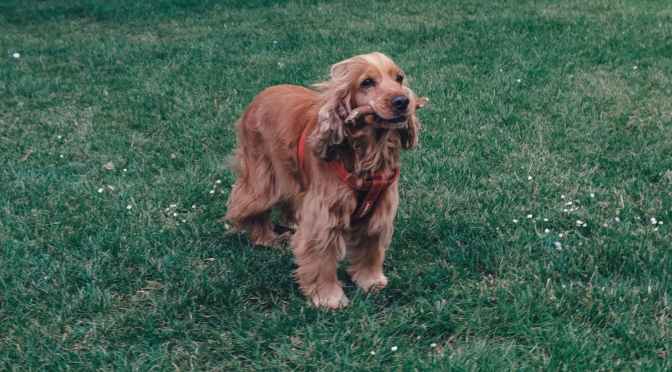
The sweet puppy, a good symbol for Enneagram Type Two
Core Mechanism
Twos are deeply focused on other people’s needs, aims, and aspirations, and may even seem to deny their own in order to help others meet theirs. Out of all the Enneagram Types, Type Two is the one that comes the closest to the archetype of the mother or of the caregiver. They tend to make others feel embraced and seen, and are capable of consoling and helping them see the bright side of everything. In a way, Twos almost seem to exist solely to be in the other’s life.
And this is where problems start, because even though healthy Twos can be truly selfless, average Twos most certainly aren’t. Twos need to be needed, and this stems from their subconscious belief that they are, in themselves, unworthy of love, acknowledgment or consideration, or of having their own needs met.
In this sense, an average Two sees taking care of others as a required detour toward themselves and their own needs. This can lead to various forms of projection. For instance, in the past my husband, a Two, sometimes asked me if I needed to pee or if I was hungry, when what he truly meant was “I need to pee” or, “I’m hungry.” Because they have learned to put other people’s needs before theirs, Twos only feel justified in meeting their own needs by helping others. More dangerously, sometimes Twos manipulate others into believing they want what the Two wants.
Another notious consequence of the Two mechanism is that, in besieging the other with attentions, Twos usually attach quite a number of strings to their favors. In their attempt to meet the other’s needs and even to anticipate them, Twos often stretch themselves thin. What they want in return is not necessarily anything material, but it usually involves a constant and clear acknowledgment of the Two’s central importance in the person’s life. When something goes south (“I didn’t even ask for that”) Twos can feel slighted. They then engage in recriminatory behavior and in making the other feel unworthy of their care.
Sin/Passion
Type Two’s passion is Pride. At first this may sound strange, as Twos can sometimes appear, if not bashful, at least meek, and they usually have a tendency to put others on a pedestal or in the limelight, rather than themselves. However, this only appears to be the case at a superficial level of consideration.
Although healthy Twos really are meek, humble and loving, the core of an average Two’s psychological structure is the tendency toinflate their ego to negate the autonomy of outside reality and of other people. All Heart types struggle with their self-image. Twos want their self-image validated in some form by others, which in turn implies the dreadful possibility of not being acknowledged or recognized.
The mere possibility of this happening is intolerable for a Two, as not having their self-image validated can be akin to not being truly there, and therefore of dying, at least metaphorically. This is truly an existential threat, as once their image of themselves is shattered, Twos must face their aloneness and neediness, that is, their helplessness in front of reality.
To avoid this, proud Twos ‘inflate’ themselves to take up space in other people’s lives, meeting their needs and seeking to become their ‘all’, with the tacit aim of feeling important, loved, acknowledged, validated. They usually do this with sweetness, but also by manipulating others as the need arises, and trying to forge deep, symbiotic bonds. Pride is this inflation of the ego, in the attempt to substitute reality with it, so that there is no risk of disillusion. When the other seeks freedom from the Two’s clutches, the Two reacts by tearing down the other as unworthy of the Two’s attention. Here the pride becomes, from metaphorical, very real.
Pride, the passion of Enneagram Type Two
Misconceptions
One of the main misconceptions I see repeated on Type Two is that they always want to be with other people. Sometimes I even come across descriptions of Twos as party people. A Two may or may not be a party person, but this has little to do with the type mechanism itself.
The reality is that Twos simply are unable to be alone, but this doesn’t automatically mean they want to be with others. Twos’ awareness tends to concentrate on the point where their life intersect the lives of others. Even when they are alone in a room, they are rarely truly by themselves.
Many tasks that Twos perform while alone they often subconsciously justify in front of themselves as good for others. Even cultivating a personal hobby is twisted as a form of service toward others so that the Two can justify enjoying it. In fact, sometimes even the mere act of resting may be seen as ‘taking a breather so later I can take care of useful things better.’
Again, this says nothing about a Two’s willingless to be with people–let alone with many people. It simply shows that a Two, regadless of how introverted or extroverted they are, tends to justify their actions in terms of the needs of other people rather than their own. This is all part of the process whereby a Two decides their own reality, manipulating themselves into believing or doing something.
Wings
2w1 – Twos with a One wing tend to have a tidy, neat, organized streak. More driven by rules and ideals and a bit less by norms, they often put their great organizational skills and unending drive for improvement in the service of their self-image as helpers of others, usually seen as needy and incapable of taking care of themselves and their surroundings. This is true for any Two, but the One wing accentuates the aspect of seeing oneself as the one who can do things right, especially for the good of others.
2w3 – Twos with a Three wing have a more marked tendency toward keeping up appearances. They tend to be more driven by societal norms and notions of ‘nicety.’ Their image among their peers is usually quite important to them, and they often try to do as much as possible to improve it and polish it. The creation of interpersonal bonds is taken on with the additional aim of being seen in one’s best qualities. They are basically the stereotype of the mom organizing the neighborhood’s contest for best apple pie.
(note that wings can have some minor descriptive power in terms of superficial behavior, but they are irrelevant in terms of what motivates the person. Many people have no noticeable wing, while few show signs of both.)
Name of the Figure: Puer (The Boy); sometimes called Beardless Element: Air Planet: Mars (direct) Sign: Aries (Sometimes given as Libra) Quality: Exiting Fortune: Bad (but in practice neutral, sometimes positive)
Puer is a much misunderstood figure in Geomancy. Because it is assigned to Mars, it is sometimes given as invariably bad. In reality, the figure is mostly neutral, and much depends on the question, where it comes up and with what other figures. Symbolically, the Puer glyph is said to represent a phallus or a sword, which is fitting considering the Mars association. The sword is a symbol of war, justice and action. Indeed, these are all potential meanings of Puer.
Illustration for the geomantic figure Puer, the Boy
The main meaning, however, is that of representing a man (not necessarily young) Very often, Puer shows the influence of a man in the question. Man means man, not your lesbian aunt who looks like Super Mario and has been called “sir” once by a distracted store clerk. On the other hand, in my limited experience I have found that trans men do show up as Puer and trans women as Puella. Needless to say, the influence of this man in your life or question will depend on the other figures, and is not in itself negative.
As an extended set of correspondences, Puer also indicates all manly things, the male side of existence. This can go from traditionally man-related things (trousers, ties, drills etc.) to traditionally man-related action, such as taking action and fighting. The figure, however, is called Puer, boy, so there is always the martian tendency to be rash and take action without putting much thought in it. Interestingly, Puer and Puella both tend to be rather unstable figures, but for different reasons. Puer is instability due to lack of foresight and forethought.
Sometimes, Puer can be exactly what is needed to break a stall: sometimes you just need to go “the hell with it” and do your thing. However, Puer lacks patience and the ability to reconcile oppositions, and this can be the cause of trouble. Also, sometimes Puer is associated with sex due to the Mars correspondence, but I see it more as the ardor or drive toward sex (in other words, horniness) but I see sex as a prerogative of Conjunctio.
Common Keywords: A boy, A man, All things manish or masculine, Justice, Doing what’s right, Action, Energy, Strong drive, Thoughtlessness, Danger from rash action, Cutting instruments, Fights, Litigation, Arguments
Puer in the Geomantic Houses (these are only examples. Use context to guide your interpretation)
Controversy, Fights, Useful to take action, Discovering hidden treasures
Fifth
A baby boy, Bad intermediary, Happiness, Having fun
Sixth
Surgery, Danger from doing the wrong thing, Need for toil
Seventh
Divorce, Marriage or partnership too soon, Energy in enterprise, Picking fights
Eighth
Little gain from other people, Danger with sharp instruments
Ninth
Good for travel, bad for learning, False science
Tenth
Great enterprise in job, Loss of job, Manual work, Infamy
Eleventh
Arguments with friends, Being friends with the bad boys, Minor contrarieties in getting one’s wish
Twelfth
Trouble with the law from doing something silly, Quick liberation, Backstabbing
Thirteenth
Querent has energy, Takes action, Has been rash in the past, There has been fighting
Fourteenth
Querent will need to put more energy into it, There will be fighting
Fifteenth
Puer cannot be the Judge
Possible meanings of Puer in the various Geomantic Houses. Note that this is not meant to be exhaustive, and it only serves to jog your interpretive muscles
The other time I talked about the old man in my building who keeps repeating the same stereotyped phrases and sentences. I conjectured that he was probably parked there by some relative who couldn’t take care of him. Clearly, whatever mental issue he might be suffering from, loneliness is not helping, as he can go the whole day saying the same things over and over.
Yesterday two kids dropped by–I assume his grandkids or nephews. They’ve been playing and yelling and laughing the whole time. Strangely enough, this seems to have broken through the crust of repetition that has clotted up this man’s life. He hasn’t said a single one of his usual phrases. Instead, for the first time, I heard him talk regularly and more or less coherently.
I’m not going to read any trite moral into this. It is just a pleasant observation.
As I did for the Sibilla, I shall now write a series of articles on the concrete interpretation of playing cards in divination. Some of what I said for the Sibilla applies here, so make sure to check that article.
Keep in mind that you cannot learn card reading in theory. I am among those who believe that, without some grounding in theory, practice tends to be shallow. I’ve met plenty of “intuitive readers” who basically spend their querents’ time saying “how powerful this reading is” without actually saying anything of consequence except some pseudo-empowering truisms (“It’s time for you to get out of your own way”). There is nothing wrong with empowering the querent, but the advice needs to be taylored to their specific situation, and reading the querent’s specific situation requires some study of the theory.
That being said, there is also such thing as too much theory. If you want to be a card reader, read cards. Do it for friends, acquaintances, relatives. Sooner than you think you are going to amass a wealth of practical insight into the nature of the cards which is going to be more valuable than anything anyone may write.
Playing Cards are usually read one after the other in a linear fashion. If you feel called by positional spreads (“This is his heart, this is his past, this is his wish, etc.”) by all means go ahead. However, playing cards are great at creating broad pictures by combining with one another.
The first thing to remember is that Hearts tend to be positive and Spades negative, with Diamonds and Clubs fluctuating somewhere in between. Unlike in the Sibilla, where red cards tend to be weak and black cards strong and assertive, in playing cards Hearts are just as strong as Spades. This means that much of the interpretation depends on which card falls first and which last.
For instance, let’s say you have the 2♥ followed by the 2♠. In this case, an argument or some kind of vexation is coming up next. The Two of Hearts is a rather broad card in terms of meaning, often just showing that something is about to knock at the door. However, if it were 2♠ followed by 2♥, then whatever negative thing the Two of Spades signifies is likey to be overcome by harmony (the Two of Hearts indicate a distance being bridged).
Diamonds and Clubs are broadly neutral, although Diamonds tend slightly toward the positive and Clubs slightly toward the negative. This means that they are strongly influenced by the Hearts and Spades in the spread. For instance, one of the main associations of Diamonds is with money, but in itself we do not really know if it’s money gained or money lost. This depends on how the card falls in the spread, and whether with Hearts or with Spades. Clubs, on the other hand, indicate effort, so a Heart can make the effort pleasurable or positive, while Spades can make it in vain. In general, accumulations of Clubs indicate difficulties.
Note that although Clubs are neutral and Hearts are positive, which prevails still depends on which card falls first. For instance, 6♥ + 7♣ shows that there are difficulties in overcoming a separation or in healing from sickness. In itself, this combination is slightly positive because the Seven of Clubs is not a Spade, so it leaves the door open, but it is not satisfactory. If we had 7♣ + 6♥, then a problem would be overcome rather easily.
In general, a Spade falling last indicates failure. However, you need to be careful. If you are only pulling three cards, this may very well be so. However, the more cards make up the row of cards you are interpreting, the less a Spade falling last can overcome very positive card, especially if it’s not a hugely negative Spade. Suppose you have five or seven cards in a row that show that the querent will get his wish, but then a Spade falls last. In this case we would interpret the spread as “you will get what you want, but then a problem will arise.” What kind of problem will be shown by the cards themselves. In case, do another spread.
These are just some preliminaries. Playing cards tend to be rather straightforward, so you will soon find yourself understanding the cards in context better than I could ever describe them in an article.
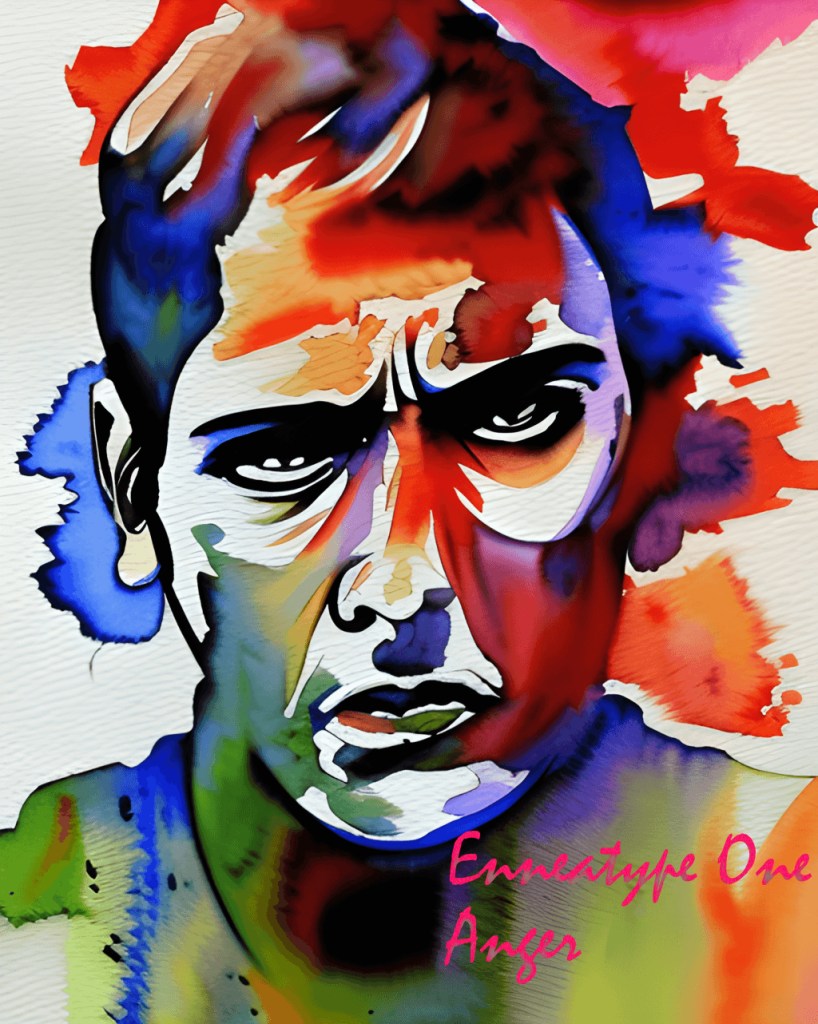
Often Known As: Perfectionist, Reformer, Idealist, Judge, Critic (note that names are as limiting as they are revealing.) Sin/Passion: Anger Focus: What is right or good Fear: Of being wrong, imperfect or at fault Energy Center: Body (energy is transformed) Social Stance: Compliant Key Positive Traits (embodied at their best): Just, Fair, Idealistic, Perfectionistic, Consistent, Principled, Tidy, Moral, Orderly, Disciplined, Sober, Rational, Impartial, Objective, Organized, Straightforward, Driven by rules and ideals rather than by personal profit Key Negative Traits (embodied at their worst): Critical, Judgmental, Angry, Moralistic, Authoritarian, Uncompromising, “On the right side of history”, Castrating, Controlling, Unbending, Nitpicky, Soapboxing, Self-Righteous Growth and Stress Direction: to Seven and Four respectively
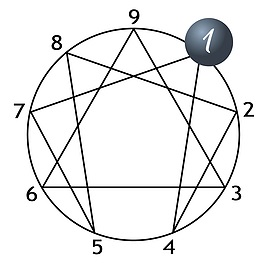
Enneagram chart with Type One highlighted.
Introduction
Type One is the person that walks toward you and you suddenly become aware that you have your zipper down. They have an incredibly keen eye for what needs to be done to improve the situation and to do things right. Nor do they stand by the wayside, but often get involved personally.
This ability that Ones have to see what ought to be done means that they are also keenly aware of what is wrong in every situation, that is, they immediately see when, where and how the standard is not being met. A healthy One is definitely someone whose advice you want to listen to, as they often have incredible foresight in predicting the consequences of letting small imperfections snowball into bigger and bigger ones.
Ones are usually fair in an impersonal and impartial sort of way. If anything, when they highlight your faults, they tend to do it out of love. They often cannot conceive how someone could be driven by anything except what’s right (either morally or technically), because they themselves seek to identify what they want with what is right.
However, Ones are famous in the Enneagram community for being the ones with the loudest and harshest inner critic. Their every action tends toward conformity with what the critic says. Whenever an action has been carried out (by them or by someone next to them) the inner critic’s sentence immediately highlights what has been done wrong and what could have been done better.
Although Ones can at times appear to be very mental or rational in their behavior, they have very strong beliefs that they rarely question, since these form the basis for their action in the world, and therefore removing them would remove One’s justification for acting. And Ones are, despite all, people of action.
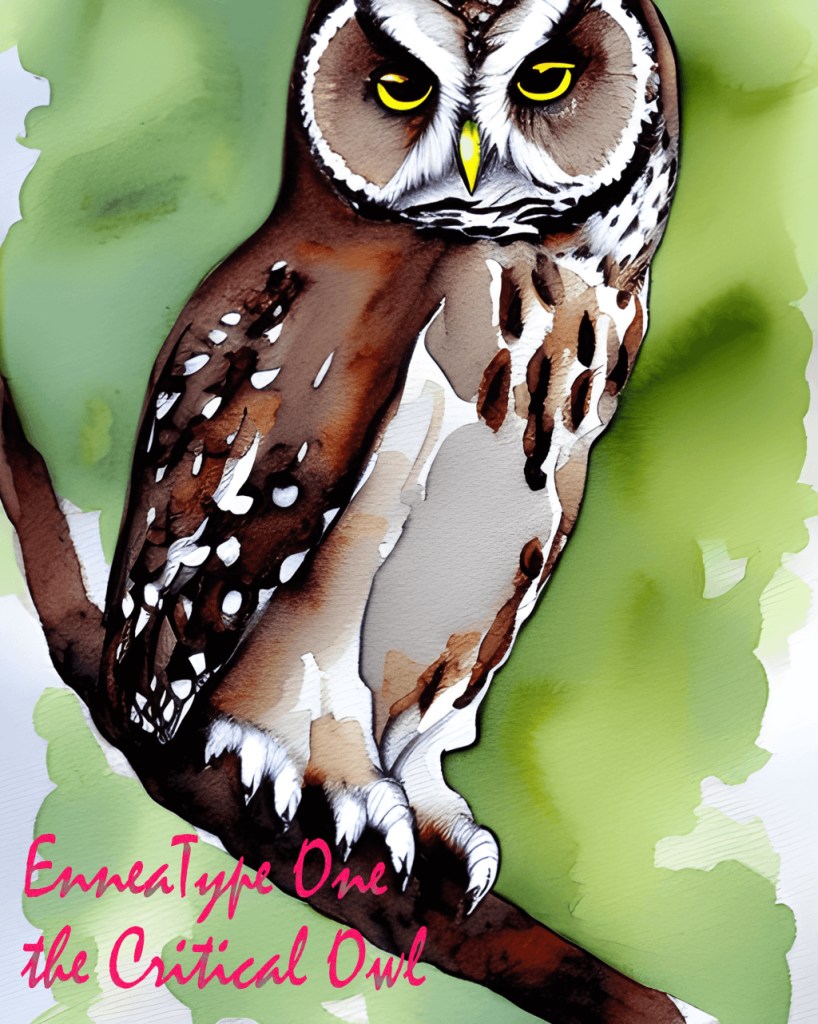
The Critical Owl, a good symbol for Enneagram Type One
Core Mechanism
Ones see the world as a place to reform or straighten out. Out of all the types, Ones most clearly embody the archetype of the reformer or the activist (although Sixes also fulfill this latter role, in another sense.) Ones give themselves ideals to follow and toward which to direct their great energy.
This happens because, on some level, Ones do not feel that they can just be in the world, but need to justify their own existence by complying with some higher standard. With Ones it is rarely “I want this” but rather “It ought to be this way”. They often seek to sublimate their subjective will by checking it against higher laws. The more Ones seek to sublimate themselves to match an ideal or to transform themselves and reality, the more they move the goalpost of what they consider to be perfect, or even just okay.
The world, and their own life, becomes by definition “not okay”, and while in average Ones this can be a stimulus to improve things, in more difficult cases it can lead to situations where the more Ones seek to perfect life, the more they become aware of every imperfection, leading them down spirals of self-hatred, puritanism and intolerance.
Sin/Passion
Type One’s passion is anger. All Body types (Eight, Nine and One) center around the issue of autonomy and self-assertion. Their basic energy is essentially choleric in the traditional sense. However, Ones are incapable of asserting themselves directly and immediately.
Instead, they seek to justify their self-assertion as autonomous beings by complying with standards, rules, morals, etc. Their unspoken contract with themselves is “I have a right to be here if I do my best to perfect myself or the world around me.”
Anger stems from their sense of impotence in making themselves and the world around them match the vision of them that would justify their existence. Ones see the difference between what is and what ought to be, and choler builds up in them. In other words, the normal flow of choleric energy that forms part of everyone’s bodily existence finds itself flowing through the strictures of One’s inner critic, turning from natural assertive drive into wrath–at themselves and at the world.
Ones are often very controlled in their behavior, exactly because their bodily energy is deviated in its course by normative structures, yet they often do not seem very relaxed. Their being in control of themselves usually betrays signs of an inner tension, an unresolved struggle for peace. Their anger often transpires as frustration toward life, themselves and others, depending on their particular life patterns and individual condition.
Anger, the Passion of Enneagram Type One
Misconceptions
The biggest misconception about Type One is that they delight in criticizing others. In fact, delight may be the last thing a One feels when being critical of what other people do. There is never anything personal in an average One’s criticism (this doesn’t necessarily make it ok, though.)
Although sometimes they may relish in being the ones who “told you so”, by and large Ones abide by standards and seek to enforce them, and often simply don’t see how others may either have different standards or not be dedicated to enforcing them. Usually, when a One criticizes you, it’s not the person that speaks: it’s the rule. By extension, Ones often believe they are helping you by criticizing you.
Furthermore, Ones’ attention to what you do and how you do it is often an indirect reflection of their own inner discourse toward themselves. Usually, their criticism of others and their criticism of themselves coincide. See it like this: in speaking on behalf of the standard or rule, Ones seek to become embodiments of it, and become aware of their own inability to ever bridge the gap between ideal and reality. In this process, they also become aware of your inability to do so, but often they fail to realize that this may not be your problem.
Wings
1w9 – Ones with a Nine wing tend to have a more laid-back demeanor, although One’s inner tension is still quite noticeable. They are often more accomodating on the surface, but their strictness usually manages to transpire anyway, especially in passive-aggressive ways (passive-aggressive behavior being something that Ones share with Nines, in different forms.) Also, the ideals they serve tend to be more all-encompassing and broad.
1w2 – Ones with a Two wing have a more marked interpersonal quality. They are usually highly involved in other people’s lives, on whose behalf and (supposed) best interest they act. Their actions, which are usually carried out in service of an ideal, can have an additional, albeit shallower, layer of motivation in pleasing others. Also, their activism tends to be based on solving concrete problems in their immediate surroundings.
(note that wings can have some minor descriptive power in terms of superficial behavior, but they are irrelevant in terms of what motivates the person. Many people have no noticeable wing, while few show signs of both.)