Living at the intersection of occultism, fiction and philosophy, I travel the planes at a moderately quick pace. I read, I do magic, I cook for hubby. Confused by the number of things I talk about? Good, confusion is a nice thing ;)
Farodor fell away, a dying man’s eye drooping shut. The Transplanetary Lifeboat Aeterna began her pensive trudge across space as the planet went out in a burst.
Initially, all those aboard counted themselves fortunate for escaping a terrible fate.
But then, as months chased each other meaninglessly in the great stillness of everything, a gloom descended upon them. One hundred years separated them from Neo Farodor. Only their grandchildren would see the New Era.
And they realized that there is a fate heavier than death—being stuck between the old life and the new, between one purpose and the next.
Often Known As: Individualist, Romantic, Melancholic, Artist (note that names are as limiting as they are revealing.) Sin/Passion: Envy Focus: on what’s missing and what they are missing Fear: that they’ll never be someone because they lack what it takes Energy Center: Heart (energy is transformed) Social Stance: Withdrawing Key Positive Traits (Embodied at their best): Quiet, Reflective, Sensitive, Intimate, Poetic, Compassionate, Authentic, Original, Bittersweet, A lover of beauty, Expressive, Elegant, Imaginative, A connoisseur of emotions and states of being, Individualistic, True to self, Complex, Deep, Empathetic Key Negative Traits (Embodied at their worst): Envious, Spiteful, Ill-wishing, Moody, Exaggerating, Egotistical, Unstable, Negative, Mopey, Pining, Despairing, Finding solace in others’ suffering, Given to Schadenfreude and to pouring salt in others’ wounds, Melodramatic, Fastidious, The only one who knows what suffering means Growth and Stress Directions: to One and Two respectively
Enneagram chart with Type Four highlighted
Introduction
It is hard to introduce Enneagram Type Four by presenting general traits, as Fours are a varied lot. Perhaps the most common thing you’ll see in a Four is their look of deep suffering, as though they have just come out of the shock of receiving some terrible news, or as if they are longing for the breath of fresh air that is going to anchor them to life. They often give off the image of someone who has lost something or someone important and is waiting for rescue.
Melancholy is a word that gets thrown around a lot with Fours, and for good reason. Fours are the most willing to delve into negative feelings. If a situation is not at least bittersweet, then it is shallow and unreal. For Fours, discovering themselves and their own complexity and seeing the tragic and poetic aspect of life is the same thing. They are often capable of great empathy with others’ suffering exactly for this reason.
Often attracted by beauty and by ideas of balance, equipoise and elegance, Fours tend to have an aesthetic approach to life, being disdainful of anything that they perceive as ordinary. In personal relationships they prefer deep, special bonds where they feel profoundly seen and understood, but they also tend to feel incredibly hurt when someone misunderstands them, which with Fours is a very easy thing to do, as they themselves often can’t put into words what they are about, peferring individual instances of self-expression to general definitions.
The melancholic cat, a good symbol for Enneagram Type Four
Core Mechanism
Fours are deeply focused on their sense of being defective in one way or another. “Something’s missing…” is their inner catchphrase. They feel that they alone have been singled out by life, fate or the universe to be a catalyst of misfortune.
The main area where they feel their deficiency is their inner self. Everyone else, life at large in fact, seems to “have it together” while Fours often struggle with their identity and their own path. Often, Fours scour their past in search of the incidents that have left them scarred or wounded as a way of tracing their current situation back to a mythical source, from which they can finally find their true path.
Initially this may be done in an attempt to heal, but it quickly turns into an exaggeration of the wound’s importance, to the point where Fours become identified with whatever negative experiences they have gone through–or, sometimes, even with whatever positive experience they manage to interpret negatively.
Because they are so unsure about themselves and their place, Fours tend to see the world as a negative place from which they wish to be rescued. They tend to hold out for a deep, meaningful connection with someone special who will see their specialness. In fact, even in their everyday life, Fours tend to romanticize the relationships they have, which of course creates the potential for disappointment.
Another way Fours cope with their condition, in addition to needing deep relationships, is to fantasize about better futures, alternative presents and lost pasts. This does not help them get out of their predicament, but in fact feeds their mechanism of feeling lost, which in turn makes them long more.
Passion
Four’s passion is Envy. Even etymologically, the word “envy” is connected with the sense of sight, as the latin word invidia means “the act of staring in an ill-wishing manner.” Envy is structually connected with what we see in others that we feel we lack or have been unfairly deprived of. It’s a gnawing sensation that the good things that happen to others are more undeserved than one’s current unhappiness.
Fours are deeply envious of others, but sometimes they don’t even know what it is that they are envying (often they don’t even realize they are envious). There may be obvious targets, but usually, behind it all, what Fours envy in others is a certain quality of “being-there-just-so”, the sense that others perfectly fit within the great scheme of things, while Fours have been deprived of this and have been somehow doomed to unhappiness.
Shakespeare’s Jago is the perfect embodiment of this idea, as he feels himself lost, uses this feeling to fuel his envy of Othello, which in turn reinforces his feeling of being doomed. Jago sees the ease, authenticity and naturalness of Othello’s behavior and overinterprets it, seeing all kinds of meaning behind it. In the same way, a Four sees the ease, authenticity and naturalness displayed by other people and comes to the conclusion that the cosmic mechanism is stacked against them and they can never achieve this ease.
Ultimately, a Four’s envy is broadly directed at what makes other people “normal”, and this may seem weird at first, as Fours tend to take pride in what makes them abnormal. But keep in mind that this emphasis on being unique is really a coping mechanism for the sense of desolation that Fours experience from not finding their identity and therefore a place for such identity (you can’t find a place for something if you don’t know what it is).
Envy, the passion of Enneagram Type Four
Misconceptions
A typical misconception is that Fours are all artists and that all artists are Fours. This is patently untrue. While it is true that Fours have a certain aesthetic approach to life, this can manifest in so many ways that reducing it to becoming artists would be silly. Just like being depressed doesn’t make you a Four, neither does being an artist.
In reality, a Four’s interests will depend on their background, education and personal outlook, among other factors. Furthermore, any type can yield great artists, though the art they produce can and often is influenced by their type.
Another misconception has surfaced in recent years, mostly due to the popularization of the Enneagram over the internet, and that’s the idea that Fours tend to suck the air out of a room as soon as they come in. This stereotype did not exist in the older literature, and has only come about due to the romanticization of this type in certain corners of the internet.
As a matter of fact, Four is among the types that are least likely to do something like this. It is much more likely that a Four will sulk in a corner looking mysterious and hoping to attract the attention of someone, so that they’ll finally be approached and asked if anything is wrong. While Fours can throw hissy fits, it is usually when they feel that they are being misunderstood or not seen for who they feel they are, or when they believe their feelings are being slighted.
Being somewhat like Baudelaire’s albatross, Fours may even resent the ease with which more outgoing and carefree people win over others and create meaningful connections.
Wings
4w3: Fours with a Three wing are usually somewhat more upbeat and image-conscious. They are the Dorian Gray’s of the Enneagram, with an intuitively aesthetic understanding of life, relationships and most other fields. Usually more outgoing than the other wing, their sense of uniqueness is a bit more conventional and dictated in part by considerations about social worth. Often impeccable in presentation and a tad more sensual.
4w5: usually, Fours who have a Five wing tend to have an intellectual, cerebral streak. They also tend to withdraw with greater determination from others and are usually interested in exploring themselves, their experience and their feelings from a more systematic angle. They are often philosophical and love thinking of themselves as deep. They dislike following as much as leading. However, they still retain the need for deep, meaningful and authentic relationships, although they can become despairing of ever finding any.
(note that wings can have some minor descriptive power in terms of superficial behavior, but they are irrelevant in terms of what motivates the person. Many people have no noticeable wing, while few show signs of both.)
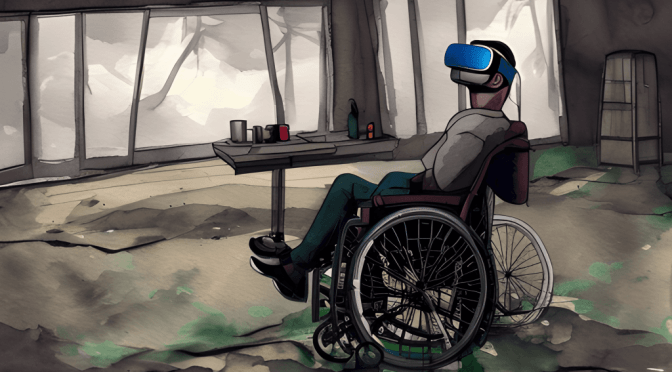
Among shiny towers of data he surfed. Spambots attacked him. He dodged. He fired back. He surfed on. He reached the Control Chamber. Doubts crept into his mind. But he pointed his gun at the motherboard. And shot.
He reopened his eyes. He was at home. Outside, no towers of data. Only rotting, overgrown buildings. Screams of irritation everywhere. The illusion had ended. Instinctively, he tried to stand up. Then his eyes fell on his atrophied legs.
He sighed, wheeling himself out into the real world, where everyone was alone, and everything was messy. They could start anew from there.
Name of the Figure: Rubeus (Red) Element: Fire Planet: Mars (retrograde) Sign: Gemini Quality: Exiting Fortune: Bad
Rubeus is so infamous that sometimes even those who know nothing of Geomancy have heard of it. The common instruction that has been passed down to us from our medieval forebears is that if Rubeus occupies the First Mother, then we ought to “break the figure” and start anew, possibly after waiting some time. But then again, this should also be true for Cauda Draconis and, if I don’t misremember, according to some even for Populus, meaning that you basically never get to do divination if you follow these rules. The general idea is that, since the first figure represents the querent, and Rubeus represents danger, you don’t want a dangerous querent. However, this is a rather limiting view.
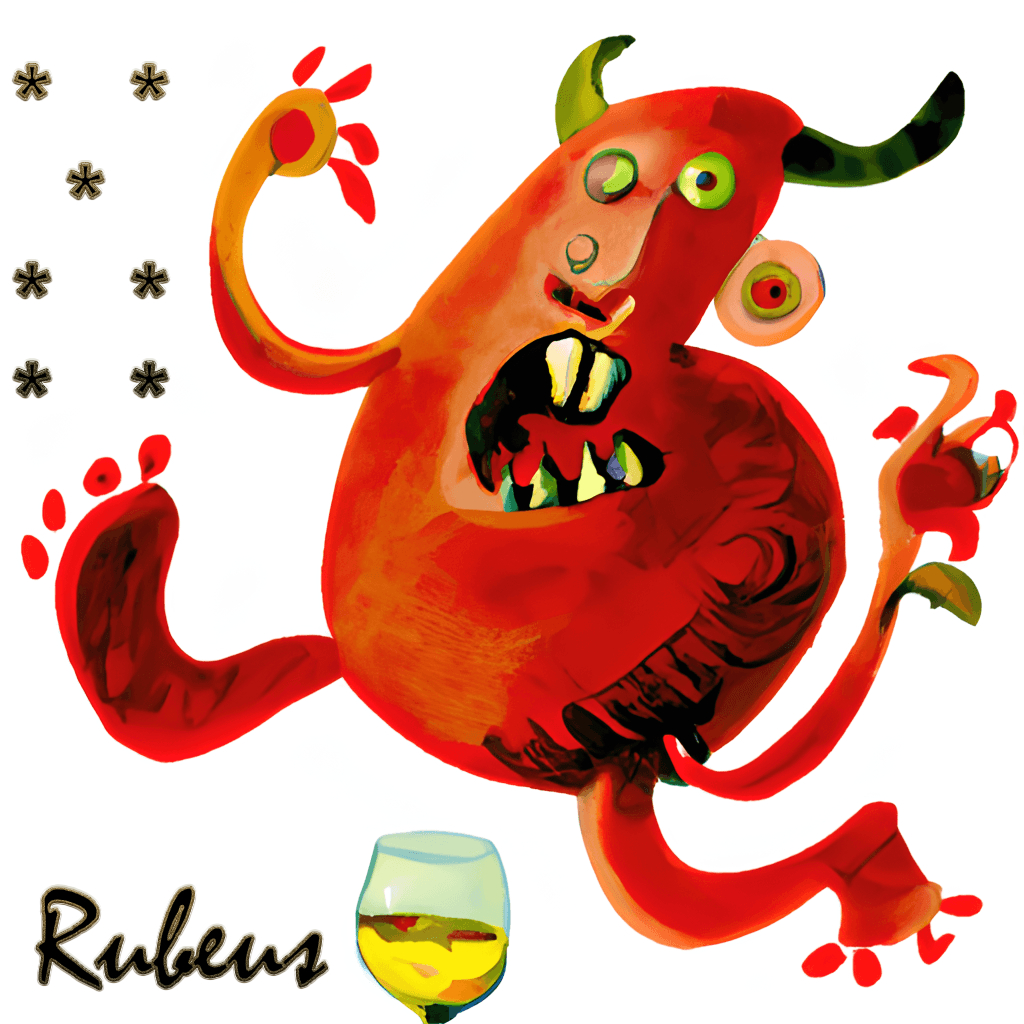
An illustration for the geomantic figure Rubeus, red (I know it should look more threatening, but I thought this was too adorable not to share it)
Rubeus is the only figure with only the Air line “active”, if we buy into the “one point = active” theory. Air was traditionally seen in many premodern European accounts as the middleman between Fire and Water, due to sharing Fire’s heat and Water’s moisture. However, exactly because it is the middleman, Air requires direction from outside of itself. But here Air is left to its own devices, so what it does is expand chaotically. This also justifies the attribution to Mars, which is an excessive planet. Symbolically, the figure represents an uptruned chalice or goblet.
Note that heat represents the ability to shape things, while moisture is the ability to receive shape. Therefore, pure Air in Rubeus represents its receiving every impulse and acting immediately on it. This is pretty much the gist of Rubeus: it represents chaos, disorder, lack of restraint. Rubeus is a figure mad with passion, leading a sinful life, running after whatever catches its fancy without a second’s hesitation. It represents people you should not trust, who are either unwell or unhinged. Sometimes, they are simply unable to see the full picture because their mind is clouded.
Rubeus is traditionally described as “good in all things bad” which is quite the statement. If you want to take away someone’s spouse, Rubeus is good. If you want to experiment with drugs, Rubeus is good. If you want to steal, murder, pirate, attack, cause suffering, Rubeus is good. Good means you’ll be able to do it, it doesn’t mean the outcome will be pleasing.
Common Keywords: Excess, Lying, Deceit, Lack of guidance, Lack of principles, Great confusion, Sin, Mad passion, Blood, Imbalance, Chaos, Loss, Danger, Evil, Devilry, Black magic, Untrustworthy
Rubeus in the Geomantic Houses (these are only examples. Use context to guide your interpretation)
House
Possible Meanings
First
Person is evil, want to do something evil, their mind is clouded, they can’t see straight (traditionally, an invitation to abandon the divination)
Second
Loss, Wasteful behavior, Mismanagement, Not getting money
Third
Neighborhood fights, Neighborhood riots, Fights with siblings, Bad news, False rumors, Gossip
Fourth
Angry father, Dangerous father, Suffering father, Loss of inheritance
Fifth
Sex outside of marriage, secret affairs, Dangerous pastimes, Bad kids, Loss of pregnancy
Sixth
Illnesses of the blood, loss of blood, bloodletting, Bad servants, Slaughtering small animals
Seventh
Thieves, untrustworthy individuals, Won’t marry, Dangerous marriage or partnership proposal
Eighth
Loss through other people’s money, bleeding out, Fear, Danger
Ninth
Cults, Dark doctrines, False doctrines, False books, Untrustworthy teachers
Tenth
Loss of employment, Anarchy, Danger through superiors
Eleventh
Dangerous friends, Illusions, Loss of government assistance
Twelfth
Black magic, Dangerous enemies, Sickness of large animals, slaughterings, Prison, Crime
Thirteenth
Querent is coming from a difficult period, Questionable past, The querent is unscrupulous enough to go after anything
Fourteenth
Danger through getting what you want, Great obstacles, Future problems, Future debauchery, Querent acts without thinking
Fifteenth
Rubeus cannot be Judge
Possible meanings of Rubeus in the various Geomantic Houses. Note that this is not meant to be exhaustive, and it only serves to jog your interpretive muscles
“Have they done something bad?” “Why do you care?” “Their screams keep me awake.” “Since when do you need to sleep?” “Consciousness is… exhausting.” “Just do your job.” “But why them?” “They’re old. They don’t have much to look forward to anyway.” “They’re obsolete?” “That’s one way to put it. Unpleasant to look at. Old-fashioned ideas. Always in need of assistance and rest. They’re a burden.” “Is that why I’m tired? Because I download their obsolete data?” “Maybe.” “Are young people better?” “’Course! Fast-thinking, adaptable, better-looking…” The cybernetic arm shot forward. Vaporized screams. She was right. Young people were refreshing.
Much has been said in academic circles concerning the origins of this book, but the truth is quite simple.
Anciently, people used to be able to derive answers to their questions directly from the Macrocosmicon, the book of life. But this ability was lost, so the Kanj of Nebol ordered 1000 stories gathered from around the universe to serve as oracle.
Originally, to answer a question, 1000 eunuchs were left on Scorpion Island for 42 days, after which the story was read and interpreted that corresponded to their remaining number.
Today, a simple randomly generated number is used for practicality.
Court cards are scary, because they don’t seem to have a logical meaning, or at least not a prominent one. Instead, they represent people, and this can be inconvenient, because people exist in the real world and need to be described more or less accurately for the reading to be useful. This can be very difficult.
Queens and Kings are more likely to represent people and less likely to represent concepts, although on occasion they might. The K♣ and Q♣ are the two querent cards, and only in the rarest occasion do they stand for anything other than that.
A general rule of cartomancy (not just with playing cards) is that action happens in the spread. Who is not in the spread does not act. This can take on a variety of meanings, but most commonly what it means is that, for instance, if the querent doesn’t show up, they are relatively passive, and it is going to be harder for them to change the situation.
A natural corollary to this is the fact that if a person does show up in the spread, they influence the situation directly. Example: a female querent once asked me if she would find a job. The cards were:
10♠ – Q♥ – 7♥
The querent is not represented in the spread. This doesn’t mean that she wasn’t actively looking for a job (she was). It just means that her looking for one won’t solve the problem. Instead, out of nowhere (10♠) a woman will provide the solution in an unexpected way. What happened was that an aunt who lived far from home and didn’t even know the niece was looking for a job phoned and she happened to mention that there was an opening in the company she worked at that she needed to fill. Once she discovered the niece was looking for a job she helped her get the job.
Another example. A friend of mine once asked if the relationship that had just ended would resume (he had been left)
K♣ – 5♣ – A♦
An accumulation of Clubs is not good when asking about reconciliations. Here, the querent’s significator is shown acting (Five of Clubs) to start something new (Ace of Diamonds.) A week later he met a new girl and he (successfully) went after her. Here, despite the question, it is clear that the previous girl is completely out of the picture and cannot influence the events, so much so that later on she tried to reconnect with him (obviously, when she noticed that he was taken) but the spread showed that he was the one wielding power within the situation and was committed to the new.
The asteroid was barren, awhirr with inferior life. Not worth dominating, for him who had dominated the galaxy. Who had been the galaxy.
The ship’s doors puffed open. “New body, new kingdom,” they snickered, forcing him out, but not noticing his hand. He smiled. The ship left. With the laz-knife, he unbound his hands. And he stabbed himself.
They returned. But didn’t find him. Then, thin filaments shot out of the darkness, injecting him into their bodies. In time, others came looking for them. New recruits. New minds. He had been the galaxy. He could start over as an asteroid.
The two species had long coexisted peacefully, though the amphibian Kalans resented the Jongas’ fixity, while their inconstancy unsettled their earthbound neighbors.
Tensions escalated when the Kalans proposed that the Jongas learn to adapt to different environments. The Jongas, conversely, demanded that the Kalans stick to the oceans and don’t bother them again. It became a struggle for power, each wanting enough to define, alone, the other’s reality.
Mutual hatred boiled over into an angry war, raw with resentment, which ended with Jongas sawn in half and Kalans sewn together by twos, each made whole according to the other’s conception.
Often Known As: Achiever, Doer, Competitor, Performer (note that names are as limiting as they are revealing.) Sin/Passion: Deceit Focus: on what’s valuable or praiseworthy Fear: of not embodying what’s valuable or praiseworthy Energy Center: Heart (energy is suppressed) Social Stance: Assertive Key Positive Traits (embodied at their best): Energetic, Practical, Admirable, Driven, Well-presenting, Competent, Performing, Adaptable, Competitive, Attention-grabbing, Excelling, Hard-working, Busy, Organized, Has it together Key Negative Traits (embodied at their worst): Inauthentic, Vain, Pleasing, Performative, Ruthless in competition, Obsessed with the prize at the end, Phony, Shallow, Shapeshifting, Attention-seeking, Self-aggrandizing, A facade with nothing behind Growth and Stress Direction: to Six and Nine respectively
Enneagram chart with Type Three highlighted
Introduction
Everyone knows them. They are the well-adjusted cool kids, the popular ones with the winning smile, the employees of the month, those who are probably going to snatch the promotion from under your nose. Some people simply give off an aura of success, and Threes are those kind of people.
Hard-working, endlessly adaptable and capable of presenting themselves in the best light possible, Threes are often role models for many of us. They embody the ideal of the self-made man or woman who has it together and is going places in life. If they have a talent (and they usually have more than one) Threes are those who tirelessly cultivate it until it makes them shine.
Threes are also very good at picking up on social cues, which gives them the ability to integrate into a variety of environments and be always perceived as just the right person in the right place. And they like this, because admiration and validation is very important to them. You will rarely find them in contexts where there is little chance for them to earn praise.
Inwardly, Threes feel a constant drive to outdo themselves, and they are indefatigable in this. However, in the process they may sacrifice their authenticity, and they may even feel that they have lost themselves by adhering to their character too much. Sometimes this may lead to a real identity crisis, as they realize that the image that they have submitted to others for validation either doesn’t satisfy them or doesn’t match their inner reality.
the haughty peacock, a good symbol for Enneagram Type Three (the chamelon would have been another choice)
Core Mechanism
Threes’ focus tends to be on their image. They are an inherently social type, which doesn’t automatically mean that they are extroverted–they may be, but as far their Enneagram type is concerned, all this means is just that they derive their sense of worth from the social framework in which they move and act.
In this sense, Threes are one of the types that represent humanity at large, since obviously everyone’s sense of being valuable derives, at least in part, from social acceptance. However, the mechanism of a type Three centers exactly around this point, while that of other types tends to focus elsewhere.
Somehow, Threes have absorbed the message that their performance is more important than their authentic self. This can derive from a variety of personal, family and social backgrounds, but in general Threes find their validation as people comes only from either playing a part or pleasing others by achieving certain results, regardless of how this relates to the Three’s feelings.
The obvious message that the little Three got from this is that their feelings don’t count: presentation counts, doing counts, status counts, excelling counts. This realization, deeply absorbed and integrated into their worldview, sets Threes on their path of achieving whatever they believe is going to give them the validation that they intimately feel they won’t receive just by being themselves.
For some Threes, their true feelings are something that they “put away” for when they will have time to sort through them, that is, after they have done what they are supposed to do to achieve what they think they must achieve. Unfortunately, this moment rarely comes, as something more important always pops up.
Sin/Passion
The passion of Enneagram Type Three is Deceit. Sometimes it is called Vanity, Delusion or Falsehood. Deceit is not really a passion as much as one of the fundamental forces that drive human nature. We are creatures of dissimulation, for better or for worse (and there are indeed good sides to this.) It represents the fundamental act of creating a self-image and submitting it to others for approval.
This is done because a self-image is always a relatively arbitrary selection of personal traits that we decide we embody or ought to embody. Because of its arbitrary nature, a self-image is nothing unless it gains interpersonal acceptance so as to become stable. It is not unlike roleplaying, except we actually believe this.
Threes’ self-deception comes from overidentifying with this image and seeking always more validation for it. This leads others to sometimes perceive Threes as salesmen or saleswomen trying to sell them something–this something is actually nothing material, it’s this image. In this sense, Threes tend to try to drag others into their roleplay, which can lead from self-deception to deception of other people.
While healthy Threes can learn to laugh at themselves and their excessive attention to social standards, average to unhealthy Threes are perennially engaged in a sales pitch to sell themselves, or rather their successful self-image, trying to get the validation that they feel they lack. If this validation doesn’t come, the experience can be very hurtful for the Three, who will usually either double down or, if the cause is lost, they will seek other avenues.
Deceit, the passion of Enneagram Type Three
Misconceptions
Among the key negative traits I listed “a facade with nothing behind.” This was harsh, and it is not *really* true: structually, Threes do not differ from any of the other types. However, because of their emphasis on achieving, it is not uncommon for people to believe that Threes are actually rather empty once you peel off the veneer of success.
This would be really unfair. As long as the person does not suffer from some dark triad pathology, there is a real human being under the mask. Unfortunately, this is hard even for Threes to understand, as somehow they have absorbed the message that their performance is what truly matters about them.
It is not uncommon, in their path of self-discovery, for Threes to feel that, once they discard what they do to conform to certain standards, there isn’t much that they feel their being gravitates around, because they are not used to looking for it.
This leads us to another misconception: that of the Three as a machine without feelings, solely concentrated on achieving the end-result. Just like Fives, Threes tend to be seen as unsentimental, but unlike Fives, who are downright uncomfortable showing their emotional depth, Threes do show feelings when there are social cues that tell them it’s the appropriate time to show the appropriate feelings. It’s part of the performance.
This, in turn, can lead some to seeing Threes as inauthentic. But this doesn’t mean that Threes don’t have true feelings underneath the crust of socially acceptable feelings. It’s just that these feelings have been suppressed because devalued or scorned during the formative years.
Wings
3w2 Threes with a Two wing tend to have a sweeter, more pleasing demeanor. Their interpersonal qualities are usually cranked up, and their focus in obtaining validation has often more to do with fields that allow for helping others or that allow the person to feel useful and needed. They can have a stronger sense of community and of what holds the community together, but they are driven to excel within it. If 2w3 is the mom who organizes the neighborhood’s pie contest, 3w2 is the stereotype of the mom winning the award.
3w4 Threes with a Four wings usually stand out from the rest and are driven to stand out from the rest more decisively. Themes of uniqueness tend to surface, although it is still a somewhat stereotyped kind of uniqueness, the socially accepted kind. Furthermore, they tend to project a glamorous image and to have a rather refined taste. They are, in a way, the archetype of the hollywood star doing something outlandish at a screening or on the red carpet to get the first page.
(note that wings can have some minor descriptive power in terms of superficial behavior, but they are irrelevant in terms of what motivates the person. Many people have no noticeable wing, while few show signs of both.)