All posts by MQS

Living at the intersection of occultism, fiction and philosophy, I travel the planes at a moderately quick pace. I read, I do magic, I cook for hubby. Confused by the number of things I talk about? Good, confusion is a nice thing ;)

Enneagram Type One – A Quick Introduction

Often Known As: Perfectionist, Reformer, Idealist, Judge, Critic (note that names are as limiting as they are revealing.)
Sin/Passion: Anger
Focus: What is right or good
Fear: Of being wrong, imperfect or at fault
Energy Center: Body (energy is transformed)
Social Stance: Compliant
Key Positive Traits (embodied at their best): Just, Fair, Idealistic, Perfectionistic, Consistent, Principled, Tidy, Moral, Orderly, Disciplined, Sober, Rational, Impartial, Objective, Organized, Straightforward, Driven by rules and ideals rather than by personal profit
Key Negative Traits (embodied at their worst): Critical, Judgmental, Angry, Moralistic, Authoritarian, Uncompromising, “On the right side of history”, Castrating, Controlling, Unbending, Nitpicky, Soapboxing, Self-Righteous
Growth and Stress Direction: to Seven and Four respectively
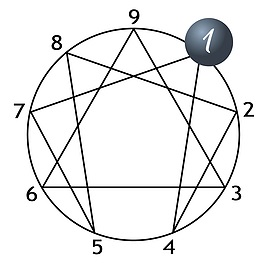
Enneagram chart with Type One highlighted.

Introduction

Type One is the person that walks toward you and you suddenly become aware that you have your zipper down. They have an incredibly keen eye for what needs to be done to improve the situation and to do things right. Nor do they stand by the wayside, but often get involved personally.

This ability that Ones have to see what ought to be done means that they are also keenly aware of what is wrong in every situation, that is, they immediately see when, where and how the standard is not being met. A healthy One is definitely someone whose advice you want to listen to, as they often have incredible foresight in predicting the consequences of letting small imperfections snowball into bigger and bigger ones.

Ones are usually fair in an impersonal and impartial sort of way. If anything, when they highlight your faults, they tend to do it out of love. They often cannot conceive how someone could be driven by anything except what’s right (either morally or technically), because they themselves seek to identify what they want with what is right.

However, Ones are famous in the Enneagram community for being the ones with the loudest and harshest inner critic. Their every action tends toward conformity with what the critic says. Whenever an action has been carried out (by them or by someone next to them) the inner critic’s sentence immediately highlights what has been done wrong and what could have been done better.

Although Ones can at times appear to be very mental or rational in their behavior, they have very strong beliefs that they rarely question, since these form the basis for their action in the world, and therefore removing them would remove One’s justification for acting. And Ones are, despite all, people of action.
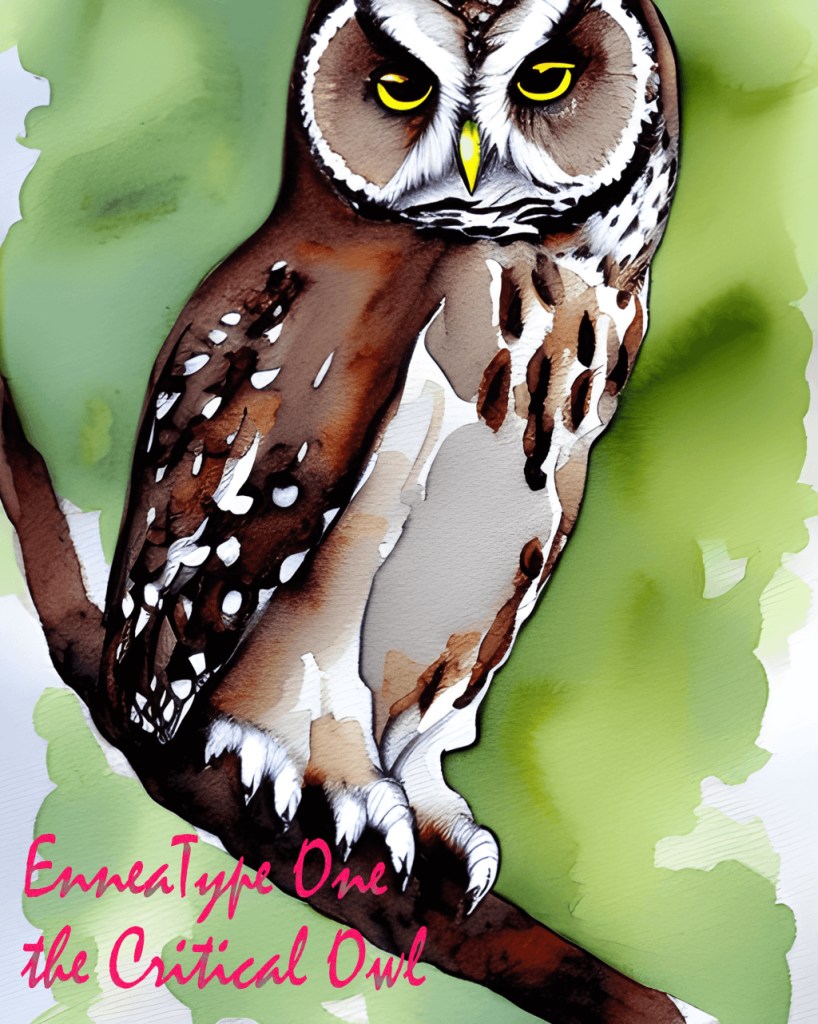
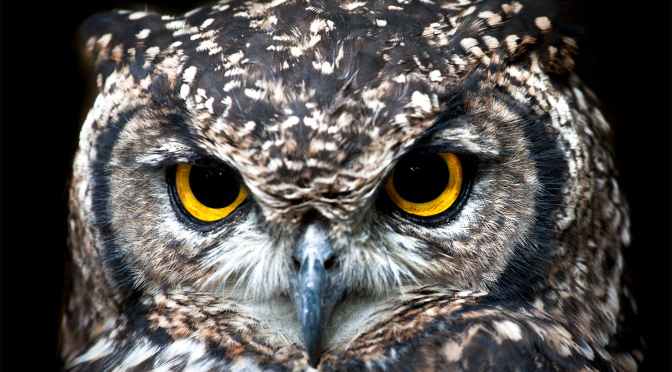
The Critical Owl, a good symbol for Enneagram Type One

Core Mechanism

Ones see the world as a place to reform or straighten out. Out of all the types, Ones most clearly embody the archetype of the reformer or the activist (although Sixes also fulfill this latter role, in another sense.) Ones give themselves ideals to follow and toward which to direct their great energy.

This happens because, on some level, Ones do not feel that they can just be in the world, but need to justify their own existence by complying with some higher standard. With Ones it is rarely “I want this” but rather “It ought to be this way”. They often seek to sublimate their subjective will by checking it against higher laws. The more Ones seek to sublimate themselves to match an ideal or to transform themselves and reality, the more they move the goalpost of what they consider to be perfect, or even just okay.

The world, and their own life, becomes by definition “not okay”, and while in average Ones this can be a stimulus to improve things, in more difficult cases it can lead to situations where the more Ones seek to perfect life, the more they become aware of every imperfection, leading them down spirals of self-hatred, puritanism and intolerance.

Sin/Passion

Type One’s passion is anger. All Body types (Eight, Nine and One) center around the issue of autonomy and self-assertion. Their basic energy is essentially choleric in the traditional sense. However, Ones are incapable of asserting themselves directly and immediately.

Instead, they seek to justify their self-assertion as autonomous beings by complying with standards, rules, morals, etc. Their unspoken contract with themselves is “I have a right to be here if I do my best to perfect myself or the world around me.”

Anger stems from their sense of impotence in making themselves and the world around them match the vision of them that would justify their existence. Ones see the difference between what is and what ought to be, and choler builds up in them. In other words, the normal flow of choleric energy that forms part of everyone’s bodily existence finds itself flowing through the strictures of One’s inner critic, turning from natural assertive drive into wrath–at themselves and at the world.

Ones are often very controlled in their behavior, exactly because their bodily energy is deviated in its course by normative structures, yet they often do not seem very relaxed. Their being in control of themselves usually betrays signs of an inner tension, an unresolved struggle for peace. Their anger often transpires as frustration toward life, themselves and others, depending on their particular life patterns and individual condition.
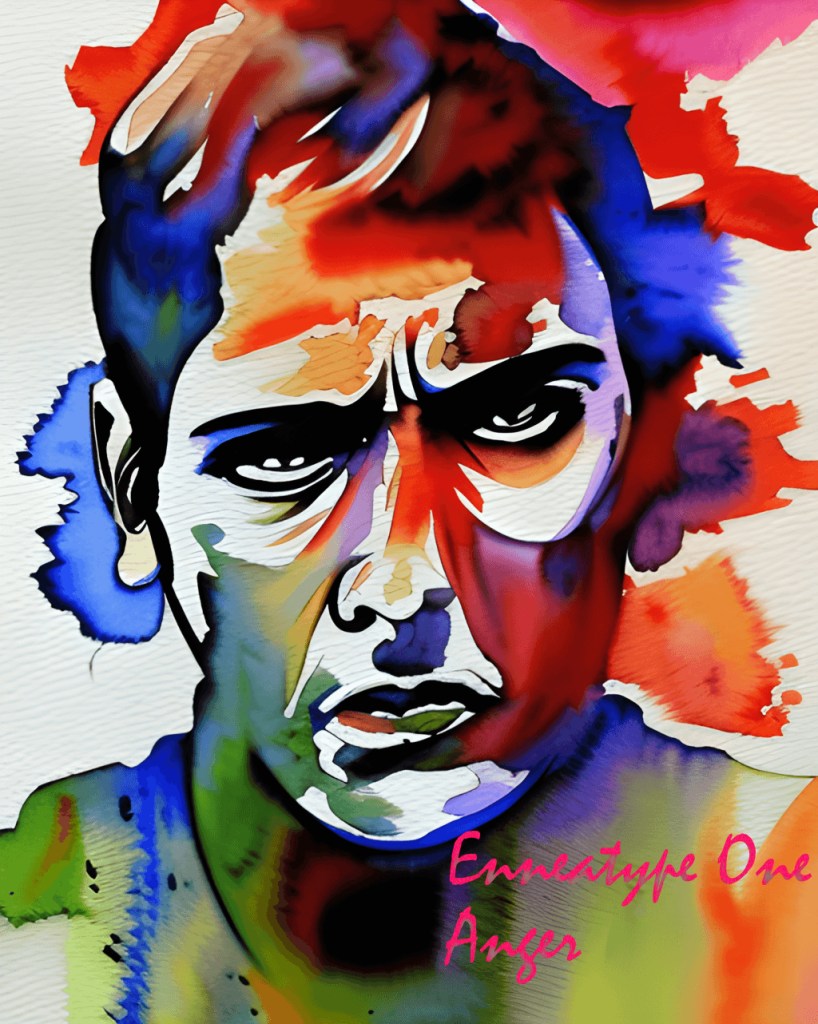
Anger, the Passion of Enneagram Type One

Misconceptions

The biggest misconception about Type One is that they delight in criticizing others. In fact, delight may be the last thing a One feels when being critical of what other people do. There is never anything personal in an average One’s criticism (this doesn’t necessarily make it ok, though.)

Although sometimes they may relish in being the ones who “told you so”, by and large Ones abide by standards and seek to enforce them, and often simply don’t see how others may either have different standards or not be dedicated to enforcing them. Usually, when a One criticizes you, it’s not the person that speaks: it’s the rule. By extension, Ones often believe they are helping you by criticizing you.

Furthermore, Ones’ attention to what you do and how you do it is often an indirect reflection of their own inner discourse toward themselves. Usually, their criticism of others and their criticism of themselves coincide. See it like this: in speaking on behalf of the standard or rule, Ones seek to become embodiments of it, and become aware of their own inability to ever bridge the gap between ideal and reality. In this process, they also become aware of your inability to do so, but often they fail to realize that this may not be your problem.

Wings

1w9 – Ones with a Nine wing tend to have a more laid-back demeanor, although One’s inner tension is still quite noticeable. They are often more accomodating on the surface, but their strictness usually manages to transpire anyway, especially in passive-aggressive ways (passive-aggressive behavior being something that Ones share with Nines, in different forms.) Also, the ideals they serve tend to be more all-encompassing and broad.

1w2 – Ones with a Two wing have a more marked interpersonal quality. They are usually highly involved in other people’s lives, on whose behalf and (supposed) best interest they act. Their actions, which are usually carried out in service of an ideal, can have an additional, albeit shallower, layer of motivation in pleasing others. Also, their activism tends to be based on solving concrete problems in their immediate surroundings.

(note that wings can have some minor descriptive power in terms of superficial behavior, but they are irrelevant in terms of what motivates the person. Many people have no noticeable wing, while few show signs of both.)

MQS
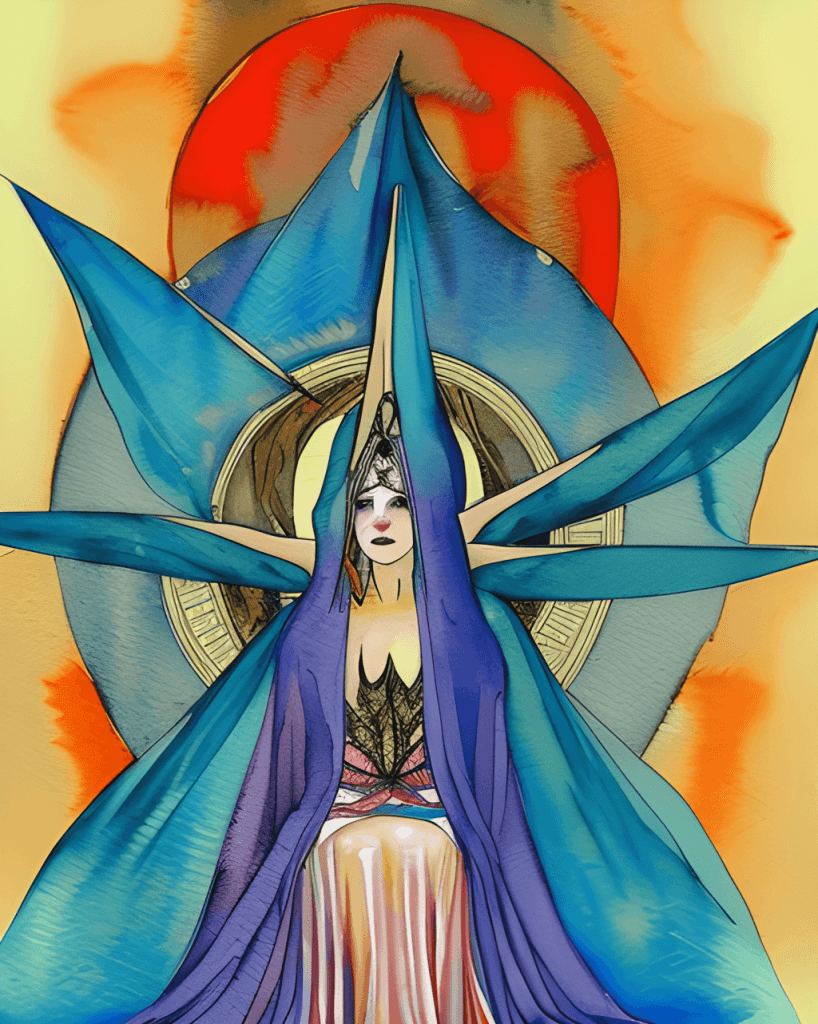
AI-generated High Priestess / Popess Tarot Card Illustrations

Bit mysterious, bit creepy

Illustration for the High Priestess / Popess tarot card, generated through AI
Illustration for the High Priestess / Popess tarot card, generated through Artificial Intelligence
Illustration for the High Priestess / Popess tarot card, generated through AI
Illustration for the High Priestess / Popess Tarot Card, generated through AI
Illustration for the High Priestess / Popess tarot card, generated through Artificial Intelligence

MQS

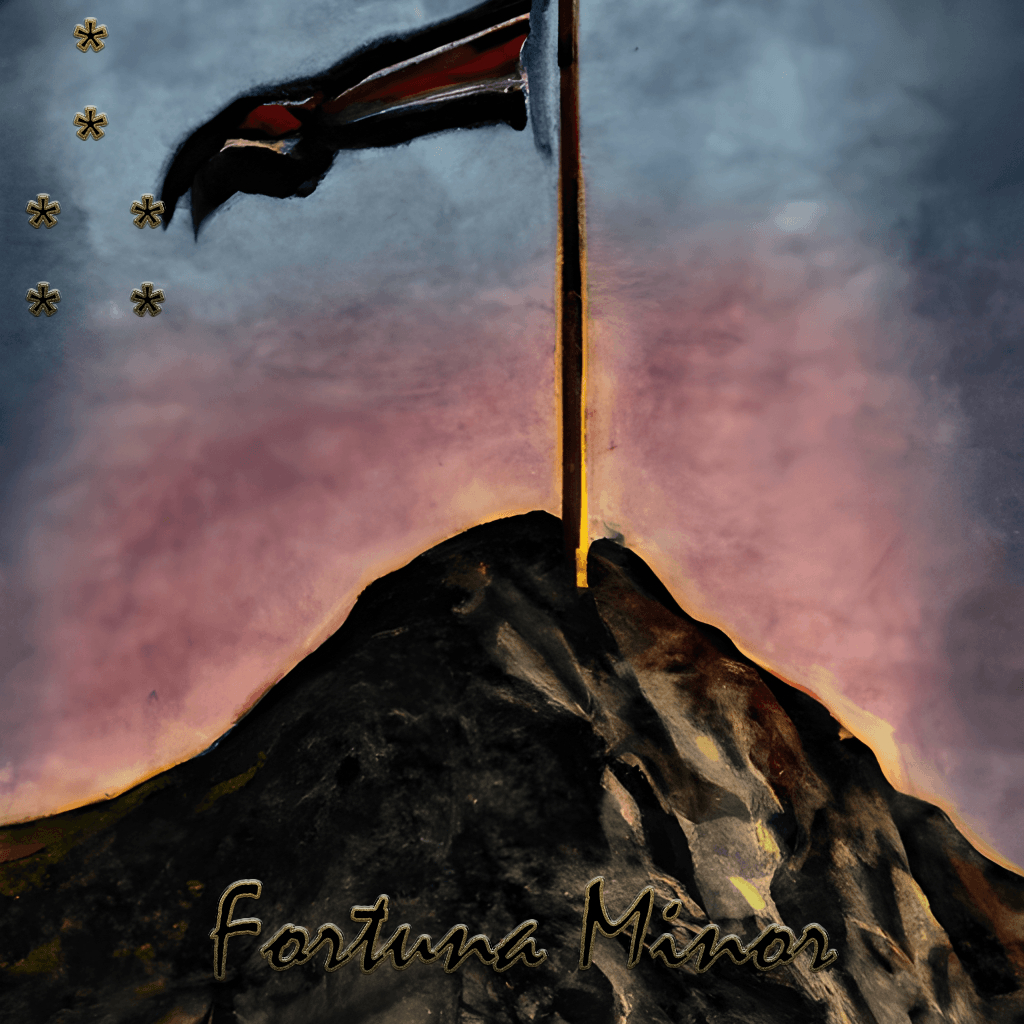
Fortuna Minor / Lesser Fortune (Geomancy Figures)

Name of the Figure: Fortuna Minor (Lesser Fortune); sometimes called Exiting or Outgoing Help
Element: Earth
Planet: Sun (setting)
Sign: Taurus
Quality: Exiting
Fortune: Bad (but in practice mostly good)

Fortuna Minor is the opposite of Fortuna Major in many ways. From an elemental standpoint, it has exactly the opposite configuration. Whereas Major has one point in the passive elements (Water and Earth) and two points in the active ones (Fire and Air), Minor has one in the active elements and two in the passive ones. If we take one point to indicate that the element is manifest or activated, then Fortuna Minor plays its hand very differently from Fortuna Major. Wheras the latter represents calm, focused, long-term action, Fortuna Minor may indicate a quick onrush of energy which is immediately expended.

Illustration of the geomantic figure Fortuna Minor, Lesser Fortune

In some old manuscripts there are indications that Fortuna Minor may have been considered a bad figure. However, when the same manuscripts indicate the effects of the figure in the various houses, they give it as mostly good. I believe this is due to the fact that, being the opposite of the more regal Fortuna Major, Fortuna Minor was considered negative, but being a figure of the Sun, it was still good enough to have a positive effect.

In general, its effect is very quick, and often manifests in the form of an unexpected chance that needs to be taken as it arises, or it will disperse quickly. Being a figure of the setting Sun, Minor may further indicate the last chance one has to make things right, but this needs to make sense within the contest of the question. In general, Minor is more positive than Major when you need something done quickly. However, it can show that the situation may either deteriorate or need constant upkeep in the long run.

Fortuna Minor retains many of the basic qualities of its sibling, being connected with money, gold, courage, nobility, etc. However, these qualities are understandably of lesser value. Also, the adjective “minor” may on occasion indicate that the result will be satisfying, but not wholly satisfying. Maybe some sacrifices will need to be made. Again, this needs to be checked against the whole chart.

Common Keywords: unexpected help, a stroke of luck, a chance to be taken, quick results but possibly unstable in the long run, the last chance, money, health, nobility, moderate satisfaction, etc.

Fortuna Minor in the Geomantic Houses (these are only examples. Use context to guide your interpretation)

HousePossible Meanings
FirstGood person, honorable, active, healthy, lucky, noble
SecondGain, A sum of money (not big), Quick wealth, Objects, Possessions of good value
ThirdGood relationship with siblings and neighbors, partly true rumors, Good for short trips
FourthA small inheritance, Discovering hidden treasures, Good relationship with the father, buildings, etc.
FifthGood luck in matters of art, gain through it, Helping children or help from one’s children, Good relationship with them, Joy, Celebration
SixthQuick recovery from illness, toil won’t be in vain, Small vexations from servants
SeventhA chance meeting with someone, gain through acquaintances, Protection from theft, Marriage
EighthGain through the spouse or partnership, help getting out of a fear-inducing situation, Honorable death
NinthQuick return from journey, Change of place, Good faith, Mostly good science and knowledge
TenthNoble people, Employment, Good chance, Good relationship with the mother
EleventhMoney from the government, Opportunity, Help from friends
TwelfthQuick return to freedom for the prisoner, safety from hexes and magic, Loss of honor
ThirteenthHonor, Good faith, Past chance
FourteenthLack of honor, Lack of chances, Chance in the future, Future good luck
FifteenthQuick good outcome, Fame, Honor, Gain
Possible meanings of Fortuna Minor in the various Geomantic Houses. Note that this is not meant to be exhaustive, and it only serves to jog your interpretive muscles

MQS

Playing Cards | Health Correspondences

This is the list of health correspondences for playing cards. As said for the Vera Sibilla, be wise and know your limits.

Ace of hearts (A♥) = the inside of the body, can indicate the need for rest, convalescence

Two of Hearts (2♥) = eyes, things that run in the family, behavioral issues

Three of Hearts (3♥) = blood, pills

Four of Hearts (4♥) = sexual organs, reproductive system

Five of Hearts (5♥) = overweight, pregnancy, womb, stomach, food

Six of Hearts (6♥) = recovery, bladder

Seven of Hearts (7♥) = unexpected recovery or relapse (depending on the cards), chronic disease

Eight of Hearts (8♥) = liver, bladder, kidneys

Nine of Hearts (9♥) = heart

Ten of Hearts (10♥) = circulation, blood vessels

Jack of Hearts (J♥) = things typical of kids, can be lack of self-care or not taking madication

Queen of Hearts (Q♥) = feminine things, feminine body parts, feminine illnesses, a good female nurse, being taken care of

King of Hearts (K♥) = masculine things, masculine body parts, masculine illnesses, a good male nurse, good diagnosis or prescription

Ace of Clubs (A♣) = outside of the body, skin

Two of Clubs (2♣) = legs and feet

Three of Clubs (3♣) = ligaments, joints, cartilage

Four of Clubs (4♣) = mouth, throat

Five of Clubs (5♣) = muscles, hands

Six of Clubs (6♣) = tiredness, exhaustion,

Seven of Clubs (7♣) = physical resistance, immune system

Eight of Clubs (8♣) = arms, muscles

Nine of Clubs (9♣) = chronic illness, long or lasting illness

Then of Clubs (10♣) = digestive tract, health related journey

Jack of Clubs (J♣) = can be the need for help (e.g., after an operation), with negative cards loss of autonomy due to illness or operation

Queen of Clubs (Q♣) = Female querent

King of Clubs (K♣) = Male querent

Ace of Diamonds (A♦) = regenerative ability, good health

Two of Diamonds (2♦) = diagnosis, IQ

Three of Diamonds (3♦) = nerve endings, with cards of blood small blood vessels, low amounts of something, allergies

Four of Diamonds (4♦) = lymphatic system

Five of Diamonds (5♦) = all glands

Six of Diamonds (6♦) = brain

Seven of Diamonds (7♦) = ears

Eight of Diamonds (8♦) = lungs

Nine of Diamonds (9♦) = nervous system

Ten of Diamonds (10♦) = respiratory system, high amounts of something

Jack of Diamonds (J♦) = nerves, test results

Queen of Diamonds (Q♦) = hair, vanity things such as cosmetic surgery

King of Diamonds (K♦) = physical defects, warts, scars etc.

Ace of Spades (A♠) = head, serious illness, operation (symbolizes the knife)

Two of Spades (2♠) = teeth, leg and feet bones, anger issues, minor illness

Three of Spades (3♠) = neck and spine, complications, medical mistakes

Four of Spades (4♠) = blockages and stoppages, liver, the sacrum

Five of Spades (5♠) = ribcage, lack of nutrients, lack of something

Six of Spades (6♠) = illness

Seven of Spades (7♠) = accidents, sudden onset, rush

Eight of Spades (8♠) = poisons, toxic things, kidneys, the medical equipe treating a patient

Nine of Spades (9♠) = excretory system, major illness

Ten of Spades (10♠) = undetected illnesses, intestines, guts

Jack of Spades (J♠) = virus, infection, contamination

Queen of Spades (Q♠) = mistakes, can be a female doctor

King of Spades (K♠) = doctor

MQS

How to Discover Your Type (Enneagram Plain and Simple)

Discovering one’s Enneagram type can be easy or hard, depending on a veriety of factors. There are some who hear about their type and immediately know it’s them. If this is not you, read on.

I would love to be able to say that if you cultivate enough self-reflection you will know your type as soon as you stumble on a (good) description of it. This is not necessarily so.

It also depends on the quality of the self-reflection. Most people have some kind of inner discourse going on. But inner discourse is not self-reflection. A Six, for instance, has a very intense inner discourse surrounding all their sources of uncertainty. They are aware of these sources of worry, but they are not aware of their being aware of this mechanism. The same is true of all types.

Until we have become used to seeing our mechanism from an observational vantage point,* the type’s mechanism is to us like water to a fish: we are so deeply immersed in it that we don’t notice it. In fact, we may even think this is the last thing we’d do. If I had a buck for every Two who told me they’ve never been proud or for every Four who told me they’ve never been envious… Well, buying a house would be much easier.

One reason discovering one’s type can be hard is also that the core of the type is one of the nine passions, all of which are, to a degree, stigmatized, frowned upon or even swept under the rug. We train ourselves to think that, because we are good or right or ok, we cannot feel such feelings, and so we delude ourselves into believing we don’t. Usually, once the illusion is rent, we discover that our mechanism has always been in front of our nose and our passion has been in the driver’s seat of our life all along.

So? What do I do to discover my type?

Well, a good grounding in Enneagram theory is more or less a must, unless you let an expert type you. Even then, it would be advisable to educate yourself a bit so you can make your own self-discovery. You don’t need to read hundreds of books. One or two good ones, or even the information you find here or on other websites, is often more than enough to get you started. Usually, this will be already enough to discard at least one or two types (although, especially at the beginning, it pays to suspend judgment).

Once you know a bit about the core of each type, learn to take a step back from your life and observe it. Look at your reaction to things, people, happenings, memories, etc. Look at what motivates you. Don’t hurry. Your type is not running away from you. You can take all the time you need. Also look back at how you were in the past, both distant and recent. Journaling is a good option, if you are so inclined.

Even the way you react toward the Enneagram can be telling of your type. Though this is not a hard rule, often your mechanism will make you see the Enneagram in a certain light. For instance, a Four may see the Enneagram as a straightjacket, or, if they like it, as a magical symbol; a Five as a nice system to explore; Sevens will often (again, not always) dislike being confined to one type; Nines will feel they are a bit of everything and we are all the same; Eights may see the Enneagram as a useless trinket, etc.

Again, this is not always the case, and usually it is something that is only noticeable in hindsight. Still, it is an opportunity to practice self-observation. But this type of self-observation is not the only useful one.

An exercise in meditation

Meditation is a good way to find out your Enneagram type

One of the characteristics of our mechanism is that it always steers our attention toward certain things as opposed to other things. A great exercise would be to do some meditation and become aware of where your attention is constantly being lured.

Sit comfortably in a straight-backed chair. Take a couple of deep breaths and free your mind from all thoughts for a second. Then start breathing slowly, inhaling and exhaling as it feels comfortable. Let your attention concentrate on the process of breathing and its rising and falling rythm. Try to keep your attention on it.

Done? Well, no. Because as soon as you settle into this meditation, your mind is going to start wandering. No matter where it goes, bring it back to your breathing. However, sooner or later you are going to start noticing a pattern. All that distracts you tends to show a certain consistency. That’s because what distracts you is your type’s mechanism. Here is a (non exhaustive) list of what tends to catch the attention of each type.

TypeAttention
OneThings to perfect, to complete, things that are not as they should, that need straightening or correcting, sense of being wrong, of not doing what you’re supposed to be doing
TwoThings to do for others, how to improve yourself to be of better service or be liked more, how doing something you want to do will result in good for others, how others owe you for your help
ThreeThings to do, checklists, projects that will reflect well on your person, either in front of yourself or of other people, finding out what’s ‘wrong’ with you in this Enneagram thing so you can jump the obstacle and get to the prize
FourWhat’s missing, what is lacking or you are lacking, what other people have that you don’t, the happiness that you are missing, how unlucky you are, how beautiful life would be elsewhere, elsewhen, or how it used to be, or it might be
FiveImpersonal concepts, focused mental explorations, mental sculptures and constructs, convoluted inner discourses, how much energy you have or lack and how you are managing it or how you are being robbed of it
SixThings that worry you, the worst that might happen, can you trust that person, thing, idea, etc. are you doing this right? maybe you should double-check, or maybe that dude has it wrong, maybe you need to contact someone who knows better than you
SevenPlans, ideas, things you look forward to, Things you can’t wait to be doing, how many things you have to do but then something cool happens, diversions, or conversely, things you keep trying not to think about but they keep nagging you, prompting you to to look for a bright side
EightWhether you are strong enough or if you need to do something, whether you are pursuing the thing you want with all your might, whether you are wasting your time on something that doesn’t strengthen your position or “fill” you, sense of deflating unless you hurl your energy at a concrete obstacle or against someone or something, need to overcome someone or something, intense desire to go get what you want
NinePeace, pleasant but somewhat vague ideas, sense of wonder, sense of retreating from your individuality into an inner space where you are one with everyone or everything, ideas that make you feel at peace with yourself, with others or with the world, but also sometimes the sense of being invisible and disregarded by others
Where the attention of each type goes

Do not hurry. Don’t expect this exercise to bear fruit after one try.

Are Online Tests Accurate?

Ehhhhh… No. Most tests you’ll find online (or offline) will at most allow you to rule out one or two types, something which you probably already know. The problem with tests is twofold: on one hand, they engage only the most superficial side of our psyche, the one most likely to host the image of ourselves we want to believe we embody but which doesn’t necessarily correspond to our more deeply seated psychological mechanism; on the other hand, they tend to ask about very superficial things that can be easily misinterpreted, either willfully or subconsciously.

For the most part, tests are just there to massage our ego (“look! I think I am X, and this bunch of pixels on the screen agrees!”) If you don’t know enough about the Enneagram, they can lock you into the wrong box for a long time, while if you know enough they are futile. I am no one to tell you what you should or shouldn’t do. If you feel like taking a test, go ahead. Just remember that your own assessment is the last word, and that if you are still undecided between two or three types it’s ok to work with all of them for a while until you understand which one you are. Suspending judgment is better than committing too soon.

The best course of action is to educate yourself on Enneagram theory, learn to develop your inner observer, meditate a bit. There are also therapists who incorporate the Enneagram in their practice. If they are skilled, one sitting will be enough to at least narrow down the possibilities to a couple of types.

Can you be more than one type?

It is common for us to resonate with more than one type. For the longest time I was undecided between Four and Five (to this day I sometimes feel I’m the only representative of type Twenty.) And even before, all I knew was that I wasn’t a Two or a Six. Everything else was on the table.

This is normal. In fact, it is also fine to appreciate the parts of us that gravitate toward other types. However, this doesn’t mean that we can be more than one type. We come into being as individuals by losing touch with one side of reality. That side determines our type. At our core, our motivations will stem from it. Not from the other types. Not from wings. Not from tri-types. Self-reflection on our core type is enough for a lifetime of discovery. Everything else becomes a distraction.

* people sometimes ask whether Fives, who are detached and are often known as observers, have it easier in finding out their type. The answer is no. There is a difference between detaching from reality and detaching from your mechanism of detaching from reality. Fives are like every other type.

MQS

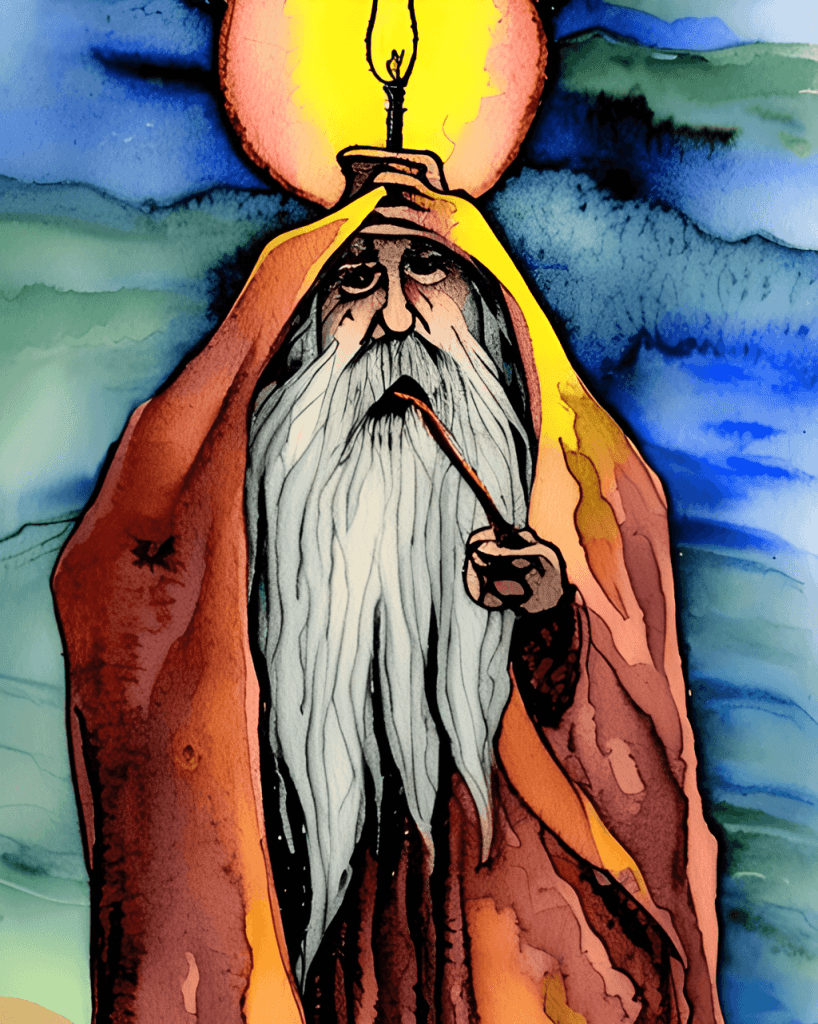
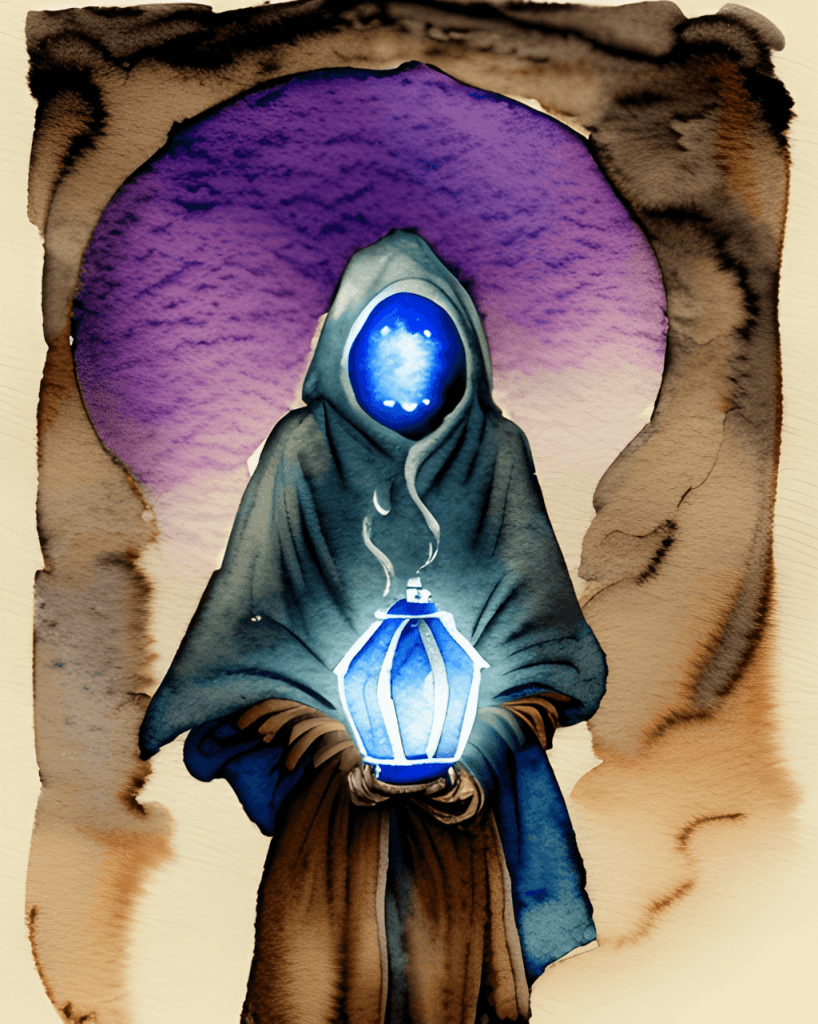
AI-Generated Hermit Tarot Card Illustrations

I love how each illustration conveys a completely different mood.

Illustration for the Hermit, generated through AI
Illustration for the Hermit 2, generated through Artificial Intelligence
Illustration for the Hermit Tarot Card 3, generated through AI
Illustration for the Hermit Tarot Card 4, generated through AI
Illustration for the Hermit Tarot Card 5, generated through AI
Illustration for the Hermit Tarot Card 6, generated through Artificial Intelligence

MQS

Fortuna Major / Greater Fortune (Geomancy Figures)

Name of the Figure: Fortuna Major (Greater Fortune); sometimes called Arriving or Incoming Help
Element: Earth
Planet: Sun (rising)
Sign: Aquarius
Quality: Entering
Fortune: Good

Fortuna Major is the Greater Fortune of the geomantic figures. It has a plethora of symbolic attributes that may be useful to someone looking to use geomancy as a framework for magic, but as far as divination goes, it is relatively straightforward in its meaning. From a strictly symbolic standpoint, it may be said to represent a river flowing between two mountains while the Sun rises. Whether this is the case or not, it represents a peculiar form of fortune that is not blind luck.

Illustration of the geomantic figure Fortuna Major, Greater Fortune

If we accept preliminarily the symbolic depiction and also the common view that one point means the element in the figure is active, then Fortuna Major is formed by activating the passive elements (Earth and Water) and by keeping the active elements (Fire and Air) passive. Metaphorically, the water flowing and cutting its own path through life by moisturizing the earth can be taken to show the type of fortune that Fortuna Major indicates: the hard-won one.

All, or at least most traditional sources agree that Fortuna Major is a slow figure, promising success but also delay. This can be good or bad depending on what the querent needs. For instance, it can be slightly worrying for illness, and someone in prison is probably looking at a longer sentence, but the figure remains broadly good. It is a symbol of fortitude. In good things, while it may show delay, it also promises stability.

In general, Fortuna Major promises success through effort, Nothing will be handed to the querent for free, but at the same time, the fact that this figure shows up indicates that the querent has the potential to achieve what he wants. It also has the general attributions of the Sun, signifying gold, renewal and similar.

Common Keywords: success through effort, perseverance, constancy, stability for good or ill, renewal, gold, some delay, great satisfaction, triumph

Fortuna Major in the Geomantic Houses (these are only examples. Use context to guide your interpretation)

HousePossible Meanings
FirstOf great stature, resilient, kingly, a nobleman, steadfast, long life, health, honorable, well-known, accomplished
SecondWealth, accumulation, riches, fortune
ThirdWell-being of siblings, good for short trips, True rumors
FourthGood in stable things, inheritance, good for parents and for the father
FifthFriendship, good grace, talent, success of a mediator
SixthGain through small animals and servants, slow recovery
Seventhlasting union, honorable partner
EighthWealth through partners of all kinds, long life, honorable death,
NinthGood science or skill, Long travel, Honor and success through travel, Piety, Faith
TenthKings, honorable people, achieving honors, promotion
EleventhGood friends, Achievement of hope, help from government
TwelfthLong prison sentence, freedom from occult enemies, gain through large animals
ThirteenthSuccess in the past or present, stamina, power, ability to achieve what one wishes
FourteenthSuccess in the future, Still need for a lot of work
FifteenthSuccess, Accomplishment of most things through effort
Possible meanings of Fortuna Major in the various Geomantic Houses. Note that this is not meant to be exhaustive, and it only serves to jog your interpretive muscles

MQS

nec sequar nec ducam

When Questions Are Deceptive Even if Querents Are Honest (Example Reading)

Sometimes people ask me, “What happens if I ask you a deceptive question?” to which the honest answer is, “I’ll be more likely to get the answer wrong” The underlying assumption is that I either pull answers out of my ass or I get them through some infallible magical process, so that either my getting the answer wrong is proof that divination is bogus or a querent’s deceptive behavior should have no bearing on my ability to answer.

Neither of these assumptions is true. Divination is a process of symbol-reading that equates the combinations of a given comprehensive set of symbols with certain states of being in the past, present or future.

A symbol is not some arbitrary squiggle. Keep in mind that symbolic means “that throws together”. It’s the opposite of diabolic, which means “that throws apart”. Our whole perception is symbolic, as we equate X with Y at every turn, linking various states of being together (“we throw them together”) in our perception. Car approaching means danger of becoming crayon smears on the asphalt. If our mind didn’t work symbolically it wouldn’t be able to link facts together, and we’d already be dead.

As I said somewhere else, if you show up at the doctor’s insisting your leg hurts even if it doesn’t, sooner or later you are going to get a diagnosis and a prescription. If the doctor touches you where it hurts but you say it doesn’t hurt, that also changes the diagnosis. The doctor is reading you and your behavior as symbols that he “throws together”, i.e., connects with certain predictions about the past, present or future. An honest and cooperative querent is as valuable as an honest and cooperative patient, except that patients understand this, querents sometimes don’t.

Detecting a querent’s lies is not impossible, just as it’s not impossible for a perceptive doctor to call a patient’s bluff, but it’s damn hard. It is especially hard with divination, because unlike a doctor visit, a divination will always give an outcome, that is, its symbols will always come up in a certain order. If a married querent asks you “will I get married?”, you are still going to have a spread of cards or a chart or some other set of symbols in front of you saying something.

In my (fortunately limited) experience with deceptive querents, the divination always contains the truth of the matter. In the example of the married querent, there should be indications of an existing marriage. Unfortunately, it is extremely easy to misread the symbols as meaning something else on the backdrop of what the querent said.

But a question is not deceptive just when the querent is maliciously trying to call you out as a fraud. Well-meaning querents can inadvertently frame their questions deceptively. Here’s an example.

Case Study

I’m currently gathering recommendations as a reader, in case I decide to offer paid readings from the blog in the future. I was reading for a young woman in her late thirties in exchange for her recommendation a couple of days ago. She asked me about her love life, but asked nothing specific.

We’ve talked about querents’ assumptions, but readers have assumptions, too. One of the typical assumptions of many readers is that if someone is getting a reading, the person must be a mess in need of major help, so readers tend to give a less favorable reading of any outcome. In this case, this assumption would have led me to make a mistake.

Here’s the spread that came out in response to the question (I know I haven’t talked about tarot on this blog yet, but I’ll explain my approach another time. Note that the querent has given me permission to talk about the reading)

A tarot reading about the querent’s love life
Tarocchi di Layla, design by Elisa Scerrato

The cards of the cut were the Empress (the querent) and the Moon. The Moon can have a huge variety of meanings, from deception to silence to maternity to influence on people to many, many more. Mostly it is a bit of a red flag when it falls next to a significator. But the rest of the cards were wonderful.


Mqs: “You’re in a relationship, right?”
Querent: “yes”
Mqs: “it’s a longstanding one, though. Marriage?” (Hermit at the beginning showing slowness/long time, plus Sun and Justice showing a union of love)
Querent: “yes!”
Mqs: “It’s a good marriage. It has settled into its rhythms (Justice and Wheel) but there is still a great deal of love (Sun)”
Querent: “yes, we love each other.”
Mqs: “there is a clean, pure (Stars) energy (Devil) around this union (Justice above). You have different characters (Justice and Devil) but it doesn’t seem to matter, and any obstacle (Devil) is overcome (Chariot).”
Querent: “it’s true”
Mqs: “Is he older than you? (He’s represented by the Pope)
Querent: ” Quite a bit”
Mqs: “But he’s very dynamic (Juggler next to Pope)”
Querent: “Definitely. He does a lot of sport.”

At this point I was a bit startled. The cards were wonderful. There didn’t seem to be any issue. This is relatively common when the querent doesn’t ask a very specific question (she only told me the topic). Still that Moon next to her bothered me. Why was it there? The cards didn’t point to any cheating or issue.

Mqs: “Are you somewhat taciturn?”
Querent: “Yes, I tend to keep to myself.”

That was an explanation, but it still wasn’t satisfying. It was an odd thing for the cards to point out in the cut.

Mqs: “Are you dissatified?” (The Moon can mean sadness)
Querent: “A bit”
Mqs: “But not with your marriage”
Querent: “No, I’m happy with my husband”
Mqs: (looking at the Juggler next to the husband, which is the significator card for work) “Does he work?”
Querent: “yes”
Mqs: “do you work?”
Querent: “I don’t”
Mqs: “Are you dissatisfied that your husband works but you don’t?”
Querent: “yes! I think that’s how I feel”
Mqs: (laughing) “So the question is about work, not love”

Her face lit up with understanding, as if she hadn’t thought about it. “That’s right!” she said enthusiastically, “I wanna know about work!”

I think this interaction shows very well how, even if not meaning to, querents can veil one issue by wrapping a different topic around it. The querent in this case wasn’t trying to deceive me. Her subconscious mind simply used the topic of her love life to lead me to her real issue. This, by the way, is why it’s important to be able to have a frank conversation with querents.

MQS

Populus / The People (Geomancy Figures)

Name of the Figure: Populus (The People); sometimes called Double Way
Element: Water
Planet: Moon (waxing)
Sign: Capricorn
Quality: Common
Fortune: Mixed

Populus is the opposite of Via, the other figure of the Moon. Its properties are in many ways diametrically opposite. Where Via forces a radical transformation of every figure it comes into contact with, flipping it into its opposite, Populus passively accepts every figure as it is, like a mirror or a bunch of clay waiting to be shaped. This latter comparison is very apt, as in Medieval (Aristotelian) philosophy, the Moon was seen as receptacle and a symbol of matter, which was capable of receiving all forms, just as the Moon receives her light from the Sun, but was ultimately beyond complete formation.

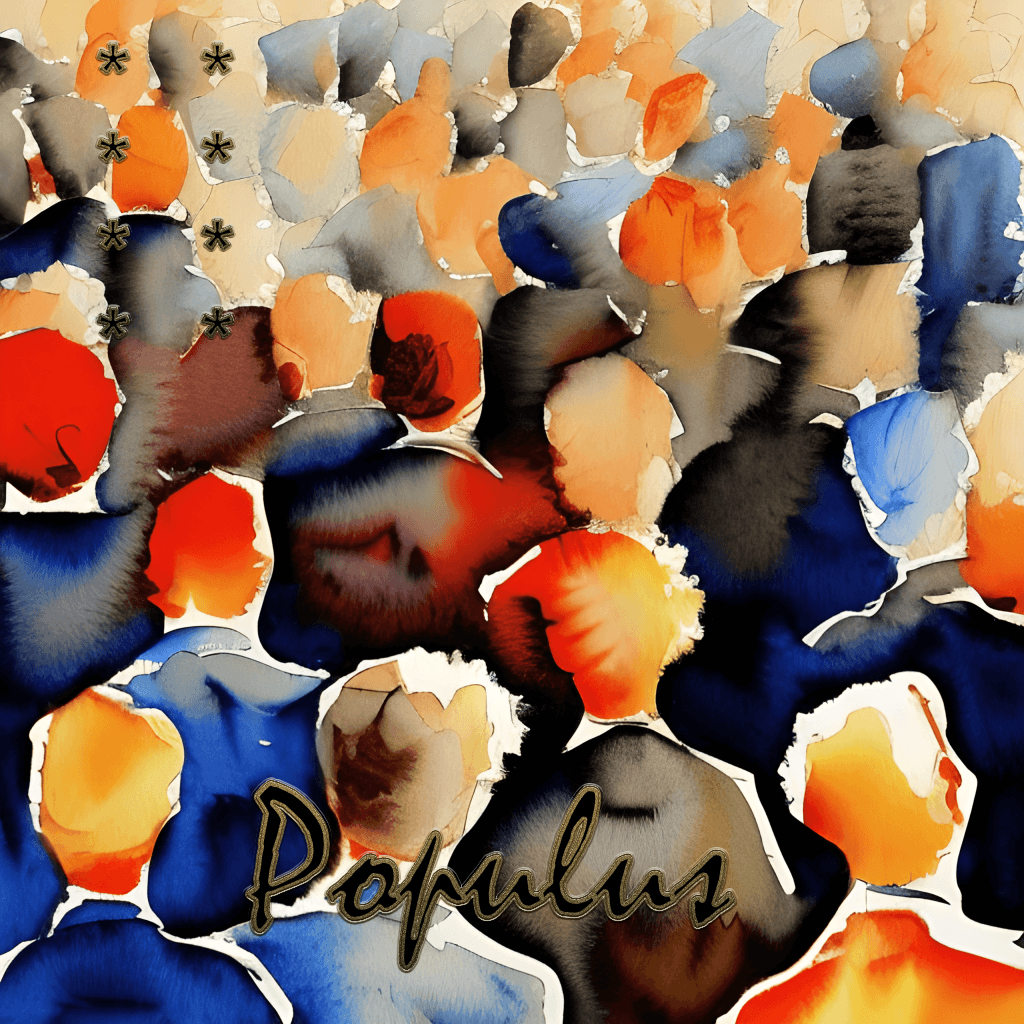
Illustration of the Geomantic figure Populus, the People

The Medievals, who were fond of finding similitudes and parallels everywhere, also saw the common folk as matter and the Emperor or King as the form-giver, just like they saw the female as matter and the male as form, so they must have felt a great thrill in finding all these correspondences at play in Populus, which also represents people (just like in astrology the Moon rules common people). If Via represents the Moon’s changeable nature, Populus is her passivity.

Populus is formed of the highest number of points of any Geomancy figure, eight, in contrast to Via, which had the least with four. This brings to light another common meaning of Populus: that of indicating “lots” of something, for good or ill.

Some old Geomancers considered Populus extremely bad, some saying that if Populus was the Judge, the chart wasn’t valid. I find this to be nonsense. We already have a limited number of possible charts to play with, and if we exclude those ending in Populus we eliminate a whole bunch more. Plus, in my experience, Populus is a neutral figure, augmenting the good and bad of other figures.

Common Keywords: passivity, receptivity, stability, a situation that may have various influences at play but in the end won’t change much, many people, groups of all kinds, crowd, togetherness, lots of anything that may make sense in the context, large, big, numerous

Populus in the Geomantic Houses (these are only examples. Use context to guide your interpretation)

HousePossible Meanings
FirstA long and/or mediocre life, a mutable life subject to many influences, lots of water, phlegmatic temperament, companionable
SecondLots of money, great wealth, many objects
ThirdMany siblings or cousins, neighbors, small trip by water or near a body of water
FourthCities, castles, buildings, abundance, fertile terrain
FifthGreat harvest, many children, gathering of artists (like an exposition), A fun gathering
SixthMany servants or small animals, dangerous illness
SeventhMany acquaintances, Good marriage, Pliable but unstable partner, Many public enemies
EighthTears, A funeral, Lots of money from the partner
NinthLong travel especially by water, pilgrimage with other people, a class or learning group, a spiritual gathering
TenthA gathering of important people (like a cabinet meeting), elevation of regular people, Rebellion of the common folk
EleventhLots of money from the government, Lots of friends
TwelfthMany occult enemies, evil machinations, groups of prisoners
ThirteenthPublic favor, stable past, good company
FourteenthThe public is against, many obstacles or lots of opposition, stable future
FifteenthSome delay, stability in the end, good if coming from good figures, bad if from bad ones
Possible meanings of Populus in the various Geomantic Houses. Note that this is not meant to be exhaustive, and it only serves to jog your interpretive muscles

MQS

Via / The Way (Geomancy Figures)

Name of the Figure: Via (The Way); some give it as Candela (Candle)
Element: Water
Planet: Moon (waning)
Sign: Leo
Quality: Common
Fortune: Mixed

When interpreting Via, there’s a couple of notions to keep in mind. First, its interesting geomantic property of turning every figure into its opposite: If you add Via to Conjunctio, meaning connectivity, you get Carcer, isolation; if you add Via to Puella, innocence and balance, you get Rubeus, vice and lying; if you add Via to Caput Draconis, the beginning of something, you get Laetitia, its peak, etc. This is because Via has one point in each elemental row: one point in the Fire row, one in the Air row, one in the Water row, one in the Earth row. One point, when added to another single point, turns it into an even double point, while when added to a double point it turns it into an odd number again.

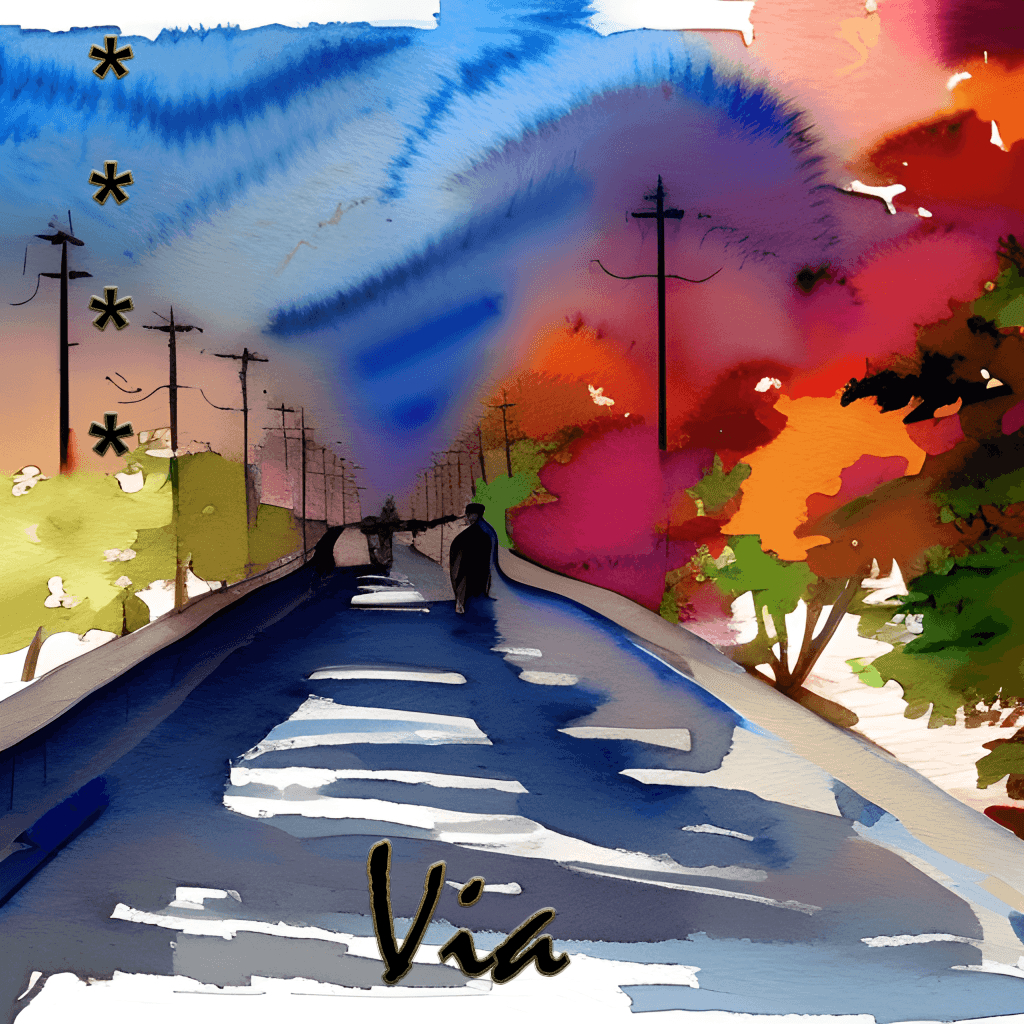
Illustration of the Geomantic figure Via, the Way

This property of Via connects well with its meaning of change, travel, etc. It is an active, transformative figure, indicating that the situation will not stay as it is. Something that began one way will finish as something different.

Another interesting and often mentioned property of Via is that it has the least amount of points of any figure in Geomancy, four. This can mean that Via stands for a small amount of something, whether for good or ill. This, however, is usually only in questions of quantity (“Will I get back the money?” “Yes, but only a small part.”)

Finally, because it is in contrast with the other figure of the Moon, Populus, which is the crowd, Via can represent aloneness, not necessarily in a bad sense. It can show someone doing something alone, following their own path. It may indicate independence. However, if you dabble in the old manuscripts, you will see that depending on the author Via is attributed better or worse qualities depending on that author’s own ideas. I personally find it a neutral figure, if an unstable one.

Common Keywords: Travel, path, journey, going, moving, acting, making inroads, change, transformation, one, only, lonely, small, little, small amount

Via in the Geomantic Houses (these are only examples. Use context to guide your interpretation)

HousePossible Meanings
FirstA traveler, wayfarer, piligrim, small stature, phlegmatic temperament, changeable, A short life
SecondTraveling merchant, Little money, change in the economic situation, poverty
ThirdShort trip, visit, younger siblings, arrival of news, partly true rumors, the garden or neighborhood
Fourthmixed end results, instability at the end, a trip to see one’s parents of father, little inheritance
FifthFew children (possibly one), going to a party, little pleasure
Sixthshort illness, change in the health, servants are arriving or fleeing (traditionally), small animals, small gain from animals
SeventhUnstable partner, highwaymen, little company, gain or loss of support (depending on how one is at the present moment)
EighthFleeing danger or fearful situation, little money from other people
NinthLong travel, little faith, unworthy knowledge or teacher, a process of transformation, inner journey
TenthUnstable government, Unstable profession, change of job, traveling for work, authority figures are not to be trusted
Eleventhvain hope, little hope, little help, changeable friends, few of them
TwelfthRelease from prison, Freedom from addiction, Few enemies
ThirteenthUnstable past, ability to change, good for traveling, positive journey or path
Fourteenthquick solution, the situation will evolve or change, issues while traveling
FifteenthThere will be travel or change for good or ill, Quick solution
Possible meanings of Via in the various Geomantic Houses. Note that this is not meant to be exhaustive, and it only serves to jog your interpretive muscles

MQS