Tag Archives: Fortune-telling

The Geomancy of Peter of Abano – Book II Pt. 1

Previous / Back to Index / Next

Abano discusses matters related to the First House. and Second House

Having shown in the first book how one may know and judge (questions), we must now show some practical examples of this science according to the twelve houses of the chart, so that everyone may more easily understand what they wish to know. And this always according to the above described rule of giving the first house to the querent and the appropriate one to the quesited.

First House

Of the life of the man or woman.1
Having made the chart and the fifteenth figure, and wanting to know one’s fortune or misfortune,2 consider the figure in the first house and, depending on its meaning and the virtue of the planet ruling this figure, judge whether it is good or bad.

And if you want further clues, look whether the figure moves toward one of the angles or in more than one of them.3 And the life is all the more long and better and fortunate depending on how good the angle is, as said before.4 And if the figure doesn’t move, but it is still good and fortunate, it means one still has a long time to live, but is lonely.5 And if it moves to the second, it causes gain through one’s industriousness and solicitude. And if it moves to the third, it means getting along with younger relatives and siblings, and if to the fourth, it indicates increase of patrimony and wealth of the father or of the older relatives.

If to the fifth, it means happiness through children, and usefulness, but if to the sixth, misfortune, tragedy, accidents, but also other people’s service (to the querent), depending on whether the figure is fortunate or not. If it moves to the seventh, it means good things from the wife or girlfriend, and good deals, or gain through war or gambling, and maybe in a foreign country, depending on the quality and condition of the figure. If it moves to the eighth, the life is short, unless one is a butcher or deals in dead animals, that is, skin, wool, or if one is a loan shark.6

If it moves to the ninth, it means much journeying, and being a knight or a wayfarer or a churchman, and the person’s luck is better if the figure is good. If it moves to the tenth, it means honors and public office and receiving dignity from people up high, or through them, depending as the figure is fortunate or not. If it moves to the eleventh, it shows good luck with friends and from people who are noble or from the Roman Curia. If it moves to the twelfth, the person will meet his end in prison, or through long infirmity, or it shows being kidnapped or being in a remote place like some religious people do.

If the figure shows up as a Witness or as the Judge, the person’s fortune depends on how good the figure is. And what we have said of the first figure, whether it is good, mediocre or bad depends on its nature.

Second House

Of wealth, possessions and gain.
If you want to know about merchandise, one must judge the first house, whether it is good or bad, and then the second, depending on its virtue, and judge thus: if it contains one figure among Acquisitio, Major, Conjunctio, Caput and Albus, it means that gain will come from things that are easily movable from place to place, or from things that change, or that are sold by approximation (that is, without carefully weighing them).

If it were Puer it signifies gain through things sold after careful weighing. If it were Puella, it means gain through things that are easily obtained. If it were Rubeus, it means in things that cause fire or that have to do with blood. If it were Amissio, Cauda or Via, it shows little gain, and if it were Tristitia or Carcer, it means ups and downs of fortune or possessions. And if it is Laetitia or Minor, it means being able to keep one’s possessions. If it is Populus, then it depends on how good the first figure is, however by its own nature it means abundance.
Note that every entering figure indicates gain or buying, and exiting indicates loss or selling.7

Whether one will retrieve the lost possession.
If the question is about lost items, or stolen items, and we want to know whether we will get them back, look at the first figure, whether it is good or not, and then the second, and if they are entering or exiting. Afterwards, if you are looking for the thing, look at the tenth figure, if it is entering and good it means retrieval of the lost thing, especially if the same figure is in the second, or if here is another figure that is entering.8 Also look at the eleventh and the fifteenth. If instead the figures are exiting or bad, it means the opposite.

If you are looking for a stolen item, look at the seventh house, if it is entering and fortunate, and if it moves to the second or first house, which means retrieval.9 Similarly in the tenth, eleventh of fifteenth. And if the seventh [figure] is in the third, it means that the lost or stolen item is in the house of a sibling or relatives; if in the fourth, in or around the house of the father or of the older relatives, or near the house or place were it was originally. If it is in the fifth or sixth or eighth it means it is far away. If it is entering, however, you still will get it back.

If one will get back the money they lent to someone else.
The first figure is he who must receive back the money, the second is the thing that he wants to get back, and the seventh is the borrower. If the first and second figure, or at least one of them (especially the second) are entering, and if the seventh is exiting, it means getting it all back easily. Similarly, if the second and seventh are the same, that is, entering. But if they aren’t, it means the opposite.

MQS

Footnotes
  1. The First House was often called “Life, Body and Wit/Talent” ↩︎
  2. This type of question may sound vague nowadays, but it must have been common in the premodern era, as Astrology and Geomancy handbooks are full of tips on how to handle it. This was especially true at a time when one couldn’t just arrange an online meeting with the diviner and when one’s time of birth was unknown, so that one may have looked at other possible alternatives to know about their general fortune in life that didn’t involve the birth chart. ↩︎
  3. the angles, i.e., the First, Tenth, Seventh and Fourth houses, are considered strong and highly performant, so they endow the figure with strength. ↩︎
  4. I am not sure what Abano means here. The angles are traditionally arranged as stronger (First and Tenth) and weaker (Seventh and Fourth) though all are generally strong. He may be referring to this. Or he may be referring to the practice of assigning the angles to the four phases of life, so that maybe a good figure passing, say, in the Seventh, shows good midlife. ↩︎
  5. Probably because he remains by himself. ↩︎
  6. Because the eighth represents other people’s money (being the second from the seventh). ↩︎
  7. “Every entering figure” probably implies “to the exception of Tristitia”. ↩︎
  8. It is not clear why Abano mentions the Tenth House. It is possible that this is because the Tenth House opposes the Fourth House of buried and invisible things, and thus shows visibility and coming to light. ↩︎
  9. Abano does not seem to count the Twelfth house as being next to the First. He is not the only authority to do so. Possibly this has to do with the doctrine of the Company of Houses, or simply with the fact that, on the Geomantic Shield, the First and Twelfth houses are visually distant. ↩︎
Tarot Encyclopedia – Index

Back to the Tarot Index

This is intended as a collection of meanings attributed by some sources to the Major Arcana and Minor Arcana of the Tarot. I will add sources as I study them. If you have sources to recommend, hit me up.

If you are interested in a (partial) list of the meanings I attribute to the Major arcana in my reading examples and case studies, click here.

Court Cards

Kings Wands, Cups, Swords, Coins/Pentacles
Queens Wands, Cups, Swords, Coins/Pentacles
Knights Wands, Cups, Swords, Coins/Pentacles
Pages Wands, Cups, Swords, Coins/Pentacles

Small Cards

Aces Wands, Cups, Swords, Coins/Pentacles
Twos Wands, Cups, Swords, Coins/Pentacles
Threes Wands, Cups, Swords,Coins/Pentacles
Fours Wands, Cups, Swords, Coins/Pentacles
Fives Wands, Cups, Swords,Coins/Pentacles
Sixes Wands, Cups, Swords, Coins/Pentacles
Sevens Wands, Cups, Swords, Coins/Pentacles
Eights Wands, Cups, Swords, Coins/Pentacles
Nines Wands, Cups, Swords, Coins/Pentacles
Tens Wands, Cups, Swords, Coins/Pentacles

MQS

The Geomancy of Peter of Abano – Book I Pt. 6

Previous / Back to Index / Next

Abano explains how to judge the figures in the houses.

Furthermore you must know that when the question is asked by a person, it is not always the case that the first house goes to the questioner, according to the universal rule, but there are eight cases of people who have a special house assigned, and one must judge the question according to said houses. These are the Pope and cardinals, a prelate, the Emperor or King, a great Lord, an absent party, a bandit or thief, a servant, one who’s been chased off the home and an imprisoned thief. These you must judge according to the house that is assigned to them.1

Similarly you ought to know that those figures that are called entering are better than those called exiting, except Tristitia, which is unfortunate, and they have great positive power against the opposite figures, if they happen to fall in good houses depending on the question asked. All exiting figures are weak and don’t promise much good, except when one wants things to happen quickly. However, they are strong in evil things and when one wishes for evil things. Entering figures are those who have more points in the upper half than in the lower half, and exiting figures have more points in the lower half than in the upper half.

And if in a chart you find an entering, fortunate figure in a good house, but the opposite, exiting figure is in a bad house, the entering figure is said accidentally exiting and unfortunate. For instance, suppose that Acquisitio is in the First and Amissio in the Second. If this is the case, Acquisitio is said to be exiting and unfortunate, but only accidentally. And if it’s the opposite, i.e., Amissio in the First and Acquisitio in the Second, we have the opposite case. In the same way you must understand every other figure with respect to its opposite.2

Similarly, every exiting, unfortunate figure is strong in evil things, and every entering figure is weak against evil, except when one seeks things to be firm and late, although Laetitia, though exiting, is good and fortunate.

One must also in every chart and question see what is the first figure and that of the quesited, i.e., what qualities they possess, e.g., fiery, airy, earthy or watery, cold or hot, wet or dry, and what’s the planet of each. And according to their conformity (to one another) or their difference, so one may judge them together with the other figures depending on which is better and has the better planet, always keeping in mind the question and the querent’s desire. And every time that a figure opposite to that of the first house falls in that of the quesited, it couldn’t get any worse.3 And this same effect have Populus and Via, although both are figures of the Moon, and Minor and Major, although both are figures of the Sun.4

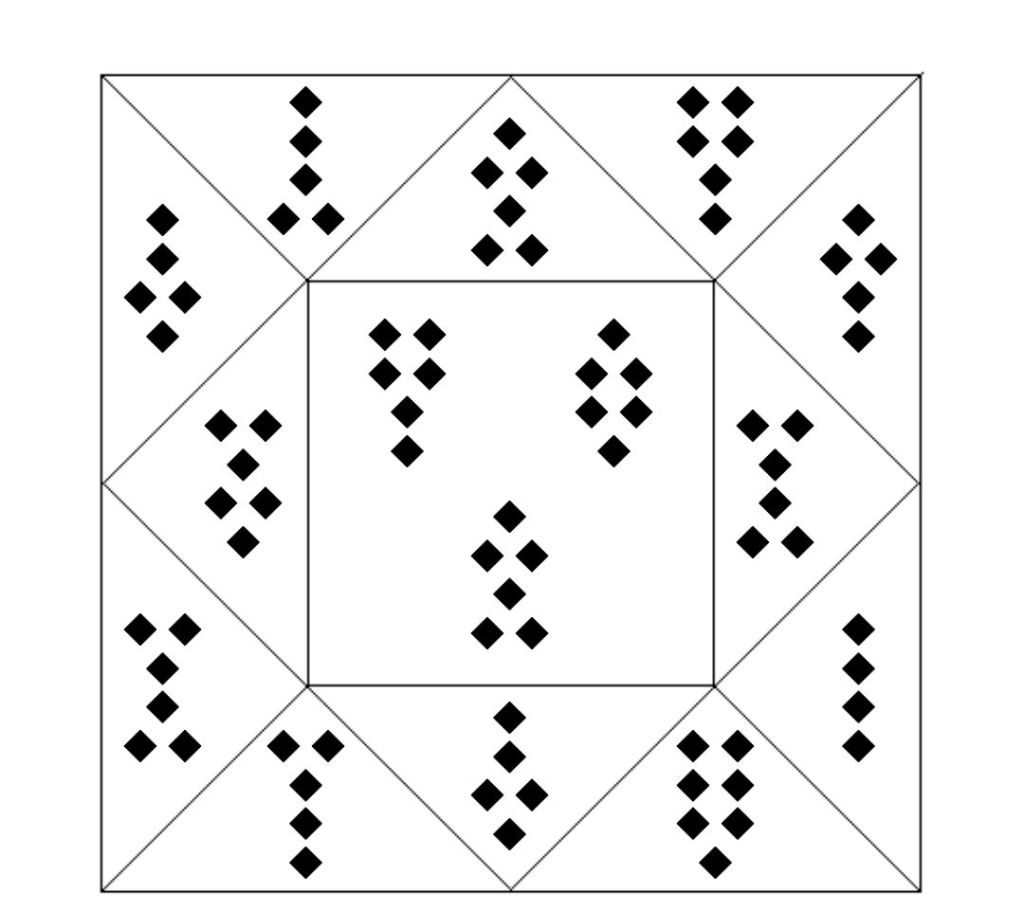
Additionally, one must keep in mind, in every figure and question, the geomantic figures that are assigned to each side, and see which is better and which is worse, and thus judge. The figures of the first side, i.e., of the querent, are the first, second, third, fourth, ninth, tenth and thirteenth. Those of the second side, that is, of the quesited, are the fifth, sixth, seventh, eighth, eleventh, twelfth and fourteenth. If the two parts were equally good or bad, judge by the fifteenth figure, and according to the comformity of the four angles.5

And if in any question a geomantic figure that is appropriate to that question falls in the house of the quesited, this is excellent, and if the opposite happens, this must also be judged. For instance, if the question is about travel and and Via falls in the third house it means well, and good journey. If the question is about gain and Acquisitio falls in the second it means good things and usefulness, but if it were the opposite [that is, Amissio in the second] it means the opposite. The reason for this is that the third and ninth house have, among their attributions, journeys and roads and mobility; and the second house is a good place for Acquisitio, which means gain and usefulness; and if there were a geomantic figure which means damage of delay, it means these two things. As such, we call opposite figures those whose fortune is the opposite one of the other, that is, Amissio/Acquisitio or Albus/Rubeus, and so on. And so also Via and Populus, both being mobile, but Via is quicker and good for travel by road, while Populus is slower and bodes well for travel by water.

The example we have discussed can be applied to any other question, looking for appropriate figures and houses in the way we have explained. In the example of a question of gain, if there was Amissio [in the second], it signifies what its name promises, i.e., damage and loss, and whenever you seek to obtain anything or if you ask about an absent party or a messenger or any other similar issue, and if Laetitia was in the second house, or in the house of the quesited, it means happiness and pleasure, and the obtaining of what one wishes, and good outcome. But if there was Tristitia it means the opposite, because Tristitia means problems, except in earthy and fixed things that don’t move, and these (negative) effects will be so much the more true when in the second house (or in the house of the quesited) we find this figure, or a similar figure.

End of the first book.

MQS

Footnotes
  1. There seems to have been considerable debate in the Middle Ages concerning whether the querent in horary questions was always represented by the First House or if certain people, such as kings or priests, ought to be considered according to their particular house (for instance, kings from the Tenth, priests from the Ninth). I advise against Abano’s practice. The querent is the querent, and as such is the First House. If the querent asks about the king, then the house of the quesited is the Tenth. Besides, but if the king asks about something, he is represented by the Ascendant, Abano does not explain how an absent party might ask a question without ceasing to be absent. ↩︎
  2. This passage is exceedingly obscure. It is not clear how we are supposed to distinguish good from bad houses. The second house may have been considered bad by some Hellenistic astrology due to the fact that it doesn’t behold the ascendant, but I am wondering if what Abano is referring to here is the company of houses. Alternatively, it seems that whenever a bad figure is in a bad house and said figure is the opposite of a the good one, then the bad hurts the good even if there is no contact between them. Abano says that the opposite is also true, but this seems to lead to a regressus ad infinitum. ↩︎
  3. I believe Abano is referring, as before, to figures that are the opposite in terms of points, such as Acquisitio and Amissio. However, later Abano says opposite figures are opposite in terms of fortune. ↩︎
  4. I do not understand this. Does this mean that it is bad if the said figures are in the house of the quesited? This seems hardly likely. ↩︎
  5. This passage is very interesting, as it shows the geomantic shield to be a sort of soccer field with two contenders. However, it is hard to reconcile what Abano says here with what he said before, for instance that it is better to have the fourteenth figure good than the thirteenth, because the former signifies the future. That being said, a certain digree of ambiguity about this issue is to be found in most texts on Geomancy. ↩︎

The Geomancy of Peter of Abano – Book I Pt. 5

Previous / Back to Index / Next

Here Abano describes the meaning and function of the Geomantic Court.

In order to have better cognition of all that one wishes to know, one must consider the thirteenth and fourteenth figure, which are called the Witnesses, because they unveil many secrets, depending on the good or evil nature of the figures they contain. And one must also consider the fifteenth figure, called the Judge, which shows the end of the matter for good or ill, together with the figure in the fourth house.1

The thirteenth figure signifies the past, but also the present, depending on the question, while the fourteenth the future.2 When the thirteenth and fourteenth figures are good, it means the question asked is positively answered, especially if the Judge is also good, but when the thirteenth figure is evil and the fourteenth good there is some trouble, and if the thirteenth is good and the fourteenth evil, then the question has a negative answer, especially if the Judge is evil. 3

If both Witnesses are evil and the Judge good, one must refer to the fourth house and judge from it what shall come to pass. Similarly, if the Right Witness is good and the Judge evil, one must look at the fourth to consider whether the matter will end in joy or sorrow.

If, after all this, there were still doubts, take the fifteenth and the first figures and add them to create another figure, and judge depending on the nature of this figure. And if this figure happens to fall in any of the houses, good or evil will come from a person or thing signified by that house. This sixteenth figure is called the Judge of the Judge [Sopraiudice].

Furthermore, this sixteenth figure is produced also from the Judge and from the figure in the house of the quesited, according to the properties of the houses as described before, and according as said figure is conform or not conform to the fifteenth or sixteenth figure, so one judges the chart of the question.4 And when they are good, all the better, and when they are bad, all the worse. And when they contradict each other it is also somewhat bad. But when they are in everything opposed to the fifteenth and sixteenth, the chart is null and void, and the chart is called anomalous, without order or rule. 5

MQS

Footnotes
  1. Here Abano seems to put the Judge and the Fourth house on the same plane. ↩︎
  2. This idea seems to stem from astrology, where the Moon’s previous aspect indicates the present or the past, and the one she makes immediately after shows the future. ↩︎
  3. The way Abano describes the interrelation of the Witnesses with the Judge almost seems to make the Witnesses more important than the Judge. ↩︎
  4. This additional technique begs a couple of questions. First off, why does Abano call both figures ‘the sixteenth figure’? Are they on the same plane? Secondly, is this technique always employed whenever the traditional Judge of the Judge (from the Judge and the First Mother) is used? ↩︎
  5. In other words, this seems to have been taken as a sign that the chart didn’t answer the question. Personally, I am skeptical of this technique. It is my experience that charts are always radical, whether they are astrological charts or geomantic shields. They always answer, or at the very least they are always meaningful. Clearly, if we keep making up new figures, the chances of them contradicting each other increase accordingly. But contradiction is not a sign that a chart is not valid: only that it mirrors a complex, contradictory reality. Maybe I am wrong. ↩︎

The Geomancy of Peter of Abano – Book I Pt. 4

Previous / Back to Index / Next

Abano quickly summarises the meanings of the planets in traditional Western astrology, so that the geomancer may better understand the meanings of the corresponding figures.

In order to make it even easier to make a judgment, we shall now consider the planet of every figure, and conveniently we shall list the virtue and meaning of every planet.1

Saturn is always evil, wherever it is, and it means sick or vile people, malady, poverty, blind or maimed people, laborers, problems and toil, prison and prisoners. Adversities and obstacles, loss of wealth. It is only good for building and in agriculture and in things that need to last. Its two figures are Tristitia and Carcer.

Jupiter is always good, wherever it is, and it means Church people, prelates, noblemen, rich people, merchants, captains, courtesans and friendly people. It is good and pleasurable, useful in every thing. It is only bad for the sick and the prisoner, whose trouble it prolongs. Its figures are Acquisitio and Laetitia. Acquisitio is the better one.

Mars is sometimes good and sometimes bad, depending on the question, but inclining to evil, and it means malicious people, wrongdoers, traitors, thieves, ruffians, harlots, murderers. It is only good in things of wars and when blood is concerned. Its figures are Puer and Rubeus, and Puer is the worse one.2

Venus is good, but its goodness is minor, for good or ill, depending on the question asked. It means people who are friendly, happy, young, with little troubles in life. But also harlots. Its figures are Puella and Amissio. Puella is the more noxious for travel and sickness and prison. Amissio is the better one.3

Mercury is a mixed planet in terms of good and evil. It means servants, messengers, letters, embassies, writers, scholars and painters, science and doctrine. Its figures are Albus and Conjunctio. Conjunctio is the worse one, as it always shows malicious intention or duplicity, and hexes.

The Sun and Moon are mixed planets in their good and evil import depending on the question, but the Sun is the better of the two,4 and it means nobles, kings, emperors and people of high station, who have dominion. Its figures are Fortuna Major and Fortuna Minor. Minor means more trouble than prosperity.

The Moon is also a mixed planet, but mostly bad, and its figures are Via and Populus. Via is only good for travel, Populus is good for dealing with people, and it means abundance and lots of water.

Caput and Cauda are associated with the planets Jupiter and Venus (Caput) and Mars and Saturn (Cauda).5

MQS

Footnotes
  1. The elaborate psychological attributes that modern astrology assigns to the twelve zodiac signs are virtually unknown to premodern Astrology, having been invented relatively recently to make up for modern astrology’s inability to make verifiable predictions. Instead, traditional astrology relies much more heavily on the planets as celestial actors. ↩︎
  2. This is not the first time Abano alludes to Puer being worse than Rubeus, although in other places he seems to contradict this statement. ↩︎
  3. This statement is also odd, and it reeks of either mistake or blind. ↩︎
  4. In Medieval Astrology the Sun was often considered a benefic when aspecting other planets, but a malefic in conjunction (planets conjunct to the Sun are said to be combust or burned up, except when they are very close, in which case they are said to be in the heart of the Sun and strengthened). The Moon’s evaluation, quite ironically, fluctuated depending on the author, but in general she was believed to be a benefic when waxing and a malefic when waning. ↩︎
  5. The practice of assigning the two Nodes to the benefics and malefics seems to have started possibly with Medieval Muslim philosophers, or at least in the Latin West. In the original Western tradition, the Hellenistic one, there doesn’t seem to have been much talk of the Nodes except in negative terms. ↩︎

On Death (Example Reading)

Of the many subjects that have been banished to the realm of shadows in contemporary divination, none have become more unspeakable than death. Under no circumstances should we be reminded of our mortality and finitude, largely because these are all things that fly in the face of the “you can be whatever you want” ideology that many diviners now espouse. Divination proves that no, we can’t be whatever we want. Certain patterns of our life are laid out for us and there is precious little we can do about them except, maybe, work on our ability to accept them.

Obviously, as diviners we wield a certain degree of power over our querents, and as such we ought not to abuse it to terrorize them. I don’t usually talk about death unless the question is specifically about it or unless the context somehow allows for such a discussion. But I am also no moralist lecturing the querent on what they should be asking. In this case I was asked by a woman about her father’s wellbeing after being diagnosed with a serious illness. I told her I would not diagnose anything, but I would merely look at the general flow of his life.

2♥ – Q♥ – Q♠ – K♠
10♠ – K♣ – 9♠
8♠ – Q♦
10♥

I said it largely to comfort her, but the cards have their own language that cannot be overruled by any consideration. The pyramid can largely be summarized in one word: “funeral“. There isn’t much to discuss or interpret. Look at that group of people cards: these are not specific individuals. They are just meant to indicate many people together.

Then we have the Nine of Spades, Eight of Spades and Ten of Speads interspersed. These show great evil, tears, darkness. You get the picture. In the context of this question, many people together for something tear-related is called a funeral. So there is going to be a funeral: the father won’t survive.

Due to the Two of Hearts, I thought this was going to be within two weeks (not the funeral, but the death). It ended up being almost a month (timing is always tricky). In general, I think the cards meant “soon”.

But what about the Ten of Hearts at the end? Shouldn’t it nullify the evil meaning of the other cards? Usually it does, but the Ten of Hearts also represents Heaven or paradise. In the context of readings about this sort of issues it indicates that death comes as a release from the sufferings of life. As such, as weird and unfathomable as this sounds to us in the realm of the living, the spread is positive: it ended well because it ended in death. As a matter of fact, I have been told that the father was serene and peaceful till the end.

Why Predict Death? Philosophical and Practical Implications

I hope I haven’t put off anyone with this post, but the fact is that death is possibly the most salient event in life, so it makes sense that divination should be able to address it. The readings I do about this sort of issues are very rare, and I generally warn the person that I am fallible and have been and will be wrong again.

Other readers may choose to avoid such questions altogether. This is a legitimate choice, as no one should be forced to read about topics they feel uncomfortable about. However, it is also important to recognize that such questions are legitimate and that there is nothing inherently dark about them. It all depends about the context and about the attitude of the diviner (and of the querent, of course).

One may ask what the point is of divining about death and other such topics, since the querent cannot do much about it. In reality, there is plenty of non-morbid reasons to want to know about it: one may wish to set their affairs in order, or simply get a head start in getting closure. In pre-modern Western astrology, as well as in Chinese astrology, the prediction of the native’s death, or at least of whether they had enough life force in them to lead a relatively long life, was one of the first things the astrologer looked for. This is obvious: you can’t predict fame to someone for next year if they’ll be gone tomorrow.

Most importantly, a sober and serviceable approach to such topics has the ability to make us appreciate life from the point of view of the eternal, from the recognition that many things escape our control and we are truly actors in a cosmic play.

MQS

Friend or Acquaintance?

In Astrology, and therefore in Geomancy, we distinguish between a friend and an acquaintance, the former being eleventh house matter, the latter seventh house. Obviously, the difference is not as clear cut as it may seem, especially in the age of social media, where all it takes to be someone’s friend is to click on the ‘add’ button.

In the old texts, both of Geomancy and Astrology, we often find examples of how to judge questions like “Will my friends be useful to me?” This may sound callous compared to our sentimental notions of friendship, but keep in mind that 1) the old notion of usefulness was broader back then, and it included everything concerned with the person’s well-being, both inner and outer 2) friends formed part of the person’s network of alliances in tackling the hardships of life 3) the eleventh house is the second from the tenth, which represents heaven, so it represents friends as wealth from heaven. Clearly friends were highly revered (just read Plato, Seneca, Xenophon or even Confucius for proofs).

As I mentioned somewhere else, my husband and I are in the process or moving, and as usual when moving, we suddenly discovered that we own three times more stuff than we thought. One friend volunteered to help us the following day, bringing us boxes and helping us with her car. In the evening though she said she didn’t know if she would make it. I cast a reading to see whether she would come:

Will she come to help us? (app used: Simple Geomancy)

Let us forget the Judge for a second and concentrate on the chart. If we take the girl as ‘our friend’ she should be eleventh house, and the eleventh house is occupied by Cauda, which also doesn’t move anywhere.

Now if my mom asked me who she is, I would say ‘a friend’. Yet she is more my husband’s friend. I am just on good terms with her, but I wouldn’t call her to spill my guts or even to ask for help, though it was of course very nice of her to volunteer.

If I take her to be my acquaintance, she is seventh house, and occupied by a more promising Conjunctio, which does spring to the second toward me. And she did end up coming.

The negative Judge, Amissio, possibly refers to the fact that we ended up losing a couple of objects due to recklessness (notice the Via Puncti reaching back to Puer in the fourth house). I also ended up losing a friend to gain an acquaintance, it seems.

MQS

Vera Sibilla Cards That Indicate Loss

I’m going to write a few articles on the similarities and differences between cards in the Sibilla deck based on certain topics or concepts. Because I’m a positive person, let’s start with the concept of loss.

This list is not meant to be exclusive (for instance, most bad cards next to the Money card can show loss of money). Context is key, and each spread must be studied as its own thing. Furthermore, loss is not the only meaning of the cards I talk about here.

Five of Hearts Reversed (Happiness)

The 5♥R generally indicates failing to meet aims and failing to live up to promises and commitments. These ideas can easily be what leads to loss, whether material or in the field of relationship (though it also has a strong connection with cheating in the latter field).

Six of Hearts Reversed (Money)

This one doesn’t require much in terms of explanation. The Money card, when reversed, can indicate money troubles.

Eight of Hearts Reversed (Hope)

When upright, the 8♥ is connected with investments (things where there is a hope placed on future returns). When it is reversed, it often shows bad investments causing losses. It also indicates relationships that go up in smoke.

Ten of Hearts Reversed (Perseverance)

Traditionally, the 10♥R is really bad for commerce, as it shows loss of contracts and even of merchandise. More broadly, though, this card bodes ill for anything where you wish for smooth sailing.

Six of Clubs Reversed (Surprise)

When upright, the 6♣ represents a positive discrepancy between effort and returns: you get more than you hoped for based on your efforts. The 6♣R is the opposite: you put much effort into something but get little in return. It also shows excess confidence and ambition causing losses.

Five of Diamonds Upright or Reversed (Melancholy)

In general, this card represents unsatisfactory situations, but next to the card of something we hope to get it shows either we don’t get it or we are unsatisfied with it. When reversed it speaks more clearly of loss and debts.

Eight of Diamonds Reversed (Handmaid)

The 8♦R often speaks of the need of spending money or money going out in general. By itself not a tragic card, but its meaning can be exaggerated by the presence of other difficult cards. It also indicates lack of skill in balancing a checkbook.

Ten of Diamonds (Thief)

Obviously, a thief takes something from us, so we lose that something. The 10♦ represents all situations where we lose someone or something, and if other cards of dubious moral import add their meaning, foul play may be suspected.

Ace of Spades (Sorrow)

The A♠ is a strong card, which can modify most readings for the worse. It represents feelings of bereavement and loss, not necessarily material in nature. If it is material, it is likely to be a big loss, as it will shake the querent to the core, like a letter containing tidings of death (which is what the card represents). When reversed its meaning is lessened.

Three of Spades (Widower)

This is the ‘loss’ card. It represents the notion of ‘without’ and it brings loss to the fore as a concept. The loss doesn’t need to be material, so the 3♠ can show loss of friends or social support. As the title implies, it can show widowhood. When reversed the loss is more traumatic.

Five of Spades (Death)

The 5♠ is similar to the Widower in its depiction of loss, but the loss is sharper and is more likely to radically change (usually for the worse) the querent’s life.

Seven of Spades (Tragedy)

The 7♠ represents disruption, the surfacing of unaccounted or unexpected factors bringing the loss of what we hoped to achieve. As with most really bad cards, the Seven of Spades can add its meaning to other cards to bring most projects to their knees.

Eight of Spades (Desperation and Jealously)

The 8♠ is specifically connected with a crisis in material affairs (though of course it can bring problems to relationships as well). It is not uncommon to find it when the question is about investments or debts, showing a critical situation where the querent must tread carefully to avoid making mistakes they’ll deeply regret.

MQS

The Spiritual Aim of Divination

I had a short but interesting conversation with a visitor of this site. He quite liked many of my articles but was somewhat perplexed by my iconoclastic attitude toward the spiritual side of divination. I think this is a good time to clarify my views further, since the reason I am so scathing is not that I hate spiritual work, but that I take it seriously.

First off, let us distinguish inspired divination from technical divination. Inspired divination is the downloading of information, as it were, from a spirit, a deity, an inner contact or some such. This depends wholly on either the inborn talent or the level of initiation of the diviner.

Technical divination works for the same reason that stones fall: because that’s how things are. One learns it the same way one learns math: they must be predisposed to it and must put in the work. Of course, one can mix the two types of divination, but they are essentially different.

Either type can be used to obtain concrete information. Either type can be used to fool yourself or others (but especially yourself). The difference is that inspired divination, especially as a consequence of initiation, has the perk that the diviner must have somewhat balanced themselves out of many of the delusions typical of the spiritual community at large. Technical divination may be just as hard for other reasons, but the counters used in the prediction are available to everyone.

From here come the hordes of tarot readers and astrologers that (believe they) are using divination for spiritual aims, or inner work, when in fact they are sinking more and more into Delululand, as most of the time they aren’t really speaking to gods or angels or ancestors but rather to their own ego (have you ever heard any tarot reader or astrologer that uses this approach say something that goes against their convictions? How come their gods or ancestors always have their same values, their same political bias, their same preferences?)

The preconception here is that divination, in order to be spiritual, must be about spiritual topics. This is as a result of two widespread phenomena: 1) most people in our society see spirituality as something separate from concrete life, something that takes place in a bubble of white light 2) most people who become interested in divination are initially interested in concrete answers, but finding that getting these is hard and not immediately rewarding, they reframe divination as ‘not really to know the future but to improve yourself’. This is at the heart of the deadly divination/fortune-telling distinction that plagues our art.

In reality, divination is an inherently spiritual practice: 1) by the mere fact of working it deflates the modern ego 2) by its ability to pinpoint how the future is likely to pan out it puts a stop to the marketable but untrue ‘you are the master of your own destiny’ nonsense 3) by showing how the intricacies of real life can be mirrored in a microcosmic mirror it teaches the diviner to rise above himself and his preconceptions and adopt a more universal standpoint 4) by proving that some things are fated it teaches the practitioner to have compassion for themselves and others and to reevaluate their priorities.

Once again, a geographic analogy could help. A traditional diviner who seeks to understand life is like one using a map of a territory to find his way around. By studying it closely the traveler can eventually form a good understanding of the land he is in. A (pseudo)spiritual approach to divination though is like that same traveler painting the map with a uniform white paint because, at the end of the day, everything is one divine unity. That may very well be, but now the traveler is lost without the map and can only sink deeper in his preconceptions in trying to picture the route.

MQS

On Prayer Before Divination

Some days ago I was talking to a fellow occult student and we were comparing notes on how we go about the process of divination. When I told her that I tend to say a little prayer before divination she was surprised, so I thought it would make for a nice topic.

First off, I do not think that praying before divination is mandatory, nor do I think that it’s the prayer that makes divination work. It doesn’t matter if it’s synchronicity, as Jung said, or if it’s the spirits that live inside the cards, as my first teacher told me, or if it’s the Soul of the World, as the Platonists believe, or if symbols are living beings, as I believe: the point is that the cards always rearrange themselves in a meaningful pattern, the planets always find themselves in the right aspects, the right geomantic figures always emerge, the right I Ching Hexagram always forms.

As such, in a way, divination is a natural activity, so much so that it’s probably one of the earliest activities humans have undertaken. The reading of symbols came much sooner than the reading of characters, because symbols occur naturally to the mind whenever we realize that X means Y. The moment the first men drew any kind or conclusion from any kind of observation, divination was born.

And yet, I believe that divination is also essentially extraordinary. In a way, divining is as normal as cleaning your cat’s litter box, but in another sense it is also very different. In divining we read a part of the whole (the divination system) to derive conclusions on the whole (life itself). Indeed most divination systems are universal languages that mirror the complexity of the Macrocosm.

As such, divination cannot be decoupled from a global understanding of life, and this global plane is where philosophy, spirituality and occultism unfurl their wings.

In my own view, occultism is divided into three branches: devotion, divination and magic. But these three aspects are not discretely separated. For instance, theurgy brings together magic and devotion. Divination and magic are often coupled together, such as in electing the right time to make a talisman or in asking if a magical action is warranted or advisable or effective.

Praying before divination brings together devotion and divination. It is a way of recognizing the extraordinary import of the action I’m about to take, despite this action being, in another sense, perfectly ordinary.

It helps me more than it helps the divination system itself. Nor does it have to be prayer. I know of some people who wash their hands before divining. In Imperial China official diviners had to cleanse themselves before attempting divination, and this is true all over the world.

No one divines willy-nilly. No one *should* divine willy-nilly. This has nothing to do with respect (unless you are receiving information from a particular spirit), it has nothing to do with asking deep questions (divination should always be practical) and it has nothing to do with not having a sense of humor (you can have a sense of humor, in spite of how bland and vapid many of us are). It does have to do with knowing what place divination has in the scheme of things and reaching that place. I do it through prayer, others may do it by just taking a second to clear their mind, but everyone does it one way or another.

MQS