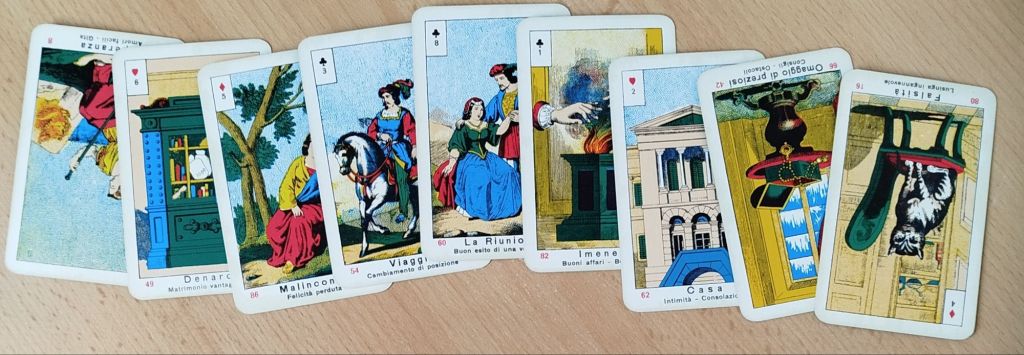
Sometimes we spend a lot of time stuck in one phase of our life, only to be surprised by fate when we’d given up hope. This is a career reading for a man in his 40s:
Vera Sibilla – A career reading
I started with three cards and then kept adding. The first three cards are Hope reversed, Money and Melancholy. It is true that the Six of Hearts, Money, generally has to do, well… With money. However, it is also the card of the past. The Five of Diamonds, Melancholy, also broadly describes the past, especially when occurring this early in the spread. However, it describes the past in a more negative light, as having somehow scarred us and left us dissatisfied or wounded.
Two cards talking about the past reinforce the idea of past. What has wounded the querent in the past? A reversal of his hopes (Eight of Hearts reversed) concerning his career!
Then we find the Three of Clubs, the Journey. The Journey can be literally about travelling, but it can also herald a transition from one phase to another. The Melancholy card itself, when not followed by evil cards, shows that the melancholy won’t last forever, but is just a phase. Once again: two cards talking about a transitory phase reinforce the idea of transitory phase!
What does the Journey bring? A meeting concerning a business or firm! The Ace of Clubs, Marriage, with the Two of Hearts, the House, can represent a relationship where we live together with the partner, but also a business or firm. Since we are talking about career, it must be the latter.
Finally, two reversed cards seal the spread in a positive way. Reversed cards have a bad reputation, but in this case they are life-savers: the reversed Gift card shows solution of problems, the reversed Falsehood card shows relief and supports the idea of a positive solution.
There is a tradition in Italian cartomancy (and possibly in other forms of folk cartomancy as well) that concerns the so-called christening of the querent’s significator. This is possibly done in order to have the divination be more certainly about the querent who comes for a reading.
Some systems, like my system for reading playing cards, have a fixed significator for the querent (the Queen or King of Clubs),1 while others (like the Vera Sibilla) do not. Either way, once the significator is known, a small magical operation takes place to connect the cards to the querent. This is what is called ‘battesimo’ or baptism/christening of the card.
There are many traditional ways of doing so. One is called ‘getting the card drunk‘ and it consists in taking the card that represents the querent and rotating it seven times (some say three times) while repeating the querent’s name each time. Another one I’ve seen used looks more similar to an actual christening, and it consists in again taking the querent’s significator and drawing a small cross symbol on the figure’s head with one’s thumb while saying “You are *name of the querent*”. There may be other systems I’m not aware of.
The practice of using a significator has largely fallen out of favor in modern tarot practice, mostly because reality has fallen out of favor with too many tarot readers, who no longer aim at describing it. This is not to say that a good tarot reader necessarily uses significators (I know some who are really good and don’t use them), but significators are a reminder that the tarot pack is a microcosm of reality, and reality contains actual people. Interestingly, many people recently became aware of the concept of significators because of traditional fortune-telling is experiencing a small resurgence.
However, it is noteworthy that the Golden Dawn and its offshoots and representatives, who greatly influenced modern tarot, did use significators. For instance, Waite recommended to select a significator even for the Celtic Cross in his Pictorial Key to the Tarot. The traditional Golden Dawn spread, The Opening of the Key, hinges on selecting a significator and counting and pairing the cards from it.
The Opening of the Key instruction recommends a brief ritual that serves to make the divination valid. This is not exactly the same as the christening I talked about, because it usually involves targeting the whole pack rather than just a card. However, I have seen GD diviners who take some time to connect the significator to the querent.
This is especially interesting to me because it shows a correspondence between folk magic and high magic (which is a distinction I don’t believe in, since ‘high’ magic is usually high only in the sense that it is practiced by people who are often high, and not just on their own farts). In part, this is because the GD, in his attempt at preserving and consolidating the whole Western tradition, often took folk traditions very seriously. In part, however, I believe that there must necessarily be such a correspondence, in as much as many streams often come from a single original spring.
MQS
Same goes for the Bologna Tarot, where the Queen and King of Wands are the significators ↩︎
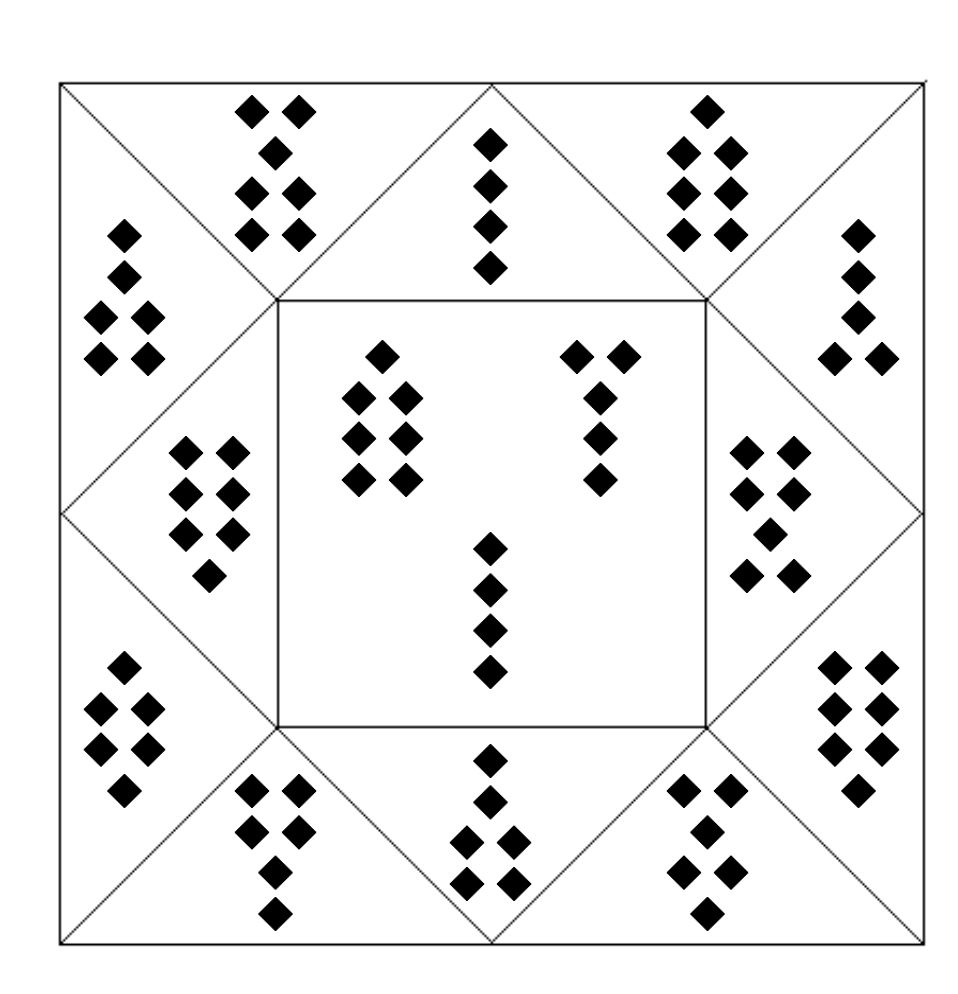
Fludd gives some basic details about the geomantic figures.
Of the Names, Forms and Natures of the Geomantic Figures
those figures which can be drawn from the series of four geomantic lines are sixteen in number, which are distinguished from one another by name and form, as follows:1
Rule I Strong and firm figures make a thing stable and firm, for better or worse, depending on whether the figure is found in a good or evil house.
Rule II Weak figures are so called, because they render a weak judgement without stability, neither are they so good and stable as much as they are mediocre,8 whether in a question of illness or incarceration or pregnancy.
Rule III Mediocre figures are so called, because they are between strong and weak figures, and they make a situation mediocre, that is, neither totally good nor totally bad.
MQS
Footnotes
Fludd was fond of using tables. I will try to make the layout of the translation as clear as possible ↩︎
Fludd gives here to Puer the form we typically assign to Puella and vice versa. ↩︎
The Sun cannot go into retrogradation, which is why some sources, like Fludd, attribute the two Fortunes to the Sun at different speeds. This is still somewhat odd, considering the Sun is always rather constant in its speed (which is probably behind the traditional symbolic view of the Sun as a source of stability, as opposed to the Moon’s changeability). ↩︎
Generally, today, we would assign Venus to Puella and Mars to Puer. It is unclear to me the extent to which Fludd was making a mistake or providing a blind to challenge the reader’s thinking. He is not the only traditional authority who swaps Puer and Puella, though. ↩︎
The Moon cannot go into retrogradation. Usually, Populus is assigned today to the waxing Moon, Via to the waning Moon. ↩︎
There exist other lists with partially different attributions. ↩︎
It is unclear to me whether Fludd means that weak figures are mediocre or that they are worse than those called mediocre. Logic would dictate that the latter interpretation is correct. ↩︎
(Note: this is a collection of the meanings attributed to the cards by some occultists in the past centuries. It does not reflect my own study or opinion of the cards. It is only meant as a quick comparative reference as I develop my own take.)
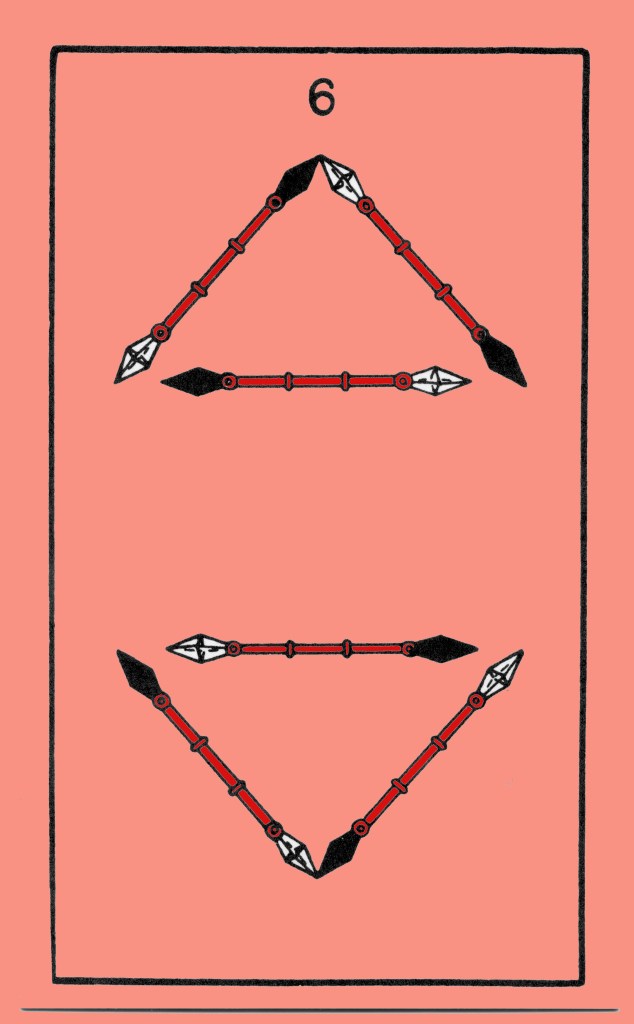
The Six of Wands from the Builders of the Adytum (BOTA) Tarot deck
Paul Foster Case (and Ann Davies)
The second decanate of Leo, related to this Key, is the time period of August 2 to August 12, ruled by Jupiter. In Tarot divination, the Six of Wands partakes of a meaning similar to the conjunction of the Sun and Jupiter, combined with the influence of Leo and its natural fifth house. Well-Dignified: success, happiness, gain; gain through love affairs or by the opposite sex; pleasure in labor; gain after a period of uncertainty and competition. lll-Dignified: loss through the same things; waste in pleasure; trouble through pride of riches or through insolence based on success. Keyword: Victory (From the Oracle of Tarot course)
A. E. Waite
A laurelled horseman bears one staff adorned with a laurel crown; footmen with staves are at his side. Divinatory Meanings: The card has been so designed that it can cover several significations; on the surface, it is a victor triumphing, but it is also great news, such as might be carried in state by the King’s courier; it is expectation crowned with its own desire, the crown of hope, and so forth. Reversed: Apprehension, fear, as of a victorious enemy at the gate; treachery, disloyalty, as of gates being opened to the enemy; also indefinite delay. (From The Pictorial Key to the Tarot)
Aleister Crowley
The Six of Wands is called Victory. The outburst of energy in the Five of Wands, which was so sudden and violent that it even gave the idea of strife, has now completely won success. The rule, or lordship, in the suit of Wands is not quite as stable as it might have been if there had been less energy displayed. So, from this point, as soon as the current leaves the middle pillar, the inherent weakness in the element of Fire (which is this: that, for all its purity, it is not completely balanced) leads to very undesirable developments.
[…]
This card represents Tiphareth of the suit of Fire. This shows Energy in completely balanced manifestation. The Five has broken up the closed forces of the Four with revolutionary ardour, but a marriage has taken place between them; and the result is the Son, and the Sun.
The reference is also to Jupiter and Leo, which seems to imply a benediction on the harmony and beauty of this arrangement. It Will be seen that the Three Wands of the Three Adepts are now orderly arranged; and the flames themselves, instead of shooting out in all directions, burn steadily as in lamps. They are nine in number, in reference to Yesod and the Moon. This shows the stabilization of the Energy, and its reception and reflection by the Feminine.
There is no circle to enclose the system. It is self-supporting, like the Sun. (From The Book of Thoth)
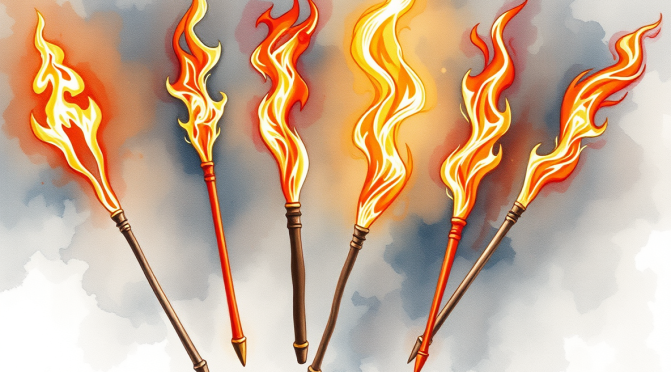
Rather prosaic AI-generated illustration for the Six of Wands
Golden Dawn’s Book T
TWO hands in grip as the last, holding six wands crossed three and three. Flames issue from the point of junction. Above and below are short wands with flames issuing, surmounted respectively by the symbols of Jupiter and Leo, representing the Decan.
Victory after strife: Love: pleasure gained by labour: carefulness, sociability and avoiding of strife, yet victory therein: also insolence, and pride of riches and success, etc. The whole dependent on the dignity.
Tiphareth of HB:Y (Gain).
Hereunto are allotted the great Angels HB:SYTAL and HB:a’aLMYH of the Schemhamphorash.
Etteilla
Servant Upright. This card, as far as the medicine of the spirit is concerned, means, in its natural position: Housekeeper, Servant, Valet, Lackey, Slave, Mercenary, Inferior. – Courier, Commissary, Factor. – Interior of the house, Ménage, Family, Complex of the servants of the house. Reversed. Expectation, Expectation, Hope, Relying on, Grounding, Trusting, Promise. – Confidence, Foresight. – Fear, Apprehension.
Following up on my previous post about the “bed sheet” spread with the Bologna tarot, I wanted to cover another full-deck spread: la scala, i.e., the staircase spread. You could also call it a pyramid spread, but I’ve never heard it being referred to as ‘pyramid’, possibly because pyramids were quite outside of the daily experience of the old ladies of Bologna. Here is the layout:
The staircase spread (la scala) with the Bologna Tarot
Note that this spread is intended for a 45-card deck. If you use a 50-card deck you’ll have five cards left over that you can put to the side as describing something imminent or something that is outside of the querent’s life (your choice).
The principles for interpreting this spread are the same as with the previous one: we look at the angles, then we locate the significator (Queen of Wands for a woman, King of Wands for a man). Generally speaking, anything above or before the significator shows the past, and anything after or under it shows the future, but we need to be flexible: sometimes we can just read the full column or row of the significator as a single sentence.
Furthermore, while the angles are important, we must not forcefully insert them into the reading: if they seem meaningful we can look at them, if they don’t, we can ignore them. Sometimes their significance becomes clear as the reading progresses.
Finally, we can look at the cards forming the outer diagonal side of the triangle as giving us one or more predictions concerning the future. In this case, the cards are read from the bottom to the top, walking up the stairs as it were.
In this case, let us suppose we are reading for a man. The angles of the spread are formed by Temperance, the Moor and the World. The cards are not especially clear. Let us move on for now. The King of Wands is found in the fourth column and third row. The row is quite negative: Justice is in the dark (Moon) causing suffering (Eight of Swords) at home (Ace of Cups) and confusion (Fool) that requires an expert (King of Coins). This could relate to something legal or bureaucratic.
In his column we find that there are messages and talks (Page of Swords, Page of Coins) with a woman who is close to him (Queen of Cups) and these communications are sad (Seven of Coins) but will be required to clarify some things (Queen of Coins).
Note that not everything we read in this spread must necessarily be connected to everything else, since this spread is supposed to be general. However, in this case we find that the querent’s card is close to the house card and the conversations happen with a family woman, so we can guess that the two things are related. Looking back at the angles, they cound indicate that this situation is requiring unexpected journeys.
Now let us look at the diagonal: the World and the Juggler could indicate a small trip or, considering the Ace of Wands is next to the Juggler, it might refer to hearing about a pregnancy. The Love card would confirm the joyful occasion. If we connect these cards, together with the Queen of Coins and the Strength card, to the issues we’ve seen relating the family, it could show the solution coming after a bit of uncertainty.
Considering the final cards on the stair, namely the King of Coins and the Chariot with the Moor, it could indicate an unexpected need to see a doctor (Chariot = sick bed, King of Coins = important man).
The Bologna Tarot is typically read in large spreads. This is because each card has very simple meanings, so one cannot spend their time musing on them at length as often happens in contemporary tarot practice. The Bologna Tarot is closer to the Sibilla or to playing cards or Lenormand in this sense (or even to how regular tarot readings used to be).
Many general spreads done to tell a broad fortune use the whole deck. This is the case of the Lezuolata, or bed sheet spread. It is a 5×9 spread similar to the Lenormand or Kipper Grand Tableau (this is for the 45-card deck. If you use the 50-card deck just add a tenth row). Here is an example:
The Bed Sheet spread (Lenzuolata) with the Bologna tarot
This spread is typically used to “locate” the querent’s card (either the King or the Queen of Wands) and see how their general circumstances are. It is typical to start the reading by having a look at the four cards in the angles. In this case we have the Tower, the Hermit, the Ace of Coins and the Page of Cups. This could indicate money trouble relating to a young woman (maybe a daughter). If we interpret the Page figuratively, then it shows that the querent has no (bad cards) monetary (Ace of Coins) satisfaction (Page).
Let us suppose we are reading for a woman. The Queen of Wands is located in the second-to-last row and in the second-to-last column. She looks at the Moon, behind which there is the Ace of Cups (the house) and the Ace of Swords (relationships, or something close). Behind her is the King of Swords, a young man, and underneath her is the Juggler, which is a kid. So possibly she has kids (remember the Page of Cups), and she is worried about her financial situation at home.
Let’s look at the column where she appears. Broadly, this is a positive column, with a King and Queen of Cups possibly indicating figures in the family. Right above the Queen is the Chariot, which in this tradition indicates the sick bed, again reinforcing the idea of suffering (not necessarily physical). But the two figures of the Queen and King bring her the Ten of Cups, flourishing, and some minor good luck thanks to the Wheel.
Above the Wheel we find the Page of Wands, her thoughts, and the Seven of Cups, which also relates to the family, especially protection from the family. Possibly, therefore, the Queen is worried about having money for her kids, but her parents or another couple from her family are helping her.
As can be seen, this spread is not meant to let you talk at length, but it does give you a snapshot of the querent’s life at that moment.
Yesterday we had a nice reunion with some friends. One of them asked the cards if she has a shot with her dance instructor, whom she’s crushing hard on. These were the cards:
The first thing that jumped at me was that nasty Eight of Spades at the end, which literally says “it will end in tears.” If we take the three angles of the pyramid, they are the Six of Clubs, Nine of Spades and Eight of Spades. Bleak.
My querent’s card falls on the first line, together with the Six, the Ten of Hearts and the Nine of Spades. If we were to read this line as a literal sentence, it would be “Coming from a place of fatigue your happiness there’s not“. In other words, my friend is not just single, but lonely, has been for a while and she’s unhappy about it. This is interesting, because it shows that her crush is more like a compensation mechanism.
Then we come to him, the King of Clubs, who is on a journey (Ten of Clubs) with a loved woman (Queen of Hearts) that leads to a house (Ace of Hearts) of union (Three of Clubs). He is engaged. The final Eight of Spades does not say that he is unhappy about the engagement, but that the engagement brings tears to the querent.
I’ve recently talked about understanding the order of the cards when using the Vera Sibilla and playing cards. The Bolognese tarot, being a traditional fortune-telling system, follows similar rules, and as such it is important to understand whether the cards add their meanings together or contradict each other. Example:
Page of Coins + Queen of Coins
The Page indicates words, while the Queen represents the truth. Therefore, in this case, we get “true words”, “trustworthy words”, and similar combinations.
Queen of Coins + Moon
The Queen of Coins is the truth, but it is followed by the Moon, which indicates negativity, falseness, secrets. Therefore the combination talks about hidden truths, and thus of potential lies to cover the truth.
Moon + Sun
In the Bolognese tarot, the Moon is the card of negativity, while the Sun is the card of positivity. Traditionally, the Sun and Moon together are called “the two red cards” (due to the color of the two celestial bodies in the card) or the sorrow combination. Since here the Moon comes first and is followed by the Sun, the sorrow is passing, the problem will be solved.
Sun + Moon
In this case, the Moon more decisively blocks the Sun, so the sorrow doesn’t stop, or at least will last longer.
Tower + Justice
The tower can represent a large building one would rather avoid. Justice represents the law. Together, the two cards can represent a courthouse (but they can also indicate that justice or fairness is impeded, if the reading is not about a trial).
Justice + Sun
The Sun affirms the positivity of something. Together with Justice, it shows justice, fairness, equilibrium, etc
Justice + Moon
This is the opposite. The Moon negates justice.
Justice + King of Coins
The King of Coins is an important person, usually one with a degree. With Justice, he becomes an attorney, a notary, someone who is competent in some area of law or bureaucracy.
Love + Hanged Man
The Love card indicates, of course, love. In the Bolognese Tarot, the Hanged Man represents betrayal (being hanged upside down was the punishment for traitors). Together, they can indicate some kind of dishonesty connected to love (with the figure of a third party, it would become a triangle).
Love + Ten of Cups
The Ten of Cups brings feasting and jollity, so this combination would describe a happy-go-lucky love that is blooming, and if we add the Fool, that’s obviously a very fun love with not much commitment.
Love + King of Coins + Justice + Tower
We’ve seen that the King of Coins with Justice indicates a lawyer, and Justice and the Tower indicate a court of law. Connected with Love, this combination could show a divorce.
World + Eight of Wands
The World card means “around the world” or journey. The Eight of Wands indicates a road or path. Clearly, the two cards together strengthen the idea of a literal journey.
World + Page of Cups
The Page of Cups can indicate a younger woman, while the World shows “from afar” or “from around the world”. So this young woman probably isn’t part of the querent’ life: she’s a stranger.
All in all, combining the cards of the Bolognese tarot is a relatively intuitive process, although there are some traditional combinations that we’ll need to talk about in a future post.
As Christmas draws near I recently bought the ingredients for my home-made 5-hour lasagna sauce. Yesterday I set about preparing it, and I started noticing an odd smell coming from the minced meat, even though it was supposedly fresh.
At first it was barely detactable, so my Christmas spirit decided to interpret it as just a figment of the imagination. The immediate red flag was seeing my husband emerge from his den asking what the strange odor was. Hubby is extremely sensible to smells. Whenever I see him curling his nose I know something is off.
What’s worse, around three hours into the preparation the subtle whiff had turned into a miasma. So I did a geomancy reading, asking if the sauce would be safe to eat.
Before casting the reading I had some doubt on how I would interpret such a question: what astrological house rules food?
In old astrology and geomancy books, when a king asks if the food served at the banquet has been poisoned, usually the diviner consults the fifth house of parties and fun. On the other hand, astrologer John Frawley makes a compelling point that your food is what sustains your person and goes into your throat, which is the second house. I decided that it was useless to worry about these distinctions, and that the chart would find a way to show me the truth.
Is the sauce safe to it? Geomancy reading (app used: Simple Geomancy)
And show me it did. This is a reading that requires very little interpretation. Tristitia is in the first house, portending trouble, and it springs into the sixth house, which is the house of sickness: neither the second house nor the fifth house were involved. The sauce is definitely unsafe.
True, the court is not negative, possibly showing that it wouldn’t cause any major trouble. On the other hand, the Way of the Point goes from the Judge Via to Cauda Draconis in the eighth house, and Cauda is a negative figure, but I doubt the sauce would be the end of us.
I still decided to dump everything out and start from scratch, meaning today I had to run to the market to get new ground meat.
(Note: this is a collection of the meanings attributed to the cards by some occultists in the past centuries. It does not reflect my own study or opinion of the cards. It is only meant as a quick comparative reference as I develop my own take.)
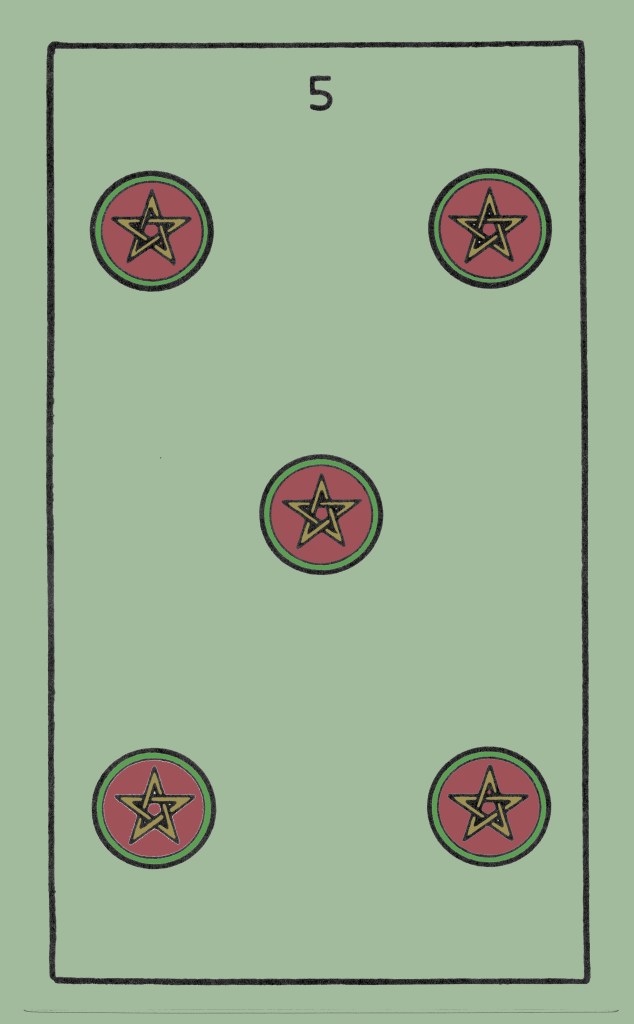
The Five of Pentacles from the Builders of the Adytum (BOTA) tarot deck
Paul Foster Case (and Ann Davies)
The time period is the first decanate of Taurus, under the rulership of Venus, April 20 to 29. Meanings: Well-Dignified: labor, toil, the cultivation of the land; building, and plans concerning it; some anxiety over money. lll-Dignified: toil unrewarded; loss of money; poverty; trouble for the Querent through lack of imagination and foresight. Keyword: Uncertainty; material trouble. (From the Oracle of Tarot course)
A. E. Waite
Two mendicants in a snow-storm pass a lighted casement. Divinatory Meanings: The card foretells material trouble above all, whether in the form illustrated–that is, destitution–or otherwise. For some cartomancists, it is a card of love and lovers-wife, husband, friend, mistress; also concordance, affinities. These alternatives cannot be harmonized. Reversed: Disorder, chaos, ruin, discord, profligacy. (From The Pictorial Key to the Tarot)
Aleister Crowley
The Five of Disks is in equally evil case. The soft quiet of the Four has been completely overthrown; the card is called Worry. [See Skeat, Etymological Dictionary. The idea is of strangling, as dogs worry sheep. Note the identity with Sphinx.] The economic system has broken down; there is no more balance between the social orders. Disks being as they are, stolid and obstinate, as compared with the other weapons, for their revolution serves t9 stabilize them, there is no action, at least not in its own ambit, that can affect the issue.
[…]
The Number Five, Geburah, in the suit of Earth, shows the disruption of the Elements, just as in the other suits. This is emphasized by the rule of Mercury in Taurus, types of energy which are opposed. It needs a very powerful Mercury to upset Taurus; so the natural meaning is Intelligence applied to Labour.
The symbol represents five disks in the form of the inverted Pentagram, instability in the very foundations of Matter. The effect is that of an earthquake. They are, however, representative of the five Tatvas; these hold together, on a very low plane, an organism which would otherwise disrupt completely. The background is an angry, ugly red with yellow markings. The general effect is one of intense strain; yet the symbol implies long-continued inaction. (From The Book of Thoth)
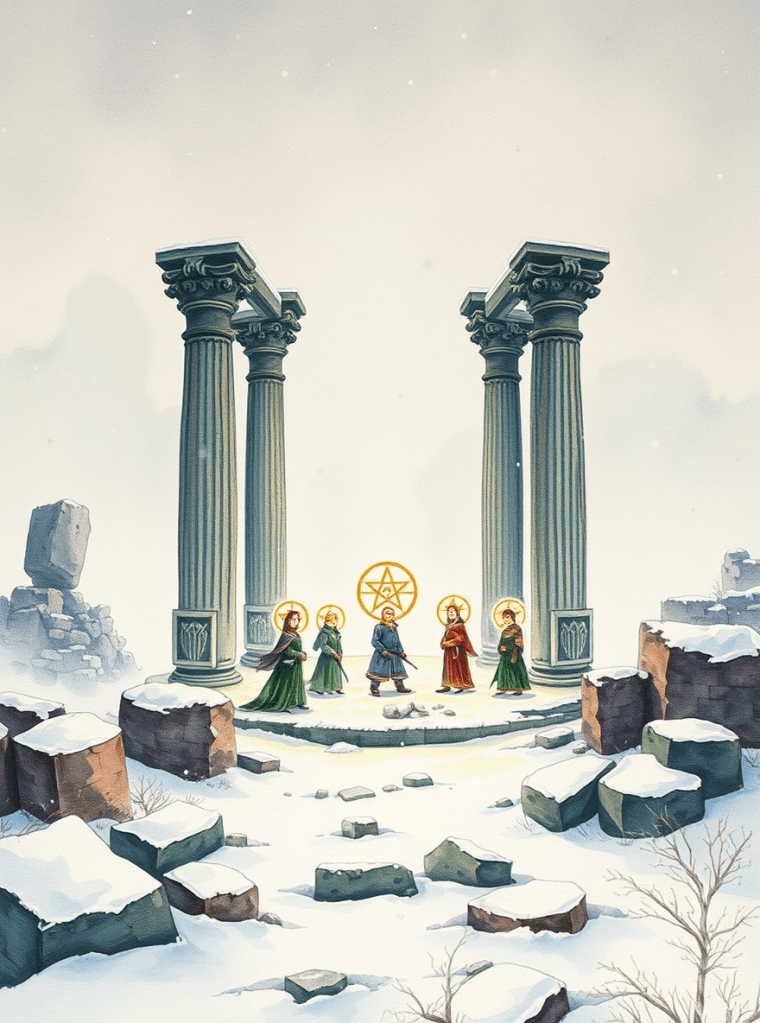
A peasantly mystical AI-generated illustration for the Five of Pentacles
Golden Dawn’s Book T
A WHITE Radiant Angelic Hand issuing from clouds, and holding a branch of the white rose tree, but from which the roses are falling, and leaving no buds behind. Five Pentacles similar to the Ace. Above and below are Mercury and Taurus.
Loss of money or position. Trouble about material things. Labour, toil, land cultivation; building, knowledge and acuteness of earthly things, poverty, carefulness, kindness; sometimes money regained after severe toil and labour. Unimaginative, harsh, stern, determined, obstinate. Geburah of HB:H (Loss of profession, loss of money, monetary anxiety). Herein the angels HB:MBHYH and HB:PNYAL rule.
Etteilla
Lover Upright. This card, as far as the medicine of the spirit is concerned, means, in its natural position: Lover [man], Lover [woman], In love, Gallant man, Gallant woman, Husband, Wife, Groom, Bride, Friend, Friend. – Lover. – Loving, Lovingly, Adoring. – Harmony, Agreement, Convenience, Concordance, Good manners. Reversed. Disorderly, Contrary to order. – Debauchery, Disorder, Turmoil, Confusion, Chaos. – Damage, Devastation, Ruin. – Dissipation, Consumption. – Unruliness, Libertinism. – Discord, Disharmony, Discordance.