I received a really sweet message from a fledgling occultist who wants to pick up some form of divination, but has been put off so far because they have been convinced that they don’t have “the gift”, as they put it, by which I think they meant intuition.
It is a fact of life that a certain predisposition can give you a head start. My high school chemistry teacher could explain to me every single step of how to balance a formula, and I would sort of understand it, but then, left to my own devices, I would still get it wrong. I certainly didn’t have the gift for it. But that doesn’t make chemistry hoplessly outside of my reach. If I had persevered instead of throwing my hands up and saying “oh well, at least I can read Plato in Greek” I would have definitely made some progress. It’s just that in life you’ve got to pick your battles, and I knew I wasn’t the next Marie Curie, and I did like Plato, so Plato it was.
The same holds true for the various esoteric disciplines. The kind of gift that is required to practice them is not different from the predisposition toward high school subjects. Yet there is this widespread belief something more is needed. Well, it isn’t needed.
Oracles, i.e., the various forms of divinations, are languages, and like all languages they require study and practice. The idea that all it takes is intuition is a result of the loss of understanding for occult practices that resulted from the scientific revolution, which confined anything that wasn’t understandable in terms of the rising empiricism to the realm of irrational superstition.
This new designation was either consciously or unconsciously accepted by those practicing divination, so divination became something irrational that requires non-rational tools to be practiced. This, in spite of the fact that, wherever you look around the world, and even in the West before the Enlightenment, divination is considered to be primarily made of rules to be studied and applied with intelligence.
True divination, like all parts of magic, is hopelessly technical. It has nothing to do with following your heart, much less your intuition. Speaking of which, actual intuition is a much more sacred thing than the “I can’t prove it but I know it’s true” that many make it out to be. “I just feel this is how it is” is how cults get started, which is probably why so many people who describe themselves as intuitive are so up their own asses and so full of unconscious prejudices.
That is not intuition: it is personal bias subtracting itself from scrutiny. Actual intuition is the prerogative of the great saints, and only to a lesser extent of people who are on a spiritual/esoteric path. It is rare and cannot be commanded. It is the result of brief moments of perfect union with the source of all, and for that reason it comes from outside the limitations of the individual vessel. What many call intuition are simply personal hunches that they cannot trace back to any line of reasoning.
And mind you: hunches ARE a thing. They can work, and sometimes they can help. They can also fail. Many people seem to believe that ‘intuition’ is never wrong. And fair enough, the intuition I talked about is in fact never wrong. But personal hunches CAN indeed be wrong, in the same way that a logical inference can be wrong: hunches, like reason, the senses and all other channels humans use to gather information, are fallible. The fact that many think their hunches are never wrong is simply the result of confirmation bias: if they concentrated on how often their hunches let them down on a daily basis they’d be crushed.
Another use of the term intuition is simply a cooler way of describing the facility that comes from experience. The experienced doctor comes in, eyeballs you, listens to a couple of your complaints and knows with a high degree of probability what is wrong with you. The experienced mechanic listens to the purr of your car and knows immediately it will break down in two weeks if you don’t do something about it.
That’s also not intuition, although it is far more valuable than what average psychics do. It is simply the result of having gone through the same process so often that you can skip some of the steps, at least consciously. It is the intellectual version of muscle memory.
So, can anyone become a diviner? Let me answer with a question: can anyone become a chemist? Well, no. If we all could, the human race would go extinct. But the only thing keeping you from studying chemistry is your decision and perseverance. So is with divination.
In many supernatural movies about exorcism, the priest trying to free the victim needs to discover the demon’s name. This is actually founded in (part of) the real practice of exorcism and does have its roots in the magical belief of the power of names. For instance, there are certain practices in folk magic in Italy that require the magician to go to the christening of a child whose name translates to the effect he or she wants to achieve.
But belief in the power of names is not just found in Italy and it probably goes back to the most ancient and elemental relationship that humans established with the things around them in their attempt to dominate them. Traces of this fact are found in the doctrines of many Greek philosophers, sophists, poets and playwrights, and I have also found some similarities with Chinese Daoist literature. A wonderful fictionalized account of this belief is found in Ursula LeGuin’s Earthsea saga, which anyone interested in magic should read, in my humble opinion.
I am not one who seeks to psychologize occultism, although I believe that psychology is not at all a useless discovery and can be part of a modern magus’ training. I think that the attempt to reduce occultism to psychology is just as misguided as the attept to condemn anything that modernity has brought us as a deviation from an ancient splendor.
That being said, as someone who practices divination for others, there is also a certain sense in which naming works in a cathartic way. Most of the people that consult me are rather upfront about their problems, especially since I don’t ask for money and therefore feel no guilt in telling them to go sit on a cactus if they are trying to waste my time.
But people can be reticent about their issues for a variety of reasons, and malice is not always the motivation. Among the many possible reasons is the fact that people sometimes feel the need to have their demons driven out of them by someone outside of their regular field of experience.
Having someone discover our particular demon’s name without us feeding it to them can be a powerful and cathartic experience, because it smokes the demon out of the dark recesses of our subjective experience and into the light of objectivity, where it can be addressed as a definite and therefore limited issue, rather than being consumed by its overwhelming lack of contours.
Not every divination session calls forth such existential experiences, nor should we as diviners try to turn each session into a catharsis. We are not therapists and our duty is not to give people advice, although advice can certainly be given if required. Our role is to provide information, whatever that may mean in the context of each particular reading. For this reason, our language and that of our divination tool needs to be earthly, concrete and objective.
But sometimes informing the querent can mean gathering the diffuse knowledge that they already have festering inside of them and turning it into useable information by giving it its proper name.
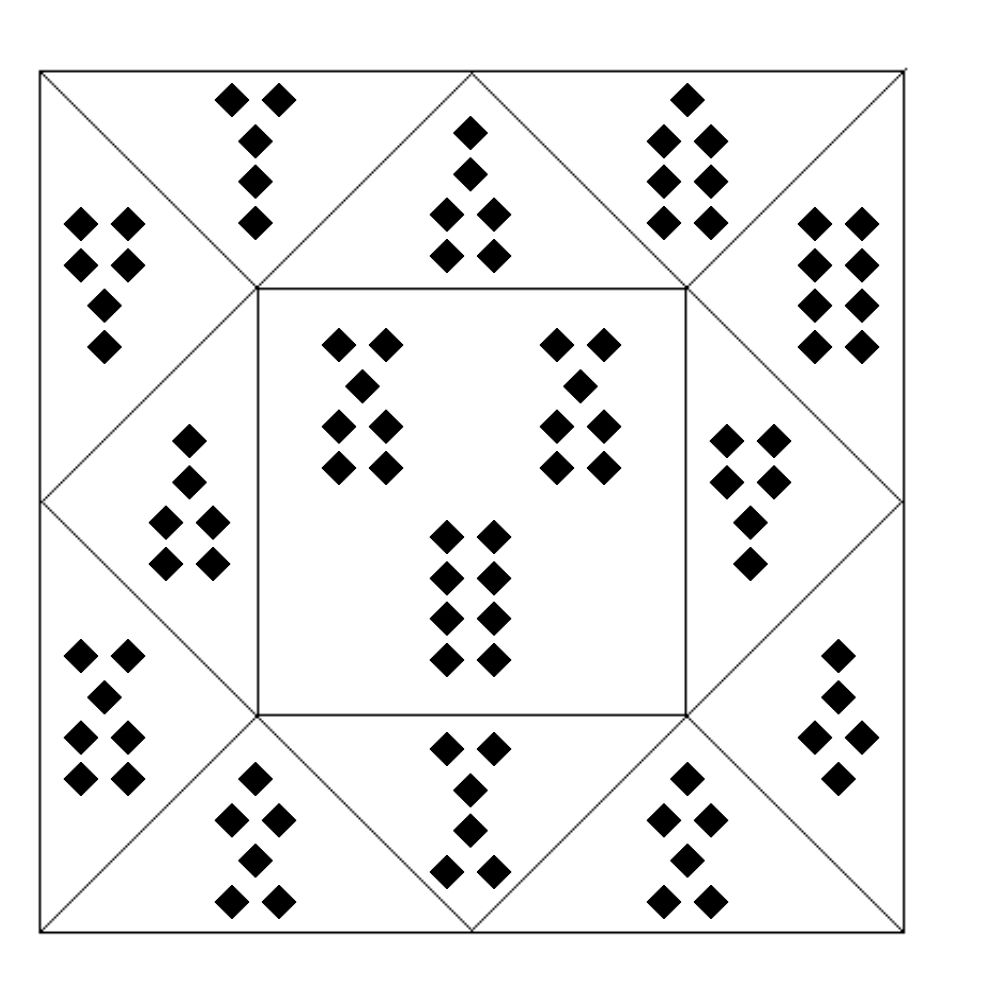
Fludd discusses the meanings of Populus, Via, Conjunctio and Carcer in the various houses.
Populus
In the First House, a multitude of thoughts about water, journeys, peoples and nations. In the Second House, with good (figures), a much fortune and riches; with evil much trouble. In the Third House, multitude of relatives, neighbors, and little journeys, both good and bad, according to the nature of the figures.1
In the Fourth House, abundance of water, laboring for an inheritance, fruits, according to figures. In the Fifth House, a multitude of children, letters and news, joy or sorrow, kisses and embraces, gathering of people for delights and joys, fruits, according to figures, and so on in the rest according to figures. In the Sixth House, a number of animals, slaves, sickness, injuries, and other things according to the figures.
In the Seventh House, a multitude of people gathered, women, enemies, good or bad according to the nature of the figures. In the Eighth House, a multitude of people assembled for a death, or a multitude of good or evil, according to the goodness or malice of the figures. In the Ninth House, a multitude of journeys, dreams, knowledge, people on the way, multitudes.
In the Tenth House, a multitude of enemies, kings, of people before judges, doctrines, assembly for good or for evil, according to figures. In the Eleventh House, a multitude of friends, good fortune, beasts, servants, children, or inconveniences, according to the nature of the figures which have been found in the vicinity.2 In the Twelfth House, a multitude of enemies, inconvenience, long imprisonment, tears, debts, beasts, and slaves.
In the Thirteenth House, much profit to him that goes to any magnate,3 of loss, change, and the like. In the Fourteenth House, a multitude of people, assembled, either for good or for evil, according to the figures next to it. In the Fifteenth House a multitude of good or evil, a gathering of people for good or for evil, according to the figure from which it comes, for if it comes from good figures, it denotes much good, if from bad, the opposite.
Note that this figure, found in the first house, represents a merchant of various things passing through the countryside.
Via
In the First House, a good journey, little profit, thoughts of small fruits. In the Second House, loss or gain, according to the neighboring figures. In the Third House, brothers, neighbors, water, a good journey, light4 business, journeys for a brother or cousin, comparison of wealth.5
In the Fourth House, parents, labors, lands, the concealment of tainted things, the end of things, poverty, poor parents, poor inheritance. In the Fifth house, letters, messages of little importance, little fruits, poor manners, poor children, little joy. In the Sixth House, poor animals, bad luck, unstable servants, sudden increase of disease, deliverance from disease,6 misfortune of animals.
In the Seventh House, robbers, poor women, little sense,7 poor and weak enemies, a harlot, death of robbers. In the Eighth House, poverty in a foreign country, loss of inheritance. In the Ninth House, a change of letters,8 messengers of little knowledge, a good journey, benefit of the church, little gain and profit
In the Tenth House, small offices, little profit from lords and noble women, an old judge, little wisdom, loss in any thing. In the Eleventh House, poor friends, little fortune, little profit, gifts of merchandise and letters of joy. In the Twelfth House, useless animals, poor friends, easily coming out of prison, liberation from debts or from misery, and sometimes death in prison, according to the good or bad figures around, and from whom it is generated.9
In the Thirteenth House, profitable journeys and changes. In the Fourteenth House, loss in any matter, according to good or bad figures. In the Fifteenth House, travel, good outcome according to the figures from which it comes.
Note that when Via is found in the First House, it means a changeable, false and poor person.
Conjunctio
In the First House, a man of good speech, eloquence, subtlety, art and goodness, and if it is combined with good figures, goodness of heart and friends. In the Second House, the acquisition of good fortune, profits in commerce. In the Third House, the good will of relatives, the gathering of relatives and neighbors.
In the Fourth House a good path, a good end, a good friend, a profitable inheritance and legal proceedings, letters for inheritance. In the Fifth House, letters, news, gathering of good people. In the Sixth House, a long illness, evil servants and robbers.10
In the Seventh House, good company, thieves and subtle and eloquent enemies, whether in litigation or in battle. In the Eighth House, a gathering to divide the property of the dead. In the Ninth House, knowledge, a bad journey, robbers on the road, knowledge and eloquence in clerics and ecclesiastical men.
In the Tenth House, the service of lords, kings and profits in teaching or profession. In the Eleventh House, good luck, the gathering of all things, conjunction of love.11 In the Twelfth House, prisons, bad journey, bad assembly, bad people and bad life.
In the Thirtteenth House, goods and profits from one’s lord. In the Fourteenth House, a lot of luck in love and work. In the Fifteenth House, good luck in good things, bad in bad things according to the figures.
Note, when this figure is found in the First House, it signifies a prudent man, a clerk, or occupied in an office for money, of moderate build, as quickly consuming his fortunes as he is acquiring them, skilled in the liberal arts, and so on.
Carcer
In the First House, loss and imprisonment of men, timidity, sadness, sadness of heart, secret thoughts, hindrance of journey. In the Second House, servitude in all secret things, and thoughts of love of money.12 In the Third House, love of parents and profit, the love of God, hindrance and retardation of the journey, greedy brothers and neighbors.
In the Fourth House, inheritance, hidden treasures, underground houses, hidden and dark places, good inheritance. In the Fifth House, a few children, a pregnant woman, writing letters and news, rude people, raw food, dirty clothes, secret love affairs. In the Sixth House, disease in prison, a pregnant woman, a useless servant, a bad man and woman, death or a long illness, disease in a man’s secret place,13 a brute.
In the Seventh House, accidents, bad company, adultery and secret fornication with another’s woman, secret enemies, a vile thief who is caught in his robbery, ships going on water.14 In the Eighth House, death, inheritance of the dead, bad profits in a foreign land, fear of death. In the Ninth House, a road or journey from the country, death, letters and secret knowledge, secret roads, obstacles on the way, sadness in the church, sad and dangerous dreams, good sense.
In the Tenth House, good fortune, strength of dominion, a sad judge, secret opinions, dishonorable offices. In the Eleventh House, profitable friends, little profit from lords, profitable in trade through travels, gathering of good kings. In the Twelfth House, prisons, debts, graves, evil beasts, incurable disease, long imprisonment, long debts, secret enemies, but timid by nature.
In the Thirteenth House, profitable journeys, brothers and friends, gathering of good things, sad and secret thoughts. In the Fourteenth House, various thoughts, imprisonment with sadness and pain and work, debts and obligations, and these especially when it doesn*t come from good figures. In the Fifteenth House, much fire15 and destruction.
Note, when this figure is in the First House, it signifies a dark man, with a thick head, curly hair, and often ignorant carpenters, or otherwise working with wood.
General rule
It must be noted that good or evil, profit or loss, is promised through each house, according to the nature of the figures with which the figure of each house is conjoined, or from which it is generated.
MQS
Footnotes
Fludd often repeats this, but it is not always clear what other figures he means. Occasionally it seems he hints at the fact that the whole shield must be looked at and judged to see if it is broadly good or bad. ↩︎
It is not clear if Fludd is hinting at the doctrine of the company of houses. ↩︎
Fludd discusses the meanings of Puer, Puella, Fortuna Major and Fortuna Minor.
Puer
in the First House, hope, marriage, the cheerful manner of a child, who loves nothing but to sing and spend time with music and the company of women.1 In the Second House, profits in commerce, good fortune, good profit, company of women, reception of debts. In the Third House, joy on account of brothers and neighbors, charming and cheerful neighbors, a good journey, a good dream, and delightful news.
In the Fourth House, fights, no acquisition of the desired object, refusal of the thing that one desires, water. In the Fifth House, joy, good children, news and letters, good news, pleasures, love, delights with women, musical instruments. In the Sixth House, good servants, foolish women, children born from fornication, good animals, and long or prolonged illnesses.
In the Seventh House, evil and foolish women,2 fornication and bad company, marriage of children. In the Eighth House, death and disease. In the Ninth House, a journey by land, false belief, lewdness of the church.3
In the Tenth House, litigations over women, or for servants, or children in judgment or before a judge, (being in) the service of some master.4 In the Eleventh House, joy, luck, good love, love of women and men due to lewdness.5 In the Twelfth House, victory, a bad man, dangers, prisons, the failure of that which is equired about, good animals, strong and bad enemies.
In the Thirteenth House, joy and profits come from great people, letters, news, life, joy and travels. In the Fourteenth House, danger but later a good end, drinking well, eating well, news and love. In the Fifteenth House, temperance, profit in all things, and the completion of goods.6 In the Sixteenth House, all good.7
Note, when this figure is in the first house, it signifies a young man, handsome, and of good looks, with a fine beard, luxurious, fond of instruments and music, monks, hypocrites, and scholars.
Puella
In the First House, happiness of friends, food, having children, lewd and licentious words, lying, full of superfluous speech.8 In the Second House, profit, a tendency to extravagance. In the Third House, love of relatives, good company, good relatives, much talk, weariness on the journey, and sometimes robbers.
In the Fourth House, profits in works of love, from father and mother,9 from inheritances, small fruits, talk, lewdness and dishonesty in the house. In the Fifth house, happy children, news, letters, delights, superfluous words about lewdness, love of women, liars, and cowards. In the Sixth House, evil women, disease of slaves, profit from animals, slaves (who are) full of boastful and lustful speech, diseases, that is, ulcers, swellings, bruises and the like.
In the Seventh House, marriage, profitable partners, women’s joys, many talkative and lustful women, harlots and dishonest women who touch others without merit. In the Eighth House, the death of parents or sisters, inheritance from the dead, many words, the death of slaves in a foreign country. In the Ninth House, profits on the way, sagacity, a man who loves joy and cheerfulness more than prayers and divine worship, dreams, news without much merit, good understanding in one’s teaching, singing, disturbance for the church.
In the Tenth House, happiness and profits on the way of one’s lord,10 good master and duties, but much talking done before. In the Eleventh House, good friends, profit from slaves and beasts and good fortune, much talk, lust and fornication. In the Twelfth House, talkativeness, profits from beasts and servants, enemies full of quarrels, beasts quite good.
In the Thirteenth House, profitable journey, profits from some lords. In the Fourteenth House, good luck, profit from danger. Note, when this figure is found in the First House, it denotes a man having a small body, and a short neck, a large head, teeth badly arranged, a fine intellect.
Fortuna Major
In the First House, thoughts of kings, treasures, old men, a man of good life, good fortune in all matters of profit and honor of the seeker, steadfastness, good hope. In the Second House, wealth, profit, and especially from animals, a rich man, good luck, acquisition, joy, sense of gain. In the Third House, good journey, but a little delayed, a good brother, good and rich relatives, a good dream, good news, joy, profit.
In the Fourth House, a good estate, the acquisition of the inheritance of great lords, treasures hidden in the earth, a good house, great advantage in all things stable,11 a good end, a good father and mother. In the Fifth House, good children, good news, good letters, good love with wife, security of heart,12 change and honours. In the Sixth House, long illness and pain, good animals, good servants, faithful and stable.
In the Seventh House, a good marriage, a good and chaste and prudent woman, great wealth, conquering one’s enemies, both in legal proceedings and in battles, strong and stable enemies,13 good in commerce, receiving one’s desire in other countries, the gathering of men and women. In the Eighth House, rich enemies, riches from the dead, profits in a foreign country; where it is noted that this figure is good, but the house is terrible. In the Ninth House, good journeys, though slow, good dreams.
In the Tenth House, good judgment, good decision in the place where the figure is duplicated, peaceful kings and kingdoms; a peaceful and firm state of the lords, the acquisition of one’s desire, reward and lasting honor from the lords. In the Eleventh House, good fortune, noble and faithful friends, profits in trade, good hope of riches from the king and prince, joy and happiness. In the Twelfth House horses, good and useful animals, a long and dangerous imprisonment, a dangerous disease, long debts, long tribulations, strong enemies14, evil for journeying.
In the Thirteenth House, a good journey and good fortune, acquisition from the king, absence, happiness in riches and joy. In the Fourteenth House, deliverance from diseases, escape from prison and debts, good luck, sudden riches for the absent, good company, good friends and security in hope. In the Fifteenth House, a good judgment, a good end, a good outcome for joys, and if it comes from good Witnesses, it will give the petitioner security in all good things, and the good is witnessed in the place (in the chart) where the figure is found.
Note, when Major is in the First House, it means an old man, a merchant of precious cloths, affable, of average stature, well dressed, good hair.
Fortuna Minor
in the First House, goodness, a good journey to princes and lords, a rich and fortunate man, also a king,15 a prince, a leader, a man of great authority, knowledge, good animals, a good and humble wife. In the Second House, the acquisition of a house by a master or a great man, and indeed without effort. In the Third House, good brothers, and wealth and profit from them, good neighbors, good knowledge and good faith, good travels, especially by sea, a good woman.
In the Fourth House, treasures of kings or magnates, good journeys to parents, noble inheritance, and acquisition of inheritance. In the Fifth House, good children, good news, a good journey towards children, joy and comfort, useful journeys,16 pleasures and delights of nobles. In the Sixth House, the insults of kings and princes and their injuries from other lords,17 as well as victory from them, fear of losing their dominion or kingdom, proud servants.
In the Seventh House, a good woman, beautiful and rich, but it will be doubtful that she will be destroyed by foolish love, murder committed by a great man, denotes to one’s son a noble marriage and good travels.18 In the Eighth House, the death of kings, or the fear of kings, so that he who has become a problem may fear them, and if Rubeus is found in the Seventh House, death due to loss of blood, it is not good to go out of the country or to travel, for imprisonment or violent death are to be feared. In the Ninth House, a good journey, a good relationship with kings or superiors to obtain favor, a faithful man, of good faith and God-fearing.
In the Tenth House, a good king and a ruler with good virtues, victory, good for migration by sea and making journeys, the acquisition of property from a prince or king, acquisition thanks to the love of judges, profit and honor. In the Eleventh House, good hope, good friends, good fortune, good company, good fortune in beasts and servants.19 In the Twelfth House, good animals, coming out of prison, poverty for the petitioner due to that, where the figure is duplicated, and especially in the Tenth House, it denotes the loss of the kingdom to the king, either due to himself or his children.
In the Thirteenth House, profits on the way, and receiving one’s wish from some lord. In the Fourteenth House, a long life, good fortune, and profits in the business one hopes for. In the Fifteenth House, a good result in all good things, a good end, good company, honor and glory.
Note, Minor in the First House signifies a king or queen, a handsome and brave man, clothed in scarlet, who likes to travel often, covered with gold.
MQS
Footnotes
Puer and Puella are the two most confusing figures in traditional texts. Here we find mixed together attributions that, in contemporary geomancy, have been attributed to one or the other. ↩︎
Fludd seems to attribute Puer to women, and since the Seventh House is the house of enemies, it causes the women to be evil. ↩︎
Here seems to emerge the typical sexual theme that some today attribute to Puer. ↩︎
This is possibly the only time that Fludd discusses the Reconciler (also knwn as Judge of the Judge) ↩︎
Similar traits are assigned by others to Puer. However, let us also not forget that in those times, sometimes women were considered deceitful by default. ↩︎
Note that typically the Fourth House is assigned to the father and the Tenth to the mother. However, when considering one’s parents in general, they are both Fourth House matter, since the Fourth is the house of the family and the home. ↩︎
“In via de Domino”. I don’t understand what this means. ↩︎
Major is considered one of the most stable figures. ↩︎
The heart is often assigned to the Fifth House, and Major gives steadfastness. ↩︎
In this interpretation, the power of Fortuna Major is in favor of the enemy, ruled by the Seventh House. ↩︎
In the Twelfth House, Major causes prison sentences to be steadfast, that is, long. ↩︎
Fludd seems to attribute worldly honors more th Minor than to Major. ↩︎
Some weeks ago I got asked why I only present readings I did for myself or others, and don’t do interactive readings which may be useful to more people. The question was asked in good faith and in good faith I answered. But I thought it made for a nice article. As usual, I will be brash and abrasive, because I’m not an easy person, but I mean no disrespect to any particular individual.
Horoscopes. In reality, horoscopes are more the invention of journalists than of astrologers: astrologers just unwittingly lent themselves to the farce. Horoscopes are predicated on the fundamental misunderstanding that the place the Sun occupies at birth automatically has something to say about us. This is a relatively modern invention in the long history of astrology, and anyone who thinks about it seriously for even five minutes must conclude that, in order to say anything at all about one twelfth of the world population purely based on their month of birth, one needs to water down everything one says to the point that nothing is said at all except playing into the belief that everyone is adorably quirky (oh those Aries boys who ram through everything, oh those Gemini girls always being nutty). That some astrologers, realizing this, feel the need to add Moon signs, Rising signs etc. into the equation does not improve matters at all: a fundamentally silly idea multiplied by itself remains silly.
Taroscopes. Taroscopes are an even more modern invention. They substitute or complement the reading of a sun sign chart with a broad card reading (usually tarot, hence the name). They started popping up on social media some ten years ago as a way of feeding the sludgeflow of nonsense that is required to keep the algorithm satisfied. I am pretty sure they started out as a silly game, then some saw that it was good for business. I am even aware of established readers who haughtily denounced taroscopes for the travesty of divination that they are, only to bend the knee once it was clear the current flowed in one direction only.
Interactive Readings. Interactive readings are the height of silliness, and the perfect exemplification of the words ‘internetslop‘. Choose between Deck One and Deck Two and listen to why he doesn’t deserve you because you are such a special, intuitive an free-minded queen. Choose between the butterfly and the butter knife and listen to why all the narcissists in your life hate you for being such an authentic empath (somehow those buying into this nonsense are always surrounded by narcissists, yet they are never narcissists themselves). That’s the essence of interactive readings as a further development from taroscopes.
The reality is that divination is already hard as it is, being an imprecise and complex art due to the amount of factors to be considered and the fallibility of humans in considering them. Trying to extend it to a whole swath of people who randomly happen to bump into your video or post is beyond ludicrous.
In attempting to justify this to themselves, some readers are eternally caught between two stances: “if you bump into it, it is meant for you” and “if it doesn’t resonate it’s not the right message”, logic being the first thing to fly out the window once someone decides to be a brave and empowered little witch. Of course you’ll always find someone who responds to an interactive saying “I chose the butterfly. That’s exactly it, that’s me to a T”. And those are the unlucky ones, because they get roped into a world of self-delusion and meaningless hype: the universe seems to be constantly cooking up something big for you, according to interactive readers, so you better stick around for the next video!
So yeah, that’s why I stick to traditional readings.
Fludd explains some of the meanings of Caput Draconis, Cauda Draconis, Albus and Rubeus.
Caput Draconis
In the First House, good and sweet fortune, a man wise, eloquent and prudent, and who keeps his affairs secret, and has firm and stable thoughts in all things. This figure is very good.1 In the Second House, profit and gain in commerce, wealth, good fortune, and secret acquisition of all things. In the Third House, good relatives, good neighbors, good faith, slowing down the journey for something good.2
In the Fourth House, profit and the acquisition of inheritance, a good house, a good estate, a discreet father, a good end, peace in one’s work.3 In the Fifth House, love of children, good children, joy, secret letters, pregnant women, being honestly satisfied with the love of a woman, good love. In the Sixth House, a long illness, profitability in all things, secret and discreet servants, good and useful animals, a long secret illness.
In the Seventh House, a good marriage, a good and chaste woman, good company, subtle and strong enemies, good change (or removal), good profits in trade, bad for going away.4 In the Eighth House, death or illness,5 gain of money, love and recovery of lost property, secret death, receipt of money from death, security from fear. In the Ninth House, journeys and return of him who is abroad, letters, good faith, slowness of a journey, good faith, a holy man of the church, knowledge in all arts, good for the church, honor.
In the Tenth House, good judgment, much wealth, a wise king, great honor of dominion and office, much riches, conciliation through the grace of the judge,6 and a discreet judgment.
In the Eleventh House, good luck, happiness, good and faithful friends, good hope, good profit. In the Twelfth House, poverty, long imprisonment, good animals, good letters.7
In the Thirteenth House, the return of one who is abroad, one’s superior’s profits, good news from the absentee, a profitable and good change. In the Fourteenth House, good fortune, good hope, long life, and profit in everything. Note, when this figure is in the first house, it denotes a prince or judge of good counsel, having fair hair, who is proud
Cauda Draconis
In the First House,8 bad for acquisition, poverty, bad journey, harassment and anger, no acquisition of the desired thing, a bad and angry person. In the Second House, loss of all good and misfortune in all matters. In the Third House, anguish of a relative and little gain, a bad brother, bad relatives and neighbors, a bad journey, a bad dream, evil in all.
In the Fourth House, a bad house, bad inheritance, and a decrease in profit.
In the Fifth House, loss due to evil (deeds) by bad children, through fruits,9 by enemies, bad tidings, bad letters, bad children, sadness of heart, vexation and anger, doubt lest the child perish in the womb, no loves or kisses, but quarrels and strife with one’s woman, and all evil according to the house. In the Sixth House, death or illness, illness of animals, bad luck, serious illness and distress, bad servants, evil to receive dowries from women,10 injuries.
In the Seventh House, an evil woman, a thief, robbery, an evil companion, a quarrelsome woman, a lustful woman, robbers, all evil for (buying or selling) merchandise, or for all matters of travel and news, nothing but the discovery of evil in the place where one intends to go and do business. In the Eighth House, death, loss of goods, property and inheritance, loss in a foreign country, fear, despair, loss from death, surrender, loss from the enemy of the petitioner, anger and confusion. In the Ninth House, leaving of a high place of dominion, a bad journey and tears (if it is multiplied in the figure, it is a bad sign of treachery, whippings and wounds on the way), a bad dream, evil for the church and for the people of the church, useless skills and knowledge; teaching will bring no good or profit.
In the Tenth House, coming out of a good place and dominion,11 which someone will lose, it is also a sign that someone has been conquered, and expelled from his lands and benefits; it threatens much evil according to the nature of the house. In the Eleventh House, the discovery of hope,12 believing enemies to be friends, friends who are lascivious, evil, traitors and liars, bad luck, loss in merchandise, a sign that the thing (sought) will be lost, the return of the absent (won’t happen), or that it will be repelled by a stronger hand,13 bad hope and being met with hatred. In the Twelfth House, escape and flight due to debts, death of a sick person, release from prison, loss of animals, an enemy, terror, a wounded horse; rebellious and ferocious enemies, traitors and deceivers.
In the Thirteenth House, bad for recovering lost things, a change of path, the dangerous anger of the querent,14 disputes and bad luck. In the Fourteenth House, enemies instead of friends, loss in merchandise, a bad end for what is claimed, bad in all. Note, when this figure is found in the first house, it denotes loss and a man of average stature, a round face, a long nose, a large mouth, large teeth, a bald head, and a large beard.
Albus
In the First House, the attainment of the desired thing, happiness, good letters, a prudent man, rich, receiver of all goods, but (this figure) will delay journeys for some positive thing, white and useful things In the Second House, money and profit in merchandise, riches in silver, reception of promised things, multiplication in all things. In the Third House, getting one’s desire, good brothers, good relatives, good parents, good neighbors and benefactors, good faith, good news, business a little delayed.
In the Fourth House, gaining a lot from the father and mother, a good house, a good estate, a good position for the father, a good and happy end. In the Fifth House, good children, good letters, joy, good white fish, hugs and kisses from one’s lady or beloved. In the Sixth House, serious disease, profit from beasts and servants, comfort and good fortune in white beasts.
In the Seventh House, a good and peaceful woman, a good company, profits in trade, peace from enemies, useful marriage.15 In the Eighth House, mortality and a diseased state, security from fear, profit in a foreign country, lost wealth, good change and a good journey. In the Ninth House, profit on the journey, faithfulness but some delay in the journey, good skills, a well-educated man, a wise man of an ecclesiastical order, a faithful man.
In the Tenth House, joy, health, good fortune, good to the king and the kingdom; if it is found in the Twelfth or Eighth house, it denotes the enemies of the king,16 a good judgment from the judge, the obtaining of what is desired from the superior, and good service. In the Eleventh House, good luck, good friends, profits in trade, hope, peace, love. In the Twelfth House, profitable beasts, good debtors, slow to come out of prison, weak enemies who ask for peace.
In the Thirteenth House, profits on the road and from some lord. In the Fourteenth House, profit from friends and escape from enemies. Note that this figure, found in the First House, represents a white man, 17well-bearded and often engaged in white things, and he stays near the water.
Rubeus
In the First House, blood, fights, wars, an angry man, full of rage, danger from fire and blood on the journey and elsewhere, enemies and bad change.18
In the Second House, poverty, loss of money through violence, harmful things. In the Third House, wrath, bad faith, good siblings or good friends angered towards their fathers and parents and neighbors.19
In the Fourth House, blood, dryness and heat in the air, few seeds, loss of parents, loss of inheritance and patrimony and of all firm things, burning of houses, invasions and conquests of castles, shedding of blood, evil in everything, evil end. In the Fifth House, bad children, bad life, bad letters, bad news, wild and choleric children. In the Sixth House, diseases from red choler20 or blood, such as abscesses, ulcers, heat of the blood, evil beasts, bites from rabid dogs, injuries, dejection, armed men.
In the Seventh House, quarrels, wars, bad marriage, false company, a bad woman, hot-tempered and quarrelsome, aggressive with insulting words, robbers, murderers, quarrels with public enemies, deceptions and the like. In the Eighth House, bloodshed, fear, loss of inheritance, loss by force, bad death by arms or by the sword, death in a foreign nation, loss of enemies, fear of death, loss to him who goes away, all evil for the absent party, hindrance of all gain to those making the journey, who will not find anything profitable in the place where they (plan to go). In the Ninth House, falsity, a bad journey, robbers on the road, corruption on the road, a man of bad faith, little knowledge in his art or teaching, violence in the church, departure from favors and lies.
In the Tenth House, evilaction of the lord, false justice, wrath and anger of the lord, evil for the kingdom, evil for profit, departure from office by violence, refusal of dominion, bad sentence by the judge, execution. In the Eleventh House, rigor and litigation, refusal by the master, bad luck, bad officials, bad children, bad hope, bad in dealing with friends and in having ownership. In the Twelfth House, enemies, debts, evil thoughts, loss, death in prison, evil beasts, a vicious condition, damage by beasts, fierce and passionate enemies, evil and hellish prisons, diseases, imprisonment or death of those imprisoned, the rigor of justice.
In the Thirteenth house, loss from the superior, bad journey and change, loss for the absent party, short life for the one who hides himself from his enemies. In the Fourteenth House, loss and anger, poverty, bad luck, accumulation of evil, reception of nothing , evil for all business; and this should be for the house of the geomantic shield, when it is generated by evil figures, or is associated with them.21 Note, when this preceding figure is in the First House, it signifies a red man, and of clever speech, longing for battles, and delighting or rejoicing in the shedding of blood, and whose work is connected with fire.
MQS
Footnotes
The connection with stability comes from Caput’s entering or incoming quality. The connection with secrecy, which Fludd uses a lot, is unclear to me. ↩︎
Because Caput implies arriving rather than going away. ↩︎
It is unclear to me why Caput would indicate death. However, in very old texts, both lunar nodes are associated with evil things and sometimes with death. ↩︎
I don’t understand this. Possibly it implies conciliation thanks to the judge’s intermediation. ↩︎
I don’t understand the connection with letters. ↩︎
Fludd doesn’t seem to share here the idea that finding Cauda in the First House warrants the destruction of the figure ↩︎
Probably fruits from the earth, signified by the Fourth House. ↩︎
Dowries are usually signified by the Eighth House, which is the second from the Seventh. Here, Fludd gives it to the Sixth which is the second from the Fifth, which rules love affairs. It doesn’t make much sense. ↩︎
The same description is used for the Ninth House, but it applies more to the Tenth, which is the high place of the chart. ↩︎
“spei inventionem”. It probably means making up a hope, which is therefore illusory. ↩︎
I don’t understand the reference to the Eighth House, but the Twelfth is quite obvious. Note that Albus is given to Mercury, which is always somewhat morally dubious. ↩︎
White man doesn’t mean ‘white’ in the current ethnic or cultural sense. ↩︎
As with Cauda, Fludd doesn’t seem to think Rubeus in the First House invalidates the figure. ↩︎
This is very odd. Rubeus in the Third should indicate wrathful siblings or neighbors. ↩︎
One of the humors of traditional Western medicine. ↩︎
This sentence is a bit obscure, but it possibly means that a figure stemming from evil figures is worse than when it comes from good ones. ↩︎
The way we do things, the way we say things, matters. The same apologetic arguments we find in Blaise Pascal’s most feverish and haunting pages would be enough to bring a doubter to conversion, yet when coming out of the lips of a cheap street preacher holding a sign, they are often received with distrust, when not with disgust.
The way we do and say things matters in occultism as well. The old texts of magical tradition, and even some old accounts of rituals and supernatural occurrences, are full of the frenzy-stillness dichotomy: some things seem to happen in a state of ecstasy, others in a state of torpor.
My path, both as diviner and as occultist, has been informed by the pursuit of stillness more than by that of frenzy. All the teachers I’ve had the honor to learn from have always required of me to reach a state of calm rather than one of heightened overexcitement.
In divination, there is always a moment of randomness required in order to break the barrier between what the personality thinks it knows and what is actually the case. Arranging the cards (or geomantic points, or whatever) consciously in the order we wish they would come out may teach us something about ourselves, but very little about the reality of a situation. Randomness ensures that our self-consciousness doesn’t interfere with the processof allignment between oracle and reality.
Whether through a frenzy or through calmness, randomness introduces itself into the process by bypassing the limits of our personality’s structure, with its limits and its biases. The choice between the “inspired” moment of frenzy and the “deadened” moment of calm rests on a partially different view of the relationship between individual and whole, between ourselves and the divine.
Ecstasy, which is the process of leaving oneself behind, occurs in both cases, but it occurs differently. By achieving a drunken confusion one simply rams through the walls of one’s personality, achieving contact with what is outside of it. By stilling oneself, one reaches the point within one’s core where individual and divine coincide.
Obviously, once each option is brought to an extreme, it bleads into its opposite. Pure frenzy becomes absence of limits and therefore absence of what is limited, and its movement resolves itself in calm. Pure calm is delivered from all difference from change, so it coincides with pure frenzy.
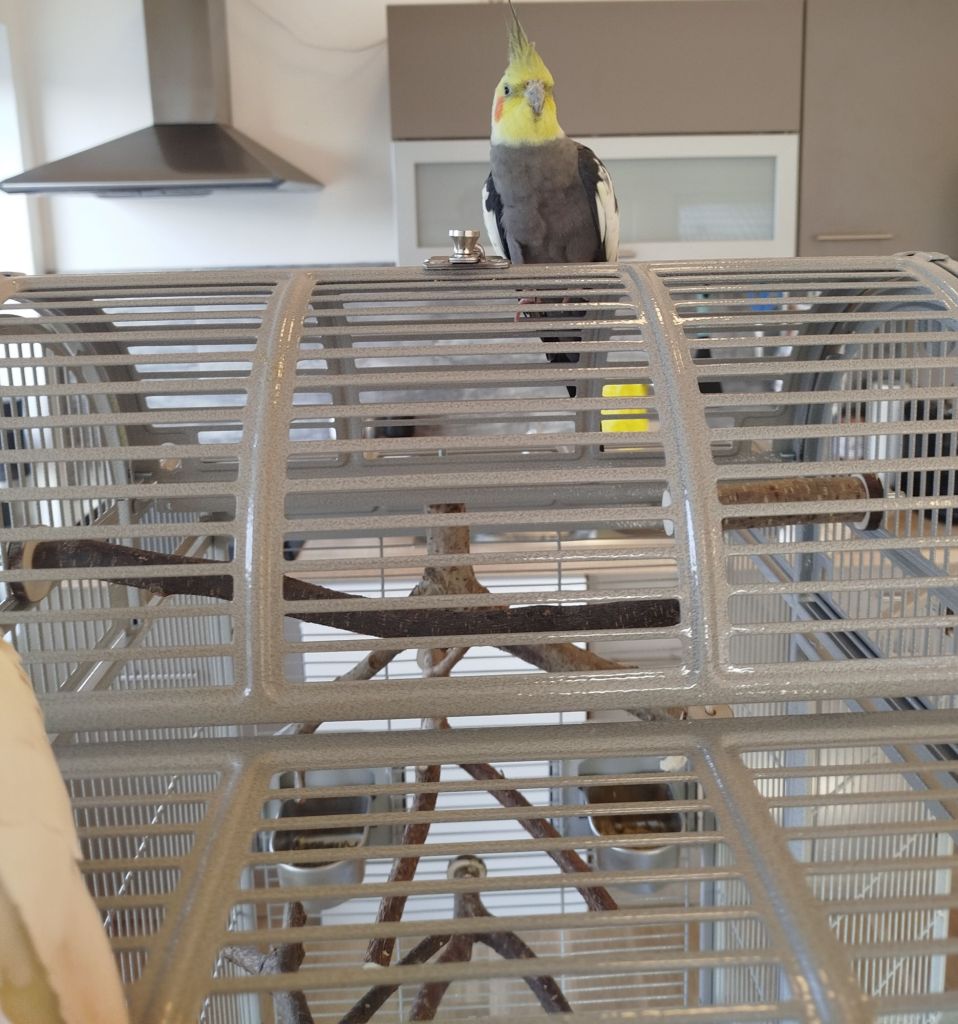
After getting our little Ciuffy, we were on the lookout for another ‘tiel. I kept browsing through the ads for a young, tame male, but I kept seeing either clear scams or birds with other issues. I did a geomancy reading, asking if I would soon find one that fit the bill of what we were looking for:
Geomancy reading: will we find a young tame male? App used: simple geomancy
I am signified by the ruler of the Ascendant, Fortuna Minor. Small animals are a Sixth House matter. Technically, if this was a horary chart, I would have to turn the chart (will I get someone else’s bird? Sixth from the Seventh, i.e., the radical Twelfth). However, I have found that Geomancy is less prescious about this kind of stuff. Let’s see how the chart speaks and let us follow it instead of trying to impose ideas on it.
The Sixth House is occupied by Puer: a male! That bodes well. The Judge, however, is Populus, which doesn’t say much. Worse still, Populus comes from two Rubeus. Still, we also find that Fortuna Major connects the Ascendant ruler with the Sixth House, since it is found both in the Seventh and the Twelfth house. A positive figure connecting two positive figures is a positive sign (Puer is more neutral, but still good in context).
Fortuna Minor, furthermore, usually indicates shorter timespans, and it moves to an angle (the Tenth house), which is also a generally positive sign as far as time is concerned.
The reading was done a couple of weeks ago, and we found Zazu yesterday.
Zazu, also known as Pollo
I am still unsure about that Geomantic Court, with two Rubeus and Populus as judge. It is sometimes said that Populus has little to say, but I don’t believe that. One possible interpretation is that, since Rubeus has the quality of being excessive, the Populus resulting from two Rubeus might show too many birds (a crowd of too many), which is why the person I got it from wanted to get rid of him (or rather, his wife wanted to get rid of him). The court could also simply be warning about potential scams or questionable deals (and I had to sift through a fair share of those).
Be it as it may, I am not too worried about the Court, since the Judge of the Judge (Judge + First House) gives Fortuna Minor, a positive sign for the long run. I’ll update the post if something comes up.
Fludd explains some of the meanings of Acquisitio, Amissio, Laetitia and Tristitia in the various houses.
Of the Nature and Meaning of the Sixteen Figures in Each of the Houses of the Shield
Acquisitio
In the First house, riches, prudence, profit, good end (or aim)1 luck, receiving what one wishes, but this figure is not good for selling;2 but it is truthful. In the Second house, wealth, gain, profit, good luck in commerce, reception of something promised, recovery of lost property, increase of all good things. In the Third house, good luck from relatives, good relatives, siblings, neighbors, good journey, good sense (or feeling).3
In the Fourth house, good inheritance, good and useful house, in which one will acquire riches, rich father, positive solution to all things connected with inheritance. In the Fifth house, gain from one’s children,4 good children, good letters, good clothes, happiness in the heart, delighting in women, the fruits of the inheritance.5 In the Sixth house, long illness,6 which however will be cured, good animals, good servants.
In the Seventh house, a chaste and submissive woman,7 good company, good dealings, peace, reconciliation with enemies, whether it be in litigation or in war. In the Eighth house, redress, natural death, gain in foreign land, freedom from fear of death, the enemy is happy and rich.8 In the Ninth house, gain from death, path or travel, fear of God, positive journey, benefit, good dreams, good sense in all actions, piety and religious devotion, good in things of church.
In the Tenth house, profit from (or for) the master or king, peaceful and happy masters, obtaining one’s wish, good sentence from the judge. In the Eleventh house, good luck, good friends, gain from commerce, immediate reception of gain. In the Twelfth house, poverty or incarceration due to debts, profit for (or from) servants and beasts,9 long prison sentence, good in case of illness and in being paid back a debt.
In the Thirteenth house, loss and change in profits,10 good journey, acquisition in everything, receipt, implementation of the wish of the absent person.11 In the Fourteenth house, gain in everything one wishes, long life, luck, usefulness, goodness. In the Fifteenth house, good in everything, recovery of lost things, delay in one’s journey.
Note that this figure in the first house shows a man who is handsome, with yellow or beautiful hair, mediocre build, a red face, a merchant.12
Amissio
In the First house, a bold, unstable man, full of crime and deception, receiving nothing. in the Second house loss of merchandise and goods, no profit, loss of all goods from robbers. In the Third house enmity between relatives, parents, brothers, neighbors full of deception, fear on the way.
In the Fourth house falsity and loss of inheritance and patrimony, bad end of the city or house.13 In the fifth house loss of fruits of the inheritance,14 bad and unstable children, bad letters,15 no pleasure in the love of unserious women. In the Sixth house escape from disease, loss of animals, flight of slaves, likewise injury and perversity.
In the Seventh house an evil woman, a quarrel with one’s master16 or partner, an unstable and lustful woman, loss of merchandise, fugitive robbers, inimical partners, changeable and deceitful, bad change (or removal).17 In the Eighth house loss from death, loss of sense, no profit in the place where one goes, poor enemies, loss a woman’s dowry. In the Ninth house a long journey without pleasure, no knowledge, some evil for the querent from the Church.
In the Tenth house evil lords, loss of honour, dominion or office, unstable lords, troubles of kingdoms, obstacles to honour. In the Eleventh house loss of friends, loss of merchandise, false hope, changeable and useless friends. In the Twelfth house loss of animals, escape from debts, bad change, escape from prison, friends full of falsehood, changeable and derisive.
In the Thirteenth house loss and change in authority or government, bad luck. In the Fourteenth house loss of friends, much toil in every matter.18 In the Fifteenth house a reception of nothing, a bad conclusion.
note, when this figure Loss is found in the first house, it signifies a pale man, a liar, a predator, a thief.
Laetitia
In the First house judges, wise men, a good and upright life, fullness of joy and exaltation, joy to the querent in all things. In the Second house a multitude of honors, a life full of fidelity and joy. In the Third house good fortune through one’s brothers, no fear of God,19 good love of brothers, neighbors, parents, much joy in everything.
In the Fourth house profit from inheritances and from all things on earth,20 a happy end, happiness through real estate, happiness of parents, peaceful inheritance. In the Fifth house profitable children, long life, happiness in all things, happy and delightful letters and news, happiness from women and all good things. In the Sixth house servants, animals cured from disease, joyful and cheerful servants.
In the Seventh house a good marriage, profitable partners or profit from partners, victory due to a cheerful and chaste woman, cheerful company, peace and harmony, good change (or removal). In the Eighth house profits inherited from the dead, escape from fear, profit and profits in the place where one removes to. In the Ninth house, journeys, fear of God, knowledge, faithfulness, cheerfulness, a holy man,21 business of the church, good news, fine arts, devotion and love of the church.
In the Tenth house exaltation to great honors, bishops and prelates, help from the lords, a happy and cheerful office, beautiful temples, a good judge, a just and good opinion, a warm place.22 In the Eleventh house good fortune from associates, profitable animals,23 joyous love, good hope from a good man, cheerful and good friends, a prudent man and of good knowledge, profit in trade. In the Twelfth house profitable beasts and slaves, coming out of prison, deliverance from debt, and from all tribulation, peace and reconciliation with enemies.
In the Thirteenth house, profit from a journey, from the king, from the lord, positive change. In the Fourteenth house good hope of fulfilling one’s will, happy hope, the fulfillment of one’s wishes, joy and exaltation.
When this figure is found in the first house, it signifies a bishop, a prelate of the church, religious and ecclesiastical, a long beard, some evil existing in the finger,24 remaining in high places.
Tristitia
In the First house, sad thoughts, debts, poverty, hidden loss, obligations, prison, roadblocks, bad change, unbelieving and without hope.25 In the Second house fortune and commerce,26 avarice, loss of property, an unfortunate usurer, dishonor. In the Third house bitterness with relatives, silent hatred with neighbors and relatives, a secret obstacle on the way.27
In the Fourth house loss of inheritance and in battles, loss of house, trouble, bad house, bad luck, poverty of parents, loss. In the Fifth house bad and poor children, false letters, sadness and anguish of heart, secrets in love of sad women, poor food and clothes. In the Sixth house evil servants, fear of captivity and poverty, timid and useless animals, long illness or death, poverty, rejection without injury and confusion.28
In the Seventh house a bad woman, a victorious man,29 a thief in the night, poor condition, loss, bad change (or removal), a sad woman. In the Eighth house being poor from the death of another, loss in a foreign nation, damage from the absent person.30
In the Ninth house the road is unprofitable, hindrances in the journey and loss, a man without wisdom and knowledge, a crude understanding, the downfall of the church and benefits.
In the Tenth house, loss and degradation of men, the exaltation of the wicked,31 loss of duties, sad lords, fear of kings and kingdoms, wrong judgment of judges, a fall from honor. In the Eleventh house, contemptuous friends, bad luck which will last for a long time, but still with hope, a poor friend, no failure in business.32 In the Twelfth house, debts, enemies, loss, long imprisonment or death in prison, a timid and poor enemy, trouble, fear of obligations and debts, long or incurable illness.33
In the Thirteenth house evil on the road and sadness. In the Fourteenth house, bad luck, small journeys, anxiety and trouble, despair and irreparable evil.
When this figure is found in the first house, it signifies a dark man,34 having torn clothes, and who deals in dark, foul, and vile things.
MQS
Footnotes
It is unclear to me whether he means a good end to the matter at hand or a positive aim in mind. ↩︎
Because it implies receiving rather than giving away. ↩︎
This sentence is not clear to me, nor why Acquisitio would imply loss. ↩︎
“Implementum desiderii absentis.” This is obscure to me. ↩︎
Fludd attributes, like many others, physical descriptions to the figures when they are in the First House. This is typical of traditional astrology, where the first house represents the querent. Note that these descriptions are rather limiting and conform to old stereotypes. Plus, they imply that the same querent would always be represented by the same figure whenever they come to the geomancer for a consultation, which is highly unlikely. They are still useful on occasion, but one must “mix discretion with art”. ↩︎
In addition to one’s home, the Fourth house indicates the city. ↩︎
Again because the Fifth is the second from the Fourth. However, the Fourth house also rules orchards and lands, so the Fifth can indicate literal fruits from the lands. ↩︎
There is some confusion in traditional astrology on which house rules letters. Some say the Third house, some the Fifth, some the Ninth. As far as I can rationalize this matter, the Third house represents communication and private correspondence; the Fifth house represents messengers because it is the second from the Fourth, the Fourth house being the city, and the second house from any house indicates that thing’s representatives (for instance, my Second house would indicate my lawyer, who represents me in a court of law.) ↩︎
It’s unclear why the Seventh would indicate the master. ↩︎
The Seventh house represents “there”, while the Firsth house is “here”. ↩︎
The Thirteenth and Fourteenth houses, i.e., the Witnesses, generally receive their signification (as we have seen in Abano’s case) from the two houses they derive from on the Shield: the Right Witness from the Ninth and Tenth, the Left Witness from the Eleventh and Twelfth. ↩︎
It is unclear whether this is positive or negative, as fear of God was considered the beginning of wisdom. As for why it is attributed to the Third house instead of the Ninth, in some very old Astrological texts the Third House is the house of the Goddess, and in Christian times it possibly came to represent how one’s faith affected one’s everyday life. ↩︎
The Fourth house, the Imum Coeli, is the earth. ↩︎
All these positive religious connotations stem from Acquisitio’s attribution to Jupiter. ↩︎
The Tenth house, the M.C., represents the sky and therefore the weather. ↩︎
The reference to absent people is due to how common it was to ask astrologers or geomancers about people who had simply gone away or vanished. This is understandable, considering astrology was probably the only tracking device available at the time. ↩︎
Because the Tenth House is the highest place in the chart and Tristitia indicates downward movement and lowly things or people, it can show the elevation of someone unworthy or the downfall of someone who is in a high place. ↩︎
This last part is unclear to me. Possibly because the failure announced by Tristitia is mitigated by the positivity of the house. ↩︎
Typically we assign illness to the Sixth house. However, there are old handbooks that assign illness (especially serious illness) to the Twelfth house. Some distinguish between the Illness (Sixth House) and the confinement that derives from it (Twelfth House). ↩︎
When a person sits in front of a diviner, a number of preconceptions have often already been set off in their mind, and sometimes even in the mind of the diviner.
We must always remember that, nowadays, many people don’t visit an astrologer or card reader by chance, nor (usually) as their first go-to choice. Often, they have made a deliberate choice to step outside of the norm, for better or for worse, meaning that they have found the norm to be lacking in its ability to provide certainty. For many, therefore, the underlying presupposition seems to be: “I accept to take part in something that operates outside of consensus reality as long as it gives me the certainty I can’t find any other way.”
As diviners, we instinctively know it, and we may feel pressured to play into this presupposition or swim directly against it, thus falling into the opposite error.
Some diviners may feel they need to provide the querent with the unreasonable all-knowledge that only God can gift them with, only to end up providing uncertain information with unreasonable confidence. Others may push in the direction of vague self-help: We may not know if Mr. Right is behind the corner for our love-starved querent, but her divine feminine or other buzzword can still derive important lessons and “aha moments” from reflecting on the whole situation.
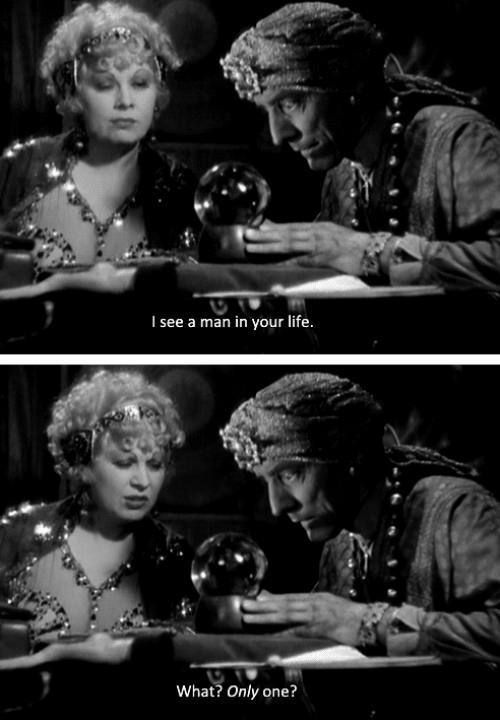
Mae West said it best. Picture by Sophie Charlotte on Pinterest
There are many dimensions to divination, some of which are indeed very deep. However, as far as our relationship with querents is concerned, we are simply an added means of intelligence-gathering, which, like all tools at our disposal, may fail for a variety of reasons, not the least of which is the diviner’s limited knowledge (our knowledge is always limited).
“But I came here to have undebiable, clearcut answers,” one might argue. To which I anwer: Tough titties! If you want undeniable clearcut answers shake a magic eightball. Divination is, quite literally, a divine language, and is not always so cleacut, either in itself or due to our limitations, or sometimes simply because the situation isn’t clearcut in itself. This is especially the case for issues involving human emotions.
As a rule, honesty is the best policy. I believe in voicing my procress to the querent, and the querent has a right to as clear an answer as I am capable of giving them, but we should never feel pressured to give them more certainty than we can truly see in the oracle.
It is perfectly acceptable to talk to the querent about our doubts or about the possible interpretations we are seeing in the oracle. For instance, it is ok to say “it seems like x, but y is also a possibility, while z seems less likely and w is out of the question.” It is also acceptable to say “these cards seem to point to such and such being the case, but I’m uncertain, as this other interpretation might also be right”. More often than not, the querent will say that both interpretations apply, and when this is not the case they can help us disambiguate the oracle.
Ultimately, the fact that divination has no legitimate place in our society implies as a consequence that, because our society believes itself to be held together by reasonable rules and processes, then divination must be either complete poppycock for delusional idiots or it must be capable of unreasonable fits of prowess in other to justify its existence in spite of its current ostracism.
This in turn creates expectations and hang-ups on both ends of the divination process that need to be analyzed and clarified to avoid them subconsciously ruling our practice. Doing so can make divination much more valuable and much more enjoyable.