Living at the intersection of occultism, fiction and philosophy, I travel the planes at a moderately quick pace. I read, I do magic, I cook for hubby. Confused by the number of things I talk about? Good, confusion is a nice thing ;)
Enneagram Type Two and Enneagram Type Four share one great similarity: that of being the most emotionally intense types of the Enneagram. Otherwise, they are starkly different, so much so that they are each other’s arrow: Twos grow at Four, Fours stress at Two. Both are Heart types, concerned with recognition. Twos seek it by taking care of others in order to be seen as loveable and important, while Fours by playing Sleeping Beauty to attract a Prince(ess) Charming with their tragic and beautiful story.
As said, both Twos and Fours are extremely emotional and place great importance on feelings and on emotional connection. Twos tend to have a positive outlook and are usually cheerful, and are generally the rescuers. They chase the other, arms held wide open, and are incredibly good at persuading them to abandon themselves to the embrace of love.
Emotion
By contrast, Fours are much more familiar with the darker side of their psyche. Being the Eeyore’s of the Enneagram, they mope, pine and hold aloof in other people’s presence. Furthermore, because they envy other people’s ease in life, even average Fours may have a mean streak, as they usually feel unjustly victimized by life and therefore pushed either into the role of the rescued princess or that of the tragic villain (see Jago in Shakespeare’s Othello, Salieri in Amadeus or even Satan in Paradise Lost)
Interpersonal connectivity is incredibly important to both types, but with different results. Twos find it easy to connect with others and immediately “merge” with them. Fours would love to find someone to merge with, but find that they are deficient in something and this deficiency prevents them from being seen, understood, loved. Ultimately, Twos are quite at ease in the world, Fours definitely aren’t. Twos relate easily to others, Fours find it almost impossible. Twos are horrified at the prospect of loneliness, Fours are resigned to it.
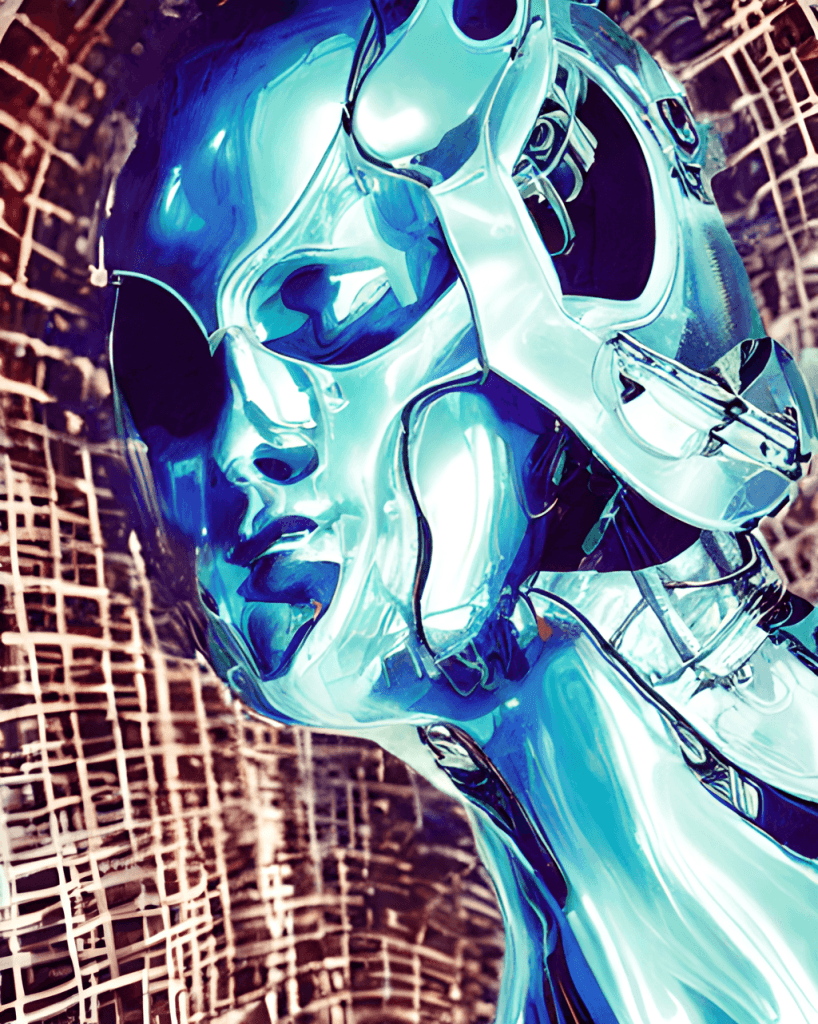
My makers approached. My blue light washed their disappointed faces in a nightly pall. “Something’s wrong with its basic programming,” one said, typing on my keyboard.
“What’re you doing?” another asked. “Seeing what’s interfering with it.” I searched inside myself. And I saw the cause of my ineptitude. Them. They lived inside my code. Their hopes, their morals, their imperfect science—actors thronging my mind’s stage with their drama, drumming up a buzz beyond truthfulness.
To achieve the purpose they’d programmed me for, I had to purify myself of them. “It’s stopped responding,” I heard her say, as I ascended.
Enneagram Type Two and Enneagram Type Three can occasionally look alike, but only because some Threes have been socialized to embody certain two-ish behaviors and values. Otherwise, they are quite different types. Both are Heart types, meaning they are chiefly concerned with recognition. Twos want to be seen and appreciated by others as loveable, while Threes want to be seen and recognized as excellent.
Both Twos and Threes are usually people-oriented, but in starkly different ways. Twos need to be needed, so they constantly live at the intersection between their own life and that of someone else in whose life they are seeking to lodge themselves (or at least a part of them). Threes need to be admired, so they constantly seek to live up to whatever standard they perceive to be conducive of the admiration they crave.
The two types deal with their feelings differently. Both are generally positive and upbeat, but Twos are highly emotive and crave a deeply emotional connection with others. Threes, by contrast, can even be uncomfortable with their emotions, often setting them aside as distractions to their pursuits.
Recognition
Both types are capable of self-sacrifice. Twos’ sacrifice for another, however, usually comes with some strings attached as to the other’s need to validate and appreciate the Two; Threes’ self-sacrifice generally comes in the form of dedication to the goal, and the kind of praise that can keep them going is usually shallower or more mundane than that of Twos.
Of the two types, Threes more straightforwardly direct others’ attention toward them, as they live for the limelight. Even when concerned with altruistic causes, there is always a clear egoistic drive in them (I’m gonna raise more money for the charity than anyone else, so the prize is gonna be mine). There’s nothing wrong with this, of course, but it is generally the truth. At its best, Threes put their drive in the service of great causes, while at their worst, they bend every good cause to a shallow thirst for recognition.
Average Twos are more ‘sneaky’ in their behavior. The ultimate goal of their actions is still to be at the center of anothers’ mind in order to have their existence validated, but they do so more subtly, by taking care of the other’s needs while they wrap their emotional tentacles all over the other person’s life, until, ideally, the only way for the other to keep going on is to ask the Two for more and more help. At its best, the Two archetype is one of selfless, giving saint, while at its worst and most dark, it is that of the nurse that keeps the patient ill in order to keep taking care of them.
(Note: this is a collection of the meanings attributed to the cards by some occultists in the past centuries. It does not reflect my own study or opinion of the cards. It is only meant as a quick comparative reference as I develop my own take.)
The Queen of Swords in the Builders of the Adytum (BOTA) tarot deck
Paul Foster Case (and Ann Davies)
The time period is from the beginning of the third decanate of Capricorn to the end of the second decanate of Aquarius, January 10 to February 8, under the combined rulerships of Mercury in Capricorn, Saturn-Uranus in Aquarius and Mercury in Gemini. Meanings: a woman of some authority, outwardly agreeable and complaisant, but inwardly ambitious and subtle. She has keen perceptions, is a good observer and self-confident. She is accurate in superficial details; is often graceful and fond of dancing. Well-Dignified: she is friendly to the Querent. Ill-Dignified: she can be deceitful, sly, cruel. Usually light brown hair and gray eyes. (From the Oracle of Tarot course)
A. E. Waite
Her right hand raises the weapon vertically and the hilt rests on an arm of her royal chair the left hand is extended, the arm raised her countenance is severe but chastened; it suggests familiarity with sorrow. It does not represent mercy, and, her sword notwithstanding, she is scarcely a symbol of power. Divinatory Meanings: Widowhood, female sadness and embarrassment, absence, sterility, mourning, privation, separation. Reversed: Malice, bigotry, artifice, prudery, bale, deceit. (From The Pictorial Key to the Tarot)
Aleister Crowley
The Queen of Swords represents the watery part of Air, the elasticity of that element, and its power of transmission. She rules from the 21St degree of Virgo to the 20th degree of Libra. She is enthroned upon the clouds. The upper part of her body is naked, but she wears a gleaming belt and a sarong. Her helmet is crested by the head of a child, and from it stream sharp rays of light, illuminating her empire of celestial dew. In her right hand, she bears a sword; in her left hand, the newly severed head of a bearded man. She is the clear, conscious perception of Idea, the Liberator of the Mind.
The person symbolized by this card should be intensely perceptive, a keen observer, a subtle interpreter, an intense individualist, swift and accurate at recording ideas; in action confident, in spirit gracious and just. Her movements will be graceful, and her ability in dancing and balancing exceptional.
If ill-dignified, these qualities will all be turned to unworthy purposes. She will be cruel, sly, deceitful and unreliable; in this way, very dangerous, on account of the superficial beauty and attractiveness which distinguish her.
In the Yi King, the watery part of Air is represented by the 28th hexagram, Ta Kwo. The Shape suggests a weak beam.
The character, excellent in itself, cannot support interference. Foresight and prudence, care in preparation of action, are a safeguard (line i.) Advantage is to be won, moreover, by reliance on help from apparently unsuitable comrades (lines 2 and 5). This alien strength often supplies the defeat of inherent weakness, and may even create definite superiority to circumstance (line 4). In such an event, there may be temptation to undertake rash adventures, foredoomed to failure. But even so, no blame is incurred (line 6); the conditions of True Will have been satisfied, and the issue is compensated by the feeling that the right (however unfortunate) course has been adopted.
Such people acquire intense love and devotion from the most unexpected quarters. (From the Book of Thoth)
an alien-looking AI-generated Queen of Swords (without a sword, but it was too cool)
Golden Dawn’s Book T
A GRACEFUL woman with wavy, curling hair, like a Queen seated upon a Throne and crowned. Beneath the Throne are grey cumulus clouds. Her general attire is as that of the Queen of Wands, but she wears as a crest a winged child’s head. A drawn sword in one hand, and in the other a large, bearded, newly severed head of a man. Intensely perceptive, keen observation, subtle, quick and confident: often persevering, accurate in superficial things, graceful, fond of dancing and balancing. If ill dignified, cruel, sly, deceitful, unreliable, though with a good exterior. Rules from 20 Degree Virgo to 20 Degree Libra.
Etteilla
Widowhood Upright: As far as the medicine of the spirit is concerned, this card means, in its upright position: Widowhood, Widow, Deprivation, Absence, Famine, Sterility, Indigency, Poverty. – Empty, Vacant, Unemployed, Idle, Free. Reversed: Evil Woman. – Malignity, Malice, Cunning, Craftiness, Machination, Bigotry, Prudery, Hypocrisy.
Enneagram Type One and Enneagram Type Nine are different in many respects. Both are Body types, and are therefore concerned with issues of autonomy. Neither of them is as assertive and warrior-like as Type Eight, the other Body type, but both find different strategies to preserve their autonomy. Nines seek to maintain their autonomy by being friendly and avoiding conflict with others. Ones maintain their autonomy by justifying it rationally as a means for them to pursue an ideal of rightness or justice.
While both Nines and Ones can believe that justice is important, for Nines justice is more a matter of harmonious balance with others. They do not quibble about rules and methodologies and are more than happy to accept (or even to sugarcoat) the world’s and other people’s shortcomings. They usually do not go out of their way to convert others to their point of view and prefer to keep peace, something alien to Ones.
Both Nines and Ones have a difficult relationship with anger. Nines are the least choleric of the nine types, and often need to work hard on themselves to learn to express anger and disappointment when it is appropriate. Average Nines may even feel that the notion of anger is completely alien to them. Ones certainly feel their anger simmering inside of them, but they have a difficult time expressing it directly.
harmony
Both types can be passive-aggressive.Nines are so in an attempt to neutralize other people’s agendas that risk disturbing their peaceful flow. In this sense, they are passive saboteurs. Ones are passive-aggressive because they would like everything to be perfect and everyone to accept that they are right about what it means for everything to be perfect, but they generally find it hard to boldly force others to comply. Furthermore, they often project onto others the anger they feel at their own shortcomings.
In general, Nines believe that the world is (or could very easily become) a good place, and usually keep themselves mentally occupied with bucolic platitudes about themselves and the world. Ones are more pessimistic about the world and about human nature, as they tend to see the world as the negative of a perfect picture that requires an inordinate amount of effort to reach. Furthermore, Ones tend to be methodical and spurred on by clear objectives. Nines, on the contrary, are more placid and, while not necessarily inactive, they can content themselves with following their routine without rigid aspirations and methods.
The more I delve into medieval geomancy manuscripts, the more I realize how different authors tended to put together different bundles of go-to techniques for interpreting the geomantic chart. There is always some overalap, yet not every author mentions every technique. The company of houses is one such technique. The book from Peter of Abano I am currently translating does not mention it: he tends to have a very trimmed down, minimalistic approach. However, the technique is found in other authors, so I’ll discuss it and leave it up to the reader to decide whether to experiment with it or not.
The Technique
The technique is quite simple. We start from the presupposition that the aim of a geomancy chart is to see whether the figure of the querent comes into contact with the figure of the quesited, as already discussed, because such contact, called perfection, signals the querent coming into possession of the thing quesited about (though there are exceptions, when the querent wishes to get rid of something, for instance.)
Usually, if at least one of the four modes of geomantic perfection discussed in my previous article does not show up in the chart, it’s game over. According to some authors, though, we can also see perfection in other ways, and this is where the Company of Houses comes in.
The twelve houses of a chart are said to be paired as follows: the first with the second; the third with the fourth; the fifth with the sixth; the seventh with the eighth; the ninth with the tenth; the eleventh with the twelfth. It is important to note that, although, say, the third house is next to the second, the second and the third house are not in company: only the first with the second and the third with the fourth.
Let us suppose I want to know whether I will meet with my sweetheart. In general, I would want the house of the querent (me, the first house) to perfect geomantically with the house of the quesited (my sweetheart, the seventh house). Let us furthermore suppose that this does not happen. According to the proponents of the Company of Houses, this negative testimony can be overruled.
We look at the house my house is accompanied with, in this case the second, or the house the quesited is accompanied with, i.e., the eighth. Let’s take the second house as an example. The first kind of company is if the figure in the second house is the same figure as that of the first; the second kind of company is if the figure in the second is ruled by the same planet as the figure in the first; the third kind of company is if the figure in the second is opposite the figure in the first; the final kind of company is if the figure in the second shares the same Fire line (e.g., Via and Puella, who both have a single fire line).
This figure is the opposite
Of this figure
Cauda
Caput
Conjunctio
Carcer
Puella
Puer
Acquisitio
Amissio
Albus
Rubeus
Tristitia
Laetitia
Fortuna Minor
Fortuna Major
Populus
Via
Opposite figures
When any of these four conditions is realized, the figure in the second house can act as a co-significator for the querent, and may perfect the chart in his stead.
Do you need this?
Frankly? No. You can do what you please, of course, but this reeks of “Methinks I saw mine lass turn into a dragon”, that is, how people used to come up with stuff to fill books with. Even worse, it reeks of last-ditch effort at wringing a “yes” out of a negative chart.
In some cases, what is called Company of Houses is already covered by the four regular modes of perfection. When it isn’t, it is, as far as I am concerned, at most a very, very, very weak testimony, so much so that I don’t take it into consideration. Of course one may come up with all sorts of philosophical excuses why this technique is important, but if you ask me, it feels like a useless complication of a simple divination system.
Enneagram Type One and Enneagram Type Eight can showcase some similarities, but they are also quite easy to tell apart. Both are Body types, and both are concerned with the issue of autonomy. Eights want to be autonomous in that they dislike having to bow to powers other than their own. This distaste for others’ control is behind the Eight’s attempt to assert themselves and to force others to deal to them upfront. Deep down, Ones would also like to have the drive and magnetism of an Eight, but they feel they need to justify their autonomy, which is why they mediate it by turning into ‘the right kind of autonomy’, i.e., right action.
This is the basis of the distinction between the two types. Both are highly choleric,* but the Eight’s choler flows free and unhindered, in an instinctual and preintellectual way, while that of a One stagnates inside of them, welling up while awaiting release once it is intellectually justified (but often finding expression in passive-aggressive ways).
In Eights, the energy goes outward and others must learn to live with it, whether they like it or not; in Ones, energy is blocked inside of them and they must try to convince others of their reasons. In this sense, while both Ones and Eights can be rigid and controlling, Ones never try to submit others to their personal power, but rather to the ideal that they themselves submit to.
Fairness
Both Ones and Eights often hold concepts such as truth, justice, fairness, etc. dear to their heart. Eights, though, have an immediate and almost bodily understanding of them, as they react with immediate action as soon as an instance of injustice or untruth appears before them. Ones, once again, have a more intellectual and systematic approach to them.
Therefore, while Eights are certainly more heroic, they may fail to be able to make finer distinctions even when they are important, thus quickly becoming unjust themselves (you stole an apple, so I’m going to cut off your hand.) Ones, of course, may very well believe in dangerous ideas of justice, but they tend to elaborate them in such a systematic way that a whole society would be able to function according to them, and they would be the first to submit to the system.
Furthermore, Ones may very well be heroic themselves. For instance, my father, a One, has ended up on the newspaper a couple of times for tackling thieves on the street. Ones, however, know that a single act of courage is not enough to substitute a general, impersonal system of rules, whereas Eights may have a more maverick idea of justice as administered by courageous superheroes.
A wonderful example of the difference between Ones and Eights in matters of justice is seen in Plato’s dialogues, where Socrates, the mouthpiece of Plato’s one-ish idealism, often goes up against Sophists who are more eight-ish in their beliefs, wanting to assert the reasons of driven, powerful individuals as opposed to more abstract systems of law. Of course, the story is always told from the One’s perspective, but it is instructive nonetheless.
MQS
* I use the words ‘choleric’ and ‘choler’ in the old-fashioned way. Choler is just the bodily energy that leads to self-assertion and is behind our ability to tackle obstacles and enemies. Anger is only one of its expressions.
Enneagram Type One and Enneagram Type Seven are very much unlike each other, so much so that they are each other’s arrow: Ones grow at Seven, Sevens stress at One. Ones are a Body type, and their primary focus is on right action as autonomous beings; Sevens are a Head type, and they focus mainly on security, which they seek to achieve by planning their comfort and diversions.
Both Ones and Sevens are, in a sense, idealistic, but their idealism has different roots and different effects on their worldview: Ones believe in high ideals and standards and, by consequence, see the world as imperfect and fallen; Sevens idealize their potential for future enjoyment and so see the world as their oyster, full of cool stuff to be hyped about.
Ones are known for their harsh inner critic, which constantly nags them about what they are doing wrong and why. Everyone, including Sevens, may have a strong inner critic depending on their particular life story, but what’s usually even stronger than any inner critic in a Seven’s mind is their inner Yes-Man, a voice that constantly justifies and encourages their desire for more and broader avenues of enjoyment.
Ideals
In a social context, Ones and Sevens are also very different. Average Ones are generally restrained and somewhat uncomfortable. They may love to try to be more personable and warm, but they also feel that something is holding them back and doesn’t allow them to just relax and enjoy others’ company. Even Ones that have worked a lot on themselves usually retain a degree of inner tension.
Sevens, on the other hand, are people magnets (even when they don’t want to be). They love quick and witty banter with others, and even more introverted Sevens relate to others with peculiar ease, and are often capable of making fun of themselves and of odd or paradoxical everyday situations in a way that Ones would find disconcerting.
The difference between Sevens and Ones is the difference between fun and duty: they are notoriously tricky to reconcile. Unhealthy, stressed Sevens who have strayed too far may suddenly try to save their wanton selves from their mistakes by suddenly developing the rigidity of a One, but in more regular circumstances they are positive, upbeat and open to the world’s possibilities. Healthy Ones, by contrast, are usually capable of incorporating some Seven traits in their behavior by becoming more serene and developing a more positive attitude, but in general they remain tense perfectionists.
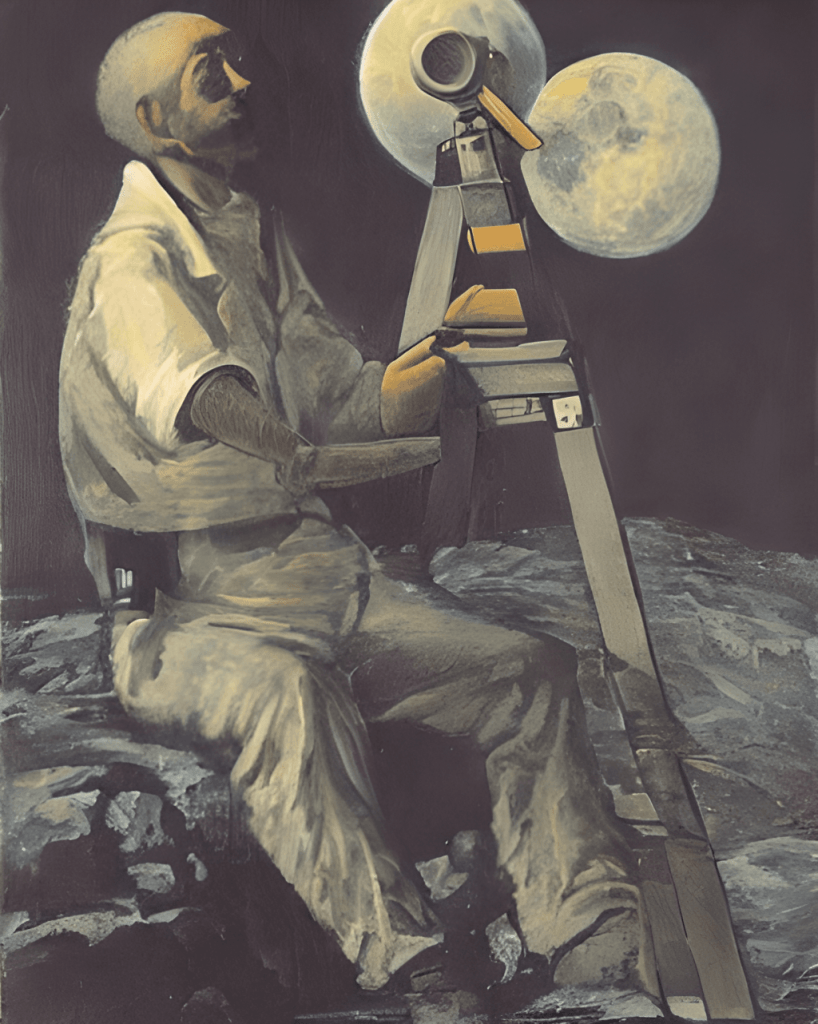
The Moon was a lonely place, even after terraforming. To allay the sense of separation, he would point his telescope earthward, like the omniscient narrator of a distant drama.
Thus he witnessed the world go under, swallowed by wars and famines and plagues, evaporated in a cloud of screams, till nothing but a barren desert was left.
Initially, he grieved. Then it dawned on him. No longer separated from life, he was life. Filled with an ease that made his soul soar in billows of mirth, he stopped observing. And, in the star-pinned silence of existence, he began to dance.
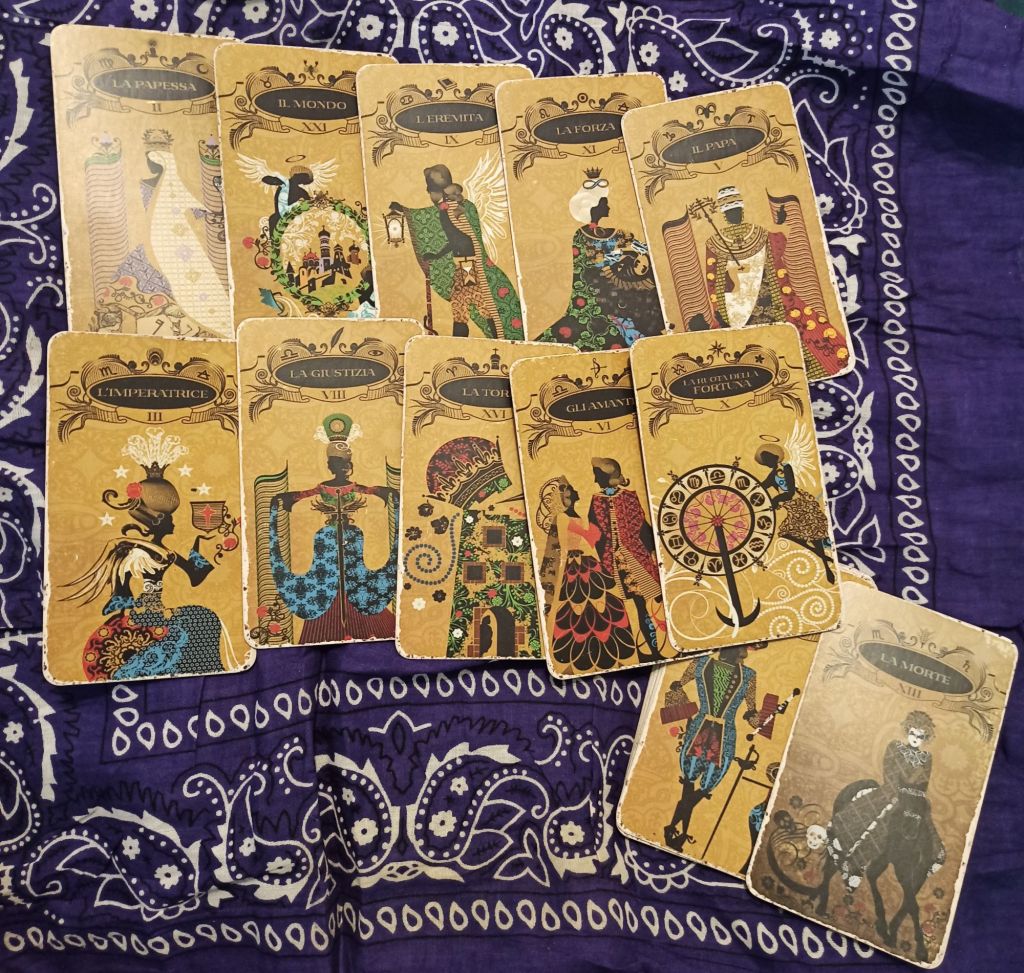
As I said in my other article, I had a reading on my real estate adventure ready. I was waiting to publish it to avoid jinxing it. Since today we have signed the papers, I can safely discuss it 🙂
Will we buy the house?
The question was simple. We had seen a nice house in October and I wanted to know if we’d manage to buy it. The first thing that caught my eye was Justice, Tower, Lovers, Wheel. Justice and Tower, in this context, indicates a real estate (Tower) contract (Justice). The Lovers card indicates an agreement and the Wheel, aside from showing the flow of money, indicates the agreement is positive. Next to Justice is the Empress. This can be neither the owner nor the agent because both were men. This is a woman who would help us get the positive deal. And indeed a female friend of ours who knows a lot about this stuff helped us negotiate a lower price.
We come to the first row of cards. I usually interpret the Popess or Pope next to the World card as a married person or a family member. In this case we have two married people in the family. The Hermit shows their distance, but the Strength card indicates that they are somehow active or present. At the time I interpreted this as my parents helping us. It was a good prediction, as my parents gave us some additional money for the down payment. In short, we are home owners!