All posts by MQS

Living at the intersection of occultism, fiction and philosophy, I travel the planes at a moderately quick pace. I read, I do magic, I cook for hubby. Confused by the number of things I talk about? Good, confusion is a nice thing ;)

Robert Fludd’s Geomancy – Book II Pt. 7

Previous / Back to Index / Next

Fludd discusses the signification of a figure springing from one house to another.

Of the signification of the 16 figures, when they duplicate in a question, that is, when similar figures are found in different houses, such as two Via, two Populus, etc.1

The figure in the first house means, when it is duplicated in the following houses:
In the Second, especially if it fortunate and fixed, and so the opposite, which is valid for all other houses.2
In the Third, good situation between relatives, brothers, sisters or neighbors.
In the Fourth, it is a bad mutation3 but not excessively so, unless the figure is Cauda Draconis.
In the Fifth, mirth, vivacious and gluttonous companions, new clothes, music, melodies, antique things, good according to the mind’s opinion,4 so that one couldn’t wish things to be better, unless the figure is Cauda Draconis.
In the Sixth, sickness, tribulations, fears.
In the Seventh, fearful things due armies or evil women; good [signification], unless Cauda or Via are there, which denote all evil in this house, unless a question has been made for a gathering, or for marriages and enemies, for otherwise they show danger.
In the Eighth, evil, great wrath or death or injury, loss, hurtful words, evil tribulations, but if the figure is good, it signifies the acquisition of the inheritances of the dead.
In the Ninth, something good, a firm and stable change to acquire some thing for another,5 and to negotiate some religious business or of the Church, or with ecclesiastical men or people, or with messengers or those who return from a journey, unless Cauda and Rubeus come up in a question made for a journey.
In the Tenth, all good, so that the thing cannot be better, and especially for the acquisition of honor and dignity, unless Cauda or Rubeus are there.
In the Eleventh, good, so that it is not better in the question propounded; for it signifies hope, a good friend, especially if it is Major, Via or Acquisitio.
In the Twelfth, the querent will fall into some tribulation, or a serious illness, or the loss of some thing, or defiance from enemies; nor can the thing be worse if the figure is Cauda.

The figure in the second house means, when it is duplicated in the following houses:
in the Third, gain from parents, brothers, sisters or neighbors, if the figures are good, but if bad, the opposite.
In the Fourth, what the querent thinks of gaining from his father, or from some great lord [he will get], if the figure is good; if bad, [he won’t get them].
In the Fifth, what the querent thinks of gaining from food, or clothes, or news that will come to him with letters, or loss by fire.6
In the Sixth, future illness of the family, or some loss, or fear, or great tribulation, or disease, or some evil thing.
In the Seventh, marriage, loss from a woman, great enmity for the querent, or robbery, or the thoughts of women about lust, or quarrels, threatening words, change from place to place.
In the Eighth, the return of an absent person, or of some other member of the family.
In the Ninth, gain for the querent, religious or ecclesiastical, or a priest, or some other similar thing.
In the Tenth, the Necromantic arts,7 or that the querent will win the love of some woman, or Lord, or great Majesty, or sciences according to the good or evil of the figures.
In the Eleventh, fortune in that house, or in the family, or through the family, or through gain, or friends, or merchandise; for this is the force and power of the whole question.
In the Twelfth, the imprisonment of some member of the family, or a serious illness, a serious molestation, or the destruction of someone from the family, of what you have gained, great accidents, or future tribulation and anguish.

The figure in the third house means, when it is duplicated in the following houses:
In the Fourth, brothers, sisters, companions, neighbors, messengers [arriving ] to the questioner, profit or loss according to the nature of the figures.
In the Fifth, joy, gladness, speedy news from friends, letters and messengers.
In the Sixth, tribulation, diseases, some fear, loss through a servant, or machination, or evil enemies.
In the Seventh, quarrels, change of place, there will be hatred and discord between brother and sister, anger against the questioner, marriage, etc.
In the Eighth, death or danger from the past, thoughts about a woman, or about one’s enemies, or fear, and future profit from evil thoughts.
In the Ninth, an occasion for the Clergy, great journeys to be made,8 benefits of the Church, some great prelate or honor.
In the Tenth, brothers and sisters will attain to some arts,9 or great marriages, or great dominion, or they will become great prelates, or be exalted to honor.
In the Eleventh, fortune or good favor from someone.
In the Twelfth, imprisonment, long illness, occupation, or entering into [a period of] tribulation, from which there will be no easy way out.

The figure in the fourth house means, when it is duplicated in the following houses:
In the Fifth, the father will rejoice with his children, or an uncle, or a relative, or some friend, or the father will make a profit through his children.
In the Sixth, the father will soon fall ill, or he will be forced into great labor in his house, or in the town where he lives.
In the Seventh, marriage or enemies, or lascivousness, or a change of state, or a change of land.
In the Eighth, mortality will enter the land10 and inheritance of the questioner, or some tribulation, or, if he is outside his country, a return.
In the Ninth, the death of priests or their loss in the Church.
In the Tenth, the questioner’s honor, gain, riches.
In the Eleventh, the questioner will be fortunate in some profitable matter, so that he will suddenly make a profit in it, and indeed through some of his friends, or some of the querent’s friends will give letters to those living in his house, which will bring the questioner much profit.
In the Twelfth, long anguish and sadness, illness, envy, betrayal of the land of some lord, or of someone of his blood, but if the figure is good, it will not do much harm.

The figure in the fifth house means, when it is duplicated in the following houses:
In the Sixth, disease by contusion or corrosion, or in other such ways, or news of children, the capture of some small beasts.
In the Seventh, a gathering for a wedding or for trade, the joy of friends, fortune for women and children.
In the Eighth, mortality, and the danger of some evil to come, the return of an absentee, and letters of joy, profit or news.
In the Ninth, the son of the querent will be a cleric or a priest of the Church or a religious person, or he will make a great and long journey, or will have great joy through the honor of the Church, that is, through a man of the Church.
In the Tenth, the son will have dominion, and the mother and sister will rejoice or find joy, or some assistance from [those in a position of] honor, or profit from the lord, or a prelature, or he [the son] will be a judge or teacher.
In the Eleventh, the son will have dominion or fortune over his enemies, or in trade or in a similar matter or in news, or his friends will rejoice over his children.
In the Twelfth, illness, imprisonment, great enemies for children, or some loss for the querent, or strangers will rejoice.11

The figure in the sixth house means, when it is duplicated in the following houses:
In the Seventh, disease, or the servant or the woman of the querent, or his companion, will suddenly become angry or will end up among enemies, or the querent and his woman will fall into the hands of robbers, or disgrace, which they will nevertheless escape from as much as possible.
In the Eighth, the servants or the beasts of the querent will fall into danger or tribulation, pain or sadness, and he will be beaten, or he will lose some object, and he will be absent and in the company of enemies of his house, or the woman of the querent will be familiar with someone else.12
In the Ninth, the servant or the animals of the querent will make a fortunate path, diseases will befall a cleric, or will hinder his exaltation, or the servants will have the company of the clergy, and especially with good and fortunate figures, such as Acquisitio and Major.
In the Tenth, those who will remain in the place about which the question was made will be sick or oppressed by some Lord.13
In the Eleventh, fortune, and your enemies will envy you.
In the Twelfth, a disease among one’s animals, or the querent himself will fall ill or be imprisoned and suffer loss either through useless beasts or through a long journey.

The figure in the seventh house means, when it is duplicated in the following houses:
In the Eighth, the death of one’s woman, iniquities and all those things which pertain to the seventh house, namely lost merchandise, etc.
In the Ninth, the companion of the querent will return to his country, and the clergy will be enemies to the querent, or his wife will enter religious life or go on a long journey.
In the Tenth, honors to those who are represented in the seventh house, or the servant of the querent will be a familiar of his wife, or of his enemies.
In the Eleventh, a friend will immediately become an enemy, or someone will immediately become a friend to the querent,14 or he will gain in some matter, or will suffer some loss from his friends.
In the Twelfth, occupation of large animals, or the querent will fall into a serious and long illness, or imprisonment, or a long journey, or poverty, or that some letters will bring him loss in a short time, which should be kept secret as proof.15

The figure in the eighth house means, when it is duplicated in the following houses:
In the Ninth, a judge of the enemies or of the woman or of the friend of the querent will attain great exaltation in the church, or he will be absent on a journey, or death threatens someone.16
In the Tenth, loss for the querent, or the death of the lord, or a defect in good will, or an impediment in some thing, or the absence of some lord.
In the Eleventh, the death of the querent, or he will acquire some thing, or the inheritance of a dead man, or that while absent he will acquire friends, or that friends will restrain the hatred of the querent.
In the Twelfth, secret enemies of the querent, who labor mightily to oppress him, or while absent he will be imprisoned or sick, or while imprisoned he will die.

The figure in the ninth house means, when it is duplicated in the following houses:
In the Tenth, being friends with priests or clerics, or the querent will suddenly marry a wife, or messengers will come from some place, or from the querent’s mother.
In the Eleventh, the journey of women, or a cleric will be your friend, or your fortune will be in the church, or you will have possessions in the church.
In the Twelfth, sadness during a the journey for the querent, or he will have trouble with his horse, or a cleric will be imprisoned. This is a bad place for the querent.

The figure in the tenth house means, when it is duplicated in the following houses:
In the Eleventh, the house or place of some lord, the completion of his fortune and hope, or that he will be a friend to some great lord, through whom he will be fortunate.
In the Twelfth, that the questioner will be shortly in great tribulation or illness, or will be imprisoned, or his enemy will be made a priest, and that the petitioner will have great loss from beasts.

A figure existing in the eleventh house signifies, when it doubles itself in the twelfth house, imprisonment, hatred of enemies, a similar thing.

MQS

Footnotes
  1. That is, if the same figure is found in two different houses. This, as we shall see, is generally interpreted as the two houses being linked together. Some of Fludd’s interpretations are straightforward, others rather obscure. Similar chapters are often found in other handbooks of geomancy as well. Their value consists not so much in their offering interpretations that need to be memorized, but rather in the kind of mental exercise that they allow the reader to engage in. ↩︎
  2. This sentence doesn’t mean much. Fludd is simply asserting that the signification of the link between the two houses is colored by the positive or negative meaning of the geomantic figure. ↩︎
  3. Mutation in the sense that the figure in the First house moves to the Fourth. ↩︎
  4. Somewhat obscure. I think Fludd means that this connection between First and Fifth houses is good concerning whatever the querent is thinking about. ↩︎
  5. Possibly referring to a business-related journey ↩︎
  6. Unclear what fire has to do with this house. ↩︎
  7. The connection of the Tenth house with necromancy is unclear. ↩︎
  8. Probably due to the connection of Third and Ninth houses, which both pertain to journeys. ↩︎
  9. The Tenth house is the house of art in the older Aristotelean sense of poiesis, i.e., practical science, which is what allows people to gain money. In short, it is one’s learned trade. ↩︎
  10. The land is a Fourth house matter. ↩︎
  11. Joy is here brought into the equation by the Fifth house. ↩︎
  12. That is, intimate. Older astrological texts are filled with lists of testimonies to look for to establish whether the querent’s wife is faithful, or even if he is exploring herself. I suggest we leave these things in the past. Still, from a purely didactical standpoint, Fludd’s paragraph makes sense. ↩︎
  13. I have no idea what Fludd meant. ↩︎
  14. Here we see how ambiguous this type of interpretation can become if we don’t keep the question in mind: it could go either way, namely that a friend (Eleventh) becomes an enemy (Seventh) or that someone else (Seventh) becomes a friend (Eleventh). ↩︎
  15. Not very clear. ↩︎
  16. The involvement of a judge here is unclear and seemingly random. ↩︎
The Bed – A Deep Dive Into Cartomancy

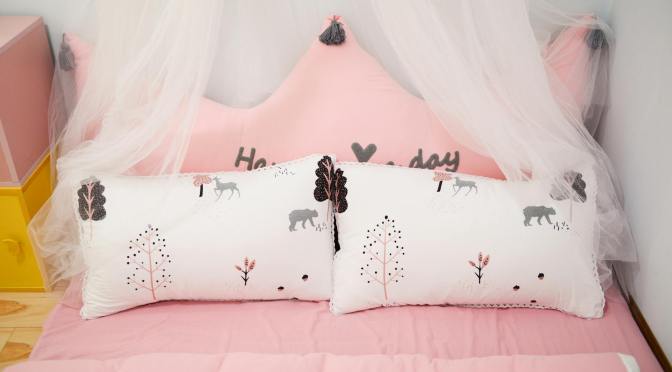
The bed symbolism is almost as widespread in cartomancy as that of the table, of which it is a natural counterpart. The table often stands for conviviality, nourishment, feasting and interpersonal contact, and it often represents situations happening during the day. The bed, by contrast, is a nocturnal symbol of retreat and rest, and can stand for sickness, but also for physical intimacy, depending on the other cards. As usual, it is admirable how the card readers of yore used to weave simple and effective symbols of daily life in their reading systems, which allowed them to talk about reality.

The oldest mention I could find of a card representing the bed is in a little-known system for reading Italian regional playing cards with a reduced pack of 25 (instead of the full deck of 40). In this method, the Four of Coins is the bed card. It tends to represent situations becoming static or sick, or it can talk about passion, depending on the other cards. It can also indicate that something happens in the evening or at night. Interestingly, in another system I’m aware of, this time utilizing the full pack, the Four of Coins is the table, while the Five of Wands is the bed.

In the Bolognese Tarot, which is the oldest used divination deck we have written records of, the Chariot is the bed card. This has got to be one of the most puzzling bits of symbolism of the deck: a card that is usually indicative of forward movement, travel, progress, launching forward is seen as a card of static sickness, likely due to how the chariot is represented, with the horses crouching at the sides, as if the forward movement had stopped.

Truth be told, in the oldest extant document on divination with the Bolognese tarot, which dates back to the Pre-Napoleonic period, the Chariot is still considered a card of journey, but shorter than the World card, which is assigned the meaning ‘long journey’. This may indicate that the meaning of the card evolved through time, from ‘little journey’ to ‘little movement’ to ‘not much movement’ to ‘staticity’. Another likely possibility is that different meanings were used by different strands of the tradition, one of which hadn’t yet been put down in writing. This latter possibility is confirmed by the fact that there are readers who who assign both meanings to the Chariot, depending on the cards that surround it (static cards activate the static meaning, active cards the moving, active meaning).

The bed card is also present in some of the oracle decks that originated in the XVIII century as parlor games. In the Sibilla we have two bed cards: one is the Four of Spades, the Sickness card, which interprets the symbolism of the bed in its more static and negative sense of needing to interrupt one’s routine and of situations that are not healthy. The other bed card is the Ace of Diamonds, the Room, which can indicate any room in a building, but which in itself stands for the bedroom. As an extended meaning, it is the card of intimacy, so the presence of cards indicating love or physical contact can lead to rather hot interpretations.

The Kipper deck does not have two bed cards, but it does contemplate the symbol of the bed in the card “a short sickness”, which depicts a patient in bed being visited by a doctor. This is mostly a card of sickness, but many German-language sources I’ve read consider it also an ingredient in combinations about intercourse, partly due to the presence of the bed and partly due to the doctor touching the sick man’s wrist, which is supposed to be indicative of physical contact, if supported by other cards.

MQS

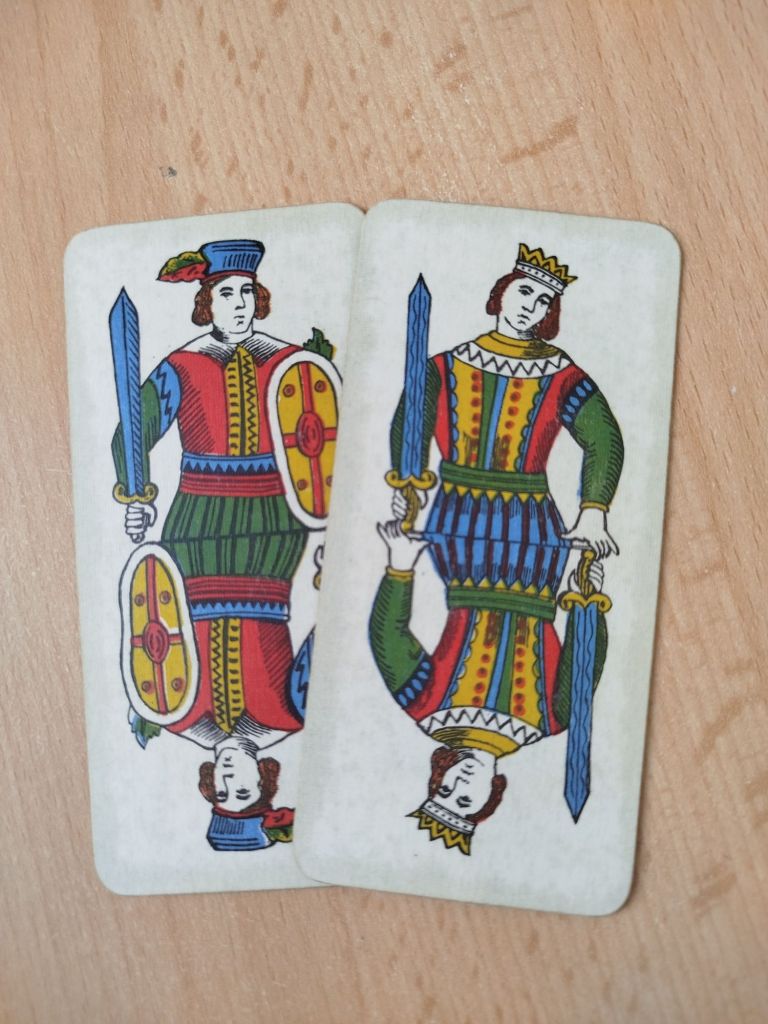
Who’s the Little Sword Bearer?

Working on my review of Andrea Vitali and Terry Zanetti’s book on the Bolognese tarot I came across some interesting information that matches what some Bolognese tarot readers have confirmed.

If you read my section on the card meanings of the Bolognese tarot, you will see that I call the King of Swords “Spadino”, which literally means “little sword” or, more appropriately in this context, “little sword bearer” (the ‘bearer’ part is implied). This is because the people I have chiefly learnt from all agreed on this one name, independently from one another.

When we read Zanetti’s section on the divinatory meanings of the cards, though, we find that she calls the Page of Swords ‘Spadino’, identifying the figure with a young man. This is in contrast with the tradition I’ve received, whereby the Page of Swords is just a letter or message. Zanetti does say that the card can also sometimes signify a disquieting letter, but she chiefly identifies the Page with a young man.

The Page of Swords and the King of Swords in the Bolognese tarot / Tarocchino bolognese

I must say I find this option strangely titillating, as the Page of Swords, Spadino, would then be a male counterpart to the Page of Cups, Coppina, ‘little cup bearer’. The ending -ino, which in Italian points to something small or young, definitely fits the Page more than the King. Zanetti denies that this parallel between Coppina and Spadino exists, because the Coppina is supposed to be always negative (she’s traditionally the little floozy who snatches hubby away). But I have not found this to be the case: the Page of Cups is just a young (or younger) woman.

Ultimately, as my understanding and practice with the Bolognese tarot evolves, I know I will have to create my own deck (all traditional readers seem to have done so, preserving a part of tradition and integrating it with their own discernment and experience). Tradition is, after all, not something fixed, but something that is handed over to us (from the Latin tradere) and that we must administer intelligently.

Another interesting fact is that Zanetti emphasizes the intellectual aspect of Spadino, calling the card “young man and his thoughts”. This is in contrast with what I’ve learned from Germana Tartari, my teacher for the 50-card method, whose grandma taught her that the Knight of Swords can sometimes represent the King of Swords’ thoughts, in a kind of parallel to the Knight of Wands being the thoughts of the King of Wands.

The fact that so many traditions seem to exist should not discourage us from engaging with them. Keep in mind that the Bolognese tarot tradition evolved locally, with each city, village or even street having slightly different versions of it. Thus, this is less a matter of who is right or wrong and more one of systemic preference and whether integrating different system together leads to new systems that work, or whether it is best to keep them separate. This is something that can be established only through trial and error.

MQS

The Trouble with Keywords

This reflection was prompted by witnessing how shallow many people discussing the Enneagram are, but it applies to anything connected with spirituality and occultism, including divination.

Keywords can be a great learning tool, and often they tend to stand us in better stead than cheap, unguided intuition. There’s also the false assumption that keywords are useful only until our intuition kicks in, but that presupposes that what most people call intuition is serviceable at all beyond suggesting sugary commonplace statements (true intuition is another thing altogether, of much nobler origin, and a much rarer phenomenon).

But keywords, too, must be handled with care. I was at an Enneagram retreat and we were discussing Type One, which everyone kept referring to as the Perfectionist or the Critic. At which point everyone and their mother started realizing that they, too, were perfectionists and sometimes too critical, even if they didn’t think they were a One.

The trouble with keywords is that they are effective at condensing knowledge and understanding only as long as that understanding has taken place beforehand. Otherwise, keywords veil just as much as they reveal. Taken at face value, and not as quick stands-in, they lead us astray.

Type One is constantly in a tension between their irreflective urges and the perceived need to justify them in front of an (internal) higher authority, so they end up trying to align those immediate urges with ‘what’s right’. If this then expresses as criticism or perfectionism, it is purely an outward manifestation. A Type Six can be just as perfectionistic because abiding by a certain ideal gives them peace and security and soothes their fear of being left to their own devices. In fact, any type can be perfectionistic in a way that fits their internal dynamic.

The trouble with keywords is therefore that we  simply take them at face value from our own perspective, without seeing them as condensations of deeper knowledge. In the case of the Enneagram, a Six will hear “perfectionism” (Type One) or Helper (Type Two) and apply it to themselves.

Even a Type Five can see themselves as a Helper if they find themselves giving out knowledge to others whom they deem to be helping. But a Five is motivated by themes of (in)adequacy and (in)competence to function in the world, which they compensate for by acquiring knowledge. A Two (the Helper) is motivated by the need to be seen, loved and confirmed in their existence by another.

What I just applied to the Enneagram is valid for pretty much all fields of occultism, and for that matter all fields of life. But especially in occultism, whether it be divination, magic or devotion, we are trying by definition (occult is what is hidden) to look past the veil of appearances and to go to the essence of things. Essence is an unfashionable word in our postmodern world, where everything is performative and internally empty, Yet keywords are useful only in so far as they represent on the surface what lies beneath. Once the connection is lost, occultism becomes the confused research so many people rightfully consider it to be.

MQS

Do You HAVE To Change Your Deck?

This is a recurrent question I get. Some people are of the opinion that reading decks have something akin to a shelf life, after which they stop answering or they become impregnated with negative energy from all the readings. I often get asked if this is the case.

To which my answer is: under normal circumstances, your deck will keep answering you (or at least it will keep working, even if it occasionally snubs your questions) for as long as you use it. This has been my experience, as well as that of all my teachers, and I’ve had the good luck having many teachers.

My first teacher, from whom I learned to read playing cards and the Sibilla, followed the Italian tradition that divination decks need to be old, must have been used to play at the local inn and the people playing with them must have covered them in offensive swearwords (read here my hypothesis on why this tradition exists).

This obviously doesn’t apply to the Sibilla, since Sibilla decks, as well as similar decks like Lenormand or Kipper cards, are pretty much the only card decks specifically designed for divination. But tarot was a playing card game, and playing cards… well, it’s in the name, and so, according to my teacher, they needed to be “giocati e bestiemmati” (played with and offended with swearwords). And after you got a hold of one such deck, you probably were going to use it for as long as you lived.

When I started learning the tarot, my other teacher held on to her first deck as if it was a relic, and it did answer her beautifully. She was of the opinion, however, that the deck could stop answering correctly or become more negative in its answers if you read for many people with a tragic life. When this happened, she usually took the deck to church and had it blessed by the priest. I honestly cannot say I ever needed this, but there you have it.

As for the Bolognese tarot, I do not know what deck the person who taught me the 45-card system used, but I do know that my teacher for the 50-card system still uses her grandmother’s deck. Another person I am in contact with, who uses 49 cards, still uses the deck her teacher gifted her.

As for me, I have a conservative outlook on life, and I don’t throw away something unless I really, really have to. The Sibilla deck I use is the one I bought when I started learning, and while I don’t insist on always using the same playing card deck, I still occasionally whip out my old one.

Still, there are people who believe decks can stop working after a while, including people I admire (see Josephine MacCarthy). Is there anything to it? Obviously, much depends on the theoretical framework one uses for their magical activities (which includes divination).

I was taught that divination (any divination) can stop working if you are the recipient of a curse, but that’s an extreme scenario. More often, the people who complain about their deck going lazy on them tend to torture them with repeated questions on the same topic over and over.

As much as skeptics may point out that this is proof that divination doesn’t work because it cannot be repeated ad libitum in lab conditions, it is simply how it is: if you annoy the deck it will stop answering. This simple fact shows, at least in my opinion, that there is something alive attached to the deck.

Usually, in traditional divination folklore, we would say that the deck has a little spirit hidden inside. And while this may sound like a childish explanation, it is the one that best explains my experience, as well as being perfectly in line with traditional hermetic principles. The point is that while many valiant attempts have been made at explaining divination using more or less recognized principles (see Jung’s views), we are at work with something we don’t fully understand. Some level of respect is due to this something, if for nothing else than to keep the work environment positive with whatever it is.

MQS

Back From The Ashes

You may have noticed some silence on this blog, considering I have posted almost daily for a while and then disappeared for a couple of months. I’ve already talked about the reasons why in my previous post.

But now that I’ve recharged my batteries and taken care of myself I’m back and my fingertips are itching, since I’ve got a couple of projects I need to catch up on (concerning the tarot, playing cards, magic, Enneagram, geomancy and other stuff. I’ve also got a couple of videos lined up)

In other news, I have finally managed to locate my form responses from the contact section, and I have caught up on all my correspondence. The only exception is the user Sonya: I’ve tried using your email to answer your message but it bounced back with an error message. If you see this post, feel free to contact me again (possibly with a different email) so I can answer your question.

MQS

Unavailable Messages

As I mentioned in yesterday’s article, I was away for several weeks to take care of myself. In the meantime people have been sending me several messages over the form. Unfortunately, WordPress seems to have changed something about the interface, so I can’t for the life of me figure out how to read those messages. Bear with me, I am a very special kid, thanks 🫣 I will answer everyone as soon as I understand how

A Brush With Death (Example Reading)

At the beginning of the year I did a reading for myself using the Bolognese tarot to have a look at my 2025. I am 99% sure I took a picture of it, but unfortunately can’t find it. One of the predictions was that an older female member of the family would probably need an operation around the middle of the year. There was no death in the cards (that I could see), but I remember that particular column looking a bit difficult. I assumed the cards were possibly talking about my mother. But I was wrong.

Last month my mother-in-law came to visit. She spent a week with us, although I couldn’t enjoy her company very much due to being in and out of a clinic in the past eight weeks (my bipolar depression flared up big time this summer).

At the end of our week together, she put off going back home for a day due to feeling sick, and on the following day hubby drove her home personally. Then she went completely off radar, to the point that we were all worried she might have had some serious health issue. We called the paramedics on her after she sent a somewhat incoherent message (we thought she might have had a stroke or something similar).

She was rushed to the hospital, and we all braced for the worst. As there was a real possibility of her dying, I asked if she would survive, and how the situation would evolve. To be fair, my question was a bit confused: I don’t know exactly what I asked, only that my concern was her survival.

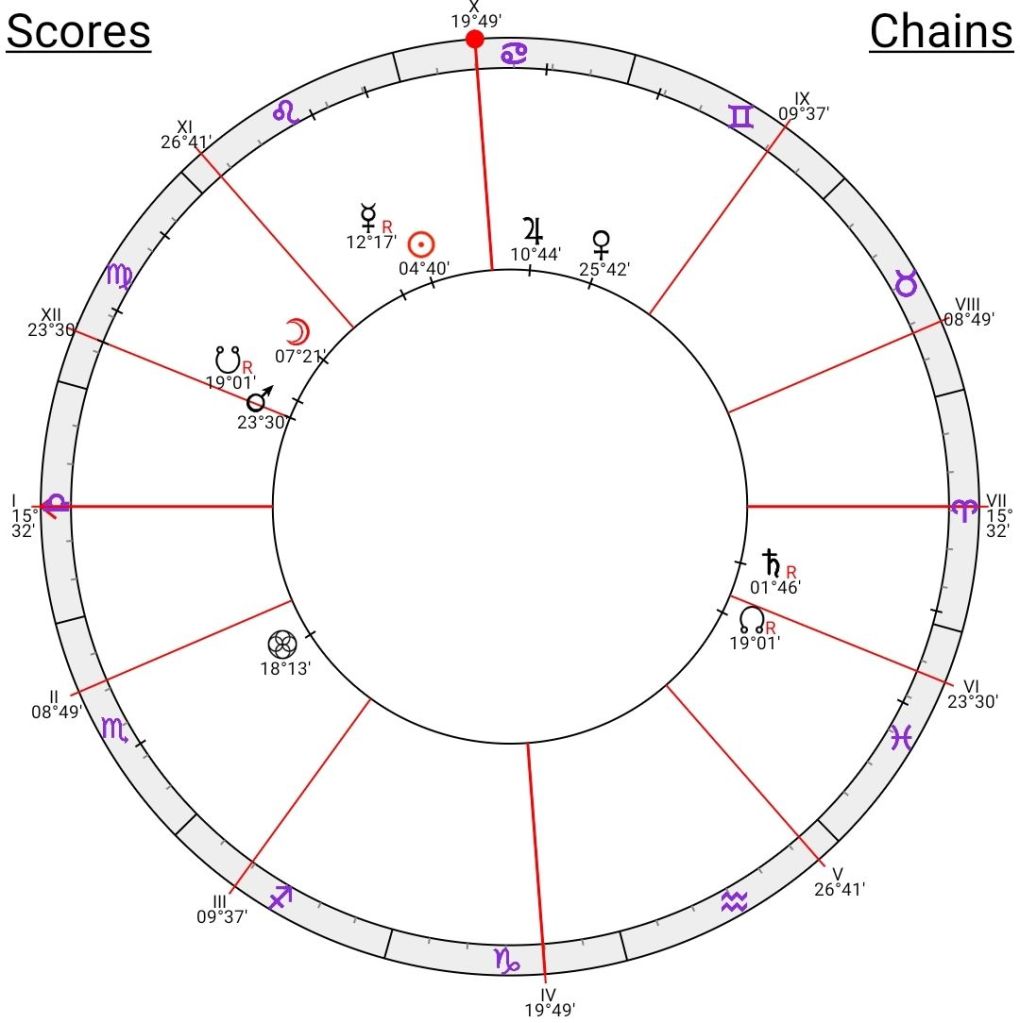
My mother-in-law is my husband’s (seventh house) mother (tenth house), so she should be represented by the radical fourth house and its ruler, Saturn. How is Saturn’s condition? Dreadful! It is in Aries, and therefore in fall, retrograde and tucked into the radical sixth house of illness. As I was concerned about her survival, I looked at the eighth house of death. Both the radical and the derived eighth house are in play, represented by Venus (radical) and the Sun (derived, radical eleventh).

Venus makes no aspect to Saturn in her current sign. The Sun is separating from a trine with reception from Saturn: there was a brush with death, but that was as close as they will come to each other in a while.

The Moon applies to a sextile of exalted Jupiter with reception. Things will improve. Saturn is about to come out of its fall by retrograding into Pisces, so while the situation remains difficult, she will survive.

It turned out she hadn’t had a stroke, but there was a serious bacterial infection in her bloodstream that caused her to have an alarmingly high fever (hence the confused message). She was treated with antibiotics. A couple of days later I asked a more relaxed: how will the matter evolve?

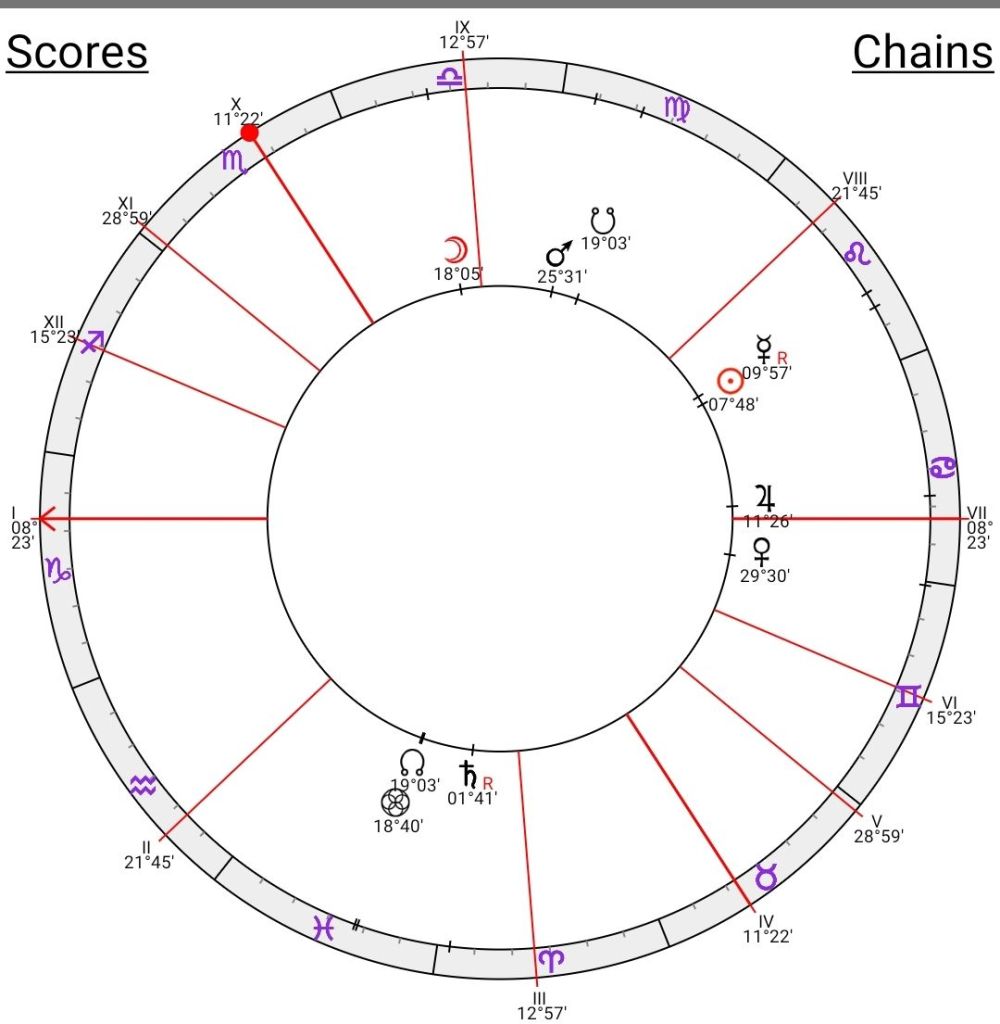
This time she Is represented by Venus as lady of the fourth house. Venus is peregrine in the sixth house of sickness, but she is about to change sign, whereupon she will enter her triplicity and decan: not out of the woods, but better. Once again there is no contact with death (once again the lord of the derived eighth house, Mars, separates from her planet).

But upon changing sign, Venus will bump into a difficult square with a very nasty Saturn. The situation will improve, but there is still something very unpleasant in her near future, though I could not tell what it was at the time.

Turns out that the infection, though cured in her blood, had reached her heart, and she needed an operation to change a valve, as well as additional antibiotics. The operation went fortunately really well and she is already improving a lot. I will edit the post if something changes.

MQS