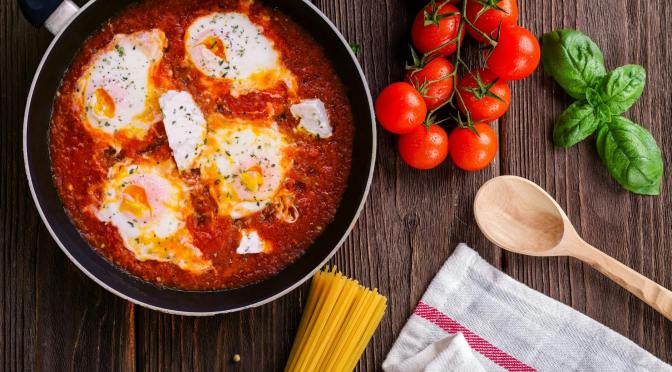
Life is a recipe, and the art of living consists in large part in detecting the ingredients to know if and how to mix them differently. Divination is a mirror of life, and oracular systems usually have some kind of vocabulary to create descriptions of life.
In traditional divination by cards, each card carries small bits of meaning that must be mixed together to form coherent pictures. If divination mirrors life, then it stands to reason that the recipe for something in real life should be mirrored by a recipe for that same thing in the divinatory language. This is how all card reading systems I know work, and that’s how the Bolognese tarot works, with the exception of a couple of universal combinations with odd meanings (Angel + Devil = Good news or satisfaction; Sun + Moon = sorrow; Angel + Death = yes, confirmed).
Let us make an example. What are the ingredients of an inheritance in real life? I would say the ingredients are: death (no inheritance without someone croaking); family ties (usually we inherit from someone whom we are related to, though not always); the law (inheritances are generally regulated by the law and require a bureaucratic mechanism to be set in motion); material possessions (the things we inherit).
In the language of the Bolognese tarot, these ingredients correspond to the following cards: Death: Death; Family ties: Ace of Cups and/or Seven of Cups; The Law: Justice and/or King of Coins; Material Possessions: The Star and/or a money card.
Do we need all the cards to be present? It much depends on the context. If the question is directly about an inheritance, then we could do without many of these cards, while if it is a general reading then the more cards, the clearer the message. But we might also find other cards to flavor the basic recipe: the Moon is also connected with death (the realm of shadows); tears may sometimes be expected, so the Seven of Coins could come up; the court card of the deceased person could show up, etc.
Let us make another example. Let’s take surgery. What’s the recipe for surgery in real life? I would say: a hospital, a bed, a doctor, a cutting instrument. In the Bolognese tarot these same ingredients are: Hospital: The Tower; Bed: The Chariot; Doctor: King of Coins; Cutting instrument: Knight of Swords.
Again, there can be additions and variations. The doctor or the bed might be absent, while the Ten of Cups (blood) or the Moon (unpleasantness) or the Eight of Swords (suffering) might be present. A King or Queen of Swords may take the doctor’s place to show someone holding the knife. Just like my lasagne recipe might differ from yours, but it would still be recognized as lasagne, so the way the deck mixes the ingredients might vary slightly from time to time, but the broad picture remains the same.
One last example. Let’s take marriage. In many situations, a marriage requires the following ingredients: a commitment; love (let’s assume the best intentions in this case); a celebrant. The same ingredients are, in the language of the Bolognese tarot: Love: Love; Commitment: Ace of Wands or Ace of Swords; Celebrant: The Stranger. This is the basic recipe. But we might also expect the main significators to show up. A marriage is a celebration, so the Ten of Cups (fun) might be expected; the family life is certainly impacted, so some Cup cards could be there.
Once we start recognizing that life is made up of ingredients mixed together, it becomes easy (or at least easier) to see how the tarot might mix its own ingredients, the cards, to match the recipe. In many cases, while it is useful to reason out the combinations handed down by tradition, it is much easier to understand the basic principles and be flexible in our observations.
Ultimately, divination starts with logic, not with psychic powers, even though psychic abilities may occasionally be of help. The more we immerse ourselves in the logic of divination, the easier it becomes to decode its messages.
MQS
Discover more from Moderately Quick Silver
Subscribe to get the latest posts sent to your email.

Je vous remercie infiniment de me faire connaître ce jeu de tarot. Je ne le connaissais pas. J’ai acheté le jeu et le livre. Je suis fan de vous et de votre site. Merci!
LikeLiked by 1 person
Hi Sylvie, thanks. I’m glad you like it 🙂
LikeLike