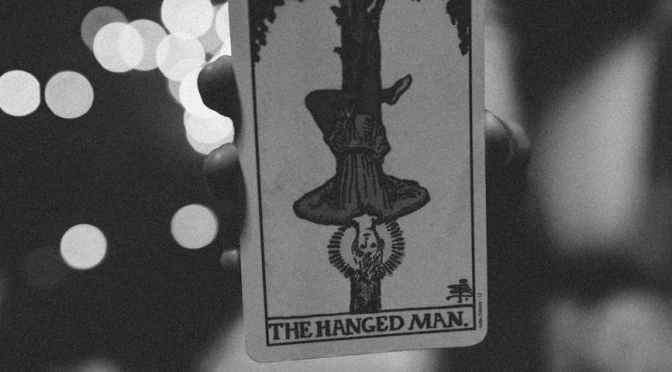
I am old enough to remember a time when people did videos of tarot unboxings and would be shocked to discover that their deck had either unillustrated pips or different designs incompatible with the Rider-Waite-Smith tradition (which is not a tradition. I’ll come back to it)
In this regard, the average literacy of tarot enthusiasts has slightly increased in the last fifteen years or so. For whatever reason, people online still rave about the latest RWS clones, but they are also aware that the RWS is not THE tarot deck. It just happens to be a very popular variant.
As a matter of fact, its illustrated pips are probably the single major contributor to its success (it certainly wasn’t for Pamela Colman Smith’s talent or Waite’s approachable writing). Although the Waite deck is not the first to have illustrated minors (the the Sola Busca has this honor, and centuries later also the Tarot of the Master) it was the one which, after a couple of decades of obscurity between World Wars, accompanied the New Age-themed Tarot revival that lasts to this day.
The Waite deck essentially redifined tarot for decades as needing illustrated pips. People have come up with all sorts of fantastic interpretations of the most minute and inconsequential details found in the pips. We also have a relatively consolidated tradition that has nothing to do with Waite’s (or Smith’s) vision, such as for instance the Eight of Pentacles being the apprentice card, the Nine of Pentacles being basically the strong independent woman who don’t need no man card, the Seven of Swords as the thief card and so on.
This, I must confess, I find very amusing, considering Waite’s own attitude toward the minor arcana. Whoever takes the time to wade through Waite’s turgid prose quickly finds out that Waite couldn’t care less about the minor arcana in his deck (so much so that he had them almost completely eliminated from his later deck, the so-called Waite-Trinick)
Waite had been a member of the Golden Dawn, and as such he must have had to draw or color in his own deck at some point or another. He was instructed in the Golden Dawn system, wherein the pips (except the aces) are assigned to the decans of the zodiac (usually the Picatrix version) and given titles. So, for instance, the Two of Wands is the Lord of Dominion (and, lo and behold, the Two of Wands in the Waite deck has a lord observing his own dominion.)
All this is no secret, and has been discussed at length already. However, what is often not discussed enough is how scathing Waite’s attitude was toward both the Golden Dawn system and the minor arcana in general. He clearly believed that the Major Trumps were a separate, mystical device that had been merged with a regular playing deck with no meaning whatever. He certainly was intelligent enough to see that the Golden Dawn system was essentially made up and had no historical authenticity to it (though this is not to say one cannot work with it. Symbols are symbols.)
It is for this reason that he notoriously “spoon-fed” Smith the design of the Major Trumps. Because he deeply cared about them, or at least about his own interpretation of them. As far as the minor arcana are concerned, he generally had Smith follow the Golden Dawn system in illustrating the names of the pips.
This is clear when we read Waite’s interpretation of cards such as the Five of Pentacles, where the meaning of the Golden Dawn card (Lord of Material Trouble) cannot be harmonized with the other sources Waite draws from (such as Etteilla, for whom the Five of Coins is the Lovers card). That is, Waite seeks to find a harmony of the various meanings, but when this is impossible, he goes with the Golden Dawn variant, though not out of true conviction that the system is valid. He also very likely left Smith more creative freedom in decorating a bunch of cards he felt were useless distractions.
So what we have today is people finding meaning into something that never was intended to have much meaning in the first place. Surely it must be one of the great ironies of history that one of the most radical developments in the structure of the tarot, i.e., illustrated pips, came about not because the inventor cared about pip cards, but because he didn’t.
MQS

Discover more from Moderately Quick Silver
Subscribe to get the latest posts sent to your email.

do you think from a divination perspective, illustrated pips are a downgrade? i keep hearing from Tarot de Marseille practitioners that RWS changed too many things from the „original“ system and its much better to learn to read TDM rather than RWS.
LikeLike
Hi. Tarot of Marseille practitioners are largely delusional and use the TdM simply because they are hipsters. The concept itself that there is a TdM tradition is a XX century invention, and there is no original system. You can use illustrated pips safely, it is a matter of taste. What is true is that historically most decks previous to the RWS deck (with a couple of exceptions) had unillustrated pips, and that Waite had them illustrated not because he cared about them, but because he didn’t. However, he did have them illustrated according to a specific system (the GD system) which is actually historically older than most made-up TDM methods. Whether illustrated pips are a downgrade or not really depends on the individual’s preferences 🙂
LikeLiked by 1 person
wow…i have heard the exact opposite,that RWS and GD completely messed up a perfect tradition.
i have been many of your individual posts where you post the interpretations of different cards like four of coins etc.
which of the interpretations resonated with you amongst the four sources?
LikeLike
I’m going to write some posts about this idea that the tarot had a univocal perfect tradition before the GD. It is factually false and it rests on a very modern interpretation of the tarot as something other than a card game with Christian Platonic imagery (which is all it was before the occult revival of the late XVIII century).
As for the interpretations, when I was training within the GD tradition I used the Book T meanings, but we were encouraged to develop clear divinatory meanings based on it, rather than memorizing them. When I met my other teacher I started using often only the majors (examples of the meanings may be found in my cheat sheet in the tarot section)
LikeLiked by 1 person