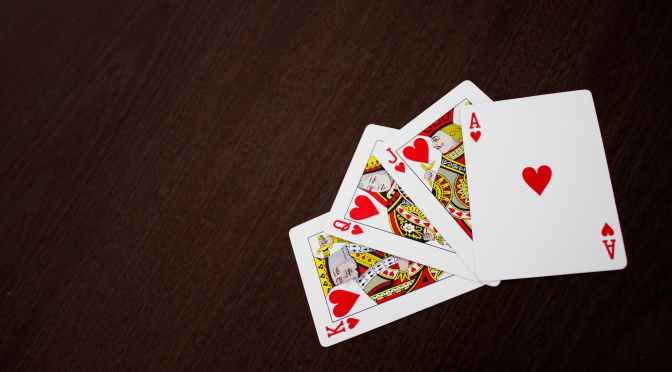
Before moving on with the regular deck of 52 cards, I wanted to spend some time on the reduced pack of 32. Reduced decks are very common across Europe. Usually, a reduced deck consists of all Aces, Sevens, Eights, Nines, Tens, Jacks, Queens and Kings.
Reduced packs are used not just in divination, but for playing games, and that’s probably how fortune-tellers and diviners got the idea. A reduced deck is usually called a Piquet deck or, in German-speaking countries, a Skat deck. I say this because the method I have been taught is of German origins.
Another important point to consider is that not all traditions see the suits in the same way. In Italy, as well as in most English traditions, Diamonds are neutral to good, while in France they are often seen more critically, as opposed to Clubs, which are seen as more positive, while in English fortune-telling they are neutral and, in Italian cartomancy, neutral to bad depending on who you ask.
In German-speaking countries we find a curious variation: Spades, which are considered invariably bad all across Europe, are seen positively, while Clubs are considered bad. This is due to the fact that in German, Clubs are called Kreuze (e.g., Kreuz-10, Kreuz-König, etc.), which means Crosses. As such, they are considered symbols of suffering. Spades, on the other hands, are associated with social activities and movement.
The method that I have been taught, which I admittedly do not practice, but have been allowed to pass along in case someone is interested in it, was originally devised for traditional German decks. German decks have peculiar suits which are completely different from the standard poker deck.
These are
Hearts (actually called Rot, Red)
Leaves (actually called Grün, Green)
Schellen (small bells)
Eicheln (Acorns)
These suits can be made to correspond to the suits of the regular poker deck, although the correspondence depends on what value you ascribe to the regular suits.
If I were to translate the German deck into regular suits, we would have the following.
“Red” or Heart cards correspond to Hearts. They deal with happiness, family, love, fun.
“Green” or Leaf cards correspond to Spades. They symbolize society, travel, movement.
Bells correspond to Diamonds. They have to do with money, success, luck.
Acorns translate as Clubs, and are symbolic of struggle, tears and difficult situations.
The system I am going to discuss in the next post can be used indifferently with German cards or with a regular reduced deck, using the correspondences above. If, however, you feel uncomfortable giving positive meanings to Spades and negative meanings to Clubs, feel free to just swap them. As long as you are consistent, you won’t have any problems.
Discover more from Moderately Quick Silver
Subscribe to get the latest posts sent to your email.

Thanks for your posts on poker card meanings and now for your posts on Skat cards!
LikeLiked by 1 person
glad you like them!
LikeLike
Yes, they see the suits differently there. The way I learned, Spades are Leaves, so they’re summer, growth…it’s a good suit. The expansiveness of it fits your society, travel, andmovement explanation.
Clubs are Acorns, so yes, it’s a hardship suit. In order to eat those, you have to leach out the tannins, boiling them several times and pouring the water off. That, plus cracking all those little things, makes them a lot of trouble. Nobody bothers with acorns unless they’re experiencing grinding poverty.
I don’t know the story behind Bells (Diamonds) but they tend to be associated with risk. Speculation, gambling, etc. Usually good, but they can go wrong, too.
LikeLiked by 1 person
Yes that’s also what I heard. As for the bells, I also don’t know exactly, but the symbol of the Glöckchen, the little bell, is very often used in Germany as a symbol of joy and good luck. There might be a connection
LikeLike
I didn’t know that! It makes sense to me, it’s logical.
Cartomancy always struck me as logic-based. So many people try to make it into something irrational! I think that started with the debunked right vs. left brained theory. They want to be more intuitive, so they avoid the logical, analytical side of things. But it’s always good to use our whole brains, lol.
LikeLiked by 1 person
Definitely. I don’t think I ever heard my first teacher utter the word “intuition” for all the time I spent with her. I’m not saying intuitions can’t happen, just like sometimes intuition could help us understand the meaning of a sentence better, but the more I study divination the more I realize it has an underlying logic, like languages
LikeLike
Yes, it’s become fashionable to throw that word around. Intuition comes into play sometimes, but I think it comes from experience. It’s kind of like when you’re driving and a child runs into the road in front of your car, you don’t have to consciously think „Now I am going to take my foot off the gas and step on the clutch and the brake pedal…“, you just do those things.
But I’ve noticed people using the term ‚intuitive readings‘ for ‚looking at the images and making things up.‘
LikeLiked by 1 person
Yup. For whatever reason they never seem to want to go to an intuitive doctor or have their house built by an intuitive architect, though 😬
LikeLike