Tag Archives: tarot reading

How to Work With Wrong Readings

I had a nice exchange with a visitor, who asked how we can work with the readings we get wrong, so that we can improve our skill.

The first thing to take into account is that this is not always possible. We may say that we are accurate because 80-90% of our assertions end up being true, but that is calculated on those assertions for which we get feedback, and we don’t always get feedback.

Here, too, there is a lesson, I think: all we can do is be as good as we can be at the particular moment in which the reading takes place. If we think an interpretation is viable, there is no point in withholding it out of fear that we might get it wrong (unless the topic is sensitive and we choose to stretch the truth to avoid hurting the querent) because we might not get another chance to say it.

What happens after the reading is that some querents simply forget about it. Too many querents think that a reading needs to come true within a couple of weeks, when in fact it often takes months, so after the initial excitement (or dread) they simply move on, and they may only be reminded of it when it comes to pass, if at all.

Other readings are correct, but the querent thinks that’s just regular business, so they don’t bother to tell us, while other readings are wrong, and the querent either rubs that in our face as publicly as possible or they don’t talk about that anymore, thinking we are beneath them.

Then there’s the readings for which we do have feedback, which can be very positive (“everything was spot on, and you’re also kinda cute”), very negative (“it ended up being the exact opposite of what you said”), or mixed (“this and that came to pass, but this other thing not yet”).

Even the feedback we get needs to be taken with a grain of salt. Positive feedback can sometimes be a mix of wishful thinking and the desire to please, while negative feedback can sometimes be a mix of delusion (you said he wouldn’t call and he didn’t, but I know he loves me, so you’re wrong) and desire to hurt.

So, what do we do with the feedback we are given, if it is negative? The reasonable thing to do, in my opinion, is to check the spread (I usually take pictures and/or notes) and see where we might have screwed up.

Was there a point in the spread where the cards were a bit ambiguous and we forced the reading in the wrong direction? Was there a huge, smacking-your-forehead blunder? You simply cannot see what went wrong? Take notes on the reading. If you don’t think you can formulate a definitive theory on what went south, don’t. Leave things hanging. Add ‘maybe’ and ‘possibly’, and see if there are other readings you did on similar issues that can help you.

Even when going back to an older spread, we should never force it to say what the feedback said, if we just don’t see it: firstly, because, as I said, even feedback that exists must be treated with caution; secondly, because there is a tendency to want to read details into the reading that we would never have been able to guess beforehand, and that’s not divination.

Broadly speaking, the feedback we get, positive, negative or mixed, should be treated as raw data that needs to be studied carefully. That’s where a lot of growth can take place. Be especially thankful for mixed feedback, as usually it is the most honest kind: we rarely get 100% of the things right, either in our description of the past/present or in our predictions. As fallible humans, getting many things right many times should be enough to satisfy us, especially since we are doing something most people consider impossible.

MQS

The Third Beast (Example Reading)

A querent (a man) asked how his relationship would evolve:

A relationship reading

The first thing to notice is that both main figures appear (King and Queen of Wands) and both their thoughts (Page and Knight of Wands). The two significators are in the central column, so let’s read the central column first: King of Wands, Queen of Wands, Ace of Cups (house), Moon (darkness), Queen of Coins (truth). Clearly their relationship is not based on clarity, because the truth is hidden, and there would be a need for honesty.

The Death card next to her might show that she is the one going through some kind of transition, and it’s probably not something that has just happened (Temperance shows time). The house is not positive to the couple, as there is hurt or arguments around it (Knight of Swords).

The King of Swords was hard to interpret. It was, until the querent asked out of the blue “Do you see her cheating on me?”

Look at the column the King of Swords falls in: Death, King of Swords, Her Thoughts and the Betrayal card. In her thoughts there’s someone else. Note also that his thoughts (Knight of Wands) is next to the Moon and the Hanged Man, so he suspects.

The Queen of Coins, which is the truth, here seems to have two meanings here. One is that it shows the need for clarity (and therefore the lack of it), and secondly it acts as a sort of punctuation, as I discussed before, sealing the reading as if to say “yup, that’s exactly what you’re thinking”

Obviously we need to be very careful when announcing this sort of situations, even if the querent suspects. It is much better to caution them to seek clarity with their partner (especially in this case with the Truth card so prominent in the reading)

MQS

Making Sense of Daily Readings

Daily readings are not my passion. Divination moves from the assumption that something is going to happen. But life is full of uneventful days, where time seems to stand still. Yet the oracle must necessarily tell us something, for the simple fact that we allow it to speak.

This is not to say that the cards (or other means) don’t mean anything, but often we need to tone down the interpretation to such a degree, or retrieve such inconsequential shades of meaning that, unless you are a god of divination, you aren’t going to be able to consistently predict much, and I am definitely not a god of divination.

On the other hand, daily readings can sometimes be easy to read into once the event has come to pass (see my recent example). Reading into the oracle always leaves us in danger of deluding ourselves. The question I always ask myself is: would I be able to see it if I didn’t know it? Often a vaguer prediction that is true to what we can see in the cards is preferable to a highly detailed account that simply regurgitates what we already know or what we have been fed.

Still, sometimes we can afford the luxury of reading-into after the fact, and daily readings can be one such instance, because at least we can learn something, if we are careful. In the example I posted about the pregnancy, the three cards, called at random to disclose a daily influence, could have meant a variety of different things, but news about a pregnancy is without a doubt one possible interpretation. Furthermore, sometimes if we know that something is bound to happen, we may gauge by the daily reading if it is likely to happen on a particular day, or if it is going to go well.

Another thing to consider is that limiting the timeframe is always somewhat arbitrary. Do you seriously think that if you ask the cards what is going to happen this week and in ten days something terrible or wonderful is bound to happen the cards are going to keep quiet about it? Just because you told them to keep it within the week?

Often, if you pull daily cards, a major event or major influence or vibe shift will start manifesting in the cards many days in advance. A romantic reunion happening next week may start manifesting with cards of love now, even if today or tomorrow aren’t especially romantic days.

What I personally prefer to do is occasionally pulling three cards for the day, while knowing that they may describe something happening further along the way. By occasionally I mean every two or three weeks, rarely every week. That way the cards are usually more meaningful than if I stress them every day on how the day is going to go. This doesn’t mean I’m going to be able to predict something, but the careful, tentative reading-into is going to be more certain and less based on wishful thinking.

MQS

Love Beyond the Grave? (Example Reading)

a reading with interesting implications. Like and subscribe to support my work

I thought this was a rather interesting reading, in part because of what it revealed and in part because it shows that divination requires rules and flexibility. I’ll probably talk about it again in an article.

MQS

Bolognese Tarot – The Love / Couple’s Spread (Three Variants)

The Bolognese Tarot tradition has several spreads for the couple. One that has been taught to me, and which I have also found is practiced by other Bolognese tarot readers, is the following:

123456
HeShe
789101112
131415

He and She are, of course, the King and Queen of Wands. However, we can explore the relationship between any two individuals. The cards above the two significators show what’s on their mind (1-2-3 his mind, 4-5-6 her mind, in this case).

The cards covering them (7-8-9 for him, 10-11-12 for her) are ambiguous. The way the method has been passed down to me, these cards show what’s going on with him and what’s going on with her, but I have found other readers (such as Rossella Giliberti) who say that these cards show what’s in his heart and what’s in her heart. Choose the variant you prefer, and remember that these are local methods, so there’s bound to be variations between one town and the other. The final three cards (13-14-15) show what’s happening to them as a couple in the near future, or if there is potential, or what connects them.

Another spread, which is found in Maria Luigia Ingallati’s book on the Bolognese Tarot (which I will review in the near future together with the few others that have been published). The layout is as follows:

HeShe
1231516178910
456181920111213
72114

Here we have cards 1 through 7 talking about what’s going on with him, cards 8 through 14 telling us what’s going on with her, and finally the group in the center (15 through 21) talking about them as a couple. Another reader I know (Monica Barbieri) uses thirteen cards for each group instead of seven.

Another variant is found in Lia Celi’s out-of-print book on the 45-card method. This is the layout:

He and She
12345
67 – 89
1011 12
13 – 14
15

As can be seen, this is a pyramid spread. Here, cards 1, 2, 6, 7, 10 and 13 talk about him, cards 4, 5, 8, 9, 12 and 14 talk about her, and cards 3, 11 and 15 talk about them.

These methods are specific for analyzing two people’s interaction, but nothing prevents you from using a simpler spread, like the thirteen card spread. To be honest, that’s what I do. Still, this is an interesting bit of traditional lore about the Bolognese tarot.

MQS

Is He Gay? (Example Reading)

A reading with the Bolognese Tarot. Like and subscribe to my YT channel to support my work

MQS

What’s the Bird Thinking? (Example Reading)

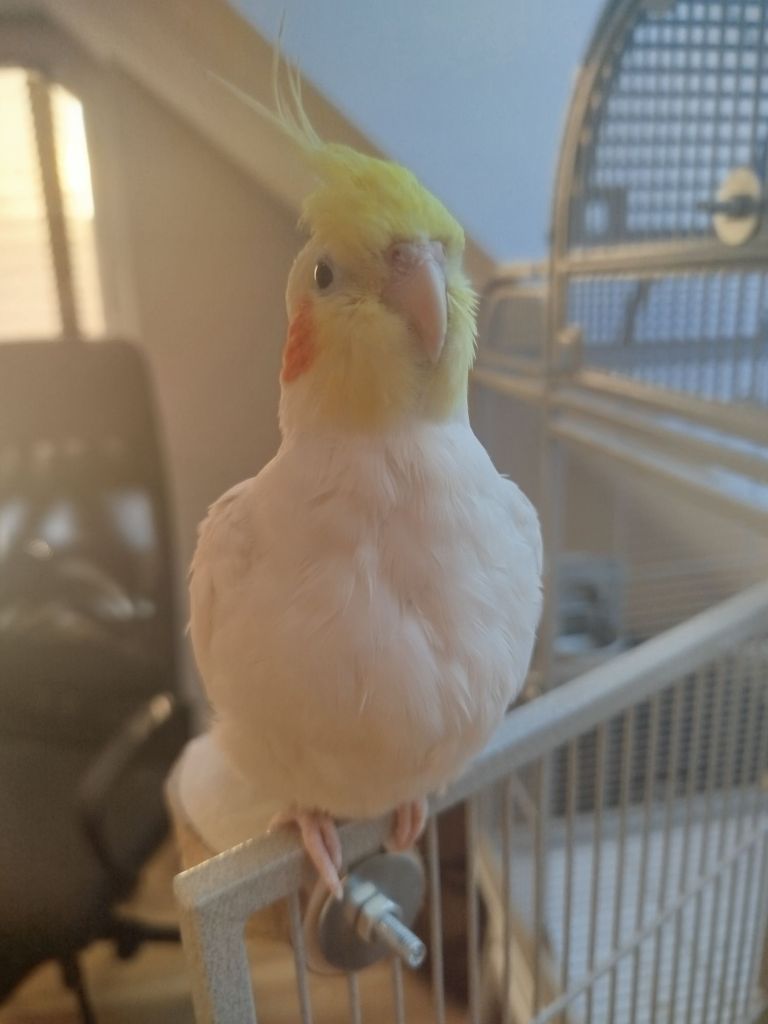
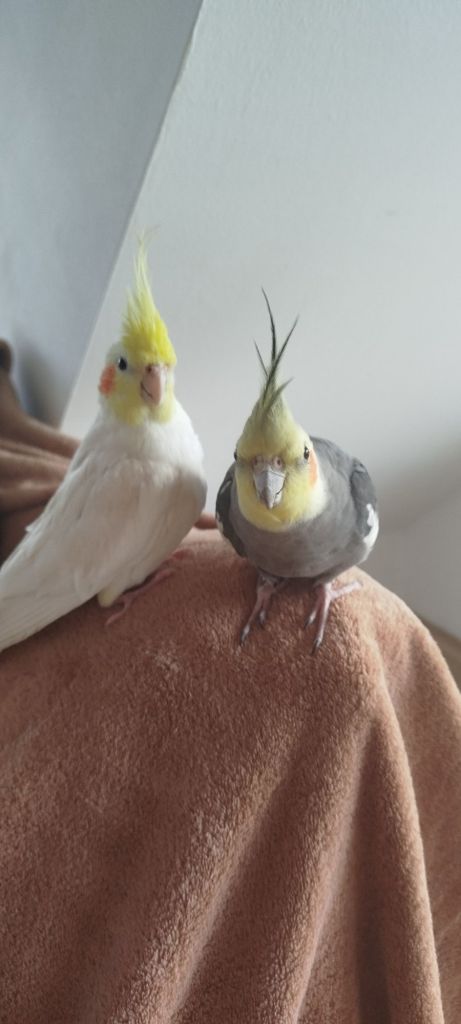
My two cockatiels couldn’t be more different from one another. Ciuffy, the white one, is a sweet cuddlebug who’ll do anything for a head scratch. He’s never nipped me, let alone bitten me. The only time he hurts me a little is when he tries to preen my ear.

“I’m the guy you want your daughter to bring home”

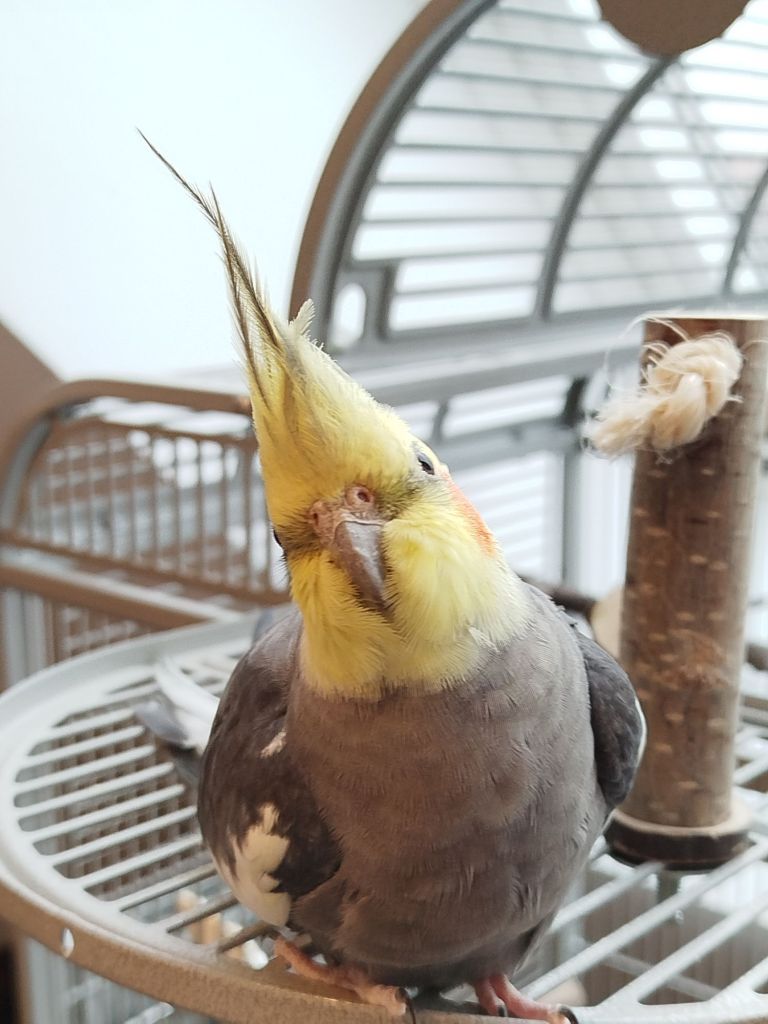
Zazu, the gray one, is a beaky, bossy, overbearing prick. He does have his sweet side, and considering I’ve had him for only a little over a month we’ve made huge progress, but when I have him on my shoulder I KNOW I’m going to get hurt at some point, and when he bites he really means it.

“I’m the guy your daughter brings home”

Now that I’ve set the scene and used the excuse to show you a couple of pics of my cutie pies, let’s get to the point. A couple of days ago, while Zazu was on my shoulder, he bit my earlobe incredibly hard out of nowhere (maybe he saw me move my head and didn’t like it).

I shooed him away with my hand, but he spooked and flew against a wall. Although he wasn’t hurt, he spent the day avoiding me and hissing (for those who don’t know, cockatiels can hiss, like cats).

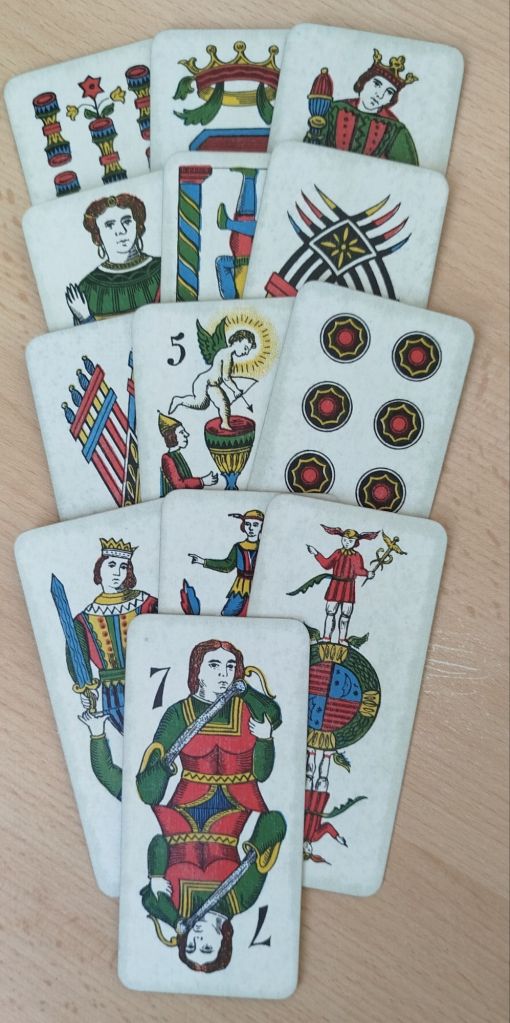
I knew that the accident set some of that hard-won progress back, but I wanted to know Zazu’s perspective and how it would likely evolve. Here’s what the Bolognese Tarot had to say:

What’s the featherball thinking? Tarot reading

One thing that surprised me is the first row, where we have happiness (Ten of Cups) in the house (Ace of Cups) with me (King of Wands). I know I try to care for the two little balls of feathers as best I can, but Zazu is always grumpy and old-farty in his behavior, so I assumed he didn’t like me very much. Apparently that’s just his character.

The second row is interesting, since we have unexpected (Stranger) betrayal (Hanged Man) leading to negative emotions (Eight of Swords). Clearly his good vibes were somewhat disrupted by the incident.

The third has a path (Eight of Wands) toward Love with harmony or small satisfactions (Ten of Coins). So even though there was a setback, there is room for moving toward love. Obviously we should be very careful when projecting human sentimentalism onto animals, but then again, divination is a language understandable to humans, so the tarot is probably translating Zazu’s reality in terms that are understandable to me.

I have some doubts about the last line. The King of Swords might be Zazu himself (it could represent my husband, but my husband isn’t particularly involved). Technically, pets are represented by the Juggler, but then again, the King of Swords does have some characteristics of the Juggler, so it’s a possibility. At any rate, the King is next to the sickbed. There are no combinations talking explicitly about sickness, so I believe this just shows his being cranky or a bit uncertain, but the World card at the end of the row indicates that this uncertainty doesn’t cause breaks: the situation remains open and moving.

The Temperance card at the end simply shows that patience and time are needed. I expected no less.

For now, the reading seems to be accurate. The day after the little bastard had gone back to his old behavior, being just a little more shy than usual, and the day following that he was back to normal.

MQS

Odd Things On This Blog, And Other News

For a couple of months I have been getting between 35 and 60 individual daily visitors on this blog, which, considering it’s a personal blog with no advertising I am perfectly happy with, especially since I started out with 0 daily visitors a day a couple of years back and it has slowly but steadily been increasing.

So you can imagine my surprise when the other day I check my stats and I see over 1000 daily visits (that is, individual users, not page views). Well, I look into it and I discover that they all come from Falkenstein, a small town in Germany. I start researching people with a similar experience and it turns out it’s a bot or AI thingy (excuse the technical jargon).

The following day, I still had a staggering amount of visitors, but around half. The day following that, the number was halved again and so on. But it is still happening, and it kind of freaks me out, though I don’t know why. I hope it goes away by itself. If anyone knows anything about this kind of stuff and wants to hit me up, I’m all ears.

In other news, I have been having crazy fun with the Bolognese tarot, but soon I will be needing fresh victims, so I’m planning on offering cheap readings within a couple of months.

Finally, although I’ve been getting good feedback from you guys about my youtube videos, I know part of it is also encouragement, and I know I need to improve my craft. It’ll come with time. Still I am grateful for the nice messages!

Also, get a load of this:

MQS

Exploring the Present Or Scrying the Future?

As a diviner, I have no objection to making predictions about what is likely to happen. I see the current taboo about the future as a mix of delusion and ignorance. Our current culture comes at the tail-end of the myth of the self-made man that has animated much of our recent (and even not-so-recent) past. This myth has strongly influenced the Zeitgeist of the current occult wave, which started at the end of the XVIII century and continues, though declining–putrefying, even–to this day.

The occult developments have in turn trickled down into pop spirituality and have fostered the belief, now extremely popular, that all it takes to change one’s reality is to tune into the wavelength where one’s delusion corresponds to objective facts, and that nothing about one’s identity is more than a socially-conditioned self-identification that can be simply deconstructed and cast off like a cloak in favor of something else as the whim of the day dictates.

This implies the idea that the future is a completely blank slate and that therefore divination can only be used as a tool for self-reflection on the present to facilitate this process of self-making and self-remaking. Unfortunately, the self-reflection in question regularly resolves itself into simply telling the querent what they already think or would like to think of themselves, but packaged in empowering language within a context in which they assume they are communing with divinity. “Wow, the Gods think exactly the same as I do! How wise!”

Anyone who lives in actual reality and has spent five minutes reflecting on it know that this view of existence is demonstrably false (although, like many false things, it contains faint traces of truth). Each of us has a path in life that is unique, containing specific challenges and opportunities, possibilities and impossibilities. Divination is good at detecting these patterns and their likely outcome in the near future.

Still, I find that there is value in employing traditional divination in exploring the present. The language of traditional divination is frank, crisp and concrete, as it comes from a deep understanding of the fact that, if what is above is as what is below and what is within is as what is without, then what is above or within cannot be a metaphysical soup of saccarine inanities, but must correspond to the complex interplay of pleasure and sorrow of the below and without.

In other words, if a tiktok psychic might tell you that you always end up with the wrong guy because you have a soul contract that stipulates that you need to come into contact with your inner queen, traditional divination is more than happy to let you know that it’s because you are a basic harlot who chooses basic idiots.

This is not to say that there is a god or a spirit judging the querent through us or through the oracle: it is merely a dispassionate look at your life from a dispassionate observer on a simple example of causality. It also does not imply that we, as diviners, shouldn’t learn to speak with tact and diplomacy. However, the employment of actual divination techniques allows us to shed light on the querent’s present in terms that might actually be helpful to them.

We never leave a divination session unaltered. The knowledge we gain changes us necessarily: me knowing about X is not the same as me not knowing about it. If X is in my hands, then knowing about it can give me some power over it. If it isn’t in my hands, then knowing about it gives me awareness of the limits that define my unique path through life. That’s growth, too.

MQS