English Version (scroll down for the Italian version)
In this blog I haven’t yet talked about one of the decks I am most interested in learning, yet one about which very little material is to be found. I’m talking about the Bolognese Tarot, or Tarocchino Bolognese.
The word “tarocchino” is a diminutive form of “tarocco”, thus meaning “small tarot.” I am not going to cover the history of the cards here. There’s plenty of great sources online. The reason for the diminutive form is that the deck is actually a reduced pack, with some variations in the order and makeup of the Major Trumps.
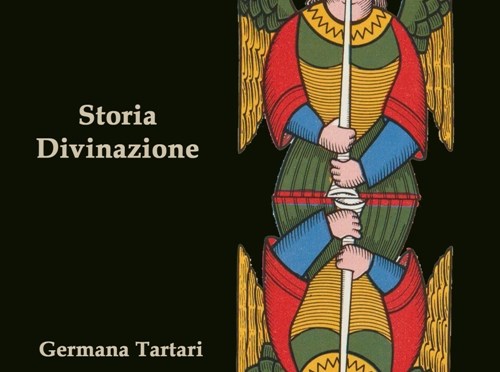
What I am going to discuss is a marvelous little book that has been recently published on the matter: Tarocchino Bolognese. Storia Divinazione, by Germana Tartari. The book is currently available only in Italian.
Miss Tartari has been taught to read the Bolognese Tarot by her grandmother, and has started teaching it in turn following what she describes as a call to spread the traditional meanings she has received.
The book is relatively short, but it succeeds as a comprehensive introduction for neophytes. As most books on the tarot, it starts with what I usually consider the “boring part”, i.e., the history of the cards. I say “boring” because most of the times, writers feel that it is bad to lead off with the juicy stuff and sense that it’s best to preface it with some historical remarks fished at random from the most dubious sources.
But this is not the case for Miss Tartari’s book. The historical introduction is not at all boring. It has been handled by the Museo Internazionale dei Tarocchi, and it is as succinct as it is interesting, as well as historically accurate.
Miss Tartari then goes on to describe her history and relationship with the cards in moving detail. The great passion that animates her shines through every single turn of phrase and choice of words. What also struck me was her understanding of cartomancy as an activity that is deeply embedded in the way people relate to one another: as described by her, cartomancy is almost an interpersonal skill, a way of caring for other people. I greatly enjoyed her take, and think most people who are into traditional tarot would profit from reading it.
The meat of the book consists of the divinatory meanings and combinations of the cards. As is usual for the Bolognese Tarot, the meanings have nothing grandiose and philosophical about them. There is no flight of fancy. There are no pseudo-deep elucubrations as usual among tarot readers who try to remove the tarot from observable reality by relegating it to a vapid mystical system.
The Bolognese Tarot is earthbound. It concerns the ordinary life of ordinary people. And, frankly, there is more depth in the recognition that the Sun means “by day” rather than in some obscure intellectual abstraction. As Miss Tartari put it in a video about the book, people once consulted the tarot about whether they would be able to put food on the table or not. They wanted to know whether the year’s crop would be good or poor. This is not to say that more spiritual concerns cannot be part of ordinary life, nor that the tarot cannot answer such questions, but its language remains clear, the language of simple people with their feet firmly planted on the ground.
The last part of the book describes two types of spread, and what distinguishes this book from many other books on the subject is that the writer describes some real readings she has done for querents. I thought this was a great way to demonstrate the great potentiality that the tarot has for describing real life and real concerns. In fact, I would gladly buy another book by Miss Tartari that his wholly focused on interpreting practical examples of real spreads.
In short: a must-have for anyone who is interested in the Bolognese Tarot, in the actual (and not fanciful) history of Tarot, and in one of the most traditional systems of divination in the West.
Where to buy: Mutus Liber
Versione Italiana
In questo blog non ho ancora parlato di uno dei mazzi che più mi interesserebbe studiare, ma sul quale si trova pochissimo materiale. Sto parlando dei Tarocchi Bolognesi, o Tarocchino Bolognese.
La parola “tarocchino” è una forma diminutiva di “tarocco”, quindi significa “piccolo tarocco”. Non tratterò qui la storia delle carte. Ci sono molte ottime fonti online. La ragione del diminutivo è che il mazzo è in realtà un mazzo ridotto, con alcune variazioni nell’ordine e nella composizione dei Trionfi.
Quello di cui parlerò è un meraviglioso piccolo libro pubblicato di recente sull’argomento: Tarocchino Bolognese. Storia Divinazione, di Germana Tartari. Il libro è attualmente disponibile solo in italiano.
La signora Tartari è stata educata alla lettura del tarocchino bolognese dalla nonna e ha iniziato a insegnarlo a sua volta seguendo quella che lei stessa definisce una vocazione a diffondere le conoscenze tradizionali che ha ricevuto.
Il libro è relativamente breve, ma riesce ad essere un’introduzione completa per i neofiti. Come la maggior parte dei libri sui tarocchi, inizia con quella che di solito considero la “parte noiosa”, cioè la storia delle carte. Dico “noiosa” perché la maggior parte delle volte gli scrittori ritengono che non sia appropriato iniziare con le cose più succose e pensano che sia meglio farle precedere da alcune osservazioni storiche pescate a caso dalle fonti più dubbie.
Ma questo non è il caso del libro della signora Tartari. L’introduzione storica non è affatto noiosa. È stata curata dal Museo Internazionale dei Tarocchi ed è tanto sintetica quanto interessante, oltre che storicamente accurata.
La signora Tartari descrive poi la sua storia e il suo rapporto con le carte con parole toccanti. La grande passione che la anima traspare ad ogni singolo passaggio e da ogni scelta di parole. Mi ha colpito anche il suo modo di intendere la cartomanzia come un’attività profondamente radicata nel modo in cui le persone si relazionano tra loro: così come da lei descritta, la cartomanzia è quasi una competenza interpersonale, un modo di prendersi cura degli altri. Ho apprezzato molto il suo punto di vista e penso che la maggior parte delle persone che sono appassionate di tarocchi tradizionali trarrebbero beneficio dalla sua lettura.
Il cuore del libro è costituito dai significati divinatori e dalle combinazioni delle carte. Come di consueto per i Tarocchi bolognesi, i significati non hanno nulla di grandioso e filosofico. Non ci sono voli pindarici. Non ci sono elucubrazioni pseudo-profonde, come di solito accade tra i lettori di tarocchi che cercano di allontanare i tarocchi dalla realtà osservabile relegandoli a un vago sistema mistico.
I Tarocchi bolognesi sono legati alla terra. Riguardano la vita ordinaria della gente comune. E, francamente, c’è più profondità nel riconoscere che il Sole significa “di giorno” piuttosto che in qualche oscura astrazione intellettuale. Come dice la signora Tartari in un video di presentazione sul libro, una volta le persone consultavano i tarocchi per sapere se sarebbero state in grado di mettere pane in tavola o meno. Volevano sapere se il raccolto sarebbe stato buono o meno. Questo non vuol dire che le preoccupazioni più spirituali non possano far parte della vita ordinaria, né che i tarocchi non possano rispondere a tali domande, ma il loro linguaggio rimane chiaro, il linguaggio di persone semplici con i piedi ben piantati a terra.
L’ultima parte del libro descrive due tipi di stesa, e ciò che distingue questo libro da molti altri libri sull’argomento è che la scrittrice descrive alcune letture reali che ha fatto per i propri consultanti. Ho pensato che questo fosse un ottimo modo per dimostrare la grande potenzialità che i tarocchi hanno nel descrivere la vita reale e preoccupazioni reali. In effetti, comprerei volentieri un altro libro della signora Tartari che si concentri interamente sull’interpretazione di esempi pratici di stese reali.
In breve: un libro imperdibile per chiunque sia interessato ai Tarocchi bolognesi, alla storia reale (e non fantasiosa) dei Tarocchi e a uno dei sistemi di divinazione più tradizionali dell’Occidente.
Dove Acquistarlo: Mutus Liber