Tag Archives: short stories

Makers of History

Previous / Back to Index / Next

From the Microcosmicon, 38:

“I’m Empress Rathoi!” Nili screeched from her dingy cubicle.
“Every two damn minutes,” Anned grunted, turning in her sleeping bag. Old Nili was getting worse.

Anned wasn’t much better off. She’d wind up a meaningless husk, like everyone else on Toreadis.
Yet something rebelled within her, coherent, alive, like the stars judging her from above the collapsed Toreadian skyline.

The following day she snuck onto an airship for Arctamam. First, the pirates welcomed her among their ranks; and when the constitution was abolished, the revolutionaries. After the war, she was crowned empress.

Nili never knew of her role in history.

MQS

Grandpa Dell

Previous / Back to Index / Next

From the Microcosmicon, 37:

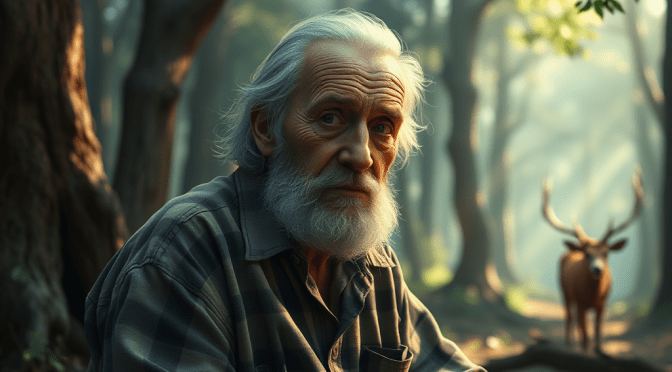
Grandpa Dell always had the most sensible explanation for everything. When we kids discovered an alien in the forest and everyone was weaving stories around it, Grandpa Dell said it was just an aborted deer.

When the seamstress was accused of witchcraft and everyone swore she’d hexed them, he laughed at people’s credulity.

Around him, I felt the world’s contours were well-defined, its contents ordinary.

It was when I went looking for him and caught him in the forest sucking a doe’s blood through suction cups in his mouth that I understood the world truly was unremarkable, compared to him.

MQS

The Jewel in Space

Previous / Back to Index / Next

From the Microcosmicon, 36:

It glinted like a forlorn beacon in the night of space.
“No heat from it,” the captain read from his control panel.

“Never seen anything like that before,” his companion muttered. “Let’s turn back.”
“I bet the Empress would want it among her crown jewels. We go.”
So the spaceship approached the light. From up close, it was no larger than a life capsule, suspended by a thin rope.

Then the captain saw it taking shape behind the radiance. The fish whose fangs opened like jagged mountains on a starless cosmic throat-chasm. Its body going on. And on. And on.

MQS

On The Way To Follow

Previous / Back to Index / Next

From the Microcosmicon, 35:

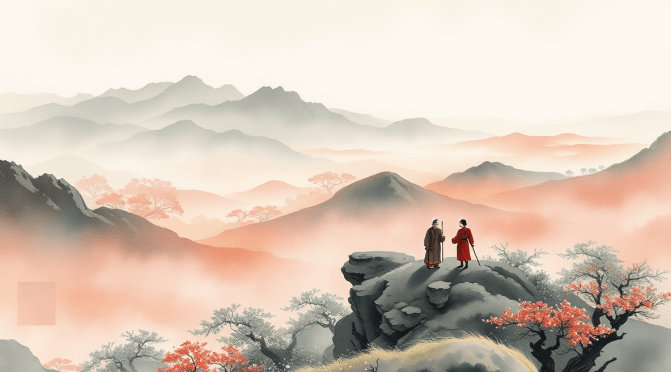
Master Feiyu scolded his pupil, Qiang, for consulting the I Ching by tossing coins instead of using the meditative yarrow stalks.

Mortified, Qiang, who’d been deriving great benefit from the oracle, set about manipulating the sticks. He asked if he’d been wrong in using coins. He got Hexagram 7, The Army. Not understanding the answer, he abandoned the divination.

Later he asked again, but tossed his coins instead. Again he got Hexagram 7, which he still didn’t understand.
What Qiang did understand was that there was nothing wrong in his choice of method, but plenty in his choice of master.

MQS

The Scarecrow

Previous / Back to Index / Next

From the Microcosmicon, 34:

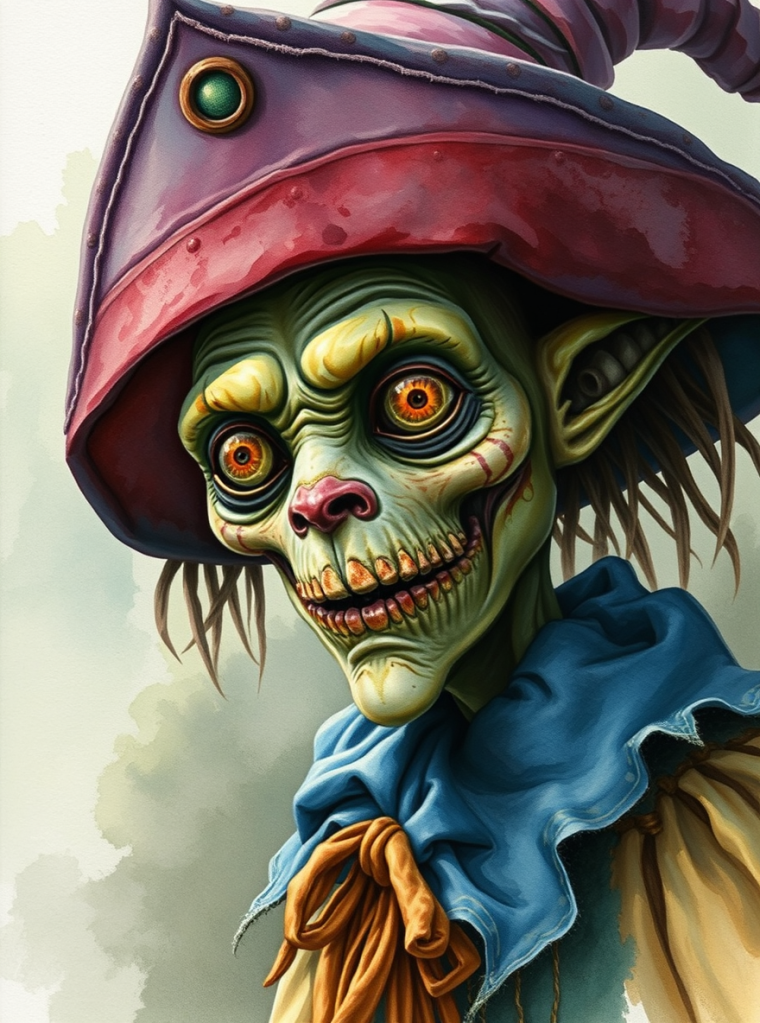
I was born with only two arms, and I grew into a scrawny, spindly lad, ridiculed for my grotesqueness. Nor would anyone give me a job—not with my face, not with my weak body.

So I did what I could to make ends meet—I started following space pirates. They knew what to do with my ugliness. They sent me out to scare gullible folks of distant planets into handing over their goods without fighting.

Soon, my reputation began to precede me. “Watch out, they are sending the Scarecrow!”
There is no acceptance for me in it. Only peace.

MQS

the scarecrow

The Soul’s Journey

Previous / Back to Index / Next

From the Microcosmicon, 33:

The Explorer III reached the end of the Suctan system eight months after departure.
But when the ship was about to trespass, it… bumped into the sky?

Suddenly a slit of light tore across the vastness. Then it yawned open, revealing not the outer universe the Suctanians had observed from afar, but an endless contortion of titanic interlocking mechanisms, each feeding into the other with impersonal, meaningless coherence.

Finally, a voice echoed from the reddish depths.
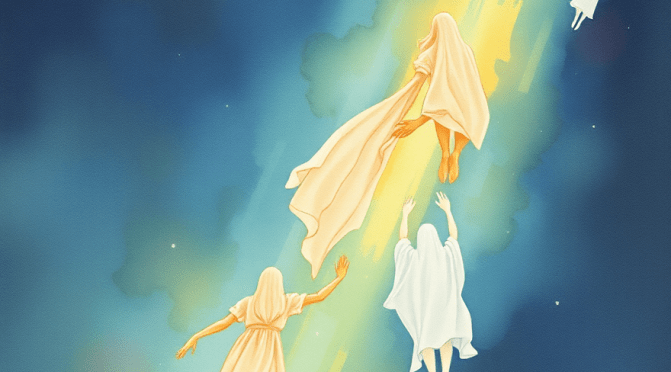
“Welcome back, souls. Now that you have spontaneously gained consciousness of the nature of things, you are fit to enliven us. We’re one again.”

MQS

The Soul’s Journey

Space Hagsploitation

Previous / Back to Index / Next

From the Microcosmicon, 32:

“I didn’t know Wild Rose had a sister,” he said, his eyes wandering to the dark space outside.
“She didn’t talk much about me,” the pudgy old woman conceded.
“Why didn’t you give news of her passing?”
“She wished to… keep her legend alive.”

“I’ll have to tell the Empress her ally is dead.”
He got up and made for his capsule.
Then a thud came. A muffled voice. “Help!”

“You bitch! Forever ruining everything!” Wild Rose’s sister screeched chidishly at the spaceship’s walls. “Couldn’t keep quiet! Always the center of attention! It’s your fault he has to die now!”

MQS

Space Hagsploitation

An Age Without Titans

Previous / Back to Index / Next

From the Microcosmicon, 31:

When the last titan was felled, my people rejoiced and called me their leader. Long had been the battle, and full of grief.

I still see it. The great shape folding in half under our bombs, then lying down on its shadow like an unruly mountain. I was raised to my late mother’s throne, to rule over a peaceful planet.

But soon the unused valor of our warriors turned inward. Children started hating their parents. Siblings called each other enemies.

And I understood that to rule in an age without titans is to rule in an age of small people.

MQS

An age without titans

The Circumstances of Greatness

Previous / Back to Index / Next

From the Microcosmicon, 30:

Finding the draft card in my mail, I knew I had to flee. I had so much to live for. Not that I’d ever done anything with my life, but I wanted the option.

I stole a military pod and left Alpha-Fenoler. For months I survived on freeze-dried food in the great star-washed nothingness.

Then a ship appeared. My capsule was pulled in. I panicked. They’d call me a traitor! I’d be quartered!

But they were not Alpha-Fenolerians. They were from the Interstellar Reconstruction Forum. They hailed me as a hero for preserving Alpha-Fenolerian DNA to repopulate my war-consumed planet.

MQS

The circumstances of greatness

What is the Heart of a Good Story?

One of my favorite writers is Jorge Luis Borges. One of his shortest stories is On Exactitude in Science, which goes as follows:

…In that Empire, the Art of Cartography attained such Perfection that the map of a single Province occupied the entirety of a City, and the map of the Empire, the entirety of a Province. In time, those Unconscionable Maps no longer satisfied, and the Cartographers Guilds struck a Map of the Empire whose size was that of the Empire, and which coincided point for point with it. The following Generations, who were not so fond of the Study of Cartography as their Forebears had been, saw that that vast Map was Useless, and not without some Pitilessness was it, that they delivered it up to the Inclemencies of Sun and Winters. In the Deserts of the West, still today, there are Tattered Ruins of that Map, inhabited by Animals and Beggars; in all the Land there is no other Relic of the Disciplines of Geography.
(translation by Andrew Hurley)

We can discuss for days about the meaning and philosophical implications of this story. You may like it or dislike it. But it is a *complete* story. It tells about something that has a beginning, a middle and an end, where the end is not clear from the beginning. It does so in a very short space, but it is complete. It has a plot, and nothing is missing from it. We are not left hanging. It has nothing to do with postmodern crap. This is traditional story-telling at its finest.

Though the story may have a deep significance and several layers of interpretation, from a structural standpoint nothing differentiates it from a penny dreadful or an early XX century pulp magazine story.

It is far from me to want to push all story-telling within the confines of a single structure, but the thing that makes Borges’ story a satisfying, well-written story worth telling is that it has some kind of twist to it. Someone is doing something, but then something else happens. X is Y-ing when Z.1

X, in this case, are the Empire’s cartographers. Y-ing is the attempt to perfect the science of cartography. Z is the fact that their success in perfecting said science renders it unserviceable.

So if we had to condense the essence of the story into a short sentence, we would say: The cartographers of an old empire manage to perfect the science of cartography, whereupon they discover that perfecting it makes it useless. X is Y-ing when Z (you can substitute ‘when’ with ‘whereupon’, ‘but’, ‘and then’, ‘but then’, etc.)

If the story had been:

In that Empire the cartographers made huge maps in an attempt to make them as accurate as possible. One day they managed to make a map that was as large as the Empire itself, and then they went home.

You’d be justified in thinking that this is no story at all. That’s because here we only have ‘X is Y-ing’, but only the Z makes the story worth telling. Pretty much every memorable, complete story has an ‘X is Y-ing when Z’ structure. In fact, even the single scenes of a story generally follow this structure (though, in Borges’ case, there is only one scene.)

When I say that this structure is near-universal I do not mean it in the same way as people rave about the Hero’s journey and other semi-academic tools of analysis. All these may have their place, but ultimately they are external models, while fiction is much freer than most people would like. Still, a story without an internal ‘Z’ factor is like a joke without a punchline, and in order for the ‘Z’ factor to make sense it must be nestled within a context in which X is Y-ing. Again, ‘X is Y-ing when Z’.

There *are* reasons to tell a joke without a punchline (to waste people’s time, maybe), just as there may be reasons to tell a story without a point. For instance, plenty of critically acclaimed writers write pointless stories for the sake of them being pointless, usually to show their intellectual peers that they, too, are possessed of the smarts or irony necessary to understand how meaningless life is.

But at this point we are just playing with semantics here: if the point of the story being pointless is that it is pointless, then it becomes its point. It’s just that the point is now external to the story, and found in the writer’s delusion of grandeur.

Of course there is much more that goes into crafting a good story than a simple formula. But, as far as I am concerned, this is not even a formula. It is the reason people have been telling stories since the beginning of times: to be enchanted by the witnessing of meaningful change. This is what makes story-telling so similar to magic: something changes before our eyes and we are left dazzled by it.

MQS

Footnotes
  1. Holly Lisle, one of the people whom I learned writing from, had a different formula, but still to the same effect. I recommend you check her out. I have link to her website in my recommended links. ↩︎