Tag Archives: relationships

Enneagram Comparisons | Type Three and Type Eight

Enneagram Type Three and Enneagram Type Eight share a number of traits that can make them similar in some contexts. Threes are a Heart type and focus on obtaining recognition for their talents. Eights are a Body type and concentrate on establishing and defending their own independence. Both types are action-oriented, energetic and highly driven, but there are also some key differences.

Both Threes and Eights want to tower over others and emerge, and therefore develop a strong character and sharp and even ruthless strategies. Furthermore, both enjoy admiration. However, Threes want to emerge above others in order to comply with some kind of ideal image of themselves as perfect or excellent, and this image is usually dictated by social, or at least familial, standards. In this sense, Threes are social comformists and fear public rejection greatly.

Eights, by contrast, care little about the court of public opinion and are more maverick-like in their demeanor. While they do like being admired, they can content themselves fearful awe they need to. Their focus is on forcing their own particular energy onto the world, leading it on a leash so as to neutralize its power on them.
leadership

Compared to average Threes, average Eights are less refined and tend to have a “me use club against you” mentality, whereas Threes are sharper and can be more underhanded. Note that this has nothing to do with intelligence (which is independent of type) but with how one’s energy is directed. Eights’ energy bursts vehemently and directly outward, and as long as it knocks down the adversary, all is well, while Threes are more strategic because, ultimately, their source of energy is outside of them, locked inside the social expectations they seek to fulfill.

Another great difference stems from the fact that Eights have a visceral connection to ideas such as justice and truth. Similarly to some other types, Eights feel they are authentic and true and immediately just and fair, while Threes often panic at the idea of being unmasked as fraudsters peddling a scam, even when there is no apparent cause. Neither of these worldviews is necessarily true, but Eights embody their chosen role immediately, while Threes often feel they are wearing a mask and are generally unable to say what’s underneath it, so they hope to sell it well to others.

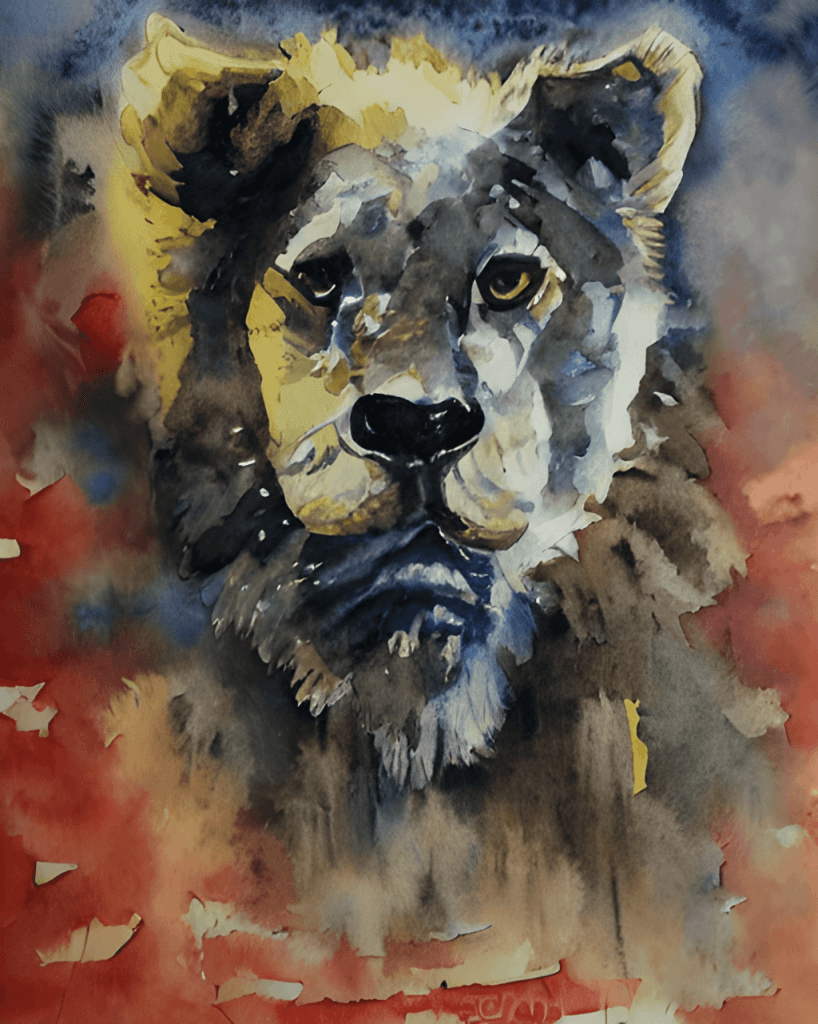
Both Eights and Threes can be very good leaders. Of the two, Eights tend to more authentically look out for their proteges’ interests, often going out of their way and to great pains to make life easier or better for them. Threes tend to give the good example, and relish in being seen as role models. Although they are of course capable of caring deeply for others, average Threes are less likely to be willing to do something for them if it means stepping out of the limelight. On the other hand, they are more image conscious than Eights, and can teach this awareness to others.

MQS

Enneagram Comparisons | Type Three and Type Seven

Enneagram Type Three and Enneagram Type Seven can on occasion be lookalikes, so distinguishing them may be treaky. Threes are a Heart type, and seek recognition for their (real or perceived) merits and for their excellence. Sevens are a Head type, concerned with achieving security by filling their life with distractions and exciting projects.

Let us never forget that the quest for recognition is part of our human makeup: it is how we work as social beings, regardless of our Enneagram Type. The same can be said for security and for looking out for exciting new things. Everyone needs security.

Threes, though, are essentially social in their psychological framework, even when they are introverted, simply because their usual way of acting is aimed at meeting criteria that have been set up for them by society or family. Thus, their actions and plans always imply the presence of other people, even when those people are not there. Sevens, on the other hand, may very well attract colorful and interesting people due to how they behave and may enjoy their praises, but they are ultimately interested in filling their lives with novelty and excitement to avoid looking at what they fear or causes them pain.

Threes are status-seekers, Sevens are pleasure-seekers. Sevens tend to have a strong materialistic streak and find comfort in owning stuff. Of course, they often want the cool new stuff, and coolness is generally a socially defined concept, but the comfort this stuff gives them is that they can use it to fill their lives with thrills and stimulations. Threes, on the other hand, want to be praised more than anything else. Of course, in our society, praise is often linked to the ability to have material possessions (prizes, wealth, etc.) but for Threes stuff matters mostly for what it means for their status.

Action

Both Threes and Sevens can be very hard and efficient workers. Sevens usually need more clearly to be in a line of work that stimulates them, but lacking this, they can put up with a job they don’t like that will allow them to fuel their extravance. Ultimately, their fear is of finding themselves in a situation of scarcity and being left without options, alone with their pain and a sneaking sense of void, meaninglessness and gloom. Threes tend to pursue paths that they deem themselves good at. Of course, if they like the path, all the better, but Threes can go down career paths they despise as long as they can stand out and gain approval. Their fear is mainly that of failure.

Both Threes and Sevens can have a grandiose sense of self. In Sevens, this is due to their disconnection (momentary or permanent) from the negative side of life, which often lauches them into phases of mania where they can become dangerously foolhardy and have unrealistic feelings of invincibility. Average Threes are grandiose about their sense of self, which is almost the sole reason, together with social or familial conditioning, why they get into careers or other life paths even if they don’t particularly like them, simply because they are looking for something that will give them a recognition they deem adequate to their view of themselves.

Ultimately, the grandiosity of an average Three does not blind them to reality, but merely fuels their plans, while the grandiosity of a Seven tends pravail in particularly unbalanced phases of their life and can cause them to make grave blunders (again, it is like a mania).

MQS

Enneagram Comparisons | Type Three and Type Five

Enneagram Type Three and Enneagram Type Five are quite different and are not easily mistaken. Threes are a Heart type, whose main preoccupation is recognition of their merits and outstanding qualities. Fives are a Head type, and they focus on security, which they achieve by withdrawing from the world and identifying with their intellectual prowess.

Threes are usually driven, adaptable and outgoing, while Fives tend to be withdrawn, aloof and preoccupied solely with what’s between their ears. While many Threes may seek recognition in whatever field they have a shot at succeeding in, Fives rarely care about social approval and in fact may go out of their way to defend outlandish ideas to scandalize their peers.

This paradoxically makes Threes better fits for places like the academia, since they are more likely to be performance-oriented, adhere to social conventions and run with the Zeitgeist rather than against it. On the other hand, Fives tend to be more original and deep, almost deriving pride from how offbeat and weird their ideas may sound, sometimes to the detriment of clarity.

Mind

Socially, the two types couldn’t be more distant. Even more reserved Threes are generally good at reading social cues and put a good deal of thought into making a good impression or being appropriate, while Fives tend to dislike people and their expectations, so much so that they seek to reduce their expectations toward people as a way to avoid having expectations placed on them. What many Fives fail to understand is that expectations are a natural part of our social existence, so while blind compliance is not necessarily good, there is something important about social interactions that Threes understand on an intuitive level and from which Fives may learn.

Both Threes and Fives have a hard time processing their emotions. Both see them as distractions: Threes see them as distractions from working on success, while Fives see them as distractions from a clear and objective view of reality. However, Threes usually display emotions in social contexts if it seems like the appropriate thing to do, while Fives generally remain aloof. In general, there is a “See? I’m hitting all the right notes!” attitude to Threes and a “Let’s get this over with quickly so I can go back to my own thing” attitude to Fives.

MQS

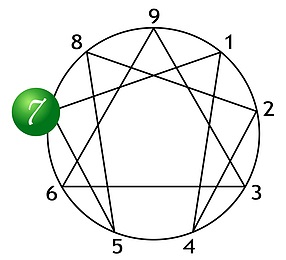
Enneagram Type Seven – Growth and Stress

Enneagram Type Seven, sometimes called the Epicurean or the Enthusiast, belongs to the Head triad. Those of this Enneatype are usually positive, upbeat, energetic and fun-loving. They are mainly driven by the desire to avoid negative sensations and to maximize their options of experiencing the world and its potentials without being held back or restricted. They often make lots of plans and are engaged in many projects, activities, side activities, etc, some of which are bound to be left incomplete. They are usually possessed of quick wits and have an aptitude toward picking up new skills and interests. They rarely focus on the negative side of life, and even when they do, they tend to snap out of it quickly (or more quickly than other people.)

Enneagram Type Seven

Enneatype Seven Grows: Move to Five

One of the common themes in most Sevens’ lives is their fear of being confined to just one option, which will lead them (in their perception) to not experiecing life to the fullest or to not having back-up plans if one option fails. This tendency can cause Sevens to remain perpetually stuck on the surface of life, to the point that some unhealthy Sevens believe the surface is all there is. Sometimes this belief can cause Sevens to make rash decisions out of fear of being chained down in one place or situation.

As they grow and learn to relax their mechanism, though, Sevens start to develop a keener appreciation for the depth and complexity of life and a greater focus in pursuing certain options as more obviously right for them as opposed to others. In this, they start to take on some of the better qualities of Enneagram Type Five. Fives are the intellectuals of the Enneagram. They rarely make rash decisions and are often laser-focused, as though their mind were a blade that they use to cut through the surface of things to reach their core. They also don’t shy away from the negative side of life.

In general, even healthy Fives tend to lead a more sober life than their Seven friends, with a preference for a few well-chosen activities (or a few well-chosen possessions, friends, etc.) as opposed to the epicurean sludgeflow that usually clutters the lives of unhealthy Sevens. This is not to say that Sevens must become minimalistic, but as they grow they do become more stably anchored to their own core.

As they do so, Sevens realize that they are not necessarily foregoing anything essential if they choose to pursue one option to the exclusion of another, and instead they learn to cultivate what they do choose with care and persistence, while bringing their sense of humor, childlike wonder and almost endless adaptability with them.

Sobriety, the Virtue of Enneagram Type Seven

Enneatype Seven Under Stress: Move to One

Perceptive Sevens can sometimes feel that they are being led on a leash by their fear of restriction and pain. While healthy Sevens face their demons directly (like all healthy types) less healthy individuals can become absorbed in an endless whirlwind of meaningless novelty-chasing and hype traps, whereby they drop their toy as soon as the next shiny trinket catches their attention.

Because Sevens are very sharp-witted, they usually notice this trend, but they also feel that they must keep going, because stopping for a second (they feel) would cause more obscure feelings and fears to catch up with them. Unhealthy Sevens generally know that they are caught in a loop, but they feel that it’s too late to stop (Sevens in general have a tendency to excuse away their lack of restraint).

In moving toward their direction of stress, Sevens can pick up some of the less healthy qualities of Enneatype One. Like unhealthy Ones, they become critical and rigid, usually toward those around them who refuse to jump on the next hype train with them. Furthermore, perceiving the futility of their behavior, Sevens may also try to organize themselves to bring more structure to their life and activities (especially if it is spiralling out of control due to poor decision-making), but they tend to organize them to death, until all the wonderful Seven-ish spontaneity is sucked out of them and all that is left is the unhealthy One’s grayish sense of bureaucratic doom.

MQS