Enneagram Type One and Enneagram Type Two are quite different, although they can share some traits. Ones are a Body type, meaning they are chiefly concerned with autonomy, while Twos are Heart type, whose main preoccupation is recognition by others. Ones defend their autonomy by abiding by rules and trying to enforce them so as to justify their actions. Twos seek recognition in the eyes of others by being ‘helpful’ to them, that is, they try to carve themselves a place in another person’s life.
These different motivations can lead both Ones and Twos to similar activities and superficial behavior, such as being altruistic and of service to others, taking care of things the right way and just generally being a goody-two-shoes.
However, the two types are vastly different in most respects. Ones are dry, unemotional and often suppress their subjective preferences in the name of their ideal, while Twos are very wet in their behavior, being emotional and subjective, and they are less interested in how things are supposed to be than in doing what it takes to receive the love and appreciation they need.
Service
Ones are famous for telling people off (“this is against the rules”) and are somewhat pessimistic, while Twos usually limit themselves in this regard, at most advising you in a motherly way (“that’s not good for you”) and tend to be upbeat and positive. Furthermore, Ones are more formal and rigid, while Twos tend to be informal and almost flirty with others, seeking close contact with them. Ones rarely unclench and are highly methodical, while Twos love to be in a flow in all their activities. Also, ultimately, Twos tend to be self-serving, even though an average Two would never admit it, even to themselves, while Ones usually deny themselves for the ideal they serve.
Interestingly, both types tend to have a problem with anger, but for different reasons: Ones can’t let the choler flow unhindered through them, so they put it in the service of a law (“it’s only ok to be angry if I get angry at things not being right”) which leads them to passive-aggressive behavior; Twos usually shy away from anger altogether because they feel it would endanger their relationship with the object of their desire, and only when they move to Eight under stress can they explode into a fit of rage if they feel scorned, unseen or when they see that their attempts at creating complicity (or codependence) with others are failing. But this rarely lasts.
Both Ones and Twos, though, tend to feel shame after a bout of anger: Twos almost always, because they fear their behavior has made them unlovable and unworthy of appreciation; Ones when they feel the anger wasn’t perfectly justified.
Often Known As: Helper, Caregiver, Lover (note that names are as limiting as they are revealing.) Sin/Passion: Pride Focus: On other people’s needs Fear: Of not being needed and/or loved Energy Center: Heart (energy is asserted) Social Stance: Compliant Key Positive Traits (embodied at their best): Warm, Helpful, Loving, Empathetic, Personable, Giving, Accepting, Nurturing, Emotional, Capable of sacrificing themselves for others, Altruistic, Positive Key Negative Traits(embodied at their worst): Manipulative, Codependent, Flattering, Possessive, Subtly tyrannical, Taking up space in others’ lives to find meaning, Clingy, Denying own needs, hopes and aims, Sense of being unworthy of love Growth and Stress Direction: to Four and Eight respectively
Enneagram chart with Type Two highlighted.
Introduction
Twos are usually immediately recognizable for their marked interpersonal qualities. Sweet, caring and warm-hearted, Twos tend to take up the role of the good friend, the older sibling or the good parent in people’s lives. There is a wonderful softness to their way of dealing with others, which makes them appear more inviting and attractive.
Twos are the type of people who show up with that one thing you once mentioned in passing that you liked and never thought about it again. The Two, however, did think about it again, as they often keep their ear on the ground for signals of the other’s wishes, so that they may help them.
Twos take other people’s needs and problems very seriously, and treat them almost as a personal mission. If someone is ready to deprive themselves of something to make another happy, that’s Enneagram Type Two. Often, it seems as though possibilities suddenly become endless with the help of a Two, as they are capable not only of seeing the bright side of things, but also of acknowledging other people’s talents, possibilities and unrecognized options.
In general, Twos are capable of making other people flourish and they themselves flourish when taking care of others. However, with their focus on others’ needs, Twos can become too involved in others’ lives and may forget to take care of themselves, and occasionally this may lead to unspoken resentment toward others–unspoken, that is, until the other disappoints them.
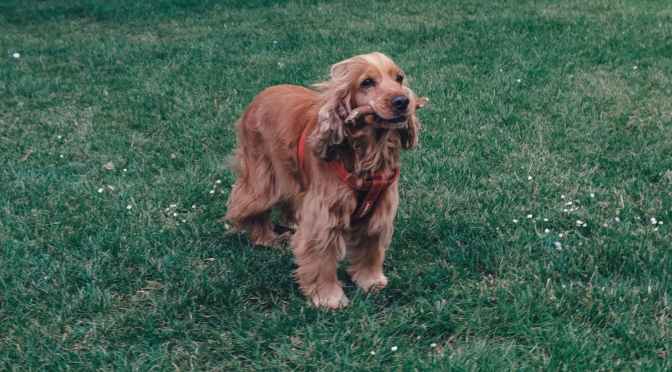
The sweet puppy, a good symbol for Enneagram Type Two
Core Mechanism
Twos are deeply focused on other people’s needs, aims, and aspirations, and may even seem to deny their own in order to help others meet theirs. Out of all the Enneagram Types, Type Two is the one that comes the closest to the archetype of the mother or of the caregiver. They tend to make others feel embraced and seen, and are capable of consoling and helping them see the bright side of everything. In a way, Twos almost seem to exist solely to be in the other’s life.
And this is where problems start, because even though healthy Twos can be truly selfless, average Twos most certainly aren’t. Twos need to be needed, and this stems from their subconscious belief that they are, in themselves, unworthy of love, acknowledgment or consideration, or of having their own needs met.
In this sense, an average Two sees taking care of others as a required detour toward themselves and their own needs. This can lead to various forms of projection. For instance, in the past my husband, a Two, sometimes asked me if I needed to pee or if I was hungry, when what he truly meant was “I need to pee” or, “I’m hungry.” Because they have learned to put other people’s needs before theirs, Twos only feel justified in meeting their own needs by helping others. More dangerously, sometimes Twos manipulate others into believing they want what the Two wants.
Another notious consequence of the Two mechanism is that, in besieging the other with attentions, Twos usually attach quite a number of strings to their favors. In their attempt to meet the other’s needs and even to anticipate them, Twos often stretch themselves thin. What they want in return is not necessarily anything material, but it usually involves a constant and clear acknowledgment of the Two’s central importance in the person’s life. When something goes south (“I didn’t even ask for that”) Twos can feel slighted. They then engage in recriminatory behavior and in making the other feel unworthy of their care.
Sin/Passion
Type Two’s passion is Pride. At first this may sound strange, as Twos can sometimes appear, if not bashful, at least meek, and they usually have a tendency to put others on a pedestal or in the limelight, rather than themselves. However, this only appears to be the case at a superficial level of consideration.
Although healthy Twos really are meek, humble and loving, the core of an average Two’s psychological structure is the tendency toinflate their ego to negate the autonomy of outside reality and of other people. All Heart types struggle with their self-image. Twos want their self-image validated in some form by others, which in turn implies the dreadful possibility of not being acknowledged or recognized.
The mere possibility of this happening is intolerable for a Two, as not having their self-image validated can be akin to not being truly there, and therefore of dying, at least metaphorically. This is truly an existential threat, as once their image of themselves is shattered, Twos must face their aloneness and neediness, that is, their helplessness in front of reality.
To avoid this, proud Twos ‘inflate’ themselves to take up space in other people’s lives, meeting their needs and seeking to become their ‘all’, with the tacit aim of feeling important, loved, acknowledged, validated. They usually do this with sweetness, but also by manipulating others as the need arises, and trying to forge deep, symbiotic bonds. Pride is this inflation of the ego, in the attempt to substitute reality with it, so that there is no risk of disillusion. When the other seeks freedom from the Two’s clutches, the Two reacts by tearing down the other as unworthy of the Two’s attention. Here the pride becomes, from metaphorical, very real.
Pride, the passion of Enneagram Type Two
Misconceptions
One of the main misconceptions I see repeated on Type Two is that they always want to be with other people. Sometimes I even come across descriptions of Twos as party people. A Two may or may not be a party person, but this has little to do with the type mechanism itself.
The reality is that Twos simply are unable to be alone, but this doesn’t automatically mean they want to be with others. Twos’ awareness tends to concentrate on the point where their life intersect the lives of others. Even when they are alone in a room, they are rarely truly by themselves.
Many tasks that Twos perform while alone they often subconsciously justify in front of themselves as good for others. Even cultivating a personal hobby is twisted as a form of service toward others so that the Two can justify enjoying it. In fact, sometimes even the mere act of resting may be seen as ‘taking a breather so later I can take care of useful things better.’
Again, this says nothing about a Two’s willingless to be with people–let alone with many people. It simply shows that a Two, regadless of how introverted or extroverted they are, tends to justify their actions in terms of the needs of other people rather than their own. This is all part of the process whereby a Two decides their own reality, manipulating themselves into believing or doing something.
Wings
2w1 – Twos with a One wing tend to have a tidy, neat, organized streak. More driven by rules and ideals and a bit less by norms, they often put their great organizational skills and unending drive for improvement in the service of their self-image as helpers of others, usually seen as needy and incapable of taking care of themselves and their surroundings. This is true for any Two, but the One wing accentuates the aspect of seeing oneself as the one who can do things right, especially for the good of others.
2w3 – Twos with a Three wing have a more marked tendency toward keeping up appearances. They tend to be more driven by societal norms and notions of ‘nicety.’ Their image among their peers is usually quite important to them, and they often try to do as much as possible to improve it and polish it. The creation of interpersonal bonds is taken on with the additional aim of being seen in one’s best qualities. They are basically the stereotype of the mom organizing the neighborhood’s contest for best apple pie.
(note that wings can have some minor descriptive power in terms of superficial behavior, but they are irrelevant in terms of what motivates the person. Many people have no noticeable wing, while few show signs of both.)