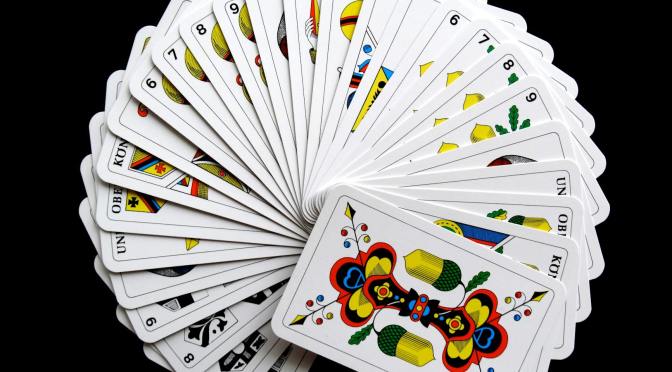
I recently received some questions from a visitor to this website. One of them was in which sense the Sibilla is considered “chiacchierina”, i.e., chatty.
This is an interesting question, because it gets to the heart of how divination works (and not just divination with cards). I don’t want to foster the belief that the Sibilla is more capable of conveying information than other divination systems. This would be false advertising. Every deck and every system is capable of informing us.
But the way in which the Sibilla informs us is rather unique. Here we get into the specific character that each deck and system has. The Sibilla is like an off-beat aunt with a poor sense of boundaries.
A girl once asked me how her crush for a guy would develop. The girl had moved in with her grandma and the grandma disapproved of the guy. The Sibilla started off not with an answer to the question, but by telling me that the girl’s grandma disapproved of the situation. If I had asked another one of the decks I work with, I probably would have gotten a more straightforward answer.
It takes working with each deck in order to understand their language and personality, but these always emerge sooner or later. This is also probably why old folk diviners believed that each deck has a spirit attached to it that lives inside its cards and infuses them with its peculiar traits, a belief that I tend to share, since it explains this phenomenon much better than the impersonal Jungian theory of synchronicity.
The reality is that each (valid) divination system is chatty in its own way. I’ve heard the Bolognese tarot being referred to as chatty, and as I work with it I understand that its chattiness really is a factor, even though it is less chaotic than the Sibilla.
The bed symbolism is almost as widespread in cartomancy as that of the table, of which it is a natural counterpart. The table often stands for conviviality, nourishment, feasting and interpersonal contact, and it often represents situations happening during the day. The bed, by contrast, is a nocturnal symbol of retreat and rest, and can stand for sickness, but also for physical intimacy, depending on the other cards. As usual, it is admirable how the card readers of yore used to weave simple and effective symbols of daily life in their reading systems, which allowed them to talk about reality.
The oldest mention I could find of a card representing the bed is in a little-known system for reading Italian regional playing cards with a reduced pack of 25 (instead of the full deck of 40). In this method, the Four of Coins is the bed card. It tends to represent situations becoming static or sick, or it can talk about passion, depending on the other cards. It can also indicate that something happens in the evening or at night. Interestingly, in another system I’m aware of, this time utilizing the full pack, the Four of Coins is the table, while the Five of Wands is the bed.
In the Bolognese Tarot, which is the oldest used divination deck we have written records of, the Chariot is the bed card. This has got to be one of the most puzzling bits of symbolism of the deck: a card that is usually indicative of forward movement, travel, progress, launching forward is seen as a card of static sickness, likely due to how the chariot is represented, with the horses crouching at the sides, as if the forward movement had stopped.
Truth be told, in the oldest extant document on divination with the Bolognese tarot, which dates back to the Pre-Napoleonic period, the Chariot is still considered a card of journey, but shorter than the World card, which is assigned the meaning ‘long journey’. This may indicate that the meaning of the card evolved through time, from ‘little journey’ to ‘little movement’ to ‘not much movement’ to ‘staticity’. Another likely possibility is that different meanings were used by different strands of the tradition, one of which hadn’t yet been put down in writing. This latter possibility is confirmed by the fact that there are readers who who assign both meanings to the Chariot, depending on the cards that surround it (static cards activate the static meaning, active cards the moving, active meaning).
The bed card is also present in some of the oracle decks that originated in the XVIII century as parlor games. In the Sibilla we have two bed cards: one is the Four of Spades, the Sickness card, which interprets the symbolism of the bed in its more static and negative sense of needing to interrupt one’s routine and of situations that are not healthy. The other bed card is the Ace of Diamonds, the Room, which can indicate any room in a building, but which in itself stands for the bedroom. As an extended meaning, it is the card of intimacy, so the presence of cards indicating love or physical contact can lead to rather hot interpretations.
The Kipper deck does not have two bed cards, but it does contemplate the symbol of the bed in the card “a short sickness”, which depicts a patient in bed being visited by a doctor. This is mostly a card of sickness, but many German-language sources I’ve read consider it also an ingredient in combinations about intercourse, partly due to the presence of the bed and partly due to the doctor touching the sick man’s wrist, which is supposed to be indicative of physical contact, if supported by other cards.
This is a recurrent question I get. Some people are of the opinion that reading decks have something akin to a shelf life, after which they stop answering or they become impregnated with negative energy from all the readings. I often get asked if this is the case.
To which my answer is: under normal circumstances, your deck will keep answering you (or at least it will keep working, even if it occasionally snubs your questions) for as long as you use it. This has been my experience, as well as that of all my teachers, and I’ve had the good luck having many teachers.
My first teacher, from whom I learned to read playing cards and the Sibilla, followed the Italian tradition that divination decks need to be old, must have been used to play at the local inn and the people playing with them must have covered them in offensive swearwords (read here my hypothesis on why this tradition exists).
This obviously doesn’t apply to the Sibilla, since Sibilla decks, as well as similar decks like Lenormand or Kipper cards, are pretty much the only card decks specifically designed for divination. But tarot was a playing card game, and playing cards… well, it’s in the name, and so, according to my teacher, they needed to be “giocati e bestiemmati” (played with and offended with swearwords). And after you got a hold of one such deck, you probably were going to use it for as long as you lived.
When I started learning the tarot, my other teacher held on to her first deck as if it was a relic, and it did answer her beautifully. She was of the opinion, however, that the deck could stop answering correctly or become more negative in its answers if you read for many people with a tragic life. When this happened, she usually took the deck to church and had it blessed by the priest. I honestly cannot say I ever needed this, but there you have it.
As for the Bolognese tarot, I do not know what deck the person who taught me the 45-card system used, but I do know that my teacher for the 50-card system still uses her grandmother’s deck. Another person I am in contact with, who uses 49 cards, still uses the deck her teacher gifted her.
As for me, I have a conservative outlook on life, and I don’t throw away something unless I really, really have to. The Sibilla deck I use is the one I bought when I started learning, and while I don’t insist on always using the same playing card deck, I still occasionally whip out my old one.
Still, there are people who believe decks can stop working after a while, including people I admire (see Josephine MacCarthy). Is there anything to it? Obviously, much depends on the theoretical framework one uses for their magical activities (which includes divination).
I was taught that divination (any divination) can stop working if you are the recipient of a curse, but that’s an extreme scenario. More often, the people who complain about their deck going lazy on them tend to torture them with repeated questions on the same topic over and over.
As much as skeptics may point out that this is proof that divination doesn’t work because it cannot be repeated ad libitum in lab conditions, it is simply how it is: if you annoy the deck it will stop answering. This simple fact shows, at least in my opinion, that there is something alive attached to the deck.
Usually, in traditional divination folklore, we would say that the deck has a little spirit hidden inside. And while this may sound like a childish explanation, it is the one that best explains my experience, as well as being perfectly in line with traditional hermetic principles. The point is that while many valiant attempts have been made at explaining divination using more or less recognized principles (see Jung’s views), we are at work with something we don’t fully understand. Some level of respect is due to this something, if for nothing else than to keep the work environment positive with whatever it is.
When it comes to divination, theory can only get you so far. The best way to improve your reading skills is to learn the basics of a *valid* system and then start reading.
For most of us, we are our own first querents, and that is a problem. I don’t have a 100% accuracy record when reading for others, but I barely reach 60% when reading for myself, especially if I’m invested in the topic. It is not just a matter of wrong interpretation, which can and does happen. I am more and more convinced that sometimes, when we read for ourselves and we are not perfectly at peace, we tend to get readings that reflect what we think rather than what is happening or will happen.
Furthermore, the tendency that many people have to start obsessively putting questions to the cards just to see if they say something vaguely understandable (which doesn’t mean true) is dangerous, and can get us in a warped frame of mind.
I know that for many, especially coming from certain societal backgrounds, reading for others can be a big step into the unknown, but I would advise anyone to start reading for some sympathetic friends or relatives (and when I say for them I mean in front of them, not asking questions about them) and then to graduate as soon as possible to readings for people we don’t know or know little about.
I don’t have too many friends, but they do a good job of talking about me to their friends and to their friends’ friends, which is how I get my supply of test anim-ehm, querents. If you start reading for your friends and ask them to spread the word the same will happen to you.
The cool thing about reading for people we don’t know is that it is so much easier than you might think. Divination DOES work! And divining for someone when there is no chance of you knowing the information in advance is very impressive for them and very satisfying for us as diviners. It will build your confidence much more quickly than torturing the cards about your own mental dramas. Plus, the oracles always seem to be much clearer and much more crisp when I divine for strangers.
One thing I would advise is to be as scientific as possible: record the question, the reading, your interpretation and the results. Don’t think you cannot build your vocabulary because the only right answer is the one offered to you by your intuition. 99% of intuitive readers are terrible, and what they call intuition is not actual intuition: it’s their stupidity echoing in the empty chambers of their mind. Be systematic and slowly you will gain experience.
Let’s move on with our look at the playing cards divided by concept. This time, we see which cards represent stability.
Ace of Hearts The Ace of Hearts, like in many systems of reading playing cards, represents the home. It is a symbol of durability and stability, since houses tend to be stable things that don’t change. Mostly, the Ace of Hearts symbolizes the house or the family, however, when describing someone’s character, for instance, it shows them to be family-oriented, looking at stabilizing their life, being rooted in traditional values, etc.
Four of Hearts The Four of Hearts usually brings agreement in all fields of life. However, the type of agreement it shows is effortless, and it resembles more a state of peace where the waters aren’t ruffled (and if they are, the waves calm down immediately). Usually this card indicates harmony, harmonious surroundings and ease.
Six of Hearts Unlike the previous two cards, the Six of Hearts, which represents such things as reconciliation, healing, etc. does often imply the presence of some disturbing factors (though not necessarily. We need to look at the spread as a whole), but it shows that these disturbing factors, such as a break-up or a disagreement, can and probably will be overcome, returning the situation to its previous stability.
Ten of Hearts The Ten of Hearts is one of the most powerful in the deck, as it is often capable of diminishing the negative impact of negative cards. Since it is symbolic of paradise, heaven or ultimate attainment of one’s happiness, it hints at a situation either being stable (and happy) or becoming stable (and happy). When it is followed by very negative cards, though, it can show this paradise being lost. In fact, it is sometimes a bad sign when we find the Ten of Hearts at the beginning of the spread without other strong cards, because it shows that the best is already in the past.
Three of Clubs The Three of Clubs brings union and unity. It causes situations or people to become locked in place, usually by signing contracts, celebrating a marriage of making a commitment to each other or doing things together. Sometimes it can show that a situation perseveres (it remains married to us).
Six of Clubs A somewhat obnoxious card, the Six of Clubs isn’t tragic, but it brings disturbance. It shows situations that have lost their momentum, and problems that we thought we had overcome reemerging. It shows a sort of static discontent with no disruption in sight, either for good or bad, unless other cards clearly show it.
Nine of Clubs This is the card of distance, either in terms of miles or in terms of time. As such, it lengthens out the timeframe, but unlike the Six, the Nine of Clubs has no negative undertones, except in the sense that often we want all the good in the world to happen to us quickly, and this card stalls us for some time. However, it can also make a good situation last longer.
Four of Diamonds Unlike the Four of Hearts, which shows effortless stability and agreement, the Four of Diamonds represents agreement following either tensions or negotiations. Thus it represents all things to do with bureaucracy and the government that seek to regulate life and make it more stable within the borders of a country.
Ten of Diamonds Of the Ten of Diamonds we can say something similar to the Ten of Hearts, except that the success promised by Diamonds tends to be more material, and doesn’t necessarily imply happiness. However, it does represent situations that have developmed to their utmost in a positive sense and have reached their aim.
Five of Spades Being the card of prison, the Five of Spades symbolizes constraints, blockages and the need to make great sacrifices. As such, it means that the person (symbolized by the central pip, hemmed in by the four other pips at the corners) cannot move and is bound to a situation. Usually this is in a negative sense. Even when surrounded by positive cards, thus showing a positive commitment, it still indicates a certain sense of being stifled.
Six of Spades The Six of Spades is the card of illness, and it shows all situations that are ill, broken, suffering, etc. In itself it is not the most tragic card in the suit, but it represents a state of suffering stillness, which may be overcome or lead to disruption, depending on the cards that follow this one.
The great thing about occultism being my life but not my job is that I get to do whatever I please. Well, right now it pleases me to talk about this deck, somehow.
Fortune-telling with Piquet cards or Skat cards. Like the video and subscribe
In almost all cartomancy systems, Italian or otherwise, the Ace of Hearts/Cups is the house. Here the Sibilla is an exception, since it relegates the House to the Two of Hearts, although the Ace of Hearts still has connections to the idea of family and people living together. In the second most widespread Sibilla deck in Italy, which is the Sibilla Regionale, which uses the suits of the Neapolitan cards, the Ace of Cups is once again the house.
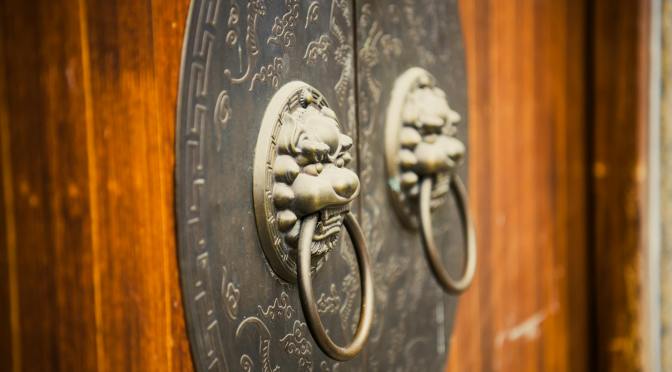
One thing I have so far never found in non-Italian systems, which on the contrary is very widespread in Italy, is the concept of the door knockers, also known as ‘close to home’. This is a meaning that is found in many regional Italian cartomancy systems, and keep in mind that almost everything in Italy is regional, since regions have a much older history as separate states than Italy itself, if we discount the Roman Empire.
When I was taught to read playing cards, my teacher told me that the Two of Hearts is “al martel di porta”, knocking at the door. This refers to the way old house doors are made in many European countries, including Italy, where door knockers were used back when you couldn’t ring at the door. At least in Italy door knockers are still very much en vogue, though mostly as a decorative element.
The idea of the Two of Hearts as “the door knockers” is a reference to the fact that door knockers usually come in twos and to the fact that the Two of Hearts comes right after the Ace, which is the house, so that the Two is quite literally close to the home.
This meaning is also found in many systems for reading Piacentine cards, where the Two of Cups takes on that meaning (in some other systems this meaning is given to the Two of Wands) as well as in the Bolognese Tarot, where it’s the Ace of Swords that depicts it, due to the odd shape of the picture.
In some systems I am aware of, there are two distinct cards: the door knockers and the roof of the house. This is true for some systems employing Piacentine cards, where the Two of Cups is the door knockers and the Four of Wands is the roof.
This distinction is also found in the Bolognese tarot, where the Ace of Swords depicts the door knockers and the Seven of Cups the roof of the house. In the oldest surviving system for reading the Bolognese tarot, which dates back to before the French revolution (I talk about it here), the Knight of Wands indicated the door knockers and the Ten of Cups the roof of the house. Clearly, therefore, this symbolism is deeply ingrained in Italian cartomancy.
According to the person who taught me the 45-card system of Bolognese tarot, the Ace of Swords, the door knockers, tends to show something close to home in a temporal sense (about to happen) whereas the Seven of Cups, the roof, is more connected to everyday life, to our close environment and to the protection of people surrounding us, as well as to the family in a more extended sense. Germana Tartari, who initiated me to the 50-card system, which she was taught by her grandmother and by some of her grandmother’s friends, uses the Nine of Cups as ‘the staircase to the house‘, again mostly in a temporal sense as something about to happen.
On the other hand, in the system for reading playing cards that I was taught, the Two of Hearts covers both possibilities: it indicates something about to knock at the door or it can show family situations, people who are close to us etc.
I have never found this symbolism in other non-Italian systems. If you did, feel free to drop me a line, as it would be very interesting. Manuel Arcuri, an American reader who was taught to read playing cards by his Italian grandmother, says somewhere that his grandmother called the Two of Hearts “l’attesa”, which means waiting or expectation, as of something about to happen. He doesn’t mention door knockers though.
Furthermore, many card reading systems I have read about assign the meaning of “within two weeks” to the Two of Hearts, which once again gives us the idea of something about to knock at the door. Interestingly, Regina Russell‘s playing card system uses the Two of Hearts to indicate excitement for something that is about to happen, expectation and even pregnancy (expecting a child).
I was asked by a visitor if I take into account the direction court cards look. The idea that the direction faced by court cards gives us important details is ingrained in several strands of card divination. In recent decades it has even been appropriated by certain scam artists (like Jodorowsky and his various imitators) when trying to sell the Tarot of Marseille as a deep metaphysical tool rather than for what it has always been–a cheap gaming deck, which, like all tarot decks, is as good for divination as it is for playing at the local inn.
But directionality does have its place in certain legitimate divination traditions. It just happens not to be part of mine. I do not take into account the way court cards face when reading playing cards, as I have never found it useful or revealing.
To me, each card is a place-holder for a cluster of certain ideas that are called to mind when the card appears: the Ace of Hearts is a place-holder of a cluster of ideas relating to the home or family, and similarly the Queen of Spades is a place-holder for a cluster of ideas relating to problematic women or issues traditionally associated with the negative side of womanhood. In this cluster of ideas there is nothing inherently left-looking or right-looking. That’s just the fantasy of whoever drew the picture.
What matters most to me is not so much where the card looks, but in what relationship it is with respect to the other cards. Suppose we have:
Q♣️ – 3♣️ – K♣️
Here we have a typical sequence of marriage. Even if the two court cards were swapped, it would change nothing. Now let’s take:
3♣️ – K♣️ – Q♣️
This positioning of the cards may or may not be the same as the previous one. In itself it is just another sequence of marriage. But if it makes sense within the context of the spread, it could indicate that he is the one who is more attached to the marriage, because he falls closer to the card that symbolizes union. However, let’s now look at this:
Q♦️ – 3♣️ – K♣️ – Q♣️
Here it is very important that the King of Clubs fell next to the union, because through it he is united to another woman. This sequence shows that the female querent is the lover (it would be even more clear if the 10♠️ fell between the two Club court cards, as it would show that the married man sees the female querent in secret).
In all this, where the court cards face is of no consequence, because what truly matters is their dynamic interplay. That being said, I know of playing card traditions where directionality is taken into account and I have nothing against it. It just happens not to be part of my toolkit.
When we give a reading about extraordinary questions like the occult or the paranormal, it is easy to fall into the trap of wanting to confirm the querent’s bias or subjective experience.
This is why I tend to avoid queries about such things as past lives: for one, I don’t believe in reincarnation, or rather, I believe that the soul of the world constantly reincarnates through every individual that is born, but I don’t believe in the existence of seprate or individual souls that reincarnate karmically; for two, I fail to see the importance of knowing about what one might have been in a previous life; for three, suppose I tell someone that they were an illiterate farmer, when another reader convinced them they were a cool witch who was burned at the stake for her mystical powers, how is the querent going to choose who is right apart from their whim of the moment?
Still, certain topics, such as magic or spirits, are within my tradition and I do believe in them, so I accept readings, but I warn querents that the likelihood of something of the sort happening in their life is very low even if they go looking for it, let alone randomly.
This one querent thought there is a ghost haunting the third floor of the building she moved to. This is the spread that came out:
A card reading about a ghost
As can be seen, even without interpreting the spread, there is no trace of haunting in the cards. The final two cards, the Nine of Diamonds and the Ten of Diamonds, are a lucky combination, they can show success, protection or even simply the fact that the “energy” is clean, not charged with magical or paranormal forces. The querent shows up at the beginning of the spread with the Three of Diamonds, which is a doubtful card in this context. It makes me think more about random things that she, the Queen, misinterpreted.
The Jack of Hearts is even more doubtful. It could show the presence of a child (a living child, that is) or an animal (again, a living one) who does something the querent misinterprets. The querent said that there are both children and animals in the building, so that’s a possibility. Frankly, I should have either added cards or done another spread.
Still, this is enough to make me think that there is a non-paranormal explanation for the querent’s experience, so the spread is enough to answer the question in that regard.
The funny thing is that, after the reading, the querent started talking to me like I am not very competent at reading cards. I am obviously open to being wrong, and I understand that it must be frustrating being told that one’s subjective experience is probably the result of a misinterpretation (it must feel like ‘gaslighting’, to employ an overused word). All I could do was trying to be as understanding as I could in delivering the answer.
After all, for every instance of real haunting or real magic (at least, real according to the oracle) there are thousands of cases of people who spend years burning sage to smoke out a presence that isn’t there, yet the ghost who isn’t there often ends up influencing their life more than those that are there.