Tag Archives: personal-development

Enneagram Comparisons – Type Six and Type Eight

Enneagram Type Six and Enneagram Type Eight can be similar, depending on certain factors, but overall they are very different. Sixes are a Head type and are concerned with security and certainty. Eights are a Body type and are concerned with independence and autonomy.

Sixes often tend to be sheepish, friendly, helpful and gregarious. They look for external points of reference that can give them the security they feel they lack (whether this point of reference be a leader, an idea, a group or something else). Eights are much more maverick-like, usually fight for themselves (and for those they wish to protect) and don’t usually need external frames of reference. In fact, they may despise them. If Eights are warriors, Sixes are worriers.

However, Sixes can also act in a radically different way when they enter their contraphobic stance, when they stop running away from fear and tackle it head-on. When this happens, Sixes can be very similar to Eights in that they act in an bold, fierce way that could even come across as arrogant or smug. The main difference between an Eight and a contraphobic Six is that the contraphobic Six still acts based on their deep fears. They are like herbivores charging against the predator.
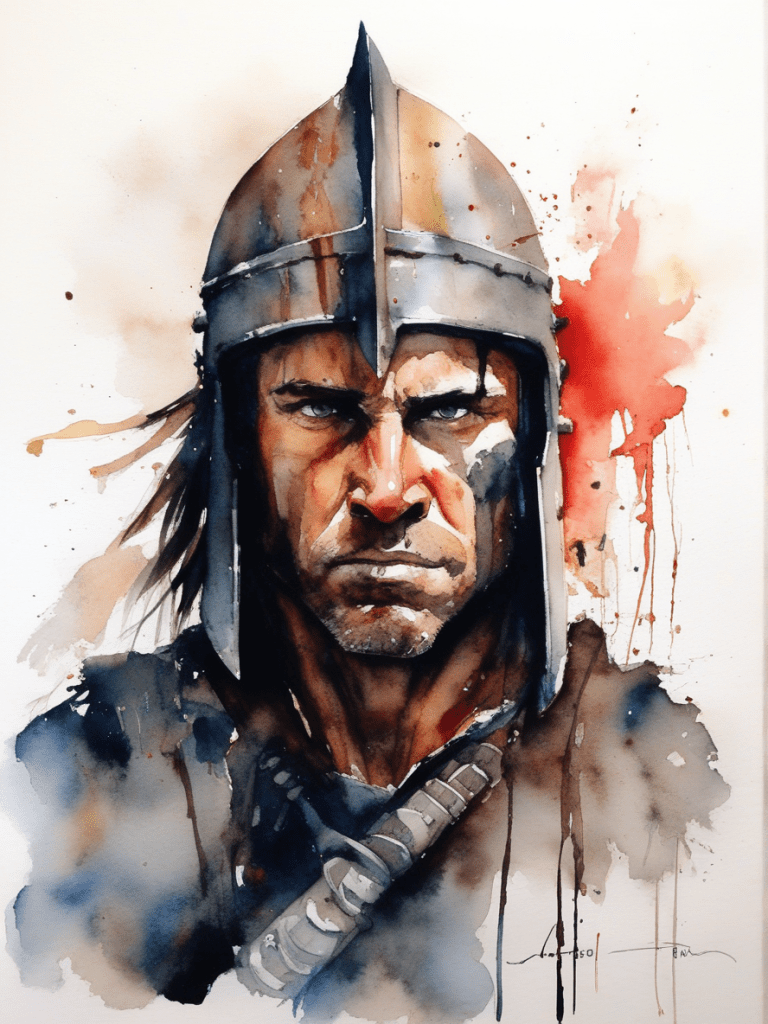
courage

Socially, Sixes generally adopt a friendly stance. They hope to come across as those fun, dependable fellas you’d take inside and defend if the zombie apocalypse they fear should actually happen. They have a strong sense of the importance of safety nets, since they are forever catastrophizing and thinking about worst case scenarios and since they feel helpless in front of an uncertain world.

Eights rarely act like this. They are usually fierce and even overconfident. Their strategy is to force others to see them as either a threat they want to stay away from or a point of reference to gravitate around, submitting to their guidance. If Sixes try to poke holes in every certainty they have in order to see if if it is, in fact, certain, Eights can often jump the gun, confident they can bend the world to their will by sheer power.

MQS
Enneagram Comparisons – Type Six and Type Seven

Enneagram Type Six and Enneagram Type Seven are quite distinct, but they do share a number of traits, especially on a superficial level. Both are Head types. Sixes feel insecure in the world, and therefore seek guidance from someone or something. Sevens also act from a place of insecurity, but they flip the script by moving toward the world with endless ideas in mind on how to enjoy it to avoid staring too much at their inner disquiet.

One of the most obvious common traits is that both Sixes and Sevens tend, on average, to come across as very likeable. Both have often a strong sense of humor (average Fives also have a sense of humor, but it tends to be used to put down others). Sixes tend to want to ingratiate themselves to others to show that they are worth defending or at least not harming. Sevens tend not to be afraid of others but they do tend to look for the entertaining side of their experience of life.

Of the two types, Sixes are the more community-oriented or other-oriented, largely because they feel that effective networking is a positive response to the uncertainties of existence. However, their skeptical side can also end up undermining their efforts as they often blow things out of proportions in an effort to make sure they can trust others, and they are very good (sometimes too good) at poking holes in everything.

humor

Sevens are not necessarily more trusting of others, but their efforts do not revolve around trying to see who they can trust. Instead, Sevens are rather self-reliant go-getters. They know that not everyone can be trusted, but they do not sleep over it, just like they tend not to lose sleep over most negative thoughts, unless they are experiencing peculiar circumstances.

On the other hands, Sevens can sometimes become too relaxed lose their grip on their life by going into almost manic phases of unwarranted optimism, whereas Sixes are cautious and will have thought about most if not all of the consequences of their actions.

Ultimately, Sixes and Sevens move from the same inner experience of anxiety and fear, but react to it in vastly different ways: Sixes by trying to looking for remedies, Sevens by distracting themselves.

MQS

Enneagram Comparisons – Type Five and Type Nine

Enneagram Type Five and Enneagram Type Nine can share some similarities, though they remain vastly different. Nines are a Body type, who seeks to maintain a sense of harmony within themselves and their surrounding by avoiding conflicts that would undermine their sense of autonomy. Fives are a Head type, who withdraw from the world to observe it from a distance and to gain skills that will ideally allow them to succeed.

Both Fives and Nines withdraw from others, but in different ways. Average Nines withdraw their energy and suppress their agenda to avoid it clashing with that of other people. Average Fives withdraw themselves, often physically, or at least emotionally, from social situations.

Nines, however, generally remain friendly and often go with other people’s flow, as long as it doesn’t threaten their inner sense of calm. Fives, on the other hand, have a strong sense of self as opposed to all other, refuse to be swept along in their flow and tend to have a supercilious and combative demeanor that most Nines would never display.

Withdrawing

Internally, Nines usually pacify themselves with happy or comforting thoughts and a positive, if vague, attitude. They tend to think in terms of generalities, which makes them very good at finding common grounds with all humanity at an almost archetypal level. Fives are internally high-strung and constantly mulling over some thought or theory, they disdain generalities and are as laser-focused on details as they are preoccupied with finding their universal significance. Furthermore, in general Nines will stop themselves from trespassing into “scary thought territory”, while Fives will usually willingly go there.

The decisive difference between Nines and Fives is in what drives the two types. Fives are driven by knowledge. At their best they are as wise as they are knowledgeable, at their worst they are obnoxious collectors of obscure trivia. Nines are motivated by peace. At their best they are deeply embracing of themselves and others, at their worst they are dollar-store mystics detached from reality.

MQS

Enneagram Comparisons – Type Five and Type Eight

Enneagram Type Five and Enneagram Type Eight are apparently very different, so much so that they are each other’s arrow on the Enneagram symbol: Five is Eight’s stress point, Eight is Five’s growth point. Fives are a Head type, concerned with security, and tend to find it by removing themselves from the world and observing it from a distance. Eights are a Body type, whose drive for independence leads them to asserting themselves in most situations, even and especially when there is resistance against them.

Interestingly, both Fives and Eights assert the energy of their center: Fives assert the intellectual urge of the Head center, Eights the instinctual urge of the Body center. In this, they both tend to break down opposition on the plane on which they operate: Eights break down physical opposition, often by asserting themselves on others more or less fiercely; Fives assert their mind’s right to be the judge of the truth of this or that idea by breaking it down, rarely accepting it as a given. Both Eights and Fives can be confrontational when unhealthy: Eights physically, Fives intellectually.

Assertion

Both types are strongly concerned with truth. Fives seek to develop a true appraisal of reality beyond social or even academic conventions. Eights usually have a very instinctual conception of the truth (their famous bullshittometer). Fives’ danger is of getting lost in the hair-splitting byzantinisms of their mental process; Eights’ danger is of failing to realize that sometimes their instincts do fail them and not everything is as simple and black-and-white as their guts tell them. Eights usually tend to simplify, Fives to complexify. Both excesses are best curbed.

Socially, both Eights and Fives have an individualistic, maverick-like streak, and both can be socially awkward and be somewhat timid. Yes, this also applies to Eights: as soon as they feel they are out of their depth Eights tend to become withdrawn and insecure, like regular Fives, often out of fear of being called out for being stupid or incompetent (this is Five’s fear, which is Eight’s stress point). Usually, though, Eights, while not necessarily social, tend to be imposing and even demanding. Fives, on the other hand, are almost always distant and even remove themselves physically from contact with others. Fives who have consciously worked on their social skills may, however, develop some of Eight’s bodily confidence.

Enneagram Comparisons – Type Five and Type Seven

Enneagram Type Five and Enneagram Type Seven are very different, but they do share some connections, so much so that Seven is the stress point of Five and Five the growth point of Seven. Both are Head types. Fives are intellectual individualists who remove themselves from the world to feel safe from it. Sevens are exciteable planners who seek to escape their inner sense of fear or pain by taking refuge into the opportunities the world seems to offer them.

Both Fives and Sevens are Head-driven, but in vastly different way. Fives are THE brainy type, as they spend the majority of their time in their heads, thinking odd ideas and formulating concepts almost as an aim in itself. For Sevens the mind is declassed to the rank of means in formulating plans for enjoyment and flight from (or rationalization of) the things the Seven fears.

Both Fives and Sevens are very good at establishing connections between disparate things, subjects and ideas that few would ever think of mentioning in the same sentence. Still, they do it in vastly different ways and following different avenues. Sevens usually move on the surface of things, casting a wide net on their multiplicity in a bid to explore as many of them as the Seven wishes to. They enjoy this sense of variety and love having options and freedom, and this almost inevitably leads them to heaping up odd experiences and ideas in never-before-seen patterns. They are, in a way, the Renaissance men and women of the Enneagram.

Fives, on the other hand, delve deeply, with an almost surgical focus, into a single abstruse and socially disregarded idea that interests them until they have broken it into its smallest possible components, which they can reassemble, often with a taste for paradox, into widely different ideas. Then they break them apart again and start over in the same endless process of analysis and synthesis. Since, at the end of the day, everything in the universe is connected with everything else, Fives end up (or at least aim at) possessing the Whole within a single concept by leveraging a single, obsessively developed core idea that allows them access to all other ideas. In other words, Sevens tend to be exploratory, Fives tend to be conceptual.

The Mind’s Eye

Socially, the two types are very different. Sevens, while not necessarily extroverts, are outgoing, in the very real sense that they go out of themselves and toward others, often directly if not bluntly. Fives tend to withdraw from social contact in a hermit-like fashion.

Furthermore, both types have a keen awareness of their needs, but take care of them in starkly different ways. Fives generally minimize their needs in order to avoid offering themselves up to the vagaries of good and bad fortune, but in pursuing this course they often end up withered and emotionally dry. Sevens on the other hand are usually anything except minimalistic, tending more toward extravagance, as they fear confinement, because confinement and lack of external fulfillment force them to bear witness to a less than happy inner reality that, in one way or another, they refuse to confront.

MQS

Enneagram Comparisons – Type Five and Type Six

Enneagram Type Five and Enneagram Type Six belong both to the Head triad, yet they give off markedly different energies. Fives actively employ their Head energy, using it to make sense of the world from a distance. Sixes often suppress their Head energy, don’t trust their own judgment and seek someone or something that will explain reality to them.

Being both Head types, both Fives and Sixes deal at their core with fear of the world around them. Fives thus retreat from the world into the safe realm of their own intellect, from which they observe life without being touched by it. It is often held that Fives are taking time off from real life in order to look for something, an idea or strategy, with which they may join the others and be useful or have a fighting chance, but while some great Fives really do come up with revolutionary ideas that changed the world, most Fives become lost and almost hooked on their own thinking power.

Sixes deal with fear differently. They don’t trust their own mind, so they seek structures outside of them, whether social, political, religious or other kind. For them, life is a sea of difficult choices, risks and dangers, a place where nothing seems certain. They therefore become engaged in an endless quest for the person, idea, group or thing that will give them clear answers that they don’t need to question anymore. Once they have found (or if they find) something that stands up to their scrutiny, they espouse it with militant fervor.

Fives tend to be philosophical and rational (though not always reasonable). Their approach to ideas and concepts is seldom practical, and they tend build up mental constructs not to employ them but to sharpen their overactive mind’s claws on them. Their attitude toward ideas is often playful and nihilistic. Sixes on the other hand are more practically oriented because their sense of fear is less rarefied and is almost palpable, as if they needed to actually survive from moment to moment. Their attempt at tearing down ideas and concepts is not playful at all: they keep poking holes in everything in hopes of finding the one thing where holes cannot be poked.

From a social standpoint, the difference between Fives and Sixes is often marked. Fives are withdrawn, remote, aloof. Even at average levels they are often socially inept, nor do they care to work on this aspect of their life, as they consider it inessential. Sixes, on the other hand, while often questioning people’s motivations, put on a friendly and even cheerful facade, because they are aware of how important networking is in dealing with the uncertainties of the world.

In reality, both Fives and Sixes are mistrustful of people. However, as far as Fives are concerned, rather than mistrusting people’s motives, like Sixes do, they tend to mistrust other people’s ability to understand reality better than them. On the other hand, a Six’s skepticism is generally oriented at people’s loyalties and competence in providing answers the Six can rely on. For instance, in an educational context, a Six pupil may not believe the teacher is good and is, in a way, faking it, while a Five pupil will often think they are better.

MQS

Enneagram Comparisons – Type Four and Type Nine

Enneagram Type Four and Enneagram Type Nine can occasionally appear similar, but are actually quite different. Fours are a Heart type, and are primarily concerned with finding someone who will see them in their woundedness. Nines are a Body type, and are focused especially on maintaining their own independence, which they achieve by avoiding causing trouble with other people.

Broadly speaking, both types tend to have a vivid inner life, though Fours generally entertain negative emotions and often play intense, tragic, tear-jerking scenarios in their minds to evoke certain feelings. On the contrary, Nines often become lost in vague and comforting ideas that they play again and again to be reassured that all is well.

Both types tend to be withdrawn, but in vastly different ways. Nines are withdrawn in the sense that they often suppress their own energy and agenda in order to avoid it colliding with that of others. As such, they appear accomodating and self-denying, though it is common knowledge that Nines generally employ a high degree of passive resistance to sabotage other people’s attempt at heralding change into their life. Still, their way of withdrawing their energy can make them appear (even to themselves) friendly and welcoming.

Fours, on the other hand, are withdrawn because they feel they don’t belong and are too broken to be understood. They tend to long for meaningful contact but at the same time despair of finding it. Their strategy is often of attracting people who will see them as suffering. Though they are often quiet, their emotional storminess at times of distress puts off others, whom they are usually not afraid of inconveniencing if it means letting them know how the Four truly feels.

Both Fours and Nines tend to have a hard time finding their “center”. Fours often struggle with their own identity (believing that they are the only ones with such problems) and generally end up playing up certain aspects of their inner life (especially negative traits or emotions) in an attempt to conjure up a stable identity. Nines also find it hard to have a defined identity, but more in the sense that they have few clearly set boundaries toward other people’s agendas and desires. They often end up flowing along with others (as long as the others also don’t rock the boat), something Fours find almost impossible to do.

MQS

Enneagram Comparisons – Type Four and Type Eight

Enneagram Type Four and Enneagram Type Eight are vastly different, though they do share some common values. Fours are a Heart type and are concerned with finding meaningful connections that will redeem them from their tragic sense of abandonment in an alien world. Eights are a Body type, and they are mavericks with a warrior-like streak who will do anything to survive and preserve their independence.

Both Eights and Fours highly value their individuality and their difference from others. Fours generally cultivate an image of being special and different as a consequence of their suffering. Their feeling of alienation from the ‘commoners’ usually contributes to their passivity and sense of vulnerability and their need of being rescued. Eights on the other hand feel like they have fought, survived and won and that this has made them stronger–but also that they need to constantly patrol every inch of their independence to avoid losing it.

Both types also value authenticity. Fours are on a quest for authentically expressing what they perceive to be their authentic self. They don’t like affectation and social niceties when these prevent them from acting the way they feel is appropriate. However, they also sometimes tend to place excessive emphasis of some of their inner experiences as opposed to others, so that paradoxically they end up appearing inauthentic.

Eights have a strong instinctive perception of truth and authenticity in others and often quickly call out their BS. For them, this is a way of deactivating potential sneak attacks. However, their unwillingness to accept that some truths are more complicated than others (thus escaping their nose) can sometimes make them appear unreasonable or even dense.

Fairness is a common theme to Fours and Eights. Fours feel that life is unfair to them because it has inflicted on them more than their fair share of pain. This may or may not be objectively true, but subconsciously Fours need to believe it in order to sustain their image of being different, which in turn leads to more pain, etc. Eights believe that the world is unfair and that they are up against it, almost superhero-style, fighting for themselves and for those who are too weak to defend themselves. However, the excess choler they put into their actions can make them behave unfairly or even cruelly at times.

MQS

Enneagram Comparisons – Type Four and Type Seven

Enneagram Type Four and Enneagram Type Seven are quite different from one another, and not easy to confuse. Fours are a Heart type whose main focus is on what’s missing and what they are lacking. Sevens are a Head type, and they are generally focused more on finding exciting ways to fill up their time to distract them from life’s unpleasant aspects.

In general, Fours tend to have a relatively pessimistic view of life, and especially of their own life. Sevens are not necessarily optimistic, but they do tend to seek distraction from the negative side of things, which they usually acknowledge only in their more sober moments.

Fours tend to see beauty in what they don’t have, which is the basis of their envy. Some Fours may not even know what it is that they feel they are missing, they just know they don’t have it. They tend to focus on the past (what is lost and unrecoverable). Sevens on the other hand have an anticipatory mindset (they are the “looking forward to” type), whereby they get hyped about new possibilities for enjoyment. Fours can also focus on the future, but they also often know from experience that when the future comes, if it comes at all, it is generally a letdown.

Experience

Fours and Sevens are also very different around people. Sevens are people magnets, even when they don’t want to be. Stuff just tends to happen around them. Fours are usually ill-at-ease around people, though they long for contact and meaningful relationships. Furthermore, Sevens generally don’t question people’s motives too much unless they are given reason to, whereas Fours often overinterpret people’s behavior around them as a negative reaction to them and as proof that they don’t belong and are misunderstood (note that Four’s overinterpretation is different from, say, a Six’s questioning of people’s motives).

It is not rare for both Fours and Sevens to appreciate peculiar experiences and have a marked aesthetic appreciation. Sevens tend to have a quick pace, and they usually “eat life” at a high speed. While they can have a small handful of favorite activities, they are generally on the go and will always incorporate new ones into their routine to avoid it getting stale. They also tend to be somewhat hedonistic and materialistic.

Fours, on the other hand, usually like to savor a more limited range of things and activities for a more protracted period of time, tend to have a slower pace and are less materialistic and more concentrated with depth, as they tend to have an almost spiritual dedication to their practices. This is not to say that Sevens are necessarily shallow (though less healthy Sevens certainly are). Many Sevens can extract all there is to extract from something in a very short time and then move on collecting new experiences. The moving on part is what Fours struggle with, as they often feel the need to create and recreate the same kind of experience to evoke certain (usually negative) feelings.

MQS

Enneagram Comparisons | Type Four and Type Six

Enneagram Type Four and Enneagram Type Six share some similarities in spite of focusing on entirely different things. Fours are a Heart type, whose deep desire for authentic connection is only equaled by their feeling unable to find someone who will truly see them in their uniquely flawed nature. Sixes are a Head type, and their need to be reassured is equaled only by their inability to trust anything they or anyone else say.

Both types can have a generally negative view of the world. Fours believe themselves to be flawed and disadvantaged and feel that they don’t belong because they lack something other people have. Sixes are negative because they are used to questioning everything that is apparently good until they have managed to squeeze something that can be considered iffy or untrustworthy out of it, and see the world as a dangerous, or at least precarious place.

However, Fours are unapologetic in their pessimism, whereas Sixes may often try to tone it down or even suppress it in order to ingratiate themselves to others (they can even come off as upbeat) to build up friendships and alliances. In general, Sixes don’t like putting others off because they subconsciously don’t want to make enemies, whereas Fours generally don’t like behaving in a way that is not authentic to how they truly feel.

Indeed, the theme of authenticity is a leitmotif for both Fours and Sixes. Sixes want someone or something to explain reality to them in a way that leaves no place for doubt and fear, even if that means identifying threats or enemies (in fact, average Sixes love to be told who or what their enemy or threat is). One of their great fears is of being lied to, or of coming into contact with people who keep their real agenda secret to them. They also fear that people won’t tell them the truth to avoid hurting them, but because they have a very good nose, Sixes often can smell something is off.

Uncertainty

Average Fours do not so much fear lack of authenticity as they feel disdain for it, and are often unable to bring themselves to play socially accetaple roles if that means not being true to themselves.

Another similarity lies in the fact that both Fours and Sixes often feel a great deal of confusion within themselves. In spite of being a Head type, Sixes often come off as emotional and stormy. This is due to their lack of trust in their own judging ability, which sometimes leads them to drowning in a glass of water. Sixes would love to be told the clearcut truth, but as soon as they are presented with (one version of) it, they begin picking the black and white apart until a chaotic mess of shades of gray is left.

Fours also feel a great deal of confusion, but this is due more to their inability to pin their own personal identity down to a specific set of characteristics, because they always end up discovering a part of themselves that doesn’t fit any definition.

An important difference between the two types comes from the fact that Sixes tend to be sturdy, gregarious and friendly, whereas Fours are generally individualistic and delicate and experience great difficulties fitting in. Secretly, Fours may envy people who do fit in, but outwardly they often show contempt. On the other hand, Sixes may admire people who manage to stand out, but they generally deem it safer to fall back in line.

MQS