In scrolling on youtube I must have passed the third or fourth pompous video essay on the loneliness epidemic and theatomization of society. Then I had to laugh as I looked at myself from the outside, lonely in my office, my eyes glued to a stupid screen, which is usually what these videos complain about. I don’t like complaining, but I do like observing.
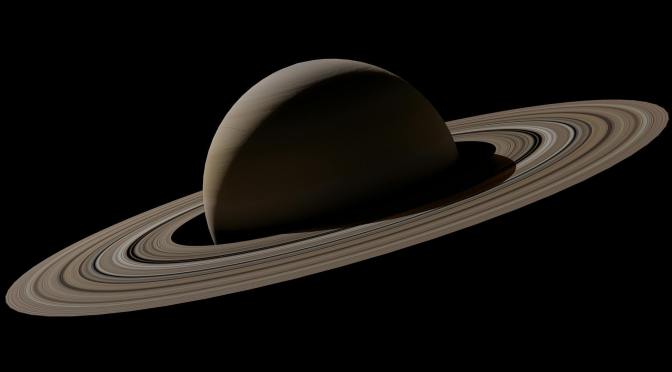
From an astrological standpoint, loneliness is ruled by Saturn, the greater malefic. Let me stress the word ‘malefic’. Generations of people better than us had no problem calling Saturn and Mars malefic and acknowledging the presence of evil in the world, yet the Becky’s and LaRhonda’s of the world who spend their time deluding themseves manifesting on social media think the concept of evil is beneath them.
It is, by the way, no moralistic notion of evil. Evil is simply that which is contrary to life (life being understood not vitalistically, but as outward expression of the metaphysical process of emanation).
Saturn is evil, greatly so. Even the few gifts it has for us are laced with poison: its deep wisdom, discernment and secret philosophy are often accompanied by illness, depression, poverty, general gloominess of circumstances. Saturn is not the cantankerous but loveable teacher that it is made out to be in pop astrology.
This doesn’t mean that Saturn is an unaccountable Satan like that of the exoteric tradition of many religions: Saturn does actively take part in the process of creation, but it usually does so by fulfilling the destructive and separative part of the equation. For instance, in some old hermetic and astrological texts Saturn is said to rule the first part of the pregnancy. This is the part where the soul becomes bound to the biological process of an individual body.
Through Saturn we become ‘this thing here’, before the other planets add their traits. Because we become ‘this thing here’ we also become subject to death, also ruled by Saturn, who is thus the first Planet we encounter descending and the last one we encounter ascending. Our being one thing, one individual, is the result of Saturn’s work.
As such, our existence as individual, ‘saturnian’ beings is also the basis of our loneliness, which is the presupposition of all we can do and achieve in life, all the social, political, cultural and economic structures we can weave together with other people.
It is not casual that all totalitarian ideologies seek to break down the ties that bind us to other people. All ideologies aim to push a certain image of humanity that corresponds to that ideology’s idea of good, but this image is usually the product of the ideologue’s deep delusion and would never occur by itself. The ideologue’s push becomes therefore a push for the reconstruction of humanity from the ground up.
And what is the ground? Saturn! The isolated individual, the one who has been torn from his or her social, moral, spiritual fabric is an individual who has been reduced to the Saturn phase of his conception, the phase where all we can say about them is that they are one thing, but before the other planets (let alone life experience) have added their specifications. The ideology then seeks to add its own imprint on this amorphous thing.
We do not live in times of totalitarian rule (anyone who argues the contrary has likely never experienced the horrors of totalitarianism). But we do live in times where there are people who profit from our isolation in a similar way.
So what is the conclusion? There is no conclusion. This is just a collection of notes as I observe the world around me. I am not suggesting any conspiracy or any evil master plan. I am merely observing who profits and who doesn’t from the current state of affairs. It is a simple reflection on what it means, from a magical standpoint, to isolate people.
Since it’s Leo season I’m rather busy creating Sun talismans and “recharging” old ones (I am not fond of the idea of talismans as something to be charged, but I digress).
This reminded me of one time, a couple of years back, when hubby was in somewhat of an existential crisis as far as his job was concerned. I was working on a Sun talisman, but didn’t tell him (he knows of my esoteric interests but doesn’t interfere, and I don’t keep him abreast of all my workings).
The night after the consecration, hubby woke up at dawn, something that rarely happens, and was drawn by the rising Sun. Inexplicably he was compelled to open a job-searching app he hadn’t opened in a while. Right in front of him was the perfect job opportunity. He applied and got the job.
This little episode, I think, is a good example of how objective magic’s power is. Of course, if by objective we mean “amenable to consistent, quasi-scientific manipulation” then magic is not objective. The presupposition nestled in the heart of science is the possibility of endlessly manipulating reality, while magic has its unbreakable patterns.
Furthermore, white magic tends to have less dramatic (sometimes hardly noticeable) effects than dark magic, because it largely harmonizes the person with the patterns available in their life rather than running against them (if someone is saying that they’ll bring back the love of your life with white magic, they are lying).
Finally, magic doesn’t work as reliably as the technology stemming from science, and never will. If the remote doesn’t work you know you must either change the batteries or see if some wires have come loose inside. But pinpointing what’s gone wrong in a magical operation is much harder, and sometimes things simply don’t work because screw you any old mortal.
But magic is objective in the sense that its influence on reality becomes undeniable to those who have had to do with it. Just like with divination, it is really hard to find excuses and rationalizations.
Also, magic is objective in the sense that it forces us out of our ego and in contact with objective forces outside of us. Some may argue these forces also exist inside of us, and that’s true. In the esoteric constitution of humanity the seven planets are all present, but in so far as their activity is bound by our limitation it is relatively useless, which is why it becomes imperative to overcome those limitations by coming into contact with those same forces outside of us.
Way too much emphasis today is placed on the psychological side of magic and spirituality. This is in part a survival mechanism adopted by our forebears to allow magic to survive the scientific revolution (you can’t disprove me if I’m just an inner feeling).
Working on ourselves is certainly a great idea, though rarely in the sense that this is done nowadays, which usually plunges people even more deeply in their narcissism. However, I believe much of the value of the esoteric arts is that they force us to come out of our selves and in contact with something objective and far greater.
The famous esoteric/philosophical motto “Know thyself” has been reinterpreted in the most abstrusely psychological ways recently, but it is very unlikely that this is what those who wrote it meant by “knowing ourselves”: in the old view of the cosmos, it was impossible to know oneself without knowing one’s place in the scheme of things and therefore not eluding reality, including higher forms of reality, and experiencing the point of juncture between the individual and the universal.
Certain topics are exceedingly rare, and they should remain so, because people otherwise tend to see the supernatural at play everywhere. Traditional divination takes these topics very seriously, which is why it rarely discusses them. In most systems, a vocabulary is given to describe most situations in life, including encounters with ghosts. We are, of course, free to disbelieve, but the cards can still talk about it.
A querent asked me if there was a ghost in her (very old) apartment complex. As I said when talking about curses and hexes, the answer is almost invariably no (although, to be fair, ghosts and other entities are far more common than competent witches). Here’s the spread (it started as a three card spread, I kept adding cards until I was satisfied).
I asked the querent an open question (to avoid influencing her), that is, I asked her to describe the ghost she thought she saw. She said she thought it was the spirit of an ugly, angry woman moving in the hallways of the building. This fits very well with the Queen of Spades and Two of Spades. The Ace of Spades, aside from indicating death, is also a card of great evil.
What about the rest of the spread? Usually the Heart court cards indicate either positive spirits (God, etc.) or religious people. I asked the querent if she was planning on contacting a priest, shaman or other such figure. She said she wasn’t really thinking about it, but another tenant was.
I said that it was a good idea. Look at the King’s action: he is taking steps (Two of Clubs) by uttering words (Four of Clubs) which are positive (Nine and Ten of Hearts). But what about the Five of Spades? My sense is that the presence will not be eradicated or banished for good, since the Five of Spades is a card of imprisonment, but it will be contained in some form (the two Hearts hemming in the Spade).
The interesting thing was that, according to the querent, the other tenant (who had been living in the building for much longer than the querent) told her that many years ago they had had a problem with the same presence and had managed to somehow exorcise it.
My view is that even this time the situation will not be remedied completely, but the situation should improve by calling in someone to perform a religious ritual.
One of the questions that occupy way too many people in the esoteric community is whether divination or even magic require the person to believe in it in order for it to work. If you’ve ever watched the movie The Skeleton Key, you’ll know that this concept has seeped into the collective consciousness enough for it to find its way into mainstream products (I will not spoil the movie here, since it is actually a fun watch, but it depends heavily on its twist).
If you open most premodern books on magic, you’ll be stunned to discover that their content bears very little resemblance to the post-Golden Dawn landscape. This, by the way, is neither good nor bad. Things change. But we need to be aware of the change to avoid being unconsciously ruled by it. One clear difference is that the magician’s will1 or his imagining/manifesting faculties are barely taken into consideration in older sources, at least outwardly.
This is not to say that there aren’t sources that encourage the practitioner to be of firm mind and clear intent (after all, you’d want your doctor to focus, too, even though their focus is not what make their science work), but even those old sources do not consider, generally speaking, the magician’s mind to be the cause of the change. Broadly speaking, when dealing with sources that date back to before the invention of modern psychoanalysis and psychology, we must be extremely careful when interpreting their concept of mind, soul, psyche, etc.
An example will suffice. In his De Vita, Neoplatonic Renaissance philosopher and magus Marsilio Ficino encourages us, among other things, to “think solar thoughts”, or jovial, or venusian, depending on the aim. Similar remarks are found, in various form, in many old sources. A contemporary practitioner might be tempted to interpret Ficino’s invitation as saying that we must envision solar things in order for them to manifest. But neither the language nor the substance of this interpretation belong to his worldview.
Ficino’s view of the cosmos is essentially the same as Agrippa’s and that of many other premodern magi: we are surrounded by chains of sympathy and antipathy between universal powers (typified by the planets). When we think “solar thoughts” we are doing essentially nothing except stepping inside a current of power that has its own metaphysical reality regardless of our attitude toward it. This is because in Renaissance naturalism, the mind is essentially like the body, i.e., a part of the cosmos, and a movement of the mind is like a movement of the body, and just like the body can create a talisman or a concoction, so can the mind shape images that allow it to shower in certain currents of universal power.
Thus, the invitation to think certain thoughts found in Ficino (and others) is not a precursor to manifestation, attraction and other modern concepts, but a natural consequence of the old view of the mind and the world.
On the other hand, from a postmodern standpoint, reality is for us to create at will. Yes, I am exaggerating, but not too much. Therefore, there is the widespread idea, or at least the widespread implication, that what happens happens because we believe in it.
Let us leave magic alone for now and concentrate on divination. Does divination work because we believe in it? Well, no. Certainly divination doesn’t require the querent to believe in it in order for it to work. In fact, it is my belief that, considering how many frauds there are in this field, a querent should be borderline psychotic to blindly believe in divination without a healthy dose of scepticism.
What about diviners? Do they need to believe in divination in order for it to work? That’s complicated, in my view. On the surface of it I would argue that, again, no, we don’t need to believe in divination for it to work. Divination systems work because they have their own internal consistency. The most obvious is Natal Astrology, which presents us with an objective set of symbols that have nothing to do with the manipulation of counters on the part of the diviner.
On the other hand, we need to allow for the fact that divination is not a mechanic set of behaviors, especially with the overwhelming majority of divination systems that do require manipulation (cartomancy, geomancy, dice, etc.) As I often repeat on this blog, divination is and remains something extraordinary. The honest desire for an answer, or at least for a picture of the future, tends to guarantee a crisp and clear answer. This is because the honest desire for an answer allows us to honestly connect with the symbols in a way that makes them fall in the appropriate order.
The querent doesn’t need to be honest in his or her desire, unless they are also the diviner. But if the diviner does not have at least a degree of confidence in what he or she is doing, then the question they put to the system is not the surface question (e.g., “Does X love Y?”) but “Do you really work?” which is an impossible question for the system to answer (if the answer is no, then the system does work).
Even then, I would be cautious in overexaggerating the importance of the diviner’s attitude. As I believe I have mentioned, one of the ways my teacher trained me was by asking me to discover secrets about her past. Clearly, the exercise was not meant to discover something new that might benefit my querent or me, but rather to build my confidence and skill. Yet it worked, and it worked well. Maybe the diviner doesn’t need to believe in divination (I know I am always skeptical until proven right), but they do need to at least be open to the idea that this is a legitimate way of receiving information, just enough to enter into the system rather than operating it from the outside as a scientist would manipulate a bunch of molecules.
My general belief at this point is that the esoteric arts do not require our consent in order to work, but they are also not the product of the mechanistic application of abstract principles. It is indeed a fine balance.
MQS
Let’s leave aside the fact that the concept of Will found in modern magic is actually more complex than what it appears to be on the surface ↩︎
Abano starts a discussion on the meaning of the various figures in each of the houses, beginning with Acquisitio and Amissio.
I have already discussed how every figure has two properties, one by virtue of its essence, and one by virtue of its accidental placement in the chart. What follows is the meaning of each figure in each of the fifteen houses.1
Acquisitio
Acquisitio in the first house means gain through partnerships,2 obtaining what one wishes, acquisition, gain, honor, good life, health, property. In the second house it means gain, merchandise, money, good outcome, usefulness. In the third house it means good luck for one’s siblings and relatives or neighbors, and in science, and the dream is true,3 good outcome through journey.
In the fourth house it means inheritance, goods from the deceased, increase of wealth and of stable things, abundance. In the fifth house it means good luck with children, or through them, recognition, happiness, what one wishes to gain, following one’s lords. In the sixth house it means sickness, falling ill, relapsing,4 gain through animals and servants and subjects.
In the seventh it means good change of place, good friendship, good partnership, usefulness, properties. In the eighth it means gaining back the money you loaned, gain through dead people, mediocre outcome in all things, except for sickness, where it lengthens the process. In the ninth it means gain through travel, honorable travel, especially if of elevated people and people who have fear of God.
In the tenth it means exaltation, lordship, lords, honor, dignity, gaining through one’s masters, kings, emperors. In the eleventh it means good luck in every question, gain, good friends, happiness and friendship and offspring. In the twelfth it means prison, loss, toil, problems, fear, gain through serfs, subjects, animals.
In the thirteenth it means honorable journey or journeying with great people or in their stead, or with one’s mother. Gain.5 In the fourteenth it means obtaining what one wishes but with trouble, problems, difficulties.6 In the fifteenth it means good outcome in everything, good brother, good things from brothers and relatives.7
Amissio
Amissio means damage, loss, especially in movable things, coins, in wealth, theft, gossip, evil in everything, except for sickness or prison or travel.8 In the second it means loss of wealth, damage through merchandise, and in everything where gain is hoped for. In the third it means enmity with siblings and relatives or through them, wrath, discord, malice, good outcome for journeys.
In the fourth it means damage, loss, misfortune in secret things, loss of inheritance, destruction of the city, of the home, of the land, of the fortress. In the fifth it means problems and misfortune with children, loss of wealth, famine.9 In the sixth it means healing of sickness, liberation of the fled servant, loss due to animals, and when one is sick, depending on the other houses, there might still be doubts [about his health].10
In the seventh it means fraud, treachery from women and enemies, loss through marriage and partnership and friendship. In the eighth it means loss of inheritance, loss of money and wealth, death of the sick person. In the ninth it means long but good journey. Late journey in a distant land, problems on the road, with changes, harlots.11
In the tenth it means loss and problems in all you wish to gain, and if Rubeus is born from it it means being harmed, if Tristitia it means prison.12 In the eleventh it means misfortune in everything you wish to get, discord, enmity with friends, bad for prisoners. In the twelfth it means bad journey, loss through animals and loss of wealth, toil, loss of merchanidse, and you’ll collect a debt at a loss, freedom from prison and sickness.
In the thirteenth it means loss of wealth, damage through one’s lords, change of country, misfortune. In the fourteenth it means loss of friends, toil, great problems. In the fifteenth it means bad outcome, flight, not retreiveing what you wish to retrieve, misfortune in all.
MQS
Footnotes
This way of proceeding is rather typical of medieval handbooks of geomancy and even of astrology. It generally aims at allowing the reader to form an idea of the abstract properties of each figure by showing its concrete manifestation. ↩︎
It is unclear why Acquisitio in the First House should indicate gain through partnerships. In most medieval handbooks of astrology, for instance, a planet showing gain in the First House usually indicates the querent’s industriousness. ↩︎
Dreams and science are usually Ninth House matters, although the distinction is not as rigid as some modern traditional astrologers make it out to be. ↩︎
This is a typical example of a broadly positive figure having a negative meaning: people usually don’t want to ‘gain’ an illness. ↩︎
Why Abano characterizes the Thirteenth Figure, i.e., the Right Witness, as meaning all these things is obscure, until we remember that, for Abano, the Right Witness is in connection with the Ninth and Tenth houses, from which it is formed. ↩︎
Probably from the mixing of Eleventh and Twelfth House meanings. ↩︎
The connection to relatives and brothers escapes me. ↩︎
Abano does not say “Amissio in the first house means…” but “Amissio means…” I suspect though that it is just a mistake. ↩︎
Because it shows loss of the products (second from) of the earth (Fourth House) ↩︎
Amissio is generally favorable in case of illness, but what Abano is saying is that we should always look at the picture as a whole, without focusing on a single testimony. ↩︎
In a relatively straightforward passage, Abano gives the reader examples of what it may mean when a figure moves from one house to another.
To truly understand mutation and the variety of the figures, you need to consider the property of the figure, whether it be fortunate or not, entering or exiting, fixed or mobile, and judge according to its meaning the effect of the mutation, always keeping in mind the question, the quesited and the querent. Another mutation1 to be kept in mind with its meaning in order understand better what has been said so far, is the one that happens to every figure as it changes from one house to another.
If the first figure changes to the second, and is good, fortunate, entering, it means gain, good luck for oneself, and when it is evil it means ill; if it moves to the third it bodes well for neighbors, relatives, traveling; when to the fourth, it means small losses, except if it is Cauda or if the question is about older relatives, friends and things fixed and immobile, endings, buildings and possessions; if to the fifth it’s excellent, except if it is Cauda; if to the sixth, it is very bad, except if it is Via or Cauda, or if the question is about sixth house matters; if to the seventh it has a very bad meaning, unless it is for seventh house matters, as said above, or unless it is Via or Cauda; if to the eighth it means ill luck, accident, loss, death, fear, except if you are asking about your enemy’s wealth or of the wealth of another person; if to the ninth it is good, unless it is Cauda or Rubeus, and if the question is about travel it won’t be made as scheduled; if to the tenth, it is very good, except if it is Via or Cauda; if to the eleventh it is also excellent; if to the twelfth, it is the worst of all, unless it is Cauda and in twelfth house questions.2
If the second figure moves to the third house, it means good luck and gain through siblings and relatives, or due to them, but if the figure is bad it shows the opposite; if it moves to the fourth it shows good outcomes in stable things, and through one’s older relatives; if to the fifth, it means well through messengers, letters, etc; when to the sixth it means infirmity, even of the family, and loss in moble things, and of servants. If it moves to the seventh, if it is good it means well, but if it is bad it shows loss through enemies or women, or games of chance,3 or thieves; if it moves to the eighth it shows that the absent party comes back with good news, and maybe the death of some relative, or loss depending on the angles of the chart; when it moves to the ninth it shows gain or loss from the church or through travel; if to the tenth it means gain from the profession or from one’s lords and good luck; if to the eleventh it shows good luck and good friends, and good luck from the community; if to the twelfth, it means one of his relatives will fall ill or be imprisoned, or shall lose wealth, but if the figure is good it shows buying animals, and things unthought of.
The third figure, when it moves to the fourth, shows gain or loss through relatives; when to the fifth, it shows happiness and new things, and messengers, clothes, etc. When to the sixth, it shows sickness, servitude, toil, small animals; to the seventh, it means copulation,4 change of place, fights, separation; when to the eighth it means gain or loss, death, fear; when to the ninth it means long travel, churches, religious people; when to the tenth it shows the army, profession, dominion, lordship, honor; when to the eleventh it means good luck, noble servants; when to the twelfth, prison, long sickness, retrieving lost animals or buying them.
When the fourth figure goes to the fifth it shows goods from one’s relatives or children, clothes, food, and other things of the home; when to the sixth, it means sickness in the family or animals, relatives, servants; when to the seventh it means getting married, a bandit coming back for you,5 the home becomes inimical; when to the eighth it shows inheritance, the absent party comes back; dying in one’s home country or home; to the ninth, it means death of a religious person, acquisition of church things; when to the tenth, honor of the house, lordship, honors, etc; when to the eleveth, it shows good luck in one’s home, family, congregation of friends, etc.; when to the twelfth, if good, it shows good things, but when bad it means sickness, long prison sentences, toil, difficulties in one’s home or country, or through one’s relatives.
When the fifth figure goes to the sixth house, it means sickness through being hexed6 or food, or issues with children, or messengers, or animals; when to the seventh, it means marrying off one’s child, merchandise, fights, enemies rejoicing, problems with children or a woman giving birth; to the eighth, problems and death of one’s child, or [acquiring] other people’s wealth, and the absent party is doing well; when to the ninth, a child entering the clergy, long travel, happiness and gain, a churchman having a child, gain from things of the church; to the tenth, it means a happy mother, lordship or [happiness] of one’s lord; when to the eleventh it means good news for the child, and a messenger resolving all kinds of issues, and friends are happy for or with the querent; to the twelfth it means sickness or imprisonment for the child, large animals and a prisoner or wayfarer who is doing well.
When the sixth moves to the seventh house, it means sickness, wrath, problems through small animals, servants or one’s wife or other people; when to the eighth, it means death of animals or servants, loss of wealth, sickness of the absent party, and servants helping one’s enemies; when to the ninth, it means a journey full of issues, and sickness during the journey, or a sick churchman, occupation, problems with the church; when to the tenth, it means sickness and problems, but also having good and faithful [servants?], obtaining a lordship; when to the eleventh it means sickness of self or of a friend, or contrarieties with friends; when to the twelfth it means sickness of great animals, loss through them, prison, pilgrimage.
When the seventh goes to the eighth house, if it is good, it means good things for the absent party, but if bad, death, loss and issues for those represented by the seventh; when to the ninth, it means the absent party will come back, the bandit goes away, the querent gets married, the enemy makes peace, long travel, religious people, or a churchman becomes your enemy; to the tenth, the lord gets married or becomes inimical, lordship, honors; when to the eleventh it means a friend becomes an enemy, and what’s good for him is bad for you, the partner won’t keep his promise, the thief is a false friend, the marriage or partnership is changeable; when to the twelfth loss of animals through enemies, or due to sickness of animals, and prison, and the prisoner gets married, problems during a pilgrimage, long pilgrimage, betrayal from hidden enemies.
The eighth figure, when it goes to the ninth house, means wealth, help from the church, death of a priest, travel full of fear and problems, the absent party is traveling; when to the tenth, it means death, occupation of stable things, the absent party comes back to the country; to the eleventh, it means death of a friend, gain through a dowry, inheritance, misfortune, loss through friends, good luck of the absent party if the figure is good; when to the twelfth, it means the prisoner or sick person is seriously sick, death of the same, and of the wayfarer, and being imprisoned due to enemies.
When the ninth goes to the tenth, it means ecclesiastical dignity, increase of church things, an honorable journey or for religious purposes; when to the eleventh it means good luck in travel, good company or partnership, luck with friends and things of the church, recognition within the church; when to the twelfth it means issues while traveling, danger through horses, being imprisoned, the prisoner may be released, the wayfarer comes back, the horse is found, and this causes more or less trouble to the querent depending on how good or bad the figure is.
When the tenth figure goes to the eleventh it means good in all things, and one’s lord or master is good and friendly, the year abundant; when to the twelfth it means prison, sickness, one’s enemies are not seen in a good light, and are hated by your friends and by your masters.
When the eleventh goes to the twelfth it means sickness, prison, adversities, problems, and one’s hidden enemies are lucky, and all is good for the querent.
MQS
Footnotes
It is rather typical, in premodern occultism, to use the same word to signify different things depending on the context. ↩︎
The general principle in judging the mutation of one figure to another house is whether it bodes well for the question at hand and whether the figure accords with the question and is fortunate. As such, in Abano’s example, a figure moving from the first to the seventh is unfortunate because it oppses itself, but the same movement is positive if the question is about Seventh House matters (marriage, alliances, etc.) ↩︎
Gambling is often seen as a Fifth house matter, but in this case the relationship with the Seventh House is through the fact that we are playing against ‘other people’. ↩︎
it is not clear why the conjunction of Third House and Seventh House matters should produce sex. ↩︎
‘Ritorna il bandito’. Bandito is an ambiguous word in Italian, as it can mean both bandit and banished. In this case it is probably the latter meaning which is relevant: someone who has been banished will come back. ↩︎
‘per fature’, similar to the current Italian word ‘fattura’, which in this context would mean a hex. It is possible the word has another meaning which escapes me. ↩︎
Danielle Johnson‘s posts on social media were like those of most popular astrology influencers: cheap mystical drivel devoid of any serious study and insight, constantly hyping up the next big astrological nothing-burger. I’ve known enough people like her in my life to know that this kind of fraudster is the worst exactly because they tend to buy the crap they peddle. Like many cult leaders, they become pleasantly accustomed to the smell of their own farts.
I am not going to examine her tragedy as a whole. You can look it up yourself if you want. Suffice to say that she ended her boyfriend’s and child’s lives, as well as her own. All because of an eclipse she thought was “the epitome of spiritual warfare” where people needed “to pick a side” in the upcoming apocalypse.
For sure there is enough going wrong in the world at present that new millenarian movements pop up from all religious and political directions. Furthermore, it is not unlikely that Johnson suffered from some kind of mental condition.
But there is more to this type of behavior. No one who seriously studies history can believe there was ever a golden age where nothing went wrong, nor there ever will be. These are the dangers of utopianism as opposed to pragmatism: in the name of something that was or will be, the utopian believer feels justified in trampling over others, either rationally (like the left-wing and right-wing dictators of yore) or psychotically.
But, again, there is more. There is a widespread malaise in the “spiritual” milieu at present, in spite of its ever growing popularity on social media. This malaise is the culmination of a historical process of decoupling of reason and spirituality. I have already touched upon this issue elsewhere.
Since official science embraced meterialism in the late XVIII century, those who believe there is more to life have found themselves without an intellectual foundation for their beliefs, and have therefore become prone to accepting any delusion as fact. This is relatively unprecedented in the history of humanity. Not that knowledge and spirituality have otherwise always enjoyed a frictionless relationship, but there had never been so stark and unanimous a rejection of the spiritual in the scientific community.
How the spiritual community tried to cope with this abandonment is paradigmatic. If you read many XVIII and early XIX century occultists, you will often find desperate attempts at fitting their ideas into the tight dress of the new scientific language. Spiritualism and vitalism, which is how occultism survived until around the 1960s are, in many ways, the evil twins of scientific materialism: they are groundless irrationalism masquerading as legitimate scientific concepts (electromagnetism, mesmerism, ‘energy’, etc.)
Yet, for all their attempts at sounding scientific, these authors have never managed to convince anyone who wasn’t already convinced. Furthermore, their attempts at proving, for instance, that this or that scientific discovery is foreshadowed in this or that spiritual doctrine made them look like asses when said discoveries were later disproved and replaced with better scientific theories–because, and this is something many occultists failed to understand, science in the modern sense ceased dealing with the eternally true in favor of ever-improving approximations of what’s likely to be the case. This is what makes modern science effective, but also what ‘spiritual seekers’ desperate for answers don’t want to hear.
Then along rolled the New Age, and the already washed-out spiritual movement started supplementing its diet with saccarine platitudes and politically correct, ill-digested mish-mashes of doctrines coming from all over the world washed down with copious drafts of unproved psychology. Any attempt at using reason became futile, or even frowned upon as a non-enlightened stance. And this is where we are now.
The medieval and Renaissance magus was as much an occultist and diviner as he was a doctor, a scientist, a philosopher, a political strategist, a war counsellor and many, many more things. In Ancient Greece, many great magi were also great philosophers and scientists (Empedocles and Pythagoras come to mind). Apparently, the contemporary spiritual guru just needs a couple of self-help concepts with a spirituar flair and he is qualitifed to tell people they need to “pick a side in the upcoming apocalypse”.
So, what is the solution? I do not know. I do not believe I have one, especially not at the collective level. All I know is that irrationalism is not the blood that sustains spirituality. it is merely the electric shock that makes its corpse convulse and appear to be alive. I also know that the future of occultism, magic and spirituality lies with few individuals who are capable of using their head rather than with desperate masses of unhinged spiritual seekers (“unhinged” because their life hinges on nothing) who let any “astrology influencer” peddle cheap illusions to them.
In this short paragraph, Abano introduces several technical terms.
This is an example of a simple mutation, about the question whether one shall be with his girlfriend.1
Geomancy shield by Peter of Abano
The first figure is Conjunctio, the second Puer, the third Puella, the fourth Conjunctio. Look how the first moves to the fourth and the seventh is the same as the third, and thus it means being with her, especially since the first is in the fifth house of fun.2 Moreover, the first is found in both Witnesses.3 Also, this is an example of translation, because the first moves next to the house of the quesited,4 that is, in the eighth, which is associated to the seventh. Moreover it is an example of conjunction, because the first is conjunct to the ninth, and the eleventh with the fifth,5 and the thirteenth with the ninth, and the fourteenth with the eleventh.6
MQS
Footnotes
“Se uno havera la sua amica”, literally, “if one shall have his (female) friend”. This passage warrants its own chapter as it is relatively strange when confronted with the modern doctrine, and it seems to contain odd mistakes, at least prima facie. ↩︎
“Casa di gaudio della cosa quesita”, literally “the house of joy of the quesited”. It could be that Abano means the Fifth house is the joy of the question itself, because it signifies fun, and the question is about fun. ↩︎
It is not clear whether this is good because the figure is Conjunctio or because it is found in the houses of the Witnesses, or both. ↩︎
Abano seems to be using the word ‘translation’ in lieu of ‘conjunction’ here. There is a translation in the modern sense here, but this is effected by Puer, who is both in the Second and in the Sixth. ↩︎
The Eleventh does not seem connected in any way with the Fifth, unless we take the Fifth to be moving to the Fourteenth (the Left Witness) or we count the translation effectuated by Puer ↩︎
This is rather obscure, unless, again, we take the Thirteenth and Fourteenth as regular houses that can come into contact with the others. This would open up the Geomantic Shield to a whole different kind of interpretation. ↩︎
Here Abano discusses matters relating to the Third House and Fourth House.
Third House
Of whether a messenger brings good news. If you want to know about a messenger or letter you’ve sent out, and about what effect they will have, and whether the messenger will come back with good news, then the first house is the querent, the third is the messenger or letter. When the first figure is good and the third one is exiting, or at least if it is entering or mixed but good, this is positive.
This is especially the case if the fourth house is conform to the first, and the third to the ninth. If the first or second figure1 moves to the house of the quesited, that is, of the person you send the message or messenger to, this augments the positivity of the message you get in return. The same is true if the first or second figure are conjunct to the house of the quesited or the person. Whether the message comes soon or late is known by whether the figures are mobile and exiting or fixed and entering, and also by the fifteenth and fourth figures.
The figures representing letters or messengers are Albus and Conjunctio. If Rubeus or Puer are in the second, it means airy words2 and talking inappropriately, and rumors or gossip, and discord, unless the message is about war. And if it’s Tristitia or Carcer, it means obstacles and lateness in what you inquire about. The other positive figures have a good meaning.
Which among one’s siblings or relatives will die sooner. 3 The first house is the querent . If it moves to the eighth, or if the eighth moves to the second, it means the querent will die before his siblings, and all the sooner if the figure moves to the angles.4 On the other hand, if the second figure5 were in the eighth or the ninth, and if the eighth were unfortunate, it means the sibling or relative will die sooner, especially if it is also found in the fourteenth or fifteenth. The death is good or bad depending on whether the figure is positive or negative.
If one is loved by their relatives. Look at the first house, whether it is good or bad, and similarly the third, and if they are conform or not, and in this way you judge whether they love each other. If they are not conform, but if the third is in the second, or the first in the fourth,6 and if the third figure is good, similarly they are friends and love each other. If the first figure is unfortunate and malicious and the third good, the querent doesn’t love the relative, but the relative loves them, and vice versa.
Fourth House
Paternal Inheritance. If you want to know about paternal inheritance, or from an older relative, or father-in-law, look at the fourth figure, if it moves to the second and if it is fortunate and entering, of fixed, judge that the querent will have what he wishes for, but if it is unfortunate and exiting, it means not obtaining it. Similarly, if the fourth does not move to the second, and if the first does not move to the fifth or eleventh.7 If the first and fourth were contrary to one another, it means not obtaining it, and similarly if the first is unfortunate and the second is contrary to the fourth. If the fourth moves to the seventh or ninth or tenth or twelfth, it means the inheritance goes toward other people, and this according to the properties of the figures, as explained before.
If one is loved by the father or uncle or partner.8 Look if the fourth figure is good and entering and if it is conjunct to the first, that is in the second, or if the first is in the fifth.9 If the first is good and is united to the fourth in the second, it means that affection is reciprocal, and all the more if the fifth or eleventh are conform to the first or the fourth. And if the first or fourth are in the fifth, it means the same, especially if the eleventh is conform to the aforesaid figures. When the first is good and the fourth bad, even if the fourth moves to the fifth, it means that the father or uncle doesn’t love the querent, although the querent loves him. On the other hand, if the fourth is in the second and is good, but the first is bad, it means the querent is well-liked, but the querent doesn’t like him. And even if the two figures are contrary to one another and there is no conjunction between them and there is no mutation of place it has a similar [negative] effect, as it shows lack of affection, and whichever of the figures is more unfortunate shows who is more at fault, and if the first and fourth are both evil, it means one is bad and the other worse.
Whether it’s good to build If you want to erect a building, look whether the fourth is good, entering and fixed, which means it’s good to build, especially if the tenth figure is conform to the fourth, and the first is good and fortunate. If the fourth is good but not fixed, the building is good but won’t last. If the fourth is mobile and exiting, and the seventh is contrary to it and unfortunate, it means the building will be ruined by an enemy, especially if the twelfth is unfortunate and contrary. And if the tenth is contrary to the fourth, it means ruin through one’s lord. If the fifth is contrary to the fourth, it will be ruined soon. However, note that if the fourth is exiting and the three other angles are fixed, the building will still last, especially if the fifteenth figure is fixed or entering and fortunate.
Whether there will be abundance or a famine. If the fourth figure is entering and fixed and fortunate, it means the year is abundant and the soil fertile, especially if the figure is earthy, and similarly if the angles are so, and also the fifteenth figure. But if the figure is unfortunate and exiting it means dearth, especially if the figure is fiery, and if the angles and the fifteenth are similar. Furthermore, add up the fourth and fifth,10 and judge if the result is good or bad or mediocre.
If a besieged fortress will be taken. The first and second figures are attributed to the fortress and those inside, the fourth means the fortress, the seventh and tenth the enemies. If the first and second houses are good, fortunate, entering and better than the seventh and tenth, it means those in the fortress will win. So also if the fourth is fixed and fortunate and earthy, and vice versa if the seventh and tenth are better. Similarly, if the fourth figure goes to the tenth or if it is conjunct to it, it means the enemies will come inside.
And if both are good and benign, they will conquer it peacefully, and if the fourth and tenth are are evil, but the first and second are strong and entering, there will be a battle, and the fortress will be taken by force, especially if the tenth figure is fortunate and powerful in virtue, and if the seventh and tenth are weak and the first and second are fortunate and entering, those in the fortress will win.
And if the third and fourth are fixed and fortunate and entering or earthy, those in the fortress will also win, and vice versa. When the first and the second are evil and unfortunate, and the seventh and tenth are likewise evil, and the fourth is fixed, it means the fortress will be conquered through betrayal.11 And if only the second is exiting and unfortunate and the first and fourth are good and fixed, money will be used [illeggibile] those of the third.
Of buried treasures and hidden things The fourth means the buried treasure and the hidden thing. If the figure is entering and fixed and fortunate, it means the question is valid, and if the first and fifteenth are conform it means the querent will get the treasure, especially if the fourth is in the second, or any other positive, entering figure is in the second, and vice versa if the figure is exiting and unfortunate and evil, and the first and fifteenth are unfortunate. And if the treasure or hidden thing is in a house it is shown by the figure in the fourth being fiery,12 and if it is airy it means in the attic, and if it is watery it is below, and if earthy it is buried.
What end the question shall have. If you want to know what effect any question will have, consider the fourth, if it is good and fixed, or exiting according to the querent’s wish, whether it is good or bad, or unfortunte, and if it is conjunct to the first or to its opposite, and if it is good according to the querent’s intention, and fortunate, it means a good end, especially if the tenth and fifteenth are conform to the querent’s intention, and similarly look at the other angles and see [if the majority of them is good]. If you want to know the cause or means of reaching this end, look at the angles and the second, fifth, eighth and eleventh,13 and the one that is best or worst will cause the greatest good or evil.
MQS
Footnotes
It is not clear why Abano refers to the second figure instead of the third in this passage. If it is not an oversight, then it could be a reference to the Company of Houses. ↩︎
This may sound a rather grim topic to ask about, but it was by no means uncommon in Abano’s times. Death was much more frequent and much more in the nose of people than it is today, and therefore something to prepare adequately for. I had a woman once ask me who would die first between her, her sister and her brother. ↩︎
The Angles (First, Tenth, Seventh and Fourth House) were generally considered quick. ↩︎
This reference to the Second House instead of the Third is difficult to explain. ↩︎
Notice, once again, that Abano refers to the First and Second Houses as pertaining to the querent (but not the Twelfth) and the Third and Fourth to the sibling or relative (but not the Second). ↩︎
The Fifth house is the second from the Fourth and thus represents the father’s wealth. The Eleventh house is harder to justify, except that it is considered a lucky house and, on the Geomantic Shield, it falls right underneath the Fifth. ↩︎
“Compagno”. I don’t know what this should imply here, in reference to the Fourth House. ↩︎
Interestingly, Abano refers to the Fifth house here in connection to the father’s or uncle’s love, but not to the third. This cannot be a reference to the Company of Houses, since by that doctrine the Fourth is in company with the Third, not with the Fifth. The Fifth house aspects the First by trine, so maybe that is an explanation. ↩︎
the Fifth house represents wealth derived from the Fourth, including the fruits of the earth. ↩︎
Possibly this is because the Fourth house, being strong, wouldn’t have been conquered without help from the First and Second. ↩︎
Traditionally, in some old Astrology handbooks, fiery signs were symbolic of the walls of a house, because bricks were made with fire. ↩︎
The founder of BOTA, Paul Foster Case, proudly started his short book “Oracle of the Tarot” with the assertion that Tarot divination is not fortune-telling. The reason, he explains, is that fortune-telling is grounded in the belief in luck, chance or fate, while divination understands that everything is about our personality. The same statement is found at the beginning of the advanced BOTA course on tarot divination (Oracle of Tarot, without the ‘the’). Ann Davies clearly had a hand in rewriting it, considering how verbose the course is, but the substance was similar.
Paul Case was tapping into the spirit of the times when he made that statement. Since Tarot had the (mis)fortune of attracting the attention of XVIII and XIX century occultists, it hasn’t enjoyed a moment of peace: everyone wants to believe it to be not an obvious masterpiece of Renaissance art and Medieval philosophy, but an occult device made to transmit mystical knowledge unknown to most people (even though most people prior to the Enlightenment and the French revolution would have been able to tell you what the Tarot was about).
The same has happened to Astrology. Once a practical art for foretelling the ups and downs of actual life, it became the victim of the occult intelligentsia of the last couple of centuries and was turned into a hodgepodge of pseudomysticism, ill-digested psychoanalytic concepts and “it’s true if you believe it” New Thought crap.1
But this is not the whole story. If one takes the time to study, say, the Golden Dawn system, one quickly finds out that their traditional way of reading the Tarot is grounded in fortune-telling (just read MacGregor Mathers’ example of the Opening of the Key spread). Even the BOTA system, which derives from it, preserves very concrete meanings to be strung together into sentences, despite Ann Davies’ attempt to turn divination into a form of Kabbalistic meditation.
In other words, the occultist attempt at reappropriating the Tarotand Astrology (which in part continues to this day with some bogus theories about the so-called Tarot of Marseille, but more on this in another post) is only partly responsible for the divination/fortune-telling dichotomy. Much of contemporary occultism is grounded in the psychoanalyzation of magic and spirituality, which, in turn, is a defense mechanism against the death of the classical spiritual worldview. Yet, for all its shortcomings, it at least preserves some core tenets of the magical worldview.
But the problem with this is that while it does preseve in some ways the roots of the worldview in which divination can flourish, it has lost the intellectual basis for defending it. Intellectually speaking, even today occultism is largely stuck in the pre-WWII era, with its myths of scientific positivism, of constant historical progress and of magic as misunderstood technology (while I would argue the opposite, namely that technology is misunderstood magic).
Essentially, what has gone lost is the philosophical framework that allows us to keep together divination as spiritual practice and divination as uttering of concrete, verifiable truths.2 That’s largely because spirituality, in the post-XVIII-century Western world, was only allowed to survive as private indulgence in irrational behavior, a weakness to be tolerated.
Thus the split was born: 1) on one hand divination: a ‘serious’, and therefore unverifiable endeavor, a tool for vague self-reflection, cheap catharsis and shallow instagrammable aha moments. In other words, something that the small judgmental scientist constantly perched on most people’s shoulder could smile upon as at least benign, if not really true; 2) on the other hand fortune-telling: a crass or quaint superstition that is just a scam when it gets things wrong and just a coincidence when it gets them right. The little scientist can be free to frown on it. In other words, the distinction was born out of the guilty conscience of “spiritual” people, i.e., out of their subconscious scientism, as a way of telling themselves and society “I indulge in this silliness, but I am just quirky, not stupid.”
The occultists of yore were at least intelligent men and women who actually had something to say. They may have worked in an intellectually hostile environment, but they at least gave it their best shot, and for this they deserve leniency. What happened next is worse: that the already battered art of divination fell into the hands of stoned hippies and people with degrees in the most useless branches of socially acceptable knowledge. Then along came the Liz Greene’s and the Rachel Pollack’s (to make just two examples) who destroyed Astrology and Tarot even further. From then on it could only go in one direction: past life readings, divine feminine, empty motivationalism and strategizing, healing of generational traumas and all the attendant nonsense.3
Interestingly, the more contemporary divination’s fake husk rots, the more one needs to be intellectually dead to practice it, the more it becomes reintegrated in the higher spheres of society. I believe I already talked about a friend of mine who works for Google and has to endure meaningless meetings with tarot readers and astrologers because her boss is the manifestation-obsessed boss babe type. Nor are tarot readers a rarity in corporate America. This probably says something about how brain-damaged this kind of environments is. The nicest thing we can say about this part of society and this strand of divination is that they deserve each other.
MQS
This is not to say that Astrology or divination were unanimously accepted, but the debate was much more complex. ↩︎
This, by the way, is not a call to “go back” to some long lost good old times. I am no reactionary. Nor am I a progressive. I am a realist. ↩︎
By which, of course, I do not mean that there is not a feminine side of the divine, nor that trauma cannot be a real thing. I only mean that these words correspond to nothing but the most vapid pseudointellectual nonsense when coming out of most people’s mouths nowadays. ↩︎