Tag Archives: mental-health

Enneagram Comparisons | Type Three and Type Six

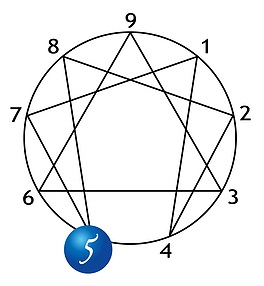
Enneagram Type Three and Enneagram Type Six are generally quite different, so much so that they are each other’s arrow: Threes grow at Six, Sixes stress at Three. Threes are a Heart type and they crave recognition of their talent and worth, while Sixes are a Head type and need security and certainty.

Both types are affable, but in quite different ways. Threes are more assertive and want to impress others with the rabbits they can pull out of their hat (the exact rabbit depending on the context). Sixes tend to prove themselves dependable and friendly so as to elicit positive and protective feelings in others while avoiding the dangers of a hostile environment.

Sixes generally want to quickly sort you out as either a danger or a dependable ally, but once you are in the latter camp they will often go the extra mile for you. Threes on the other hand are more competitive, so depending on the context they will go for your jugular if it means emerging victorious and winning the prize. Of course they can be good friends like anyone else, but because they are used to setting aside their emotions to reach their goal, they can be just as competitive against a colleague they are usually friendly with outside of work, assuming the colleague will behave the same way.
Other People

Threes are often concerned with image for image’s sake, and understand that, especially in a social context, one is supposed to wear a mask, while Sixes are terrified at the prospect of someone presenting them with a fake facade that doesn’t correspond to reality. They’d rather be told the ugly truth than be left hanging. In this, though, they can become paranoid and obsessively questioning, in a way that average Threes, who understand the importance of propriety and playing one’s role well, usually don’t become.

Paradoxically, Sixes, a Head type, are far more volatile and emotional than Threes, a Heart type. This is because Threes have learned to suppress their Heart energy, so they come off as cool and collected, like they’ve got it together. Sixes, however, have suppressed their Head energy, so they cannot trust their thinking process and are therefore often prey to strong emotions, so they come off as somewhat insecure.

Ultimately, Threes are focused on achieving status and therefore on drawing attention on them, while Sixes generally shy away from the limelight to avoid exposing themselves to possible dangers. When they do strive for recognition, it is often because they feel this is the best avenue to security in a particular context.

MQS

Enneagram Comparisons | Type Two and Type Eight

Enneagram Type Two and Enneagram Type Eight are quite different, but they do have some similarities, and they are each the arrow of the other: Eights grow at Two, Twos stress at Eight. Twos are a Heart type and want to find a place for themselves in another person’s life in order to be appreciated by them. Eights want autonomy, which they achieve by asserting themselves and pushing through others’ resistance. On paper, these two types should be opposite, but this is not always the case.

Both types assert the energy of their center: Twos assert emotional energy and Eights assert bodily energy. Twos assert themselves on others by connecting so tightly with them that they almost merge together while taking care of them. They are generally sweet, caring, friendly. However, if they feel that the other doesn’t appreciate them enough, they may resort to more authoritarian methods of getting the other’s attention.

Eights assert themselves more straightforwardly. They usually force others to deal with them and they are always ready to power through their opposition. Note that Eights aren’t necessarily aggressive, just as Twos aren’t necessarily docile. Once we had an Eight friend of ours over for dinner together with other people, and he sat in such a manner that he was the one who had to pass the various bowls and bottles to everyone. He was very liberal in giving people what they wanted, but he (subconsciously) wanted to be the one in control of giving it to them.

Willpower

In short, both Eights and Twos like to be in control of the situation, and especially they like being in control of other people. Twos are more subtle, which is why average to unhealthy Twos are known as the manipulators of the Enneagram, as when they do not get what they want from others they can easly guilt trip them by listing off all they’ve done for them and how little they’ve received in return. This is not necessarily a calculated move on the Two’s part: many times, average and even somewhat healthy Twos have difficulty seeing when they feel slighted or wronged, as they are typically more focused on making the other person happy, so they brush it off, but a part of them files the incident away in its undigested form, which means it is bound to resurface later.

Eights, on the other hand, know immediately when the other person has crossed the line and have no trouble at all letting them know. Furthermore, Eights know they have an agenda and are ready to steamroll any opposition to achieve it, as opposed to average Twos who may actually be convinced they have no personal horse in any race except the other person’s best interest. Eights consciously know what they want and go get it. Twos also know what they want, but subconsciously feel that they need to justify it as something that is good for someone else, so they often try to convince others that they are the ones who want the thing that the Two wants.

MQS

Enneagram Type Eight – Growth and Stress

Enneagram Type Eight, sometimes called the Boss or the Challenger, belongs to the Body triad. Those of this Enneatype tend to be powerful, assertive and present in their body. They have seemingly endless endurance and stamina. They highly value their own independence and hate submitting to people, especially if they consider them unworthy. Their best defense is often offense, in the form of being imposing and challenging, but they also have a sense of duty toward their friends and associates, especially if they feel they need to defend them.

Enneagram Type Eight

Enneatype Eight Grows: Move to Two

Average Eights are known for their power-exuding, in-control behavior. In a way, they go through life as if they were a fortress constantly redying for war (and occasionally attacking a neighboring country to be on the safe side). They generally seem to believe that the best way of maintaining their autonomy is to behave in an assertive, hands-on way.

In general, Enneagram Type Eight is deeply aware of a weakness or softness within them that they feel they need to defend from exploitation and aggression. This is what leads them to being defensive (or aggressive, depending on the circumstances) and to wanting to establish themselves above other people, because once they know that they are the reference point for everyone else in the room, they know how to deal with them directly and head-on, which is Eight’s favorite kind of confrontation, as it leaves little space for subtlety and underhandedness.

As they grow and learn to relax their mechanism, Eights become capable of taking care of their soft side in a more nurturing way. They learn to see that not everyone is out to get them and that, in fact, other people have a tender, weak spot too that is deserving of love and protection. As they recognize this, maturing Eights take on some of the healthy traits of Enneagram Type Two.

At their best, Twos are caring, interpersonal, giving, motherly and see the needs of others as theirs to take care of. In growing toward Two, Eights become capable of putting their warrior qualities to a higher use in honoring others’ need and defending them. They become extremely giving (in a more neutral, less manipulative way than unhealthy Twos) and their energy is expressed in a way that is innocent because it places itself beyond the rigid distinction between friend and foe.

Innocence, the Virtue of Enneagram Type Eight

Enneatype Eight Under Stress: Move to Five

All Eights tend to act assertively in order to protect a part of them that they consider vulnerable and tender. In a way, it is as if they were padding the space around that vulnerable point with their boldness and in-your-face behavior, so that others can’t take advantage of it.

Unfortunately, it is not always possible for them to succeed in this effort. Sometimes their vulnerability comes to light, especially in the form of not feeling adequate or smart enough or strong enough to meet the challenges of life. While average to healthy Eights can enjoy meeting the resistance of the world and can appreciate worthy sparring partners, unhealthy Eights can feel that big challenges threaten their independence as individuals. In these circumstances, receiving a reaction that is equal to or stronger than the action they exert can cause Eights to lose their balance.

When this happens, Eights move to their stress point, where they develop some of the less healthy traits of Enneagram Type Five. Seeing an Eight move to Five is like seeing a bloated baloon letting out the air all at once. Suddenly all the assertive energy of Type Eight implodes toward the center of their being and they become insecure, silent and almost invisible.

Eights, like average to unhealthy Fives, now tend to feel exposed and in need of putting distance between them and the threat, and it is not uncommon for stressed out Eights to physically remove themselves from others’ presence. In doing so, Eights hope to regain some power and energy and to strategize a way out of the impasse.

Enneagram Type Five – Growth and Stress

Enneagram Type Five, sometimes called the Observer, belongs to the Head triad. Those of this Enneatype are often recognizable for their tendency to withdraw from social contact and interaction with the world in order to observe it and accumulate knowledge and understanding. Fives tend to have a sense of energetic dearth, as though their inner resources weren’t enough for them to meaningfully impact the world, or even just to be in the world. Highly intellectual, they value objectivity and facts, which they often recombine in new and creative way, and are generally unsentimental and unbothered by social conventions.

Enneagram Type Five

Enneatype Five Grows: Move to Eight

Many Fives report that at some point they realized they were going through life as though they were constantly getting prepared for it, with the result that when they felt ready, life was already over. This is an understandably heartbreaking situation to be in, so it’s vital that Fives come to terms with it as soon as possible in order to live life before it’s gone.

A large chunk of a Five’s growth path comes from understanding that it is ok to get started without knowing everything, and that their marvelous mental abilities will inevitably go to waste if they don’t cultivate them in a practical setting and in the midst of real life action. Ultimately, Fives’ tendency to withdraw from others, withhold their presence and accumulate knowledge is a defense mechanism against fear, but as long as they withdraw they reinforce the implicit notion that the world is so fear-inducing that it must be seen from a distance.

The only way to break the cycle is for Fives to gradually let go of their tendency to let go of the world (it’s a letting go of the letting go) and to dive into it and take full charge of their body and their instincts, taking up space and showing up. In doing this, they start to embody the better qualities of Enneagram Type Eight, the most physically expansive and assertive of the nine type. Interestingly, Eights, like Fives, deal a lot with the idea of truth, but Eights have an instinctive awareness of it, whereas Fives have an analytical understanding of it.

In allowing their insights to take physical form, Fives reduce their tendency to detach from reality and become capable of bringing their objectivity and knowledge to fruition. Their ability to let go of things is used not to renounce the world, but to experience it all equally in all its transient permutations. Detachment thus becomes non-attachment.

Non-Attachment, the virtue of Enneagram Type Five

Enneatype Five under Stress: Move to Seven

Fives generally hate having to jump into things without preparation. They tend to plan ahead as if they possessed half the energy, time and resources they actually have and often don’t communicate their thoughts unless they have had the time to polish, proof and justify them. This is why going to war with a Five in a field they know a lot about is often a lost cause: they are always five or six steps ahead in the argument.

But, as much as they would like to be omniscient, Fives aren’t. The world is too complex to hold it all inside one’s mind before one ventures into it (which is how Fives get started on their journey of observation.) Variables are bound to intrude into one’s views. More importantly, Fives may not always have the chance to step back from quickly unfolding situations to take a breath and organize their mental response.

When this happens, Fives may initially still try to withdraw, but if their usual strategy becomes impossible, it is not uncommon to see them make fools of themselves, like unhealthy Sevens. This is not because Fives (or Sevens, for that matter) are actually fools, but because they panic at the prospect of not being able to employ their typical strategy.

Often, Fives that move to Seven under stress become volatile, scattered, given to missing the mark with odd jokes or comments. Because they haven’t had the time to establish clear boundaries within which they feel secure, they become erratic and aimless, thus lending credence to their own worst fear of being incompetent and needing to withdraw even further.

MQS