To be clear, I have the same interest in soccer that a koala has in space exploration. Two days ago I didn’t even know that Italy was playing Switzerland, and I would have kept not knowing it if I hadn’t been at a friend’s birthday party, where I met a fellow Italian, one who does care about soccer. Since she knows of my interest in occultism and divination, she asked if Italy would win. I used horary astrology to answer.
Note that the match had already started when she asked me the question, though I knew nothing of how it was going and I asked her not to tell me to avoid influencing my judgment. Furthermore, I forgot to screenshot the chart, so this is a recreation that I believe to be close to the original.
Will Italy win? App used: Astro Charts
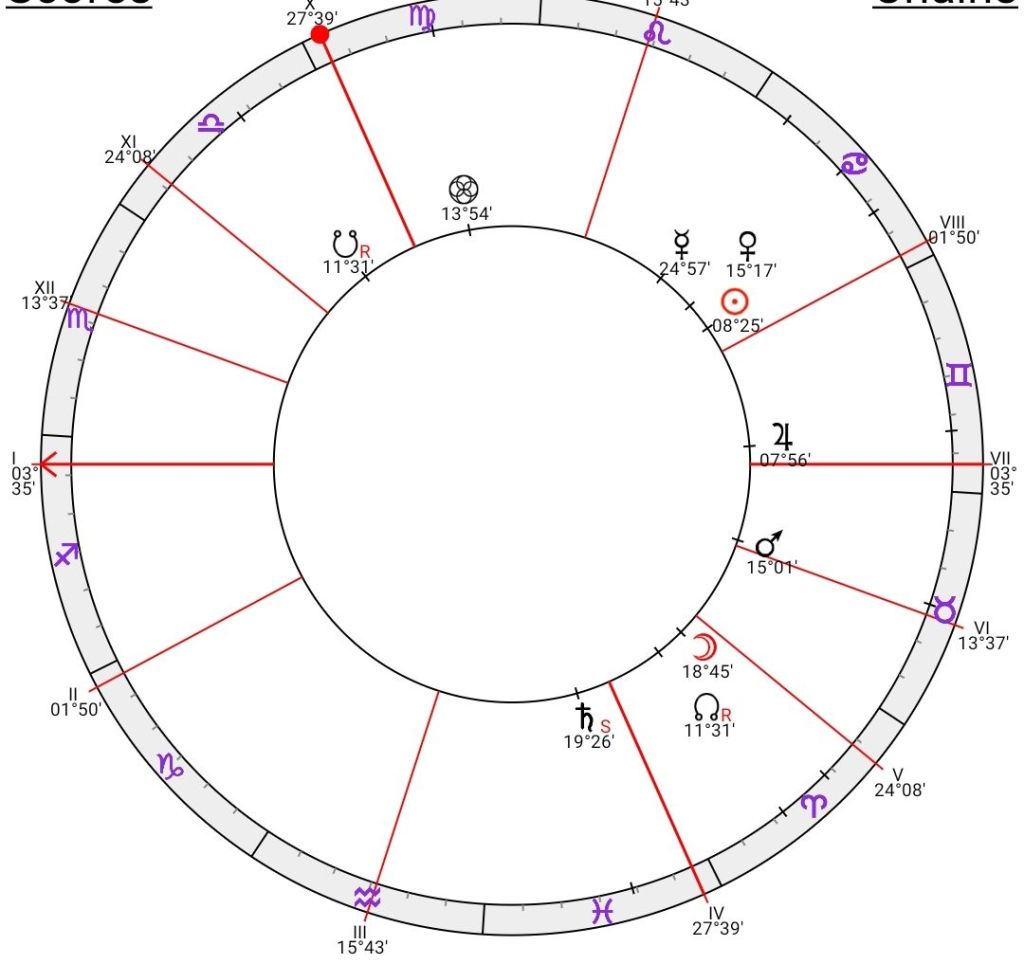
Since the querent is Italian and wants Italy to win, Italy takes the First house. Switzerland is given the seventh house of the enemy. The first, and decisive, clue is given by the position of Jupiter, significator of the First house. It is stuck inside the Seventh house, in the grips of the opposing team.
Once we see this, pretty much nothing else matters. The opposing team, signified by Mercury, is in the Eighth house, which is not great, but by antiscion it is right inside the Seventh, which is bad for Jupiter but again good for Mercury. The Moon is moving to square Mercury with reception. Bonatti says that a square with reception is like a sextile without reception, so it is generally smooth. At any rate, Switzerland should win. And indeed they won 2 to 0.
Important note: Horary astrology requires the querent to have some kind of emotional involvement in the question. Since I couldn’t care less about soccer, despite being Italian, if I had asked the question I would have regarded the chart with some suspicion. It is only because the querent is a soccer fan that the chart was accurate.
In a relatively straightforward passage, Abano gives the reader examples of what it may mean when a figure moves from one house to another.
To truly understand mutation and the variety of the figures, you need to consider the property of the figure, whether it be fortunate or not, entering or exiting, fixed or mobile, and judge according to its meaning the effect of the mutation, always keeping in mind the question, the quesited and the querent. Another mutation1 to be kept in mind with its meaning in order understand better what has been said so far, is the one that happens to every figure as it changes from one house to another.
If the first figure changes to the second, and is good, fortunate, entering, it means gain, good luck for oneself, and when it is evil it means ill; if it moves to the third it bodes well for neighbors, relatives, traveling; when to the fourth, it means small losses, except if it is Cauda or if the question is about older relatives, friends and things fixed and immobile, endings, buildings and possessions; if to the fifth it’s excellent, except if it is Cauda; if to the sixth, it is very bad, except if it is Via or Cauda, or if the question is about sixth house matters; if to the seventh it has a very bad meaning, unless it is for seventh house matters, as said above, or unless it is Via or Cauda; if to the eighth it means ill luck, accident, loss, death, fear, except if you are asking about your enemy’s wealth or of the wealth of another person; if to the ninth it is good, unless it is Cauda or Rubeus, and if the question is about travel it won’t be made as scheduled; if to the tenth, it is very good, except if it is Via or Cauda; if to the eleventh it is also excellent; if to the twelfth, it is the worst of all, unless it is Cauda and in twelfth house questions.2
If the second figure moves to the third house, it means good luck and gain through siblings and relatives, or due to them, but if the figure is bad it shows the opposite; if it moves to the fourth it shows good outcomes in stable things, and through one’s older relatives; if to the fifth, it means well through messengers, letters, etc; when to the sixth it means infirmity, even of the family, and loss in moble things, and of servants. If it moves to the seventh, if it is good it means well, but if it is bad it shows loss through enemies or women, or games of chance,3 or thieves; if it moves to the eighth it shows that the absent party comes back with good news, and maybe the death of some relative, or loss depending on the angles of the chart; when it moves to the ninth it shows gain or loss from the church or through travel; if to the tenth it means gain from the profession or from one’s lords and good luck; if to the eleventh it shows good luck and good friends, and good luck from the community; if to the twelfth, it means one of his relatives will fall ill or be imprisoned, or shall lose wealth, but if the figure is good it shows buying animals, and things unthought of.
The third figure, when it moves to the fourth, shows gain or loss through relatives; when to the fifth, it shows happiness and new things, and messengers, clothes, etc. When to the sixth, it shows sickness, servitude, toil, small animals; to the seventh, it means copulation,4 change of place, fights, separation; when to the eighth it means gain or loss, death, fear; when to the ninth it means long travel, churches, religious people; when to the tenth it shows the army, profession, dominion, lordship, honor; when to the eleventh it means good luck, noble servants; when to the twelfth, prison, long sickness, retrieving lost animals or buying them.
When the fourth figure goes to the fifth it shows goods from one’s relatives or children, clothes, food, and other things of the home; when to the sixth, it means sickness in the family or animals, relatives, servants; when to the seventh it means getting married, a bandit coming back for you,5 the home becomes inimical; when to the eighth it shows inheritance, the absent party comes back; dying in one’s home country or home; to the ninth, it means death of a religious person, acquisition of church things; when to the tenth, honor of the house, lordship, honors, etc; when to the eleveth, it shows good luck in one’s home, family, congregation of friends, etc.; when to the twelfth, if good, it shows good things, but when bad it means sickness, long prison sentences, toil, difficulties in one’s home or country, or through one’s relatives.
When the fifth figure goes to the sixth house, it means sickness through being hexed6 or food, or issues with children, or messengers, or animals; when to the seventh, it means marrying off one’s child, merchandise, fights, enemies rejoicing, problems with children or a woman giving birth; to the eighth, problems and death of one’s child, or [acquiring] other people’s wealth, and the absent party is doing well; when to the ninth, a child entering the clergy, long travel, happiness and gain, a churchman having a child, gain from things of the church; to the tenth, it means a happy mother, lordship or [happiness] of one’s lord; when to the eleventh it means good news for the child, and a messenger resolving all kinds of issues, and friends are happy for or with the querent; to the twelfth it means sickness or imprisonment for the child, large animals and a prisoner or wayfarer who is doing well.
When the sixth moves to the seventh house, it means sickness, wrath, problems through small animals, servants or one’s wife or other people; when to the eighth, it means death of animals or servants, loss of wealth, sickness of the absent party, and servants helping one’s enemies; when to the ninth, it means a journey full of issues, and sickness during the journey, or a sick churchman, occupation, problems with the church; when to the tenth, it means sickness and problems, but also having good and faithful [servants?], obtaining a lordship; when to the eleventh it means sickness of self or of a friend, or contrarieties with friends; when to the twelfth it means sickness of great animals, loss through them, prison, pilgrimage.
When the seventh goes to the eighth house, if it is good, it means good things for the absent party, but if bad, death, loss and issues for those represented by the seventh; when to the ninth, it means the absent party will come back, the bandit goes away, the querent gets married, the enemy makes peace, long travel, religious people, or a churchman becomes your enemy; to the tenth, the lord gets married or becomes inimical, lordship, honors; when to the eleventh it means a friend becomes an enemy, and what’s good for him is bad for you, the partner won’t keep his promise, the thief is a false friend, the marriage or partnership is changeable; when to the twelfth loss of animals through enemies, or due to sickness of animals, and prison, and the prisoner gets married, problems during a pilgrimage, long pilgrimage, betrayal from hidden enemies.
The eighth figure, when it goes to the ninth house, means wealth, help from the church, death of a priest, travel full of fear and problems, the absent party is traveling; when to the tenth, it means death, occupation of stable things, the absent party comes back to the country; to the eleventh, it means death of a friend, gain through a dowry, inheritance, misfortune, loss through friends, good luck of the absent party if the figure is good; when to the twelfth, it means the prisoner or sick person is seriously sick, death of the same, and of the wayfarer, and being imprisoned due to enemies.
When the ninth goes to the tenth, it means ecclesiastical dignity, increase of church things, an honorable journey or for religious purposes; when to the eleventh it means good luck in travel, good company or partnership, luck with friends and things of the church, recognition within the church; when to the twelfth it means issues while traveling, danger through horses, being imprisoned, the prisoner may be released, the wayfarer comes back, the horse is found, and this causes more or less trouble to the querent depending on how good or bad the figure is.
When the tenth figure goes to the eleventh it means good in all things, and one’s lord or master is good and friendly, the year abundant; when to the twelfth it means prison, sickness, one’s enemies are not seen in a good light, and are hated by your friends and by your masters.
When the eleventh goes to the twelfth it means sickness, prison, adversities, problems, and one’s hidden enemies are lucky, and all is good for the querent.
MQS
Footnotes
It is rather typical, in premodern occultism, to use the same word to signify different things depending on the context. ↩︎
The general principle in judging the mutation of one figure to another house is whether it bodes well for the question at hand and whether the figure accords with the question and is fortunate. As such, in Abano’s example, a figure moving from the first to the seventh is unfortunate because it oppses itself, but the same movement is positive if the question is about Seventh House matters (marriage, alliances, etc.) ↩︎
Gambling is often seen as a Fifth house matter, but in this case the relationship with the Seventh House is through the fact that we are playing against ‘other people’. ↩︎
it is not clear why the conjunction of Third House and Seventh House matters should produce sex. ↩︎
‘Ritorna il bandito’. Bandito is an ambiguous word in Italian, as it can mean both bandit and banished. In this case it is probably the latter meaning which is relevant: someone who has been banished will come back. ↩︎
‘per fature’, similar to the current Italian word ‘fattura’, which in this context would mean a hex. It is possible the word has another meaning which escapes me. ↩︎
In this short paragraph, Abano introduces several technical terms.
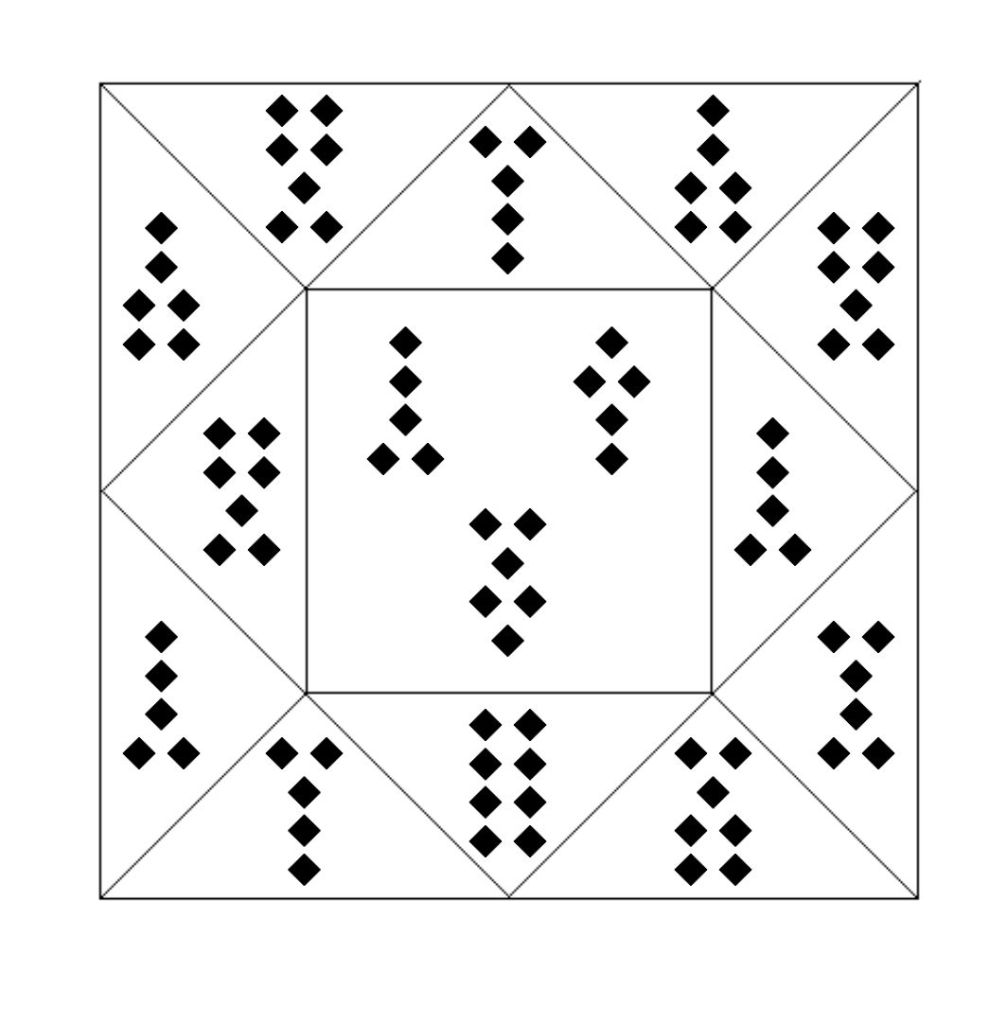
This is an example of a simple mutation, about the question whether one shall be with his girlfriend.1
Geomancy shield by Peter of Abano
The first figure is Conjunctio, the second Puer, the third Puella, the fourth Conjunctio. Look how the first moves to the fourth and the seventh is the same as the third, and thus it means being with her, especially since the first is in the fifth house of fun.2 Moreover, the first is found in both Witnesses.3 Also, this is an example of translation, because the first moves next to the house of the quesited,4 that is, in the eighth, which is associated to the seventh. Moreover it is an example of conjunction, because the first is conjunct to the ninth, and the eleventh with the fifth,5 and the thirteenth with the ninth, and the fourteenth with the eleventh.6
MQS
Footnotes
“Se uno havera la sua amica”, literally, “if one shall have his (female) friend”. This passage warrants its own chapter as it is relatively strange when confronted with the modern doctrine, and it seems to contain odd mistakes, at least prima facie. ↩︎
“Casa di gaudio della cosa quesita”, literally “the house of joy of the quesited”. It could be that Abano means the Fifth house is the joy of the question itself, because it signifies fun, and the question is about fun. ↩︎
It is not clear whether this is good because the figure is Conjunctio or because it is found in the houses of the Witnesses, or both. ↩︎
Abano seems to be using the word ‘translation’ in lieu of ‘conjunction’ here. There is a translation in the modern sense here, but this is effected by Puer, who is both in the Second and in the Sixth. ↩︎
The Eleventh does not seem connected in any way with the Fifth, unless we take the Fifth to be moving to the Fourteenth (the Left Witness) or we count the translation effectuated by Puer ↩︎
This is rather obscure, unless, again, we take the Thirteenth and Fourteenth as regular houses that can come into contact with the others. This would open up the Geomantic Shield to a whole different kind of interpretation. ↩︎
Here Abano discusses matters relating to the Ninth House and Tenth House.
Ninth House
If one shall have ecclesiastic preferment or benefit through the church. If the first and ninth figures are entering and fortunate it means good luck in these matters, especially if the first moves to the tenth or the ninth in the second, and even more if the fifteenth is lucky and good. Judge the opposite if they aren’t.
What kind of fame one shall receive from one’s deed.1 If the first and ninth figure are good and fortunate, and also the Judge agrees, it shows honor and good fame, but if not it shows the opposite. If they are Puella or Amissio it means due to women or young people, and if Tristitia or Carcer due to evil, bestial lawless men, and if Rubeus or Puer due to bloodletting or things to do with fire, and if Cauda or Conjunctio due to theft or other lawless things; but if the figures are good, and if they are Albus and Conjunctio, it means through science and the arts; and if Acquisitio or Laetitia it will be through living a good life, accompanied by good people; and if Caput or Major through great lords or through prelates and noblemen; if Populus or Via through common folks.2
On long joureys and relocations. Consider the first if the travel is by water or earth. If the joruney is by water and the first, ninth and tenth are good and watery or airy, it means good journey; especially if the fifteenth agrees. If it’s Tristitia, Rubeus or Carcer it shows accidents, and if Carcer is in the third it can also indicate one doesn’t complete the journey and will return with delay. If the journey is by land and the figures are good, fortunate, entering or exiting but good, it shows good journey, and with Minor in the eleventh it shows delays, and if Carcer is in the third, the person shall not complete the journey.3
If one shall have good fortune or not through travel. The first is the traveler, the ninth is the journey, the seventh the need he has to journey and the place where he goes, and the tenth is the person to whom he travels. If these figures are good it shows everything goes well and with ease, but if the first is unfortunate it shows accidents or trouble during the journey, and depending on whether the other houses are good or bad, judge about the accident.
And if the first moves to the sixth, he shall fall ill, and you can judge the type of illness by the figure. Ad if the first and seventh are unlucky it shows harm and trouble. If the first, second, third, fourth, ninth and tenth are unfortunate, it shows illness and death and being killed.4 If Tristitia and Rubeus are in the eighth and tenth it shows drowning and loss of wealth, and if the other houses are unfortunate but the eighth good and fortunate, it shows the querent shall go adrift at sea and will lose his wealth, but will survive.
If the first four are fortunate and entering and also the ninth and tenth, it shows good journey, especially if the Judge agrees, but if the said houses are good, but the Judge evil, it means good at the beginning, but bad ending, and if the said houses are a mixed bag and the Judge good, it means various troubles with a happy ending. Always judge based on whether the figures are good or bad, and similarly depending on the meaning of the houses, and according to the querent’s intention.
Tenth House
Of abundance and dearth.5 If you want to know whether the year will be abundant or not, look at the first, tenth and eleventh.6 If the figures are earthy and good it means abundance. If they are fiery it shows dearth. If Airy, also dearth, but less. If Watery, it’s mediocre. Always consider the Judge, the fourth and the Witnesses. If you want to know the time of the year when there will be more dearth, i.e., at the beginning or at the end, judge by the first and fourth figures, and if the first is good and the fourth bad or worse than the first, it shows the end is worse than the beginning, and vice versa. Likewise one can judge the month of May,7 by giving the first to the beginning and the fourth to the end (of the month.) If you want to know what kind of plant will be abundant or will be lacking, look at the figures. Acquisitio, Puer or Laetitia show wheat. Populus or Via show small grains. Carcer and Tristitia indicate chestnuts and fava beans. The other figures are middling.
If it shall rain. You must observe the same rules as above, and note that Watery figures portend rain, and the other figures depend on their particular signification. Keep in mind, though, that Tristitia indicates precipitations.8 And if you want to know when, look at the first and fourth, as discussed above, and also look at the Judge, and note also whether the first four figures are Watery.
To know what kind of occupation is more useful (to the querent) Look at the tenth figure and compare it to the first, and judge their virtue and conformity, and depending on the properties and virtues of the planets. Also note whether the second and the Judge agree, but if they are contrary to one another, look at the proportion of the greater part.9
If one shall obtain a fief or lordship.10 If the first and tenth are entering and fortunate and fixed, and if they are the same figure or are conjunct, it means obtaining what one desires, especially if the Judge is Conjunctio, except if the first goes to the eighth or twelfth, or if the figures are exiting and unfortunate, for this means contrarieties. It’s especially bad if the eleventh is unfortunate, or the Judge and Witnesses. And if the figure leaves you doubtful, add up the first and tenth, and judge by what it shows.
What fortune one shall have in one’s fief. If you want to know this, look at the tenth figure, and in what house it moves, and judge accordingly, especially if the Judge agrees with the tenth. If it moves to the second, it increases wealth peacefully, but if it is in the twelfth he shall obtain money through avarice, and the people will be inimical to him, and may be despoiled or assassinated by his officials.
If it is in the third, he shall be loved by the people for his justice and good work. If it moves to the fourth, he improves his position and patrimony with great honor. If to the fifth, he shall be glad with many children, and will be loved and honored by neighbors with messengers, gifts and friendship. If it moves to the sixth, he shall be loved by his servants and family, but may fall sick or maybe be poisoned.
If to the seventh, he shall be cruel to his people, and much hated,11 and his enemies shall wage war against him, and he shall be lascivious.12 If it moves to the eighth, he shall be a vile man, shy and fearful, and the people will rise against him. If the ninth, he shall travel a lot and with great honor, and his status shall increase. If the tenth is in the first and fourth houses, it means a terrible man, who shall subjugate other lords to himself, and be truthful and just, and if it moves to the eleventh, he shall have glory through his army, and be feared by his men, but if in the twelfth it shows ruin, disobedience of one’s subordinates, and if also to the eighth, he shall be killed or at least chased away, and if together with the eleventh, betrayed by his subjects or family or advisers.13
MQS
Footnotes
This section is interesting because usually we would judge fame from the Tenth House, not the Ninth. ↩︎
This section is not altogether clear, as it is not always easy to see when Abano means fame and when infamy. ↩︎
The Third House shows shorter journeys, so maybe Carcer in the Third indicates the shortening of the journey. Nowadays, it is conceivable that a journey by air would be indicated by an airy figure. ↩︎
The First, Second, Third, Fourth, Tenth and Eleventh are the houses on the querent’s side of the Geomantic Shield. ↩︎
The Medium Coeli or Midheaven is the point where the Sun peaks during the day, and as such is related to the ideas of “high” or “up above” and therefore to the sky and to the weather. ↩︎
The Eleventh House is broadly considered positive, and it is called the Good Demon, possibly indicating a gift from the Heavens. ↩︎
I don’t understand why Abano is refering to the month of May, unless it has to do with agriculture. ↩︎
Possibly because it points downward, or because it shows a ‘sad’ weather. ↩︎
“Et quando fussino contrarie vedi la proportione della maggior parte”. This sentence is unclear, unless Abano is perhaps merely refering to judging by the most numerous testimony/figure in the chart. ↩︎
These rules may just as easily be applied today to discuss questions about promotion or trophies. ↩︎
Likely because the Seventh House opposes the Ascendant, which in Mundane Astrology represents the people of the country. ↩︎
This whole section may seem useless today, but with a little fantasy it may be applied, for instance, to how a new superintendant or boss will be with the people under him. ↩︎
Here Abano discusses matters relating to the Seventh House and Eighth House.
Seventh House
Of marriage The first and second house are for the man, the seventh and eighth for the woman.1 The first signifies the person, the second his wealth, the eighth the wife’s dowry. If these figures are good they show a positive outcome. If the third figure is conform to the first and seventh, the marriage is mediated by messenger [intermediary],2 especially if the eleventh is conform to the third. If the fourth is conform to the first and seventh, it means the marriage is arranged by one’s relatives, especially if the fifteenth figure confirms it. If the second house is bad it means the husband’s (lack of) wealth is a problem, and so judge for the wife if the eighth is unfortunate. Similarly, if the first or seventh are bad, either the husband or the wife cause problems, and if the third, the mediator, and if the fourth, the family. If the first or seventh are unfortunate and move to the sixth, it shows that the marriage won’t happen due to sickness or because one of the two has a physical defect.3
If the spouse shall be chaste and honest4 Look at the first and sixth, seventh, eighth, fourth and twelfth. If you find good figures, it shows the spouse to be chaste and honest, especially if the figures move to other houses. But if the figures are evil, it shows the contrary, especially if they move to other houses, especially if Populus is born from those houses. If Puer is in the sixth and seventh, it shows the wife to be cheating with a young(er) man, and if it is in the seventh and eighth, it means it’s common knowledge.5 If in these places you find Rubeus, and if it moved as we have said above, it means the same, and similarly if in those houses you find Rubeus and Tristitia or Puer and Laetitia. And again, the more you find Populus in the whole figure, all the more dishonest the spouse is shown to be. But if the you find that the figures add up to Carcer, it shows honesty and reserve, and if the above mentioned figures cause Tristitia in the twelfth it means dishonesty with a family member or with a vile person, or with an almost beast-like man. And if Puer or Rubeus were formed in the twelfth, it means dishonesty with young men or with strangers, especially if they are conform to the thirteenth, fourteenth and fifteenth.
If the querent shall have (the love of) the lover or girlfriend If the first and seventh are fortunate and entering, benign and conform one to the other, it shows obtaining what he wants. If the first moves to the eighth or sixth, it means he will need to insist a little, but if the seventh moves to the second she will insist with him, but the mutation still shows a positive answer.6
Of partnerships and similar affairs If the first, second, fifth, seventh and eleventh figures are good, fortunate, fixed, it shows the partnership is good, especially if the second and seventh are the same figure. If the figures are fixed and fortunate it will last, but if not it shows they won’t. If you want to know who will cause problems, look at which side of the chart hosts more signs of instability and ill will, and judge in the same way as with marriage.
If one’s enemy will cause one offense If the seventh is fortunate and positive it means the enmity is of small moment, unless the enemy is a woman, because it still means ill will toward the enemy.7 But if the seventh is unfortunagte and strong and malicious, it means a great and powerful enmity, especially if the twelfth is equally evil. Look also at the fifteenth, and which planets are more fortunate, whether in the first or seventh, and in the other angles, whom they conform to. And if the first and seventh are good, fortunate, entering and the seventh conjuncts the first, or vice versa, it shows reconciliation and peace. If the figure that conjunct the other also moves to another place, it means that the reconciliation will happen through the persons signified by those houses. Always consider the fifteenth and the Witnesses. If there is no conjunction and no translation, but only conformity of the first and seventh, look at the Judge, whether it is also found in another house (of the first twelve), and the more you find it, the more the two parties shall make peace.
Whether there will be war or peace Assign the first house to one side and the seventh to the other, and look on whose side there are more fortunate figures, and look whether the figures that signify war are in the seventh or the first, or if the figures are fortunate, entering and good. If the figures are good, there is no war, but if they are malicious and fortunate in war, they mean war from the side where they are, and it will be as bad as the figures are, and the side will win that holds the more fortunate figures. Rubeus, Tristitia, Puer, Conjunctio are fortunate in war. Carcer, Amissio, Laetitia are unfortunate in war. If Popoulus or Conjunctio are in the sixth, seventh, eighth or twelfth it means death and great loss of blood, and fleeing, and great cruelty.8 If in those places you find Rubeus and Carcer is in the eighth it means death, prison, fires and flames, and if in the seventh and eighth you find Puer it shows great victory, but always look at the tenth, fifteenth and first, whether they move.
Of litigations The first is the querent, the seventh is the other party. The figure that is stronger and more fortunate wins, and if Amissio is found in either, that party shall lose. Laetitia and Puella signify concord, while Tristitia and Rubeus are very evil. And if the first moves to the sixth, eighth or twelfth, the person shall lose, but if the seventh moves in the same way, the other party shall lose. And if the whole figure is occupied by figures of more or less positive import, there will be agreement.
Of fled servants, prison and lost items If the first, seventh, eighth figures are conform and are entering and fortunate, it shows retrieval, and vice versa if they aren’t. If the first is in the sixth, the servant has not fled, but has hidden, and if the figure is Carcer, he hasn’t changed place, if not very little, especially if the first, fourth and the Judge are entering and fortunate. Acquisitio and Fortuna Major signify retrieval, but the opposite figures show the opposite.
Whether the absent party shall come back, and how soon If the first house is fortunate and well-meaning, and similarly the seventh and ninth, it shows the absent party is well and in good state,9 and vice versa if the figures are bad, especially if the sixth is unfortunate. Also look at the fifteenth and tenth. If the first is unfortunate and moves to the eighth it means death, especially if in conjunction with Carcer, Rubeus or Conjunctio.
If the sixth is unfortunate and moves to the first or in conjunction with it, it means a deadly infirmity, and similarly when the first and seventh are unfortunate are united somewhere in the figure. But if the sixth is unfortunate (but doesn’t move) it shows an illness that shall pass, especially if the eighth is good. And if you want to know whether the absent party shall come back soon, look at the first and ninth, and if they are Cauda, Acquisitio or Laetitia he shall come back soon. If Populus or Via, very soon. If the eighth is good and is in the first, he will come back in a month, if in the second, in two, and so on. And if the said figure is in the second and in the eighth, entering, he shall come in a month.10
Eighth House
Whether one shall die within the year If the first figure is the same as the eighth, or if it is conjunct to it, it is an indication of death, especially if it is also in the thirteenth or fifteenth house. If you want to see what kind of death one shall suffer, look at the nature and quality of the figure, and judge as follows: if it’s Rubeus, it indicates fire or steel (that is, being wounded by an arm,) if it is Puella, being beaten to death, if it is Carcer due to a long sickness, phlegm, melancholy or various health issues; and similarly judge of every other figure depending on its virtue and meaning and quality.
On who shall die first between two people Consider the eighth and see if it is in the house of the person you are inquiring about, or if it in conjunction to it, or if it is in the first house, and judge accordingly who shall die first.
If one shall have the money back If the eighth and the first are entering and fortunate it shows getting the money back without difficulty or problems, vice versa if they aren’t. And this is especially true if the thirteenth and the fifteenth agree, but when they don’t, and if on the side of the first house you find weak figures, it means getting back the money with great trouble. If the eighth is in the third it means one’s siblings will help, and if in the fourth, the relatives, and if in the fifth, one’s children, etc.
If the bad thing you fear shall come to pass Consider the first, second, eighth and twelfth.11 If they are lucky it shows the thing won’t come to pass, but if some of them are unfortunate, it shows it shall partly come to pass, and if they are evil, it shall come to pass, and the bad thing will be identified by the type of figure. If the first figure is in conjunction with the eighth or the eighth with the first, it means harm to the person. If the second is in the seventh or ninth, it means harm to one’s wealth. And so judge all the other things with respect to the eighth house according to the meaning of the house and the thing inquired about. Always keep in mind the Witnesses and the Judge.
MQS
Footnotes
This statement is interesting for a number of reasons. I will only mention one. Abano does not say that the First is for the querent and the Seventh for the spouse, but that the First is for the man and the Seventh for the woman. It would be easy, especially in the current cultural climate, to attribute this to Medieval sexism. I am not saying that it doesn’t play a part, but there could be more. In many Medieval astrological texts the Seventh house, as noted before, is assigned to women, and when delineating marriage from the birth chart different procedures seem to have been used to predict a man’s marriage as opposed to a woman’s, the method for the man involving the seventh house, the one for the woman being more weighed toward other considerations. ↩︎
It would be easy to update this interpretation to show the influence of social media in bringing two partners together nowadays. ↩︎
The modern doctrine would dictate that the marriage happens if the first figure springs to the Sixth House. ↩︎
The Italian title is “if she will be chaste and honest”, again presupposing a female Seventh House. ↩︎
This passage is exceedingly complex. It is not clear if Puer in the Sixth indicates a younger man because it is Puer or because it is in the Sixth (which is below the Seventh). The thing being common knowledge when it happens in the Eighth is possibly due to the fact that the Eighth house is above the horizon. ↩︎
Of interest here is that the querent can obtain the lover by moving to the Eighth or Sixth House, but the Seventh can only spring to the Second, not the Twelfth. ↩︎
This passage is not clear. It seems to imply that a good figure in the Seventh House still bodes ill if the enemy is a woman. ↩︎
These attributes seem ill-fitting for Conjunctio. ↩︎
Older astrology handbooks are filled with indications on delineating the Eleventh House in a horary question to know whether what one hopes will come to pass. Abano here applies the same method to the Eighth house to delineate one’s fears. ↩︎
This is a quick one. My husband comes from a particular family background, and as a consequence of it is often afraid of not being left with enough money despite his hard work (and he is a hard worker). As I said elsewhere, we are moving, and so expenses are popping up left and right, and I’ve noticed a certain anxiety in his eyes. Consequently, I asked the Heavens a bank statement.
My husband’s finances, Horary Astrology reading
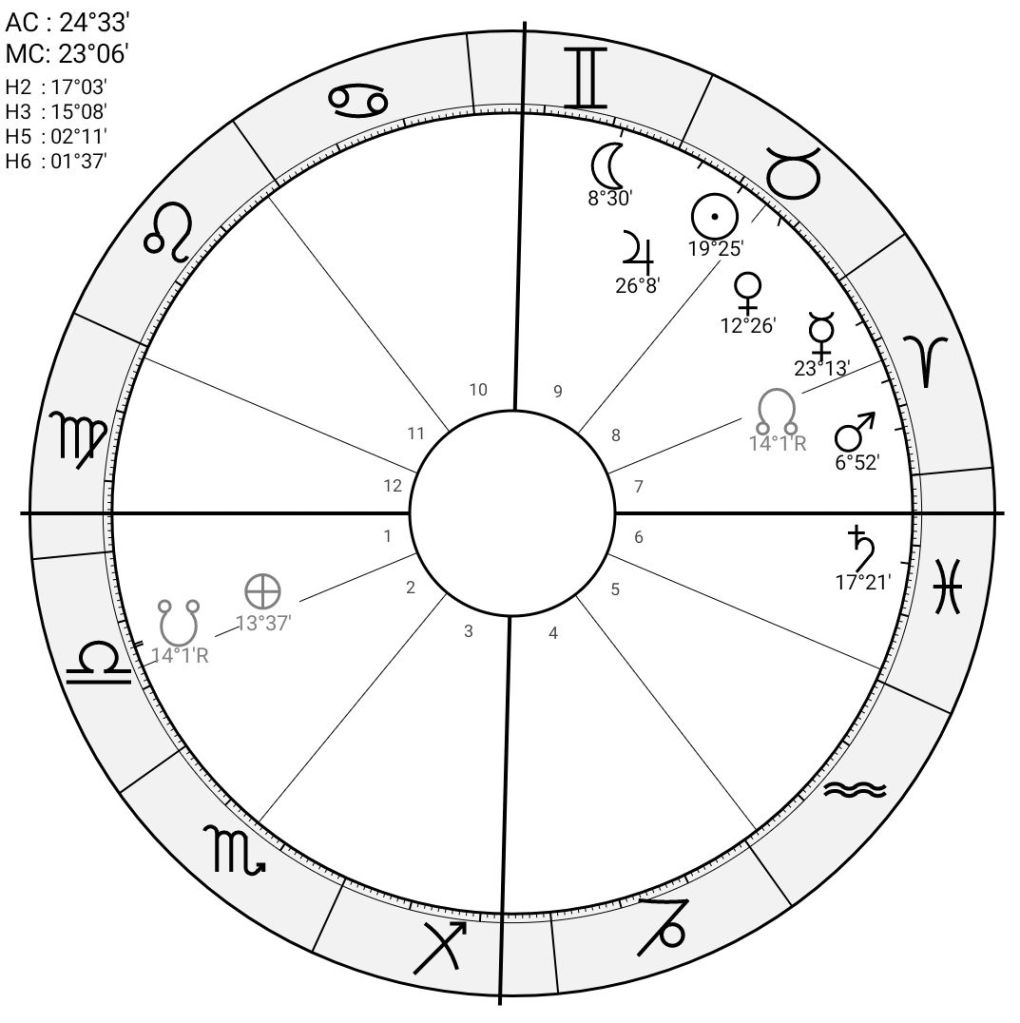
Since I didn’t tell my husband I was doing a reading, I am the querent, and he is my husband, and therefore Seventh House ruler, Jupiter. His money is represented by the second house from the Seventh, therefore the radical Eighth House, ruled by Mars.
Jupiter is peregrine in Taurus, and conjunct Caput Algol, a malefic star that, some say, is connected metaphorically to losing one’s head. Furthermore, Jupiter is combust and approaching the Sun. Therefore, my husband is under great stress.
How are his finances? Well, Mars is its sign and face, angular and inside the Seventh House, which represents my husband. So his finances are good, and they remain in his possession. This may sound silly. After all, if they are his money, of course they are his possession. Still, it is comforting to see his money in his house: he retains control over it.
I believe this wonderful Mars testimony shows that, as it were, the fundamentals of his finances are solid, i.e., there is no risk of dejection, poverty, major adversity, etc.
That being said, this does nothing to alleviate his stress. The Moon is cadent, possibly indicating that the economy is going to be slow for a while, and it separates from a positive sextile of Mars, showing a positive financial recent past, and applies to a square of Saturn. Saturn shows restriction. In other words, while there is nothing to fundamentally worry about, the next period isn’t going to be the most prosperous.
I already have a partial outcome for this reading, which was done some weeks ago. As soon as we entered the house, after a couple of days, some household utensils gave up the ghost, including the fridge, and we had to buy new ones. Since Saturn rules the Fifth house, the house’s possessions, I’m wondering if that was what it was referring to, though this is stretching it quite a bit (they are our possessions, not the house’s). Alternatively, Capricorn is the second sign on the Fourth cusp, so Saturn would generally show the house.
Here Abano describes the meaning and function of the Geomantic Court.
In order to have better cognition of all that one wishes to know, one must consider the thirteenth and fourteenth figure, which are called the Witnesses, because they unveil many secrets, depending on the good or evil nature of the figures they contain. And one must also consider the fifteenth figure, called the Judge, which shows the end of the matter for good or ill, together with the figure in the fourth house.1
The thirteenth figure signifies the past, but also the present, depending on the question, while the fourteenth the future.2 When the thirteenth and fourteenth figures are good, it means the question asked is positively answered, especially if the Judge is also good, but when the thirteenth figure is evil and the fourteenth good there is some trouble, and if the thirteenth is good and the fourteenth evil, then the question has a negative answer, especially if the Judge is evil. 3
If both Witnesses are evil and the Judge good, one must refer to the fourth house and judge from it what shall come to pass. Similarly, if the Right Witness is good and the Judge evil, one must look at the fourth to consider whether the matter will end in joy or sorrow.
If, after all this, there were still doubts, take the fifteenth and the first figures and add them to create another figure, and judge depending on the nature of this figure. And if this figure happens to fall in any of the houses, good or evil will come from a person or thing signified by that house. This sixteenth figure is called the Judge of the Judge [Sopraiudice].
Furthermore, this sixteenth figure is produced also from the Judge and from the figure in the house of the quesited, according to the properties of the houses as described before, and according as said figure is conform or not conform to the fifteenth or sixteenth figure, so one judges the chart of the question.4 And when they are good, all the better, and when they are bad, all the worse. And when they contradict each other it is also somewhat bad. But when they are in everything opposed to the fifteenth and sixteenth, the chart is null and void, and the chart is called anomalous, without order or rule. 5
MQS
Footnotes
Here Abano seems to put the Judge and the Fourth house on the same plane. ↩︎
This idea seems to stem from astrology, where the Moon’s previous aspect indicates the present or the past, and the one she makes immediately after shows the future. ↩︎
The way Abano describes the interrelation of the Witnesses with the Judge almost seems to make the Witnesses more important than the Judge. ↩︎
This additional technique begs a couple of questions. First off, why does Abano call both figures ‘the sixteenth figure’? Are they on the same plane? Secondly, is this technique always employed whenever the traditional Judge of the Judge (from the Judge and the First Mother) is used? ↩︎
In other words, this seems to have been taken as a sign that the chart didn’t answer the question. Personally, I am skeptical of this technique. It is my experience that charts are always radical, whether they are astrological charts or geomantic shields. They always answer, or at the very least they are always meaningful. Clearly, if we keep making up new figures, the chances of them contradicting each other increase accordingly. But contradiction is not a sign that a chart is not valid: only that it mirrors a complex, contradictory reality. Maybe I am wrong. ↩︎
Abano quickly summarises the meanings of the planets in traditional Western astrology, so that the geomancer may better understand the meanings of the corresponding figures.
In order to make it even easier to make a judgment, we shall now consider the planet of every figure, and conveniently we shall list the virtue and meaning of every planet.1
Saturn is always evil, wherever it is, and it means sick or vile people, malady, poverty, blind or maimed people, laborers, problems and toil, prison and prisoners. Adversities and obstacles, loss of wealth. It is only good for building and in agriculture and in things that need to last. Its two figures are Tristitia and Carcer.
Jupiter is always good, wherever it is, and it means Church people, prelates, noblemen, rich people, merchants, captains, courtesans and friendly people. It is good and pleasurable, useful in every thing. It is only bad for the sick and the prisoner, whose trouble it prolongs. Its figures are Acquisitio and Laetitia. Acquisitio is the better one.
Mars is sometimes good and sometimes bad, depending on the question, but inclining to evil, and it means malicious people, wrongdoers, traitors, thieves, ruffians, harlots, murderers. It is only good in things of wars and when blood is concerned. Its figures are Puer and Rubeus, and Puer is the worse one.2
Venus is good, but its goodness is minor, for good or ill, depending on the question asked. It means people who are friendly, happy, young, with little troubles in life. But also harlots. Its figures are Puella and Amissio. Puella is the more noxious for travel and sickness and prison. Amissio is the better one.3
Mercury is a mixed planet in terms of good and evil. It means servants, messengers, letters, embassies, writers, scholars and painters, science and doctrine. Its figures are Albus and Conjunctio. Conjunctio is the worse one, as it always shows malicious intention or duplicity, and hexes.
The Sun and Moon are mixed planets in their good and evil import depending on the question, but the Sun is the better of the two,4 and it means nobles, kings, emperors and people of high station, who have dominion. Its figures are Fortuna Major and Fortuna Minor. Minor means more trouble than prosperity.
The Moon is also a mixed planet, but mostly bad, and its figures are Via and Populus. Via is only good for travel, Populus is good for dealing with people, and it means abundance and lots of water.
Caput and Cauda are associated with the planets Jupiter and Venus (Caput) and Mars and Saturn (Cauda).5
MQS
Footnotes
The elaborate psychological attributes that modern astrology assigns to the twelve zodiac signs are virtually unknown to premodern Astrology, having been invented relatively recently to make up for modern astrology’s inability to make verifiable predictions. Instead, traditional astrology relies much more heavily on the planets as celestial actors. ↩︎
This is not the first time Abano alludes to Puer being worse than Rubeus, although in other places he seems to contradict this statement. ↩︎
This statement is also odd, and it reeks of either mistake or blind. ↩︎
In Medieval Astrology the Sun was often considered a benefic when aspecting other planets, but a malefic in conjunction (planets conjunct to the Sun are said to be combust or burned up, except when they are very close, in which case they are said to be in the heart of the Sun and strengthened). The Moon’s evaluation, quite ironically, fluctuated depending on the author, but in general she was believed to be a benefic when waxing and a malefic when waning. ↩︎
The practice of assigning the two Nodes to the benefics and malefics seems to have started possibly with Medieval Muslim philosophers, or at least in the Latin West. In the original Western tradition, the Hellenistic one, there doesn’t seem to have been much talk of the Nodes except in negative terms. ↩︎
Background: hubby and I are on a weekly veggie delivery service from a nearby farm. Yesterday they told us they might come a bit later than usual (normally they deliver at around 12-13pm). As hubby needed to go to work and I had a ritual to carry out and carefully timed, I needed to know that I wouldn’t be disturbed during the ceremony. So I asked when the veggies would come.
Horary Astrology
Here’s the horary chart (the time was 12:56)
Horary question: when will the veggies arrive? App used: Aquarius2go
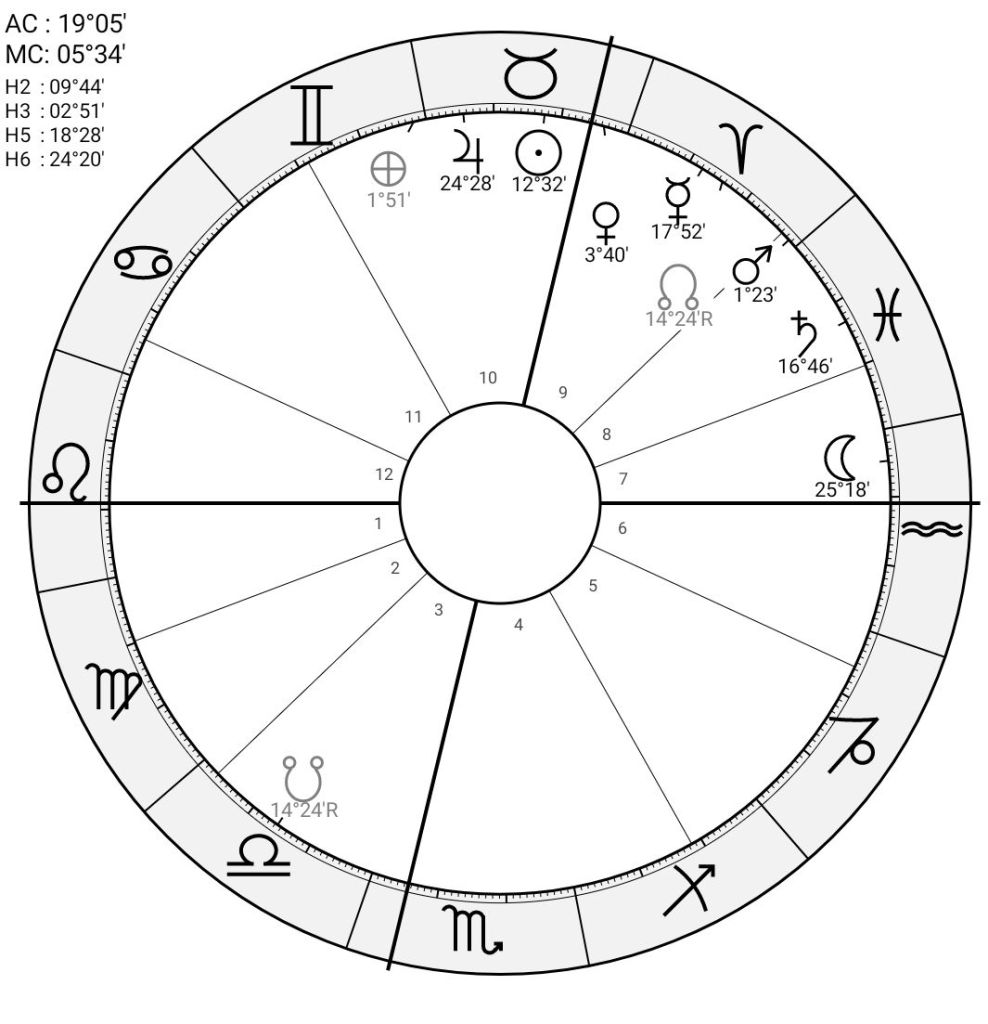
Leo rises, so Leo’s ruler, the Sun, is my significator. The delivery service is our business partner, since we buy stuff from them and they bring it to us, so they are signified by the seventh house ruler Saturn (ruling planet of Aquarius). The veggies are their moveable possession, so they are indicated by the second house from the seventh, i.e., the eighth house, and its ruler Jupiter. The Moon is given to us as cosignificator and indicator of the flow of action.
Right off the bat we notice the Moon, weakly dignified in the seventh house, so action (obviously) starts from the delivery service. The Moon has separated from a square with reception with Jupiter, i.e., the veggies, and is now void of course. Clearly there are some problems (a square with reception is still a square). Still, there is a promising sextile (a positive aspect) between the Sun and Saturn, though it’s odd to see our significator applying to theirs (see the Outcome for why).
The Sun perfects the aspect at 17 degrees and 10 minutes of Taurus. The difference from its current position is of 4 degrees and 38 minutes, so they will come in 4 and 38 somethings. I would need to see serious testimonies to judge they won’t come. The Moon being void of course can delay them, but there is a clear aspect showing they’ll come. So they will come today, I thought.
Therefore, they will either come in 4 minutes and 38 seconds or in 4 hours and 38 minutes. I thought the second option was the most likely, so since the chart was cast at 12:56, and allowing some wiggle room for reality to follow astrology, I judged they’d come anywhere between 17.30 and 18, though I was somewhat skeptical, since this timing would have been unprecedented for them, and they’d told us they would come only a little bit later than usual. But at least this gave me plenty of time for my ritual.
Geomancy
After my ritual, which was timed for around 15 in the afternoon, I decided to have a look at what Geomancy had to say about this delivery:
The Geomantic court is positive, with the Judge Acquisitio showing we’ll get the veggies, but the Witnesses are mixed, showing problems. Albus is in the first, and it’s a good figure for commerce. A very unpromising Cauda Draconis is in the seventh house (which is also the left witness). I must say that I have seldom seen things resolved satisfactorily when Cauda is involved. However, Cauda does spring to the second house, perfecting. I was also relieved, but also a bit puzzled, to see Albus spring to the eighth, also perfecting the chart. Usually, the figure that moves makes the effort. In this case, it seems both of us will make some effort, and that our effort is better than theirs.
Outcome
They did come between 17.30 and 18 (around 17.45). However, they gave us the wrong delivery, which we only noticed when they’d already gone away. So we had to call them back and go meet them to exchange the wrong veggies for the right ones. Note how in the horary our significator applies to theirs and how, in the Geomantic chart, Albus moves to the eighth.
Lessons to be learned
1. Horary questions must not be idle, but they need not be life-changing. Knowing when a delivery service will arrive may seem idle curiosity, but I had a serious reason to want to know the answer (I take my magic work seriously)
2. The divination device, whatever it may be, ALWAYS knows best, though we may be fallible in interpreting it. People like to say that divination lets you contact your unconscious. I think there is altogether too much talk about the unconscious, and not enough talk about the superconscious. I saw from the Geomancy reading that there were problems connected with the delivery, though I could not pinpoint them exactly. In hindsight it is clear what the chart meant.
3. It is a humbling and inspiring experience to see how perfectly the cosmic mechanism works.
I occasionally help my husband when he needs to work from home and I’m free. Yesterday was one such occasion. He’s a stenographer and was sent several audio bits from a famous company so that he would make a protocol out of them. I don’t think I need to stress how tedious this is. I do it mostly to improve my German, aside from being helpful to my husband. At around 18:04, he was told that the meeting was running late and that there was the possibility of us receiving audios well into the night. Horrified, I asked “when will it be over?”
The Heavens answered with this chart.
When will it be over?
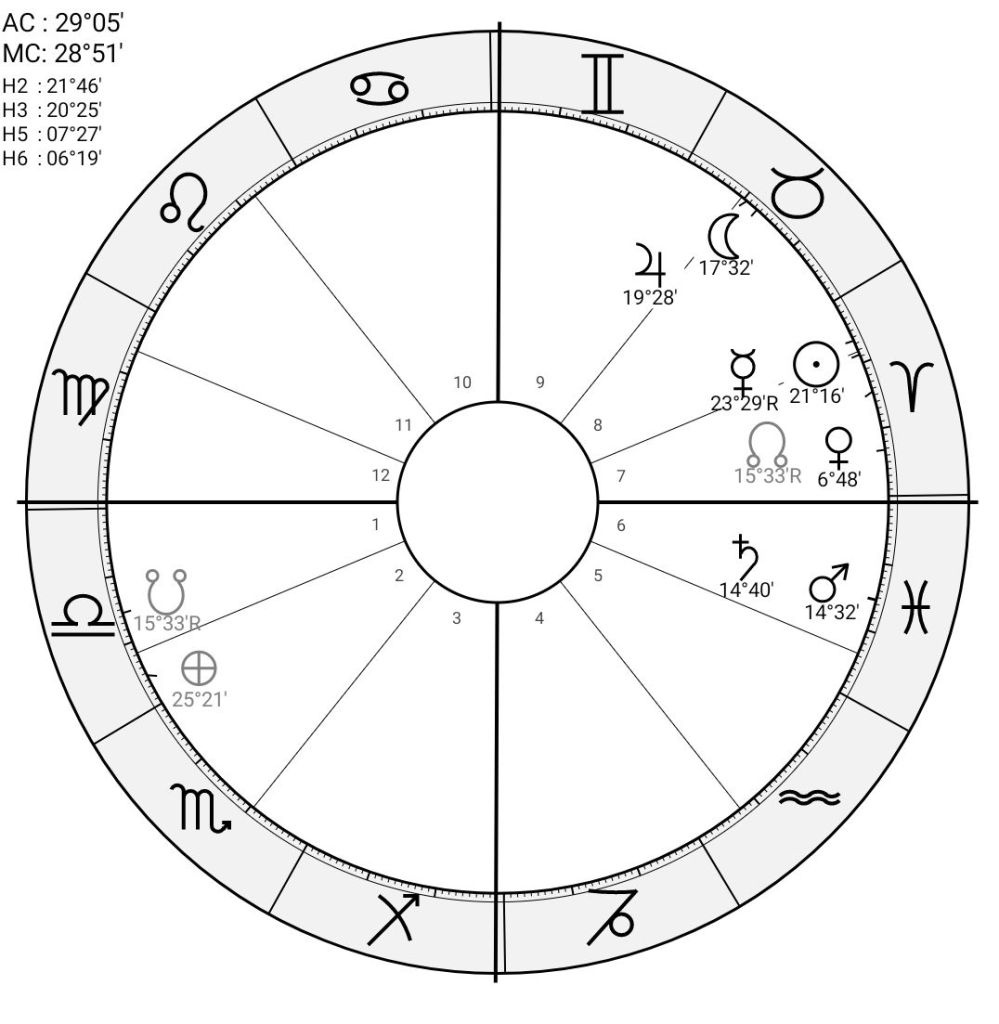
I am represented by Mercury, Lord of the Ascendant. Mercury is retrograde, stuck in the evil Eight House of “fear and anguish of Minde”, as William Lilly wrote, and speeding into Combustion of the Sun. In a word, my poor Mercury is a mess. At this point I am unsure if only I am signified by Mercury and my husband by Jupiter, Lord of the Seventh House, or if we are both signified by Mercury. The fact that a Bi-Corporeal sign is rising (Virgo) seems to indicate we are both Mercury. Our stress is well captured by Mercury’s affliction.
However, one thing that gives me hope is the VERY late ascendant (29.05 Virgo), which seems to indicate it won’t take that much. Let’s look at the Moon. She is in her exaltation in Taurus, separating from a sextile of the two Malefics and about to bump into Jupiter, the Great Benefic. Help may be at hand! Initially, as I said, I half-thought that Jupiter was my husband. However, reflecting on my question “when will it end?” I realized that Jupiter rules the Fourth House, which can indicate the end of the matter. In this case, it is quite appropriate that the end of the matter be signified by a benefic.
If that’s the case, then the Moon approaching Conjunction with Jupiter must indicate that things are about to end. When though? The Moon perfects the aspect in around two degrees, so we are left with “two somethings”, i.e., two seconds, two minutes, two hours (days wasn’t an option). The Moon is in a fixed sign, but also very quick in motion and strongly dignified, so my sense was that it would be over in less than two hours. Looking at the ascendant, which had less than one degree of Virgo left on it, I had the feeling that it could possibly be around an hour.
The question was asked at around 18:04, and at 19:02 we were told it was over.