

Was it a vision, or a waking dream?
Fled is that music:—Do I wake or sleep?
Was it a vision, or a waking dream?
Fled is that music:—Do I wake or sleep?
You know the old adage that people who sell solutions need the problem to remain unsolved. I’m not talking about odd conspiratorial crap, like “the government is hiding the secret of immortality”. I’m talking about observable facts.
When influencers started becoming a thing, it was simply a bunch of kids in their rooms talking about stuff they were passionate about. Corporations then smelled the opportunity and ruined everything, as they usually do, by turning them into advertisers.
There is, obviously, absolutely nothing wrong in wanting to make money on the Internet. My mom, who was a journalist, used to say to people criticizing that she made money off of reporting tragedies, that it’s possible to do her job well with professionalism and strong ethics. A look at the Internet today shows me that most people are not my mom.
Whenever you end up in a rabbit hole on a particular topic on social media or youtube, your feed is going to fill to the brim with people trying to part you from your money. Even if they don’t want to part you from your money, they still want to part you from your attention, and your attention is one of the most precious things you have, so you should administer it well.
I’ve already talked about the pros I experienced from reducing Internet consumption, learning again to stay with myself. I’m not some kind of Luddite or Amish. I don’t dislike technical progress. I just think it should serve me rather than the other way around.
I generally try to spend less than an hour a day on the Internet (which, for a Millennial, is quite the achievement) not counting the time I spend working on the blog or yt channel. I’ve found that most days I can safely stay under 30 minutes.
What I’ve noticed in my journey toward reclaiming my own attention is that it is especially easy to spot someone trying to sell you something on the Internet. Again, I’m not saying it is wrong to sell goods and services, and in a way all is fair in love and marketing, but the point is that my aim of keeping my attention to myself and deploying it only for worthwhile pursuits is at odds with most people’s need to make a couple of bucks off of me.
You can immediately spot a youtuber (and probably tiktoker) who is out to get your attention and/or money because they have a distinctive (and very effective) way of serializing even the most minute unit of crappy information they are going to give you. For instance, if you watch a video about fitness, you’ll be swamped with videos all telling you how you are missing out on every possible secret hack.
You will always notice that their way of pushing out ‘content’ is to make it seem as though that video is always going to be exactly the one thing you need in whatever niche you’re exploring, and without which you will utterly fail or be lied to by invisible entities who won’t tell you the truth about it.
That is, until the next video, which will drop 24 hours later, and which will also be exactly the one thing you need and are missing and are being lied to by others and without which you’ll fail. Once you start spotting these trends it becomes almost amusing to see how much sludge can be manufactured with so little actual material.
MQS

Back in my smoking days, I remember thinking that the biggest obstacle to quitting was not just the physical addiction to nicotine, but the fact that cigarettes had simply become a part of my day. Addictions slowly (or quickly) carve time for themselves in our life, so that even when we decide to stop engaging in the addictive behavior, there is a chasm left between the time before engaging in it and the time after engaging in it that needs to be filled. The hardest thing is beginning to reimagine our life as something whole even without the thing we stop doing.
I was talking to my husband’s little cousin the other day. She’s 16 and she is the typical fried-brained teenager who has been conditioned to expect that anything should be presented in small 15-second soundbites that you can scroll through if the gratification doesn’t hit within the first two seconds. By the way, I’m not saying this as a jab at the younger generations: my generation was fried-brained in a different sense, and besides, I know plenty of people older than me whose mind has been beaten to a pulp by the mechanisms of social media.
What I thought was funny, but also a bit worrying, was her fidgety demeanor whenever she had to spend more than a couple of minutes without fiddling with her phone. She was in principle no different than me after an hour of not smoking–except that the withdrawal symptoms kick in much more quickly. I asked her if she could fathom spending a day doing absolutely nothing that she didn’t have to do (e.g., going to school, help clean the house, etc.) and she looked at me as if I started speaking in tongues.
To be fair, asking this of most teenagers is asking too much, regardless of the generation, and she’s the ‘go go go’ type anyway. But yesterday I spent the day doing exactly that–nothing that I didn’t have to do. It was refreshingly hard to accomplish.
Coming to a point of stillness is difficult when we are constantly bombarded by stimuli. Plus, our conscience of other people’s awareness and attention has expanded in recent years from the couple of people around us to potentially the whole world.
The ringing silence I experienced was a reminder of how abstract this type of conscience actually is: I am not in front of an audience. I am alone, a point in the existence reflecting upon itself. It was one of the longest days I had in my recent memory, but not in a bad sense. I can start to see why so many ancient stoics said that each day can be treated as a lifetime in and of itself.
I feel this is a good exercise to do regularly, so I will incorporate it into my practice. It is not meant to be a flight from reality. It is a way of coming back to it so I don’t lose sight of its right proportions.
MQS
I don’t know about you, but at the ripe old age of 35 I’m an old fart who remembers the wild west days of the Internet, when people tried cool stuff just because they could. In the last few years I’ve noticed a shift, which probably started in the early 2010s when governments and corporations decided the internet wasn’t something to be vilified as they had done up until that point, but a space to be sanitized, homogenized and monetized.
I am not one to decry money as evil: money is simply an equivalent for one’s work that may be exchanged for the equivalent of another person’s work. In this sense, money has deep metaphysical properties and implications.
What I did notice, however, is that now, wherever I go, someone is trying to sell me something, even if it’s just a free, safe, “binge-worthy” series of videos designed to hook me in so that they may make money out of my attention.
And the more safe formulas get proofed and tested for grabbing people’s attention as quickly as possible, often with AI to provide the missing accelerationist flavor, the more the content that is peddled can be identified as slop. The existential ennui of someone who browses the internet in the year of our Lord 2025 with a smidgen of self-awareness is not to be undererstimated.
I’m bringing this up because I recently received an (automated) email on the account I use for my youtube channel where I was invited to take a course for blowing up my channel, which included such thoughtful advice as “make bad content” (their words, not mine). And honestly, that might very well work, if it wasn’t for the fact that I don’t give a rat’s tutu about drawing big numbers and am perfectly happy with my little corner.
Essentially, slop has been acknowledged as the fastest and most effective way to plug oneself into a premade template of ‘Internet success story’. This, in itself, is not a revolutionary discovery: crap has always existed and has always had success, and the reason why we often don’t know about the crap that existed in the past is that crap tends to be forgotten in the long run, unless it’s so bad it becomes an acquired taste.
What is new is the psychotic speed at which this is happening as attention spans get shorter, the number of people competing for them gets higher and the tools for achieving the result get more powerful.
From a metaphysical and esoteric standpoint, slop is simply the elevation of the lower aspects of the human consciousness to the status of aim to be pursued, with a result that might very well be seen as a form of anti-initiation.
The word initiation tends to conjure images of hooded figures bestowing grace on a supplicant. While the ritual aspect of it is not insignificant, the idea of initiation is far broader and it applies to many fields, not just esoteric, as a path that forces the person’s spirit to acquire, develop or balance certain qualities that allow it to adapt to the ideals of that path.
An anti-initiation, in this sense, is a process whereby the human spirit ossifies, rots and collapses in on itself, having lost any semblance of a guiding light and being only stirred into motion by the gravitational pull of its own ass.
I am not a prude and I am not a no-fun Fräulein Rottenmeier. I enjoy some of the products of our current age, and I accept the rest with some irony (what else is left?) I am merely observing an interesting trend. It is often repeated that initiation (any initiation) is for the few, but it seems to me that is becoming something for the fewer.
MQS
I’m doing it with the Sibilla, so it stands to reason that I should do it with playing cards too. As usual, this list is not meant to be complete. It is only intended to look at the cards as if through a cross-section based on a particular topic. In this case, gain.
Three of Hearts
In my playing card system, the Three of Hearts is a gift. It represents all things that we acquire easily. It is not, strictly speaking, a card of gain, but it can entail gain. For instance, if someone asked about their business, this card falling at the end of the spread would indicate improvements and therefore, within the context, additional wealth, that is, gain.
Five of Hearts
The Five of Hearts is the card of abundance. It is one of the cards that can indicate a very positive evolution and increase of wealth. As with the Three, the Five, being in the suit of Hearts, is not strictly about money, but it can promise positive situations in a reading about finances. Furthermore, next to money cards, it increases their import.
Nine of Hearts
Not much to say here. In many respects the Nine of Hearts is like the Three of Hearts, but much more powerful.
Ace of Clubs
The Ace of Clubs is a very strong card, which indicates power within the situation. If it falls next to the querent, it shows the querent actively obtaining something, having power over it. However, unlike in the suit of Hearts, the Club suit requires effort and action, and is therefore less rosy than the Three, Five or Nine of Hearts. The Ace of Clubs can also indicate a powerful vision that comes true in material terms.
Three of Clubs
The Three of Clubs is a card of union, and can represent a business affair. As such, it usually promises gain in material issues, but we must be careful in our analysis of the whole spread, as we all know a business deal can be disastrous when attended by Spades or less promising Club cards. By itself, the Three is mildly encouraging.
Ace of Diamonds
The Ace of Diamonds represents news in general, but it also represents gold and all things that have high value. It is a card of great riches and wealth when not impeded by other difficult cards.
Three of Diamonds
The Three of Diamonds is a money card. As such it is usually read as small gains, whether in a positive sense (as in a small inheritance or a small raise) or in a negative sense (as in having only little money). Furthermore, we must be careful to note whether the little money is being gained or spent. By itself the Three shows gain.
Four of Diamonds
The Four of Diamonds represents agreements and pacts. Being in the suit of Diamonds it is geared more toward material affairs and thus indicates contract, whether positive or negative will be shown by other cards.
Five of Diamonds
The Five of Diamonds indicates change, especially (though not exclusively) within the context of money matters. It can indicate money changing hands for better or worse.
Seven of Diamonds
This is like the Three of Diamonds, but it shows a larger amount. Furthermore, the Seven is more clearly indicative of gain over loss. It is a more inherently fortunate cards.
Nine of Diamonds
The Nine of Diamonds is strongly connected with the realization of plans, material projects and with social ascent. Increase in wealth may or may not be tied to it, though in our society it usually is. It represents strong satisfaction in money matters, and upward mobility with all the perks that are entailed.
Ten of Diamonds
The biggest money card in the game, the Ten of Diamonds indicates success all around. For entrepreneurs it shows the reaching of great goals, while for business owners it can represents advantageous situations that generate wealth and ease in terms of money. Note that gain can be intended also as a reduction in expenses, so if the question is something like “Will I manage to get my landlord toreduce my rent in the next contract?” that counts as gain.
MQS

Previous / Back to Index / Next
Abano discusses matters related to the First House. and Second House
Having shown in the first book how one may know and judge (questions), we must now show some practical examples of this science according to the twelve houses of the chart, so that everyone may more easily understand what they wish to know. And this always according to the above described rule of giving the first house to the querent and the appropriate one to the quesited.
Of the life of the man or woman.1
Having made the chart and the fifteenth figure, and wanting to know one’s fortune or misfortune,2 consider the figure in the first house and, depending on its meaning and the virtue of the planet ruling this figure, judge whether it is good or bad.
And if you want further clues, look whether the figure moves toward one of the angles or in more than one of them.3 And the life is all the more long and better and fortunate depending on how good the angle is, as said before.4 And if the figure doesn’t move, but it is still good and fortunate, it means one still has a long time to live, but is lonely.5 And if it moves to the second, it causes gain through one’s industriousness and solicitude. And if it moves to the third, it means getting along with younger relatives and siblings, and if to the fourth, it indicates increase of patrimony and wealth of the father or of the older relatives.
If to the fifth, it means happiness through children, and usefulness, but if to the sixth, misfortune, tragedy, accidents, but also other people’s service (to the querent), depending on whether the figure is fortunate or not. If it moves to the seventh, it means good things from the wife or girlfriend, and good deals, or gain through war or gambling, and maybe in a foreign country, depending on the quality and condition of the figure. If it moves to the eighth, the life is short, unless one is a butcher or deals in dead animals, that is, skin, wool, or if one is a loan shark.6
If it moves to the ninth, it means much journeying, and being a knight or a wayfarer or a churchman, and the person’s luck is better if the figure is good. If it moves to the tenth, it means honors and public office and receiving dignity from people up high, or through them, depending as the figure is fortunate or not. If it moves to the eleventh, it shows good luck with friends and from people who are noble or from the Roman Curia. If it moves to the twelfth, the person will meet his end in prison, or through long infirmity, or it shows being kidnapped or being in a remote place like some religious people do.
If the figure shows up as a Witness or as the Judge, the person’s fortune depends on how good the figure is. And what we have said of the first figure, whether it is good, mediocre or bad depends on its nature.
Of wealth, possessions and gain.
If you want to know about merchandise, one must judge the first house, whether it is good or bad, and then the second, depending on its virtue, and judge thus: if it contains one figure among Acquisitio, Major, Conjunctio, Caput and Albus, it means that gain will come from things that are easily movable from place to place, or from things that change, or that are sold by approximation (that is, without carefully weighing them).
If it were Puer it signifies gain through things sold after careful weighing. If it were Puella, it means gain through things that are easily obtained. If it were Rubeus, it means in things that cause fire or that have to do with blood. If it were Amissio, Cauda or Via, it shows little gain, and if it were Tristitia or Carcer, it means ups and downs of fortune or possessions. And if it is Laetitia or Minor, it means being able to keep one’s possessions. If it is Populus, then it depends on how good the first figure is, however by its own nature it means abundance.
Note that every entering figure indicates gain or buying, and exiting indicates loss or selling.7
Whether one will retrieve the lost possession.
If the question is about lost items, or stolen items, and we want to know whether we will get them back, look at the first figure, whether it is good or not, and then the second, and if they are entering or exiting. Afterwards, if you are looking for the thing, look at the tenth figure, if it is entering and good it means retrieval of the lost thing, especially if the same figure is in the second, or if here is another figure that is entering.8 Also look at the eleventh and the fifteenth. If instead the figures are exiting or bad, it means the opposite.
If you are looking for a stolen item, look at the seventh house, if it is entering and fortunate, and if it moves to the second or first house, which means retrieval.9 Similarly in the tenth, eleventh of fifteenth. And if the seventh [figure] is in the third, it means that the lost or stolen item is in the house of a sibling or relatives; if in the fourth, in or around the house of the father or of the older relatives, or near the house or place were it was originally. If it is in the fifth or sixth or eighth it means it is far away. If it is entering, however, you still will get it back.
If one will get back the money they lent to someone else.
The first figure is he who must receive back the money, the second is the thing that he wants to get back, and the seventh is the borrower. If the first and second figure, or at least one of them (especially the second) are entering, and if the seventh is exiting, it means getting it all back easily. Similarly, if the second and seventh are the same, that is, entering. But if they aren’t, it means the opposite.
MQS
Enneagram Type Three and Enneagram Type Six are generally quite different, so much so that they are each other’s arrow: Threes grow at Six, Sixes stress at Three. Threes are a Heart type and they crave recognition of their talent and worth, while Sixes are a Head type and need security and certainty.
Both types are affable, but in quite different ways. Threes are more assertive and want to impress others with the rabbits they can pull out of their hat (the exact rabbit depending on the context). Sixes tend to prove themselves dependable and friendly so as to elicit positive and protective feelings in others while avoiding the dangers of a hostile environment.
Sixes generally want to quickly sort you out as either a danger or a dependable ally, but once you are in the latter camp they will often go the extra mile for you. Threes on the other hand are more competitive, so depending on the context they will go for your jugular if it means emerging victorious and winning the prize. Of course they can be good friends like anyone else, but because they are used to setting aside their emotions to reach their goal, they can be just as competitive against a colleague they are usually friendly with outside of work, assuming the colleague will behave the same way.
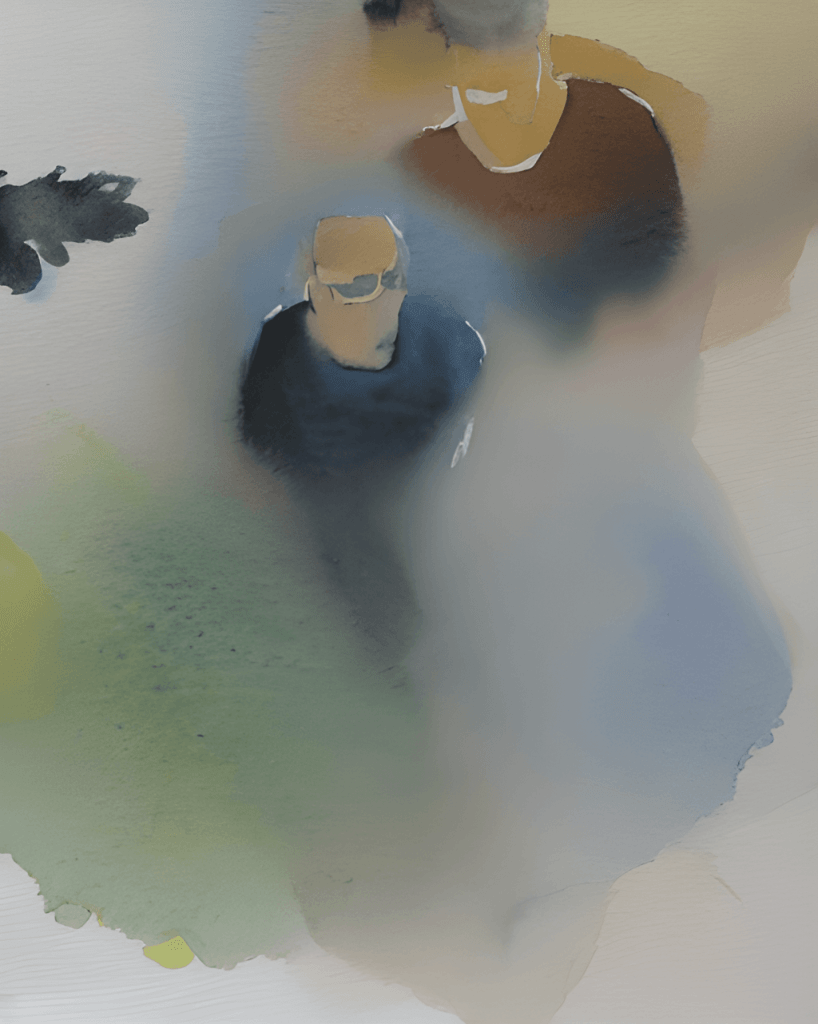
Threes are often concerned with image for image’s sake, and understand that, especially in a social context, one is supposed to wear a mask, while Sixes are terrified at the prospect of someone presenting them with a fake facade that doesn’t correspond to reality. They’d rather be told the ugly truth than be left hanging. In this, though, they can become paranoid and obsessively questioning, in a way that average Threes, who understand the importance of propriety and playing one’s role well, usually don’t become.
Paradoxically, Sixes, a Head type, are far more volatile and emotional than Threes, a Heart type. This is because Threes have learned to suppress their Heart energy, so they come off as cool and collected, like they’ve got it together. Sixes, however, have suppressed their Head energy, so they cannot trust their thinking process and are therefore often prey to strong emotions, so they come off as somewhat insecure.
Ultimately, Threes are focused on achieving status and therefore on drawing attention on them, while Sixes generally shy away from the limelight to avoid exposing themselves to possible dangers. When they do strive for recognition, it is often because they feel this is the best avenue to security in a particular context.
MQS