Tag Archives: how to read a geomantic shield

Robert Fludd’s Geomancy – Book II Pt. 7

Previous / Back to Index / Next

Fludd discusses the signification of a figure springing from one house to another.

Of the signification of the 16 figures, when they duplicate in a question, that is, when similar figures are found in different houses, such as two Via, two Populus, etc.1

The figure in the first house means, when it is duplicated in the following houses:
In the Second, especially if it fortunate and fixed, and so the opposite, which is valid for all other houses.2
In the Third, good situation between relatives, brothers, sisters or neighbors.
In the Fourth, it is a bad mutation3 but not excessively so, unless the figure is Cauda Draconis.
In the Fifth, mirth, vivacious and gluttonous companions, new clothes, music, melodies, antique things, good according to the mind’s opinion,4 so that one couldn’t wish things to be better, unless the figure is Cauda Draconis.
In the Sixth, sickness, tribulations, fears.
In the Seventh, fearful things due armies or evil women; good [signification], unless Cauda or Via are there, which denote all evil in this house, unless a question has been made for a gathering, or for marriages and enemies, for otherwise they show danger.
In the Eighth, evil, great wrath or death or injury, loss, hurtful words, evil tribulations, but if the figure is good, it signifies the acquisition of the inheritances of the dead.
In the Ninth, something good, a firm and stable change to acquire some thing for another,5 and to negotiate some religious business or of the Church, or with ecclesiastical men or people, or with messengers or those who return from a journey, unless Cauda and Rubeus come up in a question made for a journey.
In the Tenth, all good, so that the thing cannot be better, and especially for the acquisition of honor and dignity, unless Cauda or Rubeus are there.
In the Eleventh, good, so that it is not better in the question propounded; for it signifies hope, a good friend, especially if it is Major, Via or Acquisitio.
In the Twelfth, the querent will fall into some tribulation, or a serious illness, or the loss of some thing, or defiance from enemies; nor can the thing be worse if the figure is Cauda.

The figure in the second house means, when it is duplicated in the following houses:
in the Third, gain from parents, brothers, sisters or neighbors, if the figures are good, but if bad, the opposite.
In the Fourth, what the querent thinks of gaining from his father, or from some great lord [he will get], if the figure is good; if bad, [he won’t get them].
In the Fifth, what the querent thinks of gaining from food, or clothes, or news that will come to him with letters, or loss by fire.6
In the Sixth, future illness of the family, or some loss, or fear, or great tribulation, or disease, or some evil thing.
In the Seventh, marriage, loss from a woman, great enmity for the querent, or robbery, or the thoughts of women about lust, or quarrels, threatening words, change from place to place.
In the Eighth, the return of an absent person, or of some other member of the family.
In the Ninth, gain for the querent, religious or ecclesiastical, or a priest, or some other similar thing.
In the Tenth, the Necromantic arts,7 or that the querent will win the love of some woman, or Lord, or great Majesty, or sciences according to the good or evil of the figures.
In the Eleventh, fortune in that house, or in the family, or through the family, or through gain, or friends, or merchandise; for this is the force and power of the whole question.
In the Twelfth, the imprisonment of some member of the family, or a serious illness, a serious molestation, or the destruction of someone from the family, of what you have gained, great accidents, or future tribulation and anguish.

The figure in the third house means, when it is duplicated in the following houses:
In the Fourth, brothers, sisters, companions, neighbors, messengers [arriving ] to the questioner, profit or loss according to the nature of the figures.
In the Fifth, joy, gladness, speedy news from friends, letters and messengers.
In the Sixth, tribulation, diseases, some fear, loss through a servant, or machination, or evil enemies.
In the Seventh, quarrels, change of place, there will be hatred and discord between brother and sister, anger against the questioner, marriage, etc.
In the Eighth, death or danger from the past, thoughts about a woman, or about one’s enemies, or fear, and future profit from evil thoughts.
In the Ninth, an occasion for the Clergy, great journeys to be made,8 benefits of the Church, some great prelate or honor.
In the Tenth, brothers and sisters will attain to some arts,9 or great marriages, or great dominion, or they will become great prelates, or be exalted to honor.
In the Eleventh, fortune or good favor from someone.
In the Twelfth, imprisonment, long illness, occupation, or entering into [a period of] tribulation, from which there will be no easy way out.

The figure in the fourth house means, when it is duplicated in the following houses:
In the Fifth, the father will rejoice with his children, or an uncle, or a relative, or some friend, or the father will make a profit through his children.
In the Sixth, the father will soon fall ill, or he will be forced into great labor in his house, or in the town where he lives.
In the Seventh, marriage or enemies, or lascivousness, or a change of state, or a change of land.
In the Eighth, mortality will enter the land10 and inheritance of the questioner, or some tribulation, or, if he is outside his country, a return.
In the Ninth, the death of priests or their loss in the Church.
In the Tenth, the questioner’s honor, gain, riches.
In the Eleventh, the questioner will be fortunate in some profitable matter, so that he will suddenly make a profit in it, and indeed through some of his friends, or some of the querent’s friends will give letters to those living in his house, which will bring the questioner much profit.
In the Twelfth, long anguish and sadness, illness, envy, betrayal of the land of some lord, or of someone of his blood, but if the figure is good, it will not do much harm.

The figure in the fifth house means, when it is duplicated in the following houses:
In the Sixth, disease by contusion or corrosion, or in other such ways, or news of children, the capture of some small beasts.
In the Seventh, a gathering for a wedding or for trade, the joy of friends, fortune for women and children.
In the Eighth, mortality, and the danger of some evil to come, the return of an absentee, and letters of joy, profit or news.
In the Ninth, the son of the querent will be a cleric or a priest of the Church or a religious person, or he will make a great and long journey, or will have great joy through the honor of the Church, that is, through a man of the Church.
In the Tenth, the son will have dominion, and the mother and sister will rejoice or find joy, or some assistance from [those in a position of] honor, or profit from the lord, or a prelature, or he [the son] will be a judge or teacher.
In the Eleventh, the son will have dominion or fortune over his enemies, or in trade or in a similar matter or in news, or his friends will rejoice over his children.
In the Twelfth, illness, imprisonment, great enemies for children, or some loss for the querent, or strangers will rejoice.11

The figure in the sixth house means, when it is duplicated in the following houses:
In the Seventh, disease, or the servant or the woman of the querent, or his companion, will suddenly become angry or will end up among enemies, or the querent and his woman will fall into the hands of robbers, or disgrace, which they will nevertheless escape from as much as possible.
In the Eighth, the servants or the beasts of the querent will fall into danger or tribulation, pain or sadness, and he will be beaten, or he will lose some object, and he will be absent and in the company of enemies of his house, or the woman of the querent will be familiar with someone else.12
In the Ninth, the servant or the animals of the querent will make a fortunate path, diseases will befall a cleric, or will hinder his exaltation, or the servants will have the company of the clergy, and especially with good and fortunate figures, such as Acquisitio and Major.
In the Tenth, those who will remain in the place about which the question was made will be sick or oppressed by some Lord.13
In the Eleventh, fortune, and your enemies will envy you.
In the Twelfth, a disease among one’s animals, or the querent himself will fall ill or be imprisoned and suffer loss either through useless beasts or through a long journey.

The figure in the seventh house means, when it is duplicated in the following houses:
In the Eighth, the death of one’s woman, iniquities and all those things which pertain to the seventh house, namely lost merchandise, etc.
In the Ninth, the companion of the querent will return to his country, and the clergy will be enemies to the querent, or his wife will enter religious life or go on a long journey.
In the Tenth, honors to those who are represented in the seventh house, or the servant of the querent will be a familiar of his wife, or of his enemies.
In the Eleventh, a friend will immediately become an enemy, or someone will immediately become a friend to the querent,14 or he will gain in some matter, or will suffer some loss from his friends.
In the Twelfth, occupation of large animals, or the querent will fall into a serious and long illness, or imprisonment, or a long journey, or poverty, or that some letters will bring him loss in a short time, which should be kept secret as proof.15

The figure in the eighth house means, when it is duplicated in the following houses:
In the Ninth, a judge of the enemies or of the woman or of the friend of the querent will attain great exaltation in the church, or he will be absent on a journey, or death threatens someone.16
In the Tenth, loss for the querent, or the death of the lord, or a defect in good will, or an impediment in some thing, or the absence of some lord.
In the Eleventh, the death of the querent, or he will acquire some thing, or the inheritance of a dead man, or that while absent he will acquire friends, or that friends will restrain the hatred of the querent.
In the Twelfth, secret enemies of the querent, who labor mightily to oppress him, or while absent he will be imprisoned or sick, or while imprisoned he will die.

The figure in the ninth house means, when it is duplicated in the following houses:
In the Tenth, being friends with priests or clerics, or the querent will suddenly marry a wife, or messengers will come from some place, or from the querent’s mother.
In the Eleventh, the journey of women, or a cleric will be your friend, or your fortune will be in the church, or you will have possessions in the church.
In the Twelfth, sadness during a the journey for the querent, or he will have trouble with his horse, or a cleric will be imprisoned. This is a bad place for the querent.

The figure in the tenth house means, when it is duplicated in the following houses:
In the Eleventh, the house or place of some lord, the completion of his fortune and hope, or that he will be a friend to some great lord, through whom he will be fortunate.
In the Twelfth, that the questioner will be shortly in great tribulation or illness, or will be imprisoned, or his enemy will be made a priest, and that the petitioner will have great loss from beasts.

A figure existing in the eleventh house signifies, when it doubles itself in the twelfth house, imprisonment, hatred of enemies, a similar thing.

MQS

Footnotes
  1. That is, if the same figure is found in two different houses. This, as we shall see, is generally interpreted as the two houses being linked together. Some of Fludd’s interpretations are straightforward, others rather obscure. Similar chapters are often found in other handbooks of geomancy as well. Their value consists not so much in their offering interpretations that need to be memorized, but rather in the kind of mental exercise that they allow the reader to engage in. ↩︎
  2. This sentence doesn’t mean much. Fludd is simply asserting that the signification of the link between the two houses is colored by the positive or negative meaning of the geomantic figure. ↩︎
  3. Mutation in the sense that the figure in the First house moves to the Fourth. ↩︎
  4. Somewhat obscure. I think Fludd means that this connection between First and Fifth houses is good concerning whatever the querent is thinking about. ↩︎
  5. Possibly referring to a business-related journey ↩︎
  6. Unclear what fire has to do with this house. ↩︎
  7. The connection of the Tenth house with necromancy is unclear. ↩︎
  8. Probably due to the connection of Third and Ninth houses, which both pertain to journeys. ↩︎
  9. The Tenth house is the house of art in the older Aristotelean sense of poiesis, i.e., practical science, which is what allows people to gain money. In short, it is one’s learned trade. ↩︎
  10. The land is a Fourth house matter. ↩︎
  11. Joy is here brought into the equation by the Fifth house. ↩︎
  12. That is, intimate. Older astrological texts are filled with lists of testimonies to look for to establish whether the querent’s wife is faithful, or even if he is exploring herself. I suggest we leave these things in the past. Still, from a purely didactical standpoint, Fludd’s paragraph makes sense. ↩︎
  13. I have no idea what Fludd meant. ↩︎
  14. Here we see how ambiguous this type of interpretation can become if we don’t keep the question in mind: it could go either way, namely that a friend (Eleventh) becomes an enemy (Seventh) or that someone else (Seventh) becomes a friend (Eleventh). ↩︎
  15. Not very clear. ↩︎
  16. The involvement of a judge here is unclear and seemingly random. ↩︎

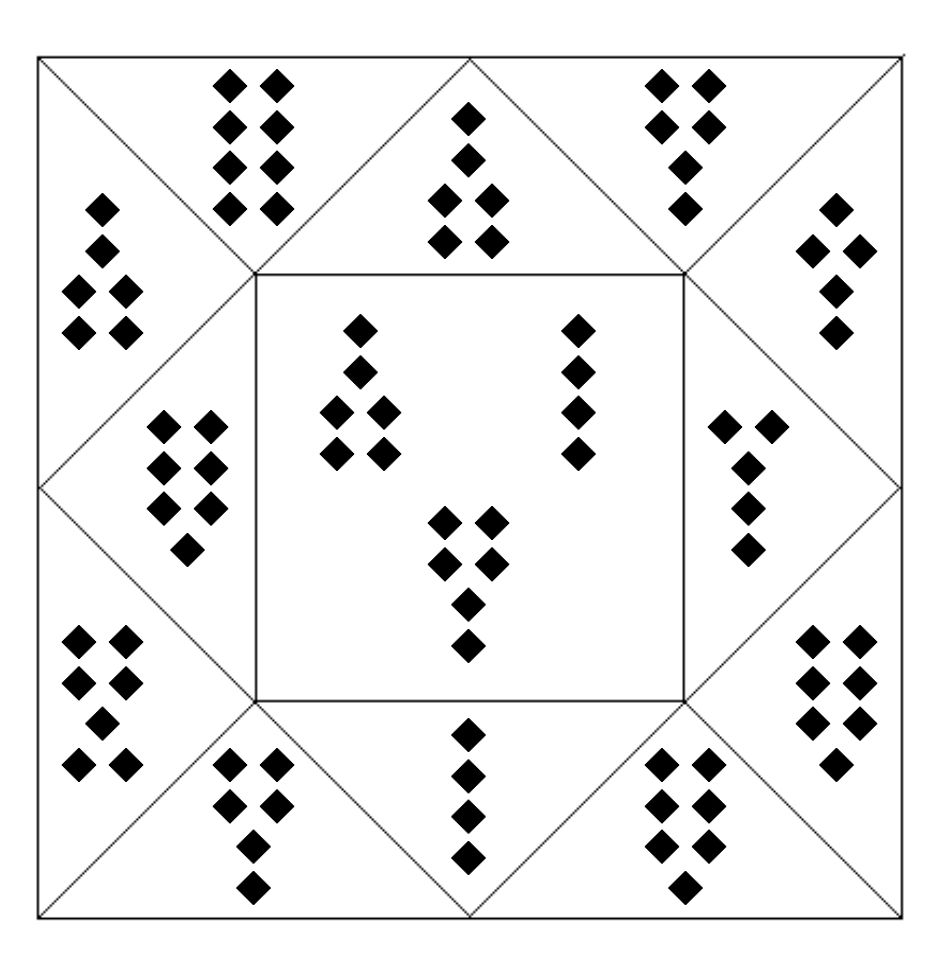
Which House Is Next To Which?

In astrology, the contiguity of the houses is obvious, since the houses are usually arranged either in a square or in a circle, but always forming a loop. Thus, we have that the Ascendant is always squished between the second house and the twelfth; that it always opposes the seventh, and, if we go by whole sign houses, that it has fixed relationships with all the others (inconjunct, sextile, square or trine).

This is not the case in Geomancy, where the relationship between houses is controversial, at least nowadays. First off, it is not pacific that the houses of the Shield represent astrological houses, unless we operate an equivalence with astrology, as was done at least since Geomancy reached Europe.

Those coming to Geomancy through Michael Greer, as I did, are probably used seeing the geomantic houses as equivalent to astrological houses: once the Shield is turned into a square chart, the houses follow the same astrological pattern as in an astrological chart. Those coming to Geomancy through the Golden Dawn, though using a different way of assigning the mothers to the houses (the one popularized by Agrippa), still end up dealing with a 1:1 replica of an astrological chart.

However, the idea that the Shield chart and the astrological chart are separate ways of doing Geomancy seems to be relatively new. In most old books, only the Shield is shown, and even when the astrological format is followed, this is done more to show some of the similarities with astrology.

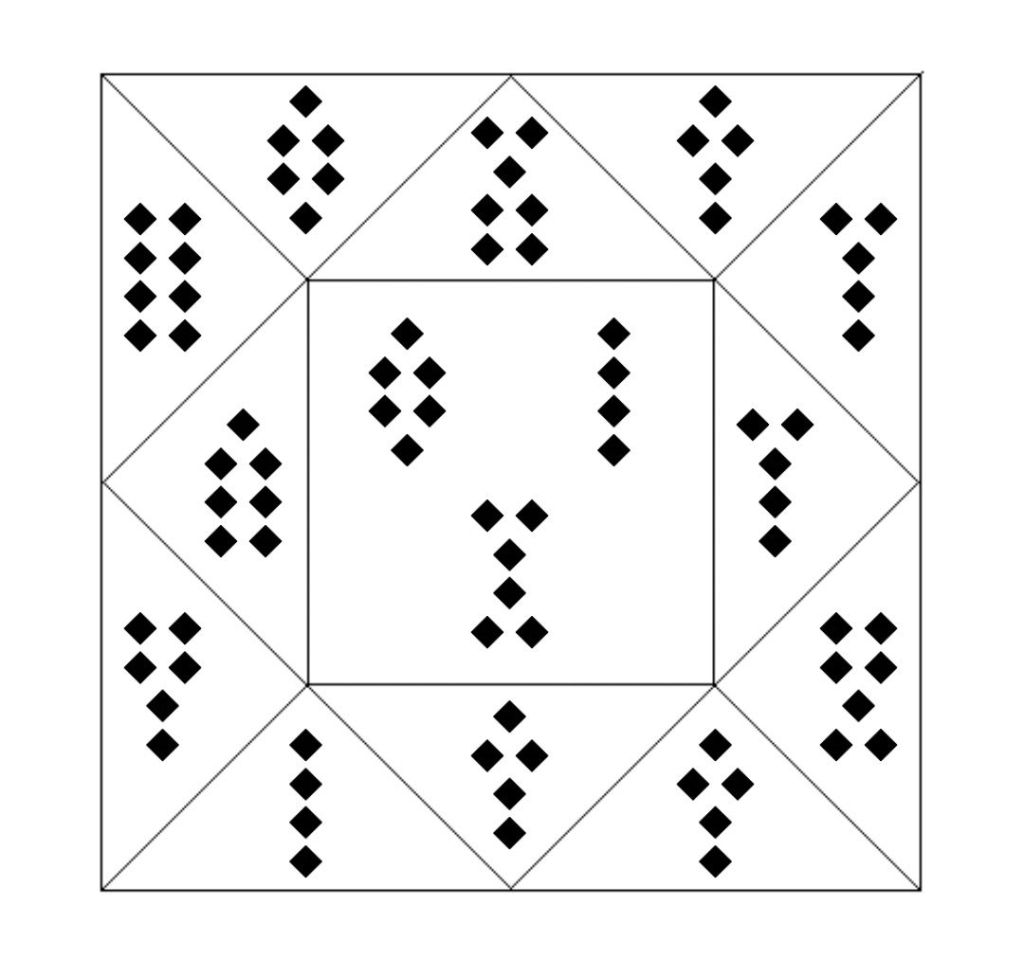
Secondly, which house is next to which is not always clear, and sometimes varies by author. In some sources it seems that only houses that are in company are considered to be next to each other: first and second, third and fourth (but not second and third), fifth and sixth (but not fourth and fifth) and so on pair by pair. This seems to follow the order in which the Shield chart is generated.

An example shield chart. App used: Simple Geomancy

In the example above, Tristitia in the first is next to Via in the second, and Tristitia in the third is next to Conjunctio in the fourth, but not to Via in the second. This is possibly because the first and second combine to form the ninth and the third and fourth combine to form the tenth, but the second and third never combine. This approach obviously restricts the possibilities of perfecting the chart, since most houses end up losing a possible spot next to them for other figures to move to.

Another approach is the one I found while translating Abano’s work. Here Abano started by saying (or rather, implying) that the twelfth house is not next to the first. Initially, I thought this was because he was following the arrangement for the company of houses I just discussed. Yet he gives other examples where he does not follow it, for instance by implying that the eighth and ninth house are next to each other, which would contradict the company of houses (the eighth is with the seventh, the ninth with the tenth).

Then, in another one of his examples, he implies that a figure in the tenth house is next to a figure in the third. This does not make sense from an astrological standpoint, but from a sheer geomantic standpoint it does: the third house DOES border with the tenth, since it co-generates it with the fourth. This would also explain why he doesn’t consider the twelfth house to be next to the first: not because they are not in company, but because they are not close on the Shield (they are, in fact, on opposite ends of the shield).

This approach of considering the houses close on the Shield as being next to each other is certainly different from anything I’ve seen, especially in contemporary geomancy, and if it weren’t for the fact that enough readings I’ve done confirmed to me that the twelfth house CAN perfect with the first, I would find Abano’s approach extremely appealing. Unfortunately, one of my rules when dealing with divination is that practice trumps theory.

Abano goes even further, implying that the Witnesses (and possibly even the Judge) are to be treated as regular houses. This, in itself, is not unique to him, but what I find unique is that he considers the Witnesses capable of perfecting the reading, for instance if the first figure moves to the tenth and the quesited’s figure moves to the right Witness, where, by Abano’s theory, the two figures touch.

Another consequence of Abano’s approach is that not all houses are created equal: the first house, for instance, only touches with the second and the ninth, while the tenth house must be considered to be next to the ninth, eleventh, third, fourth and to the right Witness.

A possible argument, at this point, could be that this approach makes certain readings too easy (like those involving the tenth house, as I just showed). Still, we should keep in mind 1. that divination reflects reality, so a no is a no, regardless of the system 2. secondly, that Abano doesn’t always consider merely the querent and quesited. Often he considers the whole chart, and sometimes he resolves certain questions by dividing the shield into two sides (the left and the right side) and seeing which side is stronger. This is a method he has from traditional astrology, where questions of contest or war are often decided in such manner.

Ultimately, which approach we choose depends on what works, which means that the only way is to try, record and compare with what actually ends up happening.

MQS

Career Change (Example Reading)

In a previous post, I talked about a friend with whom I’m doing an experiment with German Skat cards. According to the spread, he should get the job he applied for. Yesterday we did a Geomancy reading on the same topic of his change of career direction. This was the reading.

A career reading. App used: Simple Geomancy

The more I study Geomancy’s old texts, the more I am inclined to interpret the Witnesses as representations of the querent (Right Witness) and quesited (Left Witness).

In this case, the querent is represented by Via, the way, which is an appropriate symbol for someone looking to change up his career. The quesited is Fortuna Minor, sometimes called “the outside help”. It could easily be seen as an opportunity for this change to happen. The Judge resulting from the two witnesses is Fortuna Major, which is positive and offers long-term good prospects.

Within the chart itself, the querent is indicated by Tristitia. Tristitia is a symbol of sadness and stuckness. The job is indicated, once again, by Fortuna Minor. Minor springs from the Tenth to the Twelfth house. If we go by Abano’s indications, the twelfth house in the shield doesn’t touch the first, so it shouldn’t count as perfection.

Still, I have found in my practice that the two houses can be seen as contiguous to one another. Therefore, Minor moving toward the querent should repeat the testimony of the opportunity presenting itself for a change of career, in this case to relieve the stuckness of Tristitia.

Tristitia also moves toward the fifth and sixth houses. The fifth is good, the sixth is bad. However, if you read the previous post, the job is in the healthcare sector, though it would be hard to see this in the geomantic chart if I didn’t know it in advance. Tristitia’s move toward the sixth house could also indicate the querent’s stuckness is not good for him, so it might encourage him to accept the change coming from the tenth house. I am more inclined to this latter interpretation.

We still don’t know the result, but I’ll update the post when I know more.

MQS

Zazu Says Hi (Example Reading)

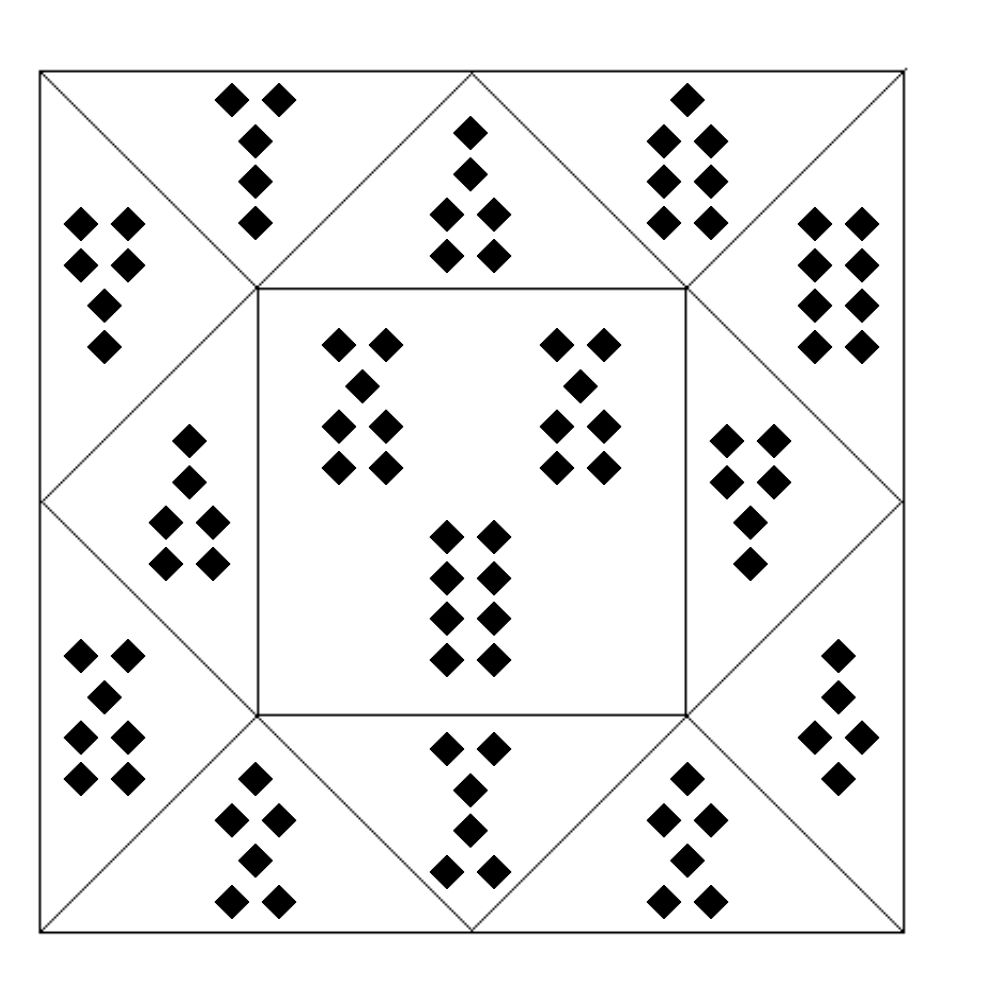
After getting our little Ciuffy, we were on the lookout for another ‘tiel. I kept browsing through the ads for a young, tame male, but I kept seeing either clear scams or birds with other issues. I did a geomancy reading, asking if I would soon find one that fit the bill of what we were looking for:

Geomancy reading: will we find a young tame male? App used: simple geomancy

I am signified by the ruler of the Ascendant, Fortuna Minor. Small animals are a Sixth House matter. Technically, if this was a horary chart, I would have to turn the chart (will I get someone else’s bird? Sixth from the Seventh, i.e., the radical Twelfth). However, I have found that Geomancy is less prescious about this kind of stuff. Let’s see how the chart speaks and let us follow it instead of trying to impose ideas on it.

The Sixth House is occupied by Puer: a male! That bodes well. The Judge, however, is Populus, which doesn’t say much. Worse still, Populus comes from two Rubeus. Still, we also find that Fortuna Major connects the Ascendant ruler with the Sixth House, since it is found both in the Seventh and the Twelfth house. A positive figure connecting two positive figures is a positive sign (Puer is more neutral, but still good in context).

Fortuna Minor, furthermore, usually indicates shorter timespans, and it moves to an angle (the Tenth house), which is also a generally positive sign as far as time is concerned. 

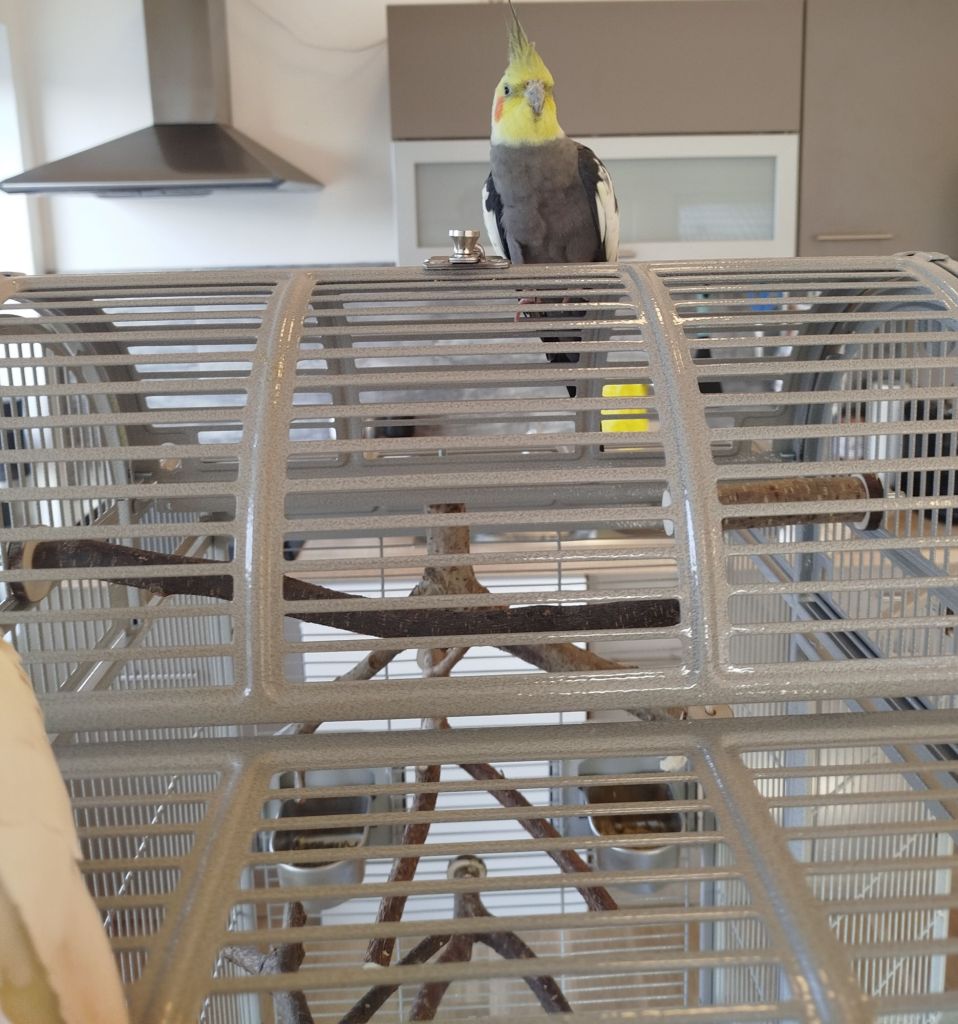
The reading was done a couple of weeks ago, and we found Zazu yesterday.

Zazu, also known as Pollo

I am still unsure about that Geomantic Court, with two Rubeus and Populus as judge. It is sometimes said that Populus has little to say, but I don’t believe that. One possible interpretation is that, since Rubeus has the quality of being excessive, the Populus resulting from two Rubeus might show too many birds (a crowd of too many), which is why the person I got it from wanted to get rid of him (or rather, his wife wanted to get rid of him). The court could also simply be warning about potential scams or questionable deals (and I had to sift through a fair share of those).

Be it as it may, I am not too worried about the Court, since the Judge of the Judge (Judge + First House) gives Fortuna Minor, a positive sign for the long run. I’ll update the post if something comes up.

MQS

On Avoiding Food Poisoning (Example Reading)

As Christmas draws near I recently bought the ingredients for my home-made 5-hour lasagna sauce. Yesterday I set about preparing it, and I started noticing an odd smell coming from the minced meat, even though it was supposedly fresh.

At first it was barely detactable, so my Christmas spirit decided to interpret it as just a figment of the imagination. The immediate red flag was seeing my husband emerge from his den asking what the strange odor was. Hubby is extremely sensible to smells. Whenever I see him curling his nose I know something is off.

What’s worse, around three hours into the preparation the subtle whiff had turned into a miasma. So I did a geomancy reading, asking if the sauce would be safe to eat.

Before casting the reading I had some doubt on how I would interpret such a question: what astrological house rules food?

In old astrology and geomancy books, when a king asks if the food served at the banquet has been poisoned, usually the diviner consults the fifth house of parties and fun. On the other hand, astrologer John Frawley makes a compelling point that your food is what sustains your person and goes into your throat, which is the second house. I decided that it was useless to worry about these distinctions, and that the chart would find a way to show me the truth.

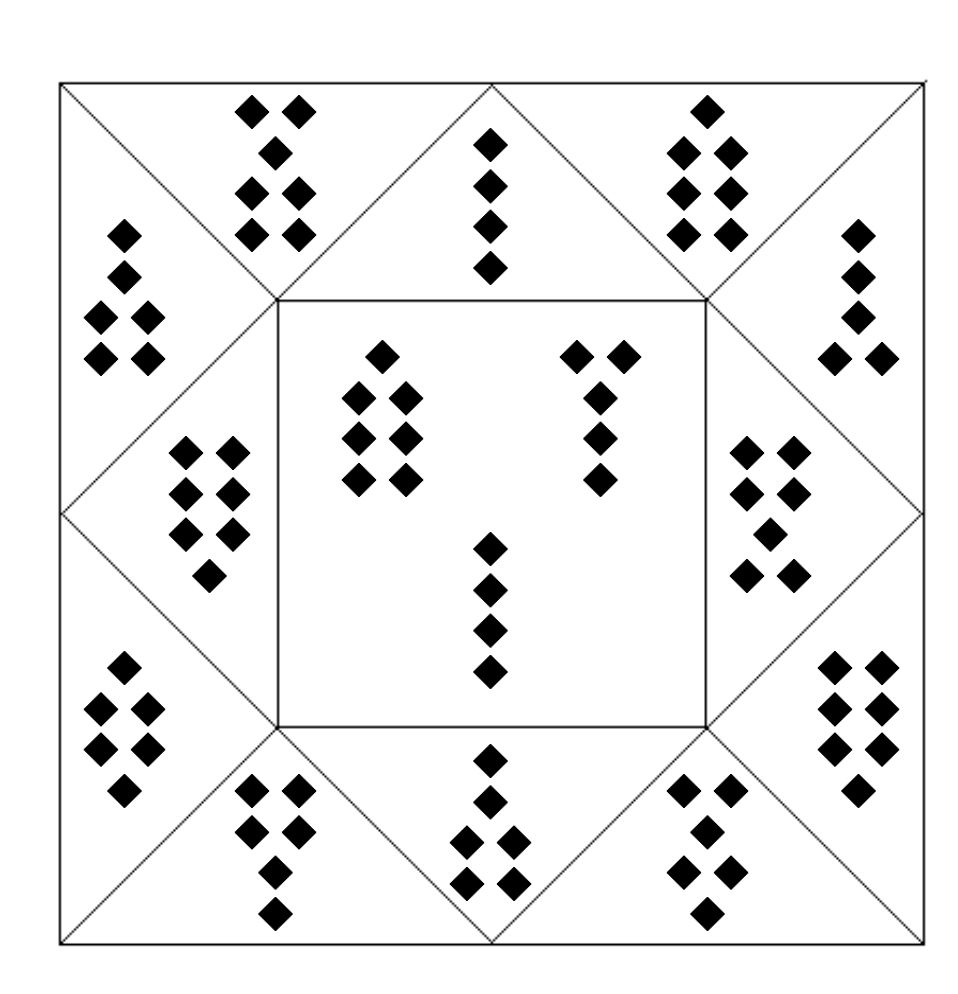
Is the sauce safe to it? Geomancy reading (app used: Simple Geomancy)

And show me it did. This is  a reading that requires very little interpretation. Tristitia is in the first house, portending trouble, and it springs into the sixth house, which is the house of sickness: neither the second house nor the fifth house were involved. The sauce is definitely unsafe.

True, the court is not negative, possibly showing that it wouldn’t cause any major trouble. On the other hand, the Way of the Point goes from the Judge Via to Cauda Draconis in the eighth house, and Cauda is a negative figure, but I doubt the sauce would be the end of us.

I still decided to dump everything out and start from scratch, meaning today I had to run to the market to get new ground meat.

MQS

Cancelled Flights? (Example Reading)

One pro of using more than one system of divination is that sometimes they clarify each other: sometimes one reading is somewhat obscure in one system but clear in the other, and we can use the clear one to navigate the one that has us scratching our heads. Granted, obscurity is in the eye of the beholder, being always a consequence of our own limitations, but it is still an occasion to learn.

I was at the airport yesterday, trying to catch a flight to get back home. Suddenly, and to my horror, I noticed that plenty of flights were being cancelled due to the heavy mist, including one flight on the same route I needed. My first instinct was to cast a Horary chart, asking if I’d be able to get back home.

Will my flight go as planned or will it be cancelled? Horary Astrology

This was my first interpretation. I am represented by Venus, ruler of the ascendant. The place I want to get is my home, which is ruled by the Fourth House and therefore by the Moon (Cancer is on the cusp). The Moon is approaching an opposition of Venus. Bam! The flight will be cancelled.

After a while, as I was waiting for information, I did a Geomancy reading on the same question. Here is the chart:

Will the flight go as planned or will it be cancelled? App used: Simple Geomancy

The first thing the struck me is the generally positive Judge, Conjunctio, which arises from Carcer and Via. It argues mobility more than stasis, and obstacles that are removed. The second important point is the figure that represents me: Laetitia in the first. Laetitia represents upward motion. It is an exiting figure, meaning movement. What a wonderful symbol for a plane taking off!

Even if we want to involve the Fourth house, we see that it is occupied by Puella, a mildly benefic figure, which is also connected to the ninth house of journeys (it occupies it). So the journey (Ninth) connects with the home (Fourth).

Obviously, two systems of divination cannot give contradictory answers if correctly interpreted, and the Geomancy seemed rather obviously positive. So I went back to the Horary Chart (again below)

Will my flight go as planned or will it be cancelled? Horary Astrology

I meditated on this chart quite a while (I had plenty of time, after all). Then it hit me. I am represented by Venus. Venus is in the Midheaven (up in the sky) in Aquarius, an *air* sign. Not only, but Aquarius is fixed: it doesn’t change. My being in the sky is fixed. So there will be a flight: I will be up in the sky as planned.

But what about that opposition by the Moon? Well, there was significant delay, so the Moon could show the flow of events causing trouble to my being up in the air.

Ultimately, the Fourth House didn’t need to get involved. The point of the question was not whether I would get home (I would have gotten home anyway at some point) but what would happen to me/my flight.

I managed to come home yesterday.

MQS

Robert Fludd’s Geomancy – Book I Pt. 3

Previous / Back to Index / Next

Fludd discusses some preliminary rules.

On the projection of sixteen lines, divided into four orders, constituting the first four geomantic figures

Before proceeding to the projection of the [geomantic] lines, which are made up of points, we shall lay down certain rules to explain the reason and manner of creating them.

Rule 1

It is not for the artist to make a judgment on any question relating to a matter which he has already known and understood before, for by doing this he is trying God and his divine knowledge, and will err on that account.1

Rule 2

Do not count the number of points of any line, for by that reason the soul will somehow be disturbed in the calculation.2

Rule 3

If you want to work in this science, you must first describe the proposed problem, so that your understanding is not disturbed otherwise.

Rule 4

You must not make a double question, but form the question in such a way that it asks for the knowledge of only one thing; otherwise your figure will be so disturbed that you will not be able to judge anything correctly. For this reason the question must be rectified in such a way that it has a single and complete purpose.

It must be noted that these geomantic lines merge from equally distant points and must have the form of the four fingers of the hand, as will be seen in the following example, and the points of each line we must connect and concatenate in such a way, proceeding from right to left, that at its extremity to the left one or two points are left free from concatenation.

Example of a geomantic projection

This also must be done with all the lines of the aforesaid four series, and in this way will come forth the four first figures of the geomantic shield, representing the four elements with their natures and combinations, likewise the four winds, and the four parts of the world; for, as regards the elements, the four first lines will signify the element of fire, the second four will denote the element of air, the second three the element of water, and the last four the element of earth.3

Of course, the figures coming out of each series will represent an element of their series, just as in the previous figure Caput will represent fire, Causa will represent air, Puer will represent water, and Albus will represent earth. Now these four figures are called Mothers, because from them all the following figures are produced.

MQS

Footnotes
  1. Asking a question whose answer we know implies that the actual question is “Does this really work?” which is a question no system can answer from within itself, therefore the question implies doubt in the author of the system ↩︎
  2. Counting the points not only implies trying to cheat the system, but it also robs the divination of its random, inspired aspect. ↩︎
  3. The elemental attributions of the figures is not of major practical importance, but it serves to respect the connection between microcosm and macrocosm and to anchor the question to a cosmic mechanism. ↩︎

Robert Fludd’s Geomancy – Book I Pt. 2

Previous / Back to Index / Next

Fludd discusses how the diviner should prepare to a geomancy reading.

The Preparation of the Soul of the Diviner Prior to Making a Figure

Since this knowledge is founded on [an operation of] the soul,1 it is certain and manifest that no truth can be guaranteed in it, except in so far as the soul permits it.

Therefore it is required that he who wishes to be versed in this art, before he begins his operation, should have a good and clear conscience, and that his body and spirit should be governed without disturbance, and that he should not think worse of another than of himself,2 nor should his mind be spare in judgment, and not tend to negation more than to affirmation. He should be a just judge of the question proposed.

Finally, he must trust in God almighty, who is the author of all knowledge and truth,3 and pray to him that through this knowledge he will be allowed to find the truth that his heart longs to know.

All of this having been properly considered, and with a soul well established in the proposed matter, he will immediately make the projections of the points.

Hence it is that so much fallacy and uncertainty arise in this art. This is also the reason why the same art is immediately regarded as nothing, namely, because some, falsely ascribing the name of artists to themselves, neglecting God, and not being moved in the least by the pacification of their souls and of the pleasures of the body, falsely judge of the things proposed, and by this reason render this secret and very profound art so despised, that it is also commonly regarded as the most falsified of all.

The fault, then, is not in the science, but in those who profess it: the science is doubtless most truthful, but its proponents are often hindered by ambiguities and difficulties because of their vicious dispositions.

For who can doubt that the soul can direct any part of the body to the true knowledge of the future more easily than the whole body itself?4

When we perceive that she governs her whole body in such a way that she foresees the future every day and every hour, that is to say, that she will arrange such a business the next day, and ride to this or that city, and do other things the following week, or even that she will marry at this or some other time, or that he would carry out his purpose and plan at such or such an hour, etc.5

MQS

Footnotes
  1. As established in the previous chapter. ↩︎
  2. To the modern reader, these tips may seem to have a moralistic taste, but we should keep in mind that, aside from being in part a product of the times, they may be boiled down to the very sensible idea that a diviner, as intermediary between the querent and the divine, should purify himself of that which keeps him away from the divine. One cannot be a bridge between A and B without being capable of reaching both sides. Aside from being against Christian morality, “thinking worse of another than oneself” also implies being engrossed in outside world nonsense. ↩︎
  3. A fundamental truth of all divination is that its knowledge does not originate within the diviner. ↩︎
  4. That is, the soul is more capable of the body of considering the future. ↩︎
  5. This remark may appear odd, but from an occult standpoint it does make sense: our soul is capable of conceiving the future because it is integral part of an inner world (which opposes and complements the outside world, of which our body is an integral part) wherein the normal rules of time don’t unfold as they do outside. ↩︎

Robert Fludd’s Geomancy – Introduction Pt. 3

Previous / Back to Index / Next

Fludd discusses the mystical implications of using divination.

5. The Act of a True Geomancer Is Like a Movement of the Mind in Ecstasy, or Rather a Sort of Rapture, in Which There Is Prophecy

Rapture in general is called the abstraction, alienation, and illumination of the human mind, proceeding directly from God, through which prophecy is obtained.1

Thus also a certain kind of rapture and ecstasy is required for divination by Geomancy, which is not called the illumination of the mind directly emanating from God, but rather the act of gathering of the mind’s rays into a narrower place, that is to say, into the seat of the human body and its own home, so that through them the divining soul discerns the simple truth more clearly.2

As such, ecstasy is first of all required in this knowledge, that is, the abstraction of the rays of the mind from all external things or affairs, so that they are contracted within themselves: for in a great rapture of the mind and soul the rays are lifted up to the divine essence of God, or into the region of the mental world.3

Thus, even in this minor rapture of the human soul, the rays sent out from without, and scattered here and there, are recalled to their center, and are reflected in the mind, and thus man, who was formerly dark because of the diffusion of his own light, is now enlightened and glorious by the aggregation of the expanded rays.

In a similar manner, as we gather from the opinion of the learned men, on the third day of creation the rays created by the light scattered evenly throughout the sky, and all appeared in a dark manner, as if darkness were mixed equally with light, or night with day.4

But when, on the fourth day, all that light scattered everywhere was collected in the center of the solar body by a certain magnetic property, there was produced that glorious and worthy example of light, in which God himself is said to have had his tabernacle.5

We also see, for instance, that in a fortress equipped with a thousand soldiers, if the greater part of these soldiers, either for the purpose of preparing for defeat or for some other attempt, goes out and runs to and fro, then that fortification is rendered weak, and those who are left experience great fear.

But if those who had gone forth should return safe and sound, those who had been left in the stronghold recover their former confidence and their former hope, and putting aside all fear, they are in no way afraid of the invasions of the enemy, since that place is already well-furnished with warriors.

Here, therefore, things are in the same way with the bright rays of the human soul. For the human body is a stronghold or fortress, where the rays of the mind and the middle soul are likened to soldiers, of whom we may compare those who are sent out of the body to attend to foreign affairs, to soldiers running hither and thither outside the fortress, the absence of which renders the body less confident, and more insecure and timid, and weak in facilitating some noble and bright aim, such as divination, which is the best and highest thing.

We say, therefore, that the recollection of rays of this kind is the reduction of man’s internal nature from multitude to simplicity.6 As a result the soul, recalled from external meditations, and reflected and recollected within itself, renders a man, as it were, raptured and ecstatic, because he thinks of himself and within himself, he is only present to himself, oblivious of strangers, so that it appears to the ignorant that he is not aware of himself. when, in truth, he is now more than ever before.7

For he who neglects worldly things is sure to care for himself more, and he who withdraws himself from the multitude into himself seems to be most present to himself, since there will not be a great interval of distance between him and God.8

To such an attitude or disposition must he reduce himself, who endeavors to procure for himself the gift of future divination. For those thinking of externals divert the powers of the soul from the judgment of truth, so that the uncertainty of the geomancer is great in his judgment, or to be more precise, the truth in him will be as great as the variation of the soul from its unity.9 Indeed, in the multitude of things, tricks, vanities, and lies are concealed; in true unity and simplicity perfection, identity and unity [are found].

Let the soul therefore snatch from the Macrocosm that which is its own, given to it by the Creator in its creation, and internalize it into its own Microcosm, and let no one else enjoy what is its own.

By virtue, I say, of his own excellency, he is snatched from the world, and restored to himself and recollected, and clings to ecstasy, so that in his most refined mirror or spirit he may reflect not only worldly things, but also divine ones. For the more clarity he achieves, the more effective will be his visions and motions for prophesying the truth

6. About the Hidden Properties of Geomancy, and How the Soul or Mind Passes in Its Operation Through the Whole Nature of the Macrocosm

Nor is it right that those who are ignorant of geomancy should regard a series of points as mere lines, formed from the act of divination, since under these characters, the objects of the eye and the senses, many things, both spiritual and material, are concealed. Indeed, these series of lines comprise no less the idea of ​​the universe than the human body itself.10

In fact, although in man his body can only be seen from the outside, yet with spiritual eyes we contemplate his spirit and soul and mind inwardly. Of course, in the body we see the elements invisibly mixed in composition;11 in the spirit and soul we observe the ethereal nature, in the intellect and mind we observe the empyrean nature.

the same can be observed also in Geomancy, since readings consist of four lines of points, and we perceive that the four elements are concealed in it, that is to say, the element of fire under the first line, of air under the second, of water under the third, and of earth under the fourth. 12

Furthermore, in the figures produced by those series of points, the seven planets and the twelve heavenly signs are included, which can only be perceived by the eyes of the spirit.

Thus the figure of Carcer is attributed to Saturn direct and Tristitia retrograde: the figure Laetitia signifies Jupiter direct, Acquisitio retrograde; Rubeus denotes Mars direct, and Puella retrograde; Major indicates the Sun in a certain direction, and the Minor in retrogradation; although the astrologers deny the retrogradation of the Sun, because of its epicycle; Puer is given to Venus direct, Amissio retrograde;13 Albus is attributed to Mercury direct, Conjunctio when retrograde; the direct Moon is symbolized by Populus, the retrograde by Via;14 Caput Draconis is represented by a figure bearing the same name, and Cauda Draconis is represented by a figure bearing the same name as well.

So also those figures contain in themselves the natures of the twelve signs. For Acquisitio is of Aries in an abstract manner; Laetitia and the Minor of Taurus, Rubeus and the Puer of Gemini; Albus and Populus of Cancer; Via of Leo; Caput and Conjunctio of Virgo; Puella of Libra; Tristitia and Amissio of Scorpio; Caput of Sagittarius; Cauda of Capricorn; Major of Aquarius; Carcer of Pisces.

Furthermore, Rubeus, Minor, Amissio and Cauda denote the element of Fire and the Southern part of the world; Laetitia, Acquisitio, Puella and Conjunctio denote Air and the Eastern part of the world; Populus, Via, Puer and Albus denote Water and the Northern corner of the world; Major, Caput, Carcer and Tristitia denote Earth and the Western part of the world.

Even deeper towards the center of the sky lies the empyrean spirit,15 which is the revealer of the future and the present, that is to say, the rational or intellectual collection of these figures and the worldly things contained in them.

From all this it is evident how purely and sincerely the intellectual spirit must be preserved from the inconveniences and harms of the flesh and filth, when from it the movement to produce the Geomantic points first arises, taking with it in a secret manner the natures of the heavenly signs, the planets, and the elements, and finally hiding all these under the number and in proportion to the points, like a certain treasure in a chest.16

If, therefore, we wish to open that chest, first to the elements, then to the planets and celestial signs, and finally to the boundary from which these movements originally flowed, we shall penetrate in the sanctuary of the mind, its will, in the mythotheque of the intellect, of the will, of the signs and planets; in the closet of the ether we shall find the act or execution of the mind; and in the storehouse of the elements, we shall find the effect of the mind’s will, reason, and act (all of which are contained and hidden under figures, as if in a chest).

From the aforesaid, therefore, it is evidently clear that, just as the prophecy of the inspired is the union of the divine mind with the human mind (whence it is the most complete and greatest, this species of prophecy), so also the prophecy of the uninspired sometimes happens, when the soul is united, with its rays drawn back to itself from the multitude toward its summit, that is, with the human mind, which, without doubt, if united with the soul and collected, can perform enormous things by itself, and can lead to the summit and a happy outcome.

MQS

Footnotes
  1. The words ‘abstraction’ and ‘alienation’ must not be understood in their usually negative sense. In Neoplatonism (and mostly in Plato himself as well), the dialectical method allows the spiritual seeker to climb up the ladder of being through a process that leads from the particulars of the material world upward and inward to unity with the divine. Ecstasy, which is the goal of Neoplatonic spirituality, literally means “going out of oneself”. This is the process of abstraction and alienation. ↩︎
  2. That is, prophecy stems from direct union with the divine and is harder to control, while divination (such as Geomancy) happens by focusing inward. ↩︎
  3. See Note 1. Fludd describes the Neoplatonic method of retreating inward and upward. ↩︎
  4. If the light is evenly distributed, no difference appears and everything is as equally dark as it is equally radiant. ↩︎
  5. In the Hermetic interpretation of Astrology, the Sun is a symbol of divinity. ↩︎
  6. Broadly speaking, the path of magic in all its branches (and divination is one of these branches) require an endless attempt at simplifying one’s life and one’s external nature. ↩︎
  7. This is a common theme in mystical and occult literature, and one of the great truths of our art. As we reach what some have called ‘superconsciousness’ we appear to be less aware, while in fact we exceed regular awareness. ↩︎
  8. The phrasing here is clearly very careful to avoid scandal. As for the words “caring for himself”, this is not to be understood as being egoistic. ↩︎
  9. that is, we are capable of seing the truth in the measure that our soul is unified. This is probably part of the reason why divining for oneself is especially difficult, since divination implies doubt about an external topic. ↩︎
  10. Here lies a great and central secret about all functional systems of divination: that their symbolic vocabulary is complete in itself, so as to be able to reflect within its permutations the truth of things to come. Here, Fludd compares the language of Geomancy to the human body, which is a symbol of the completeness of the universe. ↩︎
  11. He means the four elements, which were thought to be mixed to form the material bodies. ↩︎
  12. This is a reference to the fact that in Geomancy each figure is made up of four series of points, and each series is assigned to one of the elements. ↩︎
  13. compared to the usual attributions, Fludd switches Puer and Puella ↩︎
  14. The Moon cannot go into retrogradation. Usually, Populus is assigned to the waxing Moon and Via to the waning Moon. ↩︎
  15. with reference to the Aristotelean and Ptolemaic view of the cosmos. ↩︎
  16. This comparison is very much a consequence of Fludd’s Renaissance worldview, according to which Nature is replete with symbols. ↩︎

Introduction to Abano’s Geomancy – Who Was He?

The modern mind is used to neat distinctions and a more or less monolithic theoretical scaffolding where everything finds its little place. To our sensibility, what belongs to natural science does not belong to literature or art, let alone to astrology or occultism. Though some eccentrics try to straddle the gorge, within the current worldview they must remain what they are: eccentrics. This is largely a consequence of the evolution of science away from the mother root of philosophy and the triumph of the technical-scientific worldview. It is neither a good process nor a bad one: it is what it is, but it hasn’t always been this way.

Pietro d’Abano, who lived between the XIII and XIV century, was, like many of his time, an encyclopedic learner. This was certainly easier back then, when owning a couple of dozens books was considered a marvel and the hyperspecialization typical of our contemporary organization of knowledge hadn’t yet taken place.

The extent of Abano’s involvement in occult practices is not clear. The famous grimoire Heptameron (Book of the Seven Days) is traditionally attributed to him, though it is, in actual fact, an anonymous work. What we do know is that his knowledge of languages allowed him to study many authors (like the Averroes or Ibn Ezra) who had considerable influence on the later development of magical theory, though this influence is still little understood by contemporary occultists.

We also know that he taught a number of subjects ranging from medicine to astrology, and that he was a very adept astrologer. This is not a unicum in the history of science. Astrology was one of the few forms of divination that was, if not tolerated, at least not as consistently persecuted as other branches of occultism in the Middle Ages, largely due to the fact that a reasonable argument could be made that the astrological influence of the planets was a natural consequence of how the cosmos was believed to work according to the Platonic-Aristotelean view accepted by the Church. It was simply not always practical to distinguish astrology as astronomy from astrology as divination, though attempts were made.

Finally, Abano is the subject of a number of urban legends. For instance, he was brought before the inquisition twice, largely due to his immense erudition. Once he was acquitted, the second time he was condemned. Unfortunately, he died in custody before the sentence had been pronounced, so the tribunal ordered his body exhumed and burned. But they dug up an empty grave, since a friend of the philosopher had gotten to his body first. This fact alone was enough to cement in people’s mind the image of Abano as an ominous magus and necromancer whose body was capable of disappearing from the grave.

As for the present book on Geomancy, it is not a stretch to think that someone as versed in astrology as Abano should be interested in this form of divination, which, at least in Europe at the time, was reduced as much as possible to astrological principles. The treatise is divided into four books: in the first, Abano explains the principles and astrological correspondences of geomancy; in the second, he discusses the meanings of the various houses and the principles of geomantic perfection; in the third, he gives examples of the meanings of the figures in the houses; in the fourth, he talks about the good or bad fortune of the figures depending on which figures they derive from.

What makes this book an interesting read for any student of geomancy is that it confronts us with a way of reading the Geomantic Shield that is not typical of how geomancy has been rationalized in the late XX and early XXI centuries. This is in itself worthy of consideration, especially because it proves beyond doubt that the distinction between Shield Chart and Astrological Chart is artificial and only serves to complicate matters. Furthermore, Abano’s interpretation of the figures affords us a rare glance in the workings of the mind of an adept of geomancy, by whose example we can derive solid principles for interpreting our divinations. Abano’s examples are therefore not meant to be taken as the last word, but as a contribution to our study of the interrelation of the Geomantic figures.

MQS