Tag Archives: how to read a geomantic chart

The Via Puncti (Way of the Point) in Geomancy

I already said that I am not a big fan of complications in divination. Nor do I believe that the tendency to overcomplicate things is just modern: if we look in older Horary Astrology handbooks, for instance, they are filled to the brim with (often mutually contradictory) techniques that may be thrown at the chart in an attempt to smoke a positive judgement out of it.

Still, one technique that is relatively consistent in the tradition is that of the Via Puncti, or Way of the Point. Not all traditional sources talk about it, but I have found it to be occasionally helpful. As usual, techniques are not to be used blindly, but intelligently, like tools in the hand of a surgeon.

The long and short of this technique is as follows: some Judges have one point in their Fire line (the upmost one), while others have two. In fact, out of all eight possible Judges, four have one single Fire point (Carcer, Fortuna Minor, Via, Amissio), while the other four have two (Conjunctio, Fortuna Major, Populus, Acquisitio). Due to how Geomancy’s model works, whenever the Judge has one Fire line, it is possible to trace it back unequivocally to one of the four Mothers or Daughters (that is, to one of the eight figures at the top of the shield).
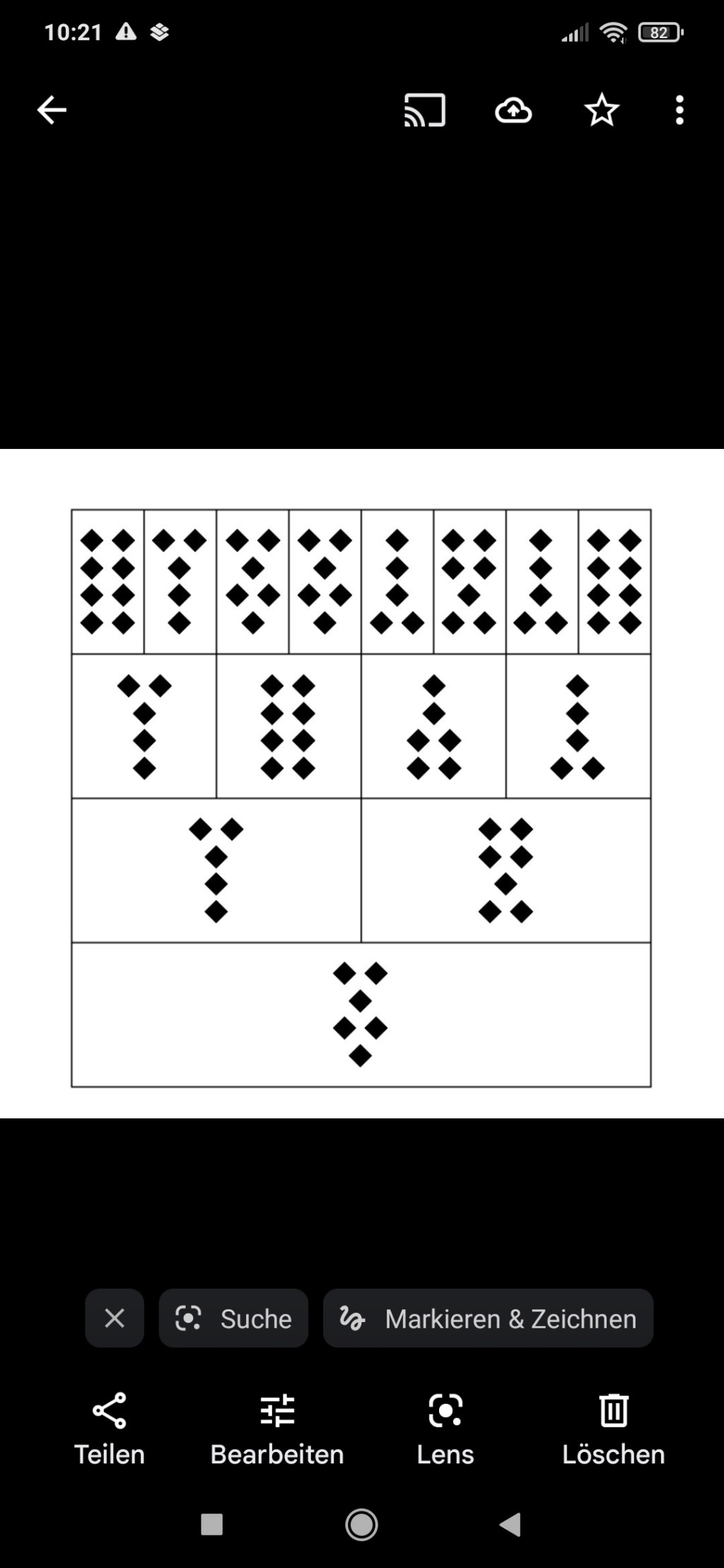
Geomantic Shield Reading, drawn with the Simple Geomancy app

In the above example, Fortuna Minor is the Judge. It has one point in its Fire line. This one point is found again in the Left Witness, Laetitia, and again in the third Niece, which is again Laetitia, and finally in the second Daughter Puella. No other path is possible. This is always so (if it isn’t so and you’ve calculated the chart by hand, you’ve made a mistake.)

Usually, the Via Puncti or Way of the Point can be looked at as a root cause for at least some aspects of the final answer. In the example above, for instance, a woman may be the cause (Puella). Or, if we take the House in consideration, since Puella is in the Sixth house, it may indicate that a sickness is the cause, or a servant/subordinate, or a pet, depending on the question.

I repeat: depending on the question. I make no effort to squeeze a consideration of the Via Puncti into my readings. If it is helpful, and if the question lends itself, I will consider it.

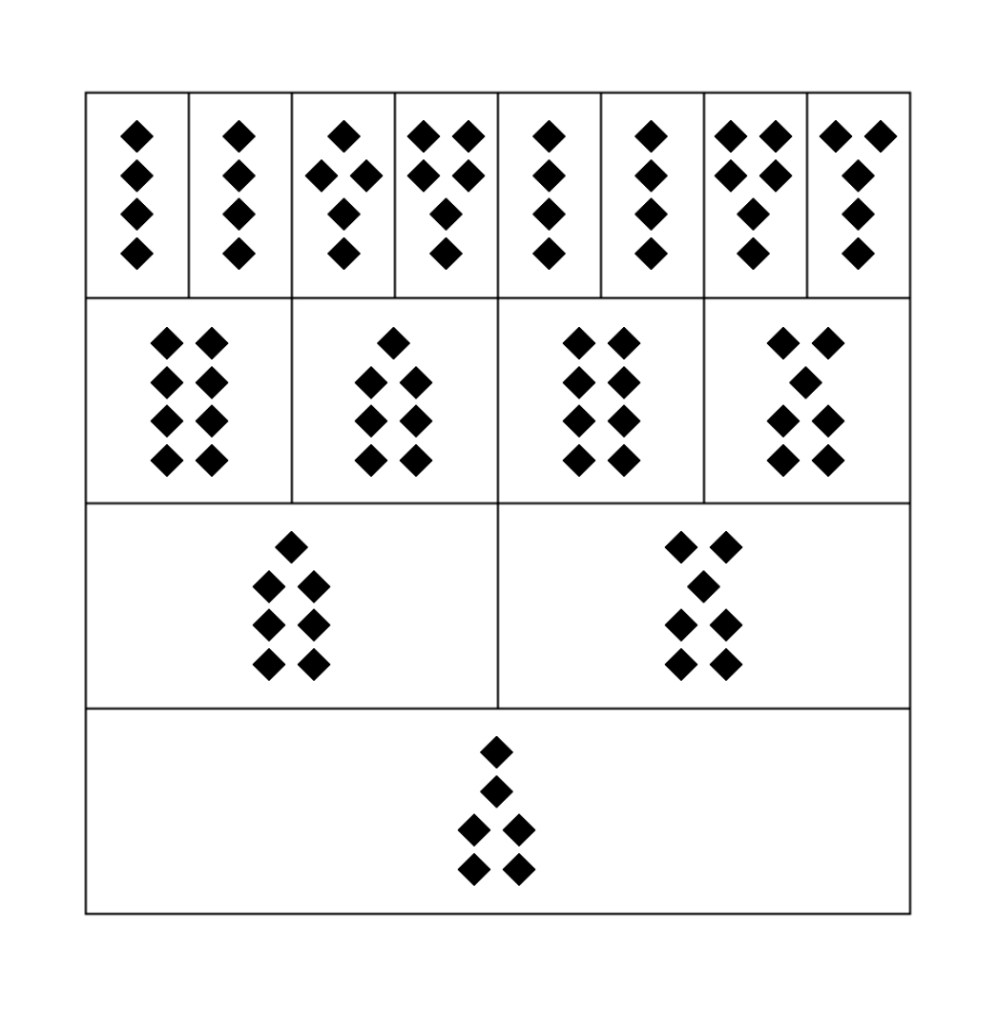
Geomantic Shield Reading, drawn with the Simple Geomancy app

In this second example, Acquisitio is the Judge. Immediately the Via Puncti branches off, as both Witnesses have two points in their Fire line. John Michael Greer says that this shows more complex causes, but he fails to mention that, in the old books, this is not considered a valid Via Puncti. I don’t know if I am unaware of some of the old material or if Greer gave in to his tendency to mix innovation (which is fine) with pretense that it is rooted in tradition. You can of course choose to experiment with Greer’s version of the Via Puncti. Personally, I don’t even always regard it when it is there (as in the first example) let alone when it is not there.

One thing that the existence of the technique shows, though, is that the Golden Dawn’s way of reading the astrological chart by placing the mothers in the angles is completely baseless, and is a typical example of the “let’s make up a secret” tendency of the occult community.

MQS

Geomancy – Reconciling the Judge and the Chart

We’ve seen that the process reading a Geomancy chart divides into two phases: the assessment of the chart and the assessment of the court.

If the chart and the court seem to hint at the same result all is well and good. Problems start when they appear to diverge and say different things. One way the old geomancers faced this possibility was by throwing random techniques at the chart so as to tease out a straight answer. In this, they were similar to old horary astrologers (“the significators are moving away and are in detriment, but ah, look at that Part of Fortune!”)

I like to keep things simple. An understanding of the first principles is more effective, I believe, than an endless array of techniques designed to allow the reader to say whatever he feels like saying at the moment. Geomancy is a “simple and short science” to quote Abano.

Abano himself, in his book, often talks about the Judge as if it described an ultimate state of affairs beyond the immediate result. This is something that I have found in other old books as well.

We only have eight possible Judges, so the Judge won’t be able to offer much subtlety in its verdict. Even after we factor in the Witnesses we still have a limited oracle. But think about it: a real-life judge doesn’t usually have much to say except to either rule for or against someone. Sure, he can tweak this or that detail, but that’s about it.

The judge’s ruling usually determines who’s happy with the result and who isn’t, but that’s not always the case. Sometimes a judge may rule in your favor but empty your victory, or conversely he may rule against you but still grant you the one small thing you care about.

Therefore, in a Geomantic reading the Judge usually describes the general tone of the answer, especially how the matter ends (well, so so or not so well). The interrelationship of the figures in the chart, though, is much more specific as it describes in more detail what happens concretely.

This is not a matter of “perfection means yes”. Perfection doesn’t mean yes. Perfection means contact or connection. Usually, of course, contact with something or someone is a positive sign as we generally want to obtain something, but context is key. “Will I be able to leave this abusive relationship?” with the two significators perfecting is a clear no.

Suppose in this example that the significators perfect, showing continuance, but the Judge is Fortuna Major. Maybe the spouse starts taking their AA meetings seriously, or depending on the other signs in the chart it may show that the querent isn’t capable of leaving now but will at a later point (Fortuna Major shows long term success)

On the other hand, there’s plenty of situations where we get our wish but later regret it. “Will I get the job?” and the first and tenth connect, but Carcer is the Judge: yes, but you won’t like it one bit.

Some like to bring in a sixteenth figure, usually called the Reconciler or the Judge of the Judge. This figure is obtained by adding the Judge to the first house figure. This can show you how the end of the matter affects the querent, but it is not a substitute for working out the meaning of the chart. All in all, the sixteenth figure only gives details, never the answer.

Greer, in his book, offers a ton of suggestions on how to deal with an obstinate chart that resists interpretation, including using certain figures to derive a new set of Mothers. Frankly, if you are that desperate, you may just as well interrupt the divination and ask the question again the next day. In all honesty, though, it has never happened to me.

The key to interpreting any oracle is to be reminded that divination is a language and language describes the world. The oracle is always a mirror of real life situations, not an abstract set of simbols.

MQS

Yes, Pregnancies May Be Predicted in Divination

I read somewhere that pregnancies cannot be predicted because it is impossible to bring someone into the equation who doesn’t yet exist. The cards (or any other method) supposedly cannot talk about inexistent people, and they may only be used to check on pregnancies that have already started.

I certainly agree that it may not be wise to use divination on health-related issues, especially on such delicate topics, since we diviners are fallible, and should never forget it.

That it *is* possible to use them to this end, though, is confirmed by experience. I believe I even discussed a spread where I predicted that a woman would become pregnant, even though the question wasn’t even about pregnancy.

The idea that the cards cannot talk about people that don’t exist, though, is poppycock. The child may not exist, but the woman’s body certainly does. If we can predict that the woman’s body will betake itself to a job interview, to the mall or to a date, it’s unclear why we shouldn’t be able to predict that an organism will start growing inside of it after a spirited round of nooky.

MQS

The Geomantic Court: Witnesses and Judge

The process of interpreting a Geomancy chart almost seems to split between two phases: 1. assessing the significators and their relationship (as discussed here) 2. interpreting the geomantic court. Some would even object to the order in which I give them, as, technically speaking, it’s the Judge that gives the answer.

The Geomantic Court is copmosed of the two Witnesses and the Judge. The two Witnesses represent the culmination of the process of development of the two sides of the Geomantic Shield (as discussed here)

Example of a Geomancy Shield reading, with the App Simple Geomancy

The right and left Witnesses (the right one is Albus, the left one is Caput) are the last product of the right and left sides of the Shield respectively. The Judge represents the overcoming of this duality into a final unity that takes everything into consideration.

We can easily liken the two Witnesses to the two pans of a scale, where arguments in favor and against are weighed. The fact that, from a technical standpoint, the Judge can only be a figure with an even number of points speaks to the Judge’s consideration of both sides. Keep in mind that there’s a total of 65.536 possible shields when we allow for all possible permutations of the sixteen mothers. But only 8 Judge figures are possible. Obviously, the Judge’s sentence can only be a general bird-eye view of the situation from the throne of Heaven, as it were. This is very different from the concrete and specific interrelation of the geomantic figures on the Shield.

As for the two Witnesses, as said, they are the culmination of the process of discussion that is carried out on the two sides of the Shield, the right side belonging to the querent and the left side to the quesited, or, alternatively, the right side being what pleads for the querent and the left side what speaks against his or her success.

Peter de Abano, interestingly, likens the right Witness to the planet the Moon separates from in an astrology chart, and the left Witness to the planet she applies to. This is largely in keeping with the attempt of Medieval magi to reduce everything to astrology. If you follow this school of thought, since in traditional astrology the Moon represents the flow of the chart or the flow of action in the chart, then the right Witness is the past and the left Witness the future. Personally, I tend to see the two Witnesses as belonging to the same timeframe, of which they highlight the up and down sides.

Some rules have been passed down to us for assessing the relationship between the Witnesses and the Judge. For instance, it is said that if the Witnesses are positive and the Judge negative, it shows that the matter is easier at the beginning but doesn’t end well, and vice versa if the Witnesses are bad and the Judge good.

In general, if we accept that the Judge is nothing more than the sum of the two Witnesses, and that the two Witnesses are the ‘for’ and ‘against’, then in a way the Judge is nothing more than a recapitulation of the Witnesses’ discussion, seen from a higher, more general level.

If we take the example of the Geomantic court above, where Acquisitio is the Judge and it derives from Albus as the right Witness and Caput as the left Witness, and if we suppose the question is about a business deal, then the right Witness argues that the querent has good business sense or a good plan, while the left Witness adds that it’s going to be hard at the beginning, while the Judge surmises from the discussion that, in general, the deal is going to be profitable.

Alternatively, if we take the right Witness as a symbol of the querent and the left Witness as a symbol of the quesited, the querent is still shown as a competent businessperson, while the quesited, i.e., the deal, is shown as a promising new start, while the Judge still rules in favor of the deal being good.

In the next article I will talk about how to reconcile the Judge and court with the other aspects of the reading.

MQS