My translation and comments on Robert Fludd’s Animae Intellectualis Scientia seu Geomantia (The Intellectual Science of the Soul or Geomancy). Please note that I am no professional translator of old texts and sometimes I had to paraphrase. Feel free to leave comments or contact me on how this project could be improved. The translation and commentaries are copyrighted to me, so please ask for my permission before using it.
Introduction Part I – Geomancy is an Act of the Soul Part II – Preparing to Divination, the Hermetic Way Part III – The Mystical Presuppositions of Divination
Book I Part I – Anecdotes on the veracity of Geomancy Part II – How to Prepare to Divination Part III – Basic rules on projecting the points Part IV – Filling out the geomantic shield
Book II Part I – Elemental and astrological attributes of the figures Part II – The Houses Part III – The First Four Geomantic Figures Part IV – The Second Four Geomantic Figures Part V – The Third Four Geomantic Figures Part VI – The Final Four Geomantic Figures Part VII – When the Same Figure is Found in Two Houses Part VIII – Interpreting the Judge, based on the two Witnesses
One of my favorite books of all times is Ursula Le Guin’s second Earthsea novel, The Tombs of Atuan. Actually, I adore the whole first trilogy. It is one of the few fantasy cycles that can actually inform one’s magical practice quite a lot, if one is observant enough. But The Tombs of Atuan is my absolute favorite, and I find myself rereading it every now and then as a sort of comfort book.
In The Tombs of Atuan, the protagonist Tenar, a young priestess in a remote and almost forgotten place of worship, is tasked with guarding the dark subterranean labyrinth of the Tombs and with worshipping the Old Powers of the Earth that seem to reside there (the Old Powers are never clearly defined in the other Earthsea novels and material, as far as I know, but they seem to be a sort of mix between natural powers, pre-divine titans and incomprehensible amoral entities).
Over the course of the book Tenar comes into contact with Ged, the protagonist of the first Earthsea novel and gradually realizes, thanks to him, not only that there is no point in worshipping the Old Powers, but that her worship of them has actually made her worse. There is a lot more to the novel, but this one key point is worth thinking about.
It is one of the tenets of my devotional, philosophical and magical practice that no power comes from me as an individual. It can, at most, come through me. The way we as individuals become channels for powers greater than us is through our worship of them (whether it be devotional, theurgic or of a different kind.)
We all worship something, whether it be mystical, philosophical or mundane. And the more we worship it, the more we make space for it in our life and in the world. This has nothing to do with the manifestation or attraction nonsense that is practiced by people online and is to magic what McDonalds is to food. It is, actually, a simple, almost physical fact.
Most, if not all, magical traditions recognize this. For instance, the reciting of the rosary in certain strands of Italian witchcraft, in addition to accomplishing certain magical goals, is also meant to empty the devotee of themselves to make space for the divine. In many so-called High Magic traditions, the aim of initiation is to balance the components of the personal vessel so as to make it a better tool for something much greater than it: “Now be assured that no one can be enlightened unless he be first cleansed or purified and stripped. So also, no one can be united with God unless he be first enlightened.” (Theologia Germanica, Ch. XIV)
(similarly, in many strands of Chinese magic, Qi Gong and other practices are used to the same effect).
A lot of people, including a lot of magicians, worship God, but this is not enough. What does God mean? How do you define the God that you worship? I feel this sort of clarification is extremely important, not because your definition changes the substance of God in a postmodern fashion, but because there are plenty of powers, objective and real, in the world that are capable of fitting the mold of your definition and seeping through the cracks of your practice, just like the Old Powers in Le Guin’s novel. Clarity, therefore, is extremely important.
Way too often do we see people who think of themselves (and are thought of) as spiritually “evolved”, whatever that means, or magically powerful who, at a second glance, have merely turned themselves into a walking collection of metaphysical parasites.
This process of clarification starts with a rational and philosophical assessment, and rationality is incredibly important (I’ve written a whole article about the importance of reason in occultism). However, keeping the lights on in your head is just the first step. What is needed is a broader cultivation of our vessel.
Can this all be taught? It is a tricky question. It is my belief that few things in life can truly be taught, or rather, most things can be taught, but the ability to be taught is harder to teach than all the rest. When I say that most branches of the occult path are for the few I do not mean to sound elitist. I mean it in the same way that I mean that math is really for few people. Not everything is for everyone.
Yet I believe that at least this one process of clarifying what we worship is important to everyone, whether they be on an occult magical path or not, simply because, as said, everyone worships something.
In scrolling on youtube I must have passed the third or fourth pompous video essay on the loneliness epidemic and theatomization of society. Then I had to laugh as I looked at myself from the outside, lonely in my office, my eyes glued to a stupid screen, which is usually what these videos complain about. I don’t like complaining, but I do like observing.
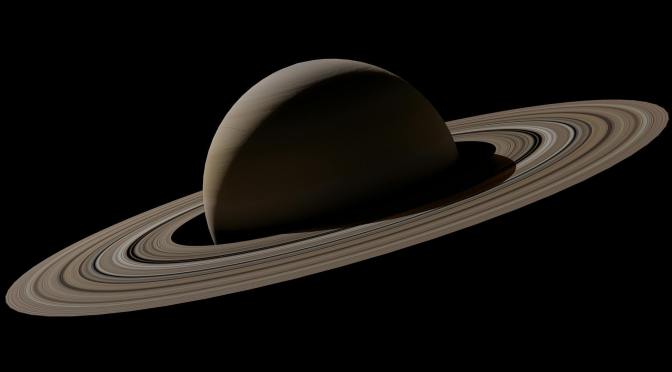
From an astrological standpoint, loneliness is ruled by Saturn, the greater malefic. Let me stress the word ‘malefic’. Generations of people better than us had no problem calling Saturn and Mars malefic and acknowledging the presence of evil in the world, yet the Becky’s and LaRhonda’s of the world who spend their time deluding themseves manifesting on social media think the concept of evil is beneath them.
It is, by the way, no moralistic notion of evil. Evil is simply that which is contrary to life (life being understood not vitalistically, but as outward expression of the metaphysical process of emanation).
Saturn is evil, greatly so. Even the few gifts it has for us are laced with poison: its deep wisdom, discernment and secret philosophy are often accompanied by illness, depression, poverty, general gloominess of circumstances. Saturn is not the cantankerous but loveable teacher that it is made out to be in pop astrology.
This doesn’t mean that Saturn is an unaccountable Satan like that of the exoteric tradition of many religions: Saturn does actively take part in the process of creation, but it usually does so by fulfilling the destructive and separative part of the equation. For instance, in some old hermetic and astrological texts Saturn is said to rule the first part of the pregnancy. This is the part where the soul becomes bound to the biological process of an individual body.
Through Saturn we become ‘this thing here’, before the other planets add their traits. Because we become ‘this thing here’ we also become subject to death, also ruled by Saturn, who is thus the first Planet we encounter descending and the last one we encounter ascending. Our being one thing, one individual, is the result of Saturn’s work.
As such, our existence as individual, ‘saturnian’ beings is also the basis of our loneliness, which is the presupposition of all we can do and achieve in life, all the social, political, cultural and economic structures we can weave together with other people.
It is not casual that all totalitarian ideologies seek to break down the ties that bind us to other people. All ideologies aim to push a certain image of humanity that corresponds to that ideology’s idea of good, but this image is usually the product of the ideologue’s deep delusion and would never occur by itself. The ideologue’s push becomes therefore a push for the reconstruction of humanity from the ground up.
And what is the ground? Saturn! The isolated individual, the one who has been torn from his or her social, moral, spiritual fabric is an individual who has been reduced to the Saturn phase of his conception, the phase where all we can say about them is that they are one thing, but before the other planets (let alone life experience) have added their specifications. The ideology then seeks to add its own imprint on this amorphous thing.
We do not live in times of totalitarian rule (anyone who argues the contrary has likely never experienced the horrors of totalitarianism). But we do live in times where there are people who profit from our isolation in a similar way.
So what is the conclusion? There is no conclusion. This is just a collection of notes as I observe the world around me. I am not suggesting any conspiracy or any evil master plan. I am merely observing who profits and who doesn’t from the current state of affairs. It is a simple reflection on what it means, from a magical standpoint, to isolate people.