Enneagram Type Two and Enneagram Type Eight are quite different, but they do have some similarities, and they are each the arrow of the other: Eights grow at Two, Twos stress at Eight. Twos are a Heart type and want to find a place for themselves in another person’s life in order to be appreciated by them. Eights want autonomy, which they achieve by asserting themselves and pushing through others’ resistance. On paper, these two types should be opposite, but this is not always the case.
Both types assert the energy of their center: Twos assert emotional energy and Eights assert bodily energy. Twos assert themselves on others by connecting so tightly with them that they almost merge together while taking care of them. They are generally sweet, caring, friendly. However, if they feel that the other doesn’t appreciate them enough, they may resort to more authoritarian methods of getting the other’s attention.
Eights assert themselves more straightforwardly. They usually force others to deal with them and they are always ready to power through their opposition. Note that Eights aren’t necessarily aggressive, just as Twos aren’t necessarily docile. Once we had an Eight friend of ours over for dinner together with other people, and he sat in such a manner that he was the one who had to pass the various bowls and bottles to everyone. He was very liberal in giving people what they wanted, but he (subconsciously) wanted to be the one in control of giving it to them.
Willpower
In short, both Eights and Twos like to be in control of the situation, and especially they like being in control of other people. Twos are more subtle, which is why average to unhealthy Twos are known as the manipulators of the Enneagram, as when they do not get what they want from others they can easly guilt trip them by listing off all they’ve done for them and how little they’ve received in return. This is not necessarily a calculated move on the Two’s part: many times, average and even somewhat healthy Twos have difficulty seeing when they feel slighted or wronged, as they are typically more focused on making the other person happy, so they brush it off, but a part of them files the incident away in its undigested form, which means it is bound to resurface later.
Eights, on the other hand, know immediately when the other person has crossed the line and have no trouble at all letting them know. Furthermore, Eights know they have an agenda and are ready to steamroll any opposition to achieve it, as opposed to average Twos who may actually be convinced they have no personal horse in any race except the other person’s best interest. Eights consciously know what they want and go get it. Twos also know what they want, but subconsciously feel that they need to justify it as something that is good for someone else, so they often try to convince others that they are the ones who want the thing that the Two wants.
Enneagram Type Two and Enneagram Type Nine are very similar, and it can be hard to tell them apart at first glance. Twos are a Heart type, and desire above all else to be important to someone else in order to receive their validation. Nines are a Body type, and are mainly concerned with independence, which they achieve by not creating trouble with others and by not letting others trouble them.
The main source of similarity is the fact that both Twos and Nines tend to be likeable, positive, nurturing and motherly toward others. Twos shower the object of their desire with attentions to the point that all but the most hardened thugs fall for their advances. Nines are extremely friendly and easily get along with others, often letting them express themselves and their gifts, but they don’t necessarily relentlessly pursue others to fulfill an emotional need.
This is, however, also where the two types diverge. Twos are extremely specific in the way they take care of someone, while Nines almost operate under a generic ‘good neighbors’ policy with most people. When describing both types, the word ‘merging‘ gets thrown around a lot, but Twos are very picky with the people they want to merge with, and their aim for merging is to have their self-worth mirrored to them by someone they consider suitable, while Nines tend to dissipate their own personal energy and to vaguely merge with the world at large, with the aim of not being bothered.
Merging
Both types tend to have a hard time expressing their own wants and needs. Twos often subconsciously projects them onto others (“Are you hungry?” usually means “I’m hungry”) because they feel the only way for them to get their needs met is to meet those of another person. Nines, on the other hand, often find it hard to find their own center as individuals with well-defined agenda and set of goals.
In this respect, Twos are much more intense and demanding than Nines, who in turn are much harder to pin down and grasp. Twos have an inflated sense of self (though they probably don’t think they do), while Nines are self-effacingand consider themselves regular folks. Furthermore, frustrated Twos who feel they are failing in achieving the kind of connection they crave with someone may resort to underhanded tactics of active manipulation, whereas Nines rarely manipulate others actively. If anything, Nines usually oppose a passive resistance to other people’s agendas, making them waste time and effort until they give up and everything becomes calm and serene again.
Enneagram Type Two and Enneagram Type Seven are quite different in many respects, but they also share some similarities. Twos are a Heart type and want to be recognized by others as loveable and meaningful to their life. Sevens are Head types, and they focus more on security, which they achieve by planning situations and activities that divert or comfort them.
Both types have it easy with others, as both tend to be very likeable and to attract people due to both being very demonstrative and communicative. Even here, though, there are some key differences. Twos seek depth of connection, while Sevens seek variety and tend to be contented with shallower interactions (though they are also likely to have a selected few besties).
More specifically, Twos’ emotional engagement is more intimately connected with their sense of self and their attempt to convince others to mirror it to them, while for Sevens engagement (including, but not especially, emotional engagement) is more a byproduct of the interaction and their attempt to create an ‘experience’ for themselves and the ones they are entertaining.
Positivity
As such, Twos are far more reluctant to be less than positive (even saccarine at times) with others, whereas Sevens, being less attached to their feelings, can let them go in more directions.
The lovebirds of the Enneagram, Twos generally try to create a unity with the other person. Sevens can go along for a ride or two with others, but they are highly independent and hate being bogged down and restricted, all things that create anxiety, or even panic, since it jams their mechanism.
All the complex apparatus of codependence that makes average Twos gush would be enough to make a Seven hyperventilate, as Sevens need and respect independence. On the other hand, since average Sevens tend to live life skimming the surface, they sometimes fail to provide others with the same emotional depth as a Two once the initial glamour of their fun personality wears off.
Enneagram Type Two and Enneagram Type Five are opposite in almost every way. No one with a brain stem connected would see many similarities between them. Twos are a Heart type, and their main issue is with recognition and validation, which they seek by taking care of others. Fives are a Head type, focused on security, which they seek by detaching from the insecurities of the world and identifying with their mental prowess.
The only similarity between the two types is that both assert the energy of their respective center: Twos assert the energy of the Heart, Fives that of the Head. In this sense, both tend to sacrifice everything else to make exclusive use of their gift: even very intelligent Twos tend to place little value in arid reasoning, and even lovestruck Fives tend to have a logical way of dealing with their partner.
Furthermore, both types have a complex relationship with otherness: Twos cannot tolerate the idea of the other existing without needing their love, help or presence, so they try to merge inseparably with them, creating a psychological unity; Fives often cannot tolerate an idea, theory or concept that they have not personally created, so they attack it until it either falls or it is as good as if they had conceived it (this drive is behind their often sardonic behavior).
Separation
That being said, Twos and Fives are opposite in every aspect: Twos are mushy, sentimental, emotionally expressive, personable and other-oriented; Fives are aloof, secretive, dry, rational and focused on themselves and on what they risk losing by interacting with other people. Twos are giving, although the things they give usually come with some strings attached; Fives are withholding, although on the rare occasion when they share they can be touchingly honest, because they have likely pondered long and hard about losing for themselves what they are giving away.
In general, Twos and Fives value different things in life. Twos value soulful connections, Fives value complex knowledge. Twos need company (at least in their head), fear losing connections by behaving badly and tend to be gentle, at least until they feel slighted; Fives are highly individualistic, iconoclastic, sometimes intractable, at least until they form a connection they really care about. Needless to say, Two and Five are an awfully common pairing in relationships.
Enneagram Type Two and Enneagram Type Four share one great similarity: that of being the most emotionally intense types of the Enneagram. Otherwise, they are starkly different, so much so that they are each other’s arrow: Twos grow at Four, Fours stress at Two. Both are Heart types, concerned with recognition. Twos seek it by taking care of others in order to be seen as loveable and important, while Fours by playing Sleeping Beauty to attract a Prince(ess) Charming with their tragic and beautiful story.
As said, both Twos and Fours are extremely emotional and place great importance on feelings and on emotional connection. Twos tend to have a positive outlook and are usually cheerful, and are generally the rescuers. They chase the other, arms held wide open, and are incredibly good at persuading them to abandon themselves to the embrace of love.
Emotion
By contrast, Fours are much more familiar with the darker side of their psyche. Being the Eeyore’s of the Enneagram, they mope, pine and hold aloof in other people’s presence. Furthermore, because they envy other people’s ease in life, even average Fours may have a mean streak, as they usually feel unjustly victimized by life and therefore pushed either into the role of the rescued princess or that of the tragic villain (see Jago in Shakespeare’s Othello, Salieri in Amadeus or even Satan in Paradise Lost)
Interpersonal connectivity is incredibly important to both types, but with different results. Twos find it easy to connect with others and immediately “merge” with them. Fours would love to find someone to merge with, but find that they are deficient in something and this deficiency prevents them from being seen, understood, loved. Ultimately, Twos are quite at ease in the world, Fours definitely aren’t. Twos relate easily to others, Fours find it almost impossible. Twos are horrified at the prospect of loneliness, Fours are resigned to it.
Enneagram Type Two and Enneagram Type Three can occasionally look alike, but only because some Threes have been socialized to embody certain two-ish behaviors and values. Otherwise, they are quite different types. Both are Heart types, meaning they are chiefly concerned with recognition. Twos want to be seen and appreciated by others as loveable, while Threes want to be seen and recognized as excellent.
Both Twos and Threes are usually people-oriented, but in starkly different ways. Twos need to be needed, so they constantly live at the intersection between their own life and that of someone else in whose life they are seeking to lodge themselves (or at least a part of them). Threes need to be admired, so they constantly seek to live up to whatever standard they perceive to be conducive of the admiration they crave.
The two types deal with their feelings differently. Both are generally positive and upbeat, but Twos are highly emotive and crave a deeply emotional connection with others. Threes, by contrast, can even be uncomfortable with their emotions, often setting them aside as distractions to their pursuits.
Recognition
Both types are capable of self-sacrifice. Twos’ sacrifice for another, however, usually comes with some strings attached as to the other’s need to validate and appreciate the Two; Threes’ self-sacrifice generally comes in the form of dedication to the goal, and the kind of praise that can keep them going is usually shallower or more mundane than that of Twos.
Of the two types, Threes more straightforwardly direct others’ attention toward them, as they live for the limelight. Even when concerned with altruistic causes, there is always a clear egoistic drive in them (I’m gonna raise more money for the charity than anyone else, so the prize is gonna be mine). There’s nothing wrong with this, of course, but it is generally the truth. At its best, Threes put their drive in the service of great causes, while at their worst, they bend every good cause to a shallow thirst for recognition.
Average Twos are more ‘sneaky’ in their behavior. The ultimate goal of their actions is still to be at the center of anothers’ mind in order to have their existence validated, but they do so more subtly, by taking care of the other’s needs while they wrap their emotional tentacles all over the other person’s life, until, ideally, the only way for the other to keep going on is to ask the Two for more and more help. At its best, the Two archetype is one of selfless, giving saint, while at its worst and most dark, it is that of the nurse that keeps the patient ill in order to keep taking care of them.
Enneagram Type One and Enneagram Type Two are quite different, although they can share some traits. Ones are a Body type, meaning they are chiefly concerned with autonomy, while Twos are Heart type, whose main preoccupation is recognition by others. Ones defend their autonomy by abiding by rules and trying to enforce them so as to justify their actions. Twos seek recognition in the eyes of others by being ‘helpful’ to them, that is, they try to carve themselves a place in another person’s life.
These different motivations can lead both Ones and Twos to similar activities and superficial behavior, such as being altruistic and of service to others, taking care of things the right way and just generally being a goody-two-shoes.
However, the two types are vastly different in most respects. Ones are dry, unemotional and often suppress their subjective preferences in the name of their ideal, while Twos are very wet in their behavior, being emotional and subjective, and they are less interested in how things are supposed to be than in doing what it takes to receive the love and appreciation they need.
Service
Ones are famous for telling people off (“this is against the rules”) and are somewhat pessimistic, while Twos usually limit themselves in this regard, at most advising you in a motherly way (“that’s not good for you”) and tend to be upbeat and positive. Furthermore, Ones are more formal and rigid, while Twos tend to be informal and almost flirty with others, seeking close contact with them. Ones rarely unclench and are highly methodical, while Twos love to be in a flow in all their activities. Also, ultimately, Twos tend to be self-serving, even though an average Two would never admit it, even to themselves, while Ones usually deny themselves for the ideal they serve.
Interestingly, both types tend to have a problem with anger, but for different reasons: Ones can’t let the choler flow unhindered through them, so they put it in the service of a law (“it’s only ok to be angry if I get angry at things not being right”) which leads them to passive-aggressive behavior; Twos usually shy away from anger altogether because they feel it would endanger their relationship with the object of their desire, and only when they move to Eight under stress can they explode into a fit of rage if they feel scorned, unseen or when they see that their attempts at creating complicity (or codependence) with others are failing. But this rarely lasts.
Both Ones and Twos, though, tend to feel shame after a bout of anger: Twos almost always, because they fear their behavior has made them unlovable and unworthy of appreciation; Ones when they feel the anger wasn’t perfectly justified.
Enneagram Type Two, sometimes called the Helper, belongs to the Heart triad. People of this Enneatype often seek validation, appreciation and affection from others by meeting their needs, real or perceived. Their hope is generally to find significance for themselves by becoming important (or even vital) to others. Often, Twos have a hard time trying to take care of their own needs without either feeling selfish and guilty or trying to reformulate them in such a way that they can be seen as favors to others and good for other people’s well-being.
Enneagram Type Two
Enneatype Two Grows: Move to Four
Average Twos are horrified at the prospect of being considered selfish or self-centered. Somehow they have learned that taking care of one’s needs first is wrong. As we know that the person who hasn’t secured his oxygen mask cannot help the person sitting next to him, this a wrong conviction. Still, Twos tend to irreflexively sacrifice themselves for others (which is why they feel scorned when they don’t get appreciation for it)
A Two’s growth begins by being honest with themselves about their own needs and learning to disentangle them from those of other people. There is often a painful spot right in the center of the Two’s heart, where the Two feels alone, hurt and unloved. Normally, Twos tend to stay away from this spot by being cheerful and by filling up their schedule with ‘useful activities’. Obviously, as long as this spot goes unrecognized and unelaborated it will be the one thing that drives the Two around.
By learning to accept and integrate this aspect of themselves, Twos begin to showcase some of the positive traits of Enneagram Type Four, which is definitely a more self-centered type. But healthy Fours have a remarkable emotional honesty and have great compassion for themselves and the darker side of their life, which is why they are also full of compassion for the suffering of others.
In moving to Four, Twos paradoxically learn to truly be loving, in a more humble and authentic way, as their kindness won’t stem from odd psychological gymnastics to create a bond of codependence with another, but from the true desire to help that overflows from their empathy with themselves.
Humility, the virtue of Enneagram Type Two
Enneatype Two Under Stress: Move to Eight
A Two moving to Eight is a sight to behold. Hell truly hath no fury like a Two scorned. I would go as far as to say that it is one of the great wonders of the Enneagram. Since my husband is a Two and since I am not the easiest person to live with, I know this well.
The way I would formulate it is that every Two has a raging lunatic locked in the basement of their mind, which they do all they can to keep at bay, but when the pressure becomes excessive, the monster escapes, and at that point the person you regularly know has no longer any control over the situation.
This raging lunatic is really the accumulated scorn that Twos are unable to work through in a positive way. Twos are a seductive type: they seek to besiege selected people whose appreciation they want with attentions, kindness and favors. When the strategy fails to get the Two the sort of recognition and appreciation they feel they deserve, this aggravates them, but because Twos generally have a positive, upbeat outlook, they tend to brush it off. They don’t forget about it, but they choose to ignore it for the time being.
They therefore double down on their seductive efforts. When it becomes clear that they aren’t getting anywhere, or when they feel cornered or at the end of their rope, Twos explode, and that’s when the lunatic escapes the basement. The accumulated aggravation, anger, resentment and hurt pride is let out all at once. They therefore display some of the less positive traits of Enneagram Type Eight, such as aggressiveness, rashness, authoritarianism.*
MQS
*on a personal note I may add that Twos become very sexy when they move to Eight, as they tend to emanate the type of choleric energy that is, in principle, channeled through sexual activity. Make-up sex with a Two is wonderful.
Often Known As: Helper, Caregiver, Lover (note that names are as limiting as they are revealing.) Sin/Passion: Pride Focus: On other people’s needs Fear: Of not being needed and/or loved Energy Center: Heart (energy is asserted) Social Stance: Compliant Key Positive Traits (embodied at their best): Warm, Helpful, Loving, Empathetic, Personable, Giving, Accepting, Nurturing, Emotional, Capable of sacrificing themselves for others, Altruistic, Positive Key Negative Traits(embodied at their worst): Manipulative, Codependent, Flattering, Possessive, Subtly tyrannical, Taking up space in others’ lives to find meaning, Clingy, Denying own needs, hopes and aims, Sense of being unworthy of love Growth and Stress Direction: to Four and Eight respectively
Enneagram chart with Type Two highlighted.
Introduction
Twos are usually immediately recognizable for their marked interpersonal qualities. Sweet, caring and warm-hearted, Twos tend to take up the role of the good friend, the older sibling or the good parent in people’s lives. There is a wonderful softness to their way of dealing with others, which makes them appear more inviting and attractive.
Twos are the type of people who show up with that one thing you once mentioned in passing that you liked and never thought about it again. The Two, however, did think about it again, as they often keep their ear on the ground for signals of the other’s wishes, so that they may help them.
Twos take other people’s needs and problems very seriously, and treat them almost as a personal mission. If someone is ready to deprive themselves of something to make another happy, that’s Enneagram Type Two. Often, it seems as though possibilities suddenly become endless with the help of a Two, as they are capable not only of seeing the bright side of things, but also of acknowledging other people’s talents, possibilities and unrecognized options.
In general, Twos are capable of making other people flourish and they themselves flourish when taking care of others. However, with their focus on others’ needs, Twos can become too involved in others’ lives and may forget to take care of themselves, and occasionally this may lead to unspoken resentment toward others–unspoken, that is, until the other disappoints them.
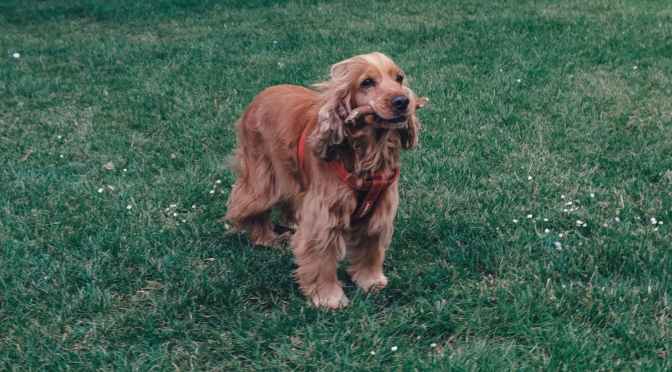
The sweet puppy, a good symbol for Enneagram Type Two
Core Mechanism
Twos are deeply focused on other people’s needs, aims, and aspirations, and may even seem to deny their own in order to help others meet theirs. Out of all the Enneagram Types, Type Two is the one that comes the closest to the archetype of the mother or of the caregiver. They tend to make others feel embraced and seen, and are capable of consoling and helping them see the bright side of everything. In a way, Twos almost seem to exist solely to be in the other’s life.
And this is where problems start, because even though healthy Twos can be truly selfless, average Twos most certainly aren’t. Twos need to be needed, and this stems from their subconscious belief that they are, in themselves, unworthy of love, acknowledgment or consideration, or of having their own needs met.
In this sense, an average Two sees taking care of others as a required detour toward themselves and their own needs. This can lead to various forms of projection. For instance, in the past my husband, a Two, sometimes asked me if I needed to pee or if I was hungry, when what he truly meant was “I need to pee” or, “I’m hungry.” Because they have learned to put other people’s needs before theirs, Twos only feel justified in meeting their own needs by helping others. More dangerously, sometimes Twos manipulate others into believing they want what the Two wants.
Another notious consequence of the Two mechanism is that, in besieging the other with attentions, Twos usually attach quite a number of strings to their favors. In their attempt to meet the other’s needs and even to anticipate them, Twos often stretch themselves thin. What they want in return is not necessarily anything material, but it usually involves a constant and clear acknowledgment of the Two’s central importance in the person’s life. When something goes south (“I didn’t even ask for that”) Twos can feel slighted. They then engage in recriminatory behavior and in making the other feel unworthy of their care.
Sin/Passion
Type Two’s passion is Pride. At first this may sound strange, as Twos can sometimes appear, if not bashful, at least meek, and they usually have a tendency to put others on a pedestal or in the limelight, rather than themselves. However, this only appears to be the case at a superficial level of consideration.
Although healthy Twos really are meek, humble and loving, the core of an average Two’s psychological structure is the tendency toinflate their ego to negate the autonomy of outside reality and of other people. All Heart types struggle with their self-image. Twos want their self-image validated in some form by others, which in turn implies the dreadful possibility of not being acknowledged or recognized.
The mere possibility of this happening is intolerable for a Two, as not having their self-image validated can be akin to not being truly there, and therefore of dying, at least metaphorically. This is truly an existential threat, as once their image of themselves is shattered, Twos must face their aloneness and neediness, that is, their helplessness in front of reality.
To avoid this, proud Twos ‘inflate’ themselves to take up space in other people’s lives, meeting their needs and seeking to become their ‘all’, with the tacit aim of feeling important, loved, acknowledged, validated. They usually do this with sweetness, but also by manipulating others as the need arises, and trying to forge deep, symbiotic bonds. Pride is this inflation of the ego, in the attempt to substitute reality with it, so that there is no risk of disillusion. When the other seeks freedom from the Two’s clutches, the Two reacts by tearing down the other as unworthy of the Two’s attention. Here the pride becomes, from metaphorical, very real.
Pride, the passion of Enneagram Type Two
Misconceptions
One of the main misconceptions I see repeated on Type Two is that they always want to be with other people. Sometimes I even come across descriptions of Twos as party people. A Two may or may not be a party person, but this has little to do with the type mechanism itself.
The reality is that Twos simply are unable to be alone, but this doesn’t automatically mean they want to be with others. Twos’ awareness tends to concentrate on the point where their life intersect the lives of others. Even when they are alone in a room, they are rarely truly by themselves.
Many tasks that Twos perform while alone they often subconsciously justify in front of themselves as good for others. Even cultivating a personal hobby is twisted as a form of service toward others so that the Two can justify enjoying it. In fact, sometimes even the mere act of resting may be seen as ‘taking a breather so later I can take care of useful things better.’
Again, this says nothing about a Two’s willingless to be with people–let alone with many people. It simply shows that a Two, regadless of how introverted or extroverted they are, tends to justify their actions in terms of the needs of other people rather than their own. This is all part of the process whereby a Two decides their own reality, manipulating themselves into believing or doing something.
Wings
2w1 – Twos with a One wing tend to have a tidy, neat, organized streak. More driven by rules and ideals and a bit less by norms, they often put their great organizational skills and unending drive for improvement in the service of their self-image as helpers of others, usually seen as needy and incapable of taking care of themselves and their surroundings. This is true for any Two, but the One wing accentuates the aspect of seeing oneself as the one who can do things right, especially for the good of others.
2w3 – Twos with a Three wing have a more marked tendency toward keeping up appearances. They tend to be more driven by societal norms and notions of ‘nicety.’ Their image among their peers is usually quite important to them, and they often try to do as much as possible to improve it and polish it. The creation of interpersonal bonds is taken on with the additional aim of being seen in one’s best qualities. They are basically the stereotype of the mom organizing the neighborhood’s contest for best apple pie.
(note that wings can have some minor descriptive power in terms of superficial behavior, but they are irrelevant in terms of what motivates the person. Many people have no noticeable wing, while few show signs of both.)