Name of the Figure: Cauda Draconis (Dragon’s Tail); sometimes called Outward Threshold Element: Fire Planet: None, Moon’s South Node (some say also the malefics, Mars and Saturn) Sign: Sagittarius Quality: Exiting Fortune: Bad
Cauda Draconis is the less lovable sibling of Caput Draconis. Like its counterpart, Cauda is not traditionally associated with any planet, although some classics say it belongs to the malefics of astrology, namely Mars and Saturn. However, in itself, Cauda is connected with the Moon’s South Node. Technically every planet has nodes, that is, points where they cross the Sun’s ecliptic. However, in traditional astrology, only the Moon’s nodes are considered, as the Moon’s connection with the journey of life is said to begin with the North and end with the South Node. Visually, the symbol of Cauda is said to show a series of steps leading away from a threshold, symbolizing the sense of ending.
Illustration of the geomantic figure Cauda Draconis, Dragon’s Tail
And ending is indeed one of the main meanings of Cauda. Ending is not necessarily bad. When you want to get rid of an illness, or really anything, Cauda can be positive, if not easy. It also shows quick, sharp change, so it can bring stagnant situations to an end.
Still, Cauda is mostly unwelcome in most readings. It can indicate the end of a relationship (or that a relationship won’t start). It can show unemployment and loss of money. It can announce difficult interpersonal relationships all around.
Due to its connection with the bad side of life, Cauda is one of the figures that, traditionally, prompted geomancers to break their figure and abandon divination if it shows up in the first house. Don’t do it. Just because Cauda is in the first house doesn’t mean your querent is a psychopath. Cauda is a challenging figure. It can simply mean the person is going through challenging times, that their life is changing dramatically and they have lost the plot.
Common Keywords: Ending, Loss, Abandonment, Evil, Quarrel, Evil intentions, Disruption, Letting go
Cauda Draconis in the Geomantic Houses (these are only examples. Use context to guide your interpretation)
House
Possible Meanings
First
Dangerous person, Person in danger, Person who is going through hell, Person who is ending something
Second
Loss of money or items
Third
Quarrels among neighbors or siblings, Bad news, False rumors
Fourth
End of lineage, Death of father, Eviction, Loss of home
Fifth
Danger though excess, Loss of pregnancy, Questionable pastimes
Sixth
End of sickness (but if the chart is bad, it could end with death), stay way from your servants
Evil religion or way, Inability to learn, Atheism, Materialism, Loss of faith
Tenth
Being fired, Loss of employment, Revolution, Coup d’etat, Death of mother
Eleventh
End of a friendship, Fights, Quarrels, End of hope
Twelfth
Escape, Freedom, Death of large animals
Thirteenth
There was upheaval, ending, disaster, the querent is capable of letting go
Fourteenth
There will be upheaval, ending, disaster, the querent is unable to let go
Fifteenth
Cauda cannot be Judge
Possible meanings of Cauda Draconis in the various Geomantic Houses. Note that this is not meant to be exhaustive, and it only serves to jog your interpretive muscles
Name of the Figure: Caput Draconis (Dragon’s Head), sometimes called Inner Threshold Element: Earth Planet: None; North Node (some say also the benefics, Venus and Juputer) Sign: Virgo Quality: Entering Fortune: Good
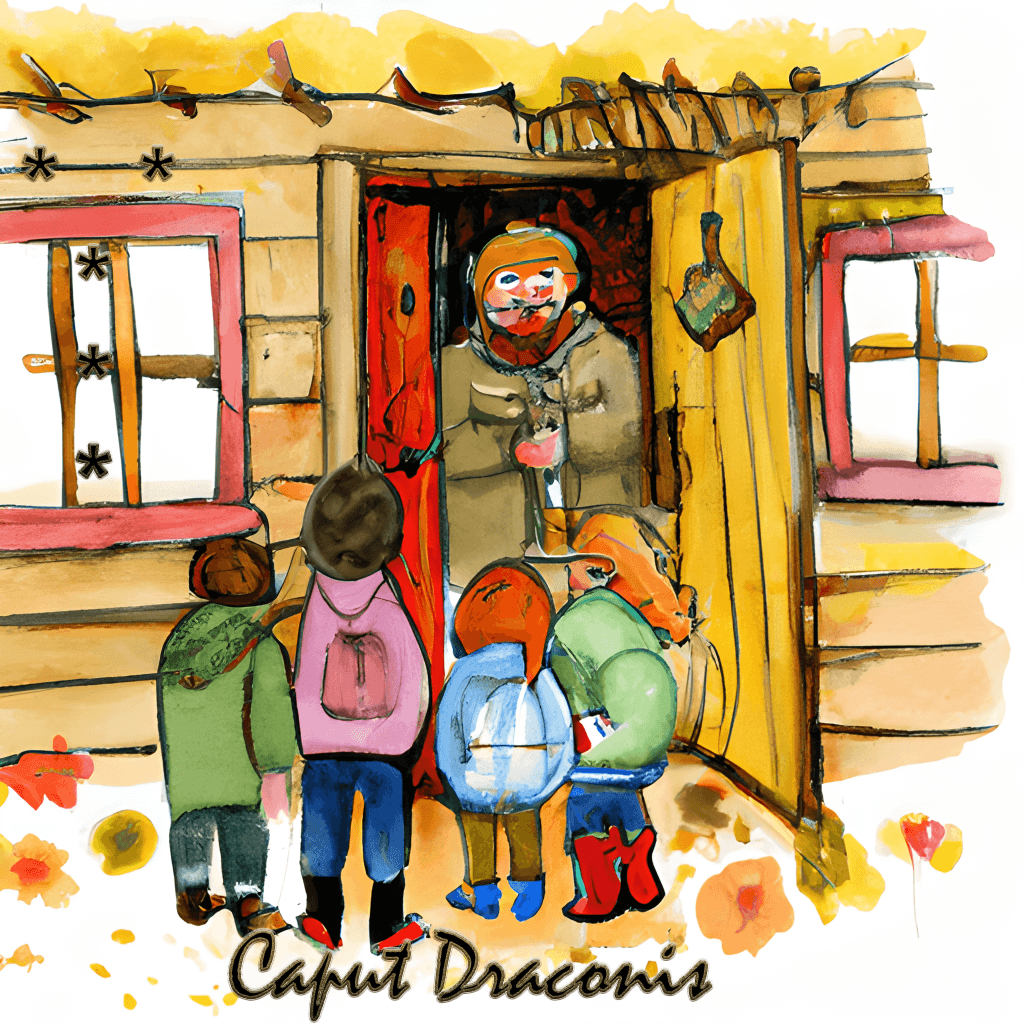
Caput Draconis, like its counterpart Cauda, is a special figure in the geomantic family. These are the only two that are not canonically assigned to any traditional planet. Instead, they are given to the nodes of the Moon, i.e. the points where the Moon intersects the Sun’s ecliptic. These were held in exceptionally high regard in traditional astrology, at least from Arab astrology moving forward (but apparently also in Hellenistic astrology, though their function there is debated.) Caput Draconis, the North Node, is usually said to be expansive and broadly positive, or at least augmenting. The symbol of the geomantic figure is usually likened to a series of steps leading toward a threshold.
Illustration for the geomantic figure Caput Draconis, the Dragon’s Head
Some say that Caput is associated with the two benefics of traditional astrology, Venus and Jupiter. More specifically, though, Caput is not automatically a good figure. It often represents an onrush of new energy, indicating everything new or everything that starts afresh.
More generally, it is associated with everything that develops, grows, becomes more stable and certain. This, of course, is a double-edged sword, as not everything that is stable is good for us. Often, Caput shows the impossibility to get rid of something, even if it is bad for us. It shows long illnesses, for instance.
Often, however, Caput is in fact a positive figure. It represents things coming to us, and as most questions get a positive answer when something comes to us, Caput is mostly a welcome figure.
Common Keywords: Arrival of new situations, beginning, fresh air, new enterprises, dynamic energy, development, deepening, stabilizing, long-lasting
Caput Draconis in the Geomantic Houses (these are only examples. Use context to guide your interpretation)
House
Possible Meanings
First
Positive, taking initiative, going, doing, starting something, good luck
Second
Income, new income stream
Third
News, important information, help from siblings
Fourth
Buying real estate, help from the father
Fifth
Fun, pregnancy, conception
Sixth
Long illness, good servants
Seventh
New relationship, lasting bond
Eighth
Being shielded from danger, gain from other people
Ninth
Conversion, signing up for a course, good at learning, spiritual evolution
Tenth
New job, lasting stability in one’s career
Eleventh
New friends, realization of hopes
Twelfth
Long prison sentence, safety from occult enemies
Thirteenth
Querent has initiative, something has already started
Fourteenth
Querent lacks initiative or needs to exert it more, there will be a new beginning
Fifteenth
Caput cannot be Judge
Possible meanings of Caput Draconis in the various Geomantic Houses. Note that this is not meant to be exhaustive, and it only serves to jog your interpretive muscles
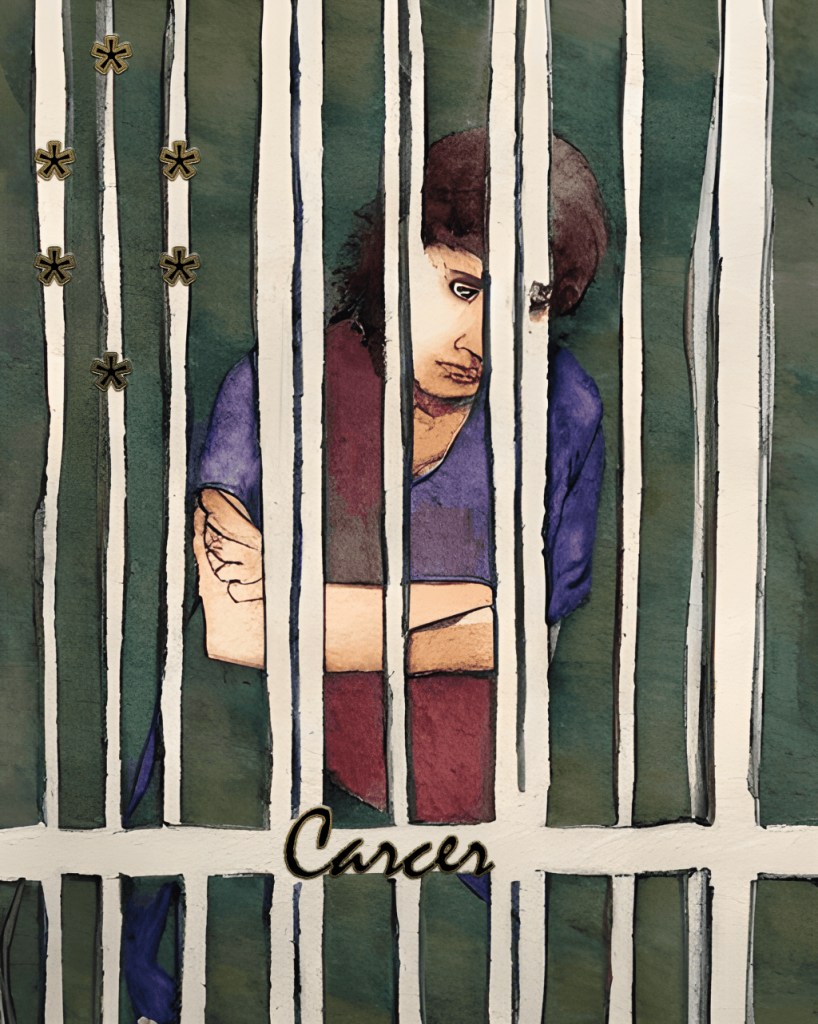
Name of the Figure: Carcer (Prison) Element: Earth Planet: Saturn (direct) Sign: Pisces Quality: Common Fortune: Bad
Carcer is a figure of Saturn direct. Its symbol is said to represent an enclosure, pen or prison of some kind. If we choose to look at the single dots as active elements, then Carcer is the opposite of Conjunctio, in that its active elements have in common the quality of dryness, which indicates difficulty in integrating and mixing together. Furthermore, the two elements are spread apart (one at the top, one at the bottom) and the figure can also be seen as two arrows pointing in opposite directions.
Illustration for the geomantic figure Carcer, prison
Carcer’s association with Saturn is very telling, as it embodies many of its qualities. It indicates loneliness, and in personal relationships it is broadly bad in its import. Although with positive indications it can show long-term commitment, it is more likely to show feelings cooling off, if not outright separation, or more simply it can speak of not finding anyone to be with. Lack of communication and personal contact all belong to the figure’s array of meanings.
Carcer can show prison and negative sentences in general, but the symbol of a prison or enclosed place can be interpreted metaphorically as obstacles, blockages and restriction. It indicates situations where we are in difficulty and it is difficult for us to act. However, on a brighter note, the symbol of the enclosed space can be interpreted as a womb, and Carcer is said in some sources to be good for pregnancy.
Another field where Carcer is generally positive is for building and laying the foundations of buildings (or maybe, metaphorically, for laying the foundations of something) and for keeping things secrets and solo endeavors such as meditation, study, etc. In most mundane questions, though, Carcer is one of the worst figures you can obtain, especially since it can become Judge, unlike other negative figures.
Common Keywords: Loneliness, sadness, blockage, obstacles, stoppage, building, laying foundations, separation, obligations, debts, poverty, pregnancy, secrets, deep knowledge
Carcer in the Geomantic Houses (these are only examples. Use context to guide your interpretation)
House
Possible Meanings
First
Lonely person, blocked, in difficulties, Stingy, Difficult to relate to
Second
Poverty, Lack of means, Hardships, Debt, Financial obligations
Third
Lack of communication, Isolation from the community, Only child, Lack of relationship with the siblings
Fourth
Castle, Large building, Constructing, Building, City, City walls, Tombstones, Loss of the father
Fifth
Depression, lack of fun or excitement, restraint, pregnancy
Sixth
long convalescence, difficult illness, lack of mobility, animal pens, death of animals
Seventh
loneliness, interpersonal difficulties, person is already committed, lack of relationships, separation
Eighth
Cemetery, death, fear, lack of progress, lack of money from the partner
Ninth
serious study, hidden knowledge, atheism, a priest or hermit,
Tenth
unemployment, lack of upward mobility, dead end
Eleventh
loneliness, lack of help or friends
Twelfth
prison, black magic
Thirteenth
past loneliness or hardships, person is serious, solid
Fourteenth
future difficulties, person needs to face serious challenges
Fifteenth
lack of success except in building and keeping secrets or pregnancy
Possible meanings of Carcer in the various Geomantic Houses. Note that this is not meant to be exhaustive, and it only serves to jog your interpretive muscles
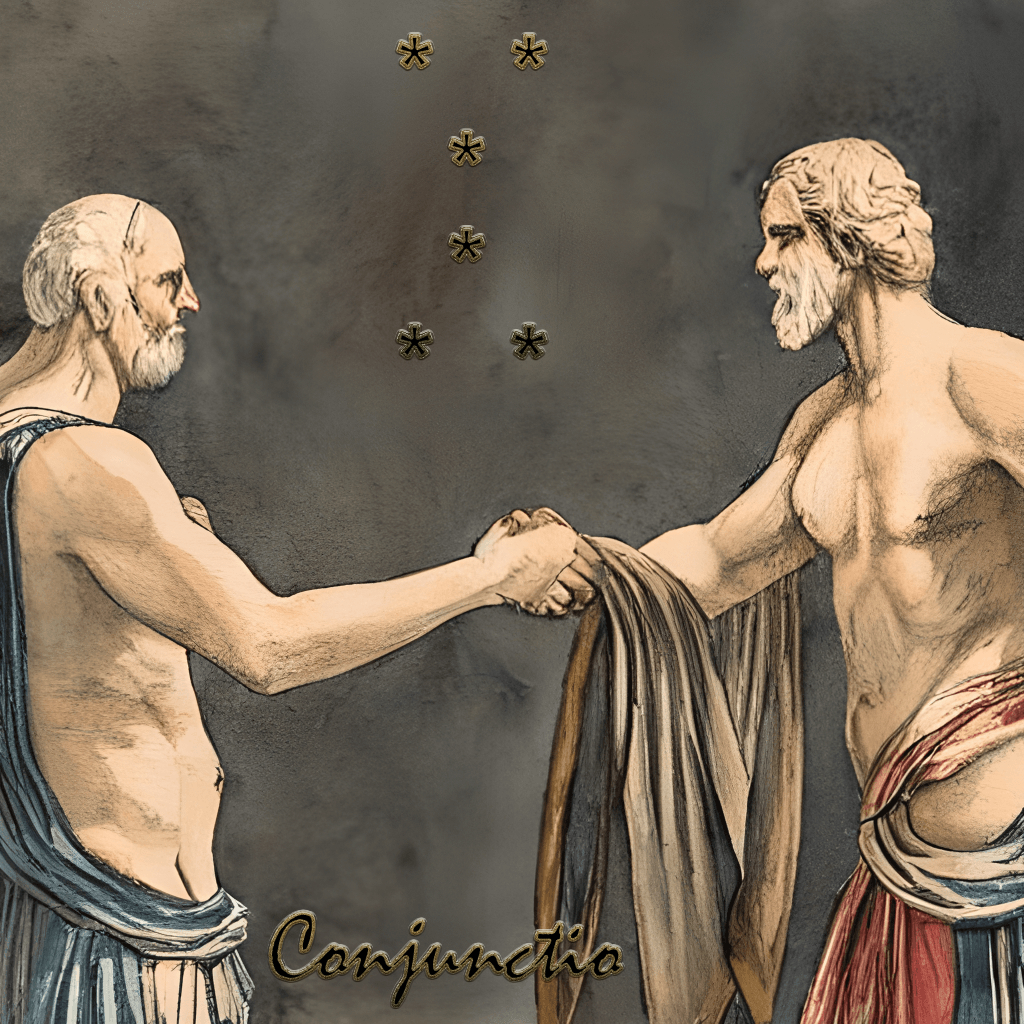
Name of the Figure: Conjunctio (Union) Element: Air Planet: Mercury (retrograde) Sign: Virgo Quality: Common Fortune: Mixed
Conjunctio is a figure of Mercury retrograde. I always found it an interesting figure, as its array of possible meanings is actually quite ample. Its glyph seems to show two arrows converging in the middle. Interestingly, if we believe that a single dot represents an active element, then Conjunctio shows that only the two moist elements (Air and Water) are active. Moisture is associated with pliability and receptivity (remember that Thales, the canonical first philosopher, said that everything comes from Water, and aside from any biological observation, philosophically this means that water can take on any shape.)
Illustration for the geomantic figure Conjunctio, union
Conjunctio represents this mercurial lack of rigidity and convergence toward a middle point. As such, Conjunctio represents all situations that link two things or people together. It is a figure of communication, talking and being good at talking. It is not a figure that favors loneliness and solo endeavors. Togetherness is hinted at.
Because it highlights the two middling elements, Conjunctio is associated with compromise and agreements. It is a very good figure for commerce, employment and for getting out of an impasse, as it indicates moderation and finding commonalities. It is also a portent of marriage. Symbolically, it represents the marriage of various elements, thus showing admixture, mixing things, and all things that are made of various parts.
As it is a symbol of fluidity, it also speaks of exchange of fluids, also known as sex (the word ‘conjunctio’ itself can hint at it). After all, it does indicate unions of all kind. It is one of the double figures, so when asking about pregnancy, if supported by other factors, it can show twins.
On a slightly less positive note, Conjunctio does not promise astonishing results, especially when it is Judge and the question is not about contracts or retrieving lost objects. It is good, it is just not THAT good.
Common Keyword: Communication, convergence, agreement, compromise, contract, document, contact, convene, congratation, sex, exchange of fluids, moderation, temperance, middling outcome, mediocrity, retrieval, discovery, coming into contact with someone or something, mixing, admixture, multiplicity
Conjunctio in the Geomantic Houses (these are only examples. Use context to guide your interpretation)
House
Possible Meanings
First
Flexible, able to compromise, intelligent, communicative, moderate
Second
documents, money-related paperwork, business contracts, retrieval of objects, buying and selling
Third
news, documents, social contacts in the neighborhood, contact with one’s siblings
Fourth
real estate contract, discovery of hidden treasure, talking to one’s father
Fifth
Writing, moderation in pleasure, sex, conception, twins
Sixth
catching an illness, taking meds, buying animals, agreement with servants
Seventh
Marriage, business contract, social contacts, acquaintances, theft
Eighth
money through marriage or business
Ninth
learning, studying, books, talking with spiritual people
Tenth
Job contract, agreement with one’s superiors, moderate leader, talking with one’s mother
Eleventh
Talking with friends, new frends, help
Twelfth
buying large animals, middling prison sentence, unable to let go of self-harming behavior
Thirteenth
able to compromise, good at talking, sociable, past middling results
Fourteenth
indecisive, without moral compass, future compromise, future middling results
Fifteenth
Middling results, obtaining something, union
Possible meanings of Conjunctio in the various Geomantic Houses. Note that this is not meant to be exhaustive, and it only serves to jog your interpretive muscles
Name of the Figure: Tristitia (Sadness) Element: Earth Planet: Saturn (retrograde) Sign: Scorpio Quality: Entering Fortune: Bad
Tristitia is a figure of Saturn retrograde. As Saturn is the great malefic of traditional astrology, connected with restriction, gloominess and such other alluring concepts, its figures cannot be particularly pleasant. Tristitia’s symbol is said to represent a fallen tower or a stake driven into the ground. If we believe the theory that a single dot indicates an active element, then Tristitia only has the Earth element active.
Illustration of the geomantic figure Tristitia, sadness
This seems to be in harmony with the general meanings of Tristitia. For one, it represents melancholy, which is mostly associated with the element of Earth. It indicates all negative emotional reactions to the slings and arrows of life. Dejection, depression, being down are all meanings of the figure. It is also associated with anything that has a downward movement: “Will the stocks go up?” no, they will go down.
Furthermore, Tristitia’s earthiness shows up in the other important concept embodied by the figure, i.e., its quality of “stuckness”. Tristitia indicates all situations that are stuck, for good or ill. As a matter of fact, it is a good figure whenever you wish for things not to proceed or to have a solid foundation. This is especially true in questions about building and cultivating the land.
Finally, as the opposite of Laetitia, Tristitia indicates secrets, another meaning of Saturn. It shows everything that is done under cover of darkness or in secret. Whether this is good or bad will depend on what the querent asked: “Will my wife find out about my affair?” Tristitia says no.
Tristitia in the Geomantic Houses (these are only examples. Use context to guide your interpretation)
House
Possible Meanings
First
Person is sad, Depressed, discouraged, Saturnine
Second
Loss of money, economic decline, Loss of items
Third
Sad news, problematic neighborhood, false rumors, secret messages
Fourth
Burying, Digging, Building, Working the earth, Loss of the father, need for renovations
Fifth
lack of enjoyment, A Debbie Downer, Loss of pregnancy
Sixth
Long illness, Problems through servants and helpers, sick pets
Seventh
Bad public relations, Bad image, Stuck in a marriage, Loneliness
Eighth
Mourning, Death, Bereavement, Lack of income from the spouse
Ninth
Sad journey, occult philosophy, atheism
Tenth
rain, precipitation, loss of employment, demotion, difficulties with the mothers
Eleventh
Lack of friends, loneliness, loss of hope, loss of support
Twelfth
Long sentence, Black magic, loss through large cattle, self-undoing
Thirteenth
Sad past, depression, loss, ability to make efforts
Fourteenth
there will be complications, it won’t be worth it, there will be toil and effort, decrease
Fifteenth
Tristitia cannot be Judge
Possible meanings of Tristitia in the various Geomantic Houses. Note that this is not meant to be exhaustive, and it only serves to jog your interpretive muscles
Name of the Figure: Laetitia (Happiness), sometimes called “Bearded” Element: Air Planet: Jupiter (direct, though some say retrograde) Sign: Taurus Quality: Exiting Fortune: Good (in most questions)
Laetitia is another “pure element” figure, if we accept the theory that signle dots represent active element. In this case, only the fire line should be active. It is a figure of Jupiter, the planet of happiness, nobility, religion and wealth. By its own design, Laetitia is often likened to a tower or to an upward pointing arrow.
Illustration of the geomantic figure Laetitia, happiness
Although the wealth aspect of Jupiter is definitely represented by Laetitia, it falls more under the domain of Acquisitio, the other Jupiter figure. Laetitia highlights more the psychological aspect of being glad, being happy, feasting, etc. which are all aspects of Jupiter. It represents everything that is “high” in a positive sense: high spirits, high-mindedness, honor, increase, growth, etc.
Laetitia is one of the few positive exiting figures, as opposed to Tristitia, which is one of the few negative incoming figures. Laetitia indicates partying and being happy, but it can also show fleeting situations, if not accompanied by more stable figures.
It is also a figure of visibility. It is therefore excellent for finding out secrets, discovering, finding lost items, etc. On the other hand, it is very bad for keeping things secret and under wraps. For instance, if someone asked if their spouse will find out about their affair, Laetitia is not an encouraging sign.
One aspect that is not often emphasized about Laetitia is that it is connected being being “bearded”. A beard, aside from indicating manliness, was also traditionally a sign of wisdom, and wisdom is one of the attributes of Jupiter, especially as it pertains conventional wisdom (e.g., the wisdom of a priest or a mentor or benefactor, as opposed to Mercury’s cunning and technological know-how and Saturn’s occult depth). It can therefore indicate “growing” in the sense of acquiring wisdom, becoming adult, either literally or figuratively
Common Keywords: Joy, merriment, happiness, feasts, parties, things that raise your spirits, up, upward, ceiling, growth, increase, visibility, fame, recognition, being seen, being busted, unearthing, lack of durability, fleeting success, wisdom, maturity
Laetitia in the Geomantic Houses (these are only examples. Use context to guide your interpretation)
House
Possible Meanings
First
Happy, positive, high-minded, handsome, a sight to behold
Second
Increase of wealth, positive financial period, stocks going up, retrieving lost objects
Third
Good news all around, positive relationships with siblings and neighbors, neighborhood celebrations
Fourth
Help from the father, Tall buildings, unearthing treasures, Unearthing secrets
healing, gain through subordinates (maybe giving them a raise), buying pets
Seventh
Good acquaintances, no problems relating to others, marriage celebrations
Eighth
Protection from fear or from death, escaping danger, increase through business or marriage
Ninth
Religion, Wisdom, Religious festivals, Education, Realization, discovery
Tenth
A raise, a promotion, finding a job, government buildings, positive decision from a judge
Eleventh
help from friends, money, wish fulfilled
Twelfth
escaping from danger, release from prison, nothing to worry about, protection from magic
Thirteenth
past joy, upward mobility, increase
Fourteenth
future joy, being discovered, finding out
Fifteenth
Laetitia cannot be Judge
Possible meanings of Laetitia in the various Geomantic Houses. Note that this is not meant to be exhaustive, and it only serves to jog your interpretive muscles
Name of the Figure: Amissio (Loss) Element: Fire Planet: Venus (retrograde) Sign: Libra Quality: Exiting Fortune: Bad
Amissio is another rather straightforward figure, with a caveat that I will address at the end. It is the opposite of Acquisitio, and its symbol shows it, as it seems to depict a bag with its mouth held downward, signifying loss. Tradition assigns this figure to Venus retrograde, meaning that while it is bad in most things, some see it as good in love affairs.
Illustration for the geomantic figure Amissio, Loss
Mainly, Amissio is a figure of loss, especially financial or material loss. It is also often associated with losing items or having them stolen from you. Needless to say, it is bad in any situations where we hope for increase, gain and the like. It is good in situations where you want to lose something, such as weight, illness, prison sentences, etc. Some say that Amissio is good for love because in love you “lose yourself” in the other.
Frankly, I believe we need to be very cautious with this line of reasoning, as it can be played with and made to say whatever we want. “Will I find a job?” “Why, yes! Here it says you will lose your lack of employment!” Furthermore, even in matters of love I have personally found that there are better figures to represent love (Puella) elation (Laetitia), ardor (Puer) or commitment (Conjunctio). I have the sneaking suspiscion that the only reason the Medievals assigned Amissio to Venus was that Saturn already had two figures to its name and nothing else was available, so always take the attributions with a grain of salt. The main meaning is loss, plain and simple.
Common Keywords: Loss, Difficulties, Hardships, Theft, Healing, Liberation, Letting go, Falling in love
Amissio in the Geomantic Houses (these are only examples. Use context to guide your interpretation)
House
Possible Meanings
First
Loss, Depression, In love, Lost, Needy, In need
Second
Loss of money or valuables, Loss of an object, Hardhips, Sacrifices
Third
Thieves in the neighborhood, Bad relationship with siblings, rumors, gossip
Fourth
Loss of inheritance, Loss from real estate or from the father
Fifth
Losing yourself in pleasures, Loss of pregnancy, Sadness
Sixth
Healing, Loss from servants and subordinates or from small animals, losing your pet
Seventh
Falling in love, Losing your partner, Thieves
Eighth
Bereavement, Loss, Loss of partner’s money
Ninth
Loss during journey, Losing your way, Bad skill or bad science
Tenth
Loss of employment, Inability to find a job
Eleventh
Loss of friendship, loss of hope, Loss of government support
Twelfth
Being freed from prison or a curse, Loss through large cattle
Thirteenth
Past expenses, Past sacrifices
Fourteenth
Future loss, Expenses, If the Judge is positive, there may be bad consequences in the future
Fifteenth
Not getting what you want (may be good in “Venusian” pursuits)
Possible meanings of Acquisitio in the various Geomantic Houses. Note that this is not meant to be exhaustive, and it only serves to jog your interpretive muscles
Name of the Figure: Acquisitio (Gain) Element: Air Planet: Jupiter (direct, but some say retrograde) Sign: Aries Quality: Entering Fortune: Good
Acquisitio is a rather straightforward figure, definitely one of the easiest to decipher. Its glyph is reminescent of a bag with its mouth held open as to signify gain, which is the literal translation of the Latin name. It is associated with Jupiter, which in traditional astrology was associated not just with wealth and abundance but also with higher and loftier things in life. All this is the domain of the other Jupiter figure, Laetitia. Acquisitio is a more material symbol.
Illustration for the geomantic figure Acquisitio, gain
Mainly, Acquisitio means what it says on the tin: acquisition, gain, money. It is strongly connected with material wealth and money in particular. It’s a good figure for finances and for acquiring objects, as well as for luxury. It can indicate finding a job, getting a raise and generally not needing to worry about the future. If the question is whether you will find a lost item or a thief will be caught, the answer is a resounding yes.
In non-material questions, such as love, affection, etc., Acquisitio can show attachment and honest relationships (it is still a figure of Jupiter) however if the chart veers toward the negative it can indicate possessiveness and, more broadly, the inability to let go. Alternatively, it can show a somewhat transactional mindset.
A rather notorious effect of Acquisitio is that its ability to gain us things can turn it into a bad figure whenever there is something we would like to lose. It represents catching illnesses or, more generally, it shows the inability to heal from them. Also, it can indicate that a prisoner’s sentence won’t be short (he will gain a lot of it)
Common Keywords: Gain, money, liquid assets, obtaining, receiving, getting back, wealth, inability to let go, inability to separate from someone or something (including illness or incarceration)
Acquisitio in the Geomantic Houses (these are only examples. Use context to guide your interpretation)
House
Possible Meanings
First
Wealthy, Jovial, Able to obtain what he or she wants
Second
Gain, wealth, increase of goods, Retrieving a lost item
Third
News of gain, Good news, News that lead to gain, Good relationship with siblings and neighbors
Fourth
Gain through real estate, Inheritance, Money from one’s family, Discovery of buried treasures
Fifth
Happiness, Jollity, Mirth, Pregnancy, Money through art
Sixth
Sickness, Inability to heal, “Catching” something, Gain through servants or subordinates or small animals
Seventh
Good business partnership, Gain through partners and marriage, Dealing with honest people
Eighth
Gain through inheritance, Dowry
Ninth
Gain through travel, High sciences, positive journeys
Tenth
Gainful employment, Raise, Increase in income
Eleventh
Help from friends, Money from the government
Twelfth
Long prison sentence, Gain through large cattle
Thirteenth
Wealth, Querent is wealthy or good at gaining wealth, he comes from a wealthy background
Fourteenth
difficulties gaining wealth, or there will be gain the future
Fifteenth
Obtaining one’s wish, especially in material issues
Possible meanings of Acquisitio in the various Geomantic Houses. Note that this is not meant to be exhaustive, and it only serves to jog your interpretive muscles
Name of the Figure: Puella (The Girl) Element: Water Planet: Venus (direct) Sign: Libra (Sometimes given as Aries) Quality: Entering Fortune: Good (with neutral undertones)
Puella is the counterpart to Puer, the boy, and the opposite figure of Rubeus (if you push Puella through Via you get Rubeus, not Puer). It is a figure of Venus direct. Just as Venus is the lesser fortune in astrology, Puella is a positive figure, but not very strong. Its testimony is easily overruled by other consideration. Its figure has two points in the Air line. This fact has been interpreted variously in modern literature. From a visual standpoint, this is said to represent a mirror or a woman’s breasts.
Illustration of the geomantic figure Puella, girl
Puella represents a girl’s or woman’s influence in the querent’s life. In this sense, the figure is neutral, and its meaning must be clarified by the rest of the chart. It also represents things we traditionally associated with women. This ranges from objects typically used by women (mirrors, lipsticks, gowns, etc.) to a feminine attitude and feminine interests.
Obviously, given its association with Venus and with womanhood, Puella has to do with love, harmony, balance, in all their applications. For instance, Puella tends to bring affection, love, togetherness. It is a good figure for interpersonal relationship, as it shows tactfulness, although it can signify someone who is easily influenced. It also has a connection with the arts, just like Venus. Everything that is pleasing to the eye falls under its jurisdiction.
Another idea connected with Puella is that of innocence. This can be played with if it is relevant to the question. Finally, Puella can represent an inability to assert oneself. If found in an unfavorable position, it can point to laziness and wastful behavior.
Common Keywords: A girl or a woman, female things (gowns, stockings, lipsticks, etc.) beauty, art, creativity, gentleness, harmony, girlish, unstable, submissive, (re)conciliation, love, feelings, easily swayed or overwhelmed, broadly positive outcome but with instability
Puella in the Geomantic Houses (these are only examples. Use context to guide your interpretation)
sisters, good siblings and neighbors, good news, true rumors
Fourth
harmony in the family, homemaking, gardening
Fifth
singing, dancing, arts, beauty, fun, love, kisses, a baby girl
Sixth
rest, good servants, lovesickness, female pets
Seventh
marriage, wife, harmony with other people or with partner
Eighth
dowry, gain through others
Ninth
holiday, vacation, respite, fun, learning an art
Tenth
pleasure from one’s occupation, good relationship with people above
Eleventh
female friends, realization of hopes, help
Twelfth
female animals, wastefulness, lack of effort, an evil woman
Thirteenth
goodwill, acceptance, loving nature, a woman from the past, a woman’s help
Fourteenth
lack of harmony, there will be harmony in the future, a future woman, a woman’s opposition, indecision
Fifteenth
Puella cannot be Judge
Possible meanings of Puella in the various Geomantic Houses. Note that this is not meant to be exhaustive, and it only serves to jog your interpretive muscles
In all Medieval handbooks of Geomancy, this method of divination is called something like “a brief science”, meaning an art that can be mastered with little effort. It was often sold as some kind of quick, “portable” oracle. This, I presume, is in comparison with Astrology, which back then required no small amount of mathematical knowledge, astrological software still being a couple of years away.
By comparison, anyone who can memorize a couple of meanings and rules and is capable of producing a Geomantic Shield (i.e., the chart) can obtain a quick answer.
The more I delve into Geomancy’s Medieval practice, the more I realize that all modern attempts at reviving it hinge on some kind of rationalization or optimization of what was, essentially, a rather chaotic (though not random) method. It is typical of the pre-modern approach to rely on older authority and compile as many observations and rules as possible from previous sources, even when contradictory with each other, so as to have an endless array of techniques to throw at the chart in hopes of teasing out the wanted response. This is not unlike what modern astrologers do when they interpret birth charts, though I must say, unlike contemporary astrology, traditional geomancy does work.
Producing a Geomantic Shield, Step by Step
If rationalization it must be, then it makes sense first to understand what it is that a geomancy reading does, that is, what it accomplishes from a structural standpoint. This is a Geomancy Shield.
Example of Geomantic Shield
In this shield, not all the figures are generated by the querent/diviner. In fact, only the figures circled in red are actively produced by the person interested in the reading. These are made from right to left, following the numbered order.
The Four Mothers produced by the querent are in red, the Four Daughters in blue
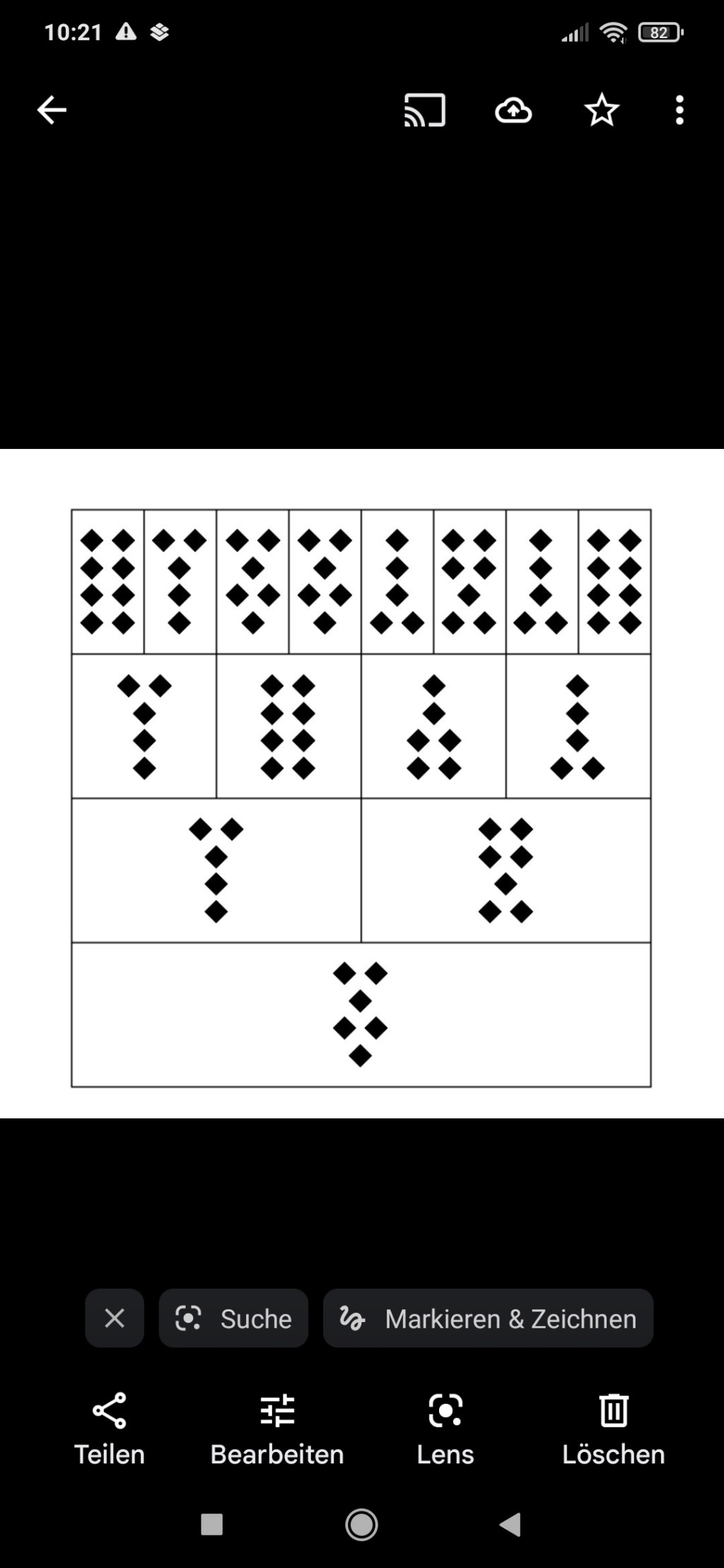
Once the four main geomantic figures (called the “four Mothers“) are produced, every other passage is automatic and relies on certain geomantic operations to fill out the Shield. One such operation is very particular, in that it only occurs once throughout the reading, while the other one is repeated many times. I’m talking about the operation that produces the “four Daughters.” This consists in taking the first line from every one of the first four figures (the mothers) to produce the fifth figure or first daughter; then taking the second line from each of the four mothers to produce the sixth figure or second daughter, and so on, until we have four mothers and four daughters (the daughters are circled in blue.)
As you can see, for instance, if you take the first line from each of the four mothers, you get a first line of two points, a second line of one point, then a third line of two points and a last, fourth line of one point, which now occupies the fifth house.
Once this operation is over, it is never repeated again, and it leaves us with a double set of four figures each. These two sets are not unrelated (hence the names of mothers and daughters.) They must of necessity be comprised of the same number of points, albeit differently shuffled around. Still, as much as they are related, they represent a split of some type, a doubling of reality from one into two related but separate sides.
Now it is a matter of producing the rest of the chart. This is done by taking the figures two by two and “adding” them line by line. We pair the first and second mother together, then the third and fourth, then the fist and second daughter together, and then the third and fourth. Adding here means taking the points that comprise each line in the two figures, adding them and seeing if you get an odd or even number: if you get an odd number, the resulting line will have one point; if you get an even number, the resulting figure line will have two points. This produces the “four Nieces” which occupy the second row in the Shield. Take careful notice that, at this point, Mothers and Daughters have not interacted with each other yet.
The Four Nieces in Geomancy
Once we have the Mothers, the Daughters and the Nieces, we repeat the second operation once more by pairing up the Nieces, the first with the second and the third with the fourth. As you can appreciate, once more, Mothers and Daughters haven’t come into contact: the split hasn’t been mended.
The Two Witnesses coming out of the Four Nieces
The two figures resulting from the addition of the four Nieces are the two Witnesses, which are the first two members of the “Geomantic Court.” The Right Witness is the ultimate consequence of the four Mothers, while the Left Witness is the ultimate consequence of the four Daughters. We can’t produce any more figures without finally bridging the gap between the right side of the Shield and the left side. This is done by producing the fifteenth figure, the last one, called the Judge. This brings the operation to a close.
The Geomantic Court complete with the Judge is in blue
So, What are we doing in Geomancy?
Anyone familiar with Hegel’s dialectics cannot but look in admiration at what I have just described. We begin the operation with a set of four symbols (the four Mothers) which represent the querent’s active involvement, in the hope of knowing something. A querent that doesn’t want to know anything does not consult an oracle: he is not a querent, ‘querent’ meaning ‘asker’. Therefore, the four Mothers represent the question itself, not in a divinatory sense, but in a structural one: if someone doesn’t want to know something, the Four Mothers don’t appear.
Once this happens, reality splits into two, the Right side representing the querent, the Left side the quesited. This culminates in the reading of the Geomantic Court, in which the Right Witnesses pleads for the querent and the Left one for the quesited, among other possible interpretations. Other variants are: Right side good, Left side bad, Right side past, Left side future, Right side helpful, Left side hindering. These are all variations on the same theme.
The point is that from a Geomantic standpoint, duality comes into being as a result of someone either desiring something they don’t have or fearing they might lose something they have. Objective reality comes into being by “lapsing away” as it were from the Subject, creating a would of sort that requires a series of steps in order to be healed again (‘heal’ literally meaning ‘to make whole’). Try to think of a situation where you don’t need anything: you don’t need food, clothes, air, light, aspirations. You’d be very godly or very dead.
What I just said, therefore, is not a disparaging of dualism: without duality, unity cannot manifest, and remains a sterile, barren field. Without the split, the querent wouldn’t be able to know, or, indeed, to get. By pronouncing his sentence, the Judge makes the situation whole again, which is signified by the fact that only the eight figures with an even number of points can become Judge. Either the querent gets his wish or he doesn’t. But the making whole again presupposes the split, just as in dialectics the synthetic moment cannot be understood and appreciated but through the process of opposition that led to it.
What I just described is, as far as I know, never mentioned in Medieval or Renaissance works on Geomancy–one obvious reason being that dialectics in the Hegelian sense hadn’t been invented yet. Platonic dialectics (that is, conceptual dialectics) comes close, but again, all this seems implicit in the operations of Geomancy and never articulated. I harbor no delusion therefore of having discovered the secret meaning of the art. I am conscious, in fact, that I am merely organizing it according to a model that is familiar to me. But I must say Geomancy wears this model beautifully. It contains a whole philosophy of what it means to ask a question and to get an answer.