Previous / Back to Index / Next
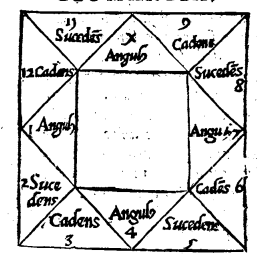
Here Abano discusses matters relating to the Ninth House and Tenth House.
Ninth House
If one shall have ecclesiastic preferment or benefit through the church.
If the first and ninth figures are entering and fortunate it means good luck in these matters, especially if the first moves to the tenth or the ninth in the second, and even more if the fifteenth is lucky and good. Judge the opposite if they aren’t.
What kind of fame one shall receive from one’s deed.1
If the first and ninth figure are good and fortunate, and also the Judge agrees, it shows honor and good fame, but if not it shows the opposite. If they are Puella or Amissio it means due to women or young people, and if Tristitia or Carcer due to evil, bestial lawless men, and if Rubeus or Puer due to bloodletting or things to do with fire, and if Cauda or Conjunctio due to theft or other lawless things; but if the figures are good, and if they are Albus and Conjunctio, it means through science and the arts; and if Acquisitio or Laetitia it will be through living a good life, accompanied by good people; and if Caput or Major through great lords or through prelates and noblemen; if Populus or Via through common folks.2
On long joureys and relocations.
Consider the first if the travel is by water or earth. If the joruney is by water and the first, ninth and tenth are good and watery or airy, it means good journey; especially if the fifteenth agrees. If it’s Tristitia, Rubeus or Carcer it shows accidents, and if Carcer is in the third it can also indicate one doesn’t complete the journey and will return with delay. If the journey is by land and the figures are good, fortunate, entering or exiting but good, it shows good journey, and with Minor in the eleventh it shows delays, and if Carcer is in the third, the person shall not complete the journey.3
If one shall have good fortune or not through travel.
The first is the traveler, the ninth is the journey, the seventh the need he has to journey and the place where he goes, and the tenth is the person to whom he travels. If these figures are good it shows everything goes well and with ease, but if the first is unfortunate it shows accidents or trouble during the journey, and depending on whether the other houses are good or bad, judge about the accident.
And if the first moves to the sixth, he shall fall ill, and you can judge the type of illness by the figure. Ad if the first and seventh are unlucky it shows harm and trouble. If the first, second, third, fourth, ninth and tenth are unfortunate, it shows illness and death and being killed.4 If Tristitia and Rubeus are in the eighth and tenth it shows drowning and loss of wealth, and if the other houses are unfortunate but the eighth good and fortunate, it shows the querent shall go adrift at sea and will lose his wealth, but will survive.
If the first four are fortunate and entering and also the ninth and tenth, it shows good journey, especially if the Judge agrees, but if the said houses are good, but the Judge evil, it means good at the beginning, but bad ending, and if the said houses are a mixed bag and the Judge good, it means various troubles with a happy ending. Always judge based on whether the figures are good or bad, and similarly depending on the meaning of the houses, and according to the querent’s intention.
Tenth House
Of abundance and dearth.5
If you want to know whether the year will be abundant or not, look at the first, tenth and eleventh.6 If the figures are earthy and good it means abundance. If they are fiery it shows dearth. If Airy, also dearth, but less. If Watery, it’s mediocre. Always consider the Judge, the fourth and the Witnesses. If you want to know the time of the year when there will be more dearth, i.e., at the beginning or at the end, judge by the first and fourth figures, and if the first is good and the fourth bad or worse than the first, it shows the end is worse than the beginning, and vice versa. Likewise one can judge the month of May,7 by giving the first to the beginning and the fourth to the end (of the month.) If you want to know what kind of plant will be abundant or will be lacking, look at the figures. Acquisitio, Puer or Laetitia show wheat. Populus or Via show small grains. Carcer and Tristitia indicate chestnuts and fava beans. The other figures are middling.
If it shall rain.
You must observe the same rules as above, and note that Watery figures portend rain, and the other figures depend on their particular signification. Keep in mind, though, that Tristitia indicates precipitations.8 And if you want to know when, look at the first and fourth, as discussed above, and also look at the Judge, and note also whether the first four figures are Watery.
To know what kind of occupation is more useful (to the querent)
Look at the tenth figure and compare it to the first, and judge their virtue and conformity, and depending on the properties and virtues of the planets. Also note whether the second and the Judge agree, but if they are contrary to one another, look at the proportion of the greater part.9
If one shall obtain a fief or lordship.10
If the first and tenth are entering and fortunate and fixed, and if they are the same figure or are conjunct, it means obtaining what one desires, especially if the Judge is Conjunctio, except if the first goes to the eighth or twelfth, or if the figures are exiting and unfortunate, for this means contrarieties. It’s especially bad if the eleventh is unfortunate, or the Judge and Witnesses. And if the figure leaves you doubtful, add up the first and tenth, and judge by what it shows.
What fortune one shall have in one’s fief.
If you want to know this, look at the tenth figure, and in what house it moves, and judge accordingly, especially if the Judge agrees with the tenth. If it moves to the second, it increases wealth peacefully, but if it is in the twelfth he shall obtain money through avarice, and the people will be inimical to him, and may be despoiled or assassinated by his officials.
If it is in the third, he shall be loved by the people for his justice and good work. If it moves to the fourth, he improves his position and patrimony with great honor. If to the fifth, he shall be glad with many children, and will be loved and honored by neighbors with messengers, gifts and friendship. If it moves to the sixth, he shall be loved by his servants and family, but may fall sick or maybe be poisoned.
If to the seventh, he shall be cruel to his people, and much hated,11 and his enemies shall wage war against him, and he shall be lascivious.12 If it moves to the eighth, he shall be a vile man, shy and fearful, and the people will rise against him. If the ninth, he shall travel a lot and with great honor, and his status shall increase. If the tenth is in the first and fourth houses, it means a terrible man, who shall subjugate other lords to himself, and be truthful and just, and if it moves to the eleventh, he shall have glory through his army, and be feared by his men, but if in the twelfth it shows ruin, disobedience of one’s subordinates, and if also to the eighth, he shall be killed or at least chased away, and if together with the eleventh, betrayed by his subjects or family or advisers.13
MQS
Footnotes
- This section is interesting because usually we would judge fame from the Tenth House, not the Ninth. ↩︎
- This section is not altogether clear, as it is not always easy to see when Abano means fame and when infamy. ↩︎
- The Third House shows shorter journeys, so maybe Carcer in the Third indicates the shortening of the journey. Nowadays, it is conceivable that a journey by air would be indicated by an airy figure. ↩︎
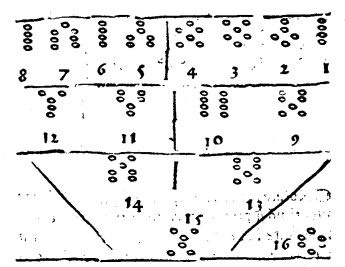
- The First, Second, Third, Fourth, Tenth and Eleventh are the houses on the querent’s side of the Geomantic Shield. ↩︎
- The Medium Coeli or Midheaven is the point where the Sun peaks during the day, and as such is related to the ideas of “high” or “up above” and therefore to the sky and to the weather. ↩︎
- The Eleventh House is broadly considered positive, and it is called the Good Demon, possibly indicating a gift from the Heavens. ↩︎
- I don’t understand why Abano is refering to the month of May, unless it has to do with agriculture. ↩︎
- Possibly because it points downward, or because it shows a ‘sad’ weather. ↩︎
- “Et quando fussino contrarie vedi la proportione della maggior parte”. This sentence is unclear, unless Abano is perhaps merely refering to judging by the most numerous testimony/figure in the chart. ↩︎
- These rules may just as easily be applied today to discuss questions about promotion or trophies. ↩︎
- Likely because the Seventh House opposes the Ascendant, which in Mundane Astrology represents the people of the country. ↩︎
- Because the Seventh is the house of women. ↩︎
- This whole section may seem useless today, but with a little fantasy it may be applied, for instance, to how a new superintendant or boss will be with the people under him. ↩︎