I don’t remember talking about it here, but I was asked to teach evening Italian classes at the local school, mostly for adults (in that most students are adult, not because I teach NSFW vocabulary).
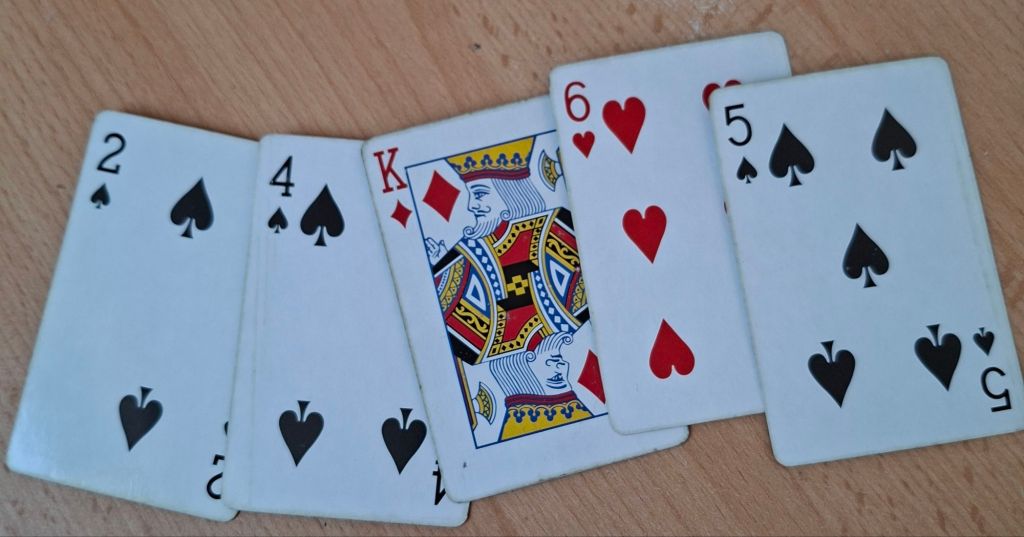
I have been having fun using the cards to predict how the classes would go. They are mostly accurate, although obviously their meanings must be toned down a bit to apply to the situation. One glaring example of the cards predicting something major is this spread on yesterday’s class.
How will the class go?
I’ll tell you what happened, and then we’ll get into the spread, especially since I didn’t predict anything ahead of time, so this is more of an exercise.
What happened was that one of the students, a man who sould have reached the age of reason some years ago, decided that I wasn’t paying enough attention to him. So when I asked him a question he reacted angrily, throwing a hissy fit and questioning me and my method. I reacted more maturely, yelling back at him that he can either get on with my method or be gone, at which point I invited him to leave.
Now let’s look at the cards I drew that evening before class. The cards are quite clear in this case, probably because what happened was relatively major compared to a boring day reading.
The King of Diamonds is ‘some dude’. He doesn’t come up as a Spade, so he’s not a sworn enemy or anything. The K♦️ dominates the spread from the center, so the situation revolves around him. The Two of Spades can be anger, while the Four of Spades can be an obstacle, but with negative cards it becomes a clean break.
So upheaval is to be expected in the relationship to this man. Since the Five of Spades ends the spread, this upheaval is unlikely to be reconciled. Especially since the Six of Hearts, the card of conciliation, is surrounded by all these spades, so it is as if the cards were saying “the conciliation is not” or, in English, there won’t be conciliation. Paradoxically, therefore, the 6♥️ worsens the spread by its presence.
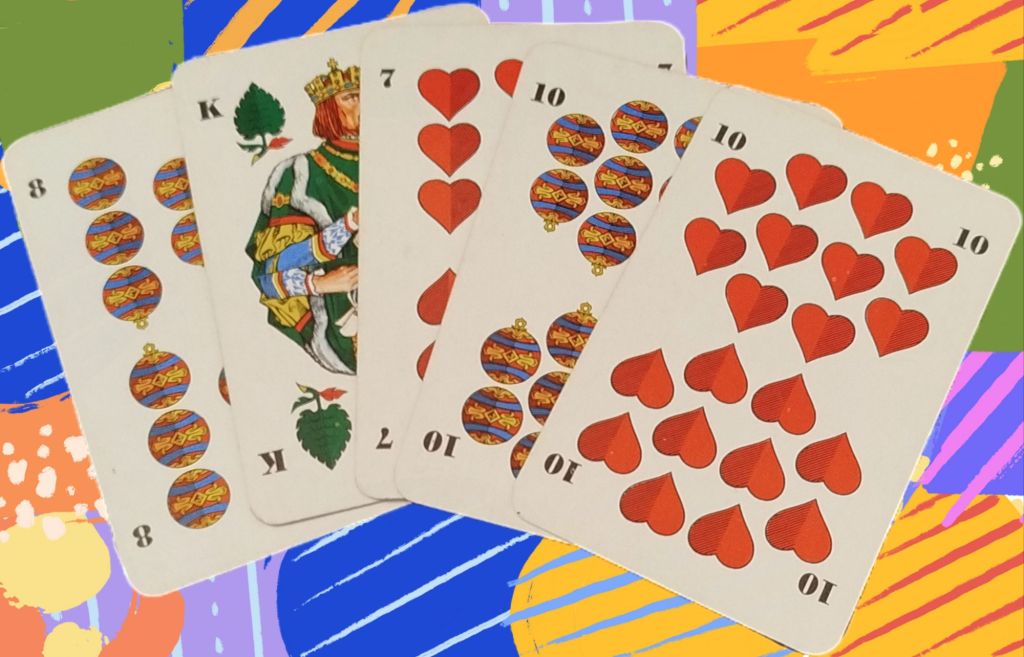
A friend and I have decided to do a little experiment with the German skat deck. He has applied for a job and we wanted to see if he’ll be hired.
An Experiment with the German Skat deck
According to the meanings I’ve received, the Eight of Diamonds (here the Eight of Bells) is the card of work and business, so the cards seem to be on the ball. We also have the Ten of Hearts which is a contract (a marriage/union) with the Ten of Diamonds/Bells indicating it’s a relatively well-paid full-time opportunity. The Seven of Hearts here should indicate relief and pleasantness in general. It could also mean the querent is going to have fun, but considering it comes before the contract, I incline more toward the former interpretation.
There’s that King of Spades / King of Leaves there, which puzzles me. Technically the querent is the King of Hearts. This could show that someone else gets the contract, but this would be a really weird way for the cards to communicate (“Will I get the job?” “Someone else is going to be really pleased”). It can happen that the cards say someone else gets the job, but they would show this as a negative for the querent. Also, this cannot be the boss, because two women are the boss and are looking for someone to hire.
Maybe the King of Leaves could represent the type of job. It is in the medical field. Technically, medical subjects would be indicated by the Ten of Clubs/Acorns or the King of Clubs/Acorns, however I have seen many sources that assign the meaning of doctor to the King of Leaves / Spades. It could indicate that the job is going to have to do with lots of bureaucracy and office stuff, and that would true.
Let’s move on with our look at the playing cards divided by concept. This time, we see which cards represent stability.
Ace of Hearts The Ace of Hearts, like in many systems of reading playing cards, represents the home. It is a symbol of durability and stability, since houses tend to be stable things that don’t change. Mostly, the Ace of Hearts symbolizes the house or the family, however, when describing someone’s character, for instance, it shows them to be family-oriented, looking at stabilizing their life, being rooted in traditional values, etc.
Four of Hearts The Four of Hearts usually brings agreement in all fields of life. However, the type of agreement it shows is effortless, and it resembles more a state of peace where the waters aren’t ruffled (and if they are, the waves calm down immediately). Usually this card indicates harmony, harmonious surroundings and ease.
Six of Hearts Unlike the previous two cards, the Six of Hearts, which represents such things as reconciliation, healing, etc. does often imply the presence of some disturbing factors (though not necessarily. We need to look at the spread as a whole), but it shows that these disturbing factors, such as a break-up or a disagreement, can and probably will be overcome, returning the situation to its previous stability.
Ten of Hearts The Ten of Hearts is one of the most powerful in the deck, as it is often capable of diminishing the negative impact of negative cards. Since it is symbolic of paradise, heaven or ultimate attainment of one’s happiness, it hints at a situation either being stable (and happy) or becoming stable (and happy). When it is followed by very negative cards, though, it can show this paradise being lost. In fact, it is sometimes a bad sign when we find the Ten of Hearts at the beginning of the spread without other strong cards, because it shows that the best is already in the past.
Three of Clubs The Three of Clubs brings union and unity. It causes situations or people to become locked in place, usually by signing contracts, celebrating a marriage of making a commitment to each other or doing things together. Sometimes it can show that a situation perseveres (it remains married to us).
Six of Clubs A somewhat obnoxious card, the Six of Clubs isn’t tragic, but it brings disturbance. It shows situations that have lost their momentum, and problems that we thought we had overcome reemerging. It shows a sort of static discontent with no disruption in sight, either for good or bad, unless other cards clearly show it.
Nine of Clubs This is the card of distance, either in terms of miles or in terms of time. As such, it lengthens out the timeframe, but unlike the Six, the Nine of Clubs has no negative undertones, except in the sense that often we want all the good in the world to happen to us quickly, and this card stalls us for some time. However, it can also make a good situation last longer.
Four of Diamonds Unlike the Four of Hearts, which shows effortless stability and agreement, the Four of Diamonds represents agreement following either tensions or negotiations. Thus it represents all things to do with bureaucracy and the government that seek to regulate life and make it more stable within the borders of a country.
Ten of Diamonds Of the Ten of Diamonds we can say something similar to the Ten of Hearts, except that the success promised by Diamonds tends to be more material, and doesn’t necessarily imply happiness. However, it does represent situations that have developmed to their utmost in a positive sense and have reached their aim.
Five of Spades Being the card of prison, the Five of Spades symbolizes constraints, blockages and the need to make great sacrifices. As such, it means that the person (symbolized by the central pip, hemmed in by the four other pips at the corners) cannot move and is bound to a situation. Usually this is in a negative sense. Even when surrounded by positive cards, thus showing a positive commitment, it still indicates a certain sense of being stifled.
Six of Spades The Six of Spades is the card of illness, and it shows all situations that are ill, broken, suffering, etc. In itself it is not the most tragic card in the suit, but it represents a state of suffering stillness, which may be overcome or lead to disruption, depending on the cards that follow this one.
We did a little experiment with a friend. She wanted to know if the bureaucratic process to get the inheritance from the recently deceased grandfather would finally come to an end, since there had been several delays (leave it to the Italian bureaucracy). We started with the Sibilla.
Sibilla
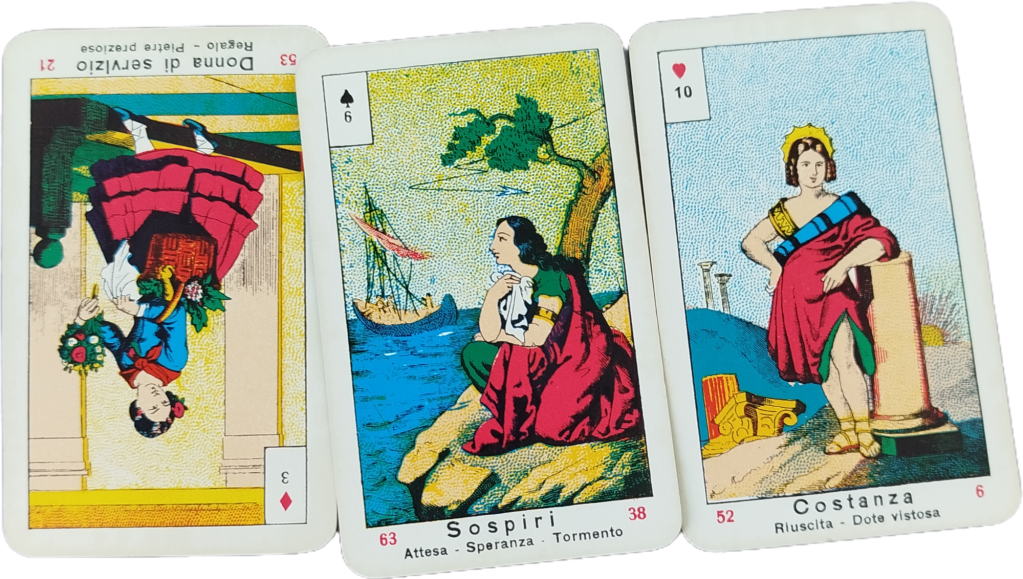
A three card reading with the Vera Sibilla
In this case, the Handmaid reversed indicates money going out (of the querent’s wallet). The Sighs card simply indicates that the person worries they’ll have to pay money. The Ten of Hearts here is not a positive influence, because it is a card that makes the uncertain certain (in the context of a trial, for instance, it might indicate the sentence being decided). So in this case the worries shown by the Sighs are confirmed.
I asked my friend if she was worried about having to pay some extra money, and she said that this was her and her dad’s worry, but that they had looked into inheritance law and thought they were safe and wouldn’t need to pay . Clearly the Sibilla begs to differ.
Playing cards
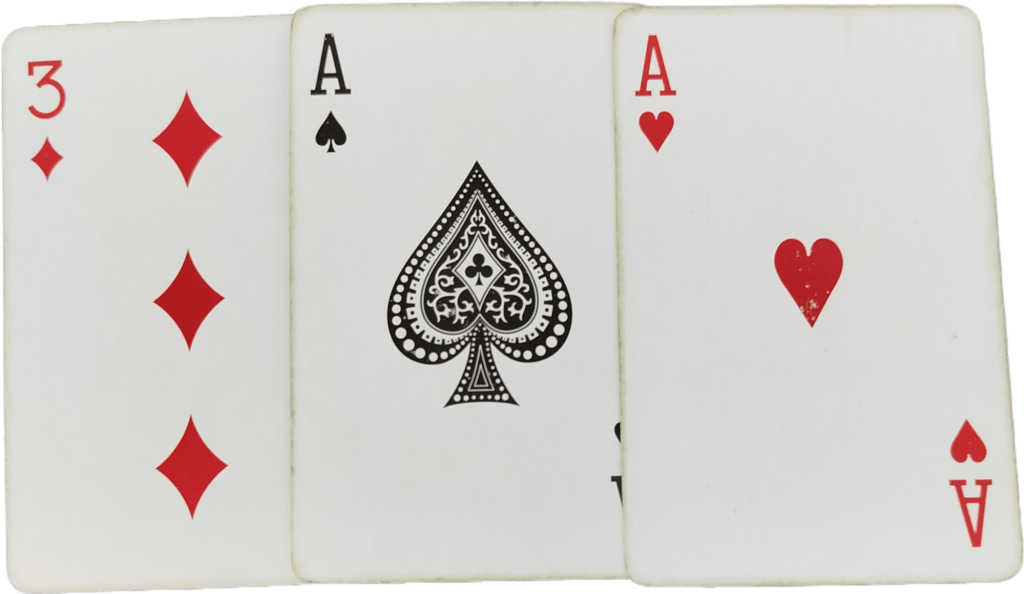
A three card reading with regular playing cards
In this case we don’t have the querent’s state of mind (which the Sibilla talked about). However, we do have, once again, the loss of money, indicated by the Three of Diamonds being covered by the Ace of Spades. The Ace of Hearts shows us that the money going out is due to family issues, something which was absent from the Sibilla.
Skat cards
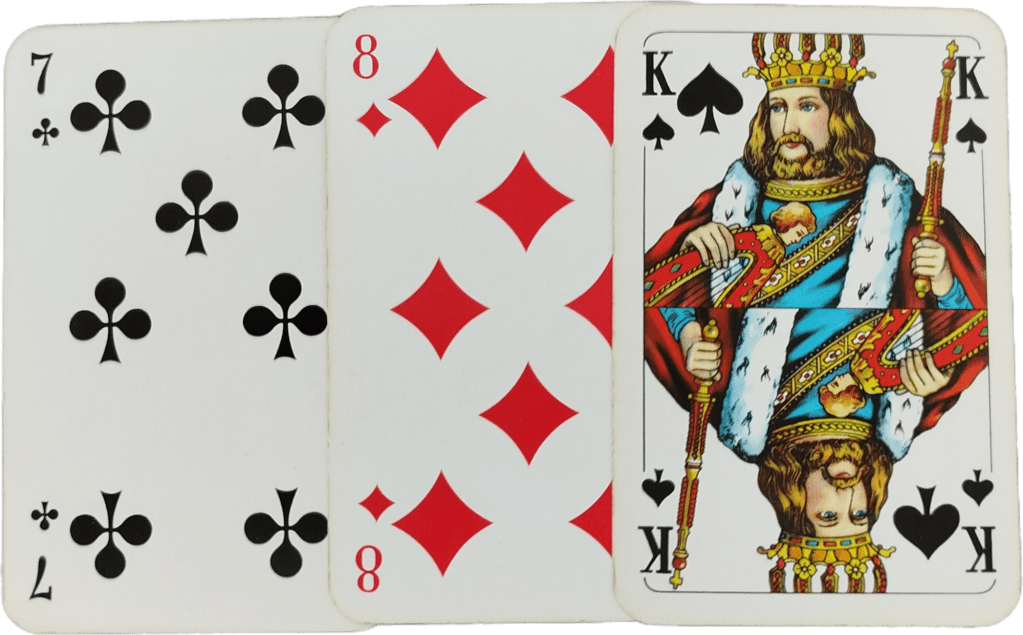
A three card reading with the Skat / Piquet deck
I decided to make an experiment with the Skat cards as well, just for kicks. The Eight of Diamonds is technically the card of work. However, if I understand the meanings correctly, it represents work because it shows the flow of money, money being exchanged. So it can represent, more broadly, the economy. With the Seven of Clubs, which indicates tears, the economy will take a hit. The King of Spades might be the office worker who will give the querent the news.
A week ago they received news that they needed to pay an extra 3000€ to unfreeze the granddad’s money. My friend doesn’t know if the office worker who worked on their case was a man (the King). Still I think the Skat cards were rather accurate.
I won’t buy it, because there’s really no point in me owning it, but I’m going to post a personal translation of the meanings found on the cards, just as a comparison to the other systems I posted. Note: in German the descriptions rhyme (sort of). Since poetry is not among my many, many gifts, I’m not even going to try it in English. We’ll wait for the next Lord Byron to stumble upon this blog and give it a go. However, I will leave in bold type the words that are in bold in German, where possible.
The fact that some of the meanings coincide with the ones I posted, which I know to be traditional because I trust the sources, tells me that this Oracle of the Silver Mirror isn’t something someone just pulled out of his heinie, but they probably at least did some reaserch or had access to someone who could read skat cards. Still, I don’t want to exaggerate the importance of this deck: it is just a little bit of Skat trivia, in the long tradition of card fortune-telling as a parlor game.
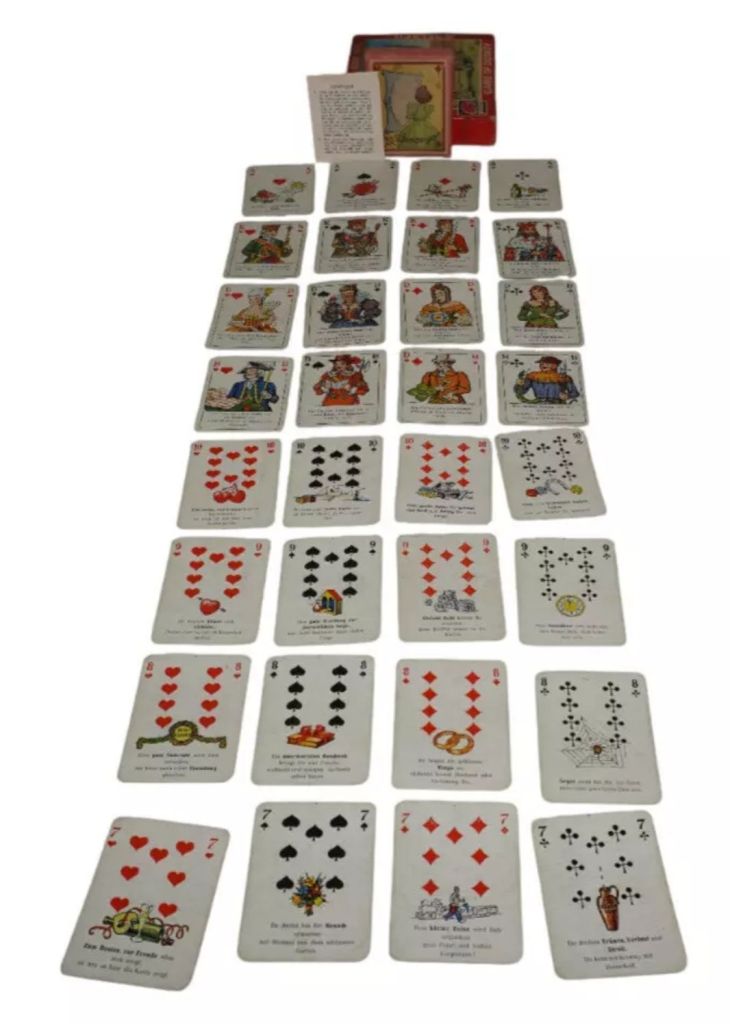
The Silberspiegel Orakel is a fortune-telling deck about which very little is known. A source online says it’s from the 50s. Considering the old-fashioned language and the pre-reform orthography it might as well be true.
Silberspiegel Orakel (Oracle of the Silver Mirror)
A♥️ Soon an event will involve the house. It appears as though it is something good! K♥️ The King of Hearts is your reflection in the mirror, or “He” who envelops you in his love Q♥️ The Queen of Hearts is your reflection in the mirror, or “She” who envelops you in her love. J♥️ The Jack of Hearts can be your son or your daughter, or just a child, broadly speaking. 10♥️ You can expect much love, much joy. The world becomes your enchanted garden. 9♥️ Kisses and love-making await you. Don’t lose your head, whether in December or in May. (This sounds much cuter in the original) 8♥️ A bit of good news is headed your way. It could also be an invitation. 7♥️ Everything turns out for the best and is cause for joy, as shown here in this card.
A♠️ Taxes, the courthouse or the government await you. Don’t pull a long face! K♠️ There is a wealthy man (around you). He could be your father, who loves you very much Q♠️ A well-meaning woman coddles you. She could be your mother, who protects you and takes care of you. J♠️ The postilion brings you a letter or message with much excitement. He’s almost here! 10♠️ You are planning a long journey, toward new horizons (shores) and harbors. 9♠️ A positive change in your personal situation. That’s a certain thing. 8♠️ An unexpected gift will bring you much joy, perhaps tomorrow, maybe even today. 7♠️ You can expect a visit, with flowers from the most beautiful garden.
A♦️ An important letter or a merry celebration, perhaps a marriage or something from the stork’s nest. K♦️ A blond man will propose to you. He may also be a relative (!!!) Q♦️ You will go out with a blonde woman. If she’s a relative, forget about her (!!!) J♦️ This is the big, big luck. Cut yourself a nice slice of it. 10♦️ You manage to accomplish something great, everything brings you success and lots of money. 9♦️ You may expect a bit of money. This is what the cards clearly show. 8♦️ You’ll have golden rings to wear. Maybe you’ll celebrate an engagement or a marriage. 7♦️ A small journey will restore you. Have a good journey and some fun!
A♣️ Affliction and a doctor are in your home, but a cheerful disposition can drive the devil out. K♣️ An older man is around you. Maybe a father-in-law, maybe a public official. Q♣️ An older woman is by your side. If she’s your mother-in-law, do as she says. J♣️ A false person wants to charm you. Be careful, and you will charm the snake! 10♣️ Luck, affluence and a long life are gifted to you as treasures. 9♣️ Something will soon become certain. Now ask yourself what it may be. 8♣️ Aggravations are coming to your house. Someone may exploit your good will. 7♣️ Tears, loss and fights threaten you. You will overcome them with a merry disposition.
Spreads
In the LWB, two spreads are described. One is the classic große Tafel, the grand tableau of 8×4, where one reads the lines that intersect the querent’s card.
The other is a cross spread (once again), where the person’s significator is taken out, the cards fanned out and fifteen cards chosen: covering him (“Was dich deckt!”, i.e., “what covers you”), to his right (“Was dich schreckt!” i.e., “What scares you/shocks you”), below him (“Was du mit Füßen trittst”, i.e., “What you tread on with your feet”), to his left (“Was dir gewiß ist”, i.e., “what you hold for certain”) and above (“Was du im Kopfe trägst”, i.e, “What you have in your head”). The “what shocks you” position on the right is probably the opposite of the “what you hold for certain” position on the left. It probably indicates something the person doesn’t expect.
The general tone of the LWB is very cautious and markedly negative toward divination, which reinforces the hypothesis that the deck originates from before the late 60s or early 70s. The reader is constantly encouraged to practice it only as a game with family members and not to practice professionally.
Following my deep dive into the Door Knockers, which seems to be an exclusive symbol (or almost) of Italian cartomancy, let’s talk about a much more universal presence in many traditions: the Road. Still, even though the symbol is widespread, the interpretations may vary.
I was introduced to the symbol of the road when being taught to read playing cards. In the system I was introduced to, the Two of Clubs is the card of the steps. Actually, the word for it was “cammino”, which means a way, road or path, but it also implies the idea of people taking steps on it. That is, a ‘cammino’ is a road that exists because people walk on it, rather than being a road that has been created so that people may or may not use it. An example would be a path through a forest or a road created by pilgrims as they progress on their pilgrimage.
The Two of Clubs therefore implies forward motion toward a goal of some kind, and the taking of steps, whether literal or figurative. In this, it is similar to the Two of Wands in some Piacentine cards systems, which interpret the card as a road, largely due to its design showing two parallel staves, no doubt (although in some other Piacentine systems the road is the Knight of Wands).
The Vera Sibilla doesn’t have a road card per se, although it does have various cards connected with movement, journeying or taking steps/fighting for something. For instance, the Journey card is connected to traveling, while the Soldier may imply fighting to attain a goal (although, being a Spade card, the struggle is more accentuated).
Etteilla famously attributed the meaning of road to the Six of Swords, and his pupils developed a whole vocabulary of synonyms that extend the meaning into other areas. An example of this is the meaning of conduct, which is, figuratively speaking, the path of the person’s actions through life. Etteilla’s attribution of the meaning of road to the Six of Swords remained attached to tarot through the Golden Dawn, who preserved it in part as a possible meaning in their Book T, and then through Waite, who had Smith design the Six of Swords as a card of journey. Even in the Crowley tradition this attribution has in part been rediscovered in Eshlemann’s Liber Theta.
In the Bolognese tarot, the meaning of road is attributed usually to the Six or Eight of Wands. Some strands of the tradition also distinguish between an open road (Six/Eight of Wands) and a closed road (Nine of Wands or Ten of Swords). The road is in itself a card of forward motion, like the Two of Clubs, it can indicate short trips and it is a card of openness.
The road or path is also present in the Lenormand and Kipper traditions. I am unclear on the Lenormand meaning, as the interpretation seems to have evolved considerably through time. Most contemporary English-speaking sources seem to see it as a card of choice (with two paths, although I am unsure if this duality was intended in the original design). Most German sources interpret it differently. Since I am not a Lenormand reader, I will leave it at that.
As for the Kipper cards, they have a card called Ein langer Weg, a long road. In most of the sources I have consulted, the card is more static than in the other traditions, highlighting the element of time (some call it the Two Years card). Interestingly, in many German Skat systems of divination, the suit of Spades / Leaves is connected with movement, and the low-numbered cards, mostly the Seven and Eight, can show a short trip or something happening quickly, while the Ten is also called the long road, and it can indicate an actual journey or the need to wait a long time.
BONUS: The Road is obviously present in Geomancy as well. The Geomantic figure Via, attributed to the Moon, is a symbol of journey and change. It is the symbol with the least amount of points, only one in every position, so some sources also attribute it to the concept of ‘little’ and to the waning of something.
Ok, I swear this is the last deck I’m buying for a while, but it was only a couple of € on Ebay, and it was vintage, so yeah.
A Schafkopf deck
It is actually a Schafkopf deck (literally, sheep head), and it is comprised of 36 cards. As far as I can tell, not all Schafkopf reading traditions use all 36 cards, as some discard the sixes.
I received a really sweet message from a fledgling occultist who wants to pick up some form of divination, but has been put off so far because they have been convinced that they don’t have “the gift”, as they put it, by which I think they meant intuition.
It is a fact of life that a certain predisposition can give you a head start. My high school chemistry teacher could explain to me every single step of how to balance a formula, and I would sort of understand it, but then, left to my own devices, I would still get it wrong. I certainly didn’t have the gift for it. But that doesn’t make chemistry hoplessly outside of my reach. If I had persevered instead of throwing my hands up and saying “oh well, at least I can read Plato in Greek” I would have definitely made some progress. It’s just that in life you’ve got to pick your battles, and I knew I wasn’t the next Marie Curie, and I did like Plato, so Plato it was.
The same holds true for the various esoteric disciplines. The kind of gift that is required to practice them is not different from the predisposition toward high school subjects. Yet there is this widespread belief something more is needed. Well, it isn’t needed.
Oracles, i.e., the various forms of divinations, are languages, and like all languages they require study and practice. The idea that all it takes is intuition is a result of the loss of understanding for occult practices that resulted from the scientific revolution, which confined anything that wasn’t understandable in terms of the rising empiricism to the realm of irrational superstition.
This new designation was either consciously or unconsciously accepted by those practicing divination, so divination became something irrational that requires non-rational tools to be practiced. This, in spite of the fact that, wherever you look around the world, and even in the West before the Enlightenment, divination is considered to be primarily made of rules to be studied and applied with intelligence.
True divination, like all parts of magic, is hopelessly technical. It has nothing to do with following your heart, much less your intuition. Speaking of which, actual intuition is a much more sacred thing than the “I can’t prove it but I know it’s true” that many make it out to be. “I just feel this is how it is” is how cults get started, which is probably why so many people who describe themselves as intuitive are so up their own asses and so full of unconscious prejudices.
That is not intuition: it is personal bias subtracting itself from scrutiny. Actual intuition is the prerogative of the great saints, and only to a lesser extent of people who are on a spiritual/esoteric path. It is rare and cannot be commanded. It is the result of brief moments of perfect union with the source of all, and for that reason it comes from outside the limitations of the individual vessel. What many call intuition are simply personal hunches that they cannot trace back to any line of reasoning.
And mind you: hunches ARE a thing. They can work, and sometimes they can help. They can also fail. Many people seem to believe that ‘intuition’ is never wrong. And fair enough, the intuition I talked about is in fact never wrong. But personal hunches CAN indeed be wrong, in the same way that a logical inference can be wrong: hunches, like reason, the senses and all other channels humans use to gather information, are fallible. The fact that many think their hunches are never wrong is simply the result of confirmation bias: if they concentrated on how often their hunches let them down on a daily basis they’d be crushed.
Another use of the term intuition is simply a cooler way of describing the facility that comes from experience. The experienced doctor comes in, eyeballs you, listens to a couple of your complaints and knows with a high degree of probability what is wrong with you. The experienced mechanic listens to the purr of your car and knows immediately it will break down in two weeks if you don’t do something about it.
That’s also not intuition, although it is far more valuable than what average psychics do. It is simply the result of having gone through the same process so often that you can skip some of the steps, at least consciously. It is the intellectual version of muscle memory.
So, can anyone become a diviner? Let me answer with a question: can anyone become a chemist? Well, no. If we all could, the human race would go extinct. But the only thing keeping you from studying chemistry is your decision and perseverance. So is with divination.
This is a cool reading because it shows that the cards tend to describe a situation and take their time to do so, so that trying to immediately get a yes or no out of them can be problematic and cause mistakes (though making mistakes is part of the human condition, obviously). This is the reason why, talking about the Bolognese tarot, I tend to disregard the yes and no rule of the Death card. It is also the reason why I don’t believe in the yes and no value of playing card colors. To me, that’s just a coin flip, and coin flips don’t work as reliably as actual divination, which is a language.
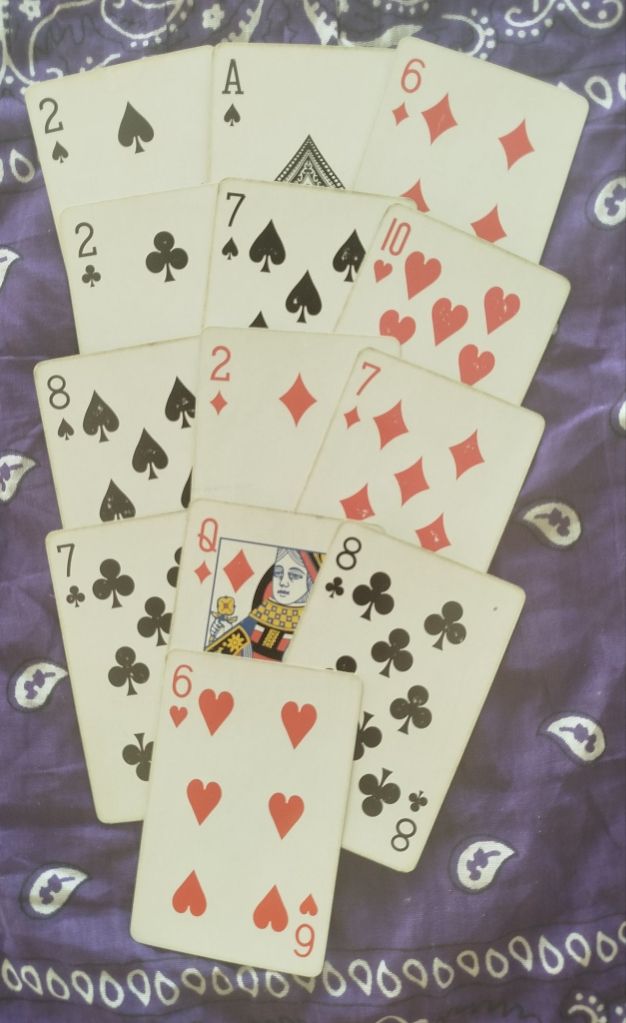
Here the question was if an unemployed man would get a job.
A career spread. Divination with playing cards.
The first thing I noticed is that the reading ends with a very positive combination of Queen of Diamonds, Eight of Clubs (work) and Six of Hearts (reconciliation/solution/adjustment). This bodes well, but the rest of the spread is more disastrous.
The first row shows that the subject is a thorn in the heart of the person (Two of Spades, Ace of Spades and the Six of Diamonds showing worry). Then we see that every step taken (Two of Clubs) to solve the issue has met with misfortune (Seven of Spades), meaning that the person has probably tried to find a job repeatedly but failed. This explains the very emotional cards in the first row, as well as the fact that the Happiness card (Ten of Hearts) is squeezed between Misfortune (Seven of Spades) and Tears (Eight of Spades). This is a whole unfortunate period unfolding in the person’s life.
There are some cards I am not quite sure about: the Two of Diamonds, Seven of Diamonds, Seven of Clubs. 2♦️ + 7♦️ can be a cheque or paper money, or projects about money. I asked the querent a couple of questions and it didn’t really help. I think a more general reading would be that, quite obviously, the lack of a job has impacted negatively (7♣️) his financial situation.
Then finally we have a woman who is either going to help him find a job or give him a job. If I had to bet I would say this is a female boss, since she shows up as a Diamond and not as a Heart. Either way, the period of misfortune is going to thankfully end.
I was asked by a visitor if I take into account the direction court cards look. The idea that the direction faced by court cards gives us important details is ingrained in several strands of card divination. In recent decades it has even been appropriated by certain scam artists (like Jodorowsky and his various imitators) when trying to sell the Tarot of Marseille as a deep metaphysical tool rather than for what it has always been–a cheap gaming deck, which, like all tarot decks, is as good for divination as it is for playing at the local inn.
But directionality does have its place in certain legitimate divination traditions. It just happens not to be part of mine. I do not take into account the way court cards face when reading playing cards, as I have never found it useful or revealing.
To me, each card is a place-holder for a cluster of certain ideas that are called to mind when the card appears: the Ace of Hearts is a place-holder of a cluster of ideas relating to the home or family, and similarly the Queen of Spades is a place-holder for a cluster of ideas relating to problematic women or issues traditionally associated with the negative side of womanhood. In this cluster of ideas there is nothing inherently left-looking or right-looking. That’s just the fantasy of whoever drew the picture.
What matters most to me is not so much where the card looks, but in what relationship it is with respect to the other cards. Suppose we have:
Q♣️ – 3♣️ – K♣️
Here we have a typical sequence of marriage. Even if the two court cards were swapped, it would change nothing. Now let’s take:
3♣️ – K♣️ – Q♣️
This positioning of the cards may or may not be the same as the previous one. In itself it is just another sequence of marriage. But if it makes sense within the context of the spread, it could indicate that he is the one who is more attached to the marriage, because he falls closer to the card that symbolizes union. However, let’s now look at this:
Q♦️ – 3♣️ – K♣️ – Q♣️
Here it is very important that the King of Clubs fell next to the union, because through it he is united to another woman. This sequence shows that the female querent is the lover (it would be even more clear if the 10♠️ fell between the two Club court cards, as it would show that the married man sees the female querent in secret).
In all this, where the court cards face is of no consequence, because what truly matters is their dynamic interplay. That being said, I know of playing card traditions where directionality is taken into account and I have nothing against it. It just happens not to be part of my toolkit.