Tag Archives: company of houses

Which House Is Next To Which?

In astrology, the contiguity of the houses is obvious, since the houses are usually arranged either in a square or in a circle, but always forming a loop. Thus, we have that the Ascendant is always squished between the second house and the twelfth; that it always opposes the seventh, and, if we go by whole sign houses, that it has fixed relationships with all the others (inconjunct, sextile, square or trine).

This is not the case in Geomancy, where the relationship between houses is controversial, at least nowadays. First off, it is not pacific that the houses of the Shield represent astrological houses, unless we operate an equivalence with astrology, as was done at least since Geomancy reached Europe.

Those coming to Geomancy through Michael Greer, as I did, are probably used seeing the geomantic houses as equivalent to astrological houses: once the Shield is turned into a square chart, the houses follow the same astrological pattern as in an astrological chart. Those coming to Geomancy through the Golden Dawn, though using a different way of assigning the mothers to the houses (the one popularized by Agrippa), still end up dealing with a 1:1 replica of an astrological chart.

However, the idea that the Shield chart and the astrological chart are separate ways of doing Geomancy seems to be relatively new. In most old books, only the Shield is shown, and even when the astrological format is followed, this is done more to show some of the similarities with astrology.

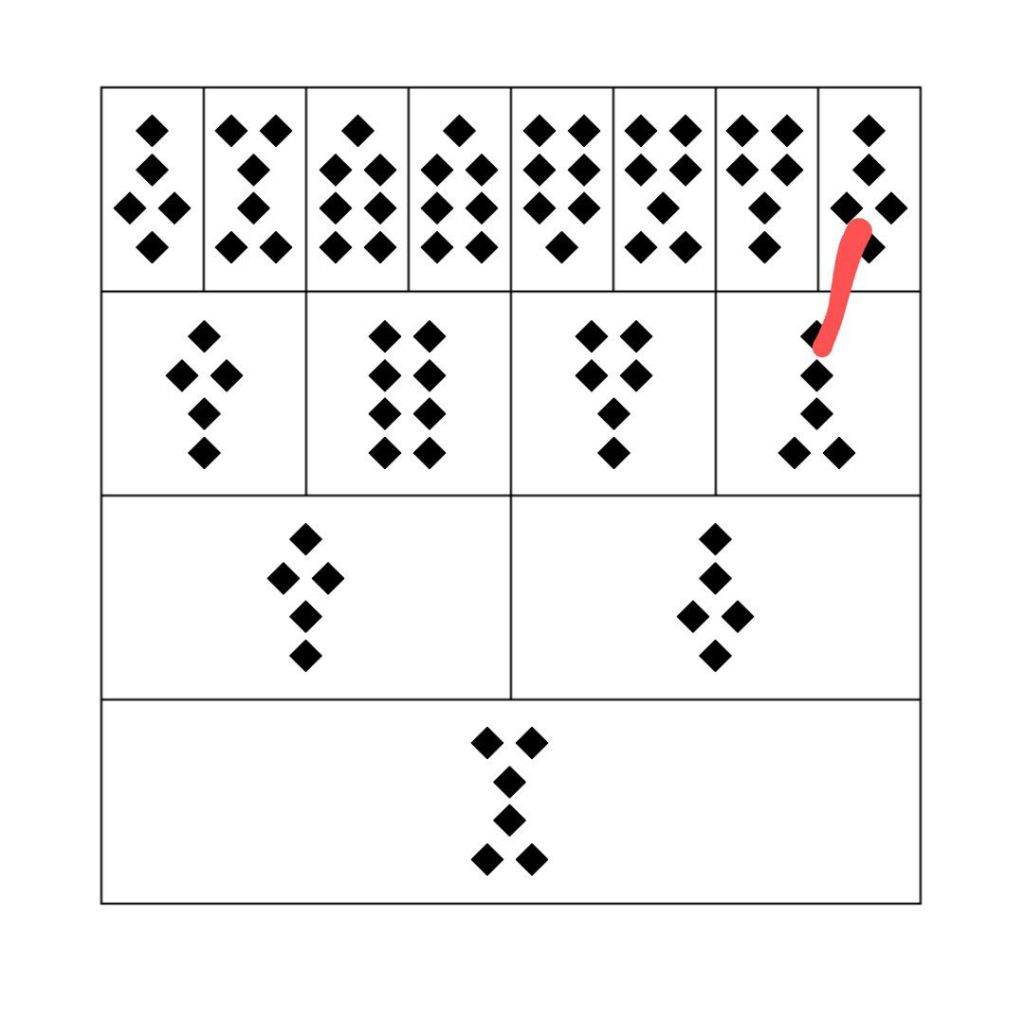
Secondly, which house is next to which is not always clear, and sometimes varies by author. In some sources it seems that only houses that are in company are considered to be next to each other: first and second, third and fourth (but not second and third), fifth and sixth (but not fourth and fifth) and so on pair by pair. This seems to follow the order in which the Shield chart is generated.
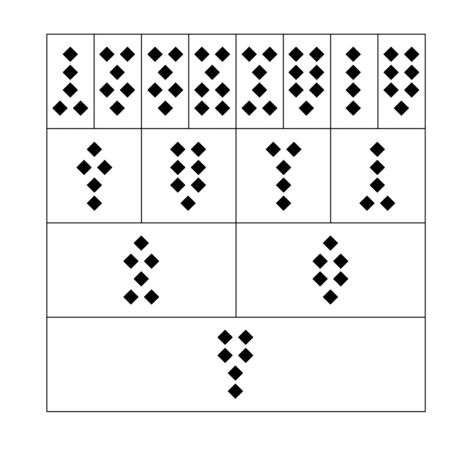
An example shield chart. App used: Simple Geomancy

In the example above, Tristitia in the first is next to Via in the second, and Tristitia in the third is next to Conjunctio in the fourth, but not to Via in the second. This is possibly because the first and second combine to form the ninth and the third and fourth combine to form the tenth, but the second and third never combine. This approach obviously restricts the possibilities of perfecting the chart, since most houses end up losing a possible spot next to them for other figures to move to.

Another approach is the one I found while translating Abano’s work. Here Abano started by saying (or rather, implying) that the twelfth house is not next to the first. Initially, I thought this was because he was following the arrangement for the company of houses I just discussed. Yet he gives other examples where he does not follow it, for instance by implying that the eighth and ninth house are next to each other, which would contradict the company of houses (the eighth is with the seventh, the ninth with the tenth).

Then, in another one of his examples, he implies that a figure in the tenth house is next to a figure in the third. This does not make sense from an astrological standpoint, but from a sheer geomantic standpoint it does: the third house DOES border with the tenth, since it co-generates it with the fourth. This would also explain why he doesn’t consider the twelfth house to be next to the first: not because they are not in company, but because they are not close on the Shield (they are, in fact, on opposite ends of the shield).

This approach of considering the houses close on the Shield as being next to each other is certainly different from anything I’ve seen, especially in contemporary geomancy, and if it weren’t for the fact that enough readings I’ve done confirmed to me that the twelfth house CAN perfect with the first, I would find Abano’s approach extremely appealing. Unfortunately, one of my rules when dealing with divination is that practice trumps theory.

Abano goes even further, implying that the Witnesses (and possibly even the Judge) are to be treated as regular houses. This, in itself, is not unique to him, but what I find unique is that he considers the Witnesses capable of perfecting the reading, for instance if the first figure moves to the tenth and the quesited’s figure moves to the right Witness, where, by Abano’s theory, the two figures touch.

Another consequence of Abano’s approach is that not all houses are created equal: the first house, for instance, only touches with the second and the ninth, while the tenth house must be considered to be next to the ninth, eleventh, third, fourth and to the right Witness.

A possible argument, at this point, could be that this approach makes certain readings too easy (like those involving the tenth house, as I just showed). Still, we should keep in mind 1. that divination reflects reality, so a no is a no, regardless of the system 2. secondly, that Abano doesn’t always consider merely the querent and quesited. Often he considers the whole chart, and sometimes he resolves certain questions by dividing the shield into two sides (the left and the right side) and seeing which side is stronger. This is a method he has from traditional astrology, where questions of contest or war are often decided in such manner.

Ultimately, which approach we choose depends on what works, which means that the only way is to try, record and compare with what actually ends up happening.

MQS

The Shield Chart is the Only Chart

One of the things newcomers to Geomancy learn first is the distinction between shield chart and astrological chart. This distinction has been popularized by Greer in his two books on Geomancy, but it doesn’t originate with him, though he is, to my limited knowledge, the first to insinuate that the shield chart is a beginner’s tool and the astrological chart a more advanced one (his attitude changes in his Golden Dawn writings, where he tries to purge astrology from geomancy and render the shield chart autonomous).

Agrippa (followed centuries later by the Golden Dawn) clearly has the astrological chart in mind, since he advocates putting the four Mothers in the four angles, the four Daughters in the four succedent houses and the four Nieces in the four cadent houses. This idea can only come to mind to someone who primarily uses the astrological square chart, or at least pictures the geomantic reading in those terms.

There are other authors, however, like Cattan, Abano and Alfakini (note that some attribute Alfakini’s work, found in the Fasciculus Geomanticus, to Gerard of Cremona) who clearly think of geomantic practice in terms of the shield chart alone. Not because they are unaware of the possible correspondence with the astrological houses, which all employ, nor because they never attempt to draw the square astrological chart (Christopher Cattan does it in the first part of his book), but because it is clear to them that the twelve astrological houses are meant as a technique to be used to draw meaning out of the shield chart and not as a new or different way of doing geomancy.

This can be seen from the fact that both Abano and Alfakini (and possibly also Cattan, but I have to study his text more closely) clearly consider the twelfth house NOT to be contiguous to the first, as it would be in the square chart. On the other hand, both consider the ninth house, which in an astrological square chart would have no relation to the first, to be contiguous to the first, just because in a shield chart it belongs to the same triplicity as the first and is close to it (see below)

Shield chart in Geomancy, with first and ninth house connected. App used: Simple Geomancy

In this chart, Puer in the first is close to Cauda in the ninth, but not to Puella in the twelfth.

This new way of looking at the chart is also making me reevaluate the doctrine of the company of houses, which I have somewhat disparaged in a previous article, and it might even shed light on the strange doctrine of the triplicities, which Greer makes much of but which is barely present in the old texts except in an apparently purely decorative sense. I will need to read the texts more closely and experiment.

What seems clear to me though is that there was never meant to be an astrological square chart, for many authors of the Medieval tradition, but rather merely an astrological lens in looking at the shield chart.

MQS

The Company of Houses in Geomancy

The more I delve into medieval geomancy manuscripts, the more I realize how different authors tended to put together different bundles of go-to techniques for interpreting the geomantic chart. There is always some overalap, yet not every author mentions every technique. The company of houses is one such technique. The book from Peter of Abano I am currently translating does not mention it: he tends to have a very trimmed down, minimalistic approach. However, the technique is found in other authors, so I’ll discuss it and leave it up to the reader to decide whether to experiment with it or not.

The Technique

The technique is quite simple. We start from the presupposition that the aim of a geomancy chart is to see whether the figure of the querent comes into contact with the figure of the quesited, as already discussed, because such contact, called perfection, signals the querent coming into possession of the thing quesited about (though there are exceptions, when the querent wishes to get rid of something, for instance.)

Usually, if at least one of the four modes of geomantic perfection discussed in my previous article does not show up in the chart, it’s game over. According to some authors, though, we can also see perfection in other ways, and this is where the Company of Houses comes in.

The twelve houses of a chart are said to be paired as follows: the first with the second; the third with the fourth; the fifth with the sixth; the seventh with the eighth; the ninth with the tenth; the eleventh with the twelfth. It is important to note that, although, say, the third house is next to the second, the second and the third house are not in company: only the first with the second and the third with the fourth.

Let us suppose I want to know whether I will meet with my sweetheart. In general, I would want the house of the querent (me, the first house) to perfect geomantically with the house of the quesited (my sweetheart, the seventh house). Let us furthermore suppose that this does not happen. According to the proponents of the Company of Houses, this negative testimony can be overruled.

We look at the house my house is accompanied with, in this case the second, or the house the quesited is accompanied with, i.e., the eighth. Let’s take the second house as an example. The first kind of company is if the figure in the second house is the same figure as that of the first; the second kind of company is if the figure in the second is ruled by the same planet as the figure in the first; the third kind of company is if the figure in the second is opposite the figure in the first; the final kind of company is if the figure in the second shares the same Fire line (e.g., Via and Puella, who both have a single fire line).

This figure is the oppositeOf this figure      
CaudaCaput
ConjunctioCarcer
PuellaPuer
AcquisitioAmissio
AlbusRubeus
TristitiaLaetitia
Fortuna MinorFortuna Major
PopulusVia
Opposite figures

When any of these four conditions is realized, the figure in the second house can act as a co-significator for the querent, and may perfect the chart in his stead.

Do you need this?

Frankly? No. You can do what you please, of course, but this reeks of “Methinks I saw mine lass turn into a dragon”, that is, how people used to come up with stuff to fill books with. Even worse, it reeks of last-ditch effort at wringing a “yes” out of a negative chart.

In some cases, what is called Company of Houses is already covered by the four regular modes of perfection. When it isn’t, it is, as far as I am concerned, at most a very, very, very weak testimony, so much so that I don’t take it into consideration. Of course one may come up with all sorts of philosophical excuses why this technique is important, but if you ask me, it feels like a useless complication of a simple divination system.

MQS