One thing that never ceases to amuse me is how so many of the people who try to sell courses in ‘wisdom’ or other metaphysical services, who pretend to have had access to the ultimate secrets of the universe, all seem obsessed with increasing the weight their own name carries. There they are, engaged in cock fights with one another, vying for the attention and legitimation of a small number of clapping seals.
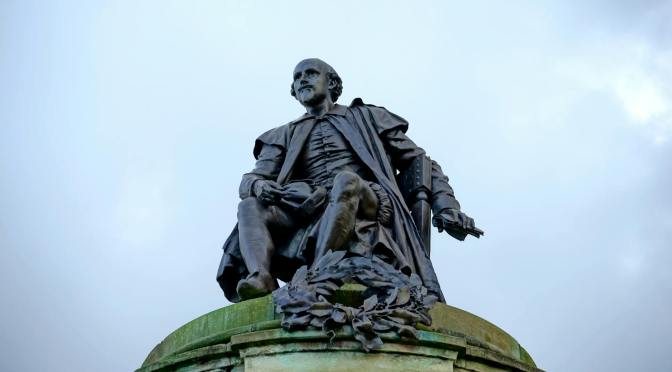
I’m not one to rain on other people’s parade, but if anyone reading this is on any sort of quest for ‘development’ (let’s use the shallow, non-descript term), you can safely forget fame. There is nothing wrong with wanting your merits recognized, but realize that you will be forgotten. Even the greatest of the greatest, the Shakespeare’s and the Einstein’s, will in the fullness of time be forgotten.
I understand the allure of an above-average level of recognition. I was raised by a mother who thought the only way for her to have a meaningful life was to birth and raise the next great genius of humanity. It took me years to distinguish my own aims from hers, to recognize that I am smart but not a genius, driven but not obsessed, and that my desire for recognition was actually hers. To this day I have to remind myself of that on a daily basis because the old education constantly rears its head within me.
I’m also not willing to reject humanity’s drive for recognition out of hand. I see that it has been the fuel behind some great accomplishments. But what I do find funny is that exactly the field that we might broadly speaking define as spirituality should be so full of egomaniacs of the shallowest, most recognizable sort.
As someone whose magical motto is ‘I shall neither lead nor follow’, I am not necessarily looking for a guru. But I know that there are people who look for a teacher, and in itself that is alright. But do be careful. Recognize them by their fruits. And some of their fruits include their actions. If they are screaming on socials at the top of their lungs, they might not be a great example to follow.
This is not to say they can’t have something to say or to teach. As a deeply flawed individual, I have learned a lot from deeply flawed individuals. But don’t put them on a pedestal. Don’t be a groupie. If you are on a path to wisdom, you cannot afford that.
When it comes to searching for philosophical-magical inspiration from pre-Christian times, many occultists look at Plotinus and Proclus, two of the most important among Plato’s successors. After Plato, they are the most noteworthy representatives of Platonism, and if Platonism is up your alley, as it is right up mine, you’ve probably looked into them.
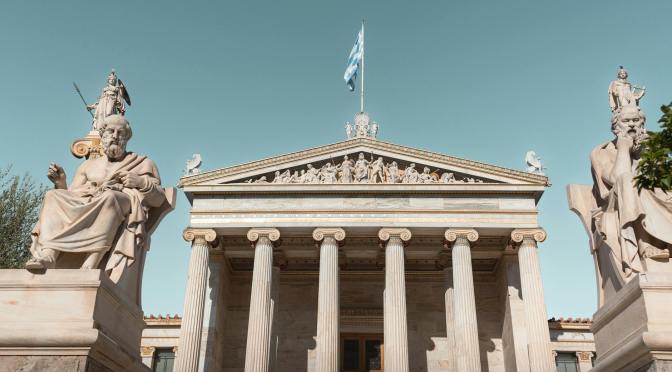
Proclus, who was one of Plotinus’ successors as head of the Academy, and was also the last noteworthy Platonist, is especially popular among those who seek inspiration for magical work. The reason is that, unlike Plotinus, Proclus did have a strong interest in religious and magical practices as well as being an important philosopher.
My personal preference, though, is Plotinus. I discovered his work, the Enneads, in my late teens and read it all throughout college. Unlike Proclus, Plotinus was a pure philosopher, with no interests outside of philosophy. Yet his writings have inspired many generations of theologians, occultists, hermeticians and devotees.
Writing at a time when Christianity and other early odd religious beliefs held sway, Plotinus managed to single-handedly revive philosophy as an exalted pursuit that connected the mind with the divine realm. Although he did not appear out of nowhere (his predecessors at the Academy had already laid the groundwork), his genius does tower over anything and anyone who lived in his time.
Plotinus had the aspiration to simply explain Plato’s work, and as a matter of fact we often find assertions in his writings that he is doing nothing more than saying what Plato has already said. But this is not true. His philosophy sought to coherently explain the whole of reality starting from the initial unity, and to trace the steps that mortals can take to re-experience that unity in their ascent back to the One. Although one could argue that the same aspiration is present in Plato, and especially in his esoteric doctrines, the two philosophers are still very much distinct, as is to be expected, considering how many centuries separate them.
From a philosophical standpoint, Proclus is not a cipher like some others of Plotinus’ successors. In fact, he was a gifted philosopher, who would have probably contributed much more, had he lived a couple of centuries earlier. Yet most of the innovations he introduced in the Platonic doctrine feel like complications rather than meaningful developments. His (over)zealous attempts at systematizing and consolidating the entire wisdom of the Greeks, from religion to philosophy to magic, may appear impressive at first, but soon one realizes that they are just the last ossification of the dying world of classical antiquity.
His systematic fervor, so appreciated by Hegel, finds a neat little place to everything that the Greeks had produced, yet at the cost of sucking them dry of their lymph. Everything is there–the gods, the beliefs, the art, the spirituality, the science of the time–yet only as an empty husk, as a relic with a tag underneath in an intellectual museum.
What many occultists today admire in Proclus is his commitment to theurgy. And from that standpoint, Proclus is definitely an important source of inspiration for us. Yet even that was a product of the crisis of the Greek worldview and of Proclus’ spiritual weakness (or rather, of the spiritual weakness that was typical of his time).
Plotinus, still firmly rooted in the Greek tradition, had no place for rituals. Union with the divine was certainly the aim of his philosophy, but his method was and remained that of philosophy, that is, pure inner moral, intellectual and spiritual cultivation. It’s not that he didn’t believe in the gods or in magic. He simply thought the method of philosophy was superior.
But by the time Proclus came to prominence, the old Greek confidence in the sole power of the human mind had crumbled under the attacks of early Christian or Christian-inspired irrationalism. Everywhere Proclus looked, people were scrambling for a source of salvation outside of themselves, because they felt small and powerless in an uncertain world. Come to think of it, we don’t live in much different times today.
Nothing that belongs to history can ever be retrieved and applied 1:1. But it is certainly permissible to look for inspiration. From a philosophical standpoint, there is no contest: Plotinus’ philosophy is still very much alive, if one knows how to get to its pulp, how to work with it, where to trim, where to add, where to change a part. By contrast, Proclus’ philosophy feels rigid, like a sculpted sarcophagus lid trying to capture the likeness of the dear departed.
From a magical standpoint, one would think that Proclus, given his interest in the topic, would have more to offer than the scoffing, eyebrow-raising Plotinus. Yet a look at Renaissance magic, heavily inspired by Plotinus’ philosophy, tells us otherwise. In fact, though Plotinus’ Enneads are a challenging text, the reader often comes across evocative bits full of beauty and wonder that may be easily adapted to prayer, ritual and other magical aims.
The fact is that Plotinus’ philosophy is a living thing that captures something universal, so it is a good framework for other pursuits, including occultism, while Proclus tried to supplement philosophy with magic because he had no confidence in it, so even his view of magic is remedial and somewhat desperate.
I do not mean to be overly critical of Proclus. He did what he had to, given the circumstances he found himself in. Plus, there is much in his work that can be salvaged, if one has the patience to wade through the abstractions. But what one cannot get from Proclus, or at least what I cannot get from him, is the sense that the cohesive picture he presents is still alive, whereas Plotinus’ system is considerably harder to recontruct, and less cohesive than Proclus’, but feels animated by a flame that was alive before him, was alive in him and will be alive forever.
Regardless of what one thinks of the church as an institution, it is hard not to be impressed by the sheer power and majesty of its rituals and customs. As a non-Christian, or rather as a post-Christian, I am still convinced that the Catholic mass, especially in its older forms, is one of the best-constructed rituals in the history of humanity (I was reminded of it during my dad’s funeral last year).
When I talk about power I am not talking about political or social power, which are undeniable. I’m talking about the power to create a ritualized experience of reality that mobilizes real forces.
This, I’ve noticed, is something many people are not willing to concede, partly out of spite toward the institution (which I may understand), partly as a result of the typical view underpinning modern esotericism that anything goes, and so the rituals of the church have no particular quality compared to the ones anyone could make up on the go, except maybe that traditional religious rituals, being older, have become more powerful through engramming.
Let us leave aside for now the memetic esoteric aspect, which however is certainly present, especially with how Leo XIV’s election has literally been turned into one of the biggest memeplexes I’ve seen in recent times.
I think that the fundamental misconception that is at the root of so much esoteric junk is that something becomes true simply by way of repetition. Yet, in spite of the dogma, reality is not merely what we make of it, as anyone who tried to fly off a skyscraper won’t be able to testify.
True: just like the small mind (the human mind) the great mind (the larger universe) is endowed with a certain level of plasticity. Just like the small brain can be impressed with habits, so can the great brain be impressed with certain forms or procedures that wouldn’t naturally arise. That’s because there is a difference between different gradations of reality: my reflection in the mirror is, from a physical standpoint, just as real as me, but in another sense, being completely dependent on the form of the mirror and my own form, it is subordinated and can be changed, to a degree.
But good rituals are not powerful simply because they have been repeated enough times. While repetition does engram rituals with an authentic foundation, if we take the time to study various magical traditions, we notice that they often utilize the ritual blueprint of the dominant religion of their area, but bending it in other directions.
The spiritual “aeon” within which they operate is their source of authentic power, because most major religions and philosophical currents do capture something of the universal life and its might. Authenticity is the keyword.
In addition, there may sometimes be certain powerful experiences that allow different traditions to fuse together into new ones (take for instance some of the magical traditions created by the descendants of African slaves converted to Christianity).
But the root of magic is always an authentic source of power, which is ultimately always the same, but which is channeled and shaped through the form of the religious or philosophical tradition, and regardless of the how corrupt or unlikeable the representatives of that tradition become. Lacking it, the most one can conjure, if anything at all, are some cheap tricks of lower esoteric jugglery.
This is also why it’s important to take the time to soak into the traditions we want to work with. Eclecticism is pure vanity if it is divorced from understanding. If I had a euro for everytime I saw someone on social media simply plucking formulas left and right, one from the magical papyri, one from esoteric Daoism and so on, without understanding their philosophical contours… Well I wouldn’t be able to buy much, because I’m not often on social media, but a nice coat would probably be within my price range.
It is probably one of the ironies of history that nowadays, many who become curious about Hermeticism bump into the Kybalion as their first text, either directly or indirectly through reelaborations of the same ideas. This in spite of the fact that the Kybalion has nothing to do with Hermeticism.
There are a couple of reasons for this: for one, because whoever wrote the Kybalion managed to fool some leading Occultists into believing it was an authentic text (most notably Paul Foster Case, but not only); for two, because the so called laws that are discussed in the text have become embedded into pop-alternative-spirituality since the late 60s. They are like invasive weeds that one can never truly get rid of.
Many people, even today, buy into the Kybalion in different ways. The first line of defense is asserting that it is an authentic text. As few people now can truly believe this in good faith, a more apparently reasonable approach has been to assert that the text is a forgery but its contents are an authentic distillation of Hermetic principles.
This is also demonstrably false. If you read any of the authors who are considered part of the Western philosophical or esoteric canon, you will find no similarity with the Kybalion’s ideas until, perhaps, well into American transcendentalism, unless you are desperate to force the texts to say what they don’t.
Certainly those ideas are not found in the Hermetica. True, there are superficial similarities of vocabulary, on occasion. For instance, you will often read the author(s) of the Hermetica ramble on about “the Mind”, so it would seem that the Kybalion’s emphasis on the mind would place it in the Hermetic tradition.
Too bad that the ancient concept of ‘mind’, as used in philosophical and magical texts, had almost nothing to do with the psychologized concepts of it that fall under the same name and that clearly show that the Kybalion is a modern text both in its authorship and in its content. In fact, it is pretty much a condensation of very fashionable late XIX century ideas, and little more beyond that.
Broadly speaking, no one with some level of historical awareness can believe the Kybalion is anything more than a rather straightforward summary of Victorian beliefs.
This is what leads another group of people to say that the Kybalion is neither an authentic text nor an authentically Hermetic text, but its principles are still valid. Of course you can believe what you please, but there is no necessity of believing in its “laws”, which are often either not laws at all or are simply superficial and partial observations about mental phenomena cast in a glamorous esoteric light. Nothing of what is described in that book is either self-evident, clearly logical or practically useful.
All in all there is nothing of special interest contained in the Kybalion. That it hasn’t been forgotten like the mass of esoteric booklets produced in the same period is largely due to the way it marketed itself and was marketed by others.
We talked about Karma and manifestation. Now let’s tackle reincarnation. Unlike manifestation, which is based on pure New Thought superstion and is indefensible from all standpoints, logical, philosophical, moral and practical, reincarnation does have a noble tradition behind it. Still, the magical inheritance of Victorian occultism has made it almost so as if reincarnation is another one of those compulsory beliefs that come with the Spiritual Outsider starter pack.
Reincarnation reentered Western occultism largely through the many misunterstandings of Eastern doctrines perpetuated by the Theosophists. Yet, contrary to what some may think, reincarnation is not an exclusively Eastern belief, and it is found in many parts of the world, including in pre-Christian (and sometimes even Christian) Europe. In fact, the idea of reincarnation is probably suggested to the mind by the observation of the cycles of nature, so it is, in a way, a somewhat valid inference, at least from an analogical standpoint.
But analogical inferences do not reality make. If that were the case, you could slap four wheels on your grandma and call her a Ferrari. Regardless of how reincarnation may be suggested to the mind of ancient civilizations, let us ask ourselves why it is the go-to belief of many self-styled independent thinkers.
I would submit that, once the average Westerner abandons the idea of Heaven and Hell as expoused by our main religions in order to approach the occult or magical worldview, they find themselves wanting for another destination for their great hereafter, so they grope around for the first purple-covered book in the local esoteric library, where they invariably find reelaborations of reelaborations of reelaborations of the same Victorian metaphysical dogmas, they mistake them for something new, refreshing and forward-looking that goes well with their new crystals and adopt it.
I don’t want to crap on reincarnation, because, as I will shortly discuss, I do believe in some version of it. What I want to drive across is that independent thinking starts with challenging dogmas, both the mainstream and the counter-mainstream ones.1 It is perfectly legitimate to examine, question and argue and to reach other conclusions, just as it is legitimate to adopt the belief in reincarnation, or some variant of it.
As for me, I would believe in reincarnation if I believed in individual souls. To me there is only one universal soul which is present as a whole within each part of existence. That soul definitely reincarnates. I may even go further and argue that, since this universal soul reincarnates continuously through endless amouts of beings, at some point some of the beings that are born are bound to have some semblance of continuity with some beings that have died before, and since the individual being who dies loses its ability to distinguish time t1 from time t2, from the standpoint of its individual perception its death and its rebirth are contiguous. Needless to say, there is nothing karmic or retributive about this view of reincarnation.
These are my two cents, very succinctly explained. Feel free to take them, leave them or add them to your collection of two cents.
MQS
Not to mention the ability to know when and how to question and when how not to. ↩︎
I had a chat with a reader of this blog about her experience ordering a spell on Etsy and being disappointed by the results. She asked me what are some pointers to follow in choosing a witch and how to know if he or she is good or lying, etc. Here are some red flags:
Their Mouth Is Moving
This may sound harsh, but by and large, actual magical practitioners who accept commissions from others don’t waste their time on social media blabbering about their own prowess. Blabbering is a marketing strategy, and as we’ll see in the next point, magic cannot have a market in the same way that toilet paper or grilled cheese can.
Actual magical practitioners may very well choose to record their experiences online, and you may even find the occasional one who offers some kind of magical service, but you’ll not find them screeching at others on socials or competing with zeal in the attention economy.
The practice of occultism, whether it is folk occultism or “high” occultism (and I don’t believe in this distinction) changes people. If they are clearly worse than you would be if you were in their position, they haven’t changed, so they don’t practice magic.
Taking Orders Like A Pizza Place
Magic is a preindustrial, pre-assembly line thing. A magical work is a complex convergence of personal and cosmic aspects and it cannot be done over and over with no end in sight. Finding ads that say something to the effect of “Make him come back to you, last 5 spells available” is an immediate red flag. An actual practitioner cannot seriously follow more than a very small handful of operations at a given time.
Of all parts of occultism and magic, divination is probably the more marketable, because one can perform it more freely and continuously, but even divination has its limits: if the diviner is not feeling at peace or concentrated, or if their are feeling tired, it is perfectly futile to fan out the cards. If something goes wrong during the reading, it is best to postpone the session. This may inconvenience the modern customer who expects results, but it is what it is.
There’s No Good And Evil, Harry
This is an exceedingly fashionable belief, because it fulfills a wish, on many people’s part, to believe that it is possible to obtain the results of evil actions while remaining neutral and respectable.
There is no need to be an old-fashioned, moralistic curmudgeon in order to understand that good and evil very much exist. Good is what fosters life and growth, evil is what stands in their way. In astrology, Saturn is not evil because he is satanic in the 80s satanic panic sense, but because he stunts, corrupts, breaks down, makes suffer, stands between us and our will, and no amount of whitewashing it as “the planet of working out karma” can change this fact. Jupiter is not good because he is the astrological equivalent of Santa, but because he nourishes and protects.
Many in the magical community choose to believe that everything is what you make of it and it all depends on your intention. This is the inheritance of the excesses of Crowleyanism.
In reality, the difference between white and dark magic is quite obvious: dark magic is a magic of command. As such, it is almost always illusory, in that the recoil for it makes it always clear that no true command over the summoned force is possible. And there HAS to be a recoil (although it is possible to discharge it on someone else). But dark magic gives very quick results when worked properly.
White magic doesn’t work by command but by petition, which is an esoteric extension of prayer, it is slower, safer and less spectacular in its action, because it doesn’t subvert the order of things, but rather harmonizes the target with it so that the best that can be obtained by a situation is obtained. But the best that can be obtained is not always what the target wants. Sometimes all that can be obtained is peace of mind. And that’s not nothing.
Furthermore, white magic doesn’t bend another’s will. You can petition an angel or a God-name to get you back with your ex all you want, that force will not intervene, and if you do get back with your ex it’s because it was on your path already. Dark magic is always a perversion of the natural path, which is what originates the imbalance that causes the recoil. It is also what gets you the quick hit.
Light and Love
This has to be the most ironic part of it. You always see fake magical practitioners spewing platitudes about light, positive vibes, manifesting abundance and all that nonsense, when what they want is often to bend other people’s autonomy, either directly (“let him come back to me”) or indirectly (“let the product I’m selling explode on the market”, which means forcing other people to like it), and this is the opposite of light and love.
Magic is made of light and love. It is also made of shit and blood and broken bones. And it is also made of all the very mundane experiences that sit on the continuum between light and love on one end and shit and blood on the other. Talking about just one side of the experience is intellectually dishonest, especially since it is aimed at winning over customers.
Witchy Aesthetics
This is the last point I’m going to talk about, but it alone would be enough to bury 99% of magical practitioners found online. Actual magic is not pleasing to the eye. It doesn’t have the aesthetic kick that the average girlypop found on TikTok or Tumblr is looking for to fuel the fantasy of being not-like-other-girls. It is not a bunch of symbols thrown together with endless amounts of colored candles, pentagrams and store-bought incense. Broadly speaking, the more the pictures you find look like what you would expect magic to look based on movies, the more you can be sure it isn’t going to have any effect.
Pretty much every card in the Vera Sibilla has some connection with spirituality and occultism, especially when that’s the topic of the question. However, some cards are more pronounced in the kind of indications they give. The unfortunate thing about this sort of topics is that people tend to use them as a substitute for real life. So, for instance, once someone wrote that the Queen of Clubs can indicate a psychic vampire, and then everyone started reading that card primarily as that for a while (becuase, of course, you are such a wonderful person that everyone wants to leech off of your energy). In reality, unless the question is about spiritual or occult topics, such interpretations are best kept rare, and even then, the surrounding cards need to be kept in mind.
Ace of Hearts – The Conversation (Conversazione)
This is not an especially esoteric or spiritual card, but I’ll talk about it to show how easy it can be to expand a card’s regular meaning to cover those topics. The Conversation card is about words and people meeting or living together. In a spiritual or esoteric reading it can therefore indicate prayers (communion with the divine), exorcisms or spells (the spiritual or esoteric use of words). It can also indicate a group of people operating a ritual or praying together.
Four of Hearts – Love (Amore)
Again, not an especially esoteric card, but it is one of the possible cards indicating the soul (winged, heart-related). It can also indicate that one has the otherworldly tendency to attract certain types of happenings into their life. This has nothing to do with the law of attraction, but merely a statement of the fact that certain people simply tend to end up in specific situations.
Seven of Hearts – The Scholar (Letterato)
The Scholar is connected with the constructive use of the mind. It can therefore indicate plans, including esoteric plans, mostly tending to be good ones. It can also show the divine plan, providence etc.
Eight of Hearts – Hope (Speranza)
The Hope card is the main significator of faith, though not necessarily religious faith. It is heavily indicative of our psychic connection with the divine. It is also involved in those situations where the person has prophetic dreams, psychic powers and all those abilities witches on WitchTok pretend to have but really don’t. Reversed, it can indicate atheism (lack of hope in the divine) or, with very evil cards, it can indicate negative faith systems, such as satanism (we’re talking O9A, not the coastal post-crowleyan, occult-flavored performance art that passes itself off as satansim).
Nine of Hearts – Faithfulness (Fedeltà)
The Faithfulness card is one of great protection and support, whether from worldly friends or from otherworldly ones. As such, it can indicate angels (the Messenger is another possible card for angels, but in a more neutral sense). More commonly, it can indicate devotion to a belief system.
King of Hearts – The Gentleman (Gran Signore)
Obviously, God is the esoteric and spiritual gentleman par excellence, and this is usually what this card can represent. It indicates great protection from the divine (the female counterpart would be the Maiden for the Virgin Mary, or the Girlfriend for a female saint or goddess).
Two of Clubs – The Peacock (Pavone)
The Peacock is one of the cards we look for in sequences about magic and spirituality. When upright, it represents the god-power which unfolds at its own pace, like the peacock’s tail, creating opportunity for marvel and salvation. Esoterically, it shows magic in a neutral to positive sense. It represents oaths and religious vows. Reversed, it is the card of the devil (the one who was doomed by his pride), demons and dark magic.
Three of Clubs Reversed – The Journey (Viaggio)
When reversed, the Journey has a specific connection with white magic in its ability to interrupt any negative trend, harmonizing us with our path in life.
Five of Clubs – Fortune (Fortuna)
In itself the Five of Clubs is the card of destiny, of one’s path through life, whether good or bad. It can represent protection, though not necessarily divine, from magical forces. It can be present when a magical attack is aimed at modifying a person’s natural destiny.
Four of Diamonds – Falsehood (Falsità)
The Falsehood card is the card of negativity in all contexts. Esoterically, it shows negativity in the person’s aura and/or the evil eye, but it usually doesn’t represent heavy black magic.
Six of Diamonds – Thought (Pensiero)
Our thought is where past, present and future coincide and gather in the form of memories, plans and inclinations. It can give us hint as to the person’s inner life, their religious beliefs, their inner and esoteric talent, etc. Reversed, in addition to indicating negative thoughts, it can have a connection with subonsciousness and the powers that are buried within it, or with thought-forms and spirits.
Three of Spades – The Widower (Vedovo)
The Widower is one of the primary culprits we look for when discussing rituals, whether religious or magical. This is especially true when the card is reversed. It is also the card of graveyards and graveyard magic, and it can indicate sects (mostly in a negative sense).
Five of Spades – Death (Morte)
The Death card is always very incisive. It can talk about the person’s aura being out of wack, and it is one of the possible cards representing the summoning of dark forces, especially when reversed.
Eight of Spades – Desperation and Jealousy (Disperato per Gelosia)
The Eight of Spades is strongly connected with magical attacks, whether upright or reversed. It is indicative of demonic presences or dealing with dark forces in a negative sence. Being the card of envy, it can indicate the ill will of the dark magician. Spiritually, it can herald a crisis of faith or beliefs, either leading to loss of faith or to conversion.
Nine of Spades – The Prison (Prigione)
On a positive note, it can indicate the taking of religious vows (which bind us). More commonly it indicates feelings of guilt or feeling limited. Magically it represents the creation of magical bonds.
Ten of Spades – The Soldier (Militare)
Another strongly esoteric card, the Soldier is the card of the night, and therefore of the occult (which means that which is hidden). Because it is the card of attacks, esoterically it can show the tackling of the problem, or more commonly the psychic attack.
King of Spades – The Priest (Sacerdote)
Just like the two Enemies, the Priest can represent a magician. However, it usually signifies the magus in a more neutral and high sense, unless the card is reversed. Spiritually it can indicate spiritual institutions and religions, but also divine justice.
One of the great myths about magical tools is that magic has always used four of them: the wand, the cup, the sword and the pentacle. This is actually a rather modern consolidation of the magician’s toolkit. Throughout history (and even more throughout geography) many different implements have been preferred. Especially pentacles, at least in the modern understanding of them, seem to be quite new.
There is nothing wrong with newness and innovation, but it is good to know that something is new. Some traditions of magic didn’t even contemplate the use of tools, and were wholly talismanic in nature, while there are strands of folk magic (like some traditions of Italian witchcraft) that use many everyday items as tools (chairs, dishes, needles, dolls, brooms, etc.)
One recent-ish idea about tools that has essentially crystallized into a dogma is that the implements are simply extensions of the practitioner. This is largely a consequence of our current egocentric view of magic and of the world, and its helpfulness escapes me. I ain’t crap. Why should an extension of the crap I ain’t be of any value?
I also started out with that idea, partly because it was the most readily available to me, partly because it was taught to me by some of my mentors. But the more I study, practice and move forward, the less I see the implements as tools and the more I see them as thresholds on otherness.
Otherness is the forgotten component of our magical worldview. The idea of tools as extensions of the magus shrinks otherness by inflating the role of the magus’ self through those extensions.
But quite on the contrary, tools as thresholds become meeting spaces between self and other, between the magus’ consciousness and the powers he works with. In this sense they are also filters through which those powers come to us in ways that are fruitful and measured.
The magus himself is a good magus in as much as he becomes a (discerning, filtering) threshold, and in this sense, one’s magical consciousness is one’s most important tool. This is not to say, as is often repeated today, that our consciousness changes the way the universe is.
But the way we approach the universe does change the results we get, simply because it changes the shape our filtering system, of our inner threshold. It is akin to an app or computer program: software programs allow us to use certain functionalities of the computer that would be inaccessible by using another software. If you keep trying to write an email on the pinball minigame you’re in for a world of problems.
I always bring up poor Rachel Pollack whenever I need to give a paradigmatic example of someone who utterly ruined tarot divination by turning it into a heap of psychobabble, though in reality the list is quite long. At some point, it was decided that 1) divination could not be a serious undertaking in an age of reason, and 2) we still wanted to think our illustrious predecessors who bought into it were not poor saps. The compromise therefore was that there was something deeper to divination, and so divination had to be reassessed and purged in accordance to this new ideology of ‘depth’ or *shudders* ‘wisdom’.
The reality is that in the “I’m too special for religion but wouldn’t it be fun if there was something more to life” community, where most people tend to think exactly alike in spite of how different they think they are, depth is a misunderstood concept.
Something is considered deep if it will allow them to talk themselves or others silly while giving them plenty of safe thrills and predictable a-ha moments by hurling around the latest buzzwords (try finding a tarot reader who doesn’t talk about narcissists, gaslighting or inner truth).
Thankfully, the tarot is not deep, just like playing cards–and tarot cards ARE playing cards–or tea leaves or dice or geomantic figures are not deep, which is what makes them marvellous divination tools. Even astrology is not deep by today’s standards, if by astrology we mean astrology in its traditional forms (Hellenistic, medieval, Chinese, etc.)
But the depth that is found in divination, just like the depth that is found in all other branches of magic, has nothing to do with finding abstract meanings or deep doctrines that move us beyond real life. Although there can be space of deep philosophy, the real depth is found in the shift in our consciousness of existence and of our place in it as we practice it concretely and see its concrete impact on real life.
I will forever be grateful to my GD supervisor, who always insisted that I practice tarot in real life and not as a mere metaphysical plaything (people will be surprised by how concrete the GD tarot system is, in spite of its metaphysical underpinnings). Traditionally, in magical practice, people are advised on how to recognize when they have established contact with an entity other than themselves.
The risk is sometimes that of contacting parasites masquerading as great beings, but the even higher (and more common) risk is that of simply contacting one’s ego. Psychic onanism IS a thing, and a much worse vice than the physical counterpart.
This is what limits, in my view, the potential for tarot as a tool for self-reflection or meditation or scrying. Granted, most symbols can be used as doorways for these aims, and therefore also the tarot. There is some value to it, especially when done under supervision or with the proper frame of mind. There is also some value in allowing symbols to bring certain aspects of oneself to the surface, if one has the necessary detachment.
Wisdom is a great thing, and it is something that can be pursued on the path of magic, including divination. But more often than not, those who are too good for simple divination and want to discover the “deeper layers” of the tool simply end up massaging the shallower parts of their own psyche without realizing it, and often even thinking they are making some kind of psychological or occult progress when in fact they are simply digging themselves a deeper hole in their own ego.
Often people associate meditation with the quest for aha-moments. There is more than one kind of meditation. While realizations can come from any kind, the one that tends to produce them is discursive meditation, where attention is fixed on a symbol, image, phrase, prayer or problem.
Meditation, understood as simply sitting somewhere, catching one’s attention in the act of wandering off and bringing it back, does not necessarily entail the reaching of any conclusion on any particular subject, although it can foster clarity, which is conducive of finding solutions.
Many occult schools and spiritual organizations recommend meditation, and even though I am no longer part of any of them at the current stage, I think it is for good reason. The stilling of the “monkey mind” before ritual work is only the most obvious of the benefits of meditating.
Deeper than that is the fact that meditation is not a state we get into. It is a state we get out of and must return to consciously. Our attention’s natural place is here, next to us. Our attention is like a blade: it belongs sheathed on our belt, ready for action when needed. Instead, we spend our time swinging it about maniacally, blunting it by hitting it against anything that crosses our path.
There is tremendous power in keeping our attention by ourselves, in the present moment. Here and now, being and changing coincide one with the other, and together they coincide the the state of initial void from which the power needed for magic comes.
All too often I hear phrases like “you are the magic” or “the power comes from you.” Although these are supposed to be empowering statements and they mean well, they are founded on an egocentric misunderstanding typical of our age, where old ideas that would otherwise be dismissed as superstitions, like magic, seek to survive by psychologizing themselves.1
But Magic is the art of creating vessels for spiritual forces to dwell in. We, too, are vessels. Magic comes through us, not from us. In meditation, with our attention sheathed by our side, we slowly make room from something other than our ego to incarnate through us.
MQS
This is not meant to discredit psychological work, which can and often is necessary in our line of work. But psychology is not spirituality or occultism. ↩︎