Tag Archives: carte piacentine

The Table – A Deep Dive Into Cartomancy

You’ve got to appreciate how folk cartomancy takes the objects of our everyday life and turns them into means for predicting the future. This is, after all, probably how cartomancy started: people needing to know what tomorrow would bring adapting the symbolism of the decks to which they had access (tarot, playing cards and later oracle cards) to the objects and situations that constituted their daily lives and their symbolic interpretation.

From a philosophical perspective this shows great acumen and observational ability on their part. They may not have had a piece of paper that qualified them to count angels dancing on pinheads, but they were possessed of great perception–which is only natural, considering that on their perception depended their survival.

From an occult standpoint, it further indicates that they were perfectly acquainted with the power of symbols to connect the inner and outer realms, which is the foundation of all forms of magic.

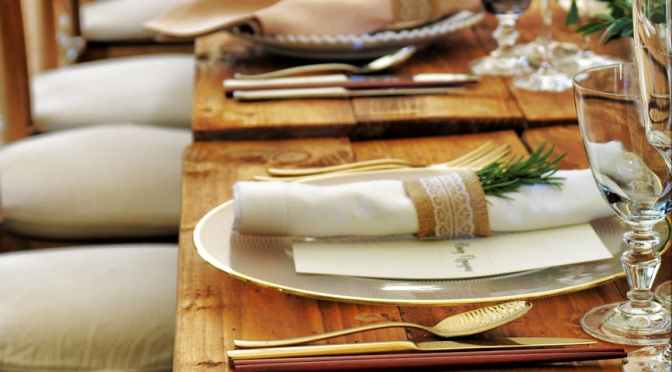
One of the recurring symbols of folk cartomancy is the table. In the system of cartomancy with playing cards that I was taught, this corresponds to the Four of Clubs, certainly due to the squarish (Four) and social (Clubs) nature of the card. The Four of Clubs is chiefly the card of words and talks, but it extends to all contacts we develop with others: we can sit at the table with them and talk, negotiate, have fun, etc.

In the Vera Sibilla, we must distinguish between the table in general and the festive table. The former is assigned to the Ace of Hearts, the Conversation. This is also the card of words and talks, but being the Ace of Hearts it is also representative of your family or the people you live with. Furthermore, the table here can also be seen as the table you eat at, due to the connection of the card with the hearth and with everything to do with your mouth and throat. The festive table is more a prerogative of the Nine of Clubs, which is connected with celebrations, fun and banquets.

The first written record of the cartomantic concept of the table is found in the earliest recorded system of reading the Bolognese tarot with 35 cards: here the table is given to the Ace of Coins. This is a meaning that still exists in all traditions I am aware of, although the card has also doubled down as the card of big money in the 45-card system I know, the card of official documents and letters for Germana Tartari and of work for Ingallati.

I am unclear as to why the Ace of Coins was chosen, but I guess the round shape of the heavily stylized coin could be seen as a round table or as a centerpiece. Broadly, the table in the Bolognese tradition is seen as the place of direct contact with others, of conviviality and of business transactions. The card also symbolizes ‘l’ora di tavola’, the time of day you sit at the table, usually lunch time and therefore, more generally, the day as opposed to the night.

The second earliest recording of the symbol of the table comes from Etteilla, whose source attributed it to the Ace of Cups. Here Etteilla and his students tried to extend the meaning of the table beyond the common experience of it by playing on the other meanings of the word ‘table’, so that for instance, the Ace of Hearts for him can also be the table of laws (as in, the one Moses received).

I am unaware of whether the Lenormand or Kipper traditions contemplate the symbolism of the table, though the symbol is not obviously represented in the cards. What I do know is that the symbol is also present in most Italian playing card system, so that I am aware of at least one where the Four of Coins indicates the table.

MQS

The Door Knockers – A Deep Dive into Italian Cartomancy

In almost all cartomancy systems, Italian or otherwise, the Ace of Hearts/Cups is the house. Here the Sibilla is an exception, since it relegates the House to the Two of Hearts, although the Ace of Hearts still has connections to the idea of family and people living together. In the second most widespread Sibilla deck in Italy, which is the Sibilla Regionale, which uses the suits of the Neapolitan cards, the Ace of Cups is once again the house.

One thing I have so far never found in non-Italian systems, which on the contrary is very widespread in Italy, is the concept of the door knockers, also known as ‘close to home’. This is a meaning that is found in many regional Italian cartomancy systems, and keep in mind that almost everything in Italy is regional, since regions have a much older history as separate states than Italy itself, if we discount the Roman Empire.

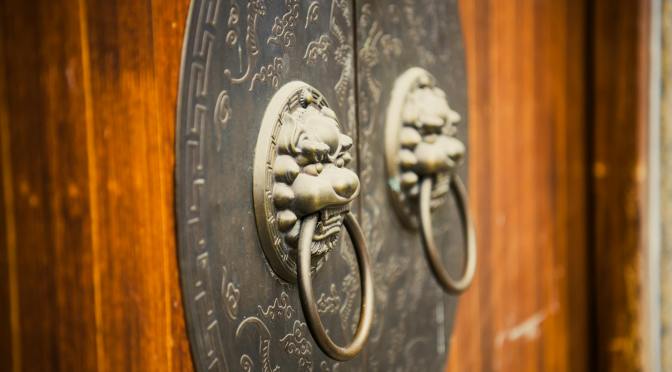
When I was taught to read playing cards, my teacher told me that the Two of Hearts is “al martel di porta”, knocking at the door. This refers to the way old house doors are made in many European countries, including Italy, where door knockers were used back when you couldn’t ring at the door. At least in Italy door knockers are still very much en vogue, though mostly as a decorative element.

The idea of the Two of Hearts as “the door knockers” is a reference to the fact that door knockers usually come in twos and to the fact that the Two of Hearts comes right after the Ace, which is the house, so that the Two is quite literally close to the home.

This meaning is also found in many systems for reading Piacentine cards, where the Two of Cups takes on that meaning (in some other systems this meaning is given to the Two of Wands) as well as in the Bolognese Tarot, where it’s the Ace of Swords that depicts it, due to the odd shape of the picture.

In some systems I am aware of, there are two distinct cards: the door knockers and the roof of the house. This is true for some systems employing Piacentine cards, where the Two of Cups is the door knockers and the Four of Wands is the roof.

This distinction is also found in the Bolognese tarot, where the Ace of Swords depicts the door knockers and the Seven of Cups the roof of the house. In the oldest surviving system for reading the Bolognese tarot, which dates back to before the French revolution (I talk about it here), the Knight of Wands indicated the door knockers and the Ten of Cups the roof of the house. Clearly, therefore, this symbolism is deeply ingrained in Italian cartomancy.

According to the person who taught me the 45-card system of Bolognese tarot, the Ace of Swords, the door knockers, tends to show something close to home in a temporal sense (about to happen) whereas the Seven of Cups, the roof, is more connected to everyday life, to our close environment and to the protection of people surrounding us, as well as to the family in a more extended sense. Germana Tartari, who initiated me to the 50-card system, which she was taught by her grandmother and by some of her grandmother’s friends, uses the Nine of Cups as ‘the staircase to the house‘, again mostly in a temporal sense as something about to happen.

On the other hand, in the system for reading playing cards that I was taught, the Two of Hearts covers both possibilities: it indicates something about to knock at the door or it can show family situations, people who are close to us etc.

I have never found this symbolism in other non-Italian systems. If you did, feel free to drop me a line, as it would be very interesting. Manuel Arcuri, an American reader who was taught to read playing cards by his Italian grandmother, says somewhere that his grandmother called the Two of Hearts “l’attesa”, which means waiting or expectation, as of something about to happen. He doesn’t mention door knockers though.

Furthermore, many card reading systems I have read about assign the meaning of “within two weeks” to the Two of Hearts, which once again gives us the idea of something about to knock at the door. Interestingly, Regina Russell‘s playing card system uses the Two of Hearts to indicate excitement for something that is about to happen, expectation and even pregnancy (expecting a child).

MQS