I mentioned around a year ago that I was learning Chinese. I still am, but after four months spent on the wrong side of mental health I decided I needed an easy win, and that’s not Chinese.
So I picked up Dutch, which, since I’m proficient in English and German, is proving to be remarkably easy. Think of it as German lite with extensive English overlaps. The grammar is essentially the same as that of German, but heavily simplified, and around 80% of the vocabulary is covered by English and German together, plus the occasional Latin influence (which is not a problem, since I’m Italian). The main challenge is pronunciation, and with it listening comprehension, but that will come with time.
When learning a foreign language it’s always a good thing to explore one’s interests through the lens of that language, and in my case that includes cooking. In short: I didn’t realize that Dutch sweets and cakes were so delicious! Within a few weeks of finishing the first Dutch course I found myself pulling up recipe after recipe from my bookmarks, until I settled on my first experiment.
My new love interest is called boterkoek, literally butter cake. The taste of the raw dough is not too dissimilar from that of Scottish shortbread, another favorite of mine. Like shortbread, the taste is heavily influenced by the butter (you don’t say) and by the interplay of sugar and the oh-so-important little teaspoon of salt.
One of the differences lies in the type of sugar that is used. As far as I know, shortbread requires regular sugar, while boterkoek, just like many other Dutch cakes and cookies, utilizes something called basterdsuiker. I am not sure what it is, exactly, but it is almost completely impossible to come by outside of Belgium and the Netherlands, so I made it myself. The result is akin to a wettish, aromatic, caramel-like sugar.
The recipe I followed is this one, but since it’s in Dutch I’ll describe what I did.
To make the “bastard sugar” I poured 250g of sugar (8.8 oz) into a bowl and added 2.5 tablespoons of sugar beet syrup. I believe most other kinds of syrups will do, such as agave syrup or molasses. The recipe says you should be working with a fork to mix the two together, but I lost my patience after a few seconds and resorted to brute force with my hands. So it only took a minute to make the sugar and licking my hands at the end was extra fun.
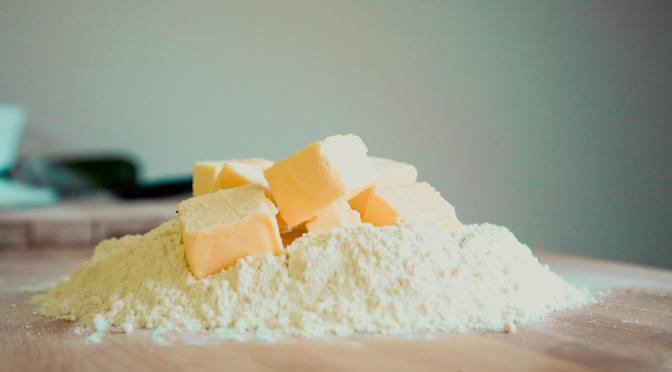
For the cake, I mixed the basterdsuiker with 300g of all purpose flour (10.5 oz). Then I cut 250g of cold butter (8.8 oz) into small chunks, added it to the mix together with a good deal of lemon zest and 1.5 teaspoons of salt. Don’t skimp on the salt: it’s what creates the contrast with the sugar. I whisked a large egg and added a little more than half of it to the dough, then kneaded all together by hand. The final texture should be firm and sticky, not too dissimilar from raw cookie dough or shortcrust, but more moist than shortcrust.
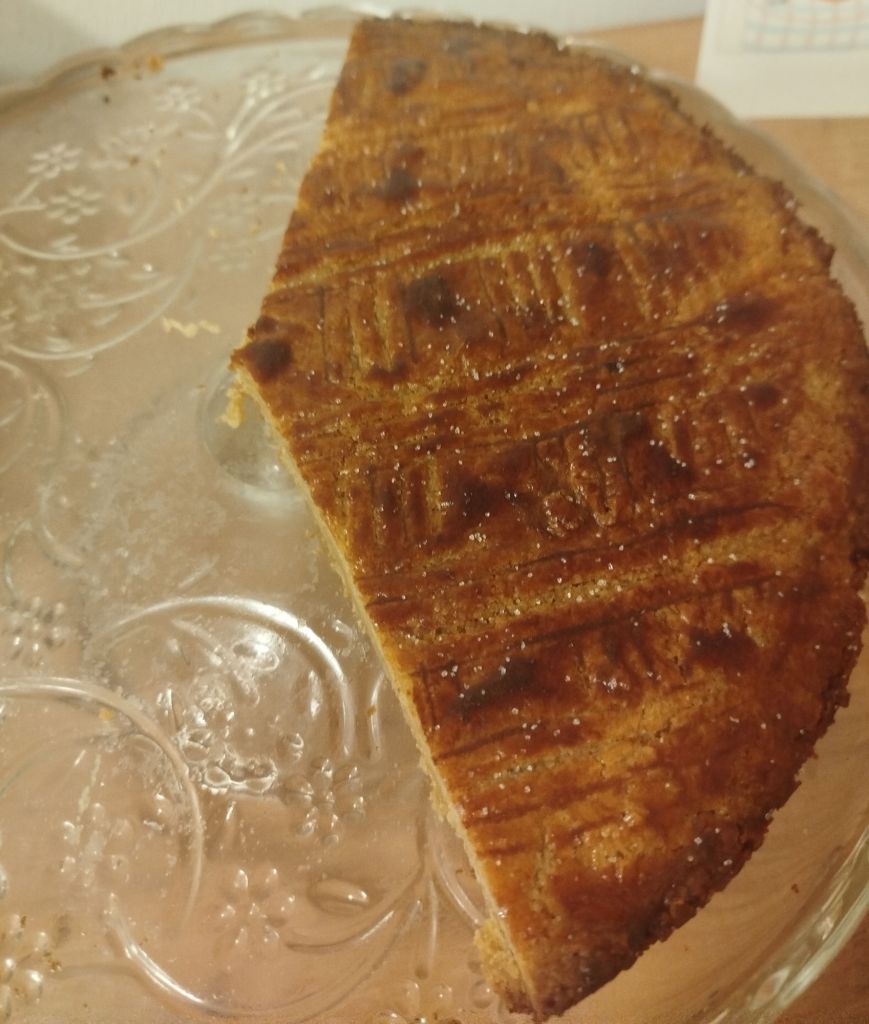
I pressed the dough into a form lined with parchment, making sure to spread it evenly, then brushed the surface with the rest of the beaten egg and used a fork to create the design you see in the picture, and that you probably see better in the recipe I linked. Then off in the oven it went, at 180°C (355 Fahrenheit) for a little under 25 minutes (the recipe calls for 30 minutes, but my oven pulls no punches).
MQS
