Tag Archives: Astrological House Attributes

Robert Fludd’s Geomancy – Book II Pt. 7

Previous / Back to Index / Next

Fludd discusses the signification of a figure springing from one house to another.

Of the signification of the 16 figures, when they duplicate in a question, that is, when similar figures are found in different houses, such as two Via, two Populus, etc.1

The figure in the first house means, when it is duplicated in the following houses:
In the Second, especially if it fortunate and fixed, and so the opposite, which is valid for all other houses.2
In the Third, good situation between relatives, brothers, sisters or neighbors.
In the Fourth, it is a bad mutation3 but not excessively so, unless the figure is Cauda Draconis.
In the Fifth, mirth, vivacious and gluttonous companions, new clothes, music, melodies, antique things, good according to the mind’s opinion,4 so that one couldn’t wish things to be better, unless the figure is Cauda Draconis.
In the Sixth, sickness, tribulations, fears.
In the Seventh, fearful things due armies or evil women; good [signification], unless Cauda or Via are there, which denote all evil in this house, unless a question has been made for a gathering, or for marriages and enemies, for otherwise they show danger.
In the Eighth, evil, great wrath or death or injury, loss, hurtful words, evil tribulations, but if the figure is good, it signifies the acquisition of the inheritances of the dead.
In the Ninth, something good, a firm and stable change to acquire some thing for another,5 and to negotiate some religious business or of the Church, or with ecclesiastical men or people, or with messengers or those who return from a journey, unless Cauda and Rubeus come up in a question made for a journey.
In the Tenth, all good, so that the thing cannot be better, and especially for the acquisition of honor and dignity, unless Cauda or Rubeus are there.
In the Eleventh, good, so that it is not better in the question propounded; for it signifies hope, a good friend, especially if it is Major, Via or Acquisitio.
In the Twelfth, the querent will fall into some tribulation, or a serious illness, or the loss of some thing, or defiance from enemies; nor can the thing be worse if the figure is Cauda.

The figure in the second house means, when it is duplicated in the following houses:
in the Third, gain from parents, brothers, sisters or neighbors, if the figures are good, but if bad, the opposite.
In the Fourth, what the querent thinks of gaining from his father, or from some great lord [he will get], if the figure is good; if bad, [he won’t get them].
In the Fifth, what the querent thinks of gaining from food, or clothes, or news that will come to him with letters, or loss by fire.6
In the Sixth, future illness of the family, or some loss, or fear, or great tribulation, or disease, or some evil thing.
In the Seventh, marriage, loss from a woman, great enmity for the querent, or robbery, or the thoughts of women about lust, or quarrels, threatening words, change from place to place.
In the Eighth, the return of an absent person, or of some other member of the family.
In the Ninth, gain for the querent, religious or ecclesiastical, or a priest, or some other similar thing.
In the Tenth, the Necromantic arts,7 or that the querent will win the love of some woman, or Lord, or great Majesty, or sciences according to the good or evil of the figures.
In the Eleventh, fortune in that house, or in the family, or through the family, or through gain, or friends, or merchandise; for this is the force and power of the whole question.
In the Twelfth, the imprisonment of some member of the family, or a serious illness, a serious molestation, or the destruction of someone from the family, of what you have gained, great accidents, or future tribulation and anguish.

The figure in the third house means, when it is duplicated in the following houses:
In the Fourth, brothers, sisters, companions, neighbors, messengers [arriving ] to the questioner, profit or loss according to the nature of the figures.
In the Fifth, joy, gladness, speedy news from friends, letters and messengers.
In the Sixth, tribulation, diseases, some fear, loss through a servant, or machination, or evil enemies.
In the Seventh, quarrels, change of place, there will be hatred and discord between brother and sister, anger against the questioner, marriage, etc.
In the Eighth, death or danger from the past, thoughts about a woman, or about one’s enemies, or fear, and future profit from evil thoughts.
In the Ninth, an occasion for the Clergy, great journeys to be made,8 benefits of the Church, some great prelate or honor.
In the Tenth, brothers and sisters will attain to some arts,9 or great marriages, or great dominion, or they will become great prelates, or be exalted to honor.
In the Eleventh, fortune or good favor from someone.
In the Twelfth, imprisonment, long illness, occupation, or entering into [a period of] tribulation, from which there will be no easy way out.

The figure in the fourth house means, when it is duplicated in the following houses:
In the Fifth, the father will rejoice with his children, or an uncle, or a relative, or some friend, or the father will make a profit through his children.
In the Sixth, the father will soon fall ill, or he will be forced into great labor in his house, or in the town where he lives.
In the Seventh, marriage or enemies, or lascivousness, or a change of state, or a change of land.
In the Eighth, mortality will enter the land10 and inheritance of the questioner, or some tribulation, or, if he is outside his country, a return.
In the Ninth, the death of priests or their loss in the Church.
In the Tenth, the questioner’s honor, gain, riches.
In the Eleventh, the questioner will be fortunate in some profitable matter, so that he will suddenly make a profit in it, and indeed through some of his friends, or some of the querent’s friends will give letters to those living in his house, which will bring the questioner much profit.
In the Twelfth, long anguish and sadness, illness, envy, betrayal of the land of some lord, or of someone of his blood, but if the figure is good, it will not do much harm.

The figure in the fifth house means, when it is duplicated in the following houses:
In the Sixth, disease by contusion or corrosion, or in other such ways, or news of children, the capture of some small beasts.
In the Seventh, a gathering for a wedding or for trade, the joy of friends, fortune for women and children.
In the Eighth, mortality, and the danger of some evil to come, the return of an absentee, and letters of joy, profit or news.
In the Ninth, the son of the querent will be a cleric or a priest of the Church or a religious person, or he will make a great and long journey, or will have great joy through the honor of the Church, that is, through a man of the Church.
In the Tenth, the son will have dominion, and the mother and sister will rejoice or find joy, or some assistance from [those in a position of] honor, or profit from the lord, or a prelature, or he [the son] will be a judge or teacher.
In the Eleventh, the son will have dominion or fortune over his enemies, or in trade or in a similar matter or in news, or his friends will rejoice over his children.
In the Twelfth, illness, imprisonment, great enemies for children, or some loss for the querent, or strangers will rejoice.11

The figure in the sixth house means, when it is duplicated in the following houses:
In the Seventh, disease, or the servant or the woman of the querent, or his companion, will suddenly become angry or will end up among enemies, or the querent and his woman will fall into the hands of robbers, or disgrace, which they will nevertheless escape from as much as possible.
In the Eighth, the servants or the beasts of the querent will fall into danger or tribulation, pain or sadness, and he will be beaten, or he will lose some object, and he will be absent and in the company of enemies of his house, or the woman of the querent will be familiar with someone else.12
In the Ninth, the servant or the animals of the querent will make a fortunate path, diseases will befall a cleric, or will hinder his exaltation, or the servants will have the company of the clergy, and especially with good and fortunate figures, such as Acquisitio and Major.
In the Tenth, those who will remain in the place about which the question was made will be sick or oppressed by some Lord.13
In the Eleventh, fortune, and your enemies will envy you.
In the Twelfth, a disease among one’s animals, or the querent himself will fall ill or be imprisoned and suffer loss either through useless beasts or through a long journey.

The figure in the seventh house means, when it is duplicated in the following houses:
In the Eighth, the death of one’s woman, iniquities and all those things which pertain to the seventh house, namely lost merchandise, etc.
In the Ninth, the companion of the querent will return to his country, and the clergy will be enemies to the querent, or his wife will enter religious life or go on a long journey.
In the Tenth, honors to those who are represented in the seventh house, or the servant of the querent will be a familiar of his wife, or of his enemies.
In the Eleventh, a friend will immediately become an enemy, or someone will immediately become a friend to the querent,14 or he will gain in some matter, or will suffer some loss from his friends.
In the Twelfth, occupation of large animals, or the querent will fall into a serious and long illness, or imprisonment, or a long journey, or poverty, or that some letters will bring him loss in a short time, which should be kept secret as proof.15

The figure in the eighth house means, when it is duplicated in the following houses:
In the Ninth, a judge of the enemies or of the woman or of the friend of the querent will attain great exaltation in the church, or he will be absent on a journey, or death threatens someone.16
In the Tenth, loss for the querent, or the death of the lord, or a defect in good will, or an impediment in some thing, or the absence of some lord.
In the Eleventh, the death of the querent, or he will acquire some thing, or the inheritance of a dead man, or that while absent he will acquire friends, or that friends will restrain the hatred of the querent.
In the Twelfth, secret enemies of the querent, who labor mightily to oppress him, or while absent he will be imprisoned or sick, or while imprisoned he will die.

The figure in the ninth house means, when it is duplicated in the following houses:
In the Tenth, being friends with priests or clerics, or the querent will suddenly marry a wife, or messengers will come from some place, or from the querent’s mother.
In the Eleventh, the journey of women, or a cleric will be your friend, or your fortune will be in the church, or you will have possessions in the church.
In the Twelfth, sadness during a the journey for the querent, or he will have trouble with his horse, or a cleric will be imprisoned. This is a bad place for the querent.

The figure in the tenth house means, when it is duplicated in the following houses:
In the Eleventh, the house or place of some lord, the completion of his fortune and hope, or that he will be a friend to some great lord, through whom he will be fortunate.
In the Twelfth, that the questioner will be shortly in great tribulation or illness, or will be imprisoned, or his enemy will be made a priest, and that the petitioner will have great loss from beasts.

A figure existing in the eleventh house signifies, when it doubles itself in the twelfth house, imprisonment, hatred of enemies, a similar thing.

MQS

Footnotes
  1. That is, if the same figure is found in two different houses. This, as we shall see, is generally interpreted as the two houses being linked together. Some of Fludd’s interpretations are straightforward, others rather obscure. Similar chapters are often found in other handbooks of geomancy as well. Their value consists not so much in their offering interpretations that need to be memorized, but rather in the kind of mental exercise that they allow the reader to engage in. ↩︎
  2. This sentence doesn’t mean much. Fludd is simply asserting that the signification of the link between the two houses is colored by the positive or negative meaning of the geomantic figure. ↩︎
  3. Mutation in the sense that the figure in the First house moves to the Fourth. ↩︎
  4. Somewhat obscure. I think Fludd means that this connection between First and Fifth houses is good concerning whatever the querent is thinking about. ↩︎
  5. Possibly referring to a business-related journey ↩︎
  6. Unclear what fire has to do with this house. ↩︎
  7. The connection of the Tenth house with necromancy is unclear. ↩︎
  8. Probably due to the connection of Third and Ninth houses, which both pertain to journeys. ↩︎
  9. The Tenth house is the house of art in the older Aristotelean sense of poiesis, i.e., practical science, which is what allows people to gain money. In short, it is one’s learned trade. ↩︎
  10. The land is a Fourth house matter. ↩︎
  11. Joy is here brought into the equation by the Fifth house. ↩︎
  12. That is, intimate. Older astrological texts are filled with lists of testimonies to look for to establish whether the querent’s wife is faithful, or even if he is exploring herself. I suggest we leave these things in the past. Still, from a purely didactical standpoint, Fludd’s paragraph makes sense. ↩︎
  13. I have no idea what Fludd meant. ↩︎
  14. Here we see how ambiguous this type of interpretation can become if we don’t keep the question in mind: it could go either way, namely that a friend (Eleventh) becomes an enemy (Seventh) or that someone else (Seventh) becomes a friend (Eleventh). ↩︎
  15. Not very clear. ↩︎
  16. The involvement of a judge here is unclear and seemingly random. ↩︎

Robert Fludd’s Geomancy – Book II Pt. 3

Previous / Back to Index / Next

Fludd explains some of the meanings of Acquisitio, Amissio, Laetitia and Tristitia in the various houses.

Of the Nature and Meaning of the Sixteen Figures in Each of the Houses of the Shield

Acquisitio

In the First house, riches, prudence, profit, good end (or aim)1 luck, receiving what one wishes, but this figure is not good for selling;2 but it is truthful.
In the Second house, wealth, gain, profit, good luck in commerce, reception of something promised, recovery of lost property, increase of all good things.
In the Third house, good luck from relatives, good relatives, siblings, neighbors, good journey, good sense (or feeling).3

In the Fourth house, good inheritance, good and useful house, in which one will acquire riches, rich father, positive solution to all things connected with inheritance.
In the Fifth house, gain from one’s children,4 good children, good letters, good clothes, happiness in the heart, delighting in women, the fruits of the inheritance.5
In the Sixth house, long illness,6 which however will be cured, good animals, good servants.

In the Seventh house, a chaste and submissive woman,7 good company, good dealings, peace, reconciliation with enemies, whether it be in litigation or in war.
In the Eighth house, redress, natural death, gain in foreign land, freedom from fear of death, the enemy is happy and rich.8
In the Ninth house, gain from death, path or travel, fear of God, positive journey, benefit, good dreams, good sense in all actions, piety and religious devotion, good in things of church.

In the Tenth house, profit from (or for) the master or king, peaceful and happy masters, obtaining one’s wish, good sentence from the judge.
In the Eleventh house, good luck, good friends, gain from commerce, immediate reception of gain.
In the Twelfth house, poverty or incarceration due to debts, profit for (or from) servants and beasts,9 long prison sentence, good in case of illness and in being paid back a debt.

In the Thirteenth house, loss and change in profits,10 good journey, acquisition in everything, receipt, implementation of the wish of the absent person.11
In the Fourteenth house, gain in everything one wishes, long life, luck, usefulness, goodness.
In the Fifteenth house, good in everything, recovery of lost things, delay in one’s journey.

Note that this figure in the first house shows a man who is handsome, with yellow or beautiful hair, mediocre build, a red face, a merchant.12

Amissio

In the First house, a bold, unstable man, full of crime and deception, receiving nothing.
in the Second house loss of merchandise and goods, no profit, loss of all goods from robbers.
In the Third house enmity between relatives, parents, brothers, neighbors full of deception, fear on the way.

In the Fourth house falsity and loss of inheritance and patrimony, bad end of the city or house.13
In the fifth house loss of fruits of the inheritance,14 bad and unstable children, bad letters,15 no pleasure in the love of unserious women.
In the Sixth house escape from disease, loss of animals, flight of slaves, likewise injury and perversity.

In the Seventh house an evil woman, a quarrel with one’s master16 or partner, an unstable and lustful woman, loss of merchandise, fugitive robbers, inimical partners, changeable and deceitful, bad change (or removal).17
In the Eighth house loss from death, loss of sense, no profit in the place where one goes, poor enemies, loss a woman’s dowry.
In the Ninth house a long journey without pleasure, no knowledge, some evil for the querent from the Church.

In the Tenth house evil lords, loss of honour, dominion or office, unstable lords, troubles of kingdoms, obstacles to honour.
In the Eleventh house loss of friends, loss of merchandise, false hope, changeable and useless friends.
In the Twelfth house loss of animals, escape from debts, bad change, escape from prison, friends full of falsehood, changeable and derisive.

In the Thirteenth house loss and change in authority or government, bad luck.
In the Fourteenth house loss of friends, much toil in every matter.18
In the Fifteenth house a reception of nothing, a bad conclusion.

note, when this figure Loss is found in the first house, it signifies a pale man, a liar, a predator, a thief.

Laetitia

In the First house judges, wise men, a good and upright life, fullness of joy and exaltation, joy to the querent in all things.
In the Second house a multitude of honors, a life full of fidelity and joy.
In the Third house good fortune through one’s brothers, no fear of God,19 good love of brothers, neighbors, parents, much joy in everything.

In the Fourth house profit from inheritances and from all things on earth,20 a happy end, happiness through real estate, happiness of parents, peaceful inheritance.
In the Fifth house profitable children, long life, happiness in all things, happy and delightful letters and news, happiness from women and all good things.
In the Sixth house servants, animals cured from disease, joyful and cheerful servants.

In the Seventh house a good marriage, profitable partners or profit from partners, victory due to a cheerful and chaste woman, cheerful company, peace and harmony, good change (or removal).
In the Eighth house profits inherited from the dead, escape from fear, profit and profits in the place where one removes to.
In the Ninth house, journeys, fear of God, knowledge, faithfulness, cheerfulness, a holy man,21 business of the church, good news, fine arts, devotion and love of the church.

In the Tenth house exaltation to great honors, bishops and prelates, help from the lords, a happy and cheerful office, beautiful temples, a good judge, a just and good opinion, a warm place.22
In the Eleventh house good fortune from associates, profitable animals,23 joyous love, good hope from a good man, cheerful and good friends, a prudent man and of good knowledge, profit in trade.
In the Twelfth house profitable beasts and slaves, coming out of prison, deliverance from debt, and from all tribulation, peace and reconciliation with enemies.

In the Thirteenth house, profit from a journey, from the king, from the lord, positive change.
In the Fourteenth house good hope of fulfilling one’s will, happy hope, the fulfillment of one’s wishes, joy and exaltation.

When this figure is found in the first house, it signifies a bishop, a prelate of the church, religious and ecclesiastical, a long beard, some evil existing in the finger,24 remaining in high places.

Tristitia

In the First house, sad thoughts, debts, poverty, hidden loss, obligations, prison, roadblocks, bad change, unbelieving and without hope.25
In the Second house fortune and commerce,26 avarice, loss of property, an unfortunate usurer, dishonor.
In the Third house bitterness with relatives, silent hatred with neighbors and relatives, a secret obstacle on the way.27

In the Fourth house loss of inheritance and in battles, loss of house, trouble, bad house, bad luck, poverty of parents, loss.
In the Fifth house bad and poor children, false letters, sadness and anguish of heart, secrets in love of sad women, poor food and clothes.
In the Sixth house evil servants, fear of captivity and poverty, timid and useless animals, long illness or death, poverty, rejection without injury and confusion.28

In the Seventh house a bad woman, a victorious man,29 a thief in the night, poor condition, loss, bad change (or removal), a sad woman.
In the Eighth house being poor from the death of another, loss in a foreign nation, damage from the absent person.30

In the Ninth house the road is unprofitable, hindrances in the journey and loss, a man without wisdom and knowledge, a crude understanding, the downfall of the church and benefits.

In the Tenth house, loss and degradation of men, the exaltation of the wicked,31 loss of duties, sad lords, fear of kings and kingdoms, wrong judgment of judges, a fall from honor.
In the Eleventh house, contemptuous friends, bad luck which will last for a long time, but still with hope, a poor friend, no failure in business.32
In the Twelfth house, debts, enemies, loss, long imprisonment or death in prison, a timid and poor enemy, trouble, fear of obligations and debts, long or incurable illness.33

In the Thirteenth house evil on the road and sadness.
In the Fourteenth house, bad luck, small journeys, anxiety and trouble, despair and irreparable evil.

When this figure is found in the first house, it signifies a dark man,34 having torn clothes, and who deals in dark, foul, and vile things.

MQS

Footnotes
  1. It is unclear to me whether he means a good end to the matter at hand or a positive aim in mind. ↩︎
  2. Because it implies receiving rather than giving away. ↩︎
  3. Probably meaning clarity of mind. ↩︎
  4. This was written in preromantic times, when children were often seen as helping hands. ↩︎
  5. Because the Fifth house is the second from the Fourth. ↩︎
  6. Because it implies not getting rid of it. ↩︎
  7. Implying the querent is a man. However, in some old Astrology handbooks, the Seventh house is assigned specifically to women. ↩︎
  8. Because it is the second from the Seventh house, which is the house opposing the first. ↩︎
  9. The Twelfth house rules larger animals. ↩︎
  10. This sentence is not clear to me, nor why Acquisitio would imply loss. ↩︎
  11. “Implementum desiderii absentis.” This is obscure to me. ↩︎
  12. Fludd attributes, like many others, physical descriptions to the figures when they are in the First House. This is typical of traditional astrology, where the first house represents the querent. Note that these descriptions are rather limiting and conform to old stereotypes. Plus, they imply that the same querent would always be represented by the same figure whenever they come to the geomancer for a consultation, which is highly unlikely. They are still useful on occasion, but one must “mix discretion with art”. ↩︎
  13. In addition to one’s home, the Fourth house indicates the city. ↩︎
  14. Again because the Fifth is the second from the Fourth. However, the Fourth house also rules orchards and lands, so the Fifth can indicate literal fruits from the lands. ↩︎
  15. There is some confusion in traditional astrology on which house rules letters. Some say the Third house, some the Fifth, some the Ninth. As far as I can rationalize this matter, the Third house represents communication and private correspondence; the Fifth house represents messengers because it is the second from the Fourth, the Fourth house being the city, and the second house from any house indicates that thing’s representatives (for instance, my Second house would indicate my lawyer, who represents me in a court of law.) ↩︎
  16. It’s unclear why the Seventh would indicate the master. ↩︎
  17. The Seventh house represents “there”, while the Firsth house is “here”. ↩︎
  18. The Thirteenth and Fourteenth houses, i.e., the Witnesses, generally receive their signification (as we have seen in Abano’s case) from the two houses they derive from on the Shield: the Right Witness from the Ninth and Tenth, the Left Witness from the Eleventh and Twelfth. ↩︎
  19. It is unclear whether this is positive or negative, as fear of God was considered the beginning of wisdom. As for why it is attributed to the Third house instead of the Ninth, in some very old Astrological texts the Third House is the house of the Goddess, and in Christian times it possibly came to represent how one’s faith affected one’s everyday life. ↩︎
  20. The Fourth house, the Imum Coeli, is the earth. ↩︎
  21. All these positive religious connotations stem from Acquisitio’s attribution to Jupiter. ↩︎
  22. The Tenth house, the M.C., represents the sky and therefore the weather. ↩︎
  23. I don’t get why. ↩︎
  24. I don’t understand why. ↩︎
  25. Probably as character traits, since it is about the First House. ↩︎
  26. I do not understand why Tristitia in the second would bode well for commerce. ↩︎
  27. Fludd’s insistence on the idea of secrecy is due to Tristitia’s association with Saturn. ↩︎
  28. “abjectionem sine vulnere et confusione”. I do not understand this sentence. ↩︎
  29. I don’t understand why “a victorious man”. ↩︎
  30. The reference to absent people is due to how common it was to ask astrologers or geomancers about people who had simply gone away or vanished. This is understandable, considering astrology was probably the only tracking device available at the time. ↩︎
  31. Because the Tenth House is the highest place in the chart and Tristitia indicates downward movement and lowly things or people, it can show the elevation of someone unworthy or the downfall of someone who is in a high place. ↩︎
  32. This last part is unclear to me. Possibly because the failure announced by Tristitia is mitigated by the positivity of the house. ↩︎
  33. Typically we assign illness to the Sixth house. However, there are old handbooks that assign illness (especially serious illness) to the Twelfth house. Some distinguish between the Illness (Sixth House) and the confinement that derives from it (Twelfth House). ↩︎
  34. From Saturn’s influence ↩︎

Collection of Light in Astrology (with Example)

In another article, I discussed the technique called translation of light, which occurs when a planet collects the influence of one significator and translates it to the other.

There is another technique which is, in many ways, the opposite of translation, but has the same effect. This is called collection of light. It happens when a slower-moving planet has been in contact with a faster one, thus receiving its influence, and then another planet also comes into contact with the slow planet. Contact can happen by conjunction or by (usually) positive aspect, that is, sextile or trine, or at least with reception. As with translation, collection usually implies the presence of third parties or external circumstances bringing things together.

Whereas translation can only be effected by a fast planet, and therefore the Moon (or sometimes Mercury) is the most likely culprit, collection of light can only be caused by a slow planet, and therefore Saturn or Jupiter are the most likely intermediaries here.

Example: Is The Book Arriving At All?

My Bolognese Tarot teacher, who is now a good friend, has recently written a follow-up to her book on the 50-card method, and she wanted to send me a dedicated copy. She posted the parcel before Christmas 2024, but by January 6 it hadn’t arrived and I was worried it might have been lost or forgotten in some dispatchment center. So I asked the heavens.

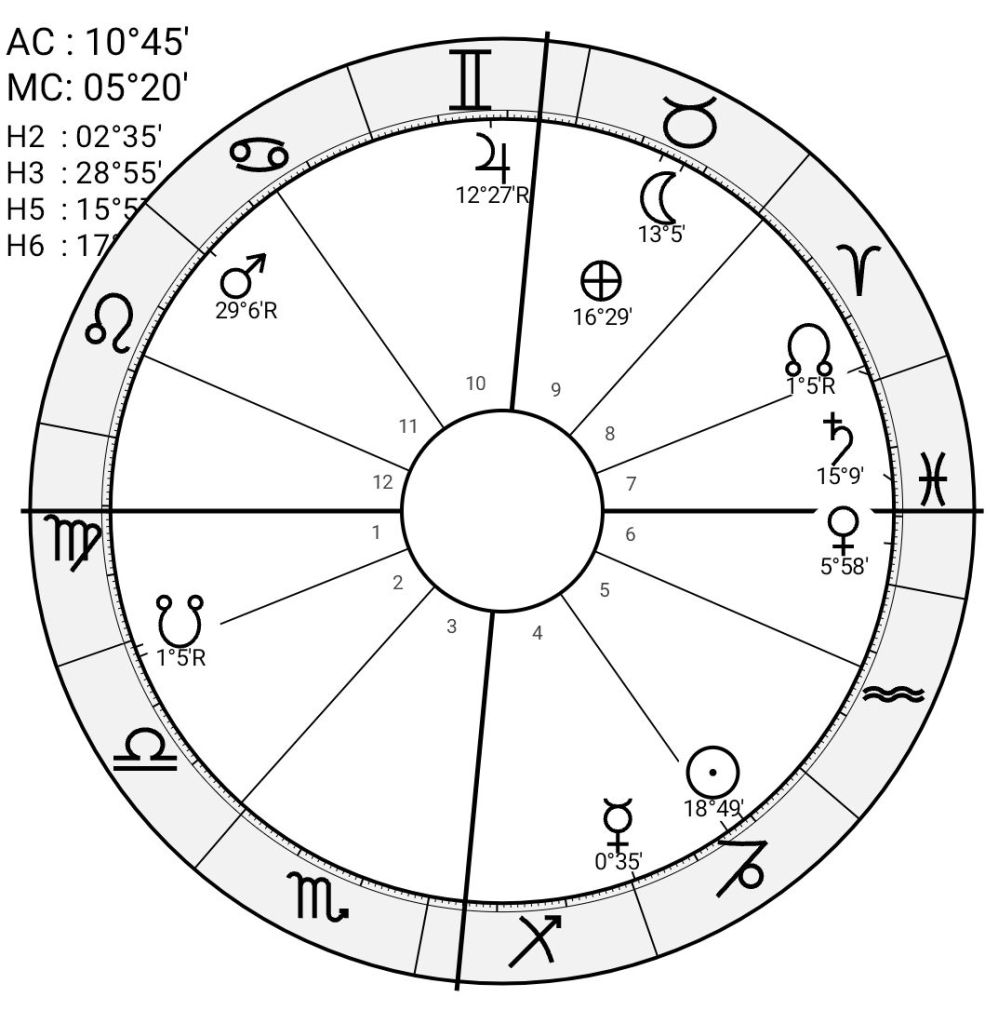
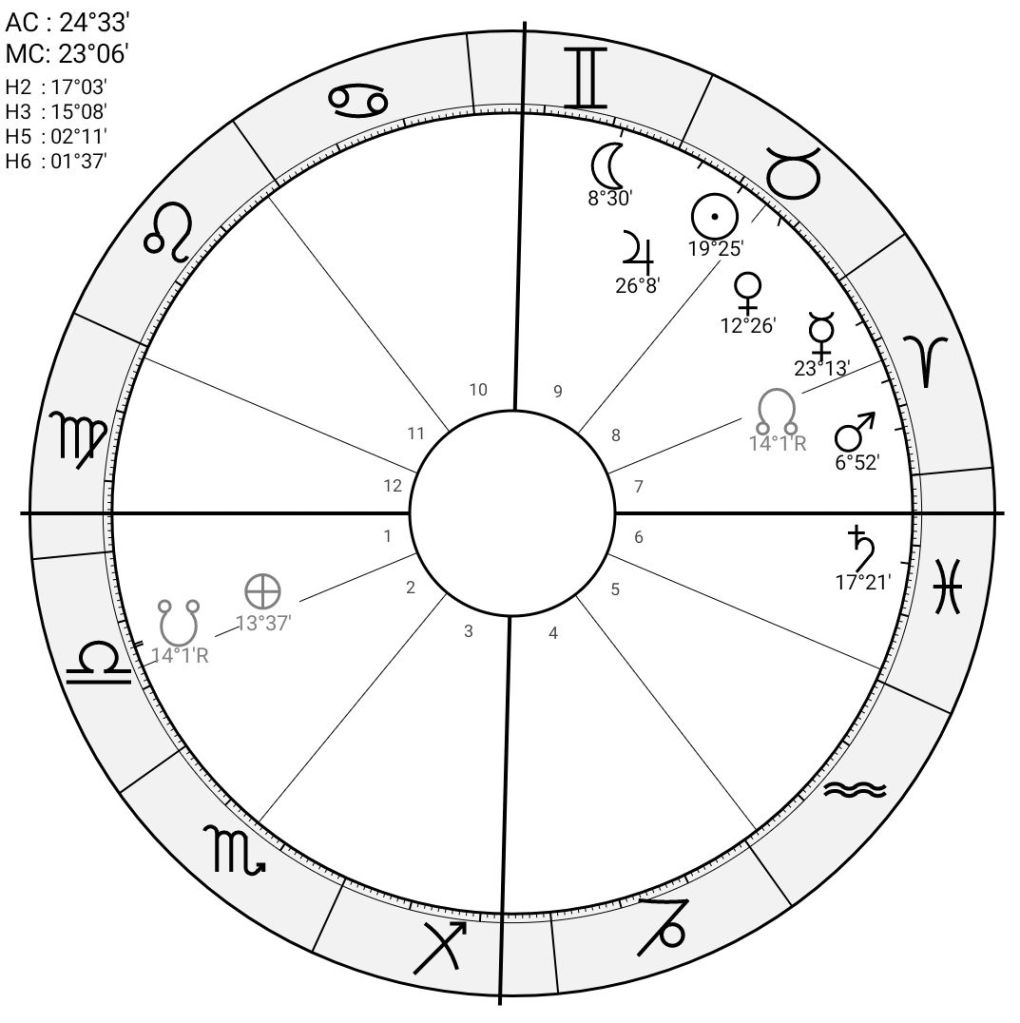
Is the gift arriving at all? App used: Aquarius2Go

I am signified by Mercury, ruler of the ascendant. My teacher sent me the book in her quality of personal friend (it wasn’t part of a course or anything), so she is signified by the Eleventh House ruler, the Moon. The Moon also represents the flow of the action (keep that in mind for later). Her gift for me is her second house, that is, the second house from the Eleventh, i.e., the radical Twelfth, ruled by the Sun. My stuff is signified by Venus, ruler of my second house.

So, ideally, we would want the Sun to be reached by Mercury. How do we get them together? Well, we don’t, clearly, or at least not for a while and not before the Sun has left Capricorn. That’s a problem.

However, we note that the Sun has just sextiled Saturn, having been received by it as well. What is Saturn? Well, it rules the Fifth and Sixth Houses, so the closest thing I can think of is the courier/delivery service (Sixth, house of servants).

What happens to Saturn next? It is sextiled by the Moon. The Moon is the ruler of the Eleventh, my teacher/friend, but it doesn’t make sense (she sent the book, she’s not gonna receive it). However, in most horary charts, the Moon also signifies the flow of the action. So the flow of the action moves favorably (sextile) with the courier (Saturn): the book hasn’t been lost. What happens next is that my significator (Mercury) and the significator of my stuff (Venus) almost simultaneously meet Saturn: Mercury by sextile with reception by sign, Venus by conjunction with reception by exaltation. Even if we chose to disqualify the Venus conjunction because Venus squares Jupiter first, Mercury makes no other aspect before the Saturn sextile.

Thankfully, the book arrived yesterday (I’m gonna review it in the near future). Note that timing in this chart seems to fail: the chart was made on January 8, the parcel arrived on January 15. If we take the Moon sextile it is two degrees away (two days, two weeks), if we take the Mercury sextile it is 15/16something degrees away (again, 16 days). The only aspect that seems to come closer is the Venus conjunction with around 10 degrees (10 days, though it took 7). It is probable that the chart was simply responding to my core question: yes, it will arrive, and took timing for granted. It could also be that I’ve misread the chart and got lucky. If you have an idea, drop a line!

Either way, we’ve finally answered the age-old question: Why is Saturn so fat and slow? The better to collect your light!

MQS

The Problem With the Neighbors (Reading Example)

As I already talked about ad nauseam, some months ago hubby and I bought an apartment. During that period I kept track of the situation using various divination tools, including Horary. This is a reading that I didn’t cover, since I didn’t have any feedback for it yet.

My question was simply if we would be happy in the new home. Here is the chart.

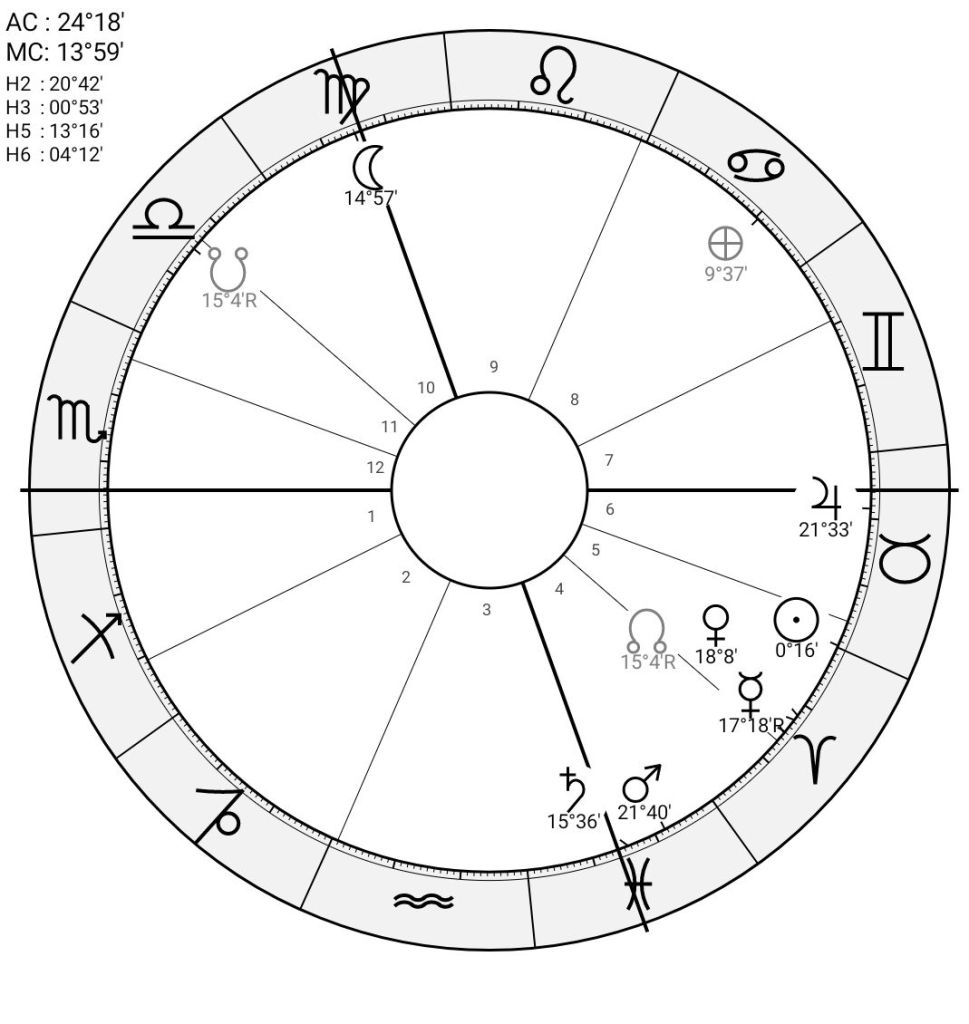
Will we be happy in the new home? Horary question. App used: Aquarius2go

We are represented by the First house and the planet ruling it, Mars (ruler of the rising sign Scorpio). As for which house represents the new place, I believe there are two schools of thought: either the Seventh House (that place there, as opposed to this place here, which is the First house), or the Fourth House of real estate and umoveable property.

The chart seems to guide us to the Fourth House. Plus, usually the Seventh house is reserved for hypothetical “there” places, whereas we had already bought the new place (therefore it was our property) and I was not interested in a comparison between the old apartment and the new, but only in the new place (I already hated the old one).

The Fourth House thus represents the apartment. Jupiter, ruler of Pisces, is the house. And look! Mars, our significator, is right inside the Fourth House, which is good and a symbol of liking the place. It has no major dignity in it (no house rulership or exaltation) but it is dignified by triplicity, term and face. So while it is not the ultimate castle of our dreams, it is very comfortable indeed.

The place’s significator, Jupiter, is conjunct the Seventh cusp and thus angular, and sextiles our significator. A sextile is a positive aspect of ‘friendship’. All in all the picture that emerges is not perfect, but it is quite satisfying.

However, look at the Moon! The Moon is about to oppose Saturn, which is right inside the Fourth cusp, afflicting it. There is some kind of problem ahead. Pinpointing it is not very easy, but considering that Saturn is inside the house representing the place itself and that Saturn rules the Third house, my first instinct was that there might be issues concerning the neighbors (the other people who live in the building). These issues would not be major, as the picture remains generally favorable, but they would be serious enough to be worth mentioning.

Fortunately, a couple of months passed and we saw that the neighbors are generally well-adjusted people. Furthermore, the apartment is, in fact, very comfortable.

What did turn out to be the problem was that the neighbors started some major fuss about the manager of the building as, according to them, he is incompetent and charges way too much for his services and even skims off on the money required for taking care of the building. The thing escalated so far as to almost end up in court, and finding a new manager is costing us quite a lot of time spent traveling and talking to new candidates.

MQS

Italy vs Switzerland (Reading Example)

To be clear, I have the same interest in soccer that a koala has in space exploration. Two days ago I didn’t even know that Italy was playing Switzerland, and I would have kept not knowing it if I hadn’t been at a friend’s birthday party, where I met a fellow Italian, one who does care about soccer. Since she knows of my interest in occultism and divination, she asked if Italy would win. I used horary astrology to answer.

Note that the match had already started when she asked me the question, though I knew nothing of how it was going and I asked her not to tell me to avoid influencing my judgment. Furthermore, I forgot to screenshot the chart, so this is a recreation that I believe to be close to the original.

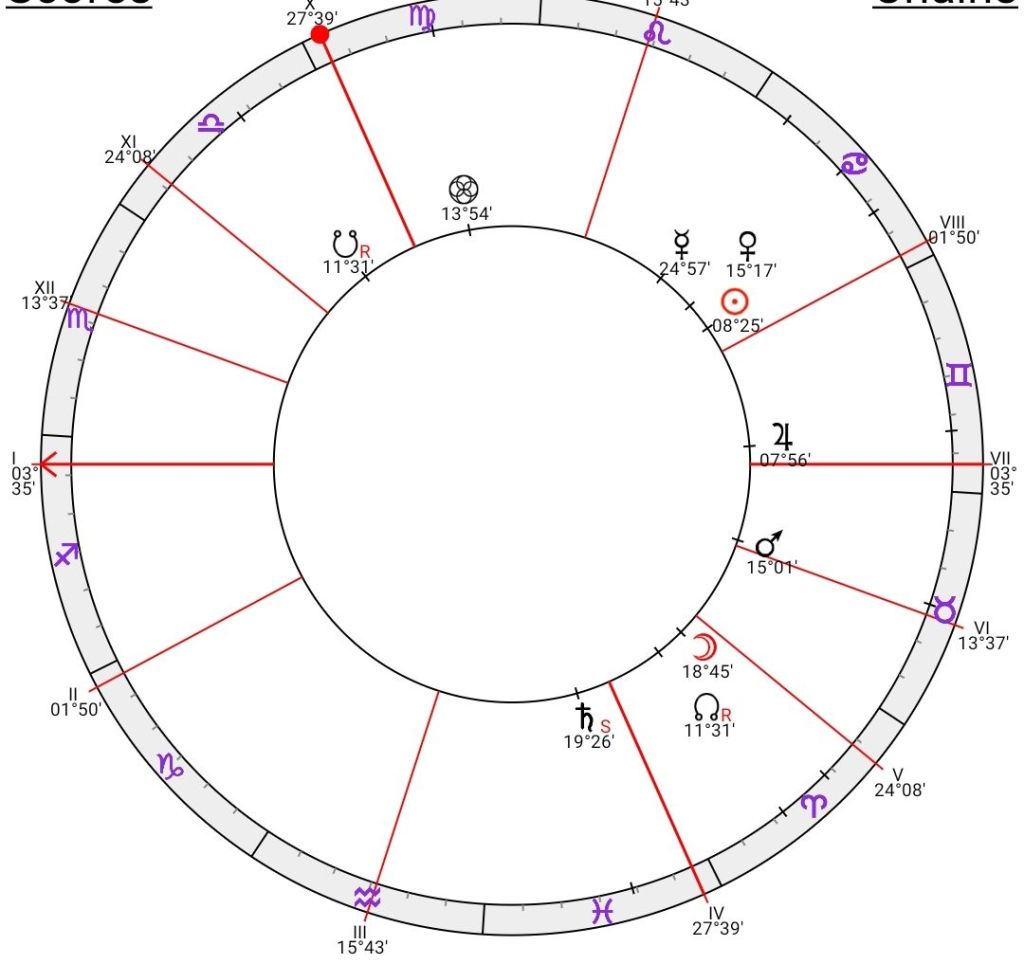
Will Italy win? App used: Astro Charts

Since the querent is Italian and wants Italy to win, Italy takes the First house. Switzerland is given the seventh house of the enemy. The first, and decisive, clue is given by the position of Jupiter, significator of the First house. It is stuck inside the Seventh house, in the grips of the opposing team.

Once we see this, pretty much nothing else matters. The opposing team, signified by Mercury, is in the Eighth house, which is not great, but by antiscion it is right inside the Seventh, which is bad for Jupiter but again good for Mercury. The Moon is moving to square Mercury with reception. Bonatti says that a square with reception is like a sextile without reception, so it is generally smooth. At any rate, Switzerland should win. And indeed they won 2 to 0.

Important note: Horary astrology requires the querent to have some kind of emotional involvement in the question. Since I couldn’t care less about soccer, despite being Italian, if I had asked the question I would have regarded the chart with some suspicion. It is only because the querent is a soccer fan that the chart was accurate.

MQS

The Geomancy of Peter of Abano – Book II Pt. 6

Previous / Back to Index / Next

Here Abano discusses topics relating to the Eleventh House and Twelfth House.

Eleventh House

If your friends or family or servants are faithful.
Look at the first and eleventh houses, if they are fortunate, entering and good, in which case it shows them faithful, especially if the eleventh is in the second or if the first and eleventh are the same, or also the Judge. If they are contrary to one another, it means the opposite, especially if the seventh is contrary to the first and the twelfth is unfortunate. When the eleventh is in the sixth and is unfortunate, it means being hated by them.1 If in the seventh, they shall turn into enemies or will help your enemies, and similarly in the eighth. If it goes to the eighth and twelfth you shall be betrayed. However, if said figures which are contrary to the first are good and fortunate and not malicious, it means that you shall not come to harm from them. Always keep the Witnesses and Judge in mind.

If you shall have your wish or what you have been promised.
If you want to know if you shall have what you have been promised by your lord or master,2 or if you want to know if you shall have your wish, look at the first, eleventh and tenth. If they are good, entering, fortunate, it means good hope, and being loved by your master, especially if the fifth and ninth and fourth and seventh are also positive and entering, or if they are exiting but fortunate.
However, if the fourth and tenth houses are involved they show toil.3 And if the figures are unfortunate and contrary one to the other, it shows not being loved, and hoping in vain. This is also valid of one’s mother, doctor, magistrate and promises made by friends.

Of abundance and dearth.
In addition to what we have already said about the matter,4 also look at the eleventh and second figures, which, together with the angles should have good entering figures. Tristitia, in this particular case, means abundance, and also Populus.
If the first, second and ninth are good and fortunate, it means the first three months are good. If the third, fourth and tenth are good it means the sixth, seventh and eighth month are good. If the seventh, eighth and twelfth are good it shows the ninth month is good, and if the ninth, tenth and thirteenth are good and conform, it means the tenth month, and if the Judge and Witnesses are good it means the last month is good. And vice versa with bad figures. But if it’s a mixed bad of good figures and bad ones it means mediocrity. This same method can be used to analyze a month, such as March, or even for single days.5

Twelfth House

If your prison sentence or illness shall be long6
If you fear you may go to prison and want to know if it’s true, look at the first and the thirteenth. If either of them is in the twelfth or is conjunct the twelfth, such as the first in the eleventh,7 and if they are unfortunate, it shows a prison sentence. Especially if the seventh and eighth are unfortunate. And if the first is in the eleventh and the fifth and sixth are unfortunate, or if the first is earthy, unfortunate and goes to the twelfth, and if the Judge agrees.

If one shall soon heal from a sickness or come out of prison
If the first, second, third, fourth, ninth and tenth figures8 are exiting it means freedom, and all the sooner if it’s Via or Cauda, and similarly if the last figures and the Judge and the Witnesses.9 If you find Acquisitio, Cauda, Tristitia or Conjunctio and they don’t move it shows long sickness or prison sentence. Populus, being formed by good figures, shows freedom, but if it comes from evil mothers it shows delay in liberation or healing.

And if Puella and Amissio, it shows freedom from a serious illness or from prison. And if they don’t move to any other house, it means also freedom. And Carcer in the twelfth lets the prisoner out, but if Carcer or Tristitia are in the twelfth and second, you must post a bail. And if it goes to the third, it will be thanks to the help of your siblings or relatives, and so on with the other houses, depending on their signification. If the Judge of the Judge10 is Rubeus, you shall be executed, and if Rubeus is in the twelfth you shall be hurt, if the same figure appears in the eighth.

Of buying large animals.
If, in the twelfth house, you find Acquisitio, Major, Cauda, Tristitia, Conjunctio or Albus it means the animal is good and will be profitable, but if Carcer, Laetitia, Via, Caput and Amissio it is not good, and you shall suffer losses, and if Puer or Puella, mediocre. If any of the aforementioned figures moves to the sixth or seventh or eighth it means losses through what the house signifies. And if Amissio or Cauda are in the twelfth, the horse shall be stolen, especially if it moves to the sixth or seventh, and the first is unfortunate, and if the twelfth is exiting, it’s best to sell the animal immediately, especially if the twelfth figure is also in the eleventh.

Of hidden enemies and traitors.
Look at the twelfth house, if good and fortunate it shows no ill, especially if it is also in the second, tenth or ninth. But if it is malicious, it shows harm, especially if it is also in the aforementioned houses, or if these houses are unfortunate. And if you want to know who the person is and of what condition, look at the houses where the twelfth moves, and judge accordingly.

MQS

Footnotes
  1. I don’t understand this reference to the Sixth house, unless we take it as the joy of Mars, in which case it justifies the idea of hatred. ↩︎
  2. The lord of master being indicated by the Tenth House, the Eleventh is the thing they promise the querent. ↩︎
  3. This reference to the Fourth House is not clear. Maybe Abano is referring to it because it opposes the Tenth. ↩︎
  4. When covering the Tenth House ↩︎
  5. Old books are full of methods for timing events by the houses. This particular method I haven’t found anywhere else either in geomancy on in astrology books. ↩︎
  6. We are often used to seeing the Sixth House as the house of sickness, but in medieval practice the Twelfth could indicate sickness as well. The late Robert Zoller ended up considering the Twelfth as the house of serious illness (such as would require prolonged hospitalization). ↩︎
  7. Here we have definitive proof that Abano conforms to the modern practice of considering even the houses not in company to be next to each other. This leaves open some questions, such as why he doesn’t accept a figure moving to the Twelfth as conjuncting the First. I believe it may have to do with the fact that the Twelfth house is negative. ↩︎
  8. That is, the figures on the querent’s side of the shield. ↩︎
  9. This sentence doesn’t make much sense. What Abano may mean by ‘last figures’ is unclear. ↩︎
  10. The Sixteenth figure ↩︎

The Geomancy of Peter of Abano – Book II Pt. 5

Previous / Back to Index / Next

Here Abano discusses matters relating to the Ninth House and Tenth House.

Ninth House

If one shall have ecclesiastic preferment or benefit through the church.
If the first and ninth figures are entering and fortunate it means good luck in these matters, especially if the first moves to the tenth or the ninth in the second, and even more if the fifteenth is lucky and good. Judge the opposite if they aren’t.

What kind of fame one shall receive from one’s deed.1
If the first and ninth figure are good and fortunate, and also the Judge agrees, it shows honor and good fame, but if not it shows the opposite. If they are Puella or Amissio it means due to women or young people, and if Tristitia or Carcer due to evil, bestial lawless men, and if Rubeus or Puer due to bloodletting or things to do with fire, and if Cauda or Conjunctio due to theft or other lawless things; but if the figures are good, and if they are Albus and Conjunctio, it means through science and the arts; and if Acquisitio or Laetitia it will be through living a good life, accompanied by good people; and if Caput or Major through great lords or through prelates and noblemen; if Populus or Via through common folks.2

On long joureys and relocations.
Consider the first if the travel is by water or earth. If the joruney is by water and the first, ninth and tenth are good and watery or airy, it means good journey; especially if the fifteenth agrees. If it’s Tristitia, Rubeus or Carcer it shows accidents, and if Carcer is in the third it can also indicate one doesn’t complete the journey and will return with delay. If the journey is by land and the figures are good, fortunate, entering or exiting but good, it shows good journey, and with Minor in the eleventh it shows delays, and if Carcer is in the third, the person shall not complete the journey.3

If one shall have good fortune or not through travel.
The first is the traveler, the ninth is the journey, the seventh the need he has to journey and the place where he goes, and the tenth is the person to whom he travels. If these figures are good it shows everything goes well and with ease, but if the first is unfortunate it shows accidents or trouble during the journey, and depending on whether the other houses are good or bad, judge about the accident.

And if the first moves to the sixth, he shall fall ill, and you can judge the type of illness by the figure. Ad if the first and seventh are unlucky it shows harm and trouble. If the first, second, third, fourth, ninth and tenth are unfortunate, it shows illness and death and being killed.4 If Tristitia and Rubeus are in the eighth and tenth it shows drowning and loss of wealth, and if the other houses are unfortunate but the eighth good and fortunate, it shows the querent shall go adrift at sea and will lose his wealth, but will survive.

If the first four are fortunate and entering and also the ninth and tenth, it shows good journey, especially if the Judge agrees, but if the said houses are good, but the Judge evil, it means good at the beginning, but bad ending, and if the said houses are a mixed bag and the Judge good, it means various troubles with a happy ending. Always judge based on whether the figures are good or bad, and similarly depending on the meaning of the houses, and according to the querent’s intention.

Tenth House

Of abundance and dearth.5
If you want to know whether the year will be abundant or not, look at the first, tenth and eleventh.6 If the figures are earthy and good it means abundance. If they are fiery it shows dearth. If Airy, also dearth, but less. If Watery, it’s mediocre. Always consider the Judge, the fourth and the Witnesses. If you want to know the time of the year when there will be more dearth, i.e., at the beginning or at the end, judge by the first and fourth figures, and if the first is good and the fourth bad or worse than the first, it shows the end is worse than the beginning, and vice versa. Likewise one can judge the month of May,7 by giving the first to the beginning and the fourth to the end (of the month.) If you want to know what kind of plant will be abundant or will be lacking, look at the figures. Acquisitio, Puer or Laetitia show wheat. Populus or Via show small grains. Carcer and Tristitia indicate chestnuts and fava beans. The other figures are middling.

If it shall rain.
You must observe the same rules as above, and note that Watery figures portend rain, and the other figures depend on their particular signification. Keep in mind, though, that Tristitia indicates precipitations.8 And if you want to know when, look at the first and fourth, as discussed above, and also look at the Judge, and note also whether the first four figures are Watery.

To know what kind of occupation is more useful (to the querent)
Look at the tenth figure and compare it to the first, and judge their virtue and conformity, and depending on the properties and virtues of the planets. Also note whether the second and the Judge agree, but if they are contrary to one another, look at the proportion of the greater part.9

If one shall obtain a fief or lordship.10
If the first and tenth are entering and fortunate and fixed, and if they are the same figure or are conjunct, it means obtaining what one desires, especially if the Judge is Conjunctio, except if the first goes to the eighth or twelfth, or if the figures are exiting and unfortunate, for this means contrarieties. It’s especially bad if the eleventh is unfortunate, or the Judge and Witnesses. And if the figure leaves you doubtful, add up the first and tenth, and judge by what it shows.

What fortune one shall have in one’s fief.
If you want to know this, look at the tenth figure, and in what house it moves, and judge accordingly, especially if the Judge agrees with the tenth. If it moves to the second, it increases wealth peacefully, but if it is in the twelfth he shall obtain money through avarice, and the people will be inimical to him, and may be despoiled or assassinated by his officials.

If it is in the third, he shall be loved by the people for his justice and good work. If it moves to the fourth, he improves his position and patrimony with great honor. If to the fifth, he shall be glad with many children, and will be loved and honored by neighbors with messengers, gifts and friendship. If it moves to the sixth, he shall be loved by his servants and family, but may fall sick or maybe be poisoned.

If to the seventh, he shall be cruel to his people, and much hated,11 and his enemies shall wage war against him, and he shall be lascivious.12 If it moves to the eighth, he shall be a vile man, shy and fearful, and the people will rise against him. If the ninth, he shall travel a lot and with great honor, and his status shall increase. If the tenth is in the first and fourth houses, it means a terrible man, who shall subjugate other lords to himself, and be truthful and just, and if it moves to the eleventh, he shall have glory through his army, and be feared by his men, but if in the twelfth it shows ruin, disobedience of one’s subordinates, and if also to the eighth, he shall be killed or at least chased away, and if together with the eleventh, betrayed by his subjects or family or advisers.13

MQS

Footnotes
  1. This section is interesting because usually we would judge fame from the Tenth House, not the Ninth. ↩︎
  2. This section is not altogether clear, as it is not always easy to see when Abano means fame and when infamy. ↩︎
  3. The Third House shows shorter journeys, so maybe Carcer in the Third indicates the shortening of the journey. Nowadays, it is conceivable that a journey by air would be indicated by an airy figure. ↩︎
  4. The First, Second, Third, Fourth, Tenth and Eleventh are the houses on the querent’s side of the Geomantic Shield. ↩︎
  5. The Medium Coeli or Midheaven is the point where the Sun peaks during the day, and as such is related to the ideas of “high” or “up above” and therefore to the sky and to the weather. ↩︎
  6. The Eleventh House is broadly considered positive, and it is called the Good Demon, possibly indicating a gift from the Heavens. ↩︎
  7. I don’t understand why Abano is refering to the month of May, unless it has to do with agriculture. ↩︎
  8. Possibly because it points downward, or because it shows a ‘sad’ weather. ↩︎
  9. “Et quando fussino contrarie vedi la proportione della maggior parte”. This sentence is unclear, unless Abano is perhaps merely refering to judging by the most numerous testimony/figure in the chart. ↩︎
  10. These rules may just as easily be applied today to discuss questions about promotion or trophies. ↩︎
  11. Likely because the Seventh House opposes the Ascendant, which in Mundane Astrology represents the people of the country. ↩︎
  12. Because the Seventh is the house of women. ↩︎
  13. This whole section may seem useless today, but with a little fantasy it may be applied, for instance, to how a new superintendant or boss will be with the people under him. ↩︎

The Geomancy of Peter of Abano – Book II, Pt. 2

Previous / Back to Index / Next

Here Abano discusses matters relating to the Third House and Fourth House.

Third House

Of whether a messenger brings good news.
If you want to know about a messenger or letter you’ve sent out, and about what effect they will have, and whether the messenger will come back with good news, then the first house is the querent, the third is the messenger or letter. When the first figure is good and the third one is exiting, or at least if it is entering or mixed but good, this is positive.

This is especially the case if the fourth house is conform to the first, and the third to the ninth. If the first or second figure1 moves to the house of the quesited, that is, of the person you send the message or messenger to, this augments the positivity of the message you get in return. The same is true if the first or second figure are conjunct to the house of the quesited or the person. Whether the message comes soon or late is known by whether the figures are mobile and exiting or fixed and entering, and also by the fifteenth and fourth figures.

The figures representing letters or messengers are Albus and Conjunctio. If Rubeus or Puer are in the second, it means airy words2 and talking inappropriately, and rumors or gossip, and discord, unless the message is about war. And if it’s Tristitia or Carcer, it means obstacles and lateness in what you inquire about. The other positive figures have a good meaning.

Which among one’s siblings or relatives will die sooner. 3
The first house is the querent . If it moves to the eighth, or if the eighth moves to the second, it means the querent will die before his siblings, and all the sooner if the figure moves to the angles.4 On the other hand, if the second figure5 were in the eighth or the ninth, and if the eighth were unfortunate, it means the sibling or relative will die sooner, especially if it is also found in the fourteenth or fifteenth. The death is good or bad depending on whether the figure is positive or negative.

If one is loved by their relatives.
Look at the first house, whether it is good or bad, and similarly the third, and if they are conform or not, and in this way you judge whether they love each other. If they are not conform, but if the third is in the second, or the first in the fourth,6 and if the third figure is good, similarly they are friends and love each other. If the first figure is unfortunate and malicious and the third good, the querent doesn’t love the relative, but the relative loves them, and vice versa.

Fourth House

Paternal Inheritance.
If you want to know about paternal inheritance, or from an older relative, or father-in-law, look at the fourth figure, if it moves to the second and if it is fortunate and entering, of fixed, judge that the querent will have what he wishes for, but if it is unfortunate and exiting, it means not obtaining it. Similarly, if the fourth does not move to the second, and if the first does not move to the fifth or eleventh.7 If the first and fourth were contrary to one another, it means not obtaining it, and similarly if the first is unfortunate and the second is contrary to the fourth. If the fourth moves to the seventh or ninth or tenth or twelfth, it means the inheritance goes toward other people, and this according to the properties of the figures, as explained before.

If one is loved by the father or uncle or partner.8
Look if the fourth figure is good and entering and if it is conjunct to the first, that is in the second, or if the first is in the fifth.9 If the first is good and is united to the fourth in the second, it means that affection is reciprocal, and all the more if the fifth or eleventh are conform to the first or the fourth. And if the first or fourth are in the fifth, it means the same, especially if the eleventh is conform to the aforesaid figures. When the first is good and the fourth bad, even if the fourth moves to the fifth, it means that the father or uncle doesn’t love the querent, although the querent loves him. On the other hand, if the fourth is in the second and is good, but the first is bad, it means the querent is well-liked, but the querent doesn’t like him. And even if the two figures are contrary to one another and there is no conjunction between them and there is no mutation of place it has a similar [negative] effect, as it shows lack of affection, and whichever of the figures is more unfortunate shows who is more at fault, and if the first and fourth are both evil, it means one is bad and the other worse.

Whether it’s good to build
If you want to erect a building, look whether the fourth is good, entering and fixed, which means it’s good to build, especially if the tenth figure is conform to the fourth, and the first is good and fortunate. If the fourth is good but not fixed, the building is good but won’t last. If the fourth is mobile and exiting, and the seventh is contrary to it and unfortunate, it means the building will be ruined by an enemy, especially if the twelfth is unfortunate and contrary. And if the tenth is contrary to the fourth, it means ruin through one’s lord. If the fifth is contrary to the fourth, it will be ruined soon. However, note that if the fourth is exiting and the three other angles are fixed, the building will still last, especially if the fifteenth figure is fixed or entering and fortunate.

Whether there will be abundance or a famine.
If the fourth figure is entering and fixed and fortunate, it means the year is abundant and the soil fertile, especially if the figure is earthy, and similarly if the angles are so, and also the fifteenth figure. But if the figure is unfortunate and exiting it means dearth, especially if the figure is fiery, and if the angles and the fifteenth are similar. Furthermore, add up the fourth and fifth,10 and judge if the result is good or bad or mediocre.

If a besieged fortress will be taken.
The first and second figures are attributed to the fortress and those inside, the fourth means the fortress, the seventh and tenth the enemies. If the first and second houses are good, fortunate, entering and better than the seventh and tenth, it means those in the fortress will win. So also if the fourth is fixed and fortunate and earthy, and vice versa if the seventh and tenth are better. Similarly, if the fourth figure goes to the tenth or if it is conjunct to it, it means the enemies will come inside.

And if both are good and benign, they will conquer it peacefully, and if the fourth and tenth are are evil, but the first and second are strong and entering, there will be a battle, and the fortress will be taken by force, especially if the tenth figure is fortunate and powerful in virtue, and if the seventh and tenth are weak and the first and second are fortunate and entering, those in the fortress will win.

And if the third and fourth are fixed and fortunate and entering or earthy, those in the fortress will also win, and vice versa. When the first and the second are evil and unfortunate, and the seventh and tenth are likewise evil, and the fourth is fixed, it means the fortress will be conquered through betrayal.11 And if only the second is exiting and unfortunate and the first and fourth are good and fixed, money will be used [illeggibile] those of the third.

Of buried treasures and hidden things
The fourth means the buried treasure and the hidden thing. If the figure is entering and fixed and fortunate, it means the question is valid, and if the first and fifteenth are conform it means the querent will get the treasure, especially if the fourth is in the second, or any other positive, entering figure is in the second, and vice versa if the figure is exiting and unfortunate and evil, and the first and fifteenth are unfortunate.
And if the treasure or hidden thing is in a house it is shown by the figure in the fourth being fiery,12 and if it is airy it means in the attic, and if it is watery it is below, and if earthy it is buried.

What end the question shall have.
If you want to know what effect any question will have, consider the fourth, if it is good and fixed, or exiting according to the querent’s wish, whether it is good or bad, or unfortunte, and if it is conjunct to the first or to its opposite, and if it is good according to the querent’s intention, and fortunate, it means a good end, especially if the tenth and fifteenth are conform to the querent’s intention, and similarly look at the other angles and see [if the majority of them is good]. If you want to know the cause or means of reaching this end, look at the angles and the second, fifth, eighth and eleventh,13 and the one that is best or worst will cause the greatest good or evil.

MQS

Footnotes
  1. It is not clear why Abano refers to the second figure instead of the third in this passage. If it is not an oversight, then it could be a reference to the Company of Houses. ↩︎
  2. “Parole in aere” ↩︎
  3. This may sound a rather grim topic to ask about, but it was by no means uncommon in Abano’s times. Death was much more frequent and much more in the nose of people than it is today, and therefore something to prepare adequately for. I had a woman once ask me who would die first between her, her sister and her brother. ↩︎
  4. The Angles (First, Tenth, Seventh and Fourth House) were generally considered quick. ↩︎
  5. This reference to the Second House instead of the Third is difficult to explain. ↩︎
  6. Notice, once again, that Abano refers to the First and Second Houses as pertaining to the querent (but not the Twelfth) and the Third and Fourth to the sibling or relative (but not the Second). ↩︎
  7. The Fifth house is the second from the Fourth and thus represents the father’s wealth. The Eleventh house is harder to justify, except that it is considered a lucky house and, on the Geomantic Shield, it falls right underneath the Fifth. ↩︎
  8. “Compagno”. I don’t know what this should imply here, in reference to the Fourth House. ↩︎
  9. Interestingly, Abano refers to the Fifth house here in connection to the father’s or uncle’s love, but not to the third. This cannot be a reference to the Company of Houses, since by that doctrine the Fourth is in company with the Third, not with the Fifth. The Fifth house aspects the First by trine, so maybe that is an explanation. ↩︎
  10. the Fifth house represents wealth derived from the Fourth, including the fruits of the earth. ↩︎
  11. Possibly this is because the Fourth house, being strong, wouldn’t have been conquered without help from the First and Second. ↩︎
  12. Traditionally, in some old Astrology handbooks, fiery signs were symbolic of the walls of a house, because bricks were made with fire. ↩︎
  13. These are the succedent houses. ↩︎

It’s The Economy, Stupid! (Example Reading)

This is a quick one. My husband comes from a particular family background, and as a consequence of it is often afraid of not being left with enough money despite his hard work (and he is a hard worker). As I said elsewhere, we are moving, and so expenses are popping up left and right, and I’ve noticed a certain anxiety in his eyes. Consequently, I asked the Heavens a bank statement.

My husband’s finances, Horary Astrology reading

Since I didn’t tell my husband I was doing a reading, I am the querent, and he is my husband, and therefore Seventh House ruler, Jupiter. His money is represented by the second house from the Seventh, therefore the radical Eighth House, ruled by Mars.

Jupiter is peregrine in Taurus, and conjunct Caput Algol, a malefic star that, some say, is connected metaphorically to losing one’s head. Furthermore, Jupiter is combust and approaching the Sun. Therefore, my husband is under great stress.

How are his finances? Well, Mars is its sign and face, angular and inside the Seventh House, which represents my husband. So his finances are good, and they remain in his possession. This may sound silly. After all, if they are his money, of course they are his possession. Still, it is comforting to see his money in his house: he retains control over it.

I believe this wonderful Mars testimony shows that, as it were, the fundamentals of his finances are solid, i.e., there is no risk of dejection, poverty, major adversity, etc.

That being said, this does nothing to alleviate his stress. The Moon is cadent, possibly indicating that the economy is going to be slow for a while, and it separates from a positive sextile of Mars, showing a positive financial recent past, and applies to a square of Saturn. Saturn shows restriction. In other words, while there is nothing to fundamentally worry about, the next period isn’t going to be the most prosperous.

I already have a partial outcome for this reading, which was done some weeks ago. As soon as we entered the house, after a couple of days, some household utensils gave up the ghost, including the fridge, and we had to buy new ones. Since Saturn rules the Fifth house, the house’s possessions, I’m wondering if that was what it was referring to, though this is stretching it quite a bit (they are our possessions, not the house’s). Alternatively, Capricorn is the second sign on the Fourth cusp, so Saturn would generally show the house.

MQS

The Geomancy of Peter of Abano – Book II Pt. 1

Previous / Back to Index / Next

Abano discusses matters related to the First House. and Second House

Having shown in the first book how one may know and judge (questions), we must now show some practical examples of this science according to the twelve houses of the chart, so that everyone may more easily understand what they wish to know. And this always according to the above described rule of giving the first house to the querent and the appropriate one to the quesited.

First House

Of the life of the man or woman.1
Having made the chart and the fifteenth figure, and wanting to know one’s fortune or misfortune,2 consider the figure in the first house and, depending on its meaning and the virtue of the planet ruling this figure, judge whether it is good or bad.

And if you want further clues, look whether the figure moves toward one of the angles or in more than one of them.3 And the life is all the more long and better and fortunate depending on how good the angle is, as said before.4 And if the figure doesn’t move, but it is still good and fortunate, it means one still has a long time to live, but is lonely.5 And if it moves to the second, it causes gain through one’s industriousness and solicitude. And if it moves to the third, it means getting along with younger relatives and siblings, and if to the fourth, it indicates increase of patrimony and wealth of the father or of the older relatives.

If to the fifth, it means happiness through children, and usefulness, but if to the sixth, misfortune, tragedy, accidents, but also other people’s service (to the querent), depending on whether the figure is fortunate or not. If it moves to the seventh, it means good things from the wife or girlfriend, and good deals, or gain through war or gambling, and maybe in a foreign country, depending on the quality and condition of the figure. If it moves to the eighth, the life is short, unless one is a butcher or deals in dead animals, that is, skin, wool, or if one is a loan shark.6

If it moves to the ninth, it means much journeying, and being a knight or a wayfarer or a churchman, and the person’s luck is better if the figure is good. If it moves to the tenth, it means honors and public office and receiving dignity from people up high, or through them, depending as the figure is fortunate or not. If it moves to the eleventh, it shows good luck with friends and from people who are noble or from the Roman Curia. If it moves to the twelfth, the person will meet his end in prison, or through long infirmity, or it shows being kidnapped or being in a remote place like some religious people do.

If the figure shows up as a Witness or as the Judge, the person’s fortune depends on how good the figure is. And what we have said of the first figure, whether it is good, mediocre or bad depends on its nature.

Second House

Of wealth, possessions and gain.
If you want to know about merchandise, one must judge the first house, whether it is good or bad, and then the second, depending on its virtue, and judge thus: if it contains one figure among Acquisitio, Major, Conjunctio, Caput and Albus, it means that gain will come from things that are easily movable from place to place, or from things that change, or that are sold by approximation (that is, without carefully weighing them).

If it were Puer it signifies gain through things sold after careful weighing. If it were Puella, it means gain through things that are easily obtained. If it were Rubeus, it means in things that cause fire or that have to do with blood. If it were Amissio, Cauda or Via, it shows little gain, and if it were Tristitia or Carcer, it means ups and downs of fortune or possessions. And if it is Laetitia or Minor, it means being able to keep one’s possessions. If it is Populus, then it depends on how good the first figure is, however by its own nature it means abundance.
Note that every entering figure indicates gain or buying, and exiting indicates loss or selling.7

Whether one will retrieve the lost possession.
If the question is about lost items, or stolen items, and we want to know whether we will get them back, look at the first figure, whether it is good or not, and then the second, and if they are entering or exiting. Afterwards, if you are looking for the thing, look at the tenth figure, if it is entering and good it means retrieval of the lost thing, especially if the same figure is in the second, or if here is another figure that is entering.8 Also look at the eleventh and the fifteenth. If instead the figures are exiting or bad, it means the opposite.

If you are looking for a stolen item, look at the seventh house, if it is entering and fortunate, and if it moves to the second or first house, which means retrieval.9 Similarly in the tenth, eleventh of fifteenth. And if the seventh [figure] is in the third, it means that the lost or stolen item is in the house of a sibling or relatives; if in the fourth, in or around the house of the father or of the older relatives, or near the house or place were it was originally. If it is in the fifth or sixth or eighth it means it is far away. If it is entering, however, you still will get it back.

If one will get back the money they lent to someone else.
The first figure is he who must receive back the money, the second is the thing that he wants to get back, and the seventh is the borrower. If the first and second figure, or at least one of them (especially the second) are entering, and if the seventh is exiting, it means getting it all back easily. Similarly, if the second and seventh are the same, that is, entering. But if they aren’t, it means the opposite.

MQS

Footnotes
  1. The First House was often called “Life, Body and Wit/Talent” ↩︎
  2. This type of question may sound vague nowadays, but it must have been common in the premodern era, as Astrology and Geomancy handbooks are full of tips on how to handle it. This was especially true at a time when one couldn’t just arrange an online meeting with the diviner and when one’s time of birth was unknown, so that one may have looked at other possible alternatives to know about their general fortune in life that didn’t involve the birth chart. ↩︎
  3. the angles, i.e., the First, Tenth, Seventh and Fourth houses, are considered strong and highly performant, so they endow the figure with strength. ↩︎
  4. I am not sure what Abano means here. The angles are traditionally arranged as stronger (First and Tenth) and weaker (Seventh and Fourth) though all are generally strong. He may be referring to this. Or he may be referring to the practice of assigning the angles to the four phases of life, so that maybe a good figure passing, say, in the Seventh, shows good midlife. ↩︎
  5. Probably because he remains by himself. ↩︎
  6. Because the eighth represents other people’s money (being the second from the seventh). ↩︎
  7. “Every entering figure” probably implies “to the exception of Tristitia”. ↩︎
  8. It is not clear why Abano mentions the Tenth House. It is possible that this is because the Tenth House opposes the Fourth House of buried and invisible things, and thus shows visibility and coming to light. ↩︎
  9. Abano does not seem to count the Twelfth house as being next to the First. He is not the only authority to do so. Possibly this has to do with the doctrine of the Company of Houses, or simply with the fact that, on the Geomantic Shield, the First and Twelfth houses are visually distant. ↩︎