Tag Archives: anger

Vera Sibilla Cards That Indicate Negative Feelings

I already made a post about positive feelings. This is a follow-up on the other side of the coin. As usual, this isn’t meant to be exhaustive. Note that many cards indicating difficult feelings are just reversed cards whose upright meaning is positive.

Three of Hearts Reversed – The Balcony

When upright, the Three of Hearts relates to the sense of sight, both literally and figuratively. Reversed, it can represent someone who is blinded by emotion, especially such emotions as rage or lust (the “red” emotions). It can indicate the inability to control oneself as a result of such emotions.

Four of Hearts Reversed – Love

Aside from being an indication of depravity, the reversed Love card can, and in fact is more commonly found to relate to unrequited feelings, emotional dryness and deep emotional scars from disappointment, usually in love.

Seven of Hearts Reversed – The Scholar

Upright, the Scholar card represents the mind in its best aspects of intelligence, creativity and having a solid grip on reality and on one’s problems. When it is reversed, it represents either someone who is cold and calculating (the lower octave of the mind) or someone who feels impotent and easily overwhelmed by problems.

Eight of Hearts Reversed – Hope

When reversed, the Eight of Hearts is a harbinger of sorrow, disappointment and unfulfilled hopes and wishes. Being a card that is strongly connected with one’s inner optimism, the reversed Hope card becomes one of pessimism or even of mild depression (by itself).

Nine of Hearts Reversed – Faithfulness

Upright, the Dog card of the Sibilla indicates friendship and loyalty, as well as deep and strong attachment to someone, something or an idea. Reversed, it is an indicator of rebellion, unreliability and biting the hand that feeds you, from thankless teens to political activists depending on the context.

Ten of Hearts Reversed – Perseverance

Upright, the Ten of Hearts can indicate solid, reliable people, lasting feelings and certainty. When it falls reversed in a reading, the Ten of Hearts become an indication of turmoil and of not being able to control oneself, one’s instinct and one’s rage.

Two of Clubs Reversed – The Peacock

When it comes up reversed, the Peacock card embodies the negative side of the symbolism of the animal, namely pride, haughtiness, an inflated ego that is easily slighted and self-centeredness. Depending on the surrounding cards this can go from a mild drama-queen complex to serious pathological deviancy.

Seven of Clubs Reversed – Realization

The Upright Seven of Clubs represents our realization in the world, our ambitions and our sense of accomplishment. When it comes up reversed, it shows insecurity, dissatisfaction with one’s existence, and fear, especially understood as feeling under attack in one’s life projects.

Eight of Clubs Reversed – The Reunion

Reversed, the Reunion card has many difficult meanings relating to groups and one’s social contacts. However, it is also a card of disillusion, sadness and depression. It represents someone who has lost momentum and is prey to inner turmoil, self-doubt and similar feelings.

Nine of Clubs Reversed – Merriment

Coming up reversed in a reading, the Nine of Clubs reverses the hakuna matata feeling of its upright counterpart. It becomes a card of joylessness, and it can also represent feeling isolated from others, sometimes even as a consequence of other people taking shots at us.

Four of Diamonds – Falsehood

The Falsehood of this card must be understood broadly as a feeling of “wrongness” and negativity. In this sense it is the opposite of the Dog card. It represents being ill-disposed or displeased with something, and negative feelings brewing right below the surface.

Five of Diamonds – Melancholy

The title speaks for itself. Upright, the card can be an indicator of disappointment, sadness, pining, melancholy and dissatisfaction. By itself it is not a tragic card, but it does slow you down. Reversed, the card becomes much more impactful and its effects long-lasting.

Seven of Diamonds Reversed – The Child

When it falls reversed, the Child card embodies the negative side of children: childishness, in the main, but also a general sense of inexperience and that the world is too complex for us to understand and tackle.

Nine of Diamonds – The Fools

The Fools indicate feelings of unwarranted exaltation and self-confidence, mistaken conceptions, as well as easily aroused feelings of aggression. They depict a volatile atmosphere where things can go seriously south.

Ten of Diamonds – The Thief

The Thief is a card of betrayal, whether literal or metaphorical. It represents ill-will toward someone or something, and the desire to do wrong things. This needn’t be tragic, as there are many situations where the sneakiness of the Thief borders on amorality rather than immorality. Still, this card is always a warning.

Ace of Spades – Sorrow

The Sorrow card is the card of tears, of the broken heart and of the sense of being cut off from one’s source of happiness. In itself it is a very difficult card to go through, but when not piled on by other problematic cards it can show just a sense of discouragement that the person can muscle through with some mental discipline.

Three of Spades – The Widower

Another difficult card, the Widower represents isolation, loneliness and serious interpersonal issues. Being the card that signifies “oneness” and the single individual, sometimes it can show things done alone, with no negative connotation, but more often than not it foretells difficulties in one’s loneliness. When reversed, it becomes a rather tragic card.

Four of Spades – Sickness

Although this is the card that indicates literal sickness, it can also be interpreted metaphorically on occasion. It often signifies feeling sick, disturbed or down, but it can also be the card of sick and morbid feelings which cannot find a healthy expression.

Six of Spades – Sighs

Among the less difficult Spades in the deck, the Six of Spades represents everything we desperately long for and await, hoping it will come to us. It is a less serene version of the Eight of Hearts, as it contrasts its composure with a sense of uncertainty and fear of losing what one wishes to get.

Seven of Spades – Tragedy

Another card of “red” feelings, this one indicates anger and wrath. It shows explosive energy disrupting one’s life, which, from an emotional standpoint, usually signifies that we are feeling slighted or wronged or somehow unable to restrain our ire.

Eight of Spades – Desperation and Jealousy

In the main, the Eight of Spades is a card of literal jealousy and envy, but it can represent all those situations where we look at others with toxic feelings in our heart. It can also signify desperation and tears, and a sense of being trapped in a corner with no way out.

MQS
Enneagram Comparisons | Type One and Type Three

Enneagram Type One and Enneagram Type Three belong to different centers: Ones are a Body type and Threes a Heart type. Therefore, there are broad differences between them, although they may have some similarities on the surface, depending on their particular life circumstances. Ones’ main aim is autonomous action, which they believe themselves entitled to only in so far as it is the right action. Threes, though, are not especially concerned with right or wrong, but rather with recognition and admiration.

From this fact alone it is clear that Ones and Threes live in vastly different worlds. Of course, Threes who have been socialized in an environment where morality and righteousness are, for better or worse, the standard to meet may occasionally behave like Ones. However, even in this case, Threes will generally do so as long as recognition is forthcoming.

Achieving

Furthermore, both Threes and Ones tend to be unsentimental and action-oriented, but again, in different ways. Ones feel the need to suppress their particular feelings, preferences and desires in order to abide by an ideal they believe to be more or less absolute. Threes, on the other hand, file their feelings away for later consideration in order to achieve a goal not necessarily because it is good, but because they believe it will bring them prestige.

In a word, if a One is the crusader converting the infidels of distant lands, the Three is the Roman emperor conquering a new province to be remembered forever. If Threes are the competitors, Ones are the referees.

Shame can be a powerful experience for both Ones and Threes. Ones constantly feel they need to work on themselves in order to improve their adherence to their ideal, and may feel shame in front of themselves if they feel they have failed to do so. Threes feel shame in a more mundane sense, as internalized social pressure to achieve a certain goal and improve their performance.

While both types can be perfectionistic, Threes are motivated by the joy and sense of challenge of making others see how praiseworthy they are, while Ones are prepared to go through the desert alone, or even for martyrdom if necessary.

Ultimately, like all Heart types, Threes are not necessarily principled individuals, which doesn’t mean they are immoral, but that the core structure of their personality does not revolve around principles as it does around interpersonal dynamics, and the opposite is true for Ones.

MQS

Enneagram Comparisons | Type One and Type Two

Enneagram Type One and Enneagram Type Two are quite different, although they can share some traits. Ones are a Body type, meaning they are chiefly concerned with autonomy, while Twos are Heart type, whose main preoccupation is recognition by others. Ones defend their autonomy by abiding by rules and trying to enforce them so as to justify their actions. Twos seek recognition in the eyes of others by being ‘helpful’ to them, that is, they try to carve themselves a place in another person’s life.

These different motivations can lead both Ones and Twos to similar activities and superficial behavior, such as being altruistic and of service to others, taking care of things the right way and just generally being a goody-two-shoes.

However, the two types are vastly different in most respects. Ones are dry, unemotional and often suppress their subjective preferences in the name of their ideal, while Twos are very wet in their behavior, being emotional and subjective, and they are less interested in how things are supposed to be than in doing what it takes to receive the love and appreciation they need.

Enneagram Type Two and Enneagram Type One
Service

Ones are famous for telling people off (“this is against the rules”) and are somewhat pessimistic, while Twos usually limit themselves in this regard, at most advising you in a motherly way (“that’s not good for you”) and tend to be upbeat and positive. Furthermore, Ones are more formal and rigid, while Twos tend to be informal and almost flirty with others, seeking close contact with them. Ones rarely unclench and are highly methodical, while Twos love to be in a flow in all their activities. Also, ultimately, Twos tend to be self-serving, even though an average Two would never admit it, even to themselves, while Ones usually deny themselves for the ideal they serve.

Interestingly, both types tend to have a problem with anger, but for different reasons: Ones can’t let the choler flow unhindered through them, so they put it in the service of a law (“it’s only ok to be angry if I get angry at things not being right”) which leads them to passive-aggressive behavior; Twos usually shy away from anger altogether because they feel it would endanger their relationship with the object of their desire, and only when they move to Eight under stress can they explode into a fit of rage if they feel scorned, unseen or when they see that their attempts at creating complicity (or codependence) with others are failing. But this rarely lasts.

Both Ones and Twos, though, tend to feel shame after a bout of anger: Twos almost always, because they fear their behavior has made them unlovable and unworthy of appreciation; Ones when they feel the anger wasn’t perfectly justified.

MQS

Enneagram Type One – A Quick Introduction

Often Known As: Perfectionist, Reformer, Idealist, Judge, Critic (note that names are as limiting as they are revealing.)
Sin/Passion: Anger
Focus: What is right or good
Fear: Of being wrong, imperfect or at fault
Energy Center: Body (energy is transformed)
Social Stance: Compliant
Key Positive Traits (embodied at their best): Just, Fair, Idealistic, Perfectionistic, Consistent, Principled, Tidy, Moral, Orderly, Disciplined, Sober, Rational, Impartial, Objective, Organized, Straightforward, Driven by rules and ideals rather than by personal profit
Key Negative Traits (embodied at their worst): Critical, Judgmental, Angry, Moralistic, Authoritarian, Uncompromising, “On the right side of history”, Castrating, Controlling, Unbending, Nitpicky, Soapboxing, Self-Righteous
Growth and Stress Direction: to Seven and Four respectively

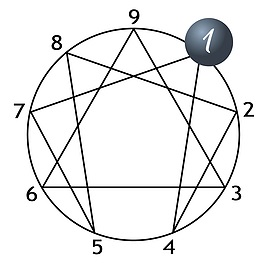
Enneagram chart with Type One highlighted.

Introduction

Type One is the person that walks toward you and you suddenly become aware that you have your zipper down. They have an incredibly keen eye for what needs to be done to improve the situation and to do things right. Nor do they stand by the wayside, but often get involved personally.

This ability that Ones have to see what ought to be done means that they are also keenly aware of what is wrong in every situation, that is, they immediately see when, where and how the standard is not being met. A healthy One is definitely someone whose advice you want to listen to, as they often have incredible foresight in predicting the consequences of letting small imperfections snowball into bigger and bigger ones.

Ones are usually fair in an impersonal and impartial sort of way. If anything, when they highlight your faults, they tend to do it out of love. They often cannot conceive how someone could be driven by anything except what’s right (either morally or technically), because they themselves seek to identify what they want with what is right.

However, Ones are famous in the Enneagram community for being the ones with the loudest and harshest inner critic. Their every action tends toward conformity with what the critic says. Whenever an action has been carried out (by them or by someone next to them) the inner critic’s sentence immediately highlights what has been done wrong and what could have been done better.

Although Ones can at times appear to be very mental or rational in their behavior, they have very strong beliefs that they rarely question, since these form the basis for their action in the world, and therefore removing them would remove One’s justification for acting. And Ones are, despite all, people of action.

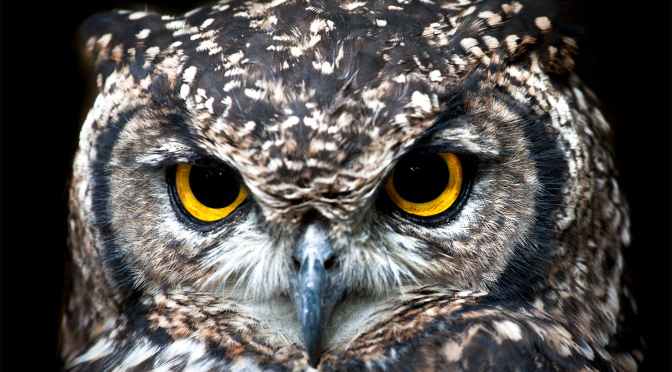
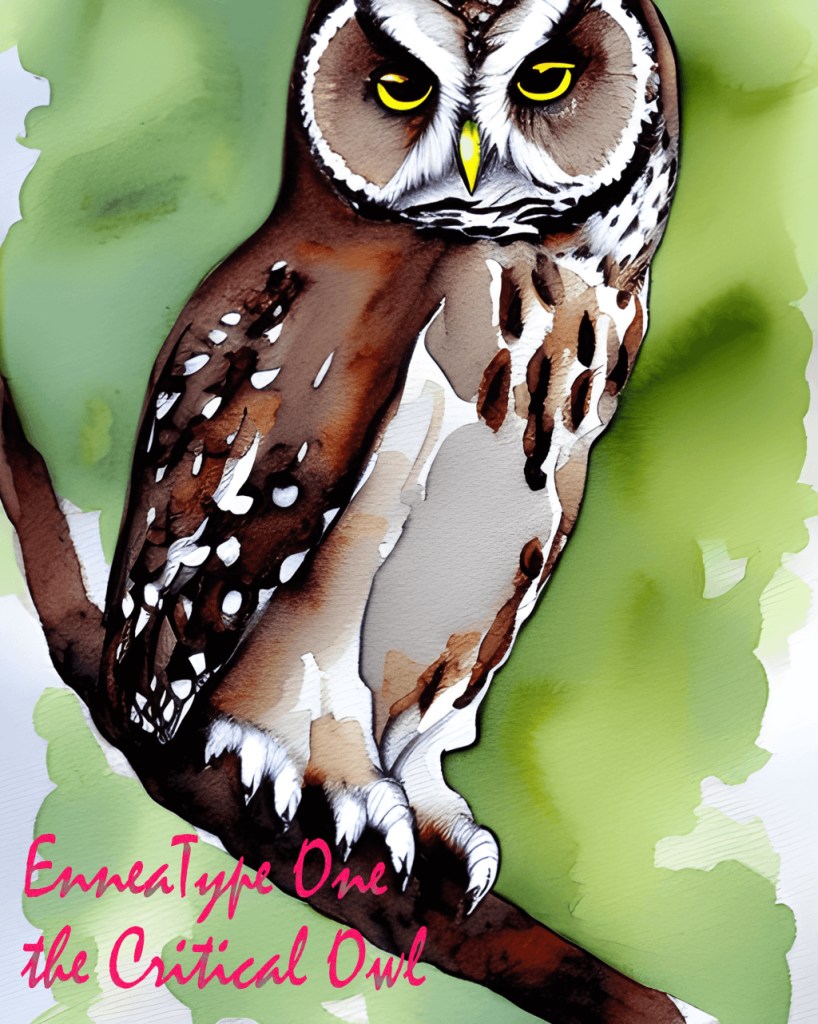
The Critical Owl, a good symbol for Enneagram Type One

Core Mechanism

Ones see the world as a place to reform or straighten out. Out of all the types, Ones most clearly embody the archetype of the reformer or the activist (although Sixes also fulfill this latter role, in another sense.) Ones give themselves ideals to follow and toward which to direct their great energy.

This happens because, on some level, Ones do not feel that they can just be in the world, but need to justify their own existence by complying with some higher standard. With Ones it is rarely “I want this” but rather “It ought to be this way”. They often seek to sublimate their subjective will by checking it against higher laws. The more Ones seek to sublimate themselves to match an ideal or to transform themselves and reality, the more they move the goalpost of what they consider to be perfect, or even just okay.

The world, and their own life, becomes by definition “not okay”, and while in average Ones this can be a stimulus to improve things, in more difficult cases it can lead to situations where the more Ones seek to perfect life, the more they become aware of every imperfection, leading them down spirals of self-hatred, puritanism and intolerance.

Sin/Passion

Type One’s passion is anger. All Body types (Eight, Nine and One) center around the issue of autonomy and self-assertion. Their basic energy is essentially choleric in the traditional sense. However, Ones are incapable of asserting themselves directly and immediately.

Instead, they seek to justify their self-assertion as autonomous beings by complying with standards, rules, morals, etc. Their unspoken contract with themselves is “I have a right to be here if I do my best to perfect myself or the world around me.”

Anger stems from their sense of impotence in making themselves and the world around them match the vision of them that would justify their existence. Ones see the difference between what is and what ought to be, and choler builds up in them. In other words, the normal flow of choleric energy that forms part of everyone’s bodily existence finds itself flowing through the strictures of One’s inner critic, turning from natural assertive drive into wrath–at themselves and at the world.

Ones are often very controlled in their behavior, exactly because their bodily energy is deviated in its course by normative structures, yet they often do not seem very relaxed. Their being in control of themselves usually betrays signs of an inner tension, an unresolved struggle for peace. Their anger often transpires as frustration toward life, themselves and others, depending on their particular life patterns and individual condition.

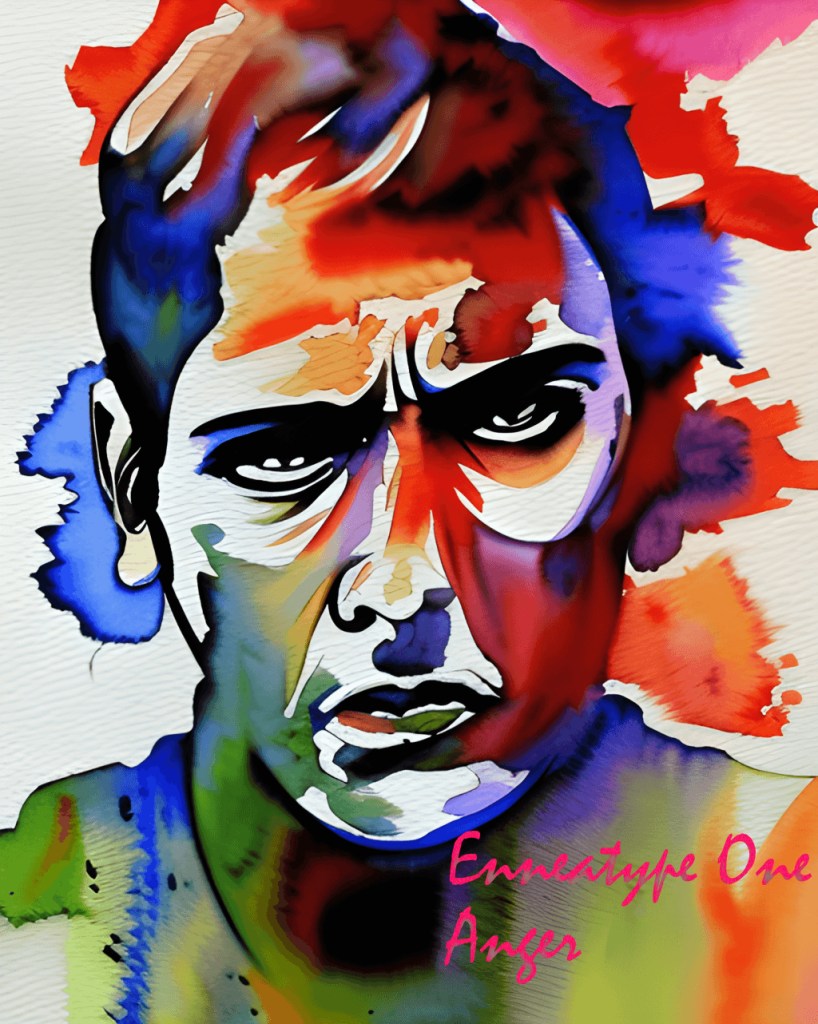
Anger, the Passion of Enneagram Type One

Misconceptions

The biggest misconception about Type One is that they delight in criticizing others. In fact, delight may be the last thing a One feels when being critical of what other people do. There is never anything personal in an average One’s criticism (this doesn’t necessarily make it ok, though.)

Although sometimes they may relish in being the ones who “told you so”, by and large Ones abide by standards and seek to enforce them, and often simply don’t see how others may either have different standards or not be dedicated to enforcing them. Usually, when a One criticizes you, it’s not the person that speaks: it’s the rule. By extension, Ones often believe they are helping you by criticizing you.

Furthermore, Ones’ attention to what you do and how you do it is often an indirect reflection of their own inner discourse toward themselves. Usually, their criticism of others and their criticism of themselves coincide. See it like this: in speaking on behalf of the standard or rule, Ones seek to become embodiments of it, and become aware of their own inability to ever bridge the gap between ideal and reality. In this process, they also become aware of your inability to do so, but often they fail to realize that this may not be your problem.

Wings

1w9 – Ones with a Nine wing tend to have a more laid-back demeanor, although One’s inner tension is still quite noticeable. They are often more accomodating on the surface, but their strictness usually manages to transpire anyway, especially in passive-aggressive ways (passive-aggressive behavior being something that Ones share with Nines, in different forms.) Also, the ideals they serve tend to be more all-encompassing and broad.

1w2 – Ones with a Two wing have a more marked interpersonal quality. They are usually highly involved in other people’s lives, on whose behalf and (supposed) best interest they act. Their actions, which are usually carried out in service of an ideal, can have an additional, albeit shallower, layer of motivation in pleasing others. Also, their activism tends to be based on solving concrete problems in their immediate surroundings.

(note that wings can have some minor descriptive power in terms of superficial behavior, but they are irrelevant in terms of what motivates the person. Many people have no noticeable wing, while few show signs of both.)

MQS