Enneagram Type Eight and Enneagram Type Nine are extremely different and almost never confused, despite the fact that they form each other’s wing. Both are Body types concerned with their own independence. Eights preserve their independence by asserting themselves on others and challenging them. Nines preserve their independence by being compliant, accomodating and friendly so as to avoid causing issues that might result in uncomfortable strife.
Both Eights and Nines can be extremely dynamic people, but Nines prefer routines that comfort them and fill them with a general sense of wellbeing, balance and calm. Ultimately, Nines want to avoid unpleasant sensations of sadness, isolation and conflict, whether outer or inner. Eights, on the other hand, generally go down the path of greatest reasistance and seek to overcome it, finding pleasure in difficulty and in the challenges the world around them and other people offer them.
opposites
Socially, the two types behave in radically different ways. Average Eights immediately sense the power relations among people and disrupt them to impose themselves as the reference point, so that they may have better control over others and therefore over themselves (more healthy Eights often use this vantage position to help others, but they still often want to be the ones initiating the action).
Average Nines, by contrast, take a step back by allowing others to express themselves, often finding it hard to get their own point-of-view or agenda across, and their personal energy tends to disappear, assimilated by that of others (whereas more healthy Nines learn to cooperate with others while still mantaining a separate sense of self and of their own preferences).
Enneagram Type Seven and Enneagram Type Nine share some similarities, and can therefore be confused. Sevens are a Head type and seek to avoid anxiety and fear by being hyped about things they can enjoy. Nines are a Body type who maintain their sense or independence by being agreeable and positive to avoid causing trouble that might come back to haunt them.
Both Sevens and Nines are known to have a hard time selecting a single thing that they can be or do. Sevens thrive on pursuing variety as this allows them to continue skimming the surface of life in search of the next big thrill and avoid staying with negative emotions for too long. However, Sevens tend to have a rather strong sense of self and of their wants and needs.
Nines on the other hand have a diffuse sense of their identity and do not feel comfortable defining themselves, often sensing that they can resonate with almost anything and anyone. By avoiding taking on a sharp identity, Nines protect themselves from potential trouble by simply passively flowing through it instead of bumping against it.
variety
Both Sevens and Nines have a broadly optimistic worldview. To a Seven, the world is their oyster and they look forward to the next thing to be hyped about. They are excitable and quick, and even when in a situation that they dislike, they can learn to tolerate it in anticipation of something better to come.
Nines by contrast move at a slower pace and have a sense of placid and unassuming satisfaction about them. They do not demand much from life and do not spiral into the manic frenzy of Sevens. In fact, they are very wary of anything that might cause excessive reactions in them. Their sense of optimism takes the form of a generalized, vague it’s-fine-ness that they adopt to avoid having to take a stronger stance, which might open them up to trouble and strife with others.
Both types can be rather superficial. Sevens are superficial in the sense that they remain on the surface of the things that they get excited about and avoid settling down so as to not miss out on the next thing that excites them. Nines are superficial in the sense that they avoid deep emotional or intellectual commitments that might put them in a corner or pit them against others, and so prefer to remain flexible and deal in generalities, which may sometimes sound deep but aren’t.
Enneagram Type Six and Enneagram Type Nine are quite distinct from one another, so much so that they are each other’s arrow: Six relaxes at Nine, Nine stresses at Six. Sixes are a Head type, and their priority is to find security and certainty in an uncertain world. Nines are a Body type, whose main goal is to not have their inner sense of independence disrupted by disharmonious trends.
Both Six and Nine usually come across as friendly and likeable. Sixes want to prove to others that they are dependable and that they can be allies in facing common struggles. Nines are also broadly supportive of others, but more in the sense that they go with other people’s flow so as to not cause the kind of friction that might disrupt their inner sense of balance as independent individuals (“If I say yes to the invitation she won’t make a fuss”).
Sixes are often found evaluating the risk factors in every situation or assessing other people’s behavior to see if they can trust them, while Nines normally hold a non-descript optimistic view of people and life, and a sense that things will turn out well somehow, to the point where they may deny the existence of objective hurdles and problems. Sixes seek to predict all possible problems, while Nines often look the other way. On the other hand, average to unhealthy Sixes often end up compromising stable or positive situations in an attempt to smoke out hidden threats or enemies that exist only in their head.
Peace
A Six’s strategy for survival generally implies developing a conscience of themselves as a social being (they are the archetype of the ‘member’, whether of a party, a church, an organization, a class, a country, etc.) The Six’s idea of survival implies minimizing risk and uncertainty by handing over the final say on their life decisions to something external (a belief system, a person, a group, etc.) that is perceived as stable or trustworthy. However, once a Six has identified the idea or group they belong to, they can become rather confrontational with that idea’s or group’s enemies.
A Nine’s minimization of problems is more geared toward preserving an inner sense of peace. Swept under the rug of a general, bland “it’s all fine”-ness, external trouble can be denied the status of force that pushes against them. Similarly, in social situations Nines will tend to be agreeable and limber so as to not allow others to perceive resistance in their part that might turn into a power struggle. In other words, by denying a strong reaction, Nines seek to cause the external action to dissipate by itself.
Enneagram Type Five and Enneagram Type Nine can share some similarities, though they remain vastly different. Nines are a Body type, who seeks to maintain a sense of harmony within themselves and their surrounding by avoiding conflicts that would undermine their sense of autonomy. Fives are a Head type, who withdraw from the world to observe it from a distance and to gain skills that will ideally allow them to succeed.
Both Fives and Nines withdraw from others, but in different ways. Average Nines withdraw their energy and suppress their agenda to avoid it clashing with that of other people. Average Fives withdraw themselves, often physically, or at least emotionally, from social situations.
Nines, however, generally remain friendly and often go with other people’s flow, as long as it doesn’t threaten their inner sense of calm. Fives, on the other hand, have a strong sense of self as opposed to all other, refuse to be swept along in their flow and tend to have a supercilious and combative demeanor that most Nines would never display.
Withdrawing
Internally, Nines usually pacify themselves with happy or comforting thoughts and a positive, if vague, attitude. They tend to think in terms of generalities, which makes them very good at finding common grounds with all humanity at an almost archetypal level. Fives are internally high-strung and constantly mulling over some thought or theory, they disdain generalities and are as laser-focused on details as they are preoccupied with finding their universal significance. Furthermore, in general Nines will stop themselves from trespassing into “scary thought territory”, while Fives will usually willingly go there.
The decisive difference between Nines and Fives is in what drives the two types. Fives are driven by knowledge. At their best they are as wise as they are knowledgeable, at their worst they are obnoxious collectors of obscure trivia. Nines are motivated by peace. At their best they are deeply embracing of themselves and others, at their worst they are dollar-store mystics detached from reality.
Enneagram Type Four and Enneagram Type Nine can occasionally appear similar, but are actually quite different. Fours are a Heart type, and are primarily concerned with finding someone who will see them in their woundedness. Nines are a Body type, and are focused especially on maintaining their own independence, which they achieve by avoiding causing trouble with other people.
Broadly speaking, both types tend to have a vivid inner life, though Fours generally entertain negative emotions and often play intense, tragic, tear-jerking scenarios in their minds to evoke certain feelings. On the contrary, Nines often become lost in vague and comforting ideas that they play again and again to be reassured that all is well.
Both types tend to be withdrawn, but in vastly different ways. Nines are withdrawn in the sense that they often suppress their own energy and agenda in order to avoid it colliding with that of others. As such, they appear accomodating and self-denying, though it is common knowledge that Nines generally employ a high degree of passive resistance to sabotage other people’s attempt at heralding change into their life. Still, their way of withdrawing their energy can make them appear (even to themselves) friendly and welcoming.
Fours, on the other hand, are withdrawn because they feel they don’t belong and are too broken to be understood. They tend to long for meaningful contact but at the same time despair of finding it. Their strategy is often of attracting people who will see them as suffering. Though they are often quiet, their emotional storminess at times of distress puts off others, whom they are usually not afraid of inconveniencing if it means letting them know how the Four truly feels.
Both Fours and Nines tend to have a hard time finding their “center”. Fours often struggle with their own identity (believing that they are the only ones with such problems) and generally end up playing up certain aspects of their inner life (especially negative traits or emotions) in an attempt to conjure up a stable identity. Nines also find it hard to have a defined identity, but more in the sense that they have few clearly set boundaries toward other people’s agendas and desires. They often end up flowing along with others (as long as the others also don’t rock the boat), something Fours find almost impossible to do.
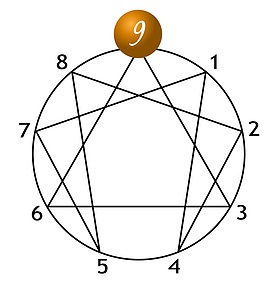
Enneagram Type Three and Enneagram Type Nine are quite different in almost all regards, so much so that they are each other’s arrow on the Enneagram symbol. Threes are a Heart type and are focused on gaining validation and approval for their merits and talents, while Nines are a Body type, concerned with independence, which they try to scure by not causing trouble with others.
Threes are highly driven, ambitious and combative, and they want to excel and to emerge above others as worthy of praise. By contrast, Nines tend to be meek, easygoing, conciliatory and ready to take a step back to allow others to shine.
More deeply, Threes have accepted a certain image of themselves which has been handed down to them by society or parental figures and they run with it until it brings them validation (or a nervous breakdown). Nines, on the other hand, often suppress their own individuality, their own priorities and their own agenda for fear of it setting them on a collision course with others. This is not to say that Nines are inert: they can lead very active lives, but they are usually undemanding and unwilling to stand out for their own sake.
Identity
Surprisingly, the two types do have one similarity. Threes often fight with the inner feeling of not truly knowing who they are, a troubling sensation that the image they submit to the world for a stamp of approval does not truly encapsulate them. Usually they try not to think too much about it, which is in part why they are so driven and motivated in accomplishing their goals, but when this feeling catches up to them it can lead them to an identity crisis.
Nines can also find it hard to pinpoint themselves, but for a different reason: they instinctively feel that to emerge as an individual with a specific identity or mission means cutting themselves off from an all-encompassing merging with a greater whole, whether this greater whole be God, a social group, married life, etc. In other words, Threes may not know who they are and fear this sensation, while Nines dread having a sharp separate identity pushed onto them.
Enneagram Type Two and Enneagram Type Nine are very similar, and it can be hard to tell them apart at first glance. Twos are a Heart type, and desire above all else to be important to someone else in order to receive their validation. Nines are a Body type, and are mainly concerned with independence, which they achieve by not creating trouble with others and by not letting others trouble them.
The main source of similarity is the fact that both Twos and Nines tend to be likeable, positive, nurturing and motherly toward others. Twos shower the object of their desire with attentions to the point that all but the most hardened thugs fall for their advances. Nines are extremely friendly and easily get along with others, often letting them express themselves and their gifts, but they don’t necessarily relentlessly pursue others to fulfill an emotional need.
This is, however, also where the two types diverge. Twos are extremely specific in the way they take care of someone, while Nines almost operate under a generic ‘good neighbors’ policy with most people. When describing both types, the word ‘merging‘ gets thrown around a lot, but Twos are very picky with the people they want to merge with, and their aim for merging is to have their self-worth mirrored to them by someone they consider suitable, while Nines tend to dissipate their own personal energy and to vaguely merge with the world at large, with the aim of not being bothered.
Merging
Both types tend to have a hard time expressing their own wants and needs. Twos often subconsciously projects them onto others (“Are you hungry?” usually means “I’m hungry”) because they feel the only way for them to get their needs met is to meet those of another person. Nines, on the other hand, often find it hard to find their own center as individuals with well-defined agenda and set of goals.
In this respect, Twos are much more intense and demanding than Nines, who in turn are much harder to pin down and grasp. Twos have an inflated sense of self (though they probably don’t think they do), while Nines are self-effacingand consider themselves regular folks. Furthermore, frustrated Twos who feel they are failing in achieving the kind of connection they crave with someone may resort to underhanded tactics of active manipulation, whereas Nines rarely manipulate others actively. If anything, Nines usually oppose a passive resistance to other people’s agendas, making them waste time and effort until they give up and everything becomes calm and serene again.
Enneagram Type One and Enneagram Type Nine are different in many respects. Both are Body types, and are therefore concerned with issues of autonomy. Neither of them is as assertive and warrior-like as Type Eight, the other Body type, but both find different strategies to preserve their autonomy. Nines seek to maintain their autonomy by being friendly and avoiding conflict with others. Ones maintain their autonomy by justifying it rationally as a means for them to pursue an ideal of rightness or justice.
While both Nines and Ones can believe that justice is important, for Nines justice is more a matter of harmonious balance with others. They do not quibble about rules and methodologies and are more than happy to accept (or even to sugarcoat) the world’s and other people’s shortcomings. They usually do not go out of their way to convert others to their point of view and prefer to keep peace, something alien to Ones.
Both Nines and Ones have a difficult relationship with anger. Nines are the least choleric of the nine types, and often need to work hard on themselves to learn to express anger and disappointment when it is appropriate. Average Nines may even feel that the notion of anger is completely alien to them. Ones certainly feel their anger simmering inside of them, but they have a difficult time expressing it directly.
harmony
Both types can be passive-aggressive.Nines are so in an attempt to neutralize other people’s agendas that risk disturbing their peaceful flow. In this sense, they are passive saboteurs. Ones are passive-aggressive because they would like everything to be perfect and everyone to accept that they are right about what it means for everything to be perfect, but they generally find it hard to boldly force others to comply. Furthermore, they often project onto others the anger they feel at their own shortcomings.
In general, Nines believe that the world is (or could very easily become) a good place, and usually keep themselves mentally occupied with bucolic platitudes about themselves and the world. Ones are more pessimistic about the world and about human nature, as they tend to see the world as the negative of a perfect picture that requires an inordinate amount of effort to reach. Furthermore, Ones tend to be methodical and spurred on by clear objectives. Nines, on the contrary, are more placid and, while not necessarily inactive, they can content themselves with following their routine without rigid aspirations and methods.
Enneagram Type One and Enneagram Type Two are quite different, although they can share some traits. Ones are a Body type, meaning they are chiefly concerned with autonomy, while Twos are Heart type, whose main preoccupation is recognition by others. Ones defend their autonomy by abiding by rules and trying to enforce them so as to justify their actions. Twos seek recognition in the eyes of others by being ‘helpful’ to them, that is, they try to carve themselves a place in another person’s life.
These different motivations can lead both Ones and Twos to similar activities and superficial behavior, such as being altruistic and of service to others, taking care of things the right way and just generally being a goody-two-shoes.
However, the two types are vastly different in most respects. Ones are dry, unemotional and often suppress their subjective preferences in the name of their ideal, while Twos are very wet in their behavior, being emotional and subjective, and they are less interested in how things are supposed to be than in doing what it takes to receive the love and appreciation they need.
Service
Ones are famous for telling people off (“this is against the rules”) and are somewhat pessimistic, while Twos usually limit themselves in this regard, at most advising you in a motherly way (“that’s not good for you”) and tend to be upbeat and positive. Furthermore, Ones are more formal and rigid, while Twos tend to be informal and almost flirty with others, seeking close contact with them. Ones rarely unclench and are highly methodical, while Twos love to be in a flow in all their activities. Also, ultimately, Twos tend to be self-serving, even though an average Two would never admit it, even to themselves, while Ones usually deny themselves for the ideal they serve.
Interestingly, both types tend to have a problem with anger, but for different reasons: Ones can’t let the choler flow unhindered through them, so they put it in the service of a law (“it’s only ok to be angry if I get angry at things not being right”) which leads them to passive-aggressive behavior; Twos usually shy away from anger altogether because they feel it would endanger their relationship with the object of their desire, and only when they move to Eight under stress can they explode into a fit of rage if they feel scorned, unseen or when they see that their attempts at creating complicity (or codependence) with others are failing. But this rarely lasts.
Both Ones and Twos, though, tend to feel shame after a bout of anger: Twos almost always, because they fear their behavior has made them unlovable and unworthy of appreciation; Ones when they feel the anger wasn’t perfectly justified.
Enneagram Type Nine, sometimes called the Mediator, belongs to the Body triad. People of this Enneatype tend to be nurturing, accepting, agreeable and flexible. They are usually very good at holding space for other people, and they often manage to find common grounds with others. They are generally driven by a desire to avoid conflict, because they fear that conflict will make others fail to see them as independent individuals. They much prefer to work together with others, sometimes giving up on their own agenda to avoid rocking the boat, but also exerting a kind of silent passive resistance against things they don’t want to do or accept.
Enneagram Type Nine
Enneatype Nine Grows: Move to Three
Nines have a tendency to ‘disappear’, but not necessarily because they are shy or because they retreat from others in a traditional sense (like a Five avoiding draining contact or a Four witholding themselves to lick their wounds). Instead, average Nines fail to emerge as individuals in the eyes of others (and even in their own eyes): they often find it hard to articulate their preferences, projects and views out of fear of clashing with the people around them.
So while Nines are usually the most sociable of the three withdrawing types (Nine, Four, Five) they still withdraw from others by not opposing them or putting their foot down. This way of remaining merged with other people’s preferences and ideas and going with their flow can cause pain to the Nine as they may feel that they are being stepped on, even though they never drew a line to begin with, which makes it hard even for well-meaning friends to respect their boundaries.
However, as they develop and relax their mechanism, Nines learn to assert themselves more clearly. They learn that there is nothing wrong with having their own agenda, aims and views, and that in fact life cannot be meaningfully lived without choosing one’s path rather than remaining stuck in an all-encompassing mystical haze. Nines thus take on some of the qualities of healthy Threes.
Threes are very assertive people, with a strong desire to emerge and embody exceptional qualities. As one of the most driven Enneatypes, Threes’ way of getting the social acceptance they seek is not to blend in, but to stand out. As they take on some of these qualities, healthy Nines learn to take action by themselves, even if it means risking conflict with others by defending their own identity, their boundaries and their vision.
Action, the virtue of Enneagram Type Nine
Enneatype Nine Under Stress: Move to Six
Average Nines generally have a rather diffuse sense of self. Their ideal of a good day is one spent in peace, though not necessarily in inaction, as Nines can be very active people. What gives them peace is the idea that everything has its neat little place, everyone is a good neighbor, pleasantries are exchanged and no one causes any trouble. As long as everything goes like this, Nines don’t feel pressured into taking uncomfortable stances and they can simply occupy themselves with comforting thoughts.
Obviously, since life rarely takes place in Hobbitville, the Nines’ ideal rarely comes true, especially because many people don’t share Nines’ worldview. Nines usually go with other people’s flow as long as it doesn’t cause them any trouble and the even surface of their life is not ruffled. When someone threatens to bring serious change into their placid routine, Nines often engage in passive sabotage until the ‘agitator’ gives up in the face of the futility of their effort.
When this typical strategy fails though, Nines can become seriously stressed out as it becomes impossible for them to sweep every problem and irregularity under the rug. This is when they reach their stress point at Six. Enneatype Six is usually the opposite of Nine’s serene peace. High-strung and catastrophizing, they seek to poke a hole into every possibility and theory in order to find the one that will give them the certainty they are looking for.
In embodying some of Six’s negative traits, unhealthy Nines often become cynical toward those trying to bring change in their life. They will often conjure up endless amounts of excuses for why whatever has been proposed is silly or doesn’t work. In extreme cases, others may even be treated as threats to the Nine’s way of life and dealt with accordingly.