Enneagram Type Eight and Enneagram Type Nine are extremely different and almost never confused, despite the fact that they form each other’s wing. Both are Body types concerned with their own independence. Eights preserve their independence by asserting themselves on others and challenging them. Nines preserve their independence by being compliant, accomodating and friendly so as to avoid causing issues that might result in uncomfortable strife.
Both Eights and Nines can be extremely dynamic people, but Nines prefer routines that comfort them and fill them with a general sense of wellbeing, balance and calm. Ultimately, Nines want to avoid unpleasant sensations of sadness, isolation and conflict, whether outer or inner. Eights, on the other hand, generally go down the path of greatest reasistance and seek to overcome it, finding pleasure in difficulty and in the challenges the world around them and other people offer them.
opposites
Socially, the two types behave in radically different ways. Average Eights immediately sense the power relations among people and disrupt them to impose themselves as the reference point, so that they may have better control over others and therefore over themselves (more healthy Eights often use this vantage position to help others, but they still often want to be the ones initiating the action).
Average Nines, by contrast, take a step back by allowing others to express themselves, often finding it hard to get their own point-of-view or agenda across, and their personal energy tends to disappear, assimilated by that of others (whereas more healthy Nines learn to cooperate with others while still mantaining a separate sense of self and of their own preferences).
Enneagram Type Seven and Enneagram Type Eight can be very similar and are often confused. Sevens are a Head type, who cope with their fear, pain and anxiety by getting lost in a world of pleasure-seeking and fun distractions. Eights are a Body type, and they seek to protect their independence by being assertive and bold and forcing others to deal with them and take them into account.
Both Sevens and Eights are very assertive and outgoing on the surface. Sevens find it easy to attract interesting people and adventures, since remaining confined in a routine can cause them to become restless or even to suffer. Eights are more guarded and do not trust people very much, but they do come out of their inner fortress to mark their territory against others and to let them know that they (the Eight) are not to be messed with. Thus they often end up either submitting others or guiding them.
Both types tend to have a somewhat materialistic view of reality and seek earthly pleasures. Generally speaking, Sevens seek variety and change in order to be constantly dazzled and stimulated and stay hyped about something positive, so that they can avoid being sucked into a cycle of fear. Eights on the other hand usually seek intensity in powerful experiences, as they enjoy the feeling of having something outside of them offer them resistance, and they enjoy conquering it in the end, to prove that they are the ones who are still standing (it is typical, for instance, for alcoholic Eights to want to prove that they can handle one more glass).
passion
Both types often come across as action-oriented. Eights attack problems from an instinctive standpoint, throwing brute force (either literal or metaphorical) against the obstacle until it is destroyed. Sevens are more intellectually versatile (not necessarily more intelligent) and they often quickly come up with plans to overcome obstacles in order to reap the rewards, the rewards usually being meterial comfort and/or the ability to pursue their many passions.
Socially, average Eights operate on a friend/enemy level: they quickly sort other people out in either one of the two camps. For them, life is a battle and they need to know whom they are going to defend and whom they are going to attack. Sevens are not naive, but they see the world more as their oyster, and while they know that there are difficult people in the world, they seek to look past them in anticipation of the fun time to be had after dealing with them.
Eights tend to be more unshakably dedicated to the small handful of people they call friends. Sevens are also very good friends, but they also often look to create different groups of friends based on their interests (the group they go dancing with, the group they watch movies with, etc.) although they too often have a small core of best friends.
Enneagram Type Six and Enneagram Type Eight can be similar, depending on certain factors, but overall they are very different. Sixes are a Head type and are concerned with security and certainty. Eights are a Body type and are concerned with independence and autonomy.
Sixes often tend to be sheepish, friendly, helpful and gregarious. They look for external points of reference that can give them the security they feel they lack (whether this point of reference be a leader, an idea, a group or something else). Eights are much more maverick-like, usually fight for themselves (and for those they wish to protect) and don’t usually need external frames of reference. In fact, they may despise them. If Eights are warriors, Sixes are worriers.
However, Sixes can also act in a radically different way when they enter their contraphobic stance, when they stop running away from fear and tackle it head-on. When this happens, Sixes can be very similar to Eights in that they act in an bold, fierce way that could even come across as arrogant or smug. The main difference between an Eight and a contraphobic Six is that the contraphobic Six still acts based on their deep fears. They are like herbivores charging against the predator.
courage
Socially, Sixes generally adopt a friendly stance. They hope to come across as those fun, dependable fellas you’d take inside and defend if the zombie apocalypse they fear should actually happen. They have a strong sense of the importance of safety nets, since they are forever catastrophizing and thinking about worst case scenarios and since they feel helpless in front of an uncertain world.
Eights rarely act like this. They are usually fierce and even overconfident. Their strategy is to force others to see them as either a threat they want to stay away from or a point of reference to gravitate around, submitting to their guidance. If Sixes try to poke holes in every certainty they have in order to see if if it is, in fact, certain, Eights can often jump the gun, confident they can bend the world to their will by sheer power.
Enneagram Type Five and Enneagram Type Eight are apparently very different, so much so that they are each other’s arrow on the Enneagram symbol: Five is Eight’s stress point, Eight is Five’s growth point. Fives are a Head type, concerned with security, and tend to find it by removing themselves from the world and observing it from a distance. Eights are a Body type, whose drive for independence leads them to asserting themselves in most situations, even and especially when there is resistance against them.
Interestingly, both Fives and Eights assert the energy of their center: Fives assert the intellectual urge of the Head center, Eights the instinctual urge of the Body center. In this, they both tend to break down opposition on the plane on which they operate: Eights break down physical opposition, often by asserting themselves on others more or less fiercely; Fives assert their mind’s right to be the judge of the truth of this or that idea by breaking it down, rarely accepting it as a given. Both Eights and Fives can be confrontational when unhealthy: Eights physically, Fives intellectually.
Assertion
Both types are strongly concerned with truth. Fives seek to develop a true appraisal of reality beyond social or even academic conventions. Eights usually have a very instinctual conception of the truth (their famous bullshittometer). Fives’ danger is of getting lost in the hair-splitting byzantinisms of their mental process; Eights’ danger is of failing to realize that sometimes their instincts do fail them and not everything is as simple and black-and-white as their guts tell them. Eights usually tend to simplify, Fives to complexify. Both excesses are best curbed.
Socially, both Eights and Fives have an individualistic, maverick-like streak, and both can be socially awkward and be somewhat timid. Yes, this also applies to Eights: as soon as they feel they are out of their depth Eights tend to become withdrawn and insecure, like regular Fives, often out of fear of being called out for being stupid or incompetent (this is Five’s fear, which is Eight’s stress point). Usually, though, Eights, while not necessarily social, tend to be imposing and even demanding. Fives, on the other hand, are almost always distant and even remove themselves physically from contact with others. Fives who have consciously worked on their social skills may, however, develop some of Eight’s bodily confidence.
Enneagram Type Four and Enneagram Type Eight are vastly different, though they do share some common values. Fours are a Heart type and are concerned with finding meaningful connections that will redeem them from their tragic sense of abandonment in an alien world. Eights are a Body type, and they are mavericks with a warrior-like streak who will do anything to survive and preserve their independence.
Both Eights and Fours highly value their individuality and their difference from others. Fours generally cultivate an image of being special and different as a consequence of their suffering. Their feeling of alienation from the ‘commoners’ usually contributes to their passivity and sense of vulnerability and their need of being rescued. Eights on the other hand feel like they have fought, survived and won and that this has made them stronger–but also that they need to constantly patrol every inch of their independence to avoid losing it.
Both types also value authenticity. Fours are on a quest for authentically expressing what they perceive to be their authentic self. They don’t like affectation and social niceties when these prevent them from acting the way they feel is appropriate. However, they also sometimes tend to place excessive emphasis of some of their inner experiences as opposed to others, so that paradoxically they end up appearing inauthentic.
Eights have a strong instinctive perception of truth and authenticity in others and often quickly call out their BS. For them, this is a way of deactivating potential sneak attacks. However, their unwillingness to accept that some truths are more complicated than others (thus escaping their nose) can sometimes make them appear unreasonable or even dense.
Fairness is a common theme to Fours and Eights. Fours feel that life is unfair to them because it has inflicted on them more than their fair share of pain. This may or may not be objectively true, but subconsciously Fours need to believe it in order to sustain their image of being different, which in turn leads to more pain, etc. Eights believe that the world is unfair and that they are up against it, almost superhero-style, fighting for themselves and for those who are too weak to defend themselves. However, the excess choler they put into their actions can make them behave unfairly or even cruelly at times.
Enneagram Type Three and Enneagram Type Eight share a number of traits that can make them similar in some contexts. Threes are a Heart type and focus on obtaining recognition for their talents. Eights are a Body type and concentrate on establishing and defending their own independence. Both types are action-oriented, energetic and highly driven, but there are also some key differences.
Both Threes and Eights want to tower over others and emerge, and therefore develop a strong character and sharp and even ruthless strategies. Furthermore, both enjoy admiration. However, Threes want to emerge above others in order to comply with some kind of ideal image of themselves as perfect or excellent, and this image is usually dictated by social, or at least familial, standards. In this sense, Threes are social comformists and fear public rejection greatly.
Eights, by contrast, care little about the court of public opinion and are more maverick-like in their demeanor. While they do like being admired, they can content themselves fearful awe they need to. Their focus is on forcing their own particular energy onto the world, leading it on a leash so as to neutralize its power on them.
leadership
Compared to average Threes, average Eights are less refined and tend to have a “me use club against you” mentality, whereas Threes are sharper and can be more underhanded. Note that this has nothing to do with intelligence (which is independent of type) but with how one’s energy is directed. Eights’ energy bursts vehemently and directly outward, and as long as it knocks down the adversary, all is well, while Threes are more strategic because, ultimately, their source of energy is outside of them, locked inside the social expectations they seek to fulfill.
Another great difference stems from the fact that Eights have a visceral connection to ideas such as justice and truth. Similarly to some other types, Eights feel they are authentic and true and immediately just and fair, while Threes often panic at the idea of being unmasked as fraudsters peddling a scam, even when there is no apparent cause. Neither of these worldviews is necessarily true, but Eights embody their chosen role immediately, while Threes often feel they are wearing a mask and are generally unable to say what’s underneath it, so they hope to sell it well to others.
Both Eights and Threes can be very good leaders. Of the two, Eights tend to more authentically look out for their proteges’ interests, often going out of their way and to great pains to make life easier or better for them. Threes tend to give the good example, and relish in being seen as role models. Although they are of course capable of caring deeply for others, average Threes are less likely to be willing to do something for them if it means stepping out of the limelight. On the other hand, they are more image conscious than Eights, and can teach this awareness to others.
Enneagram Type Two and Enneagram Type Eight are quite different, but they do have some similarities, and they are each the arrow of the other: Eights grow at Two, Twos stress at Eight. Twos are a Heart type and want to find a place for themselves in another person’s life in order to be appreciated by them. Eights want autonomy, which they achieve by asserting themselves and pushing through others’ resistance. On paper, these two types should be opposite, but this is not always the case.
Both types assert the energy of their center: Twos assert emotional energy and Eights assert bodily energy. Twos assert themselves on others by connecting so tightly with them that they almost merge together while taking care of them. They are generally sweet, caring, friendly. However, if they feel that the other doesn’t appreciate them enough, they may resort to more authoritarian methods of getting the other’s attention.
Eights assert themselves more straightforwardly. They usually force others to deal with them and they are always ready to power through their opposition. Note that Eights aren’t necessarily aggressive, just as Twos aren’t necessarily docile. Once we had an Eight friend of ours over for dinner together with other people, and he sat in such a manner that he was the one who had to pass the various bowls and bottles to everyone. He was very liberal in giving people what they wanted, but he (subconsciously) wanted to be the one in control of giving it to them.
Willpower
In short, both Eights and Twos like to be in control of the situation, and especially they like being in control of other people. Twos are more subtle, which is why average to unhealthy Twos are known as the manipulators of the Enneagram, as when they do not get what they want from others they can easly guilt trip them by listing off all they’ve done for them and how little they’ve received in return. This is not necessarily a calculated move on the Two’s part: many times, average and even somewhat healthy Twos have difficulty seeing when they feel slighted or wronged, as they are typically more focused on making the other person happy, so they brush it off, but a part of them files the incident away in its undigested form, which means it is bound to resurface later.
Eights, on the other hand, know immediately when the other person has crossed the line and have no trouble at all letting them know. Furthermore, Eights know they have an agenda and are ready to steamroll any opposition to achieve it, as opposed to average Twos who may actually be convinced they have no personal horse in any race except the other person’s best interest. Eights consciously know what they want and go get it. Twos also know what they want, but subconsciously feel that they need to justify it as something that is good for someone else, so they often try to convince others that they are the ones who want the thing that the Two wants.
Enneagram Type One and Enneagram Type Eight can showcase some similarities, but they are also quite easy to tell apart. Both are Body types, and both are concerned with the issue of autonomy. Eights want to be autonomous in that they dislike having to bow to powers other than their own. This distaste for others’ control is behind the Eight’s attempt to assert themselves and to force others to deal to them upfront. Deep down, Ones would also like to have the drive and magnetism of an Eight, but they feel they need to justify their autonomy, which is why they mediate it by turning into ‘the right kind of autonomy’, i.e., right action.
This is the basis of the distinction between the two types. Both are highly choleric,* but the Eight’s choler flows free and unhindered, in an instinctual and preintellectual way, while that of a One stagnates inside of them, welling up while awaiting release once it is intellectually justified (but often finding expression in passive-aggressive ways).
In Eights, the energy goes outward and others must learn to live with it, whether they like it or not; in Ones, energy is blocked inside of them and they must try to convince others of their reasons. In this sense, while both Ones and Eights can be rigid and controlling, Ones never try to submit others to their personal power, but rather to the ideal that they themselves submit to.
Fairness
Both Ones and Eights often hold concepts such as truth, justice, fairness, etc. dear to their heart. Eights, though, have an immediate and almost bodily understanding of them, as they react with immediate action as soon as an instance of injustice or untruth appears before them. Ones, once again, have a more intellectual and systematic approach to them.
Therefore, while Eights are certainly more heroic, they may fail to be able to make finer distinctions even when they are important, thus quickly becoming unjust themselves (you stole an apple, so I’m going to cut off your hand.) Ones, of course, may very well believe in dangerous ideas of justice, but they tend to elaborate them in such a systematic way that a whole society would be able to function according to them, and they would be the first to submit to the system.
Furthermore, Ones may very well be heroic themselves. For instance, my father, a One, has ended up on the newspaper a couple of times for tackling thieves on the street. Ones, however, know that a single act of courage is not enough to substitute a general, impersonal system of rules, whereas Eights may have a more maverick idea of justice as administered by courageous superheroes.
A wonderful example of the difference between Ones and Eights in matters of justice is seen in Plato’s dialogues, where Socrates, the mouthpiece of Plato’s one-ish idealism, often goes up against Sophists who are more eight-ish in their beliefs, wanting to assert the reasons of driven, powerful individuals as opposed to more abstract systems of law. Of course, the story is always told from the One’s perspective, but it is instructive nonetheless.
MQS
* I use the words ‘choleric’ and ‘choler’ in the old-fashioned way. Choler is just the bodily energy that leads to self-assertion and is behind our ability to tackle obstacles and enemies. Anger is only one of its expressions.
Enneagram Type Eight, sometimes called the Boss or the Challenger, belongs to the Body triad. Those of this Enneatype tend to be powerful, assertive and present in their body. They have seemingly endless endurance and stamina. They highly value their own independence and hate submitting to people, especially if they consider them unworthy. Their best defense is often offense, in the form of being imposing and challenging, but they also have a sense of duty toward their friends and associates, especially if they feel they need to defend them.
Enneagram Type Eight
Enneatype Eight Grows: Move to Two
Average Eights are known for their power-exuding, in-control behavior. In a way, they go through life as if they were a fortress constantly redying for war (and occasionally attacking a neighboring country to be on the safe side). They generally seem to believe that the best way of maintaining their autonomy is to behave in an assertive, hands-on way.
In general, Enneagram Type Eight is deeply aware of a weakness or softness within them that they feel they need to defend from exploitation and aggression. This is what leads them to being defensive (or aggressive, depending on the circumstances) and to wanting to establish themselves above other people, because once they know that they are the reference point for everyone else in the room, they know how to deal with them directly and head-on, which is Eight’s favorite kind of confrontation, as it leaves little space for subtlety and underhandedness.
As they grow and learn to relax their mechanism, Eights become capable of taking care of their soft side in a more nurturing way. They learn to see that not everyone is out to get them and that, in fact, other people have a tender, weak spot too that is deserving of love and protection. As they recognize this, maturing Eights take on some of the healthy traits of Enneagram Type Two.
At their best, Twos are caring, interpersonal, giving, motherly and see the needs of others as theirs to take care of. In growing toward Two, Eights become capable of putting their warrior qualities to a higher use in honoring others’ need and defending them. They become extremely giving (in a more neutral, less manipulative way than unhealthy Twos) and their energy is expressed in a way that is innocent because it places itself beyond the rigid distinction between friend and foe.
Innocence, the Virtue of Enneagram Type Eight
Enneatype Eight Under Stress: Move to Five
All Eights tend to act assertively in order to protect a part of them that they consider vulnerable and tender. In a way, it is as if they were padding the space around that vulnerable point with their boldness and in-your-face behavior, so that others can’t take advantage of it.
Unfortunately, it is not always possible for them to succeed in this effort. Sometimes their vulnerability comes to light, especially in the form of not feeling adequate or smart enough or strong enough to meet the challenges of life. While average to healthy Eights can enjoy meeting the resistance of the world and can appreciate worthy sparring partners, unhealthy Eights can feel that big challenges threaten their independence as individuals. In these circumstances, receiving a reaction that is equal to or stronger than the action they exert can cause Eights to lose their balance.
When this happens, Eights move to their stress point, where they develop some of the less healthy traits of Enneagram Type Five. Seeing an Eight move to Five is like seeing a bloated baloon letting out the air all at once. Suddenly all the assertive energy of Type Eight implodes toward the center of their being and they become insecure, silent and almost invisible.
Eights, like average to unhealthy Fives, now tend to feel exposed and in need of putting distance between them and the threat, and it is not uncommon for stressed out Eights to physically remove themselves from others’ presence. In doing so, Eights hope to regain some power and energy and to strategize a way out of the impasse.
Often Known As: Boss, Warrior, Challenger Sin/Passion: Lust Focus: on the power and strength needed to preserve their independence Fear: of weakness and being submitted Energy Center: Body (energy is asserted) Social Stance: Assertive Key Positive Traits (embodied at their best): Assertive, Strong, Powerful, Willful, Protective, Fatherly, No-nonsense, Decisive, Honest, Truthful, Magnanimous, Big-hearted, Inexhaustible, Fierce, Courageous, Heroic, Able to fight for what’s right, Has a good bullshittometer, Endlessly patient with friends and proteges Key Negative Traits (embodied at their worst): Cruel with enemies, Unforgiving, Aggressive, Overbearing, Vicious, Lustful, Unable to resist own urges, Uncompromising, Intimidating, Impulsive, Foolhardy, Hooked up on intense experiences, An elephant in a china shop, Obtuse, Unwilling to make subtle distinctions even when needed, Unable to unclench Directions of Growth and Stress: to Two and Five respectively
Enneagram chart with Type Eight highlighted
Introduction
An Enneagram Type Eight is usually hard to miss. Not seldom they are physically imposing–not necessarily because they are big or tall (the Enneagram has nothing to do with body type) but because of the kind of energy they emanate.
Eights enter a room and most people in there feel that they need to deal with them, one way or another. They exude power, they know they exude power, and they know you know they exude power. And they like it. Eights are not necessarily arrogant, but they are unwilling to let anyone trample over them, and will often take the opportunity to make it known at the merest slight they receive (sometimes even if no slight was intended).
Being on a Type Eight’s good side not only makes things easier, but it’s also a wonderful experience. They shower the people they like with all kinds of attention. It is like living between a cushion and a very, very soft place. Eights love pampering their friends, family and protégés just as much as they hate anyone that threatens them (either in reality or in the Eight’s imagination).
In fact, they have particularly developed protective instincts toward their loved ones, and average to healthy Eights often take the initiative whenever they feel anyone is being treated unfairly, especially if the Eight believes the person is too weak to defend themselves.
Fairness, truthfulness and honesty are the values that Eights usually cherish the most. They don’t have a cerebral definition of these qualities, but rather an instinctive understanding of it. Eights often feel that they had to toughen up early in life to avoid being treated unfairly or dishonestly, and their sense of justice will often come from their experience rather than from abstract principles.
In a way, they believe that they must still protect the tender side of their personality (figuratively, the small Eight child that still lives inside of them) and this they accomplish by making it known that they are a force to be reckoned with and that they are the one who are in control. This, of course, is where many problems start.
The powerful bear, a good symbol for Enneagram Type Eight
Core Mechanism
Eights belong to the Body triad, and they are the type that most directly and emphatically expresses their bodily energy. Out of all the nine types, Eights are the one with the most willpower, stamina and endurance.
In general, an Eight’s more or less subconscious drive is for independence, like all Body types. Eights achieve independence by either submitting others and being in control of the situation or by preventing others from submitting them. They have a strong sense of who is in charge of any situation, and they often look for ways to make those people know that they (the Eight) are not to be messed with.
An Eight’s greatest fear is of appearing weak, either in front of themselves or, even worse, in front of others. They have a sneaking suspicion that there is a weak point in them that they need to protect, often coming from some childhood event that left a mark. To compensate, they often act overconfident and cocky, and it is not unheard of that they will actively look for a fight, either physical or psychological.
Well-adjusted Eights are capable of using their endless drive in productive and fair ways, and their general sense of justice makes them often heroic. Less well-adjusted Eights can just as easily turn into overbearing villains that force their ways onto others.
Underneath it all, Eights are keenly aware of their vulnerability and deficiencies, and much of their subsequent behavior depends on how they deal with it. If they accept it as a core part of themselves, they can grow and allow others to grow with them, while if they deny it or hide it, it often leads them toward misery for themselves and others.
Passion
Type Eight’s passion is Lust. Lust must not be confined to sexual needs, although Eights may indeed have a strong sex drive. The word “lust” derives from a Proto-Indo-European root which means “to be wanton, unruly“. This is a good description for the Enneagram conception of lust.
Lust is a powerful inclination toward someone or something. The accent here is on “powerful”. Eights have a strong bodily energy, and crave using it to establish themselves and their dominion over anything or anyone outside of themselves. In a way, Eights love the idea of meeting resistance, and they actually respect those that are capable of offering it. By meeting resistance, Eights can overcome it to assert themselves.
When left unbridled, lust can become a source of problems for Eights, as it is a magnet for confrontations, but also because it tends to give them the idea that they simply need to reach for whatever they want and it will be theirs, regardless of what others think and do. This leads to the typical problem of Eights being wanton and having no self-restraint.
The lack of self-restraint of an Eight is different from that of, say, a Seven, as the latter seeks variety and fears confinement, while Eights seek intensity, even if just in one or two fields.
Unfortunately, the lustful attitude of an unhealthy to average Eight can lead to people becoming extremely resentful of them for behaving like the villains of a martial arts movie. As Eights already feel the need to protect themselves by being assertive, when they pick up on people’s less than friendly attitude they can be led to ramping up their aggression, which is obviously a recipe for disaster.
Lust, the passion of Enneagram Type Eight
Misconceptions
It is not uncommon for people to describe Type Eight as the “bad” type. Even when explicit value judgments are absent, Type Eight descriptions tend to be less than flattering. Not that I think the Enneagram should flatter anyone, but we should certainly acknowledge that there is a place for every type.
The reality is that the aggressive mediocrity that rules our spayed and neutered world today is quite allergic to the kind of warrior-like values that Eights tend to embody. Eights are not inoffensive, they are not conciliatory and they don’t give a flying fig about not hurting other people’s emotions. They are, in the best sense of the word, predators, and predators go for the jugular.
This is not to say that Eights must be protected from criticism, either. First of all, they don’t need protection, and second of all, like every type they can become entangled in their own mechanism, with negative consequences for themselves and others.
What is true is that being in front of an average Eight *is* confronting, for two reasons: because Eights’ way of asserting themselves is of confronting others directly, and because people are generally used to exactly the kind of tea-and-cookies social niceties that Eights rarely provide. As with any type, there is plenty of room for others to learn something from Eights.
Wings
8w7: Eights with a Seven wing are generally hard to miss when you come across them. The in-your-face quality of Type Eight is magnified. They tend to be extremely quick-witted, though they are also generally pachydermic in their way of dealing with subtle issues. They rarely complain about anything and are possessed of incredible endurance and willpower.
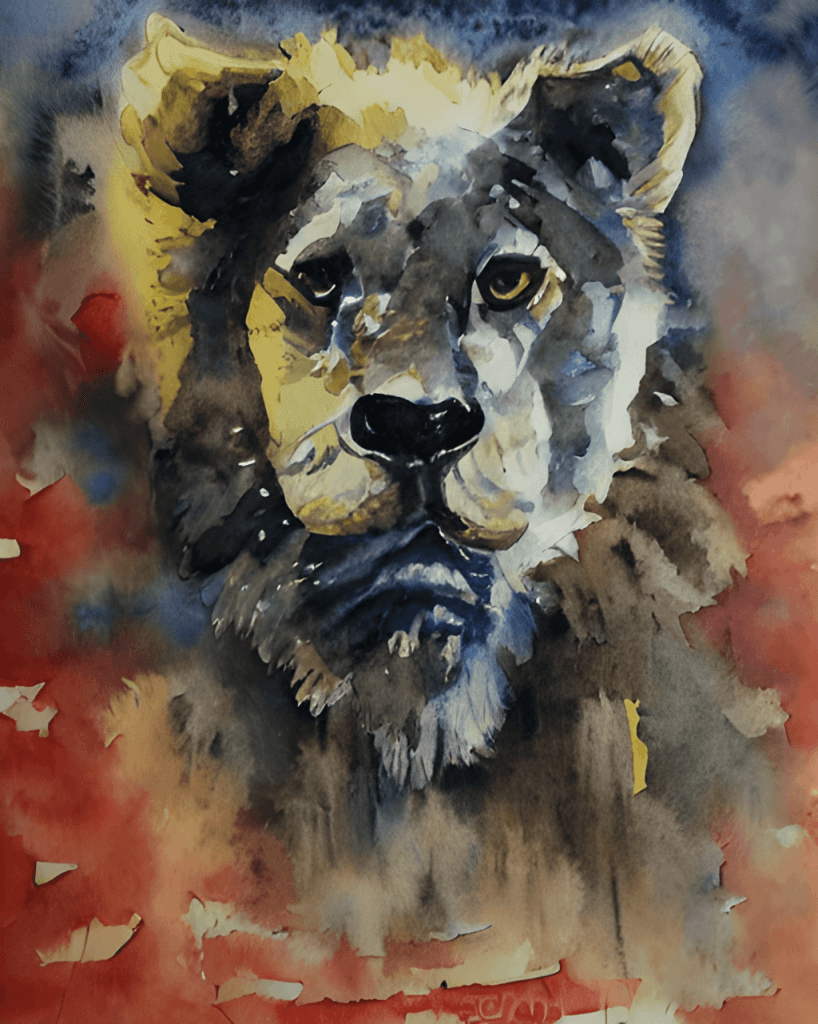
8w9: Eights with a Nine wing are the archetype of the lioness protecting her cubs. There is a more conciliatory aspect to this subtype, and a tendency to use their power to hold together and protect the important bonds in the Eight’s life (this can be for better or worse). Usually, this subtype is more tranquil and laid back, although it still cultivates its sense of condifence that, in case of need, it can break a bone or two.
(note that wings can have some minor descriptive power in terms of superficial behavior, but they are irrelevant in terms of what motivates the person. Many people have no noticeable wing, while few show signs of both.)