Unfortunately my dad passed away. I’ll be taking a couple of days off from the Internet to process it all and fly back to Italy to my mom.
MQS
Unfortunately my dad passed away. I’ll be taking a couple of days off from the Internet to process it all and fly back to Italy to my mom.
MQS
No matter what kind of divination we practice: if it’s worth its salt and is not just some feelgood angel therapy oracle, it has the potential to deliver bad news. How we handle bad news is a mark of how helpful we are capable of being as diviners.
People can come to us for a variety of reason. They may need reassurance, hope, advice or just a quick look ahead. They may even come to us for fun or curiosity, and as long as they are not disrespectful, there is nothing wrong in indulging them.
The principle of respect for our querent stems from seeing them as a whole person rather than a sack of meat endowed with more than its fair share of doubts. We, as diviners and as handlers of odd devices (decks, charts, counters of various kinds) hold a degree of power over them. It is symbolic power, for sure, but reality itself is symbolic (that’s how magic works), therefore symbolic power is real power, and must not be misused.
Finding the right balance between informing the querent and respecting them can be difficult. It’s all well and good as long as the cards talk about pleasant trips and job interviews. But occasionally we recognize messages that we know are going to deeply upset our querent.
Causing unnecessary anguish is a no-no, and there are things that cannot be said without causing unnecessary anguish (“You’ll die soon”, “You’ll lose the baby). Even less serious topics (at least, less serious than death), such as marital infidelity must be treated with caution. We cannot just destroy whole families willy-nilly simply because our cards seem to hint at untoward dealings.
We must also distinguish whether a querent directly asks for something or something unpleasant simply shows up in the cards. Usually, if the querent asks for something, we can be more forthcoming, if we can speak with tact. If they ask “Will I get the job?”, they need to be able to accept “I’m not infallible, but it seems they appear more inclined to go with someone else.”
If they ask “Is my spouse faithful?” and the cards show clear signs of interference, an answer like “Remember that I could be wrong, but there does seem to be someone who’s trying whisk them away from you. Maybe it’s time to have an honest talk and try to solve the issue.”
Incredibly enough, even some taboo topics may occasionally be addressed in this guise. For instance, there are plenty of non-morbid reasons querents might want to know about death: “Do you think my elderly father going to survive long? I want to be able to visit him one last time but the situation at home is just crazy.”
While we must not delude the querent, we have no right to rob them of all hope. Aside from the mantra “Remember I’m a fallible human being”, and even aside from potential advice we might sometime give the querent to soften the blows of bad luck, there are occasionally ways of preparing the querent for a difficult situation without hurting them.
“Is the pregnancy going to go alright?” This is a question I am become more and more skeptical of answering as time goes by, because there is no way of saying anything other than “yes” and still be able to look at myself in the mirror. If we do find ourselves somehow coerced into answering it and the cards are less than positive, the only thing we may say is something to the effect of “Yes, but remember to take it easy, and the cards are saying you should pay extra attention to the doctor’s orders.”
Where all else fails, human empathy is our last line of defense. Helping the querent even for just some minutes by sharing their burden is part of what we may have to sign up for when we choose the path of divination.
MQS
Previous / Back to Index / Next
Fludd discusses some preliminary rules.
Before proceeding to the projection of the [geomantic] lines, which are made up of points, we shall lay down certain rules to explain the reason and manner of creating them.
It is not for the artist to make a judgment on any question relating to a matter which he has already known and understood before, for by doing this he is trying God and his divine knowledge, and will err on that account.1
Do not count the number of points of any line, for by that reason the soul will somehow be disturbed in the calculation.2
If you want to work in this science, you must first describe the proposed problem, so that your understanding is not disturbed otherwise.
You must not make a double question, but form the question in such a way that it asks for the knowledge of only one thing; otherwise your figure will be so disturbed that you will not be able to judge anything correctly. For this reason the question must be rectified in such a way that it has a single and complete purpose.
It must be noted that these geomantic lines merge from equally distant points and must have the form of the four fingers of the hand, as will be seen in the following example, and the points of each line we must connect and concatenate in such a way, proceeding from right to left, that at its extremity to the left one or two points are left free from concatenation.
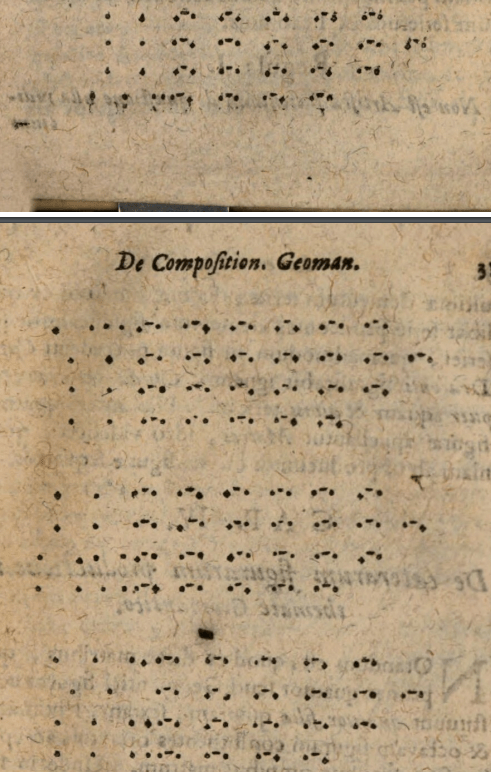
This also must be done with all the lines of the aforesaid four series, and in this way will come forth the four first figures of the geomantic shield, representing the four elements with their natures and combinations, likewise the four winds, and the four parts of the world; for, as regards the elements, the four first lines will signify the element of fire, the second four will denote the element of air, the second three the element of water, and the last four the element of earth.3
Of course, the figures coming out of each series will represent an element of their series, just as in the previous figure Caput will represent fire, Causa will represent air, Puer will represent water, and Albus will represent earth. Now these four figures are called Mothers, because from them all the following figures are produced.
MQS

I’m taking inspiration from a question I got asked recently to talk about an important topic in cartomancy. Sometimes (in fact, many times) the cards appear contradictory, with positive and negative cards mixed together. The question I was asked is, which cards prevail in the reading.
Before starting the interpretation, it is usually a good thing to get a general look at the cards to see the ‘tone’. Are they mostly positive? Are there places in the spread that seem difficult? Are there cards that answer the question directly? You don’t need to come up with the interpretation right away, but it’s good to be aware.
However, this general bird-eye view is not enough. Usually, in cartomancy, we read the cards from left to right as if they were a sentence, stringing the meanings together. Therefore, as a general rule, 5♥️ – 4♠️ is worse than 4♠️ – 5♥️. In the former case, the abundance is broken or blocked, while in the latter case the brokenness and blockage are overcome.
In this sense, it is important to pay attention to whether the negative points in the spread come at the beginning, in the middle or at the end, because. Even if there’s two negative cards out of five, if they come up at the end they can obstruct success. If they come at the beginning, it may be a passing problem.
Again, though, let us avoid purely mechanical rules. Suppose a five-card spread is all positive and shows the querent getting what he wants, and then at the end there is one negative card. This card may show not failure, but that the fulfillment of the wish comes with problems. In these cases it is always good to either add cards or do another spread.
Similarly, the cards are entirely negative and show failure, a single positive card at the end doesn’t necessarily show that the querent will get his way. It could be showing that there will be new opportunities. Again, additional cards or a new spread may be warranted.
When we ask a question and a card directly connected to it comes up in the spread, it is always important to look at the cards surrounding it, especially if they are of the same suit, and even more important are the cards following it, because they will show us what will happen to the significator of the question.
For instance, if the question is about a pregnancy, the 5♥️ followed by positive cards is encouraging. If the question is about work, the 8♣️ surrounded by Spades could show serious problems or even unemployment. In a marriage question, the 3♣️ surrounded by Hearts shows a loving union.
These are rules of thumb. Every spread is unique and must be judged on its own merits and in its own structure.
MQS
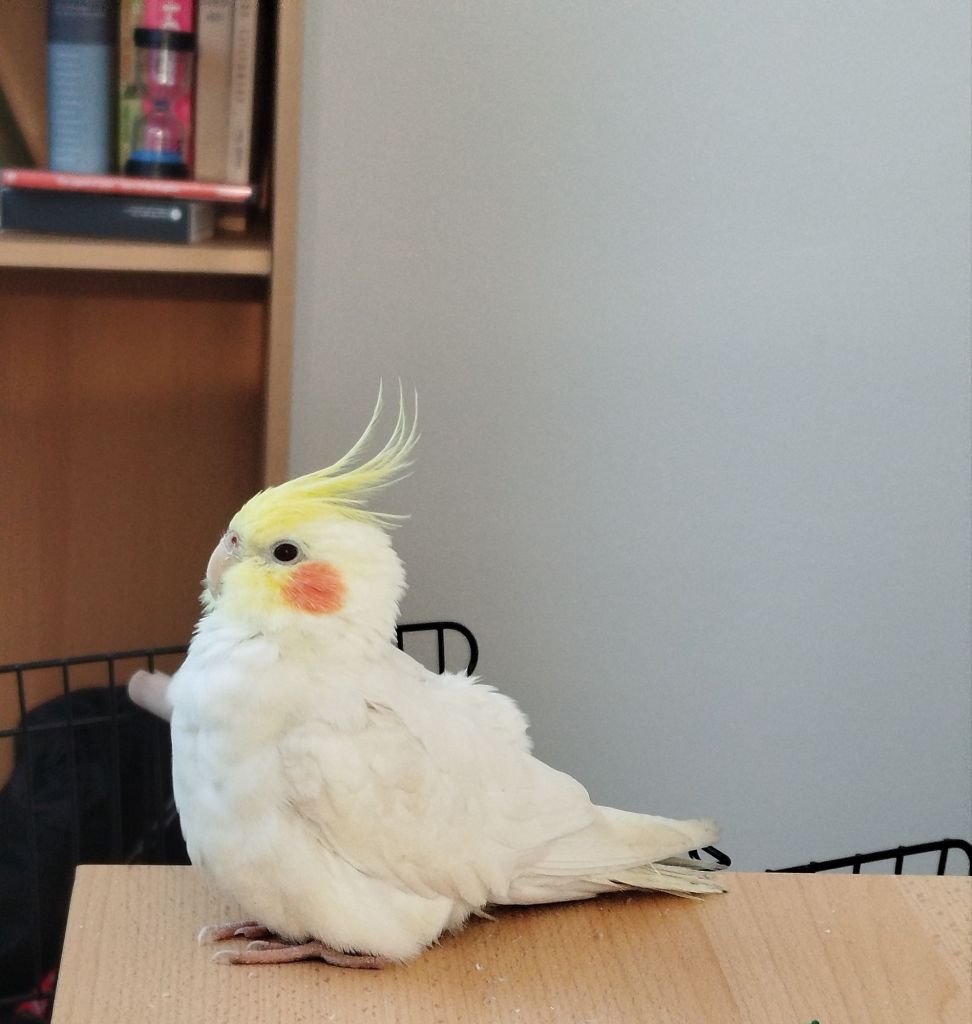
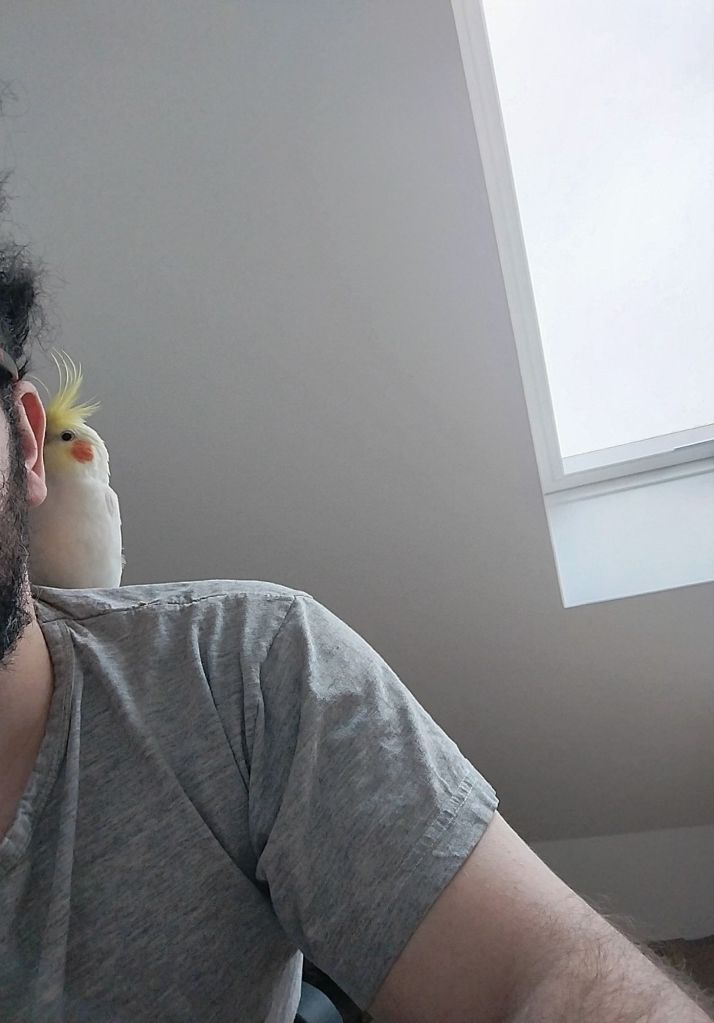
We’re making progress here!

MQS
I’ve already discussed why I don’t do readings on public events and public figures, but it largely boils down to two reasons: 1) it would merely serve my ego 2) I would just be adding to the useless spectacle of divination being paraded around as a form of silly entertainment.
But something interesting happened that made me chuckle a little at the simple complexities of life. I heard from a friend of mine for whom I had done a short reading before she went back to the USA, where she resides. This was an unfocused reading, done more for fun than seriously. These were the three cards:
A♦️ – 3♦️ – 9♠️
Most people can guess that this spread was about money, and loss of money more specifically. With nothing to go off of, I simply warned her about the possibility of losing a small amount of money, as she would get news about it. She was rather perplexed as she wasn’t expecting anything of this kind.
Well, it turned out she had betted money on Harris in the presidential election.
So, am I saying that I predicted Trump’s reelection? Of course not. When I did the reading I had no idea it could be referring to it, especially since I don’t keep up with American politics that much. All I predicted was bad financial news for my friend who, unbeknownst to me, had a horse in that race, but life has a way of weaving the most disparate threads together in way we cannot foresee. Life is always a system if circles within circles, the smaller within the larger, by the hermetic principle. And the more I practice divination, the more I am grateful for the unpredictable side of things.
MQS
As I’ve mentioned on this blog, I’ve been studying the divination tradition of the Bolognese Tarot (Tarocchino Bolognese, literally the Small Tarot of Bologna) for some months now. I’ve been doing it under the direction of a traditional practitioner of this art, whom I’ve befriended and with whom a wonderful exchange of ideas has started.
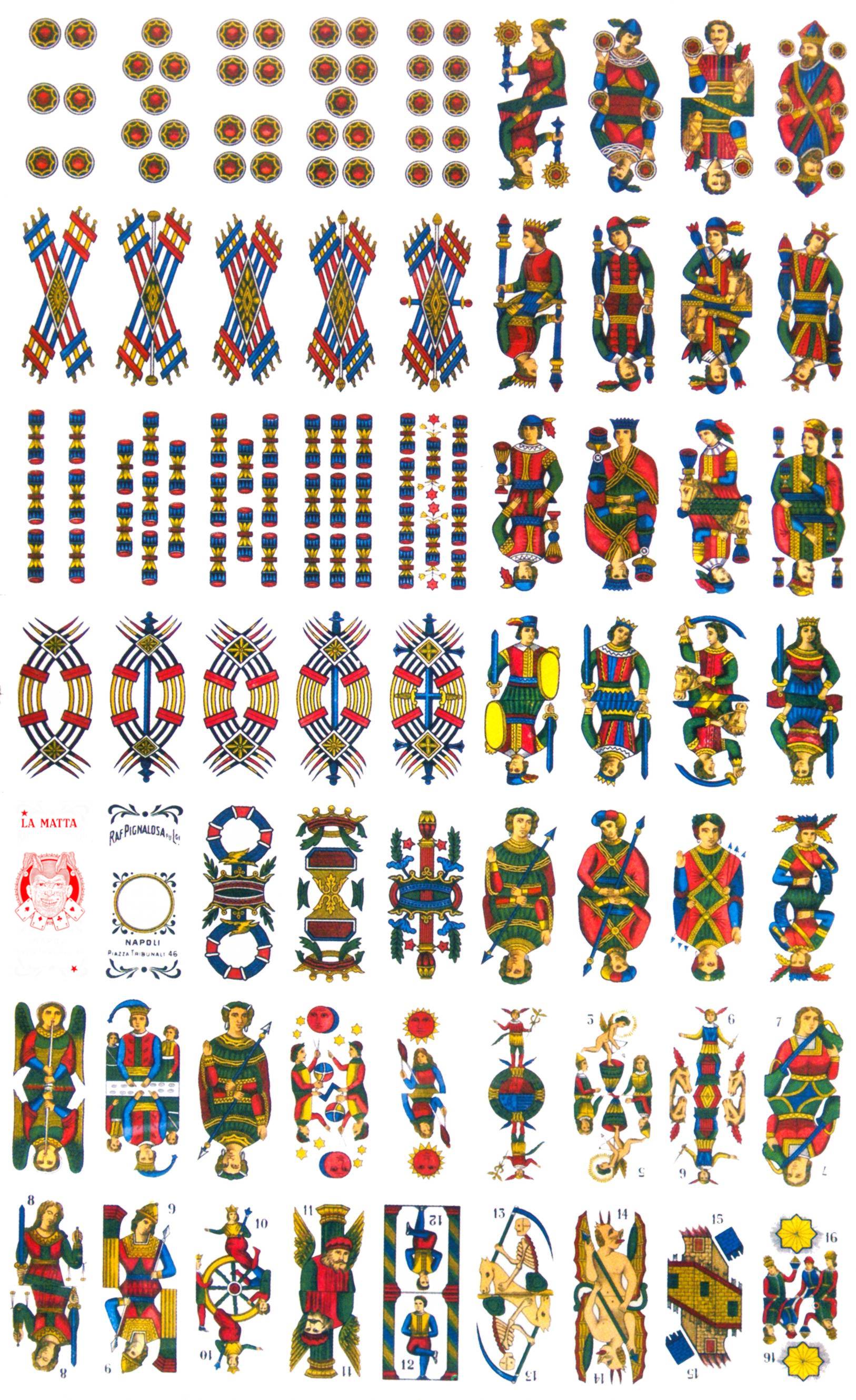
I plan on introducing this form of divination in its main lines for a couple of reasons: 1) it is little known outside of Italy and it deserves some love 2) Its reading techniques are markedly different from the current approach and allow for a very concrete, down-to-earth approach 3) I want to discuss some spreads done with it in the future, and I can’t do it without introducing it first 4) it is the oldest tarot-related divination tradition that we know of, and it is therefore cool from a historical standpoint.1
Like the almost totality of very old decks, with a couple of exceptions (the Visconti deck is one) the Bolognese tarot is distinctively unappealing from an esthetic standpoint, largely because, like other popular pre-RWS decks, it was meant to be used by poor people as a playing deck at the local inn.

The reason it is called ‘tarocchino’ (small tarot) has to do with its reduced size, probably to enhance its handlability. However, it is not just the size of the cards that is reduced, but also the number of the cards that comprise the deck: all pip cards from Two to Five are removed, leaving only the Ace of each suit plus the cards from Six to Ten and the court cards.
Furthermore, the Pope (Hierophant), Popess (High Priestess) Empress and Emperor are absent from the deck for political reasons, as Bologna was directly under the control of the Church. Instead, the deck includes four ‘Moors‘ (the Moors were Muslim colonizers that had conquered parts of Italy.)

Finally, the Bolognese Tarot has another peculiarity, in that the Major Trumps are out of order compared to our regular system. This may sound surprising to some, but our current ordering of the trumps is a relatively recent development and has nothing mystical about it (the oldest preserved document with the order of the trumps gives a rather different sequence).
The Bolognese Tarot tradition was almost entirely confined to the city of Bologna and the surrounding areas, and was at risk of dying out, until both the card game and the divination tradition were transmitted to a larger public thanks to the power of the Internet.
Interestingly, to this tradition is connected the most ancient set of meanings handed down by old sources. The following list dates back to the pre-Napoleonic period and gives the meanings of a reduced pack of thirty five cards. I’m copying it here for its historical interest, but it does not correspond to the system I have been taught:
As I said, this is not the system that I’ve been taught, and it is very likely that even back then more than one system existed (usually, significant differences are found from quarter to quarter in Bologna and from small village to small village in the surrounding areas). Since this cartomantic tradition predates Etteilla’s by at least a quarter of a century, and probably more, and since Etteilla says he learned to read the tarot from an Italian card reader (though he pretends it was Alexis of Piedmont to add to the mystery), it is not to be excluded that the Bolognese tarot had some influence on him.
But this is speculation. What is clear is that tarot divination, whenever it was born, was brought into the world as a way of addressing concrete issues. This series of articles is dedicated to bringing the tarot back to these roots.
MQS
(Note: this is a collection of the meanings attributed to the cards by some occultists in the past centuries. It does not reflect my own study or opinion of the cards. It is only meant as a quick comparative reference as I develop my own take.)
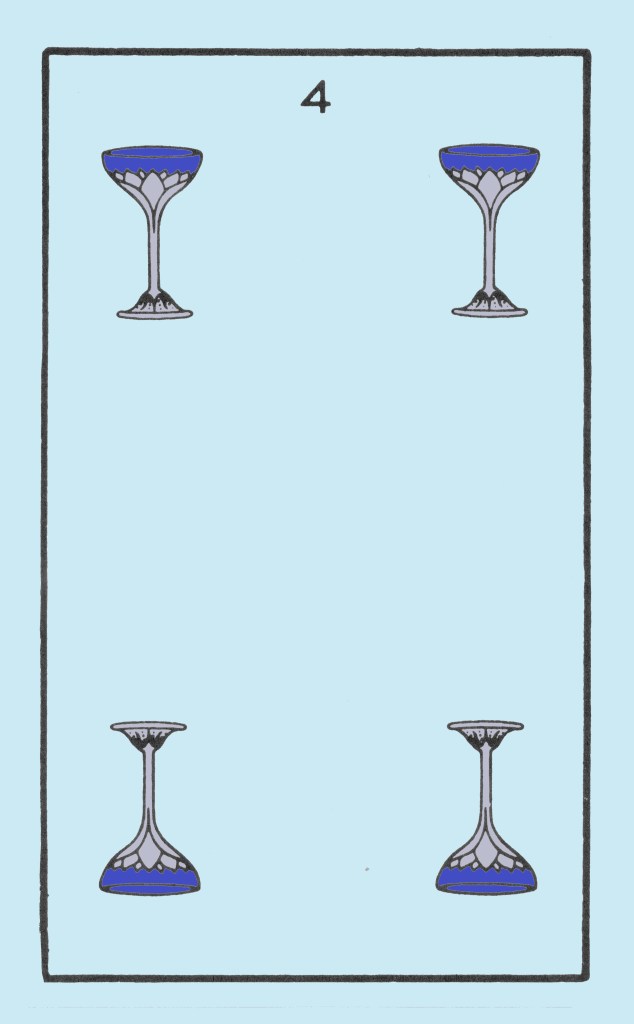
The specific divinatory meanings are thus based on the attributions of Chesed, the planetary forces of Jupiter and Neptune, the zodiacal influences of Cancer ruled by the Moon, and the astrological fourth house. Jupiter’s sphere of influence is Chesed. It co-rules the third decanate of Cancer besides being exalted in this zodiacal sign. Therefore the Four of Cups has a very strong Jupiterian influence of wealth and expansiveness. The Four of Cups corresponding to the third decanate of Cancer is the time period July 13 to July 22, ruled by Jupiter and Neptune.
In specific Tarot Divination its key meanings are:
Well Dignified: success in material things, but desire for something higher; a period of comparative comfort, yet a little confining, thus suggesting a measure of satiety; it is a symbol of contemplation and of the turning away from pleasure in quest of higher things; it intimates strong psychic influences in the life or environment of the Querent.
lll-Dignified: material gain, but through injustice; sorrows resulting from satisfaction of desire; getting what one has wanted but finding no joy in it.
Keyword: Surfeit
(From the Oracle of Tarot Course)
A young man is seated under a tree and contemplates three cups set on the grass before him; an arm issuing from a cloud offers him another cup. His expression notwithstanding is one of discontent with his environment. Divinatory Meanings: Weariness, disgust, aversion, imaginary vexations, as if the wine of this world had caused satiety only; another wine, as if a fairy gift, is now offered the wastrel, but he sees no consolation therein. This is also a card of blended pleasure. Reversed: Novelty, presage, new instruction, new relations.
(From The Pictorial Key to the Tarot)
The Four of Cups is called Luxury.
The masculine nature of fire permits the Four of Wands to appear as a very positive and clear-cut conception. The weakness in the element of water threatens its purity; it is not quite strong enough to control itself properly; so the Lord of Pleasure is a little unstable. Purity has somehow been lost in the process of satisfaction.
[…]
This card refers to Chesed in the sphere of Water. Here, below the Abyss, the energy of this element, although ordered, balanced and (for the moment) stabilized, has lost the original purity of the conception.
The card refers to the Moon in Cancer, which is her own house; but Cancer itself is so placed that this implies a certain weakness, an abandonment to desire. This tends to introduce the seeds of decay into the fruit of pleasure.
The sea is still shown, but its surface is ruffled, and the four Cups which stand upon it are no longer so stable. The Lotus from which the water Springs has a multiple stem, as if to show that the influence of the Dyad has gathered strength. For although the number Four is the manifestation and consolidation of the dyad, it is also secretly preparing catastrophe by emphasizing individuality.
There is a certain parallelism between this card and the Geomantic figures Via and Populus, which are attributed to the Moon in her decrease and increase respectively. The link is primarily the “Change=Stability” equation, already familiar to readers of this essay. Four is an “awkward” number; alone among the natural numbers, it is impossible to construct a “Magic Square” of four cells. Even in the Naples Arrangement, Four is a dead stop, a blind alley. An idea of a totally different Order is necessary to carry on the series. Note also the refolding-in-upon-itself suggested by the “Magic Number” of Four 1 + 2 + 3 + 4 which is Ten. Four is the number of the Curse of Limitation, of Restriction. It is the blind and barren Cross of equal arms, Tetragrammaton in his fatal aspect of finality, as the Qabalists knew him before the discovery of the Revolving Formula whereby the Daughter, seated upon the Throne of the Mother, “awakens the Eld of the All-Father”.
For the meanings of Via and Populus, refer to the “Handbook of Geomancy” (Equinox Vol. I, No.2).
(From The Book of Thoth)
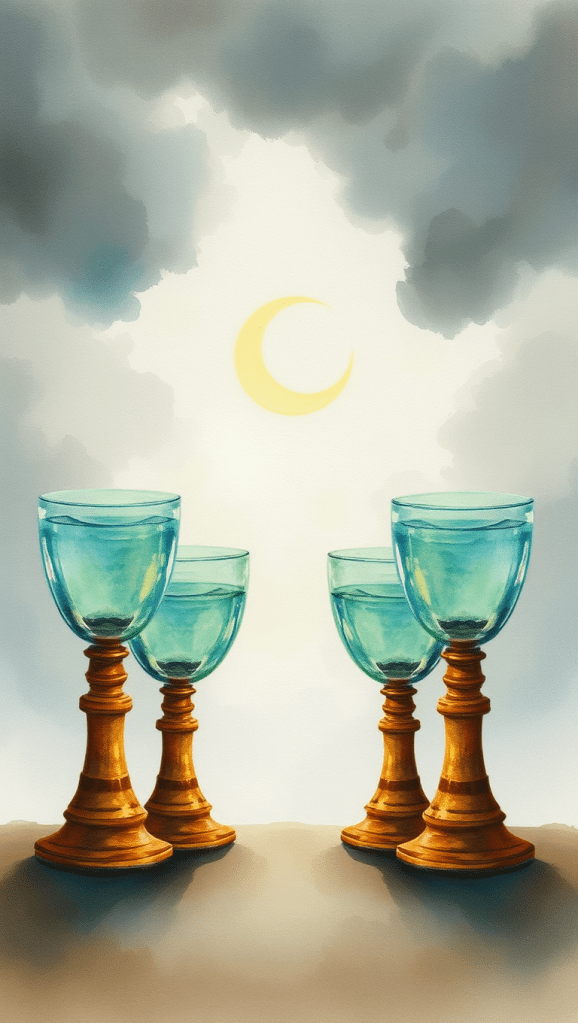
FOUR cups: the two upper overflowing into the two lower, which do not
overflow. An Angelic Hand grasps a branch of lotus, from which ascends a stem bearing one flower at the top of the card, from which the white water flows into the two upper cups. From the centre two leaves pass right and left, making, as it were, a cross between the four cups. Above and below are the symbols Moon and Cancer for the Decan.
Success or pleasure approaching their end. A stationary period in happiness, which may, or may not, continue. It does not mean love and marriage so much as the previous symbol. It is too passive a symbol to represent perfectly complete happiness. Swiftness, hunting and pursuing. Acquisition by contention: injustice sometimes; some drawbacks to pleasure implied.
Chesed of HB:H (Receiving pleasure or kindness from others, but some
discomfort therewith).
Therein rule the great Angels HB:HYYAL and HB:MVMYH.
Boredom
Upright. This card, as far as the medicine of the spirit is concerned, means, in its natural position: Boredom, Displeasure, Discontent, Disgust, Aversion, Enmity, Hatred, Horror, Restlessness, Pain of spirit, Slight sadness, Affliction, Painful, Annoying, Unpleasant. – Saddening, Distressing.
Reversed. New Directive, New Light. – Index, Indication, Conjecture. – Augury, Foreboding. – Presentment, Foreboding, Predilection, Novelty.
MQS
I’m currently visiting my parents in Italy, so I’m going to keep this short and sweet. I lost my keys. As I probably already mentioned, I hate lost object readings because they are incredibly difficult to decipher, but I figured it wouldn’t hurt to try. The cool thing about playing cards is that most people have them at home. This is the reading that came up:
7♠️ – 8♥️ – 10♠️ – 2♦️ – J♦️
If I had to tell you I understood this reading I’d be lying. The one thing that seemed clear to me is that it was in a place made for people (Eight of Hearts), so the living room was an option, though it seemed strange, since I always keep my keys in my old bedroom. There were also those two diamonds indicating messages, which I didn’t understand.
Well, it turned out I suddely lost (Seven of Spades) the keys the previous evening (Ten of Spades) during a dinner (Eight of Hearts), and I was contacted by the owners through a friend of mine who knows them.
MQS
This post is inspired by a forum page I was reading where various people whose whole magical practice consists in casting the defensive spells were comparing notes. One thing that often amuses me is that many people who are looking to get into magic often start by practicing random rituals which are either plucked off the internet (trust me bro) or taken from old books (it’s old so it’s true).
Even supposing that these rituals are effective (no, your wanting it to be effective is not enough for it to be) practicing them outside of the cultural, philosophical and magical framework within which they were conceived can be extremely dangerous if it is not done with full knowledge of the facts pertaining to it and by supplementing your magical knowledge with your reasoning ability to work out its inner mechanism. This is why I advocate for magicians to study philosophy and logic, among other things.
The first thing these people will rush to is defensive magic, their reasoning being that defensive magic can do no harm. In fact, it’s good for you! How can it not be? There are some words that unfortunately evoke unwarranted feelings of safety. ‘Nature‘ is one of those words. People hear “It’s natural” and immediately assume it’s good. Know what is natural? Ebola. But people in industrialized countries have a romantic notion of nature due to how distant it is from them–they can afford such a romantic notion, since usually nature is allowed into their lives in small, sanitized drops of color.
The same goes with the word ‘defensive magic’. It must be good if it is just for defense! After all, defense is good: That’s why we take karate lessons and install cameras on the front door. This, people think, is the equivalent of defensive magic.
Yes, defense is good. So is hygiene. After all, while hygiene now falls mostly under the cosmetic industry, it was once a matter of defense: cities with running water and plumbing had healthier citizens who could defend themselves more effectively. And what is hygiene, at its core, if not defending the body against certain biological threats?
Still, most people would agree that taking antibiotica every day without a reason, or washing your hands every few minutes is not only silly but detrimental. Our body exists in a dynamic balance with the forces outside of it, and neutralizing those outside forces will inevitably lead to our body being incapable of resisting them. The same is true for our soul. Magical hygiene is a thing, and it does contain certain solutions to keeping a good equilibrium. So how do we know if something is good?
The one thing we need to ask ourselves when looking for protection is: protection from what? What am I doing that requires protection? To put this into perspective: a welder’s mask protects his face from flying sparks. Do you need such a mask? Are you in danger of being blinded by flying sparks? Unless you are a welder, probably not, and even if you are, you probably don’t need it the whole day.
Most people have a certain inborn resistance to low-level magical threats, often supplemented by whatever protection derives from the religion they practice, so long as it’s a traditional religion with established rituals and prayers. This basic package is usually enough for anyone who is not a practicing magician. There is no point in people going around casting Banishing Rituals for no reason.
One universal law, maybe of magic, maybe of life, is: if there is no problem, don’t try to implement a solution, lest you cause an imbalance that only the presence of the problem itself can solve, thus inviting the problem to present itself.
The more we advance in the magical path, the more we are going to be on the radar of the odd inner-world larvae, and perhaps worse, the more we are going to need to keep the defenses up, and this will usually involve an always unique combination of strategies that are always specific to the kind of work we are doing.
MQS