I don’t remember talking about it here, but I was asked to teach evening Italian classes at the local school, mostly for adults (in that most students are adult, not because I teach NSFW vocabulary).
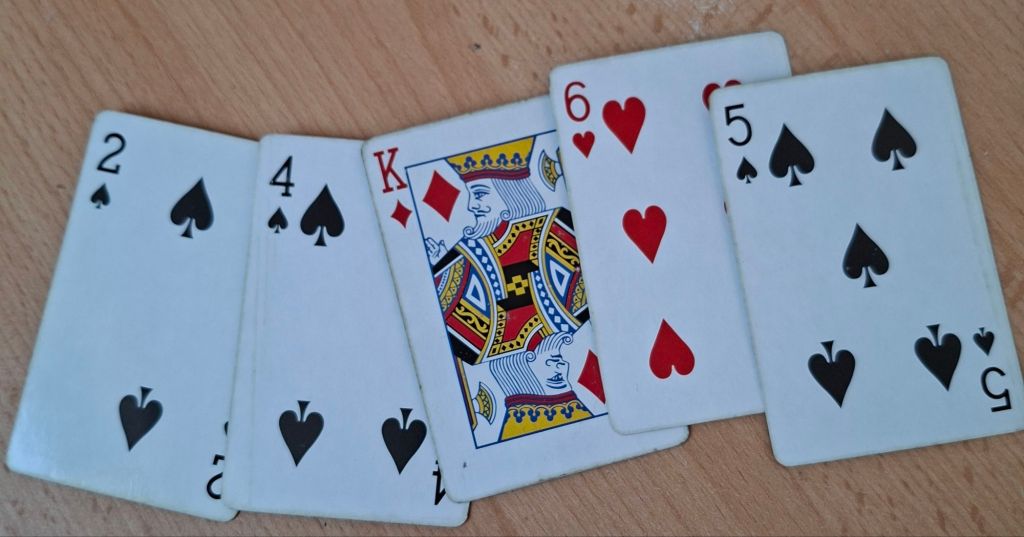
I have been having fun using the cards to predict how the classes would go. They are mostly accurate, although obviously their meanings must be toned down a bit to apply to the situation. One glaring example of the cards predicting something major is this spread on yesterday’s class.
How will the class go?
I’ll tell you what happened, and then we’ll get into the spread, especially since I didn’t predict anything ahead of time, so this is more of an exercise.
What happened was that one of the students, a man who sould have reached the age of reason some years ago, decided that I wasn’t paying enough attention to him. So when I asked him a question he reacted angrily, throwing a hissy fit and questioning me and my method. I reacted more maturely, yelling back at him that he can either get on with my method or be gone, at which point I invited him to leave.
Now let’s look at the cards I drew that evening before class. The cards are quite clear in this case, probably because what happened was relatively major compared to a boring day reading.
The King of Diamonds is ‘some dude’. He doesn’t come up as a Spade, so he’s not a sworn enemy or anything. The K♦️ dominates the spread from the center, so the situation revolves around him. The Two of Spades can be anger, while the Four of Spades can be an obstacle, but with negative cards it becomes a clean break.
So upheaval is to be expected in the relationship to this man. Since the Five of Spades ends the spread, this upheaval is unlikely to be reconciled. Especially since the Six of Hearts, the card of conciliation, is surrounded by all these spades, so it is as if the cards were saying “the conciliation is not” or, in English, there won’t be conciliation. Paradoxically, therefore, the 6♥️ worsens the spread by its presence.
When someone teaches someone else the traditional meanings of the cards, they often don’t waste too much time giving them a rundown of all the applications of the one or two keywords they give them, especially at the beginning. Keep in mind that in many traditions, at least in Italy, the initial instructions for card reading are passed down on Christmas Eve, so the explanations must be quick enough to fit into one evening where you have plenty of other stuff to do.
Usually, the initial instruction is followed up by a more thorough explanation later, but the new reader is also expected to “lavorare le carte”, literally to “work the cards“. This means that while they are being given a vocabulary (the keywords) and some grammar and syntax (the various spreads and combinations) they are supposed to develop their own language.
Think about it: we all speak English on this blog, yet each of us speaks a different version of it, not only because some of us are native speakers while some aren’t, and not just because some come from the US, some from GB, some from Australia, etc. but also, and especially, because each speaker of a language has their own slightly different version of it, owing to their character, personal history, experiences, education, talents and many other factors.
This may sound like an admission that language is random and infinitely pliable at will, but it isn’t. Your own language is an emanation of you as a person, but who you are as a person is not fully under your control. In fact, the diviner and occultist in me believes that it is only very slightly under your control.
What is true for regular speech is true for the speech of the cards. Once you are given the meanings of the cards, it is not a matter of reinventing them, but rather of discovering how the meanings work for you, of understanding what your particular, individual dialect is. This is a never-ending process, because the language of divination is a difficult second language to learn and because there is no human native that can help us.
But let’s discuss an example of how you take a single keyword and turn it into a web of interrelated meanings. In the Bolognese Tarot, which is my current obsession and is quickly becoming one of my favorite systems, the Queen of Coins is called “the truth”. There. If you were sitting on grandma’s lap on Christmas Eve and she were passing the meanings down to you, that’s what she would say. The truth. Period.
The truth is a complex thing, and throughout history different people have understood it to be something different. In itself, it is an abstract concept. After receiving it, you need to make it concrete, i.e., you need to discover how the word “truth” is used in your particular divination dialect. Let’s give it a try (and this is my dialect, obviously. It may or may not overlap with yours).
The truth is what truthful people tell, so obviously the card qualifies people as truthful, dependable, reliable. Next to a person card, the person will be all these things, probably.
Once you know the truth about something, you know about it. Knowledge is therefore another aspect of truth. Who has knowledge? Professors, for sure, and people who have studied something. One might counter that so many graduates today are ignorant fools filled with prejudices they never questioned. And one would be right. Archetypally, though, the connection (the ‘signature’) holds, similarly to how astrologically scholars are ruled by Mercury, even if scholars are often up their asses.
Study, teaching, learning, explaining, science, discovering, bringing to light, intellectual (or at least not physical) occupations seem to also be concepts that beautifully complement that lonely keyword “truth”. But all these aren’t just descriptions for abstract knowledge. What is a less abstract form of knowledge? Expertise, for sure. If you call the plumber, he may not be able to tell you how the categories of Aristotle’s logic apply to your toilet, but he sure knows how to stop it puking out scum. And that’s a good deal more helpful. So a plumber with the truth on his side is certainly a plumber you want to hire.
Today, the word wisdom is almost forgotten, or relegated to describing dubious practices with no scientific stamp of approval. But wisdom used to be deeply connected to knowledge. The Queen of Coins, therefore, surely describes the ability to lead your life the right way, or to lead others the right way.
Especially in the West, the idea of truth has always been connected with the ability to see. “I see” we say, when we understand something. This may sound shallow, but it actually has its roots in the old Greek notion that the truth is what the mind sees beyond the illusions of the senses. The word “idea”, which is what we have in our minds and which we hope to be a truthful representation of reality, comes from the root ‘vid-‘, which is the same root as the latin ‘videre’, to see. So the Queen of Coins stands for sight and for the eyes, and for windows, which bring light (understanding) into the home and from which we see how the world outside looks like. And so on and so forth.
These associations can be discovered by practice and by decoding the combinations that are usually passed down. Again, it is not a matter of making up. It is, literally, a process of discovery.
The bed symbolism is almost as widespread in cartomancy as that of the table, of which it is a natural counterpart. The table often stands for conviviality, nourishment, feasting and interpersonal contact, and it often represents situations happening during the day. The bed, by contrast, is a nocturnal symbol of retreat and rest, and can stand for sickness, but also for physical intimacy, depending on the other cards. As usual, it is admirable how the card readers of yore used to weave simple and effective symbols of daily life in their reading systems, which allowed them to talk about reality.
The oldest mention I could find of a card representing the bed is in a little-known system for reading Italian regional playing cards with a reduced pack of 25 (instead of the full deck of 40). In this method, the Four of Coins is the bed card. It tends to represent situations becoming static or sick, or it can talk about passion, depending on the other cards. It can also indicate that something happens in the evening or at night. Interestingly, in another system I’m aware of, this time utilizing the full pack, the Four of Coins is the table, while the Five of Wands is the bed.
In the Bolognese Tarot, which is the oldest used divination deck we have written records of, the Chariot is the bed card. This has got to be one of the most puzzling bits of symbolism of the deck: a card that is usually indicative of forward movement, travel, progress, launching forward is seen as a card of static sickness, likely due to how the chariot is represented, with the horses crouching at the sides, as if the forward movement had stopped.
Truth be told, in the oldest extant document on divination with the Bolognese tarot, which dates back to the Pre-Napoleonic period, the Chariot is still considered a card of journey, but shorter than the World card, which is assigned the meaning ‘long journey’. This may indicate that the meaning of the card evolved through time, from ‘little journey’ to ‘little movement’ to ‘not much movement’ to ‘staticity’. Another likely possibility is that different meanings were used by different strands of the tradition, one of which hadn’t yet been put down in writing. This latter possibility is confirmed by the fact that there are readers who who assign both meanings to the Chariot, depending on the cards that surround it (static cards activate the static meaning, active cards the moving, active meaning).
The bed card is also present in some of the oracle decks that originated in the XVIII century as parlor games. In the Sibilla we have two bed cards: one is the Four of Spades, the Sickness card, which interprets the symbolism of the bed in its more static and negative sense of needing to interrupt one’s routine and of situations that are not healthy. The other bed card is the Ace of Diamonds, the Room, which can indicate any room in a building, but which in itself stands for the bedroom. As an extended meaning, it is the card of intimacy, so the presence of cards indicating love or physical contact can lead to rather hot interpretations.
The Kipper deck does not have two bed cards, but it does contemplate the symbol of the bed in the card “a short sickness”, which depicts a patient in bed being visited by a doctor. This is mostly a card of sickness, but many German-language sources I’ve read consider it also an ingredient in combinations about intercourse, partly due to the presence of the bed and partly due to the doctor touching the sick man’s wrist, which is supposed to be indicative of physical contact, if supported by other cards.
This is a recurrent question I get. Some people are of the opinion that reading decks have something akin to a shelf life, after which they stop answering or they become impregnated with negative energy from all the readings. I often get asked if this is the case.
To which my answer is: under normal circumstances, your deck will keep answering you (or at least it will keep working, even if it occasionally snubs your questions) for as long as you use it. This has been my experience, as well as that of all my teachers, and I’ve had the good luck having many teachers.
My first teacher, from whom I learned to read playing cards and the Sibilla, followed the Italian tradition that divination decks need to be old, must have been used to play at the local inn and the people playing with them must have covered them in offensive swearwords (read here my hypothesis on why this tradition exists).
This obviously doesn’t apply to the Sibilla, since Sibilla decks, as well as similar decks like Lenormand or Kipper cards, are pretty much the only card decks specifically designed for divination. But tarot was a playing card game, and playing cards… well, it’s in the name, and so, according to my teacher, they needed to be “giocati e bestiemmati” (played with and offended with swearwords). And after you got a hold of one such deck, you probably were going to use it for as long as you lived.
When I started learning the tarot, my other teacher held on to her first deck as if it was a relic, and it did answer her beautifully. She was of the opinion, however, that the deck could stop answering correctly or become more negative in its answers if you read for many people with a tragic life. When this happened, she usually took the deck to church and had it blessed by the priest. I honestly cannot say I ever needed this, but there you have it.
As for the Bolognese tarot, I do not know what deck the person who taught me the 45-card system used, but I do know that my teacher for the 50-card system still uses her grandmother’s deck. Another person I am in contact with, who uses 49 cards, still uses the deck her teacher gifted her.
As for me, I have a conservative outlook on life, and I don’t throw away something unless I really, really have to. The Sibilla deck I use is the one I bought when I started learning, and while I don’t insist on always using the same playing card deck, I still occasionally whip out my old one.
Still, there are people who believe decks can stop working after a while, including people I admire (see Josephine MacCarthy). Is there anything to it? Obviously, much depends on the theoretical framework one uses for their magical activities (which includes divination).
I was taught that divination (any divination) can stop working if you are the recipient of a curse, but that’s an extreme scenario. More often, the people who complain about their deck going lazy on them tend to torture them with repeated questions on the same topic over and over.
As much as skeptics may point out that this is proof that divination doesn’t work because it cannot be repeated ad libitum in lab conditions, it is simply how it is: if you annoy the deck it will stop answering. This simple fact shows, at least in my opinion, that there is something alive attached to the deck.
Usually, in traditional divination folklore, we would say that the deck has a little spirit hidden inside. And while this may sound like a childish explanation, it is the one that best explains my experience, as well as being perfectly in line with traditional hermetic principles. The point is that while many valiant attempts have been made at explaining divination using more or less recognized principles (see Jung’s views), we are at work with something we don’t fully understand. Some level of respect is due to this something, if for nothing else than to keep the work environment positive with whatever it is.
Morality is a complex thing, though this fact is lost in an age in which debates are reduced to exchanges of snarky remarks on social media. Morality is complex because it deals not in what is but in what ought to be, and what ought to be is invisible to the eyes. How ideas about what ought to be came to exist has kept philosophers and scientists occupied for thousands of years.
And this may account for a good deal of the blind desperation with which people seek something or someone who will tell them how to act. For those of a speculative mindset, reaching definitive conclusions is less a priority than exploring possibilities.
But most people feel the urgent need of external guidance. So some give themselves over to group leaders, others adhere rigidly to an ideology or religion. And those with a more woo woo view of life turn to oracles.
But divination is not a good judge of what’s morally right. If you want proof, when was the last time you laid out a spread that gave you advice that was based on moral principles completely incompatible with your own?
Having the stamp of approval of whatever projection we may make onto pretty bits of cardboards is not that good of an idea. It is a surefire way to delude ourselves and it can rob us of our agency and of our responsibility to think for ourselves.
Divination is good at telling us what is, or was, or has a good chance of being in the future. What ought to be is for us to make up our mind about.
There are couples who stay together a lifetime, couples who break up at the first sign of hardship, and then couples that seem to follow some kind of fated path made of pushing and pulling. This is one example.
8♥️ 6♣️ 7♣️ 4♠️
Q♣️ J♦️ K♣️
9♣️ 3♣️
6♥️
Note the absolude predominance of Clubs. Clubs are a heavy suit that causes difficulties and slowness. There is no card of great love, but the Eight of Hearts is a card of fun and good times.
Followed by two problematic Club cards, the Six and the Seven, which end up in break-up (Four of Spades) it is clear that the two didn’t break up from one day to the other never to see each other again, but have been on a constant path of ups and downs ending up in separation.
At the time of the reading the two were broken up, so when I told the (female) querent what I was seeing she confirmed that they’ve been on again off again for quite some time.
Look the second line! We have the two significators united by the messenger card (Jack of Diamonds). So the two have broken up but are still in contact. The querent told me it’s not so much that they send each other messages as they communicate and cause misunderstandings with one another through mutual friends (the Jack of Diamonds can show a go-between). Clearly not a very healthy situation!
The final cards, the Three of Clubs and Six of Hearts, show a reconciliation in the union, but the Nine of Clubs before them implies this is going to be a long-term goal rather than a matter of days or weeks. So the unsatisfactory situation is likely to persist for a while.
As far as giving the querent some advice based on this spread is concerned, I would personally be wary of that Jack of Diamonds between them. It is much better to clear up misunderstandings directly instead of playing up the drama by involving friends as if the two were still high-schoolers (they are in their 40s).
All in all, this spread gives off bad vibes for a relationship. It seems the two are attached more to the drama than to each other. To each their own.
In every deck there are what we might call topic cards, that is, cards that represent a specific field of life: family, work, money, health, love, the law, etc.
All or most of these cards also have general meanings that apply to various contexts. For instance, the Ace of Cups in the Bolognese Tarot is the home card (just like the Ace of Hearts in playing cards or the Two of Hearts in the Vera Sibilla), so it is the topic card for everything relating to family and house questions. But it can also indicate that someone belongs to the family, e.g., when it comes up next to a court card. It can also indicate the inner side of one’s experience of life, one’s inmost, intimate world, etc. So it can also show that something is close to us and touches us.
We need to distinguish between a card acting as a stand-in for a specific topic and the same card acting out a particular meaning. To keep with the Ace of Cups example, when it comes up in a question about work, it might show that the querent’s work life interferes with their family life or vice versa, or that they work from home, or that their work environment is family-like. In all these cases, the house card qualifies the other cards by adding details of its own.
But when the House card is simply a stand-in for the topic ‘home and family life’, the card says nothing about the topic itself. It doesn’t qualify the reading. It simply tells us, “this is the topic.” It is then the role of the other cards to describe the situation, qualifying it in a positive or negative way.
When we are doing a general reading with no question, or with all the cards down on the table, this is all well and good: we see if the person’s significator is next to any of the topic cards, showing that that topic is important, and then we read the cards surrounding the topic card relating them to the topic.
When the question has been specified, though, extra care must be taken trying to figure out if the topic cards that appear are qualifying the topic of the question or if they are coming up to ignore the question and talk about something else. This is not always easy.
Let’s say you asked about work, but the house card comes up. Why? Is it because the home is involved? Or is it because the cards have decided to bypass your question and discuss something else? Or is it both? (It CAN be both). One way to solve this issue is to see if there are topic cards relating to the question, or if at least the cards seem to be predominantly of a nature that seems more akin to the question asked (e.g., lots of Diamonds and Clubs in a work-related question).
The other way is to see if the cards next to the rogue topic card coalesce with it to form a coherent statement that has nothing to do with work, or if instead the topic card allows itself to be absorbed into the querent’s question.
The third way is simply to work with the querent. This is always a good idea. After all, our aim is to interpret the oracle correctly, not to impress people.
Cards that have the potential to be topic cards are always quite strong in a reading, so it is always good to observe them first. Often they form focal points in the interpretation of the spread. Sometimes some cards in some readings can even be ignored, but topic cards always seem to have something to say. We ignore them at our peril.
When it comes to divination, theory can only get you so far. The best way to improve your reading skills is to learn the basics of a *valid* system and then start reading.
For most of us, we are our own first querents, and that is a problem. I don’t have a 100% accuracy record when reading for others, but I barely reach 60% when reading for myself, especially if I’m invested in the topic. It is not just a matter of wrong interpretation, which can and does happen. I am more and more convinced that sometimes, when we read for ourselves and we are not perfectly at peace, we tend to get readings that reflect what we think rather than what is happening or will happen.
Furthermore, the tendency that many people have to start obsessively putting questions to the cards just to see if they say something vaguely understandable (which doesn’t mean true) is dangerous, and can get us in a warped frame of mind.
I know that for many, especially coming from certain societal backgrounds, reading for others can be a big step into the unknown, but I would advise anyone to start reading for some sympathetic friends or relatives (and when I say for them I mean in front of them, not asking questions about them) and then to graduate as soon as possible to readings for people we don’t know or know little about.
I don’t have too many friends, but they do a good job of talking about me to their friends and to their friends’ friends, which is how I get my supply of test anim-ehm, querents. If you start reading for your friends and ask them to spread the word the same will happen to you.
The cool thing about reading for people we don’t know is that it is so much easier than you might think. Divination DOES work! And divining for someone when there is no chance of you knowing the information in advance is very impressive for them and very satisfying for us as diviners. It will build your confidence much more quickly than torturing the cards about your own mental dramas. Plus, the oracles always seem to be much clearer and much more crisp when I divine for strangers.
One thing I would advise is to be as scientific as possible: record the question, the reading, your interpretation and the results. Don’t think you cannot build your vocabulary because the only right answer is the one offered to you by your intuition. 99% of intuitive readers are terrible, and what they call intuition is not actual intuition: it’s their stupidity echoing in the empty chambers of their mind. Be systematic and slowly you will gain experience.
You’ve got to appreciate how folk cartomancy takes the objects of our everyday life and turns them into means for predicting the future. This is, after all, probably how cartomancy started: people needing to know what tomorrow would bring adapting the symbolism of the decks to which they had access (tarot, playing cards and later oracle cards) to the objects and situations that constituted their daily lives and their symbolic interpretation.
From a philosophical perspective this shows great acumen and observational ability on their part. They may not have had a piece of paper that qualified them to count angels dancing on pinheads, but they were possessed of great perception–which is only natural, considering that on their perception depended their survival.
From an occult standpoint, it further indicates that they were perfectly acquainted with the power of symbols to connect the inner and outer realms, which is the foundation of all forms of magic.
One of the recurring symbols of folk cartomancy is the table. In the system of cartomancy with playing cards that I was taught, this corresponds to the Four of Clubs, certainly due to the squarish (Four) and social (Clubs) nature of the card. The Four of Clubs is chiefly the card of words and talks, but it extends to all contacts we develop with others: we can sit at the table with them and talk, negotiate, have fun, etc.
In the Vera Sibilla, we must distinguish between the table in general and the festive table. The former is assigned to the Ace of Hearts, the Conversation. This is also the card of words and talks, but being the Ace of Hearts it is also representative of your family or the people you live with. Furthermore, the table here can also be seen as the table you eat at, due to the connection of the card with the hearth and with everything to do with your mouth and throat. The festive table is more a prerogative of the Nine of Clubs, which is connected with celebrations, fun and banquets.
The first written record of the cartomantic concept of the table is found in the earliest recorded system of reading the Bolognese tarot with 35 cards: here the table is given to the Ace of Coins. This is a meaning that still exists in all traditions I am aware of, although the card has also doubled down as the card of big money in the 45-card system I know, the card of official documents and letters for Germana Tartari and of work for Ingallati.
I am unclear as to why the Ace of Coins was chosen, but I guess the round shape of the heavily stylized coin could be seen as a round table or as a centerpiece. Broadly, the table in the Bolognese tradition is seen as the place of direct contact with others, of conviviality and of business transactions. The card also symbolizes ‘l’ora di tavola’, the time of day you sit at the table, usually lunch time and therefore, more generally, the day as opposed to the night.
The second earliest recording of the symbol of the table comes from Etteilla, whose source attributed it to the Ace of Cups. Here Etteilla and his students tried to extend the meaning of the table beyond the common experience of it by playing on the other meanings of the word ‘table’, so that for instance, the Ace of Hearts for him can also be the table of laws (as in, the one Moses received).
I am unaware of whether the Lenormand or Kipper traditions contemplate the symbolism of the table, though the symbol is not obviously represented in the cards. What I do know is that the symbol is also present in most Italian playing card system, so that I am aware of at least one where the Four of Coins indicates the table.
If I were to start talking to you using just nouns, verbs and a small number of adjectives, your understanding of what I say would probably decrease, but not massively. The reason for this is that the lacking connecting words would probably be supplied by your mind. The context of what I say, furthermore, would allow you to pick mostly the right words based on your past experience, so while there would be a few problems here and there, you’d mostly be able to follow along.
In divination, we often find ourselves with blanks fill in between nouns, adjectives and verbs, which are generally represented by whatever the basic units of meaning are (cards in cartomancy, geomantic figures in geomancy, etc.) And while divination IS a language, the difference is that we have necessarily less experience with it than with natural languages, and that its vocabulary is necessarily more ambiguous.
Taking playing cards as an example, we essentially have only 52 words to play with, with the result that those 52 words must necessarily carry more possible shades of meanings than regular words in complex natural languages. These shades of meaning are generally given by the extended applications of the card’s main significations and other metaphorical takes on them.
The potential for errors, therefore, increases significantly, and that’s even before we take into account the fact that the connecting words are usually missing, and need to be supplied by our own interpretation. Finally, another factor is that the sentences of divination have much less context.
I often get questions by people who have been trying to get into divination but never seem to get a straight sentence out of their oracles. To be honest, it is an art, and like all arts it requires a ‘feel’ that can only be developed by banging your head against the obstalce long enough. However, another problem I often notice is that people tend to have excessive expectations of the type of answers they can get out of the oracle, especially at the beginning.
My philosophy is that I need to be only as specific as my current understanding and experience allows me to be. When you have a spread in front of you, don’t think you need to read a passage from Dostoevsky from it. Think more like having to make sense of the ramblings of a toddler. “Uhhh, something to do with three brothers and a question of faith” is good enough. In fact, it is much better to remain a bit vaguer than filling in the blanks the wrong way, which could potentially mislead the querent, especially since it is way to easy to let fantasy take over and take the interpretation in the wrong direction, and divination is NOT fantasy.
Skeptics might argue that this is way of trying to be right at all costs. It isn’t. It is, in fact, a perfectly philological method. I once did a reading for someone where I remember telling her something to the effect of “the cards seem to highlight something in the past connected with a person you were involved with and money issues with legal ramifications”. It turned out her ex had wasted most of their money in secret, and run away with the rest, triggering a divorce and other legal troubles. I could have filled in the blanks more thoroughly, but, at least based on my understanding at the time, I would have had to shoot in the dark.
The point is: do not feel you have to fill in all the blanks at all costs. You will always be able to be as specific as you need to be. Everything else is vanity.