Category Archives: Occultism and Esoterism

The Mystery of the Seven of Swords

Waite the Juggler

The Rider Waite’s minor arcana (which I already talked about here) are based on the Golden Dawn’s correspondences and titles found in Mathers’ and Felkin’s Book T. Yet Waite, who was very fond of showing off his erudition, made it a point to look for as many similarities as possible between the Book T system and other lists of meanings such as Etteilla’s, Christian’s and others.

This is reflected in the accompanying book to his deck, The Pictorial Key to the Tarot, where he tries to find similarities between various sources for each minor card. He never mentions the Golden Dawn material, despite the fact that knowing the GD’s card names would clarify most of the designs.

The 1 to 1 correspondence between GD meanings and Waite’s minor arcana is self-evident, and once it is noted it cannot be unseen. Yet in his book he makes it a point to just rely on non-esoteric sources, or at least on non-GD sources.

Note that the Golden Dawn did something similar, despite the claim that the card titles were revealed to them. Take the Four of Cups, for instance, which technically should be ascribed to the rulership of the Moon in the third decan of Cancer and to the sephira Chesed (mercy). All these things sound very promising. Yet the card is called Blended Pleasure and it is less positive than the previous two, largely (I believe) in an attempt to accomodate Etteilla’s relatively negative interpretation of the Four of Cups as a card of boredom, annoyance, etc.

Similarly, the Golden Dawn retained certain meanings found in traditional fortune-telling, such as ‘travel by water’ for the Six of Swords. This can be seen as part of the GD’s attempt at summarizing the whole of the Western magical tradition in a new synthesis.

Going back to Waite, it is clear that in his book he is also trying to balance various sources, but if in doubt about which one to follow, he will stick (without saying so explicitly) to the GD tradition. An example I already discussed is the Five of Pentacles, which Etteilla calls the card of the lovers, but the Golden Dawn called it ‘Material Trouble’.

Another example is the Two of Wands, which Etteilla calls a card of sorrow, but for the GD it is a card of Dominion, so Waite goes with the GD but tries to stretch the interpretation in his text by saying that it could be the sorrow of a great leader, like Alexander the Great, at the height of his power.

But What About the Seven of Swords?

With that in mind, what the hell is going on with the Seven of Swords? Let me explain: most people who pick up a Rider Waite tarot deck, even today, have no idea about the esoteric stuff behind it, so they base their interpretation on the design (which, incidentally, Waite thought very little of). This is how, for instance, the Two of Pentacles, the Lord of Harmonious Change according to GD, became the card of juggling, or how the Seven of Cups, the Lord of Illusionary Success, became the card of options.

In this new folk approach to the Waite deck, the Seven of Swords became known as the thief card due to the design.

Yet Waite does not even mention thieves in his description. He says:

A man in the act of carrying away five swords rapidly; the two others of the card remain stuck in the ground. A camp is close at hand. Divinatory Meanings: Design, attempt, wish, hope, confidence; also quarrelling, a plan that may fail, annoyance. The design is uncertain in its import, because the significations are widely at variance with each other. Reversed: Good advice, counsel, instruction, slander, babbling.

The meanings he gives are from Etteilla, where the Seven of Swords is one of the few non negative Sword cards. The description of the card, however, is far more consonant with what we find in Book T, which is:

The Lord of Unstable Effort […]Partial success. Yielding when victory is within grasp, as if the last reserves of strength were used up. Inclination to lose when on the point of gaining, through not continuing the effort. Love of abundance, fascinated by display, given to compliments, affronts and insolences, and to spy upon others. Inclined to betray confidences, not always intentionally. Rather vacillatory and unreliable.
Netzach of HB:V (Journey by land: in character untrustworthy)

This thing with the yielding when victory is within grasp is clearly depicted in the card, where the thief takes away most of the enemy’s swords, but not all, as Waite clearly states.

But why did Waite (and, maybe, Smith) decide to depict a thief in the Seven of Swords despite it being so thematically different from Waite’s actual inspiration (Book T) and even his cover-up inspiration (Etteilla)?

The only hints we find in Book T that seem to point in this direction are “to spy upon others” and “in character untrustworthy”. In an attempt to accomodate Etteilla, Waite probably saw the man looking longingly at the swords he left on the ground as a symbol of hope, which is Etteilla’s meaning for the card.

One possible explanation is that Waite and/or Smith probably thought the type of action that is best suited to the Suit of Swords is the kind of sneaky, underhanded action depicted in the final design of the card. Be it as it may, this is one of the cards that always stood out to me when studying the history of this deck, because it takes a very non-obvious approach to its theme.

MQS

AI, Dream Logic and Visionary Magic Work

I’ve been having a lot of fun lately, watching AI generated videos based on pre-existing material. If you are not familiar with the “steamed hams” meme, here’s the original video:

and this is a meme version (one of the hundreds of versions being produced every year) of the same video, but reworked with AI:

One thing that struck me about it was how incredibly similar this video’s internal logic (or lack of it) is to the logic of dreams, especially of weird dreams. Everything flows into everything else, hanging together with it by thin threads of association.1

Notice, for instance, how the two characters, Skinner and Superintendent Chalmers, start dancing a romantic dance out of the blue just because the AI interprets the two characters getting close to each other as them engaging in romantic behavior, in spite of the fact that one of them is actually rather pissed at the other in the actual scene, and the other actually would rather avoid being in his presence.

This reminds me of how clearly the tone of dreams seems to shift flowingly from fun to scary to dramatic, to fun again, to romantic and so on, based on cues that the brain interprets much more loosely than when governing our waking consciousness. As an example, I recently dreamt I was visiting an old friend back in Italy, and the tone of the dream was cheerful and whimsical. Then, my friend taps on my shoulder from behind, and this must have reminded my brain of some horror movie I watched, because upon turning, my friend’s face turned into a demonic one and I was jumpscared awake.

Interestingly, what AI seems to be lacking, at least at this point in time, is the faculty of judgment, which is exactly what we also lack when dreaming or inebriated.

What I’m saying doesn’t really have any direct magical application. Technically, from a purely magical standpoint, the ability to let the consciousness flow in a dreamlike state is only one of the first levels to be achieved,2 as visionary work deals not only with a rigorous sculpting of the inner reality but also with the contacting of beings on different planes, which does require judgment (and sound judgment, possibly). On the other hand, the free flow of association, while it does have its artistic, psychological and even spiritual uses, is not immediately helpful in magic. In fact, it can lead to self-deception.

Still, I am left wondering if further progress can push AI in the same direction our consciousness moves toward in visionary work. It is a stretch, of course. After all, even the term ‘intelligence’ is used rather loosely when describing AI at this point. But what we thought was impossible yesterday is coming true today, so it is really hard to discern what AI will and won’t be able to achieve, and whether some kind of computer-generated magic or computer-fueled magic is possible.

MQS

Footnotes
  1. It reminded me of what Paul Foster Case says about how the subconscious works, when describing his own version of the High Priestess tarot card ↩︎
  2. Which is why so many self-styled visionaries who used or use drugs to fuel their trips are usually rather shallow, when the consistency of their vision is probed (and we should always probe the consistency of our visions) ↩︎

Be Careful What You Worship

One of my favorite books of all times is Ursula Le Guin’s second Earthsea novel, The Tombs of Atuan. Actually, I adore the whole first trilogy. It is one of the few fantasy cycles that can actually inform one’s magical practice quite a lot, if one is observant enough. But The Tombs of Atuan is my absolute favorite, and I find myself rereading it every now and then as a sort of comfort book.

In The Tombs of Atuan, the protagonist Tenar, a young priestess in a remote and almost forgotten place of worship, is tasked with guarding the dark subterranean labyrinth of the Tombs and with worshipping the Old Powers of the Earth that seem to reside there (the Old Powers are never clearly defined in the other Earthsea novels and material, as far as I know, but they seem to be a sort of mix between natural powers, pre-divine titans and incomprehensible amoral entities).

Over the course of the book Tenar comes into contact with Ged, the protagonist of the first Earthsea novel and gradually realizes, thanks to him, not only that there is no point in worshipping the Old Powers, but that her worship of them has actually made her worse. There is a lot more to the novel, but this one key point is worth thinking about.

It is one of the tenets of my devotional, philosophical and magical practice that no power comes from me as an individual. It can, at most, come through me. The way we as individuals become channels for powers greater than us is through our worship of them (whether it be devotional, theurgic or of a different kind.)

We all worship something, whether it be mystical, philosophical or mundane. And the more we worship it, the more we make space for it in our life and in the world. This has nothing to do with the manifestation or attraction nonsense that is practiced by people online and is to magic what McDonalds is to food. It is, actually, a simple, almost physical fact.

Most, if not all, magical traditions recognize this. For instance, the reciting of the rosary in certain strands of Italian witchcraft, in addition to accomplishing certain magical goals, is also meant to empty the devotee of themselves to make space for the divine. In many so-called High Magic traditions, the aim of initiation is to balance the components of the personal vessel so as to make it a better tool for something much greater than it: “Now be assured that no one can be enlightened unless he be first cleansed or purified and
stripped. So also, no one can be united with God unless he be first enlightened.” (Theologia Germanica, Ch. XIV)

(similarly, in many strands of Chinese magic, Qi Gong and other practices are used to the same effect).

A lot of people, including a lot of magicians, worship God, but this is not enough. What does God mean? How do you define the God that you worship? I feel this sort of clarification is extremely important, not because your definition changes the substance of God in a postmodern fashion, but because there are plenty of powers, objective and real, in the world that are capable of fitting the mold of your definition and seeping through the cracks of your practice, just like the Old Powers in Le Guin’s novel. Clarity, therefore, is extremely important.

Way too often do we see people who think of themselves (and are thought of) as spiritually “evolved”, whatever that means, or magically powerful who, at a second glance, have merely turned themselves into a walking collection of metaphysical parasites.

This process of clarification starts with a rational and philosophical assessment, and rationality is incredibly important (I’ve written a whole article about the importance of reason in occultism). However, keeping the lights on in your head is just the first step. What is needed is a broader cultivation of our vessel.

Can this all be taught? It is a tricky question. It is my belief that few things in life can truly be taught, or rather, most things can be taught, but the ability to be taught is harder to teach than all the rest. When I say that most branches of the occult path are for the few I do not mean to sound elitist. I mean it in the same way that I mean that math is really for few people. Not everything is for everyone.

Yet I believe that at least this one process of clarifying what we worship is important to everyone, whether they be on an occult magical path or not, simply because, as said, everyone worships something.

MQS

Folklore of Italian Cartomancy

Cartomancy has a rich tradition in Italy. It was believed until some years ago that cartomancy had been brought to Italy by Napoleon, but then some cartomantic meanings dating back to before the Napoleonic period were discovered, as well as even some scattered early modern literary references to tarot as a tool for fortune-telling in Italy.

Cartomancy (i.e., divination by cards) has always been a Folk tradition, as opposed to Astrology, which required an advanced knowledge of math. Therefore, the practice of cartomancy was always mingled with odd traditions, beliefs and superstitions. Here I gather a couple of folk anecdotes that were passed down to me and that I later discovered to be widespread. I don’t share these as rules (they aren’t) but only as interesting bits of trivia.

The Cards Must Have Been Used to Play Games

The cards were always originally used as game counters (including tarot). No esoteric woowoo. When I first started learning to read playing cards, my teacher told me to get a deck that was “giocato e bestemmiato“. This literally means, a deck that has been played with (giocato) and that players have used swearwords and profanities over while playing (bestemmiato).

This may sound curious, but it is a widespread belief among Italian fortune-tellers. I don’t have a definitive explanation for why this is so, but I do have a theory: the Church has always condemned card games as tools of the devil, because they caused people to gamble away their money (which they ought to give to the Church) and it tarnished their soul because it caused them to use swearwords and profanities.

When fortune-telling evolved out of card games, it was of course equally condemned as witchcraft and devil-worship, as it was believed that the devil moved the cards to form the messages. Therefore, some card readers must have believed that the cards that some people had used to play while using profanities had already acquired some kind of demonic connection with hell that made them work better (note that profanities are an important part of some strands of Italian witchcraft).

A more angelic variation of this belief is that the cards must have been used either by a virgin or by children, due to their purity.

Although I don’t think the cards have anything to do with demons, I must confess I always use used decks, simply because they feel better when I touch them.

The Little Spirit In The Cards

There is a widespread belief among old-time fortune-tellers that the cards work because they are inhabited by a little spirit or sprite that moves them through the reader’s hand (traditional folk beliefs in Italy, as well as around the world, tend to have animistic undertones.) Not only this, but it is believed that, in each deck, one particular card is home to the little spirit. For instance, in some Italian playing decks the spirit is said to inhabit the Ace of Swords, where a little angel is depicted.

In the regular playing deck, it is said that the spirit inhabits either the Ace of Hearts or the Ace of Clubs, depending on the tradition. My teacher also seemed to believe that, in the Sibilla deck, the spirit resides in the Peacock card, probably due to its esoteric connection.

Needless to say, it is widely believed that if the card inhabited by the spirit is lost or destroyed this is a portent of bad luck.

Passing Down The Meanings

In many Italian traditions it is said that the meanings of the cards must be passed down excusively either on Christmas Eve or in the week preceding Easter. The same holds true for many magic formulas. But don’t worry, the cards work regardless of when you learned to use them.

Knocking On The Deck

Possibly a consequence of the belief in the little spirit in the cards, many fortune-tellers have the habit of knocking on the deck before dealing out the spread as a way to respectfully ask the cards to speak the truth. I have preserved this habit from my teacher: I always knock three times (some even say seven) before dealing out the cards. It’s not that I think the cards wouldn’t answer anyway. It is just a tip of the hat to my tradition.

Paying For Consultations

There are, as usual, two contradictory schools. One says that readings must absolutely be free. The other, more common, is that readings must absolutely be paid to avoid incurring bad luck. This latter belief probably comes from the fact that cartomancy was a popular way for women to make some money, especially in the countryside, and this often led them to become both respected and feared.

Honestly, it was much more common for the old cartomancers to be paid not with money but in different ways: a chicken, a jar of preserve, a pie, some free repairwork. Cartomancers of old became integrated members of the community by offering their advice in exchange for other people’s goods and services.

Clearly, doing free readings is not really problematic from an esoteric standpoint. I’ve been giving free readings my whole life and I’m still alive. I’ll probably soon start offering paid reading from this site and I don’t think this will interfere much with my fate.

The Ace of Hearts

As in many systems of cartomancy with playing cards, in Italian cartomancy the Ace of Hearts is the house. There are many traditions connected to it. One of these traditions is that some fortune-tellers will have the Ace of Hearts blessed by a priest (if the priest is against such practices, then the Ace of Hearts is simply slipped under something else that the priest will bless) and then put somewhere in the home for protection. Usually this somewhere is next to the entrance door.

Leg-crossing

This isn’t exclusively Italian, but still interesting. Some fortune-tellers believe the querent should never cross their legs during the reading. While I don’t really believe this, the interesting thing is that in some countries, during the Middle Ages, judges were encouraged to cross their legs when ruling so as to avoid external interference. Fortune-tellers clearly want the querent to be energetically open, and so encourage the opposite.

MQS

The Esoteric Side of the Loneliness Epidemic

In scrolling on youtube I must have passed the third or fourth pompous video essay on the loneliness epidemic and the atomization of society. Then I had to laugh as I looked at myself from the outside, lonely in my office, my eyes glued to a stupid screen, which is usually what these videos complain about. I don’t like complaining, but I do like observing.

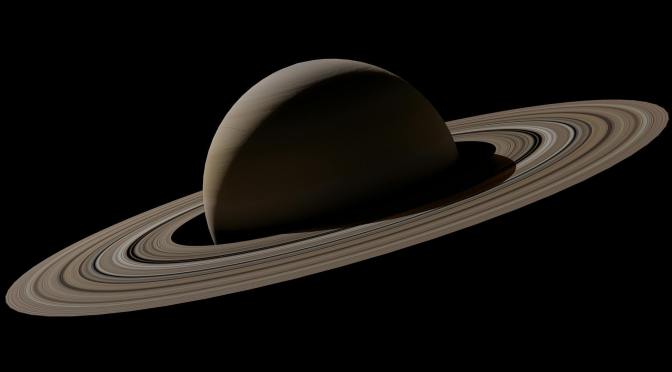
From an astrological standpoint, loneliness is ruled by Saturn, the greater malefic. Let me stress the word ‘malefic’. Generations of people better than us had no problem calling Saturn and Mars malefic and acknowledging the presence of evil in the world, yet the Becky’s and LaRhonda’s of the world who spend their time deluding themseves manifesting on social media think the concept of evil is beneath them.

It is, by the way, no moralistic notion of evil. Evil is simply that which is contrary to life (life being understood not vitalistically, but as outward expression of the metaphysical process of emanation).

Saturn is evil, greatly so. Even the few gifts it has for us are laced with poison: its deep wisdom, discernment and secret philosophy are often accompanied by illness, depression, poverty, general gloominess of circumstances. Saturn is not the cantankerous but loveable teacher that it is made out to be in pop astrology.

This doesn’t mean that Saturn is an unaccountable Satan like that of the exoteric tradition of many religions: Saturn does actively take part in the process of creation, but it usually does so by fulfilling the destructive and separative part of the equation. For instance, in some old hermetic and astrological texts Saturn is said to rule the first part of the pregnancy. This is the part where the soul becomes bound to the biological process of an individual body.

Through Saturn we become ‘this thing here’, before the other planets add their traits. Because we become ‘this thing here’ we also become subject to death, also ruled by Saturn, who is thus the first Planet we encounter descending and the last one we encounter ascending. Our being one thing, one individual, is the result of Saturn’s work.

As such, our existence as individual, ‘saturnian’ beings is also the basis of our loneliness, which is the presupposition of all we can do and achieve in life, all the social, political, cultural and economic structures we can weave together with other people.

It is not casual that all totalitarian ideologies seek to break down the ties that bind us to other people. All ideologies aim to push a certain image of humanity that corresponds to that ideology’s idea of good, but this image is usually the product of the ideologue’s deep delusion and would never occur by itself. The ideologue’s push becomes therefore a push for the reconstruction of humanity from the ground up.

And what is the ground? Saturn! The isolated individual, the one who has been torn from his or her social, moral, spiritual fabric is an individual who has been reduced to the Saturn phase of his conception, the phase where all we can say about them is that they are one thing, but before the other planets (let alone life experience) have added their specifications. The ideology then seeks to add its own imprint on this amorphous thing.

We do not live in times of totalitarian rule (anyone who argues the contrary has likely never experienced the horrors of totalitarianism). But we do live in times where there are people who profit from our isolation in a similar way.

So what is the conclusion? There is no conclusion. This is just a collection of notes as I observe the world around me. I am not suggesting any conspiracy or any evil master plan. I am merely observing who profits and who doesn’t from the current state of affairs. It is a simple reflection on what it means, from a magical standpoint, to isolate people.

MQS

The Objectivity of Magic

Since it’s Leo season I’m rather busy creating Sun talismans and “recharging” old ones (I am not fond of the idea of talismans as something to be charged, but I digress).

This reminded me of one time, a couple of years back, when hubby was in somewhat of an existential crisis as far as his job was concerned. I was working on a Sun talisman, but didn’t tell him (he knows of my esoteric interests but doesn’t interfere, and I don’t keep him abreast of all my workings).

The night after the consecration, hubby woke up at dawn, something that rarely happens, and was drawn by the rising Sun. Inexplicably he was compelled to open a job-searching app he hadn’t opened in a while. Right in front of him was the perfect job opportunity. He applied and got the job.

This little episode, I think, is a good example of how objective magic’s power is. Of course, if by objective we mean “amenable to consistent, quasi-scientific manipulation” then magic is not objective. The presupposition nestled in the heart of science is the possibility of endlessly manipulating reality, while magic has its unbreakable patterns.

Furthermore, white magic tends to have less dramatic (sometimes hardly noticeable) effects than dark magic, because it largely harmonizes the person with the patterns available in their life rather than running against them (if someone is saying that they’ll bring back the love of your life with white magic, they are lying).

Finally, magic doesn’t work as reliably as the technology stemming from science, and never will. If the remote doesn’t work you know you must either change the batteries or see if some wires have come loose inside. But pinpointing what’s gone wrong in a magical operation is much harder, and sometimes things simply don’t work because screw you any old mortal.

But magic is objective in the sense that its influence on reality becomes undeniable to those who have had to do with it. Just like with divination, it is really hard to find excuses and rationalizations.

Also, magic is objective in the sense that it forces us out of our ego and in contact with objective forces outside of us. Some may argue these forces also exist inside of us, and that’s true. In the esoteric constitution of humanity the seven planets are all present, but in so far as their activity is bound by our limitation it is relatively useless, which is why it becomes imperative to overcome those limitations by coming into contact with those same forces outside of us.

Way too much emphasis today is placed on the psychological side of magic and spirituality. This is in part a survival mechanism adopted by our forebears to allow magic to survive the scientific revolution (you can’t disprove me if I’m just an inner feeling).

Working on ourselves is certainly a great idea, though rarely in the sense that this is done nowadays, which usually plunges people even more deeply in their narcissism. However, I believe much of the value of the esoteric arts is that they force us to come out of our selves and in contact with something objective and far greater.

The famous esoteric/philosophical motto “Know thyself” has been reinterpreted in the most abstrusely psychological ways recently, but it is very unlikely that this is what those who wrote it meant by “knowing ourselves”: in the old view of the cosmos, it was impossible to know oneself without knowing one’s place in the scheme of things and therefore not eluding reality, including higher forms of reality, and experiencing the point of juncture between the individual and the universal.

MQS

Fantasy in Divination: A Double-Edged Sword

I’m currently still doing readings in exchange for recommendations for when I  decide to start offering readings from this site. After a short reading with a querent we began chatting about the process of divination, and he asked me if fantasy is required to interpret the cards. I thought this was a really great question. I’m taking fantasy as a synonym with imagination, that is, the ability to conjure up images in one’s mind.

First off, we need to distinguish fantasy/imagination from (true) intuition. True intuition is relatively rare and it does not originate from the limited structure of the personality. It is, for all intents and purposes, otherworldly. Before being appropriated by boss babes on TikTok, intuition was rightfully considered a gift of the gods. It is hard to obtain and even harder to train, although the practice of divination, as it leads to the divine, does allow for the development of intuition.

Fantasy or imagination is mostly the product of neurons bouncing together, and it is at least in good part under our control (though whether imagination is also merely a personal power is up for debate. Many occultists think it isn’t, and I agree.)

Imagination plays a large role in modern magic, and, it could be argued, in the magic of all times (though with different implications and within different frameworks), but I’ll leave this discussion for another time. The point is that imagination is one among the many legitimate sources of understanding that we have at our disposal, including in the occult world.

Ordinarily, if someone asked me what’s the one thing that is required in order to become a diviner, I would answer that they need to understand the vocabulary, grammar and syntax of what is essentially a divine language.

Yet, in philosophy of language, and even more in philosophy of science, there is a concept called underdetermination. In its most frequent use, the principle of underdetermination states that, given a number of facts, there exist more than one theory that can explain those facts and account for them. How we then choose the most appropriate theory has sparked a debate that largely goes on to this day between scientists, philosophers, psychologists and anthropologists.

Something similar happens with divination: given a spread of cards, or a chart, it is often the case that more than one explanation might appear plausible at first. True, the more cards we string together, the fewer the possible interpretations are, just as a single word out of context might mean many things, but the more words there are, the more we understand the sentence.

But take a sentence like “we saw her duck“. Was she avoiding a bullet or does she live on a farm? This is a form of underdetermination, because the possible mental images evoked by the sentence cannot be reduced to the sentence itself.

Probably if we had a perfect understanding of the language of divination we would get unambiguous results, but we don’t. We must therefore use logic and context to weed out the less likely predictions, yet even so we might be left with more than one possible image of the future in mind. The word image here is key.

Can we predict a future we cannot imagine? That is, can we predict a future (or reveal a past) that we cannot put in the form of a picture or series of pictures? If one asks me: would you be able to understand a sentence you’ve never heard before? The answer is: if I know the language, yes. We hear sentences we’ve never heard before everyday and we rarely have problems. But going back to “we saw her duck”, if I didn’t know that duck can also be a verb, I would interpret the sentence univocally, as I wouldn’t be able to create a mental image corresponding to the interpretation of “duck” as verb instead of noun.

In real world languages the ambiguity is often removed by clear context. But in divination context is not always clear, meaning it is harder to exclude possible interpretations, and we need to be capable of creating mental images of all the most likely interpretations of an oracle before choosing which one is the most likely.

We need to be able to extrapolate the many possible meanings a spread can have before submitting them to inquiry. The ability to construct mental images or scenes from the divination tool we are using is consequently incredibly important. In other words, yes, imagination is key in divination.

But the imagination I am talking about is not the unbridled imagination that so many mistake for intuition, and which usually leads either to error or to unverifiable predictions. Imagination is the ability to create possible images derived from our (limited) understanding of the medium we are using, so that we can then see which one is more likely to be accurate by finding testimonies in the spread or by asking the querent.

Like all other occult arts, divination therefore requires the cooperation of both sides of the brain (to which we may add the importance of bodily grounding, but that’s a matter for another post).

MQS

The Ghost That Came Back (Example Reading)

Certain topics are exceedingly rare, and they should remain so, because people otherwise tend to see the supernatural at play everywhere. Traditional divination takes these topics very seriously, which is why it rarely discusses them. In most systems, a vocabulary is given to describe most situations in life, including encounters with ghosts. We are, of course, free to disbelieve, but the cards can still talk about it.

A querent asked me if there was a ghost in her (very old) apartment complex. As I said when talking about curses and hexes, the answer is almost invariably no (although, to be fair, ghosts and other entities are far more common than competent witches). Here’s the spread (it started as a three card spread, I kept adding cards until I was satisfied).

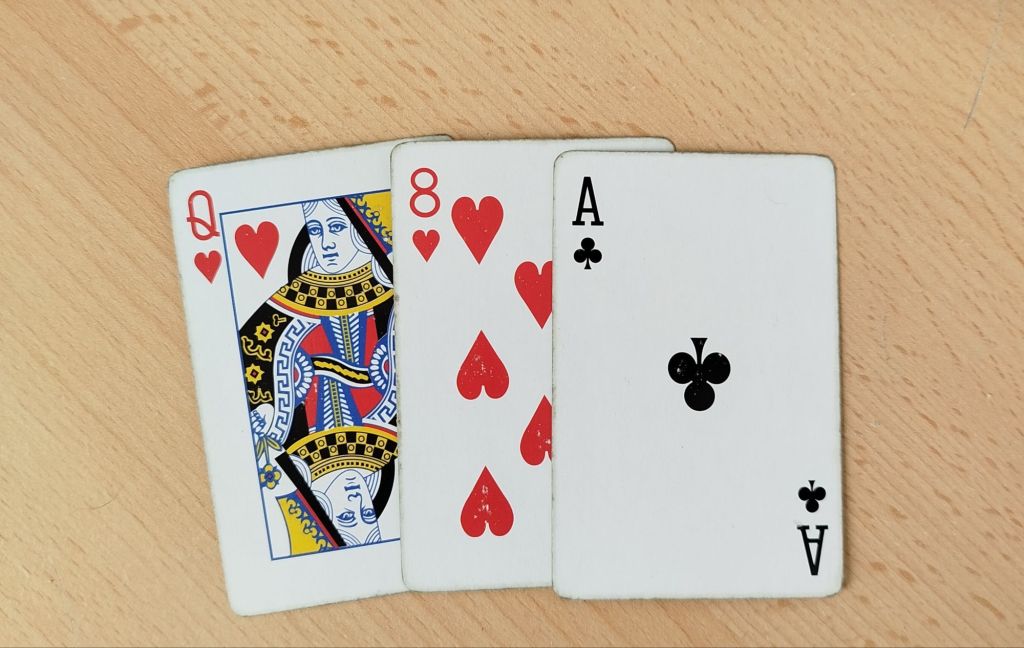
A♠️ – Q♠️ – 2♠️ – K♥️ – 2♣️ – 4♣️ – 9♥️ – 5♠️ – 10♥️

I asked the querent an open question (to avoid influencing her), that is, I asked her to describe the ghost she thought she saw. She said she thought it was the spirit of an ugly, angry woman moving in the hallways of the building. This fits very well with the Queen of Spades and Two of Spades. The Ace of Spades, aside from indicating death, is also a card of great evil.

What about the rest of the spread? Usually the Heart court cards indicate either positive spirits (God, etc.) or religious people. I asked the querent if she was planning on contacting a priest, shaman or other such figure. She said she wasn’t really thinking about it, but another tenant was.

I said that it was a good idea. Look at the King’s action: he is taking steps (Two of Clubs) by uttering words (Four of Clubs) which are positive (Nine and Ten of Hearts). But what about the Five of Spades? My sense is that the presence will not be eradicated or banished for good, since the Five of Spades is a card of imprisonment, but it will be contained in some form (the two Hearts hemming in the Spade).

The interesting thing was that, according to the querent, the other tenant (who had been living in the building for much longer than the querent) told her that many years ago they had had a problem with the same presence and had managed to somehow exorcise it.

My view is that even this time the situation will not be remedied completely, but the situation should improve by calling in someone to perform a religious ritual.

MQS

Do You Need To Believe In It For It To Work?

One of the questions that occupy way too many people in the esoteric community is whether divination or even magic require the person to believe in it in order for it to work. If you’ve ever watched the movie The Skeleton Key, you’ll know that this concept has seeped into the collective consciousness enough for it to find its way into mainstream products (I will not spoil the movie here, since it is actually a fun watch, but it depends heavily on its twist).

If you open most premodern books on magic, you’ll be stunned to discover that their content bears very little resemblance to the post-Golden Dawn landscape. This, by the way, is neither good nor bad. Things change. But we need to be aware of the change to avoid being unconsciously ruled by it. One clear difference is that the magician’s will1 or his imagining/manifesting faculties are barely taken into consideration in older sources, at least outwardly.

This is not to say that there aren’t sources that encourage the practitioner to be of firm mind and clear intent (after all, you’d want your doctor to focus, too, even though their focus is not what make their science work), but even those old sources do not consider, generally speaking, the magician’s mind to be the cause of the change. Broadly speaking, when dealing with sources that date back to before the invention of modern psychoanalysis and psychology, we must be extremely careful when interpreting their concept of mind, soul, psyche, etc.

An example will suffice. In his De Vita, Neoplatonic Renaissance philosopher and magus Marsilio Ficino encourages us, among other things, to “think solar thoughts”, or jovial, or venusian, depending on the aim. Similar remarks are found, in various form, in many old sources. A contemporary practitioner might be tempted to interpret Ficino’s invitation as saying that we must envision solar things in order for them to manifest. But neither the language nor the substance of this interpretation belong to his worldview.

Ficino’s view of the cosmos is essentially the same as Agrippa’s and that of many other premodern magi: we are surrounded by chains of sympathy and antipathy between universal powers (typified by the planets). When we think “solar thoughts” we are doing essentially nothing except stepping inside a current of power that has its own metaphysical reality regardless of our attitude toward it. This is because in Renaissance naturalism, the mind is essentially like the body, i.e., a part of the cosmos, and a movement of the mind is like a movement of the body, and just like the body can create a talisman or a concoction, so can the mind shape images that allow it to shower in certain currents of universal power.

Thus, the invitation to think certain thoughts found in Ficino (and others) is not a precursor to manifestation, attraction and other modern concepts, but a natural consequence of the old view of the mind and the world.

On the other hand, from a postmodern standpoint, reality is for us to create at will. Yes, I am exaggerating, but not too much. Therefore, there is the widespread idea, or at least the widespread implication, that what happens happens because we believe in it.

Let us leave magic alone for now and concentrate on divination. Does divination work because we believe in it? Well, no. Certainly divination doesn’t require the querent to believe in it in order for it to work. In fact, it is my belief that, considering how many frauds there are in this field, a querent should be borderline psychotic to blindly believe in divination without a healthy dose of scepticism.

What about diviners? Do they need to believe in divination in order for it to work? That’s complicated, in my view. On the surface of it I would argue that, again, no, we don’t need to believe in divination for it to work. Divination systems work because they have their own internal consistency. The most obvious is Natal Astrology, which presents us with an objective set of symbols that have nothing to do with the manipulation of counters on the part of the diviner.

On the other hand, we need to allow for the fact that divination is not a mechanic set of behaviors, especially with the overwhelming majority of divination systems that do require manipulation (cartomancy, geomancy, dice, etc.) As I often repeat on this blog, divination is and remains something extraordinary. The honest desire for an answer, or at least for a picture of the future, tends to guarantee a crisp and clear answer. This is because the honest desire for an answer allows us to honestly connect with the symbols in a way that makes them fall in the appropriate order.

The querent doesn’t need to be honest in his or her desire, unless they are also the diviner. But if the diviner does not have at least a degree of confidence in what he or she is doing, then the question they put to the system is not the surface question (e.g., “Does X love Y?”) but “Do you really work?” which is an impossible question for the system to answer (if the answer is no, then the system does work).

Even then, I would be cautious in overexaggerating the importance of the diviner’s attitude. As I believe I have mentioned, one of the ways my teacher trained me was by asking me to discover secrets about her past. Clearly, the exercise was not meant to discover something new that might benefit my querent or me, but rather to build my confidence and skill. Yet it worked, and it worked well. Maybe the diviner doesn’t need to believe in divination (I know I am always skeptical until proven right), but they do need to at least be open to the idea that this is a legitimate way of receiving information, just enough to enter into the system rather than operating it from the outside as a scientist would manipulate a bunch of molecules.

My general belief at this point is that the esoteric arts do not require our consent in order to work, but they are also not the product of the mechanistic application of abstract principles. It is indeed a fine balance.

MQS

  1. Let’s leave aside the fact that the concept of Will found in modern magic is actually more complex than what it appears to be on the surface ↩︎

The Astro-Killer and the Need for Reason in Occultism

Danielle Johnson‘s posts on social media were like those of most popular astrology influencers: cheap mystical drivel devoid of any serious study and insight, constantly hyping up the next big astrological nothing-burger. I’ve known enough people like her in my life to know that this kind of fraudster is the worst exactly because they tend to buy the crap they peddle. Like many cult leaders, they become pleasantly accustomed to the smell of their own farts.

I am not going to examine her tragedy as a whole. You can look it up yourself if you want. Suffice to say that she ended her boyfriend’s and child’s lives, as well as her own. All because of an eclipse she thought was “the epitome of spiritual warfare” where people needed “to pick a side” in the upcoming apocalypse.

For sure there is enough going wrong in the world at present that new millenarian movements pop up from all religious and political directions. Furthermore, it is not unlikely that Johnson suffered from some kind of mental condition.

But there is more to this type of behavior. No one who seriously studies history can believe there was ever a golden age where nothing went wrong, nor there ever will be. These are the dangers of utopianism as opposed to pragmatism: in the name of something that was or will be, the utopian believer feels justified in trampling over others, either rationally (like the left-wing and right-wing dictators of yore) or psychotically.

But, again, there is more. There is a widespread malaise in the “spiritual” milieu at present, in spite of its ever growing popularity on social media. This malaise is the culmination of a historical process of decoupling of reason and spirituality. I have already touched upon this issue elsewhere.

Since official science embraced meterialism in the late XVIII century, those who believe there is more to life have found themselves without an intellectual foundation for their beliefs, and have therefore become prone to accepting any delusion as fact. This is relatively unprecedented in the history of humanity. Not that knowledge and spirituality have otherwise always enjoyed a frictionless relationship, but there had never been so stark and unanimous a rejection of the spiritual in the scientific community.

How the spiritual community tried to cope with this abandonment is paradigmatic. If you read many XVIII and early XIX century occultists, you will often find desperate attempts at fitting their ideas into the tight dress of the new scientific language. Spiritualism and vitalism, which is how occultism survived until around the 1960s are, in many ways, the evil twins of scientific materialism: they are groundless irrationalism masquerading as legitimate scientific concepts (electromagnetism, mesmerism, ‘energy’, etc.)

Yet, for all their attempts at sounding scientific, these authors have never managed to convince anyone who wasn’t already convinced. Furthermore, their attempts at proving, for instance, that this or that scientific discovery is foreshadowed in this or that spiritual doctrine made them look like asses when said discoveries were later disproved and replaced with better scientific theories–because, and this is something many occultists failed to understand, science in the modern sense ceased dealing with the eternally true in favor of ever-improving approximations of what’s likely to be the case. This is what makes modern science effective, but also what ‘spiritual seekers’ desperate for answers don’t want to hear.

Then along rolled the New Age, and the already washed-out spiritual movement started supplementing its diet with saccarine platitudes and politically correct, ill-digested mish-mashes of doctrines coming from all over the world washed down with copious drafts of unproved psychology. Any attempt at using reason became futile, or even frowned upon as a non-enlightened stance. And this is where we are now.

The medieval and Renaissance magus was as much an occultist and diviner as he was a doctor, a scientist, a philosopher, a political strategist, a war counsellor and many, many more things. In Ancient Greece, many great magi were also great philosophers and scientists (Empedocles and Pythagoras come to mind). Apparently, the contemporary spiritual guru just needs a couple of self-help concepts with a spirituar flair and he is qualitifed to tell people they need to “pick a side in the upcoming apocalypse”.

So, what is the solution? I do not know. I do not believe I have one, especially not at the collective level. All I know is that irrationalism is not the blood that sustains spirituality. it is merely the electric shock that makes its corpse convulse and appear to be alive. I also know that the future of occultism, magic and spirituality lies with few individuals who are capable of using their head rather than with desperate masses of unhinged spiritual seekers (“unhinged” because their life hinges on nothing) who let any “astrology influencer” peddle cheap illusions to them.

MQS