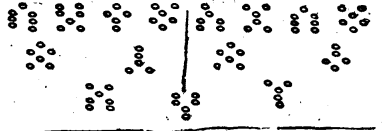
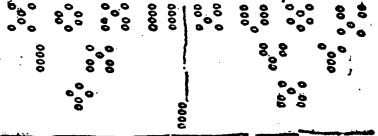
Abano discusses now some of the meanings of Laetitia and Tristitia in the various houses.
Laetitia
Laetitia in the first house means king, priest, noble person,1 just people, good company, justice, faith, honors, good life. In the second house it means increase of wealth, gain, obtaining what one wishes. In the third it means good luck, science, inner goodness, amity, friendship with relatives, good siblings, just people, who fear God.
In the fourth it means inheritance, usefulness, obtaining what one wishes,2 just things, things that are occult or hidden or under the earth.3 In the fifth it means help from children, honor for one’s household, mirth, songs, dances, coming out of difficult situations, long life, obtaining one’s hope. In the sixth it means servants, subjects, sickness through coldness and through envy, good success.
In the seventh it means good marriage, victory over enemies, good partnerships, usefulness, gain. In the eighth it means gaining the wealth of dead people, usefulness, gain through marriage or friendship. In the ninth it means travel for religious matters or science, faith, honor, counsel, gain through travel, change of place, talking to priests.
In the tenth it means honors, dignity, judges, congregation of clerics or lords and noblemen. In the eleventh it means happiness through one’s friends, dignity, honor, gain through friends. In the twelfth it means freedom from servitude and prison, travel in faraway lands, staying away a long time.
In the thirteenth it means usefulness through travel and prelates and churches, obtaining one’s wish. In the fourteenth it means help from friends, gifts, good news in what one hopes to get, long life. In the fifteenth it means good according to the other figures.4
Tristitia
Tristitia in the first house means difficulties, pain, problems, poverty, debts, evil fancy, desire to hurt, disgrace through merchandise. In the second house it means difficulty in obtaining wealth, little gain through merchandise, poverty, dearth, damage in movable things. In the third it means adultery, incest, fights and disorder with family members.
In the fourth house it means evil children,5 loss through trees and fruits, ruin for a city or castle, secret enmity, loss of inheritance, acquisition of secret things. In the fifth it means little gain from merchandise, little happiness through children, false documents, you will gain what you want but you will lose it soon afterward, loss through fruit trees.6 In the sixth it means problems, difficulties, sickness (long), pain in the head, prison, poverty.
In the seventh it means dishonest women, unjust marriage, discord with friends, thieves, evil men, traitors. In the eighth it means fear, problems, desperation, death, gain from the sick person, fury, malignity. In the ninth it means problems traveling, delay, sickness, change of place for the worse.
In the tenth it means fall from grace, elevation of the inferior, loss of honor, exaltation of evil people.7 In the eleventh it means change, variety in friendship, misfortune in what we wish to gain, lack of help. In the twelfth it means many great enemies, fear, problems, things ill done, damage, loss of animals and servants, death of the prisoner.
In the thirteenth it means change of place, travel, loss through lords or judges, loss of wealth. In the fourteenth it means ill luck, loss, toil, misfortune due to enemies, dearth. In the fifteenth it always bodes ill, except for rain and stability.8
MQS
Footnotes
because of Laetitia’s connection with the noble side of Jupiter. ↩︎
Likely due to the Fourth House’s connection with the end of the matter. ↩︎
It probably means that such things are obtained, unearthed etc., due to Laetitia’s connection with upward movement. ↩︎
Laetitia cannot be the Judge. Abano assigns meanings to every figure in every house, including the Judge, even though only eight of the sixteen figures can become Judge. I don’t know why this is the case, whether it is due to a blind, an oversight, a lack of understanding, or a simple “stylistic exercise”, so to speak. Considering Abano’s intellectual prowess and great education, I doubt he wasn’t aware of the fact that Laetitia and other figures cannot be the Judge. ↩︎
The connection of the Fourth House with children escapes me. ↩︎
The Fourth House is the ‘orchard’, the Fifth are the orchard’s wealth, i.e., its fruits. ↩︎
I find some of these interpretations extremely ingenious, and worthy of attention. The Tenth House indicates honor and elevation, but Tristitia indicates lowliness and evil, so the combination of the two can yield either a fall from grace or the elevation of someone who isn’t worthy of being elevated. ↩︎
Abano gives some examples of the possible meanings of Fortuna Major and Fortuna Minor in the various houses.
Fortuna Major
Fortuna Major in the first house means good luck for the querent, science, honor, fame, noble people, health, long life, good in all. In the second it means gain, good luck, science, victory, money, and good through women1 and animals. In the third it means good luck, happiness with brothers, relatives, friends, usefulness in travel and through women, obtaining what you wish.
In the fourht it means usefulness in stable things, inheritance, good things from one’s parents and older relatives. In the fifth it means good fame, friendship, good grace, happiness through children, good news, favors from women, obtaining your wish. In the sixth it means health, except for women, and gain through animals and servants.
In the seventh it means marriage, increase of wealth, good partnership with gain, overcoming your enemies, good and tranquil life. In the eighth it means gaining wealth through other people’s death, freedom from danger and from death, gain, increase of wealth. In the ninth it means travel with honor, gain through it, and through science in foreign countries and with foreign people, good change of place, quietude, divine spirit, true judgment.2
In the tenth it means honor, dignity, riches through one’s ingeniousness and speeches, and thanks to one’s mother, and in things related to God, good fame, gain through great and noble people, and through one’s job, and from prelates.3 In the eleventh it means good luck, gain, increase through friends, servants, kids, and from the King or from lords and prelates and noblemen. In the twelfth it means health, freedom from danger and fear, gain through animals and servants, but the sick person won’t heal and the prisoner won’t be released, or with difficulty.
In the thirteenth it means gain through travel or from the king or a lord, parties, banquets, and toils and difficulties to have health. In the fourteenth it means good luck in all you wish, and in animals, agriculture, buildings, long life.4 In the fifteenth it means good success, good outcome, succession, good friendship.
Fortuna Minor
Fortuna Minor in the first means King, Queen, lord, nobleperson, dignity, honor, fortitude, noblewoman, noble things, animals, good journey.5 In the second it means gain, gain through merchandise, and in selling and in buying, and from family or servants. In the third it means a sister or (female) relative or (female) neighbor, good luck, good science.
In the fourth it means bringing secret things to light, fixed term employment or office, inheritance, unmovable goods, buildings. In the fifth it means honor, dignity, spouses, happiness among the common folk, happiness through journey and children. In the sixth it means sickness of a servant, problems through them, female servants, gain through toil.
In the seventh it means marriage, congregation of people, but with problems, partnership, gain throguh movable things. In the eighth it means quick long travel bringing gain, but with danger of death, good fame followed by death, being killed. In the ninth it means change of place, honorable journey, peregrination, good sceince, occult things.
In the tenth it means empress, king, lord, dignity, magistrate, mother, judge, excellent master/teacher, law, institutions. In the eleventh it means happiness, chanting, dancing, various sounds, noble friends, fortitude, travel, obtaining your wish. In the twelfth it means honor and dignity, fear of enemies and subjects and servants and sick people, freedom from prison, good for animals.
In the thirteenth it means travel with honor, sacraments, faith, gain, quick positive results. In the fourteenth it means good luck and fortune in all you wish to gain. In the fifteenth it means good succession, fame, honor among people, obtaining or accumulating wealth.
MQS
Footnotes
It is not clear why women should be connected with the Second House or with Fortuna Major. ↩︎
It is not clear what the word ‘judgment’ refers to here. In some old astrology books the Ninth house represents the court in a court case, though usually, for instance in Horary, we take the Tenth house as the judge. Furthermore, the Ninth House represents the wise people whose judgment was held in great esteem in the community. ↩︎
Although some of these subjects are usually Ninth House matter, gain through them is the second from the Ninth, so the radical Tenth House. ↩︎
The associations of the two Witnesses are taken mostly, as I’ve already discussed, from the two houses they derive from on the Shield. ↩︎
Journeys are not normally associated with the First House, but Fortuna Minor is a mobile figure and the First House can represent the querent’s location and the means of transport they use to move (buggy, ship, etc.) ↩︎
One of the questions that occupy way too many people in the esoteric community is whether divination or even magic require the person to believe in it in order for it to work. If you’ve ever watched the movie The Skeleton Key, you’ll know that this concept has seeped into the collective consciousness enough for it to find its way into mainstream products (I will not spoil the movie here, since it is actually a fun watch, but it depends heavily on its twist).
If you open most premodern books on magic, you’ll be stunned to discover that their content bears very little resemblance to the post-Golden Dawn landscape. This, by the way, is neither good nor bad. Things change. But we need to be aware of the change to avoid being unconsciously ruled by it. One clear difference is that the magician’s will1 or his imagining/manifesting faculties are barely taken into consideration in older sources, at least outwardly.
This is not to say that there aren’t sources that encourage the practitioner to be of firm mind and clear intent (after all, you’d want your doctor to focus, too, even though their focus is not what make their science work), but even those old sources do not consider, generally speaking, the magician’s mind to be the cause of the change. Broadly speaking, when dealing with sources that date back to before the invention of modern psychoanalysis and psychology, we must be extremely careful when interpreting their concept of mind, soul, psyche, etc.
An example will suffice. In his De Vita, Neoplatonic Renaissance philosopher and magus Marsilio Ficino encourages us, among other things, to “think solar thoughts”, or jovial, or venusian, depending on the aim. Similar remarks are found, in various form, in many old sources. A contemporary practitioner might be tempted to interpret Ficino’s invitation as saying that we must envision solar things in order for them to manifest. But neither the language nor the substance of this interpretation belong to his worldview.
Ficino’s view of the cosmos is essentially the same as Agrippa’s and that of many other premodern magi: we are surrounded by chains of sympathy and antipathy between universal powers (typified by the planets). When we think “solar thoughts” we are doing essentially nothing except stepping inside a current of power that has its own metaphysical reality regardless of our attitude toward it. This is because in Renaissance naturalism, the mind is essentially like the body, i.e., a part of the cosmos, and a movement of the mind is like a movement of the body, and just like the body can create a talisman or a concoction, so can the mind shape images that allow it to shower in certain currents of universal power.
Thus, the invitation to think certain thoughts found in Ficino (and others) is not a precursor to manifestation, attraction and other modern concepts, but a natural consequence of the old view of the mind and the world.
On the other hand, from a postmodern standpoint, reality is for us to create at will. Yes, I am exaggerating, but not too much. Therefore, there is the widespread idea, or at least the widespread implication, that what happens happens because we believe in it.
Let us leave magic alone for now and concentrate on divination. Does divination work because we believe in it? Well, no. Certainly divination doesn’t require the querent to believe in it in order for it to work. In fact, it is my belief that, considering how many frauds there are in this field, a querent should be borderline psychotic to blindly believe in divination without a healthy dose of scepticism.
What about diviners? Do they need to believe in divination in order for it to work? That’s complicated, in my view. On the surface of it I would argue that, again, no, we don’t need to believe in divination for it to work. Divination systems work because they have their own internal consistency. The most obvious is Natal Astrology, which presents us with an objective set of symbols that have nothing to do with the manipulation of counters on the part of the diviner.
On the other hand, we need to allow for the fact that divination is not a mechanic set of behaviors, especially with the overwhelming majority of divination systems that do require manipulation (cartomancy, geomancy, dice, etc.) As I often repeat on this blog, divination is and remains something extraordinary. The honest desire for an answer, or at least for a picture of the future, tends to guarantee a crisp and clear answer. This is because the honest desire for an answer allows us to honestly connect with the symbols in a way that makes them fall in the appropriate order.
The querent doesn’t need to be honest in his or her desire, unless they are also the diviner. But if the diviner does not have at least a degree of confidence in what he or she is doing, then the question they put to the system is not the surface question (e.g., “Does X love Y?”) but “Do you really work?” which is an impossible question for the system to answer (if the answer is no, then the system does work).
Even then, I would be cautious in overexaggerating the importance of the diviner’s attitude. As I believe I have mentioned, one of the ways my teacher trained me was by asking me to discover secrets about her past. Clearly, the exercise was not meant to discover something new that might benefit my querent or me, but rather to build my confidence and skill. Yet it worked, and it worked well. Maybe the diviner doesn’t need to believe in divination (I know I am always skeptical until proven right), but they do need to at least be open to the idea that this is a legitimate way of receiving information, just enough to enter into the system rather than operating it from the outside as a scientist would manipulate a bunch of molecules.
My general belief at this point is that the esoteric arts do not require our consent in order to work, but they are also not the product of the mechanistic application of abstract principles. It is indeed a fine balance.
MQS
Let’s leave aside the fact that the concept of Will found in modern magic is actually more complex than what it appears to be on the surface ↩︎
Abano starts a discussion on the meaning of the various figures in each of the houses, beginning with Acquisitio and Amissio.
I have already discussed how every figure has two properties, one by virtue of its essence, and one by virtue of its accidental placement in the chart. What follows is the meaning of each figure in each of the fifteen houses.1
Acquisitio
Acquisitio in the first house means gain through partnerships,2 obtaining what one wishes, acquisition, gain, honor, good life, health, property. In the second house it means gain, merchandise, money, good outcome, usefulness. In the third house it means good luck for one’s siblings and relatives or neighbors, and in science, and the dream is true,3 good outcome through journey.
In the fourth house it means inheritance, goods from the deceased, increase of wealth and of stable things, abundance. In the fifth house it means good luck with children, or through them, recognition, happiness, what one wishes to gain, following one’s lords. In the sixth house it means sickness, falling ill, relapsing,4 gain through animals and servants and subjects.
In the seventh it means good change of place, good friendship, good partnership, usefulness, properties. In the eighth it means gaining back the money you loaned, gain through dead people, mediocre outcome in all things, except for sickness, where it lengthens the process. In the ninth it means gain through travel, honorable travel, especially if of elevated people and people who have fear of God.
In the tenth it means exaltation, lordship, lords, honor, dignity, gaining through one’s masters, kings, emperors. In the eleventh it means good luck in every question, gain, good friends, happiness and friendship and offspring. In the twelfth it means prison, loss, toil, problems, fear, gain through serfs, subjects, animals.
In the thirteenth it means honorable journey or journeying with great people or in their stead, or with one’s mother. Gain.5 In the fourteenth it means obtaining what one wishes but with trouble, problems, difficulties.6 In the fifteenth it means good outcome in everything, good brother, good things from brothers and relatives.7
Amissio
Amissio means damage, loss, especially in movable things, coins, in wealth, theft, gossip, evil in everything, except for sickness or prison or travel.8 In the second it means loss of wealth, damage through merchandise, and in everything where gain is hoped for. In the third it means enmity with siblings and relatives or through them, wrath, discord, malice, good outcome for journeys.
In the fourth it means damage, loss, misfortune in secret things, loss of inheritance, destruction of the city, of the home, of the land, of the fortress. In the fifth it means problems and misfortune with children, loss of wealth, famine.9 In the sixth it means healing of sickness, liberation of the fled servant, loss due to animals, and when one is sick, depending on the other houses, there might still be doubts [about his health].10
In the seventh it means fraud, treachery from women and enemies, loss through marriage and partnership and friendship. In the eighth it means loss of inheritance, loss of money and wealth, death of the sick person. In the ninth it means long but good journey. Late journey in a distant land, problems on the road, with changes, harlots.11
In the tenth it means loss and problems in all you wish to gain, and if Rubeus is born from it it means being harmed, if Tristitia it means prison.12 In the eleventh it means misfortune in everything you wish to get, discord, enmity with friends, bad for prisoners. In the twelfth it means bad journey, loss through animals and loss of wealth, toil, loss of merchanidse, and you’ll collect a debt at a loss, freedom from prison and sickness.
In the thirteenth it means loss of wealth, damage through one’s lords, change of country, misfortune. In the fourteenth it means loss of friends, toil, great problems. In the fifteenth it means bad outcome, flight, not retreiveing what you wish to retrieve, misfortune in all.
MQS
Footnotes
This way of proceeding is rather typical of medieval handbooks of geomancy and even of astrology. It generally aims at allowing the reader to form an idea of the abstract properties of each figure by showing its concrete manifestation. ↩︎
It is unclear why Acquisitio in the First House should indicate gain through partnerships. In most medieval handbooks of astrology, for instance, a planet showing gain in the First House usually indicates the querent’s industriousness. ↩︎
Dreams and science are usually Ninth House matters, although the distinction is not as rigid as some modern traditional astrologers make it out to be. ↩︎
This is a typical example of a broadly positive figure having a negative meaning: people usually don’t want to ‘gain’ an illness. ↩︎
Why Abano characterizes the Thirteenth Figure, i.e., the Right Witness, as meaning all these things is obscure, until we remember that, for Abano, the Right Witness is in connection with the Ninth and Tenth houses, from which it is formed. ↩︎
Probably from the mixing of Eleventh and Twelfth House meanings. ↩︎
The connection to relatives and brothers escapes me. ↩︎
Abano does not say “Amissio in the first house means…” but “Amissio means…” I suspect though that it is just a mistake. ↩︎
Because it shows loss of the products (second from) of the earth (Fourth House) ↩︎
Amissio is generally favorable in case of illness, but what Abano is saying is that we should always look at the picture as a whole, without focusing on a single testimony. ↩︎
In a relatively straightforward passage, Abano gives the reader examples of what it may mean when a figure moves from one house to another.
To truly understand mutation and the variety of the figures, you need to consider the property of the figure, whether it be fortunate or not, entering or exiting, fixed or mobile, and judge according to its meaning the effect of the mutation, always keeping in mind the question, the quesited and the querent. Another mutation1 to be kept in mind with its meaning in order understand better what has been said so far, is the one that happens to every figure as it changes from one house to another.
If the first figure changes to the second, and is good, fortunate, entering, it means gain, good luck for oneself, and when it is evil it means ill; if it moves to the third it bodes well for neighbors, relatives, traveling; when to the fourth, it means small losses, except if it is Cauda or if the question is about older relatives, friends and things fixed and immobile, endings, buildings and possessions; if to the fifth it’s excellent, except if it is Cauda; if to the sixth, it is very bad, except if it is Via or Cauda, or if the question is about sixth house matters; if to the seventh it has a very bad meaning, unless it is for seventh house matters, as said above, or unless it is Via or Cauda; if to the eighth it means ill luck, accident, loss, death, fear, except if you are asking about your enemy’s wealth or of the wealth of another person; if to the ninth it is good, unless it is Cauda or Rubeus, and if the question is about travel it won’t be made as scheduled; if to the tenth, it is very good, except if it is Via or Cauda; if to the eleventh it is also excellent; if to the twelfth, it is the worst of all, unless it is Cauda and in twelfth house questions.2
If the second figure moves to the third house, it means good luck and gain through siblings and relatives, or due to them, but if the figure is bad it shows the opposite; if it moves to the fourth it shows good outcomes in stable things, and through one’s older relatives; if to the fifth, it means well through messengers, letters, etc; when to the sixth it means infirmity, even of the family, and loss in moble things, and of servants. If it moves to the seventh, if it is good it means well, but if it is bad it shows loss through enemies or women, or games of chance,3 or thieves; if it moves to the eighth it shows that the absent party comes back with good news, and maybe the death of some relative, or loss depending on the angles of the chart; when it moves to the ninth it shows gain or loss from the church or through travel; if to the tenth it means gain from the profession or from one’s lords and good luck; if to the eleventh it shows good luck and good friends, and good luck from the community; if to the twelfth, it means one of his relatives will fall ill or be imprisoned, or shall lose wealth, but if the figure is good it shows buying animals, and things unthought of.
The third figure, when it moves to the fourth, shows gain or loss through relatives; when to the fifth, it shows happiness and new things, and messengers, clothes, etc. When to the sixth, it shows sickness, servitude, toil, small animals; to the seventh, it means copulation,4 change of place, fights, separation; when to the eighth it means gain or loss, death, fear; when to the ninth it means long travel, churches, religious people; when to the tenth it shows the army, profession, dominion, lordship, honor; when to the eleventh it means good luck, noble servants; when to the twelfth, prison, long sickness, retrieving lost animals or buying them.
When the fourth figure goes to the fifth it shows goods from one’s relatives or children, clothes, food, and other things of the home; when to the sixth, it means sickness in the family or animals, relatives, servants; when to the seventh it means getting married, a bandit coming back for you,5 the home becomes inimical; when to the eighth it shows inheritance, the absent party comes back; dying in one’s home country or home; to the ninth, it means death of a religious person, acquisition of church things; when to the tenth, honor of the house, lordship, honors, etc; when to the eleveth, it shows good luck in one’s home, family, congregation of friends, etc.; when to the twelfth, if good, it shows good things, but when bad it means sickness, long prison sentences, toil, difficulties in one’s home or country, or through one’s relatives.
When the fifth figure goes to the sixth house, it means sickness through being hexed6 or food, or issues with children, or messengers, or animals; when to the seventh, it means marrying off one’s child, merchandise, fights, enemies rejoicing, problems with children or a woman giving birth; to the eighth, problems and death of one’s child, or [acquiring] other people’s wealth, and the absent party is doing well; when to the ninth, a child entering the clergy, long travel, happiness and gain, a churchman having a child, gain from things of the church; to the tenth, it means a happy mother, lordship or [happiness] of one’s lord; when to the eleventh it means good news for the child, and a messenger resolving all kinds of issues, and friends are happy for or with the querent; to the twelfth it means sickness or imprisonment for the child, large animals and a prisoner or wayfarer who is doing well.
When the sixth moves to the seventh house, it means sickness, wrath, problems through small animals, servants or one’s wife or other people; when to the eighth, it means death of animals or servants, loss of wealth, sickness of the absent party, and servants helping one’s enemies; when to the ninth, it means a journey full of issues, and sickness during the journey, or a sick churchman, occupation, problems with the church; when to the tenth, it means sickness and problems, but also having good and faithful [servants?], obtaining a lordship; when to the eleventh it means sickness of self or of a friend, or contrarieties with friends; when to the twelfth it means sickness of great animals, loss through them, prison, pilgrimage.
When the seventh goes to the eighth house, if it is good, it means good things for the absent party, but if bad, death, loss and issues for those represented by the seventh; when to the ninth, it means the absent party will come back, the bandit goes away, the querent gets married, the enemy makes peace, long travel, religious people, or a churchman becomes your enemy; to the tenth, the lord gets married or becomes inimical, lordship, honors; when to the eleventh it means a friend becomes an enemy, and what’s good for him is bad for you, the partner won’t keep his promise, the thief is a false friend, the marriage or partnership is changeable; when to the twelfth loss of animals through enemies, or due to sickness of animals, and prison, and the prisoner gets married, problems during a pilgrimage, long pilgrimage, betrayal from hidden enemies.
The eighth figure, when it goes to the ninth house, means wealth, help from the church, death of a priest, travel full of fear and problems, the absent party is traveling; when to the tenth, it means death, occupation of stable things, the absent party comes back to the country; to the eleventh, it means death of a friend, gain through a dowry, inheritance, misfortune, loss through friends, good luck of the absent party if the figure is good; when to the twelfth, it means the prisoner or sick person is seriously sick, death of the same, and of the wayfarer, and being imprisoned due to enemies.
When the ninth goes to the tenth, it means ecclesiastical dignity, increase of church things, an honorable journey or for religious purposes; when to the eleventh it means good luck in travel, good company or partnership, luck with friends and things of the church, recognition within the church; when to the twelfth it means issues while traveling, danger through horses, being imprisoned, the prisoner may be released, the wayfarer comes back, the horse is found, and this causes more or less trouble to the querent depending on how good or bad the figure is.
When the tenth figure goes to the eleventh it means good in all things, and one’s lord or master is good and friendly, the year abundant; when to the twelfth it means prison, sickness, one’s enemies are not seen in a good light, and are hated by your friends and by your masters.
When the eleventh goes to the twelfth it means sickness, prison, adversities, problems, and one’s hidden enemies are lucky, and all is good for the querent.
MQS
Footnotes
It is rather typical, in premodern occultism, to use the same word to signify different things depending on the context. ↩︎
The general principle in judging the mutation of one figure to another house is whether it bodes well for the question at hand and whether the figure accords with the question and is fortunate. As such, in Abano’s example, a figure moving from the first to the seventh is unfortunate because it oppses itself, but the same movement is positive if the question is about Seventh House matters (marriage, alliances, etc.) ↩︎
Gambling is often seen as a Fifth house matter, but in this case the relationship with the Seventh House is through the fact that we are playing against ‘other people’. ↩︎
it is not clear why the conjunction of Third House and Seventh House matters should produce sex. ↩︎
‘Ritorna il bandito’. Bandito is an ambiguous word in Italian, as it can mean both bandit and banished. In this case it is probably the latter meaning which is relevant: someone who has been banished will come back. ↩︎
‘per fature’, similar to the current Italian word ‘fattura’, which in this context would mean a hex. It is possible the word has another meaning which escapes me. ↩︎
In this chapter, Abano discusses what happens when a figure changes from one house to another, and also geomantic perfection.
It is very necessary that you know how figures change from one place to another, as shown above,1 for it is of great signification. We have three species of mutation: Mutation, Translation, Occupation and Conjunction. Mutation is when the first figure of the querent is found in other houses such as the third or ninth or other places, whether near to or far from the house that signifies the quesited.2 Similarly, Mutation is when the quesited does the same with the querent.
For instance, let there be a question about a sick person, who wants to know whether he shall heal. In this case the first is the querent and the sixth his being sick, and the eighth is death, and the tenth is the house of well-being and the twelfth the house of the graveyard. If the first goes to the third and also to the tenth or eleventh, this is a mutation of place; and similarly if the sixth goes to the ninth or eleventh house, this is also a mutation.
And Mutation has a double meaning, because depending on where it happens it changes its signification and virtue for good or ill depending on the house. If the said figures are in the tenth, which means well-being, or the eleventh which is next to the tenth, it means healing, especially if it is both in the tenth and the eleventh; but if the first or sixth goes to the eighth it means dying, or if to the twelfth also, because it means the graveyard, especially if the figures are earthy and unfortunate.
Another example. Let there be a question about whether one shall have the woman he desires. The first is the querent and the seventh the quesited. If the first, being fortunate, moves to the fourth and the seventh, similarly fortunate, moves to the third, he shall have her, because both figures are fortunate and they are next to each other: they have mutated place. However, this shows that he shall not have her at his place or even at hers, but it will happen in the house of a neighbor or relative of his, and this because both figures are found in the first four houses, which represent the querent. If it had been on her side of the chart, i.e., in the following four figures, it would have happened in the house of someone she knows. And if it were in the ninth, tenth and eleventh, in a distant place. But if the figures are unfortunate, it shows contrarieties, partly due to him and partly due to the persons signified by the houses involved. But if the figure is fortunate but it changes to the twelfth, it means he shall not have her due to hidden enemies.
Translation is when the first figure or the second, which is associated to it, moves to the house of the quesited or next to it, or vice versa. And if the figures are good and accompanied by good figures,3 it shows a happy end, but if it is a mixed bag, the greater part wins4. However, it is better when the translation is made by the first figure and not by the second.5 It is also a translation when the figure of the quesited is found in the house next to the querent, that is, the second. It is also a translation when the first or second are not only in the house before the the quesited, but also in the house afterward.
Example. If the question is about marriage, whether it will happen or not, and through what means, and the first figure is Acquisitio and the second Laetitia, which are both good (and the first is better), and the seventh is Albus and the eighth Laetitia, which is better than Albus, this all shows that the marriage will happen easily and will happen through one’s relatives, especially if the fourth and tenth are close to one another and to the second, which is airy, and to the querent and the first figure is found in the Witnesses. For instance:
Example of Geomantic Shield by Peter of Abano
Occupation can happen in two ways: the first is when the figure of the querent occupies the house of the quesited. For instance, if the question is about a (contested) inheritance and whether one shall have it or will need to get it from an enemy, and if the first figure is Albus and the same figure is found in the fourth house, which indicates houses, fields, possessions, inheritance and stable goods, this is called Occupation, because the first figure occupies the fourth house, i.e., that of the quesited. It indicates obtaining what you wish, especially because Albus is a good figure. No geomantic configuration is better than occupation, but only, again, if the figure is good.
Example of Geomantic Shield by Peter of Abano, 2
Even more does it indicate obtaining the quesited because Acquisitio is in the second house, which means gain, and the ninth and tenth are fortunate, being houses assigned to the querent. Another way of occupation is when the house of the quesited is found to hold the opposite figure of that of the querent. So, for instance, if with Albus in the first, one should find Rubeus in the fourth. This is also a form of occupation, but this is a worse kind, especially if the figure of the quesited thus obtained is unfortunate.6
Conjunction is also of two kinds. The first is when the first moves next to the house of the quesited, or vice versa when the quesited moves next to the house of the querent, that is, in the second house. The second type of conjunction is when not only one finds the two figures together as just said above, but one finds them together also far away, that is, in the ninth, tenth or eleventh.
Example. The question is if one shall get back a lost or stolen item or a fugitive servant. The first figure is Major, which moves to the fifth house next to the sixth of the lost thing or the runaway servant. Major is a good, entering figure. Furthermore the sixth figure is found in the second house next to the querent. The judgment is therefore that one shall get back the lost item. Furthermore, the figure of the quesited is conjunct to the first in the second, which shows the querent’s gain, and things are further facilitated by the fact that the sixth house has Populus in it, which means the waxing Moon. Finally, it is even more fortunate because Populus is found in the tenth and Major in the ninth and eleventh, and even more so because the first is found in the Witnesses, and the sixth as the Judge.
Example of Geomantic Shield by Peter of Abano, 3
All these configurations are called conjunction, whereby the ninth figure is said to be conjunct the first and the second because it is born from them,7 and the tenth is conjunct the third and fourth because it is born from them, and the eleventh is conjunct the fifth and the sixth because it is born from them, and the twelfth is cojunct the seventh and eighth, because it is born from them. And furthermore the Right Witness is conjunct to the ninth and tenth because it is born from them, and the Left Witness is conjunct to the eleventh and twelfth, because it is born from them.8
Let’s make the example of one asking about a lost item, and the first figure is Major, which however does not move to the house of the lost item, nor does it conjunct it, but moves to the third house, and similarly the sixth figure, which is Acquisitio, does not conjunct the first immediately, but moves to the tenth house, wherefore one shall judge that he shall soon get the lost item back, because the figure of the querent is found in the third house and Conjunctio is in the fourth, and the sixth figure is Acquisitio and is found in the tenth, which is born from Major in the third and Conjunctio in the fourth.9 Therefore, querent and quesited are said to be in Conjunction, especially when they are fixed and fortunate and entering, and the Witnesses are the Judge are exiting, and this means a change of place of the quesited to the place where the figure is found.
Example of Geomantic Shield by Peter of Abano, 4
The reason for all these methods of Mutation or Translation and Occupation and Conjunction is that every time a figure moves from its original house, it is always found in the place wherein it moves, and not in its original place, because no change happens without cause and without meaning something. Nevertheless, always it maintains the meaning of the person or thing inquired about in their original place, only changing its fortune or misfortune and its time-frame (past or future) in the way we have discussed above.
However it is not always the case that a good figure diminishes its good fortune or a bad figure its bad fortune; in fact, sometimes it increases them, depending that it is found in a better Mutation or Conjunction, so that if the first moves by Translation or Conjunction in another place, or if it occupies it, the figure still indicates the person of the querent, but it shows greater virtue of said figure in the question inquired about, and it means a more particular effect than if it were found only in the first house.
The same is to be observed if the second figure goes next to the house of the quesited or moves to its exact house, or next to the figure of said house, if they are good, and vice versa if they are bad the misfortune is greater [than if the figure hadn’t moved], always keeping in mind the limits of the question and of the figures it requires, and of the places and houses of the quesited. So that if the first goes to the seventh, which is a bad place, contrary to that which the querent seeks, being the house of the enemy, and it means fighting, anger, discord, then it means contrarieties surrounding the obtaining of what one wishes, unless if the question is about marriage, love, friendship, business, travel, lack of peace, and similar things, in which case finding the first in the seventh is excellent, if the figure is positive and fortunate.10
In other questions, if the first moves to the twelfth or sixth or seventh, if it is a good figure, it diminishes its goodness, but if it is a bad figure it augments its evil, except if the first figure is accompanied by a good figure in the second or ninth or eleventh.
And when the second, ninth and eleventh are fortunate and good and the questions are about an absent messenger, good news, money coming from afar and other similar things, and if you find in these houses the fifth or sixth figure or the seventh, twelfth, eleventh or thirteenth, it means good news, good messenger, a messenger coming from afar, money approaching. If the second or ninth and third or also the thirteenth move or translate to the seventh, eighth or twelfth it means good things from afar, especially if the Judge agrees.
If the seventh or eighth moves to the fourth they show good news and durable situations, if the figure is good, and the opposite if they are unfortunate. The best houses are the first, fifth, tenth and eleventh. The second, third, fourth and ninth houses follow. The worst are the sixth, seventh, eighth and twelfth.
Every good figure that you find in a good place increases its virtue due to being in a good place, but if you find it in a bad place it diminishes it. Every bad figure you find in a bad place increases its malice, but if you find it in a good place it diminishes it, except in the first house, where it always keeps its own properties and meaning. And every figure you find accompanied or conjunct by others diminishes or increases its goodness or malice depending on the figure it is accompanied by.
Therefore, if the first is good and fortunate and the second good, and the ninth also good,11 it does not increase the goodness of the first, but if it is bad it decreases the goodness of the first or second, keeping also in mind the question and the querent’s desire and the houses involved in it and the meaning of the house of the querent. The same is valid for the tenth house with respect to the third and fourth house, of the eleventh with respect to the fifth and sixth, of the twelfth with respect to the seventh and eighth, of the Right Witness with respect to the ninth and tenth, of the Left Witness with respect to the eleventh and twelfth, as said above.
In other words, mutation implies change of house, regardless of whether it brings the querent near the quesited, although in this case we have, of course, perfection. Note that usually we consider a Mutation to happen when two figures move to places that are next to each other, but Abano, as many other Medieval authorities, doesn’t seem to fixated on precise language. ↩︎
“Accomagnate cun bone”. It is unclear if this refers to the company of houses. ↩︎
That is, if the figures are mostly good, it is positive, and vice versa ↩︎
This seems to imply that translation happens even if the querent’s figure causes it. This is in contrast with modern practice. ↩︎
This technique has not survived in modern practice. However, it would be interesting to test it out. ↩︎
This assertion made by Abano is of incredible interest for those trying to make more of the Geomantic Shield. Apparently, we do not consider figures to be next to each other just in the order of the Astrological houses, but also when they are next to each other ‘genealogically’, so to speak, on the Geomantic Shield. ↩︎
As shown in other examples before, Abano seems to consider the Witnesses to be similar to the other houses, and therefore potentially in conjunction with them. ↩︎
In other words, the two figures are conjunct by moving to houses that Abano consider to be next to each other, i.e., the third and the ninth. ↩︎
Abano seems to be saying that when a house that is meaningful to the reading has its figure move to another house, it is always significant, but the good or bad import is decided by the kind of question. ↩︎
The Ninth House is considered by Abano therefore to be in company with the first, in a way, or at least to be close to it, so that a figure in it influences the querent. ↩︎
Danielle Johnson‘s posts on social media were like those of most popular astrology influencers: cheap mystical drivel devoid of any serious study and insight, constantly hyping up the next big astrological nothing-burger. I’ve known enough people like her in my life to know that this kind of fraudster is the worst exactly because they tend to buy the crap they peddle. Like many cult leaders, they become pleasantly accustomed to the smell of their own farts.
I am not going to examine her tragedy as a whole. You can look it up yourself if you want. Suffice to say that she ended her boyfriend’s and child’s lives, as well as her own. All because of an eclipse she thought was “the epitome of spiritual warfare” where people needed “to pick a side” in the upcoming apocalypse.
For sure there is enough going wrong in the world at present that new millenarian movements pop up from all religious and political directions. Furthermore, it is not unlikely that Johnson suffered from some kind of mental condition.
But there is more to this type of behavior. No one who seriously studies history can believe there was ever a golden age where nothing went wrong, nor there ever will be. These are the dangers of utopianism as opposed to pragmatism: in the name of something that was or will be, the utopian believer feels justified in trampling over others, either rationally (like the left-wing and right-wing dictators of yore) or psychotically.
But, again, there is more. There is a widespread malaise in the “spiritual” milieu at present, in spite of its ever growing popularity on social media. This malaise is the culmination of a historical process of decoupling of reason and spirituality. I have already touched upon this issue elsewhere.
Since official science embraced meterialism in the late XVIII century, those who believe there is more to life have found themselves without an intellectual foundation for their beliefs, and have therefore become prone to accepting any delusion as fact. This is relatively unprecedented in the history of humanity. Not that knowledge and spirituality have otherwise always enjoyed a frictionless relationship, but there had never been so stark and unanimous a rejection of the spiritual in the scientific community.
How the spiritual community tried to cope with this abandonment is paradigmatic. If you read many XVIII and early XIX century occultists, you will often find desperate attempts at fitting their ideas into the tight dress of the new scientific language. Spiritualism and vitalism, which is how occultism survived until around the 1960s are, in many ways, the evil twins of scientific materialism: they are groundless irrationalism masquerading as legitimate scientific concepts (electromagnetism, mesmerism, ‘energy’, etc.)
Yet, for all their attempts at sounding scientific, these authors have never managed to convince anyone who wasn’t already convinced. Furthermore, their attempts at proving, for instance, that this or that scientific discovery is foreshadowed in this or that spiritual doctrine made them look like asses when said discoveries were later disproved and replaced with better scientific theories–because, and this is something many occultists failed to understand, science in the modern sense ceased dealing with the eternally true in favor of ever-improving approximations of what’s likely to be the case. This is what makes modern science effective, but also what ‘spiritual seekers’ desperate for answers don’t want to hear.
Then along rolled the New Age, and the already washed-out spiritual movement started supplementing its diet with saccarine platitudes and politically correct, ill-digested mish-mashes of doctrines coming from all over the world washed down with copious drafts of unproved psychology. Any attempt at using reason became futile, or even frowned upon as a non-enlightened stance. And this is where we are now.
The medieval and Renaissance magus was as much an occultist and diviner as he was a doctor, a scientist, a philosopher, a political strategist, a war counsellor and many, many more things. In Ancient Greece, many great magi were also great philosophers and scientists (Empedocles and Pythagoras come to mind). Apparently, the contemporary spiritual guru just needs a couple of self-help concepts with a spirituar flair and he is qualitifed to tell people they need to “pick a side in the upcoming apocalypse”.
So, what is the solution? I do not know. I do not believe I have one, especially not at the collective level. All I know is that irrationalism is not the blood that sustains spirituality. it is merely the electric shock that makes its corpse convulse and appear to be alive. I also know that the future of occultism, magic and spirituality lies with few individuals who are capable of using their head rather than with desperate masses of unhinged spiritual seekers (“unhinged” because their life hinges on nothing) who let any “astrology influencer” peddle cheap illusions to them.
In this short paragraph, Abano introduces several technical terms.
This is an example of a simple mutation, about the question whether one shall be with his girlfriend.1
Geomancy shield by Peter of Abano
The first figure is Conjunctio, the second Puer, the third Puella, the fourth Conjunctio. Look how the first moves to the fourth and the seventh is the same as the third, and thus it means being with her, especially since the first is in the fifth house of fun.2 Moreover, the first is found in both Witnesses.3 Also, this is an example of translation, because the first moves next to the house of the quesited,4 that is, in the eighth, which is associated to the seventh. Moreover it is an example of conjunction, because the first is conjunct to the ninth, and the eleventh with the fifth,5 and the thirteenth with the ninth, and the fourteenth with the eleventh.6
MQS
Footnotes
“Se uno havera la sua amica”, literally, “if one shall have his (female) friend”. This passage warrants its own chapter as it is relatively strange when confronted with the modern doctrine, and it seems to contain odd mistakes, at least prima facie. ↩︎
“Casa di gaudio della cosa quesita”, literally “the house of joy of the quesited”. It could be that Abano means the Fifth house is the joy of the question itself, because it signifies fun, and the question is about fun. ↩︎
It is not clear whether this is good because the figure is Conjunctio or because it is found in the houses of the Witnesses, or both. ↩︎
Abano seems to be using the word ‘translation’ in lieu of ‘conjunction’ here. There is a translation in the modern sense here, but this is effected by Puer, who is both in the Second and in the Sixth. ↩︎
The Eleventh does not seem connected in any way with the Fifth, unless we take the Fifth to be moving to the Fourteenth (the Left Witness) or we count the translation effectuated by Puer ↩︎
This is rather obscure, unless, again, we take the Thirteenth and Fourteenth as regular houses that can come into contact with the others. This would open up the Geomantic Shield to a whole different kind of interpretation. ↩︎
Many people of the ‘spiritual but not religious’ milieu tend to believe they invented intuition, or that intuition came into existence when glossy oracle cards with gaudy images and inspirational quotes started being published–the kind that was especially en vogue before Doreen Virtue went from a fundamentalist with a deck of cards in her hands to a fundamentalist without a deck of cards in her hands.
But, believe it or not, intuition is a concept with a legitimate philosophical history. It is present, either implicitly or explicitly, in the epistemology (theory of how knowledge happens) of many great traditional Western and non Western philosophers.
If had to provide a generalization of what the tradition meant by intuition, I would say that it’s the immediate apprehension of universal principles and truths. It had nothing to do with the stream-of-consciousness-like association of ideas that many moderns mistake for psychic ability.
Old philosophers held that true intuition could only happen when someone had developed all their human faculties (including, and especially, reason) to their utmost degree, so that such faculties, having been tamed and trained, fell into place and were ready to receive truths otherwise reserved to the gods. In other words, intuition was the reward of the flourishing human.
Nowadays, “I’m intuitive” is usually synonymous with “I’m incapable of simple deduction but I am also deep up my ass and don’t take well to criticism.” Back in the day, intuition was regarded as the efflorescence of the rightly cultivated mind. Put simply, in the past intuition was considered suprarational. Now it is implicitly considered irrational.
So much so that intuition is today relegated to psychic exercise, whereas in days of yore prophecy through psychic means was regarded as a wholly separate matter: the famous prophetess of the Oracle of Delphi, for instance, entered a state of ‘enthusiasm’, that is, of literal divine possession, whereas intuition was, essentially, a gift of God to the philosopher who had educated himself to the point where his excelling human faculties grazed on the superior sphere of divine knowledge, allowing some of it to filter down to him.
This fact is especially clear when we consider the old conception of the cosmos as an onion-like set of emanated spheres, with humans in the middle, capable of either falling deeper or rising above. But the modern intuitive moves in a world that has no clear up or down and where over a century of psychologizing everything has planted in people’s minds the impression that everything is in their head and that, therefore, if it’s in their head it’s true. We could summarize this by saying that intuition in the older sense required people to get out of their ass and become bigger than they were, whereas by today’s standards it requires them to entangle themselves even further in their delusions.
Here Abano discusses topics relating to the Eleventh House and Twelfth House.
Eleventh House
If your friends or family or servants are faithful. Look at the first and eleventh houses, if they are fortunate, entering and good, in which case it shows them faithful, especially if the eleventh is in the second or if the first and eleventh are the same, or also the Judge. If they are contrary to one another, it means the opposite, especially if the seventh is contrary to the first and the twelfth is unfortunate. When the eleventh is in the sixth and is unfortunate, it means being hated by them.1 If in the seventh, they shall turn into enemies or will help your enemies, and similarly in the eighth. If it goes to the eighth and twelfth you shall be betrayed. However, if said figures which are contrary to the first are good and fortunate and not malicious, it means that you shall not come to harm from them. Always keep the Witnesses and Judge in mind.
If you shall have your wish or what you have been promised. If you want to know if you shall have what you have been promised by your lord or master,2 or if you want to know if you shall have your wish, look at the first, eleventh and tenth. If they are good, entering, fortunate, it means good hope, and being loved by your master, especially if the fifth and ninth and fourth and seventh are also positive and entering, or if they are exiting but fortunate. However, if the fourth and tenth houses are involved they show toil.3 And if the figures are unfortunate and contrary one to the other, it shows not being loved, and hoping in vain. This is also valid of one’s mother, doctor, magistrate and promises made by friends.
Of abundance and dearth. In addition to what we have already said about the matter,4 also look at the eleventh and second figures, which, together with the angles should have good entering figures. Tristitia, in this particular case, means abundance, and also Populus. If the first, second and ninth are good and fortunate, it means the first three months are good. If the third, fourth and tenth are good it means the sixth, seventh and eighth month are good. If the seventh, eighth and twelfth are good it shows the ninth month is good, and if the ninth, tenth and thirteenth are good and conform, it means the tenth month, and if the Judge and Witnesses are good it means the last month is good. And vice versa with bad figures. But if it’s a mixed bad of good figures and bad ones it means mediocrity. This same method can be used to analyze a month, such as March, or even for single days.5
Twelfth House
If your prison sentence or illness shall be long6 If you fear you may go to prison and want to know if it’s true, look at the first and the thirteenth. If either of them is in the twelfth or is conjunct the twelfth, such as the first in the eleventh,7 and if they are unfortunate, it shows a prison sentence. Especially if the seventh and eighth are unfortunate. And if the first is in the eleventh and the fifth and sixth are unfortunate, or if the first is earthy, unfortunate and goes to the twelfth, and if the Judge agrees.
If one shall soon heal from a sickness or come out of prison If the first, second, third, fourth, ninth and tenth figures8 are exiting it means freedom, and all the sooner if it’s Via or Cauda, and similarly if the last figures and the Judge and the Witnesses.9 If you find Acquisitio, Cauda, Tristitia or Conjunctio and they don’t move it shows long sickness or prison sentence. Populus, being formed by good figures, shows freedom, but if it comes from evil mothers it shows delay in liberation or healing.
And if Puella and Amissio, it shows freedom from a serious illness or from prison. And if they don’t move to any other house, it means also freedom. And Carcer in the twelfth lets the prisoner out, but if Carcer or Tristitia are in the twelfth and second, you must post a bail. And if it goes to the third, it will be thanks to the help of your siblings or relatives, and so on with the other houses, depending on their signification. If the Judge of the Judge10 is Rubeus, you shall be executed, and if Rubeus is in the twelfth you shall be hurt, if the same figure appears in the eighth.
Of buying large animals. If, in the twelfth house, you find Acquisitio, Major, Cauda, Tristitia, Conjunctio or Albus it means the animal is good and will be profitable, but if Carcer, Laetitia, Via, Caput and Amissio it is not good, and you shall suffer losses, and if Puer or Puella, mediocre. If any of the aforementioned figures moves to the sixth or seventh or eighth it means losses through what the house signifies. And if Amissio or Cauda are in the twelfth, the horse shall be stolen, especially if it moves to the sixth or seventh, and the first is unfortunate, and if the twelfth is exiting, it’s best to sell the animal immediately, especially if the twelfth figure is also in the eleventh.
Of hidden enemies and traitors. Look at the twelfth house, if good and fortunate it shows no ill, especially if it is also in the second, tenth or ninth. But if it is malicious, it shows harm, especially if it is also in the aforementioned houses, or if these houses are unfortunate. And if you want to know who the person is and of what condition, look at the houses where the twelfth moves, and judge accordingly.
MQS
Footnotes
I don’t understand this reference to the Sixth house, unless we take it as the joy of Mars, in which case it justifies the idea of hatred. ↩︎
The lord of master being indicated by the Tenth House, the Eleventh is the thing they promise the querent. ↩︎
This reference to the Fourth House is not clear. Maybe Abano is referring to it because it opposes the Tenth. ↩︎
Old books are full of methods for timing events by the houses. This particular method I haven’t found anywhere else either in geomancy on in astrology books. ↩︎
We are often used to seeing the Sixth House as the house of sickness, but in medieval practice the Twelfth could indicate sickness as well. The late Robert Zoller ended up considering the Twelfth as the house of serious illness (such as would require prolonged hospitalization). ↩︎
Here we have definitive proof that Abano conforms to the modern practice of considering even the houses not in company to be next to each other. This leaves open some questions, such as why he doesn’t accept a figure moving to the Twelfth as conjuncting the First. I believe it may have to do with the fact that the Twelfth house is negative. ↩︎
That is, the figures on the querent’s side of the shield. ↩︎
This sentence doesn’t make much sense. What Abano may mean by ‘last figures’ is unclear. ↩︎