In the Vera Sibilla, every card can indicate some type of feelings. I have singled out some of those that indicate positive feelings. As usual, the list is not meant to be exclusive.
Ace of Hearts (A♥️) – Conversation
This card is broadly connected with words and self-expression. However, when discussing someone’s feelings, they indicate someone who is capable of expressing their feelings to someone else and reaching some kind of communion with them. In general, it shows an attitude of openness toward others.
Two of Hearts (2♥️) – The House
Usually the Two is the card of the house and of places in general. However it is also connected with harmony between two people, and it shows a constructive attitude, especially, though not exclusively, in a love reading.
Four of Hearts (4♥️) – Love
The Love card is, wouldn’t you know, the card of love, but also of strong feelings of affection in all personal relationship. It is connected with the motions of our heart, and as such it shows emotions above and beyond reason. The caveat here is that this card is not stable, and it requires other more grounded cards to promise lasting happiness.
Five of Hearts (5♥️) – Happiness
The Happiness card indicates everything connected with joy and good intentions. Being the card of the bethrodal, it also shows a certain degree of commitment to someone, and is therefore also a symbol of fidelity.
Seven of Hearts (7♥️) – The Scholar
The Scholar is a rational card, one of planning and long term prospects. When not damaged by the presence of difficult cards it shows the desire to create something lasting, as well as a helpful attitude.
Eight of Hearts (8♥️) – Hope
Hope is the positive feeling par exccellence. It represents optimism, honesty, someone who takes the high road, is elevated, spiritual, reliable. The exception is when the Hope card is not supported by stronger cards, as in this case it tends to show flirts, due to its connection with ease and lack of trouble.
Nine of Hearts (9♥️) – Faithfulness
Contrary to popular belief, the Nine of Hearts (not the Four) is the best card when it comes to feelings. Not only does it show love, but unlike the Love card, it also represent a strong bond and commitment that goes beyond those feelings and is pursued systematically. It is the card of the diehard supporter, of the best friend, of the lifelong love commitment.
The Heart Court Cards
Court cards tend to be neutral. However, the Heart court cards, when upright, indicate a person who is in love or who has a positive attitude toward the question or the querent.
Four of Clubs (4♣️) – The Friend
Similar to the Nine of Hearts, the Friend can indicate friendship (when it doesn’t show a literal -female- friend). The difference is that the concept of friendship of the Four of Clubs is not as strong and it is often connected with practical matters. When reversed, the Friend card can indicate a helpful attitude that takes the form of tips, recommendations, etc.
Six of Clubs (6♣️) – The Surprise
The Surprise card is connected broadly with things that come to us easily. As such, it indicates people who are similar, have similar interests and find it easy to grow together and pursue similar activities. Relationships tend to flourish with this card.
Seven of Clubs (7♣️) – The Realization
In general, this card speaks of ambitions in a positive sense, so it can show people having common goals and projects.
Eight of Clubs(8♣️) – The Reunion
The reconciliation card of the deck, the Eight of Clubs is indicative of a willingness to compromise and to find common ground. Furthermore, it shows someone who is social and moves toward others with positive intents in mind.
Nine of Clubs (9♣️) – Merriment
In keeping with the energy of the suit, the Nine of Clubs indicate positive bonds, though not necessarily deep. It is a card of fun and of playing, drinking and having a good time together.
Ace of Diamonds (A♦️) – The Room
The Room has, among its meanings, that of intimacy. As such it represents someone who seeks closeness and contact. However it is not a card of love, as it is in the suit of Diamonds, not that of Hearts.
Seven of Diamonds (7♦️) – The Child
As the card of children, the Seven of Diamonds shows someone to be open, good-hearted and inoffensive, unless with cards that bring out the worst qualities of children (immaturity, etc.). It represents also someone who wants to start new things and is unprejudiced and innocent.
Eight of Diamonds (8♦️) – The Handmaid
This is the card of someone who is serviceable, dependable and hardworking. It is also a card of politeness and the desire of peace. It can show someone of a noble character who is helpful, friendly and improving himself to be better with others.
Two of Spades (2♠️) – The Old Lady
As pretty much the only card of this suit that is not outright negative, the Old Lady can indicate feelings of affection toward others, though these feelings tend to be tenuous and not very dynamic. It can also indicate someone who uses the wisdom and experience they gained in life to be of service to others in a detached, serene way
When we read for people and they only give us a broad question, I think it’s important to remain open to the twists of fate the cards are showing us, as well as to have an open dialogue with the querent Sometimes querents lie, but more often they are either confused or fail to focus on the ‘real’ question. In the following case, the querent’s question wasn’t wrong, but it hid more than it showed. The querent is a woman of around 25. She asked me about her career without specifying anything.
A career reading using the Vera Sibilla
The querent is anagraphically covered by the Queen of Clubs, the young maiden, so we can initially assign this card to her. She is reversed, showing trouble.
The first line of the pyramid indicates the influence of a (probably older) woman. She is surrounded by the House and Love, but on the same line we find the Seven of Spades reversed. This is one of the worst cards in the deck, so whenever we see it we must tread carefully.
I asked the querent if an older female relative, possibly her mother, is involved in the issue, and at this point the querent tells me she works with her parents in the family business.
The Seven of Spades reversed represents tyranny and oppression, so I ask her if her mother is somewhat authoritarian, and she confirms. Note though that the mother is surrounded by two positive cards, hence the ‘somewhat’ in the statement. Furtermore, look at the angles of the spread: Good feelings, oppression, but not too much (Butterfly). I am aware that smothering mothers are how some serial killers get started, but this mother, while not positive, could be worse. She smothers the querent out of (real) love. She is oppressive, but not a sociopath.
Be it as it may, the querent clearly suffers from this situation (she is reversed) and therefore hopes to move away (Hope + Journey), as the Hope card can indicate the hopes of the querent or of the person preceding it, which in this case is again the querent. Probably the querent wants to find her sense of self and freedom. This would be understandable even under normal circumstances, let alone in this case. I asked her if she wanted to leave and again she confirmed.
But, woe and alas, look how the spread ends! Money is tight (Money + Sickness) so whatever job she is looking for is going to probably make her start at the very bottom. Thus we end with the Ten of Clubs, the Butterfly. This card indicates all those things that are fleeting and not rooted in the querent’s destiny. Thus her hopes are just fleeting, at least in the foreseeable future, due to the rotten (Sickness) money situation.
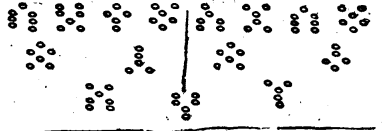
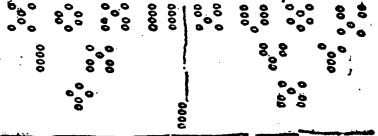
In this chapter, Abano discusses what happens when a figure changes from one house to another, and also geomantic perfection.
It is very necessary that you know how figures change from one place to another, as shown above,1 for it is of great signification. We have three species of mutation: Mutation, Translation, Occupation and Conjunction. Mutation is when the first figure of the querent is found in other houses such as the third or ninth or other places, whether near to or far from the house that signifies the quesited.2 Similarly, Mutation is when the quesited does the same with the querent.
For instance, let there be a question about a sick person, who wants to know whether he shall heal. In this case the first is the querent and the sixth his being sick, and the eighth is death, and the tenth is the house of well-being and the twelfth the house of the graveyard. If the first goes to the third and also to the tenth or eleventh, this is a mutation of place; and similarly if the sixth goes to the ninth or eleventh house, this is also a mutation.
And Mutation has a double meaning, because depending on where it happens it changes its signification and virtue for good or ill depending on the house. If the said figures are in the tenth, which means well-being, or the eleventh which is next to the tenth, it means healing, especially if it is both in the tenth and the eleventh; but if the first or sixth goes to the eighth it means dying, or if to the twelfth also, because it means the graveyard, especially if the figures are earthy and unfortunate.
Another example. Let there be a question about whether one shall have the woman he desires. The first is the querent and the seventh the quesited. If the first, being fortunate, moves to the fourth and the seventh, similarly fortunate, moves to the third, he shall have her, because both figures are fortunate and they are next to each other: they have mutated place. However, this shows that he shall not have her at his place or even at hers, but it will happen in the house of a neighbor or relative of his, and this because both figures are found in the first four houses, which represent the querent. If it had been on her side of the chart, i.e., in the following four figures, it would have happened in the house of someone she knows. And if it were in the ninth, tenth and eleventh, in a distant place. But if the figures are unfortunate, it shows contrarieties, partly due to him and partly due to the persons signified by the houses involved. But if the figure is fortunate but it changes to the twelfth, it means he shall not have her due to hidden enemies.
Translation is when the first figure or the second, which is associated to it, moves to the house of the quesited or next to it, or vice versa. And if the figures are good and accompanied by good figures,3 it shows a happy end, but if it is a mixed bag, the greater part wins4. However, it is better when the translation is made by the first figure and not by the second.5 It is also a translation when the figure of the quesited is found in the house next to the querent, that is, the second. It is also a translation when the first or second are not only in the house before the the quesited, but also in the house afterward.
Example. If the question is about marriage, whether it will happen or not, and through what means, and the first figure is Acquisitio and the second Laetitia, which are both good (and the first is better), and the seventh is Albus and the eighth Laetitia, which is better than Albus, this all shows that the marriage will happen easily and will happen through one’s relatives, especially if the fourth and tenth are close to one another and to the second, which is airy, and to the querent and the first figure is found in the Witnesses. For instance:
Example of Geomantic Shield by Peter of Abano
Occupation can happen in two ways: the first is when the figure of the querent occupies the house of the quesited. For instance, if the question is about a (contested) inheritance and whether one shall have it or will need to get it from an enemy, and if the first figure is Albus and the same figure is found in the fourth house, which indicates houses, fields, possessions, inheritance and stable goods, this is called Occupation, because the first figure occupies the fourth house, i.e., that of the quesited. It indicates obtaining what you wish, especially because Albus is a good figure. No geomantic configuration is better than occupation, but only, again, if the figure is good.
Example of Geomantic Shield by Peter of Abano, 2
Even more does it indicate obtaining the quesited because Acquisitio is in the second house, which means gain, and the ninth and tenth are fortunate, being houses assigned to the querent. Another way of occupation is when the house of the quesited is found to hold the opposite figure of that of the querent. So, for instance, if with Albus in the first, one should find Rubeus in the fourth. This is also a form of occupation, but this is a worse kind, especially if the figure of the quesited thus obtained is unfortunate.6
Conjunction is also of two kinds. The first is when the first moves next to the house of the quesited, or vice versa when the quesited moves next to the house of the querent, that is, in the second house. The second type of conjunction is when not only one finds the two figures together as just said above, but one finds them together also far away, that is, in the ninth, tenth or eleventh.
Example. The question is if one shall get back a lost or stolen item or a fugitive servant. The first figure is Major, which moves to the fifth house next to the sixth of the lost thing or the runaway servant. Major is a good, entering figure. Furthermore the sixth figure is found in the second house next to the querent. The judgment is therefore that one shall get back the lost item. Furthermore, the figure of the quesited is conjunct to the first in the second, which shows the querent’s gain, and things are further facilitated by the fact that the sixth house has Populus in it, which means the waxing Moon. Finally, it is even more fortunate because Populus is found in the tenth and Major in the ninth and eleventh, and even more so because the first is found in the Witnesses, and the sixth as the Judge.
Example of Geomantic Shield by Peter of Abano, 3
All these configurations are called conjunction, whereby the ninth figure is said to be conjunct the first and the second because it is born from them,7 and the tenth is conjunct the third and fourth because it is born from them, and the eleventh is conjunct the fifth and the sixth because it is born from them, and the twelfth is cojunct the seventh and eighth, because it is born from them. And furthermore the Right Witness is conjunct to the ninth and tenth because it is born from them, and the Left Witness is conjunct to the eleventh and twelfth, because it is born from them.8
Let’s make the example of one asking about a lost item, and the first figure is Major, which however does not move to the house of the lost item, nor does it conjunct it, but moves to the third house, and similarly the sixth figure, which is Acquisitio, does not conjunct the first immediately, but moves to the tenth house, wherefore one shall judge that he shall soon get the lost item back, because the figure of the querent is found in the third house and Conjunctio is in the fourth, and the sixth figure is Acquisitio and is found in the tenth, which is born from Major in the third and Conjunctio in the fourth.9 Therefore, querent and quesited are said to be in Conjunction, especially when they are fixed and fortunate and entering, and the Witnesses are the Judge are exiting, and this means a change of place of the quesited to the place where the figure is found.
Example of Geomantic Shield by Peter of Abano, 4
The reason for all these methods of Mutation or Translation and Occupation and Conjunction is that every time a figure moves from its original house, it is always found in the place wherein it moves, and not in its original place, because no change happens without cause and without meaning something. Nevertheless, always it maintains the meaning of the person or thing inquired about in their original place, only changing its fortune or misfortune and its time-frame (past or future) in the way we have discussed above.
However it is not always the case that a good figure diminishes its good fortune or a bad figure its bad fortune; in fact, sometimes it increases them, depending that it is found in a better Mutation or Conjunction, so that if the first moves by Translation or Conjunction in another place, or if it occupies it, the figure still indicates the person of the querent, but it shows greater virtue of said figure in the question inquired about, and it means a more particular effect than if it were found only in the first house.
The same is to be observed if the second figure goes next to the house of the quesited or moves to its exact house, or next to the figure of said house, if they are good, and vice versa if they are bad the misfortune is greater [than if the figure hadn’t moved], always keeping in mind the limits of the question and of the figures it requires, and of the places and houses of the quesited. So that if the first goes to the seventh, which is a bad place, contrary to that which the querent seeks, being the house of the enemy, and it means fighting, anger, discord, then it means contrarieties surrounding the obtaining of what one wishes, unless if the question is about marriage, love, friendship, business, travel, lack of peace, and similar things, in which case finding the first in the seventh is excellent, if the figure is positive and fortunate.10
In other questions, if the first moves to the twelfth or sixth or seventh, if it is a good figure, it diminishes its goodness, but if it is a bad figure it augments its evil, except if the first figure is accompanied by a good figure in the second or ninth or eleventh.
And when the second, ninth and eleventh are fortunate and good and the questions are about an absent messenger, good news, money coming from afar and other similar things, and if you find in these houses the fifth or sixth figure or the seventh, twelfth, eleventh or thirteenth, it means good news, good messenger, a messenger coming from afar, money approaching. If the second or ninth and third or also the thirteenth move or translate to the seventh, eighth or twelfth it means good things from afar, especially if the Judge agrees.
If the seventh or eighth moves to the fourth they show good news and durable situations, if the figure is good, and the opposite if they are unfortunate. The best houses are the first, fifth, tenth and eleventh. The second, third, fourth and ninth houses follow. The worst are the sixth, seventh, eighth and twelfth.
Every good figure that you find in a good place increases its virtue due to being in a good place, but if you find it in a bad place it diminishes it. Every bad figure you find in a bad place increases its malice, but if you find it in a good place it diminishes it, except in the first house, where it always keeps its own properties and meaning. And every figure you find accompanied or conjunct by others diminishes or increases its goodness or malice depending on the figure it is accompanied by.
Therefore, if the first is good and fortunate and the second good, and the ninth also good,11 it does not increase the goodness of the first, but if it is bad it decreases the goodness of the first or second, keeping also in mind the question and the querent’s desire and the houses involved in it and the meaning of the house of the querent. The same is valid for the tenth house with respect to the third and fourth house, of the eleventh with respect to the fifth and sixth, of the twelfth with respect to the seventh and eighth, of the Right Witness with respect to the ninth and tenth, of the Left Witness with respect to the eleventh and twelfth, as said above.
In other words, mutation implies change of house, regardless of whether it brings the querent near the quesited, although in this case we have, of course, perfection. Note that usually we consider a Mutation to happen when two figures move to places that are next to each other, but Abano, as many other Medieval authorities, doesn’t seem to fixated on precise language. ↩︎
“Accomagnate cun bone”. It is unclear if this refers to the company of houses. ↩︎
That is, if the figures are mostly good, it is positive, and vice versa ↩︎
This seems to imply that translation happens even if the querent’s figure causes it. This is in contrast with modern practice. ↩︎
This technique has not survived in modern practice. However, it would be interesting to test it out. ↩︎
This assertion made by Abano is of incredible interest for those trying to make more of the Geomantic Shield. Apparently, we do not consider figures to be next to each other just in the order of the Astrological houses, but also when they are next to each other ‘genealogically’, so to speak, on the Geomantic Shield. ↩︎
As shown in other examples before, Abano seems to consider the Witnesses to be similar to the other houses, and therefore potentially in conjunction with them. ↩︎
In other words, the two figures are conjunct by moving to houses that Abano consider to be next to each other, i.e., the third and the ninth. ↩︎
Abano seems to be saying that when a house that is meaningful to the reading has its figure move to another house, it is always significant, but the good or bad import is decided by the kind of question. ↩︎
The Ninth House is considered by Abano therefore to be in company with the first, in a way, or at least to be close to it, so that a figure in it influences the querent. ↩︎
Readings about lost objects are hard. I am very much less than infallible in finding them. The reason is quite simple: most questions have a limited number of likely answers and an even more limited number of unlikely ones, so it is usually easier to make sense of the cards. “Yes he’ll marry you”, “No, he hates you”, “There doesn’t seem to be much tenderness left in the relationship, but with some effort you can keep it going a while.” There is, of course, some skill for finding nuances involved, and a good reader will add some details, but in general, the possible answers are relatively limited.
But a lost object can be anywhere, and we can either be very right or very wrong, with little space for “yes, but…” and “no, although…” Especially if we’ve never seen the place where the object was lost, it becomes hard to read the symbolism of the cards without reading our own fantasy into them. As far as I am concerned, much depends on how clear the cards decide to be with me. Since I have nothing to prove, I have no problem throwing my hands up and saying “Dunno” if that is my honest answer.
As we are moving all our stuff from the old house into the new one, plenty of things have gone momentarily missing, in the sense that I don’t know which of the dozens of boxes we’ve brought along they are in, and frankly I’m not too eager to start searching.
Except that I started itching to do some I Ching readings, and I couldn’t find my I Ching coins anymore. I did remember putting them somewhere where “I know I will find them”. The problem is that I have done the same with so many of my things in the last couple of months that the trick doesn’t work anymore. So I asked the cards for a pointer:
K♣ – 2♥ – 5♣
In general, what makes this reading relatively easy, compared to other lost item readings, is that it does not describe the place where the coins are, but rather their relationship to me. The King of Clubs is my significator. It is followed by a card, the Two of Hearts, which indicates ‘close to home’, but also ‘close’ in general. I know I cannot have left the coins in the neighborhood, which is naturally signified by the Two of Hearts, so I take it to mean ‘close’.
That Five of Clubs is interesting. In general it represents effort, but it is connected also with the body in general, understood as moving, acting ‘machine’, and also the hands. Close at hand, maybe? Or close to my body?
Either reading would have been correct. I found the coins in an internal pocket of my jacket where I usually don’t keep anything and don’t bother looking.
In this short paragraph, Abano introduces several technical terms.
This is an example of a simple mutation, about the question whether one shall be with his girlfriend.1
Geomancy shield by Peter of Abano
The first figure is Conjunctio, the second Puer, the third Puella, the fourth Conjunctio. Look how the first moves to the fourth and the seventh is the same as the third, and thus it means being with her, especially since the first is in the fifth house of fun.2 Moreover, the first is found in both Witnesses.3 Also, this is an example of translation, because the first moves next to the house of the quesited,4 that is, in the eighth, which is associated to the seventh. Moreover it is an example of conjunction, because the first is conjunct to the ninth, and the eleventh with the fifth,5 and the thirteenth with the ninth, and the fourteenth with the eleventh.6
MQS
Footnotes
“Se uno havera la sua amica”, literally, “if one shall have his (female) friend”. This passage warrants its own chapter as it is relatively strange when confronted with the modern doctrine, and it seems to contain odd mistakes, at least prima facie. ↩︎
“Casa di gaudio della cosa quesita”, literally “the house of joy of the quesited”. It could be that Abano means the Fifth house is the joy of the question itself, because it signifies fun, and the question is about fun. ↩︎
It is not clear whether this is good because the figure is Conjunctio or because it is found in the houses of the Witnesses, or both. ↩︎
Abano seems to be using the word ‘translation’ in lieu of ‘conjunction’ here. There is a translation in the modern sense here, but this is effected by Puer, who is both in the Second and in the Sixth. ↩︎
The Eleventh does not seem connected in any way with the Fifth, unless we take the Fifth to be moving to the Fourteenth (the Left Witness) or we count the translation effectuated by Puer ↩︎
This is rather obscure, unless, again, we take the Thirteenth and Fourteenth as regular houses that can come into contact with the others. This would open up the Geomantic Shield to a whole different kind of interpretation. ↩︎
Many people of the ‘spiritual but not religious’ milieu tend to believe they invented intuition, or that intuition came into existence when glossy oracle cards with gaudy images and inspirational quotes started being published–the kind that was especially en vogue before Doreen Virtue went from a fundamentalist with a deck of cards in her hands to a fundamentalist without a deck of cards in her hands.
But, believe it or not, intuition is a concept with a legitimate philosophical history. It is present, either implicitly or explicitly, in the epistemology (theory of how knowledge happens) of many great traditional Western and non Western philosophers.
If had to provide a generalization of what the tradition meant by intuition, I would say that it’s the immediate apprehension of universal principles and truths. It had nothing to do with the stream-of-consciousness-like association of ideas that many moderns mistake for psychic ability.
Old philosophers held that true intuition could only happen when someone had developed all their human faculties (including, and especially, reason) to their utmost degree, so that such faculties, having been tamed and trained, fell into place and were ready to receive truths otherwise reserved to the gods. In other words, intuition was the reward of the flourishing human.
Nowadays, “I’m intuitive” is usually synonymous with “I’m incapable of simple deduction but I am also deep up my ass and don’t take well to criticism.” Back in the day, intuition was regarded as the efflorescence of the rightly cultivated mind. Put simply, in the past intuition was considered suprarational. Now it is implicitly considered irrational.
So much so that intuition is today relegated to psychic exercise, whereas in days of yore prophecy through psychic means was regarded as a wholly separate matter: the famous prophetess of the Oracle of Delphi, for instance, entered a state of ‘enthusiasm’, that is, of literal divine possession, whereas intuition was, essentially, a gift of God to the philosopher who had educated himself to the point where his excelling human faculties grazed on the superior sphere of divine knowledge, allowing some of it to filter down to him.
This fact is especially clear when we consider the old conception of the cosmos as an onion-like set of emanated spheres, with humans in the middle, capable of either falling deeper or rising above. But the modern intuitive moves in a world that has no clear up or down and where over a century of psychologizing everything has planted in people’s minds the impression that everything is in their head and that, therefore, if it’s in their head it’s true. We could summarize this by saying that intuition in the older sense required people to get out of their ass and become bigger than they were, whereas by today’s standards it requires them to entangle themselves even further in their delusions.
I’m doing it with the Sibilla, so it stands to reason that I should do it with playing cards too. As usual, this list is not meant to be complete. It is only intended to look at the cards as if through a cross-section based on a particular topic. In this case, gain.
Three of Hearts
In my playing card system, the Three of Hearts is a gift. It represents all things that we acquire easily. It is not, strictly speaking, a card of gain, but it can entail gain. For instance, if someone asked about their business, this card falling at the end of the spread would indicate improvements and therefore, within the context, additional wealth, that is, gain.
Five of Hearts
The Five of Hearts is the card of abundance. It is one of the cards that can indicate a very positive evolution and increase of wealth. As with the Three, the Five, being in the suit of Hearts, is not strictly about money, but it can promise positive situations in a reading about finances. Furthermore, next to money cards, it increases their import.
Nine of Hearts
Not much to say here. In many respects the Nine of Hearts is like the Three of Hearts, but much more powerful.
Ace of Clubs
The Ace of Clubs is a very strong card, which indicates power within the situation. If it falls next to the querent, it shows the querent actively obtaining something, having power over it. However, unlike in the suit of Hearts, the Club suit requires effort and action, and is therefore less rosy than the Three, Five or Nine of Hearts. The Ace of Clubs can also indicate a powerful vision that comes true in material terms.
Three of Clubs
The Three of Clubs is a card of union, and can represent a business affair. As such, it usually promises gain in material issues, but we must be careful in our analysis of the whole spread, as we all know a business deal can be disastrous when attended by Spades or less promising Club cards. By itself, the Three is mildly encouraging.
Ace of Diamonds
The Ace of Diamonds represents news in general, but it also represents gold and all things that have high value. It is a card of great riches and wealth when not impeded by other difficult cards.
Three of Diamonds
The Three of Diamonds is a money card. As such it is usually read as small gains, whether in a positive sense (as in a small inheritance or a small raise) or in a negative sense (as in having only little money). Furthermore, we must be careful to note whether the little money is being gained or spent. By itself the Three shows gain.
Four of Diamonds
The Four of Diamonds represents agreements and pacts. Being in the suit of Diamonds it is geared more toward material affairs and thus indicates contract, whether positive or negative will be shown by other cards.
Five of Diamonds
The Five of Diamonds indicates change, especially (though not exclusively) within the context of money matters. It can indicate money changing hands for better or worse.
Seven of Diamonds
This is like the Three of Diamonds, but it shows a larger amount. Furthermore, the Seven is more clearly indicative of gain over loss. It is a more inherently fortunate cards.
Nine of Diamonds
The Nine of Diamonds is strongly connected with the realization of plans, material projects and with social ascent. Increase in wealth may or may not be tied to it, though in our society it usually is. It represents strong satisfaction in money matters, and upward mobility with all the perks that are entailed.
Ten of Diamonds
The biggest money card in the game, the Ten of Diamonds indicates success all around. For entrepreneurs it shows the reaching of great goals, while for business owners it can represents advantageous situations that generate wealth and ease in terms of money. Note that gain can be intended also as a reduction in expenses, so if the question is something like “Will I manage to get my landlord toreduce my rent in the next contract?” that counts as gain.
Here Abano discusses topics relating to the Eleventh House and Twelfth House.
Eleventh House
If your friends or family or servants are faithful. Look at the first and eleventh houses, if they are fortunate, entering and good, in which case it shows them faithful, especially if the eleventh is in the second or if the first and eleventh are the same, or also the Judge. If they are contrary to one another, it means the opposite, especially if the seventh is contrary to the first and the twelfth is unfortunate. When the eleventh is in the sixth and is unfortunate, it means being hated by them.1 If in the seventh, they shall turn into enemies or will help your enemies, and similarly in the eighth. If it goes to the eighth and twelfth you shall be betrayed. However, if said figures which are contrary to the first are good and fortunate and not malicious, it means that you shall not come to harm from them. Always keep the Witnesses and Judge in mind.
If you shall have your wish or what you have been promised. If you want to know if you shall have what you have been promised by your lord or master,2 or if you want to know if you shall have your wish, look at the first, eleventh and tenth. If they are good, entering, fortunate, it means good hope, and being loved by your master, especially if the fifth and ninth and fourth and seventh are also positive and entering, or if they are exiting but fortunate. However, if the fourth and tenth houses are involved they show toil.3 And if the figures are unfortunate and contrary one to the other, it shows not being loved, and hoping in vain. This is also valid of one’s mother, doctor, magistrate and promises made by friends.
Of abundance and dearth. In addition to what we have already said about the matter,4 also look at the eleventh and second figures, which, together with the angles should have good entering figures. Tristitia, in this particular case, means abundance, and also Populus. If the first, second and ninth are good and fortunate, it means the first three months are good. If the third, fourth and tenth are good it means the sixth, seventh and eighth month are good. If the seventh, eighth and twelfth are good it shows the ninth month is good, and if the ninth, tenth and thirteenth are good and conform, it means the tenth month, and if the Judge and Witnesses are good it means the last month is good. And vice versa with bad figures. But if it’s a mixed bad of good figures and bad ones it means mediocrity. This same method can be used to analyze a month, such as March, or even for single days.5
Twelfth House
If your prison sentence or illness shall be long6 If you fear you may go to prison and want to know if it’s true, look at the first and the thirteenth. If either of them is in the twelfth or is conjunct the twelfth, such as the first in the eleventh,7 and if they are unfortunate, it shows a prison sentence. Especially if the seventh and eighth are unfortunate. And if the first is in the eleventh and the fifth and sixth are unfortunate, or if the first is earthy, unfortunate and goes to the twelfth, and if the Judge agrees.
If one shall soon heal from a sickness or come out of prison If the first, second, third, fourth, ninth and tenth figures8 are exiting it means freedom, and all the sooner if it’s Via or Cauda, and similarly if the last figures and the Judge and the Witnesses.9 If you find Acquisitio, Cauda, Tristitia or Conjunctio and they don’t move it shows long sickness or prison sentence. Populus, being formed by good figures, shows freedom, but if it comes from evil mothers it shows delay in liberation or healing.
And if Puella and Amissio, it shows freedom from a serious illness or from prison. And if they don’t move to any other house, it means also freedom. And Carcer in the twelfth lets the prisoner out, but if Carcer or Tristitia are in the twelfth and second, you must post a bail. And if it goes to the third, it will be thanks to the help of your siblings or relatives, and so on with the other houses, depending on their signification. If the Judge of the Judge10 is Rubeus, you shall be executed, and if Rubeus is in the twelfth you shall be hurt, if the same figure appears in the eighth.
Of buying large animals. If, in the twelfth house, you find Acquisitio, Major, Cauda, Tristitia, Conjunctio or Albus it means the animal is good and will be profitable, but if Carcer, Laetitia, Via, Caput and Amissio it is not good, and you shall suffer losses, and if Puer or Puella, mediocre. If any of the aforementioned figures moves to the sixth or seventh or eighth it means losses through what the house signifies. And if Amissio or Cauda are in the twelfth, the horse shall be stolen, especially if it moves to the sixth or seventh, and the first is unfortunate, and if the twelfth is exiting, it’s best to sell the animal immediately, especially if the twelfth figure is also in the eleventh.
Of hidden enemies and traitors. Look at the twelfth house, if good and fortunate it shows no ill, especially if it is also in the second, tenth or ninth. But if it is malicious, it shows harm, especially if it is also in the aforementioned houses, or if these houses are unfortunate. And if you want to know who the person is and of what condition, look at the houses where the twelfth moves, and judge accordingly.
MQS
Footnotes
I don’t understand this reference to the Sixth house, unless we take it as the joy of Mars, in which case it justifies the idea of hatred. ↩︎
The lord of master being indicated by the Tenth House, the Eleventh is the thing they promise the querent. ↩︎
This reference to the Fourth House is not clear. Maybe Abano is referring to it because it opposes the Tenth. ↩︎
Old books are full of methods for timing events by the houses. This particular method I haven’t found anywhere else either in geomancy on in astrology books. ↩︎
We are often used to seeing the Sixth House as the house of sickness, but in medieval practice the Twelfth could indicate sickness as well. The late Robert Zoller ended up considering the Twelfth as the house of serious illness (such as would require prolonged hospitalization). ↩︎
Here we have definitive proof that Abano conforms to the modern practice of considering even the houses not in company to be next to each other. This leaves open some questions, such as why he doesn’t accept a figure moving to the Twelfth as conjuncting the First. I believe it may have to do with the fact that the Twelfth house is negative. ↩︎
That is, the figures on the querent’s side of the shield. ↩︎
This sentence doesn’t make much sense. What Abano may mean by ‘last figures’ is unclear. ↩︎
The following is an attempt at reorganizing some old notes I have taken on the subject of divinations without a specific question, adding to them some new insights,
Divination Without Questions Is Possible (With Exceptions)
There is a relatively well-known tarot reader who says that a reading without a question is basically two people talking over a bunch of colored cardboards.
This is not true. It was customary, among old-time fortune-tellers, to have the querent sit in front of them and never have them speak anything that wasn’t their name at the beginning of the consultation. I know for a fact that this is a tradition in the Italian countryside, and I believe it is the case all over the world as soon as one leaves the hipster pseudointellectual tarot community bubble and seeks the real deal.
Let’s leave aside the fact that, technically speaking, there is always a question. Even if the querent sits with their arms crossed in front of you waiting to be astounded, the implicit question is “What’s going on in my life, now and in the near future?”
Times change, and sensibilities change with the times. Many querents nowadays wish to take a more active part in the reading. Furthermore, readings without a question are obviously more difficult, and the modern diviner who doesn’t have time to waste is certainly happy to get more cooperation. I know I do. But this doesn’t mean that a reading without a question isn’t possible.
There are exceptions to this, of course. Some oracles do require a question. Horary Astrology, for instance, usually needs one, and the more specific and focused it is, the better. True, some old authorities give rules for judging “Universal Questions“, but these universal questions were asked back when many people didn’t know their birth time and often had to travel for days to see the astrologer for probably the one and only time in their life, so instead they asked the astrologer to tell them about their future in general in more than one sector of life.
Confronted with the impossibility of looking at the person’s birth chart, the astrologer erected a horary chart for the time the consultation took place, a moment that was probably significant, since the querent had gone to great trouble to visit him. Today, the astrologer is one Zoom call away, so this hardly justifies vague Horary questions.
The peculiarity that makes Horary more sensitive than other oracles is that there is no manipulation of physical counters involved: you don’t reshuffle the planets whenever the querent’s whim settles on a new fancy. Therefore, the question put to the heavens must be meaningful and at least relatively important to the person asking it. In a way, this limitation of Horary is due to Astrology’s nobility, seeking as it does answers from the heavens themselves.
Cartomancy is not noble. It spreaded like wildfire among the lower classes exactly because you didn’t need to have studied trigonometry in order to deal out a spread. Cartomancy is therefore as sturdy as the beasts of burden that the lower classes used in the fields. Like all beasts of burden, of course, cartomancy too has its limits: you can ask random questions (“Tell me about my life. Now tell me about my sweatheart. Now tell me about my job. Now about my neighbor”) but if you abuse it, it collapses to the ground exhausted.
But the fact remains that cartomancy (and tarot reading is a form of cartomancy) is a trusty, resistant beast.
Another common myth is that if one asks a general question the reader is entitled to give them a general answer. Even worse, some readers say that, in the absence of a question, they can read “the general energies surrounding your life.” The problem is that there is no such thing as a (meaningful) general answer. “Tell me about myself.” Well, you seem to be a featherless biped with one heart, two lungs, etc.
The thing is that when the cards have been shuffled and dealt, they always tell a specific story. Sometimes this story is not what the querent secretly wishes us to talk about, but that’s not our fault–we are merely reading what’s there. Furthermore, we as readers may sometimes not be able to decipher the story in the cards, but it’s there. We may, as a result of our confusion, try to string together the cards in a looser way than usual (“There seems to be a woman next to you whom you love dearly and is going through a rough patch in life. It could be health-related, but I may be wrong. Can you help me with this?”). The cards, however, are always specific, never vague.
As a matter of fact, our life is never vague. It is always made up of details. These details may be mundane, but they are specific. In our life there is never “the general energy of the moment”. You don’t go the supermarket and find the general energy of the moment on sale. There is no such thing.
There is the coffee I’m brewing, the floor I’m sweeping, the feeling of dread I’ve been struggling with for some months, the mom I just talked to on the phone, etc. And the mom I talked to is my mom, not a general mom floating in the world of Platonic ideas. No energy. No universals. Universals are always embodied in our limited existence. I don’t talk to “momness in itself”. I talk to my mom. Therefore, the fact that our querent asks us a general question cannot embolden us to give a general answer, though it CAN justify us in being more cautious and loose in the interpretation.
Again, if we don’t have a specific question, it may be harder to interpret the cards, especially because certain cards together may appear to be open to more than one interpretation if we don’t have enough context.
And here we come to an important point. Some diviners think they need to be able to awe the querent with incredible details without missing a beat and think they should never ask them for clarification. I say that the querent exists in order to be tortured until every last bit of useful information that I need in order to interpret his damn spread has been wrung out of his writhing body, because at the end of the day it’s him who wants to know about his future, not I.
This authoritarianism is all the more justified in case of a general question. I am not going to talk for ten minutes straight without catching my breath only to be told “no that’s not me.” I’d much rather proceed cautiously and ask the querent for clarification step by step (and, if nothing makes sense, start anew).
BUT, the point remains that when we lay out the cards, the cards are going to talk about specific situations in the querent’s past, present or future. They are not going to give us “the general energy”.
(Note: this is a collection of the meanings attributed to the cards by some occultists in the past centuries. It does not reflect my own study or opinion of the cards. It is only meant as a quick comparative reference as I develop my own take.)
The Ace of Coins or Pentacles from the Builders of the Adytum (BOTA) tarot
Paul Foster Case (and Ann Davies)
The time period is from the beginning of Capricorn to the end of Pisces, December 22 to March 20. Occult title: The Root of the Powers of Earth. Divinatory meanings: The power of Will as expressed on the physical plane. Materiality in all its phases, whether good or evil. “The things that are Caeser’s.” The power of the world-illusion. Material gain, contentment, wealth, and the things, conditions and works which contribute to such gain. Keyword: Materiality. (From the Oracle of Tarot course)
A. E. Waite
A hand–issuing, as usual, from a cloud–holds up a pentacle. Divinatory Meanings: Perfect contentment, felicity, ecstasy; also speedy intelligence; gold. Reversed: The evil side of wealth, bad intelligence; also great riches. In any case it shews prosperity, comfortable material conditions, but whether these are of advantage to the possessor will depend on whether the card is reversed or not. (From The Pictorial Key to the Tarot)
Aleister Crowley
The Ace of Disks pictures the entry of that type of Energy which is called Earth. It is here proper to insist a little strongly upon one of the essential theoretical theses which have inflamed the constitution of this present pack of Tarot cards; for this feature is significant, and distinguishes it from the numerous crude efforts of uninitiates to put themselves forward as adepts. The grotesque barber Alliette, the obscurely perverse Wirth, the poseur-fumiste Peladan, down to the verbose ignorance of such Autolycus-quacks as Raffalovitch and Ouspensky; none of these or their kin have done more than “play the sedulous ape” to the conventional Mediaeval designs. (Their luck was out: the Tarot is a razor!)
Eliphaz Levi was a master-scholar, and knew the true attributions; but his grade in the Great White Brotherhood was only 6○=5□ (Adeptus Major); and he had no instructed foresight of the New Aeon. He did indeed hope to find a Messiah in Napoleon III; but of the complete spiritual upheaval which accompanies the Proclamation of a new Magical Formula he had no glimpse; no, not though he had Maistre Alcofribas Nasier to guide him! [See The Grands Annales ou croniques Tresveritables des filz. Roy des Dipsodes. 1542. Book I, Chapter LVIII, where is given not only a remarkable description of the social conditions of the twentieth century e.v., but even, in the last line of the Prophetic Riddle, a clear indication of the Magical Motto of the Adept chosen by the Masters to announce this Formula-this Word, openly given in the name of the Abbey itself. But, as so often is the case, it was too simple and straightforward to be seen!]
Dr. Gerard Encausse, “Papus”, who followed Eliphaz Levi, felt himself even more closely bound by his Oath of Secrecy, so that his dealings with the Tarot are worthless; and that although he was Grand Master of the O.T.O. in France, and Grand Hierophant 97° of the Rite of Memphis on the death of John Yarker.
These historical data are necessary to explain why all previous packs are of little more than archaeological interest; for the New Aeon demanded a new system of symbolism. Thus, in particular, the old conception of the Earth as a passive, immobile, even dead, even “evil” element, had to go. It was imperative to restore the King-Scale colour attribution to that of the Aeon of Isis, Emerald Green, as was understood by the Egyptian Hierophants. This green is, however, not the original vegetable green of Isis, but the new green of spring following the resurrection of Osiris as Horus. Nor are the Disks any more to be considered as Coins; the Disk is a whirling emblem. Naturally so; since it is now know that every Star, every true Planet, is a whirling sphere. The Atom, again, is no more the hard, intractable, dead Particle of Dalton, but a system of whirling forces, comparable to the Solar hierarchy itself.
This thesis dovetails perfectly with the new Doctrine of Tetragrammaton, where the Earthy component, He’ final, the Daughter, is set upon the Throne of the Mother, to awaken the Eld of the All-Father. The NAME itself, accordingly, is no longer a fixed symbol, emblem of extension and limit, but a continuously revolving sphere; in the words of Zoroaster, “rebounding, whirling forth, crying aloud”.
It has been the custom of publishers or designers of packs to set their personal seal upon the Ace of Disks, for grammatical reasons not unconnected with the perhaps arbitrary differentiation in the Latin Language between the pronouns “meum” and “tuum”. Saith not the Bard?
“Steal not this Book for fear of shame! The Ace of Disks-the Author’s name. The Ace of Swords-thy corpse shall look Like Agag’s did, in Samuel’s book. The Ace of Cups-drink thou no less Than Brinvilliers the Marchioness! The Ace of Wands-thy death be reckoned Like that of good King Edward Second!”
The central symbol of the Ace of Disks is consequently the personal Hieroglyph of “the chosen priest and apostle of infinite space”, “the prince-priest the Beast”. (Liber AL. 1.15.)
This is to be compared with the Sigillum Sanctum of the Order of A∴A∴
In the centre of all is yet another form of Tetragrammaton, the Phallus, showing Sol and Luna, with the number 666 duly inscribed, as if to equilibrate, to fit into the Vesica, with the seven sevens adding to 156 (BABALON 2 + 1 + 2 + 1 + 30 + 70 + 50=(7 + 7) divided by 7 + 77+ 77=156) as the Magick Square of 6 adds to 666 (1=62= TO MEGA QHRION 300 + 70 + 40 + 5 + 3 + I + 9 + 8 + 100 + 10 + 70 + 50=]Vyrt 400 + 200 + 10 + 6 + 50). Should one choose to interpret the vertical line above 666 as 1, and add it, the number of the Scarlet Woman, 667, appears. (667 = H KOKKINH GUNH =8 + 20 + 70 + 20 + 20 + 10 + 50 + 8 + 3 + 400 + 50+ 8.) This cipher is enclosed in a Heptagram, as manifestly needful; and this figure again in interlaced Pentagons whose sides are extended, so forming a Wheel of 10 spokes whose boundary is a Decagon; and this again within a circular band, upon which is inscribed in full the name TO MEGA QHRION, of 12 (6 x 2) letters.
About this whirling Disk are its six Wings; the entire symbol is not only a glyph of Earth as understood in this New Aeon of Horus, but of the number 6, the number of the Sun. This card is thus an affirmation of the identity of Sol and Terra-and that will be best understood by those who have punctually practised Liber Resh for the necessary number of years, preferably in such Hermitages as those of the Sahara Desert, where the Sun and the Earth can soon be instinctively recognized as living Beings, one’s constant companions in a Universe of Pure Joy. (From The Book of Thoth)
AI generated illustration for the Ace of Pentacles or Ace of Coins
Golden Dawn’s Book T
A WHITE Radiant Angelic Hand, holding a branch of a Rose Tree, whereon is a large Pentacle, formed of Five concentric circles. The Innermost Circle is white, charged with a red Greek Cross. From this White Centre, Twelve Rays, also white, issue: these terminate at the circumference, making the whole something like an Astrological figure of the Heavens. It is surmounted by a small circle, above which is a large white Maltese Cross, and with two white wings. Four Crosses and two buds are shewn. The Hand issueth from the Clouds as in the other three cases. It represents materiality in all senses, good and evil: and is, therefore, in a sense, illusionary: it shows material gain, labour, power, wealth, etc.
Etteilla
Perfect contentment Upright. This card, as far as the medicine of the spirit is concerned, means, in its natural position: Perfect contentment, Happiness, Fortune, Rapture, Enchantment, Ecstasy, Wonder, Complete satisfaction, Unspeakable joy, Inexpressible pleasure, Red color, Perfect medicine, Solar medicine, Pure, Fulfillment. Reversed. Amount, Capital, Coin of great value. – Treasure, Wealth, Opulence. – Rare, Dear, Precious, Priceless.