Category Archives: Creativity

Blending In With The Locals

Previous / Back to Index / Next

From the Microcosmicon, 29:

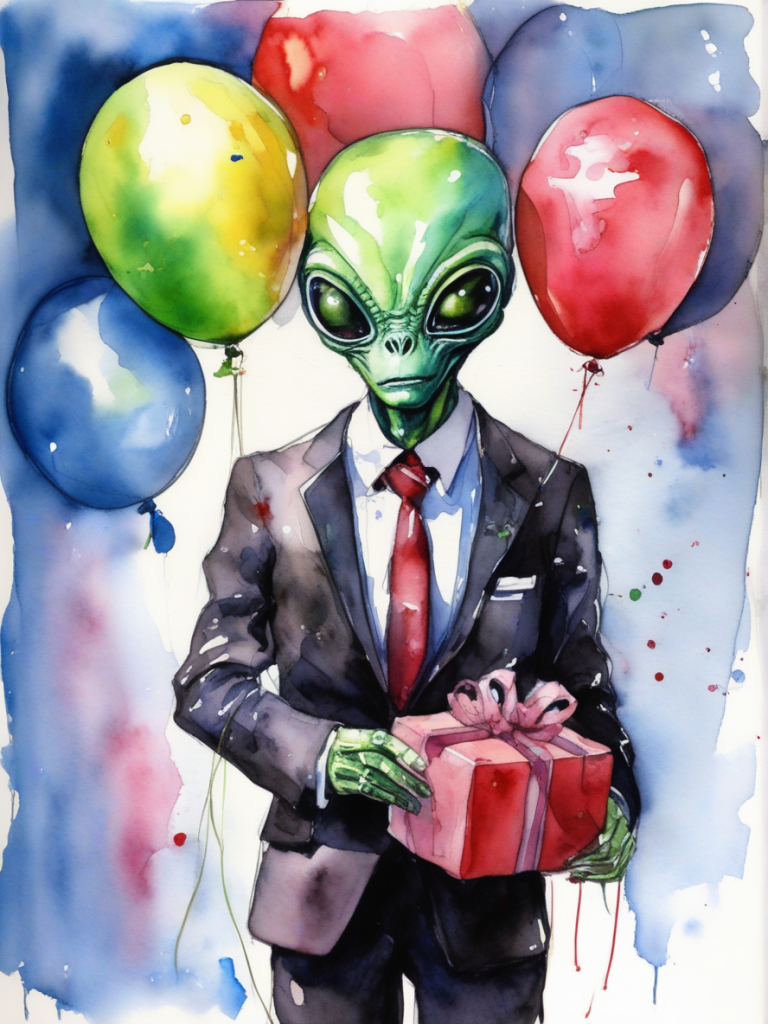
“They celebrate the day of their birth?” Tannuz asked, puzzled, as he adjusted his holographic camouflage. Humans were delicious, but also easily startled.
“Yup. Help me with the card,” Xondon said.

Tannuz thought about it, then scribbled something.
“What do you think?”
“It just says ‘Happy Birthday,’” Xondon mumbled, “be more creative or they’ll become suspicious.”
Tannuz got back to work.
“Better?”
“’Happy Birthday, hope it’s the best.’ Ok… But wouldn’t that imply the next one’s gonna be worse?”
Tannuz corrected the card again.

“Now?”
“’Happy Birthday, hope it’s the best (and last) one!’ Perfect! No one will suspect anything!”

MQS

blending in with the locals

Fantasy in Divination: A Double-Edged Sword

I’m currently still doing readings in exchange for recommendations for when I  decide to start offering readings from this site. After a short reading with a querent we began chatting about the process of divination, and he asked me if fantasy is required to interpret the cards. I thought this was a really great question. I’m taking fantasy as a synonym with imagination, that is, the ability to conjure up images in one’s mind.

First off, we need to distinguish fantasy/imagination from (true) intuition. True intuition is relatively rare and it does not originate from the limited structure of the personality. It is, for all intents and purposes, otherworldly. Before being appropriated by boss babes on TikTok, intuition was rightfully considered a gift of the gods. It is hard to obtain and even harder to train, although the practice of divination, as it leads to the divine, does allow for the development of intuition.

Fantasy or imagination is mostly the product of neurons bouncing together, and it is at least in good part under our control (though whether imagination is also merely a personal power is up for debate. Many occultists think it isn’t, and I agree.)

Imagination plays a large role in modern magic, and, it could be argued, in the magic of all times (though with different implications and within different frameworks), but I’ll leave this discussion for another time. The point is that imagination is one among the many legitimate sources of understanding that we have at our disposal, including in the occult world.

Ordinarily, if someone asked me what’s the one thing that is required in order to become a diviner, I would answer that they need to understand the vocabulary, grammar and syntax of what is essentially a divine language.

Yet, in philosophy of language, and even more in philosophy of science, there is a concept called underdetermination. In its most frequent use, the principle of underdetermination states that, given a number of facts, there exist more than one theory that can explain those facts and account for them. How we then choose the most appropriate theory has sparked a debate that largely goes on to this day between scientists, philosophers, psychologists and anthropologists.

Something similar happens with divination: given a spread of cards, or a chart, it is often the case that more than one explanation might appear plausible at first. True, the more cards we string together, the fewer the possible interpretations are, just as a single word out of context might mean many things, but the more words there are, the more we understand the sentence.

But take a sentence like “we saw her duck“. Was she avoiding a bullet or does she live on a farm? This is a form of underdetermination, because the possible mental images evoked by the sentence cannot be reduced to the sentence itself.

Probably if we had a perfect understanding of the language of divination we would get unambiguous results, but we don’t. We must therefore use logic and context to weed out the less likely predictions, yet even so we might be left with more than one possible image of the future in mind. The word image here is key.

Can we predict a future we cannot imagine? That is, can we predict a future (or reveal a past) that we cannot put in the form of a picture or series of pictures? If one asks me: would you be able to understand a sentence you’ve never heard before? The answer is: if I know the language, yes. We hear sentences we’ve never heard before everyday and we rarely have problems. But going back to “we saw her duck”, if I didn’t know that duck can also be a verb, I would interpret the sentence univocally, as I wouldn’t be able to create a mental image corresponding to the interpretation of “duck” as verb instead of noun.

In real world languages the ambiguity is often removed by clear context. But in divination context is not always clear, meaning it is harder to exclude possible interpretations, and we need to be capable of creating mental images of all the most likely interpretations of an oracle before choosing which one is the most likely.

We need to be able to extrapolate the many possible meanings a spread can have before submitting them to inquiry. The ability to construct mental images or scenes from the divination tool we are using is consequently incredibly important. In other words, yes, imagination is key in divination.

But the imagination I am talking about is not the unbridled imagination that so many mistake for intuition, and which usually leads either to error or to unverifiable predictions. Imagination is the ability to create possible images derived from our (limited) understanding of the medium we are using, so that we can then see which one is more likely to be accurate by finding testimonies in the spread or by asking the querent.

Like all other occult arts, divination therefore requires the cooperation of both sides of the brain (to which we may add the importance of bodily grounding, but that’s a matter for another post).

MQS

Learning From Experience

Previous / Back to Index / Next

From the Microcosmicon, 28:

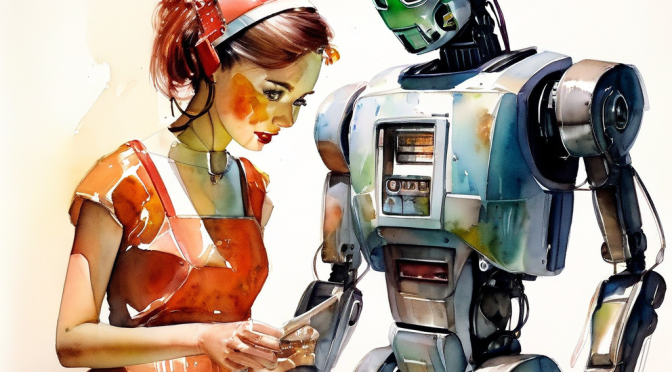
The doctor told Jade I’d be better than her late wife. I immediately shocked her with my mannerisms.
“That’s so Ana!”

For months I kept surprising Jade with my impression. In fact, I was more pliable than Ana: we never fought over the remote or her cooking, as Ana would have. I could learn and adapt, without prejudice.

Yet this bothered her.
“Ana wouldn’t have done it.”
She started sleeping on the couch. I didn’t disturb her, because that was her wish.

Rotting in the cellar, I realize she wanted me to do what she didn’t want. But I can’t.

MQS

learning from experience without prejudice

The Great Watcher

Previous / Back to Index / Next

From the Microcosmicon, 27:

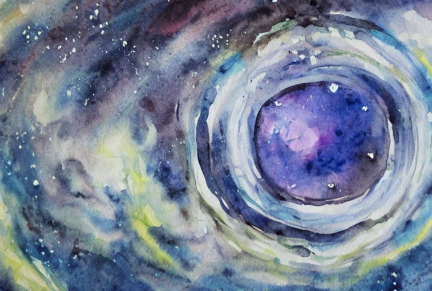
The psychonauts’ submarine plunged into the Inmost Ocean, the depths of the collective unconscious where the whirlpool roared. A wound throbbed at the bottom of it, through which meaning bled out of reality, leaving the world stunned under a pall of grayness.

“There’s something,” one of them shouted, as the sub spiraled down toward the abyss.
“Don’t be silly, there can’t be anything beyond reality,” another responded.

“Wake up!” Dr. Ferguson’s voice broke in, saving them just as they were approaching the point of no return.
Their vision disappeared from the screen as they awoke.

“What did you see?”
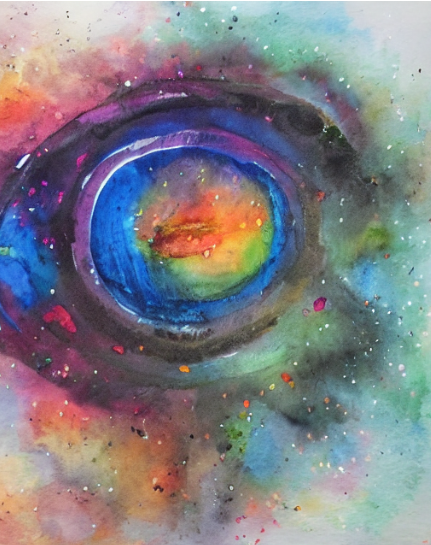
“An eye.”

MQS

The Great Watcher

Mrs. Pettigrew’s Cat

Previous / Back to Index / Next

From the Microcosmicon, 26:

To Mrs. Pettigrew’s relief, the cat came back five days later.

Initially, everything seemed fine. Then Mrs. Pettigrew noticed something was off about the creature, though she could not put her finger on it. It kept meowing, but this in itself was not strange—Admiral was a talkative cat. It was the monotonous way it meowed.

Then, one night, as she was falling asleep trying to disregard the noise, it occurred to her—it was a looped recording.

She stood up and bolted into the living room. But Admiral was already taking off through the window with her biometric data.

MQS

Mrs. Pettigrew’s Cat

Eternal Life

Previous / Back to Index / Next

From the Microcosmicon, 25:

They called it the Hermit Planet, though no one existed who spoke its native tongue.

Lured by the promises of eternal life found in its electromagnetic field, travelers came to it from all over, meandering through its statue-rimmed roads, hunting the promised wondrous resin.

When they found it, they drank of it exclusively for three thousand days, waiting for the miracle.

Thus did vitality slowly dim in their stiffening limbs; thus did their minds drown in syrup, till life was evened out in their stilled nature, and fear merged with bliss, and flesh with bone and earth.
Pure, unobstructed presence.

The Planet of Eternal Life

MQS

A Loose Page From Dr. Ferguson’s Copy of the DSM

Previous / Back to Index / Next

From the Microcosmicon, 24:

It is not a place, but a state of mind. No one is especially predisposed. You reach it the same way you reach the wrong conclusion or the wrong address.

Initially, you are aware of it. It begins as a deviation in your thinking patterns, like a secondary route through the woods. All made perfect sense a minute earlier. Now something doesn’t. Then, nothing makes sense, so there’s nothing to be aware of.

And suddenly an endless residential area stretches out before your mind’s eyes, empty under an empty sky.
Now you are where barely any psychonaut can find you.

A loose page from Dr. Ferguson’s Copy of the DSM

MQS

The Love Dimension

Previous / Back to Index / Next

From the Microcosmicon, 23:

They approached the thing stretched out mutely on the table. Its nervous system unfolded like a web out of its brain, suspended on hooks. This was their forbidden gateway to the fullness of life.

“Lock the door,” one of them said apprehensively. The other obeyed.
Then each of them took a connector, forced one extremity of it inside the thing and the other into their temple socket.

Finally, one pushed a button, and the life latent in the thing unfurled. Their perception collapsed, absorbed into that of the thing.

Kids playing, dogs barking, the smell of meatloaf.
“I’m home, honey!”

The Love Dimension

MQS

The Fuel of History

Previous / Back to Index / Next

From the Microcosmicon, 22:

After their liberation, two centuries of fights were required for the Xandal’uc to achieve equality with their former human masters. During the so-called Golden Era, a generation of enlightened humans and Xandal’uc moved closer, working hand in hand like brothers.

Then a blind evil began uncoiling in the hearts of many Xandal’uc. Having tasted equality, they thirsted after superiority. When the final choice had to be made between moving on and getting even, they chose unwisely.

This proved that they were indeed equal to humans. And so History’s cogs screeched into motion, and the pendulum of evil was kept swinging.

The Pendulum of History

MQS