Category Archives: Cartomancy

Vera Sibilla FAQ

My version has keywords. Should I use them?

Honestly? No. The keywords provided are extremely limiting, they are sometimes completely stupid (the Gift card does NOT mean obstacles) and they were clearly added by people working on the graphics of that particular version in the 60s or 70s. People working on a deck’s graphics in a big manufacturing company are NOT card readers. Their boss probably told them to add keywords so they could market the deck as ‘now improved and easier to read’ or something to that effect.

What are the little numbers supposted to mean?

They are lottery numbers. Some older versions even have three numbers. I’ve never paid attention to them, but then again my eyes glaze over at the mere mention of lottery and games of chance.

In my deck the cards of the Three of Diamonds and Eight of Diamonds are swapped. Why?

I honestly have no clue. My best guess is that there was an error made during the reelaboration of the deck for that specific edition. The traditional numbering is 3♦ for the Gift and the 8♦ for the Handmaid. If they are swapped in your version it’s not a big deal. Just don’t expect it to be due to some deep kabbalistic consideration. No “tzaddi is not the Star” and all that jazz. The Sibilla is much simpler.

Can I use playing cards with the meanings you provide?

Yes. If it helps you, write the title on each card.

What is the difference between the Vera Sibilla and the Sibilla della Zingara?

The Sibilla della Zingara (sometimes marketed as Gypsy oracle cards) is a reimagining of the Vera Sibilla, and is relatively recent compared to it. It was created because the Sibilla was popular and they wanted to update the graphics. Whether you choose it or the Vera Sibilla is a matter of taste, though I personally prefer the original. There is no difference in terms of meanings.

Do you recommend any books on the Vera Sibilla/Sibilla della Zingara?

I am a sucker for books. I believe I am aware of most, if not all books written on this deck in most languages, which isn’t to say much. I can, in all honesty, only recommend one which is still available: Alessandra Venturi’s Italian Cartomancy. It is poorly organized and it doles out information in hopes or making you fork out more money for the author’s course. There are no examples, no combinations, no spreads. But the information it does contain is solid. All other books on the Vera Sibilla/Sibilla della Zingara in all languages I PERSONALLY consider pretty bad (you are welcome to your own judgment). Italian cartomancer Etienne Valancourt is working on a book. It’s been years in the making, so I don’t know if he’ll ever publish it, but I have great respect for him and I already recommend it even before having read it.

Can I skip reversals?

Yes, you can do what you want. I myself do not actively create reversals when shuffling: any card reader will tell you that cards simply have a way of reversing themselves. I deal out the cards as they are, and then, in gathering them up, I don’t pay too much attention to how they face. However, I always try to start a new reading session with my cards upright. Even then, often one or two cards will reverse themselves. Call it chance, call it magic, but it happens. I would suggest that you pay attention when a card comes up reversed, but you can do what you want.

Can I make up my own meanings?

The first thing to realize when it comes to any psychic skill is that there is no psychic police. So yes. You can. I know some people who don’t use traditional meanings and give perfectly satisfactory readings. My own meanings are a mix of tradition and experience, and the numerology I use is invented, not traditional.
The second thing to realize is that if you are asking me, or anyone, for permission to do what you want, you’ve already lost. Detract further points if you pay someone in order to be told.
The third thing to realize is that just because you can reinvent the wheel doesn’t mean you have to. There is no psychic police, but there are established practices. To dismiss them out of hand without knowing them can be just as much an act of weakness as slavishly following them. Another point worth mentioning is that when we make up something we place our own limitations on it. It can be good to measure yourself against something you didn’t make up even just to stretch your imagination, skill and preconceptions.
My advice would be to educate yourself (here or somewhere else), make your own experience and adjust accordingly.
Or do what you want. Just don’t ask me to validate you. You don’t need validation and I am not inclined to validate people.

Can I just use the pictures as a guide?

Again, you can do what you want. Remember to keep a record of your readings, though, so you can go back to them and see what was accurate and what wasn’t.

Can I use the information you give as basis and develop it in my own way?

Of course! That’s what I did.

Do I have to memorize the combinations?

A handful of combinations are so classic (like that for pregnancy) that not to know them would be a mistake in my opinion, but combinations don’t need to be memorized, especially because you will find that the same combination could mean something totally different when surrounded by other cards. Just use the ones I provide as a mental gymnastics, but don’t confine yourself to them, nor to the interpretations I provide.

Do I need to consecrate/purify the deck?

No, but you can. I do. I would also suggest that you keep your deck near you for some time. As a rule, anything that helps you feel attuned to the deck is good.

Can I make up my own spread?

Absolutely!

Who taught you?

The mother of one of my professors. The numerology is something I made up to make sense of the meanings I learned and to expand on them.

Will you teach me one-to-one?

I will not. I don’t have the time. Besides, theory will only get you so far, and this blog is, I believe, most if not all the theory you need. You need to practice and keep a record of your readings. Don’t exaggerate with readings for yourself. Don’t force yourself to ask questions just out of idle curiosity to see what the cards say. Strive to read for others. Nag your friends and relatives. That’s the best way to start. That’s not to say you can’t read for yourself. Just know your limits.

If I send you my spread will you interpret it for me?

I will not. I don’t have the time. Also, I believe everyone should take responsibility for their spreads and I also think that the language of the cards is somewhat personal, just like different dialects within the same language. Just because all the words are found in the same general dictionary doesn’t mean every word has the same significance and importance for every speaker. Learn your own cartomancy language. You can do it!
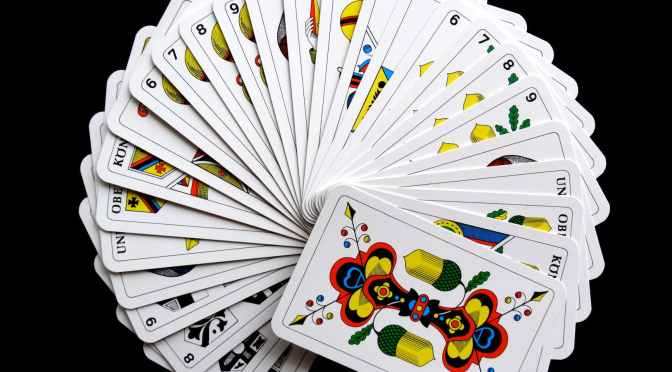
Cartomancy with the Skat / Piquet Deck of 32 Cards – Spreads

The German Skat / Piquet deck is normally read in a großes Blatt or große Tafel, i.e., a grand tableau. Usually, the composition of the Blatt is 8×4 or, alternatively, 6×5 plus two remaining cards in the last row. Maybe I will cover it in a future post, but as it’s a method I’m still studying and am not familiar with, it may take a while 🙂 there are, however, other methods.

For starters, nothing prevents you from using regular rows of cards for answering simple questions or just to get a general look at the future.  You can also take a look at the spreads I presented for the Sibilla and adapt them.

Another popular method used with Skat cards is that of the star. There are several variations online. The star spread is relatively simple and is normally used for general readings.
You place the significator card for the querent on the table, shuffle (or have the querent shuffle, depending on who you listen to). You then cut three times and read the cut. You restore the cut by placing the central heap on the last and then on the first, and you start dealing the cards.

One goes to the left of the significator, one to the right, one above, one below, one in the upper left corner, one in the lower right corner, one in the upper right corner, one in the lower left corner. You now have the significator completely surrounded by cards, like in a square of 9. But it’s not over. You then place another card to the left, one to the right, one above, one below, upper left, lower right, upper right, lower left. This will get you the shape of a star.

You then go on to interpret the spread, with the cards to the left as the past, those to the right as the future and those in the middle as the present. As I said, there are many variations on this spread, and I haven’t personally used it yet. I will update this post when I do.

Cartomancy with the Skat / Piquet Deck of 32 Cards – Card Meanings

This is the list of meanings I have received for the German Skat deck. If you need a background, click here for part I.

Hearts – Hearts (also called “Rot”, red)

Ace – The home, The Family
Seven – Intimacy, Someone or something close, Something imminent
Eight – Fun, Entertainment, Festivity
Nine – Friendship, Joy, Love
Ten – Marriage, Union, Connection, Bond
Jack / Unter – A Child, Naive, Inexperienced, Positive, Immature
Queen / Ober – The female querent
King – The male querent

Spades – Leaves (called “Grün”, green)*

Ace – A letter, Document, A book, Study
Seven – Visit, Meetings, Hopes, A short trip (even just going out on foot)
Eight – Society, People meeting, Groups, Talks, Also a short trip, but a bit longer than the Seven
Nine – Worry, Uncertainty, Preoccupation
Ten – Long road, Travel, A long time, Abroad
Jack / Unter – Message, News, also relatives
Queen / Ober – An older woman, A dark-haired woman, A friend or relative
King – The male counterpart to the Queen

Diamonds – Bells (“Schellen”)

Ace – Success, Great fortune, Gift, Good for career and business
Seven – Small money, Something small, Objects, little by little, of small account
Eight – Job, Occupation, also Praise
Nine – Success, Growth, Increase, Recognition, Satisfaction, Improvement
Ten – Money, Success
Jack / Unter – Good luck, Fortunate occurrence
Queen / Ober – A blond woman, A younger woman
King – The male counterpart to the Queen

Clubs – Acorns (note that Clubs are called “Kreuzkarten”, Crosses)

Ace – Sorrow, Suffering, Spirituality, Loss, Shock, A large building
Seven – Tears, can rarely be tears of happiness
Eight – Anger, Arguments, Clashes
Nine – Loss, Lack of success, Also jealousy
Ten – Illness, Situations that are sick
Jack / Unter – Disruption, Bad luck, Falseness, also wearing a uniform
Queen / Ober – An elderly woman, An ex, A negative woman, Lonely, lying, A female doctor or a woman in a position of authority
King – The male counterpart to the queen

Combinations

A♣ – 10♣ – K♣ = hospital, sickness
K♣ – 10♥ – 8♥ = marriage
7♥ – 7♠ – J♥ = pregnancy
8♦ – A♠ = a new job
8♦ – 9♦ – A♦ = career advancement
8♦ – 7♦ = part-time job
8♦ – 10♦ = full-time job
10♦ – K♦ – A♦ = successful businessman
8♠ – 8♥ = meeting people, a party
A♥ – 7♣ – 9♣ – A♣ = loss in the family
10♥ – K♣ – 8♣ = divorce
K♣ – J♣ – A♣ = problems with the law, prison (if another bad card instead of the Ace, problems with the law)
10♠ – 7♠ = someone visiting from far away
8♥ – J♦ – A♦ – 10♦ = winning money
J♦ – J♣ = bad luck, lost opportunity
J♣ – J♦ = good luck
7♥ – 7♦ = flirt, just sex, small money coming in
7♠ – 8♥ = going out with friends
10♠ – 8♥ = a pleasant trip
10♠ – 10♣ = problems with the car
10♠ – 8♣ – A♣ = an accident
7♦ – A♥ – 9♦ = house renovations
A♠ – 10♦ – A♥ – A♦ = buying a house
K♥ or Q♥ – 9♠ – 9♣ = person is jealous
7♦ – 7♣ = money problems

* as I said in part I, in the German tradition Spades are good and Clubs bad. If that seems weird to you, feel free to swap them.

Cartomancy with the Skat / Piquet Deck of 32 Cards – Introduction

Before moving on with the regular deck of 52 cards, I wanted to spend some time on the reduced pack of 32. Reduced decks are very common across Europe. Usually, a reduced deck consists of all Aces, Sevens, Eights, Nines, Tens, Jacks, Queens and Kings.
Reduced packs are used not just in divination, but for playing games, and that’s probably how fortune-tellers and diviners got the idea. A reduced deck is usually called a Piquet deck or, in German-speaking countries, a Skat deck. I say this because the method I have been taught is of German origins.

Another important point to consider is that not all traditions see the suits in the same way. In Italy, as well as in most English traditions, Diamonds are neutral to good, while in France they are often seen more critically, as opposed to Clubs, which are seen as more positive, while in English fortune-telling they are neutral and, in Italian cartomancy, neutral to bad depending on who you ask.

In German-speaking countries we find a curious variation: Spades, which are considered invariably bad all across Europe, are seen positively, while Clubs are considered bad. This is due to the fact that in German, Clubs are called Kreuze (e.g., Kreuz-10, Kreuz-König, etc.), which means Crosses. As such, they are considered symbols of suffering. Spades, on the other hands, are associated with social activities and movement.

The method that I have been taught, which I admittedly do not practice, but have been allowed to pass along in case someone is interested in it, was originally devised for traditional German decks. German decks have peculiar suits which are completely different from the standard poker deck.
These are
Hearts (actually called Rot, Red)
Leaves (actually called Grün, Green)
Schellen (small bells)
Eicheln (Acorns)

These suits can be made to correspond to the suits of the regular poker deck, although the correspondence depends on what value you ascribe to the regular suits.
If I were to translate the German deck into regular suits, we would have the following.
“Red” or Heart cards correspond to Hearts. They deal with happiness, family, love, fun.
“Green” or Leaf cards correspond to Spades. They symbolize society, travel, movement.
Bells correspond to Diamonds. They have to do with money, success, luck.
Acorns translate as Clubs, and are symbolic of struggle, tears and difficult situations.

The system I am going to discuss in the next post can be used indifferently with German cards or with a regular reduced deck, using the correspondences above. If, however, you feel uncomfortable giving positive meanings to Spades and negative meanings to Clubs, feel free to just swap them. As long as you are consistent, you won’t have any problems.

Playing Cards and Numerology – The Kings

In cartomancy with playing cards, Kings are almost always significators for men. On rare occasion, Kings can come up to signify action, judgments and protection.
In some systems, the significators for the querents vary, but in the one I have been taught, it’s normally the Queen and King of Clubs that represent the querent.

The King of Hearts is a family man. He can be a father, a brother, an uncle, etc. For a gay man, the King of Hearts can be a partner. He is a good man, one who has an interest in the querent’s welfare. He is the archetype of the philanthrope. Even when he is not close to the querent, he is warm and kind. Even on the rare occasions when it doesn’t stand for an actual man, the card symbolizes a positive opinion of the querent (for instance, a judge ruling in the querent’s favor or a public servant furthering his aims). It shows positive outcomes thanks to protection. In general, it shows action taken in favor of the querent.

The King of Clubs is the male querent or the female querent’s male partner. When this figure doesn’t exist, he still represents a man, not necessarily related to the querent. Broadly, the card speaks of action, a positive role model, fair judgement and fair procedures.

The King of Diamonds is a man who is not close to the querent. He can be an acquaintance, a boss, a professor, a businessman. He is a person of good means and, like the Queen of Diamonds, one who follows primarily his self-interest, though he is not necessarily evil. He can be a rival in love in the appropriate context. Even when it doesn’t represent a man, the card symbolizes financial institutions, decisions concerning money and situations where there are interests at play that are greater and more powerful than the querent’s.

The King of Spades can be the male counterpart to the Queen of Spades, a man who is lonely, bitter, a rival, an enemy, an ex etc. He can be a difficult person, a bad father and all the things that apply to the Queen. However, the allegorical meaning of this card is also quite common, in that it represents the law itself, as well as a doctor or even the concept itself of medicine. It signifies great power being brought to bear on the querent, often in a cold and impersonal manner, if not altogether antagonistic. With negative cards it also signifies evil deeds and the will (and ability) to hurt

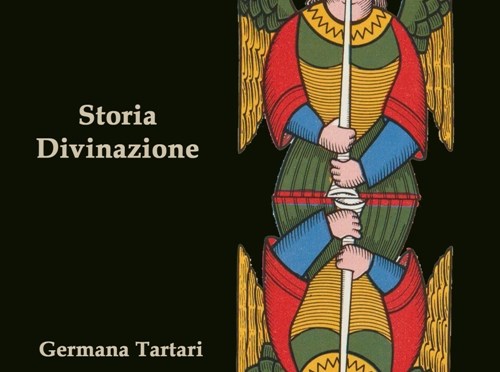
Tarocchino Bolognese. Storia Divinazione, by Germana Tartari (A Short Review)

English Version (scroll down for the Italian version)

In this blog I haven’t yet talked about one of the decks I am most interested in learning, yet one about which very little material is to be found. I’m talking about the Bolognese Tarot, or Tarocchino Bolognese.

The word “tarocchino” is a diminutive form of “tarocco”, thus meaning “small tarot.” I am not going to cover the history of the cards here. There’s plenty of great sources online. The reason for the diminutive form is that the deck is actually a reduced pack, with some variations in the order and makeup of the Major Trumps.

What I am going to discuss is a marvelous little book that has been recently published on the matter: Tarocchino Bolognese. Storia Divinazione, by Germana Tartari. The book is currently available only in Italian.

Miss Tartari has been taught to read the Bolognese Tarot by her grandmother, and has started teaching it in turn following what she describes as a call to spread the traditional meanings she has received.

The book is relatively short, but it succeeds as a comprehensive introduction for neophytes. As most books on the tarot, it starts with what I usually consider the “boring part”, i.e., the history of the cards. I say “boring” because most of the times, writers feel that it is bad to lead off with the juicy stuff and sense that it’s best to preface it with some historical remarks fished at random from the most dubious sources.

But this is not the case for Miss Tartari’s book. The historical introduction is not at all boring. It has been handled by the Museo Internazionale dei Tarocchi, and it is as succinct as it is interesting, as well as historically accurate.

Miss Tartari then goes on to describe her history and relationship with the cards in moving detail. The great passion that animates her shines through every single turn of phrase and choice of words. What also struck me was her understanding of cartomancy as an activity that is deeply embedded in the way people relate to one another: as described by her, cartomancy is almost an interpersonal skill, a way of caring for other people. I greatly enjoyed her take, and think most people who are into traditional tarot would profit from reading it.

The meat of the book consists of the divinatory meanings and combinations of the cards. As is usual for the Bolognese Tarot, the meanings have nothing grandiose and philosophical about them. There is no flight of fancy. There are no pseudo-deep elucubrations as usual among tarot readers who try to remove the tarot from observable reality by relegating it to a vapid mystical system.

The Bolognese Tarot is earthbound. It concerns the ordinary life of ordinary people. And, frankly, there is more depth in the recognition that the Sun means “by day” rather than in some obscure intellectual abstraction. As Miss Tartari put it in a video about the book, people once consulted the tarot about whether they would be able to put food on the table or not. They wanted to know whether the year’s crop would be good or poor. This is not to say that more spiritual concerns cannot be part of ordinary life, nor that the tarot cannot answer such questions, but its language remains clear, the language of simple people with their feet firmly planted on the ground.

The last part of the book describes two types of spread, and what distinguishes this book from many other books on the subject is that the writer describes some real readings she has done for querents. I thought this was a great way to demonstrate the great potentiality that the tarot has for describing real life and real concerns. In fact, I would gladly buy another book by Miss Tartari that his wholly focused on interpreting practical examples of real spreads.

In short: a must-have for anyone who is interested in the Bolognese Tarot, in the actual (and not fanciful) history of Tarot, and in one of the most traditional systems of divination in the West.

Where to buy: Mutus Liber

Versione Italiana

In questo blog non ho ancora parlato di uno dei mazzi che più mi interesserebbe studiare, ma sul quale si trova pochissimo materiale. Sto parlando dei Tarocchi Bolognesi, o Tarocchino Bolognese.

La parola “tarocchino” è una forma diminutiva di “tarocco”, quindi significa “piccolo tarocco”. Non tratterò qui la storia delle carte. Ci sono molte ottime fonti online. La ragione del diminutivo è che il mazzo è in realtà un mazzo ridotto, con alcune variazioni nell’ordine e nella composizione dei Trionfi.

Quello di cui parlerò è un meraviglioso piccolo libro pubblicato di recente sull’argomento: Tarocchino Bolognese. Storia Divinazione, di Germana Tartari. Il libro è attualmente disponibile solo in italiano.

La signora Tartari è stata educata alla lettura del tarocchino bolognese dalla nonna e ha iniziato a insegnarlo a sua volta seguendo quella che lei stessa definisce una vocazione a diffondere le conoscenze tradizionali che ha ricevuto.

Il libro è relativamente breve, ma riesce ad essere un’introduzione completa per i neofiti. Come la maggior parte dei libri sui tarocchi, inizia con quella che di solito considero la “parte noiosa”, cioè la storia delle carte. Dico “noiosa” perché la maggior parte delle volte gli scrittori ritengono che non sia appropriato iniziare con le cose più succose e pensano che sia meglio farle precedere da alcune osservazioni storiche pescate a caso dalle fonti più dubbie.

Ma questo non è il caso del libro della signora Tartari. L’introduzione storica non è affatto noiosa. È stata curata dal Museo Internazionale dei Tarocchi ed è tanto sintetica quanto interessante, oltre che storicamente accurata.

La signora Tartari descrive poi la sua storia e il suo rapporto con le carte con parole toccanti. La grande passione che la anima traspare ad ogni singolo passaggio e da ogni scelta di parole. Mi ha colpito anche il suo modo di intendere la cartomanzia come un’attività profondamente radicata nel modo in cui le persone si relazionano tra loro: così come da lei descritta, la cartomanzia è quasi una competenza interpersonale, un modo di prendersi cura degli altri. Ho apprezzato molto il suo punto di vista e penso che la maggior parte delle persone che sono appassionate di tarocchi tradizionali trarrebbero beneficio dalla sua lettura.

Il cuore del libro è costituito dai significati divinatori e dalle combinazioni delle carte. Come di consueto per i Tarocchi bolognesi, i significati non hanno nulla di grandioso e filosofico. Non ci sono voli pindarici. Non ci sono elucubrazioni pseudo-profonde, come di solito accade tra i lettori di tarocchi che cercano di allontanare i tarocchi dalla realtà osservabile relegandoli a un vago sistema mistico.

I Tarocchi bolognesi sono legati alla terra. Riguardano la vita ordinaria della gente comune. E, francamente, c’è più profondità nel riconoscere che il Sole significa “di giorno” piuttosto che in qualche oscura astrazione intellettuale. Come dice la signora Tartari in un video di presentazione sul libro, una volta le persone consultavano i tarocchi per sapere se sarebbero state in grado di mettere pane in tavola o meno. Volevano sapere se il raccolto sarebbe stato buono o meno. Questo non vuol dire che le preoccupazioni più spirituali non possano far parte della vita ordinaria, né che i tarocchi non possano rispondere a tali domande, ma il loro linguaggio rimane chiaro, il linguaggio di persone semplici con i piedi ben piantati a terra.

L’ultima parte del libro descrive due tipi di stesa, e ciò che distingue questo libro da molti altri libri sull’argomento è che la scrittrice descrive alcune letture reali che ha fatto per i propri consultanti. Ho pensato che questo fosse un ottimo modo per dimostrare la grande potenzialità che i tarocchi hanno nel descrivere la vita reale e preoccupazioni reali. In effetti, comprerei volentieri un altro libro della signora Tartari che si concentri interamente sull’interpretazione di esempi pratici di stese reali.

In breve: un libro imperdibile per chiunque sia interessato ai Tarocchi bolognesi, alla storia reale (e non fantasiosa) dei Tarocchi e a uno dei sistemi di divinazione più tradizionali dell’Occidente.

Dove Acquistarlo: Mutus Liber

Playing Cards and Numerology – The Queens

In cartomancy with playing cards, Queens are generally representative of women, and this is just about their only role. It is very rare that they come up to signify something else. That being said, they also have a connection with receptivity, nourishment and growth.
In some systems, the significators for the querents vary, but in the one I have been taught, it’s normally the Queen and King of Clubs that represent the querent.

The Queen of Hearts is usually a woman who is known to the querent. She represents a mother, daughter, relative or close friend. In general, she is a woman who has the querent’s best interest at heart, or at least should (you’ll need to check the surrounding cards). Even if she is not related, she could stand for a positive woman in general. For a lesbian querent, the Queen or Hearts can be the partner. The Queen of Hearts is also a symbol of acceptance and receptivity. It shows an environment where the querent thrives and is allowed to grow. Broadly, it confirms the receipt of something and it is a symbol of motherhood.

The Queen of Clubs is the female querent. If the querent is a man, she is usually the partner, either actual or perspective. If this interpretation is out of the question, she is still a woman in the querent’s life, usually not related to him. The Queen of Clubs is also connected to the idea of tending to something, working on it to make it grow or perfect it. She is not a symbol of great accomplishments, but she signifies honest effort, and doing what’s honorable. She is connected to harvest.

The Queen of Diamonds is a woman outside of the querent’s immediate circle. She is an acquaintance, a superior, a businesswoman, a professor. Her role is ambiguous, because her primary loyalty is to herself and her interests, but this doesn’t make her evil (after all, the woman you buy flowers from sells flowers to make money, not to please you). Compared to the Queen of Hearts she can be colder. She can also be a rival. The card is also a symbol of prosperity and of reaping the good fruits of one’s labor.

The Queen of Spades is a lonely or elderly woman. She can be an enemy or a difficult person. She doesn’t love the querent, nor does she further the querent’s aims (this is a great difference with the Queen of Diamonds, that the latter’s aims can allign with the querent’s, while those of the Queen of Spades are usually opposite). She can also be a woman who is very powerful, wears a uniform or represents the law. She can be an ex or a doctor. The card is a symbol of things that rot or are overripe or spoiled, and also signifies lack of acceptance (including lack of submission) privation, hunger, miscarriage. Finally, the card signifies falsehood, false words, false promises and false people.

Playing Cards and Numerology – The Jacks

The way I was taught to read playing cards, Queens and Kings are often real people, representing women and men respectively, while Jacks are only rarely real people, although the Jack of Hearts can represent a real child.

Jacks tend to represent news and attitudes.
The Jack of Hearts, in addition to representing a child, can represent someone or something who is fresh, naive, immature, honest, happy-go-lucky. In love readings, for instance, it tends to show flirts and situations that haven’t fully matured yet. It is also a card of inexperience.

The Jack of Clubs represents friendship and help. It represents also service to others. Next to another court card representing a person, it shows that he or she is helpful, friendly, positive, serious, constructive. The card is also connected to cooperation and, as an extended meaning, to co-workers.

The Jack of Diamonds represents messages and the knowledge of facts. It shows the acquisition of information. As an extended meaning, it signifies study and research. It can also signify a go-between (you will notice that the Jacks of Diamonds and Clubs are similar to their Sibilla counterparts). The card points to someone who is inquisitive, curious and desirous to delve deeper into something.

The Jack of Spades signifies enmity. It shows a negative attitude toward the querent (or of the querent toward someone or something). It is a card of ill-will. It is also the uniform card, especially when together with the King of Spades. Animosity, a competitive attitude and the desire to dominate another are all part of the meanings of this card.

Despite the Jack of Hearts being the Child card, all Jacks can represent children. Usually, the Jack of Spades is a child with problems, or a sick child, or a child that misbehaves. The Jack of Clubs is a good child, while the Jack of Diamonds is a smart child.

Playing Cards and Numerology – The Tens

The tens in playing cards represent goals and destinations.

The Ten of Hearts is another lucky card in the deck, signifying happiness and well-being. Just like the Nine of Hearts, the Ten has the power to greatly reduce the negative impact of other cards. It represents lasting joy and a sense of not needing to look further. It is a great love card. It is also connected with the querent’s city or homeland.

The Ten of Clubs is the card of travel. Clubs are cards of action, but the aim of the action is represented by Diamonds. By themselves, Clubs are just a means, and travel is the means to get from where you are to your destination. Likewise, the Ten of Clubs signifies metaphorical pathways, the course of action.

The Ten of Diamonds is the card of success, and broadly speaking of accomplishment of aims. It is a generally material card, and can signify a large sum of money, or at the very least that money is not an issue. It also represents cities other than the querent’s, seen as goals or destinations to travel toward.

The Ten of Spades has a variety of meanings. Some are neutral. For instance, it represents unknown destinations, stranger places and destinations abroad. It is also a card of negative goals, illegal aims and, more generally, of secrets and silence. It is connected to night time, just as the Ten of Hearts is connected to day time. Broadly, it is a card of failure, but only if together with other cards that point in that direction.

Playing Cards and Numerology – The Nines

The nines in cartomancy with playing cards are associated with the idea of wishes and hopes.

The Nine of Hearts is, as in many other systems, the wish card. It represents realization, fulfillment, sincerity of heart and, in general, things going as we wish them to go. It’s a positive card in most instances, as it has the power to alleviate the negative import of other cards that precede it.

The Nine of Clubs represents distance. It is a neutral card that represents things of long duration, long waits and delays, matters slowing down. It can also relate to physical distance. Generally, it shows the separation between what what we want and us. It’s the long road ahead.

If the Nine of Clubs is the road, the Nine of Diamonds is making progress on that road, and advancement in general. It is an extremely positive card, showing improvement, recognition, increase, fame, even. It represents other people’s views and expectations concerning the querent, if he has a good name or not, etc. By itself, it shows a good name. It is symbolic of career.

The Nine of Spades is notoriously the worst card in the deck, and some call it the wish denied card. If the Nine of Hearts shows things going as we wish them to go, the Nine of Spades mean things going against our wish. As a further consequence, it signifies things happening that we don’t want to happen, and against which we are relatively powerless.