Category Archives: astrology

The Esoteric Side of the Loneliness Epidemic

In scrolling on youtube I must have passed the third or fourth pompous video essay on the loneliness epidemic and the atomization of society. Then I had to laugh as I looked at myself from the outside, lonely in my office, my eyes glued to a stupid screen, which is usually what these videos complain about. I don’t like complaining, but I do like observing.

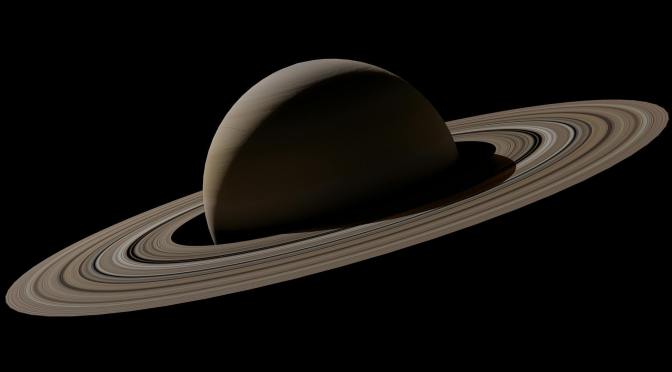
From an astrological standpoint, loneliness is ruled by Saturn, the greater malefic. Let me stress the word ‘malefic’. Generations of people better than us had no problem calling Saturn and Mars malefic and acknowledging the presence of evil in the world, yet the Becky’s and LaRhonda’s of the world who spend their time deluding themseves manifesting on social media think the concept of evil is beneath them.

It is, by the way, no moralistic notion of evil. Evil is simply that which is contrary to life (life being understood not vitalistically, but as outward expression of the metaphysical process of emanation).

Saturn is evil, greatly so. Even the few gifts it has for us are laced with poison: its deep wisdom, discernment and secret philosophy are often accompanied by illness, depression, poverty, general gloominess of circumstances. Saturn is not the cantankerous but loveable teacher that it is made out to be in pop astrology.

This doesn’t mean that Saturn is an unaccountable Satan like that of the exoteric tradition of many religions: Saturn does actively take part in the process of creation, but it usually does so by fulfilling the destructive and separative part of the equation. For instance, in some old hermetic and astrological texts Saturn is said to rule the first part of the pregnancy. This is the part where the soul becomes bound to the biological process of an individual body.

Through Saturn we become ‘this thing here’, before the other planets add their traits. Because we become ‘this thing here’ we also become subject to death, also ruled by Saturn, who is thus the first Planet we encounter descending and the last one we encounter ascending. Our being one thing, one individual, is the result of Saturn’s work.

As such, our existence as individual, ‘saturnian’ beings is also the basis of our loneliness, which is the presupposition of all we can do and achieve in life, all the social, political, cultural and economic structures we can weave together with other people.

It is not casual that all totalitarian ideologies seek to break down the ties that bind us to other people. All ideologies aim to push a certain image of humanity that corresponds to that ideology’s idea of good, but this image is usually the product of the ideologue’s deep delusion and would never occur by itself. The ideologue’s push becomes therefore a push for the reconstruction of humanity from the ground up.

And what is the ground? Saturn! The isolated individual, the one who has been torn from his or her social, moral, spiritual fabric is an individual who has been reduced to the Saturn phase of his conception, the phase where all we can say about them is that they are one thing, but before the other planets (let alone life experience) have added their specifications. The ideology then seeks to add its own imprint on this amorphous thing.

We do not live in times of totalitarian rule (anyone who argues the contrary has likely never experienced the horrors of totalitarianism). But we do live in times where there are people who profit from our isolation in a similar way.

So what is the conclusion? There is no conclusion. This is just a collection of notes as I observe the world around me. I am not suggesting any conspiracy or any evil master plan. I am merely observing who profits and who doesn’t from the current state of affairs. It is a simple reflection on what it means, from a magical standpoint, to isolate people.

MQS

The Objectivity of Magic

Since it’s Leo season I’m rather busy creating Sun talismans and “recharging” old ones (I am not fond of the idea of talismans as something to be charged, but I digress).

This reminded me of one time, a couple of years back, when hubby was in somewhat of an existential crisis as far as his job was concerned. I was working on a Sun talisman, but didn’t tell him (he knows of my esoteric interests but doesn’t interfere, and I don’t keep him abreast of all my workings).

The night after the consecration, hubby woke up at dawn, something that rarely happens, and was drawn by the rising Sun. Inexplicably he was compelled to open a job-searching app he hadn’t opened in a while. Right in front of him was the perfect job opportunity. He applied and got the job.

This little episode, I think, is a good example of how objective magic’s power is. Of course, if by objective we mean “amenable to consistent, quasi-scientific manipulation” then magic is not objective. The presupposition nestled in the heart of science is the possibility of endlessly manipulating reality, while magic has its unbreakable patterns.

Furthermore, white magic tends to have less dramatic (sometimes hardly noticeable) effects than dark magic, because it largely harmonizes the person with the patterns available in their life rather than running against them (if someone is saying that they’ll bring back the love of your life with white magic, they are lying).

Finally, magic doesn’t work as reliably as the technology stemming from science, and never will. If the remote doesn’t work you know you must either change the batteries or see if some wires have come loose inside. But pinpointing what’s gone wrong in a magical operation is much harder, and sometimes things simply don’t work because screw you any old mortal.

But magic is objective in the sense that its influence on reality becomes undeniable to those who have had to do with it. Just like with divination, it is really hard to find excuses and rationalizations.

Also, magic is objective in the sense that it forces us out of our ego and in contact with objective forces outside of us. Some may argue these forces also exist inside of us, and that’s true. In the esoteric constitution of humanity the seven planets are all present, but in so far as their activity is bound by our limitation it is relatively useless, which is why it becomes imperative to overcome those limitations by coming into contact with those same forces outside of us.

Way too much emphasis today is placed on the psychological side of magic and spirituality. This is in part a survival mechanism adopted by our forebears to allow magic to survive the scientific revolution (you can’t disprove me if I’m just an inner feeling).

Working on ourselves is certainly a great idea, though rarely in the sense that this is done nowadays, which usually plunges people even more deeply in their narcissism. However, I believe much of the value of the esoteric arts is that they force us to come out of our selves and in contact with something objective and far greater.

The famous esoteric/philosophical motto “Know thyself” has been reinterpreted in the most abstrusely psychological ways recently, but it is very unlikely that this is what those who wrote it meant by “knowing ourselves”: in the old view of the cosmos, it was impossible to know oneself without knowing one’s place in the scheme of things and therefore not eluding reality, including higher forms of reality, and experiencing the point of juncture between the individual and the universal.

MQS

Fantasy in Divination: A Double-Edged Sword

I’m currently still doing readings in exchange for recommendations for when I  decide to start offering readings from this site. After a short reading with a querent we began chatting about the process of divination, and he asked me if fantasy is required to interpret the cards. I thought this was a really great question. I’m taking fantasy as a synonym with imagination, that is, the ability to conjure up images in one’s mind.

First off, we need to distinguish fantasy/imagination from (true) intuition. True intuition is relatively rare and it does not originate from the limited structure of the personality. It is, for all intents and purposes, otherworldly. Before being appropriated by boss babes on TikTok, intuition was rightfully considered a gift of the gods. It is hard to obtain and even harder to train, although the practice of divination, as it leads to the divine, does allow for the development of intuition.

Fantasy or imagination is mostly the product of neurons bouncing together, and it is at least in good part under our control (though whether imagination is also merely a personal power is up for debate. Many occultists think it isn’t, and I agree.)

Imagination plays a large role in modern magic, and, it could be argued, in the magic of all times (though with different implications and within different frameworks), but I’ll leave this discussion for another time. The point is that imagination is one among the many legitimate sources of understanding that we have at our disposal, including in the occult world.

Ordinarily, if someone asked me what’s the one thing that is required in order to become a diviner, I would answer that they need to understand the vocabulary, grammar and syntax of what is essentially a divine language.

Yet, in philosophy of language, and even more in philosophy of science, there is a concept called underdetermination. In its most frequent use, the principle of underdetermination states that, given a number of facts, there exist more than one theory that can explain those facts and account for them. How we then choose the most appropriate theory has sparked a debate that largely goes on to this day between scientists, philosophers, psychologists and anthropologists.

Something similar happens with divination: given a spread of cards, or a chart, it is often the case that more than one explanation might appear plausible at first. True, the more cards we string together, the fewer the possible interpretations are, just as a single word out of context might mean many things, but the more words there are, the more we understand the sentence.

But take a sentence like “we saw her duck“. Was she avoiding a bullet or does she live on a farm? This is a form of underdetermination, because the possible mental images evoked by the sentence cannot be reduced to the sentence itself.

Probably if we had a perfect understanding of the language of divination we would get unambiguous results, but we don’t. We must therefore use logic and context to weed out the less likely predictions, yet even so we might be left with more than one possible image of the future in mind. The word image here is key.

Can we predict a future we cannot imagine? That is, can we predict a future (or reveal a past) that we cannot put in the form of a picture or series of pictures? If one asks me: would you be able to understand a sentence you’ve never heard before? The answer is: if I know the language, yes. We hear sentences we’ve never heard before everyday and we rarely have problems. But going back to “we saw her duck”, if I didn’t know that duck can also be a verb, I would interpret the sentence univocally, as I wouldn’t be able to create a mental image corresponding to the interpretation of “duck” as verb instead of noun.

In real world languages the ambiguity is often removed by clear context. But in divination context is not always clear, meaning it is harder to exclude possible interpretations, and we need to be capable of creating mental images of all the most likely interpretations of an oracle before choosing which one is the most likely.

We need to be able to extrapolate the many possible meanings a spread can have before submitting them to inquiry. The ability to construct mental images or scenes from the divination tool we are using is consequently incredibly important. In other words, yes, imagination is key in divination.

But the imagination I am talking about is not the unbridled imagination that so many mistake for intuition, and which usually leads either to error or to unverifiable predictions. Imagination is the ability to create possible images derived from our (limited) understanding of the medium we are using, so that we can then see which one is more likely to be accurate by finding testimonies in the spread or by asking the querent.

Like all other occult arts, divination therefore requires the cooperation of both sides of the brain (to which we may add the importance of bodily grounding, but that’s a matter for another post).

MQS

Do You Need To Believe In It For It To Work?

One of the questions that occupy way too many people in the esoteric community is whether divination or even magic require the person to believe in it in order for it to work. If you’ve ever watched the movie The Skeleton Key, you’ll know that this concept has seeped into the collective consciousness enough for it to find its way into mainstream products (I will not spoil the movie here, since it is actually a fun watch, but it depends heavily on its twist).

If you open most premodern books on magic, you’ll be stunned to discover that their content bears very little resemblance to the post-Golden Dawn landscape. This, by the way, is neither good nor bad. Things change. But we need to be aware of the change to avoid being unconsciously ruled by it. One clear difference is that the magician’s will1 or his imagining/manifesting faculties are barely taken into consideration in older sources, at least outwardly.

This is not to say that there aren’t sources that encourage the practitioner to be of firm mind and clear intent (after all, you’d want your doctor to focus, too, even though their focus is not what make their science work), but even those old sources do not consider, generally speaking, the magician’s mind to be the cause of the change. Broadly speaking, when dealing with sources that date back to before the invention of modern psychoanalysis and psychology, we must be extremely careful when interpreting their concept of mind, soul, psyche, etc.

An example will suffice. In his De Vita, Neoplatonic Renaissance philosopher and magus Marsilio Ficino encourages us, among other things, to “think solar thoughts”, or jovial, or venusian, depending on the aim. Similar remarks are found, in various form, in many old sources. A contemporary practitioner might be tempted to interpret Ficino’s invitation as saying that we must envision solar things in order for them to manifest. But neither the language nor the substance of this interpretation belong to his worldview.

Ficino’s view of the cosmos is essentially the same as Agrippa’s and that of many other premodern magi: we are surrounded by chains of sympathy and antipathy between universal powers (typified by the planets). When we think “solar thoughts” we are doing essentially nothing except stepping inside a current of power that has its own metaphysical reality regardless of our attitude toward it. This is because in Renaissance naturalism, the mind is essentially like the body, i.e., a part of the cosmos, and a movement of the mind is like a movement of the body, and just like the body can create a talisman or a concoction, so can the mind shape images that allow it to shower in certain currents of universal power.

Thus, the invitation to think certain thoughts found in Ficino (and others) is not a precursor to manifestation, attraction and other modern concepts, but a natural consequence of the old view of the mind and the world.

On the other hand, from a postmodern standpoint, reality is for us to create at will. Yes, I am exaggerating, but not too much. Therefore, there is the widespread idea, or at least the widespread implication, that what happens happens because we believe in it.

Let us leave magic alone for now and concentrate on divination. Does divination work because we believe in it? Well, no. Certainly divination doesn’t require the querent to believe in it in order for it to work. In fact, it is my belief that, considering how many frauds there are in this field, a querent should be borderline psychotic to blindly believe in divination without a healthy dose of scepticism.

What about diviners? Do they need to believe in divination in order for it to work? That’s complicated, in my view. On the surface of it I would argue that, again, no, we don’t need to believe in divination for it to work. Divination systems work because they have their own internal consistency. The most obvious is Natal Astrology, which presents us with an objective set of symbols that have nothing to do with the manipulation of counters on the part of the diviner.

On the other hand, we need to allow for the fact that divination is not a mechanic set of behaviors, especially with the overwhelming majority of divination systems that do require manipulation (cartomancy, geomancy, dice, etc.) As I often repeat on this blog, divination is and remains something extraordinary. The honest desire for an answer, or at least for a picture of the future, tends to guarantee a crisp and clear answer. This is because the honest desire for an answer allows us to honestly connect with the symbols in a way that makes them fall in the appropriate order.

The querent doesn’t need to be honest in his or her desire, unless they are also the diviner. But if the diviner does not have at least a degree of confidence in what he or she is doing, then the question they put to the system is not the surface question (e.g., “Does X love Y?”) but “Do you really work?” which is an impossible question for the system to answer (if the answer is no, then the system does work).

Even then, I would be cautious in overexaggerating the importance of the diviner’s attitude. As I believe I have mentioned, one of the ways my teacher trained me was by asking me to discover secrets about her past. Clearly, the exercise was not meant to discover something new that might benefit my querent or me, but rather to build my confidence and skill. Yet it worked, and it worked well. Maybe the diviner doesn’t need to believe in divination (I know I am always skeptical until proven right), but they do need to at least be open to the idea that this is a legitimate way of receiving information, just enough to enter into the system rather than operating it from the outside as a scientist would manipulate a bunch of molecules.

My general belief at this point is that the esoteric arts do not require our consent in order to work, but they are also not the product of the mechanistic application of abstract principles. It is indeed a fine balance.

MQS

  1. Let’s leave aside the fact that the concept of Will found in modern magic is actually more complex than what it appears to be on the surface ↩︎

Italy vs Switzerland (Reading Example)

To be clear, I have the same interest in soccer that a koala has in space exploration. Two days ago I didn’t even know that Italy was playing Switzerland, and I would have kept not knowing it if I hadn’t been at a friend’s birthday party, where I met a fellow Italian, one who does care about soccer. Since she knows of my interest in occultism and divination, she asked if Italy would win. I used horary astrology to answer.

Note that the match had already started when she asked me the question, though I knew nothing of how it was going and I asked her not to tell me to avoid influencing my judgment. Furthermore, I forgot to screenshot the chart, so this is a recreation that I believe to be close to the original.

Will Italy win? App used: Astro Charts

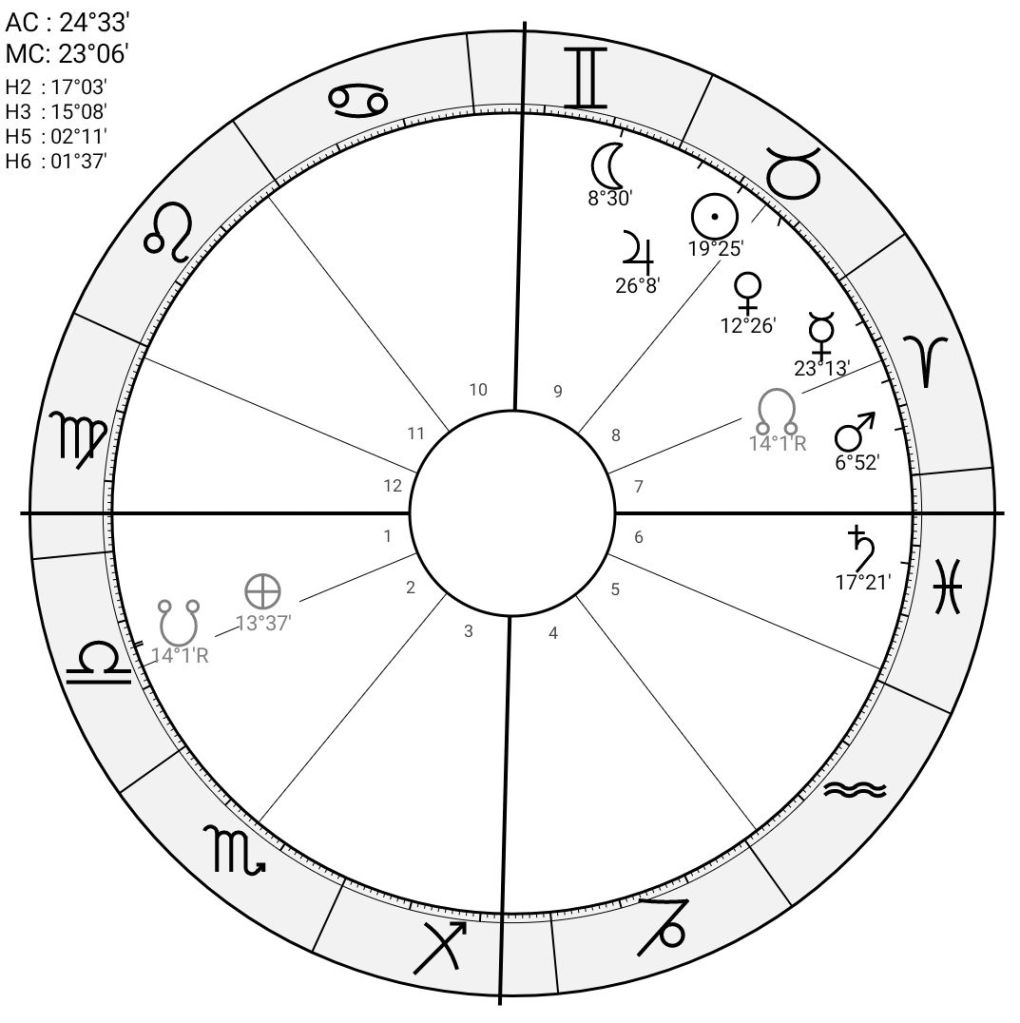
Since the querent is Italian and wants Italy to win, Italy takes the First house. Switzerland is given the seventh house of the enemy. The first, and decisive, clue is given by the position of Jupiter, significator of the First house. It is stuck inside the Seventh house, in the grips of the opposing team.

Once we see this, pretty much nothing else matters. The opposing team, signified by Mercury, is in the Eighth house, which is not great, but by antiscion it is right inside the Seventh, which is bad for Jupiter but again good for Mercury. The Moon is moving to square Mercury with reception. Bonatti says that a square with reception is like a sextile without reception, so it is generally smooth. At any rate, Switzerland should win. And indeed they won 2 to 0.

Important note: Horary astrology requires the querent to have some kind of emotional involvement in the question. Since I couldn’t care less about soccer, despite being Italian, if I had asked the question I would have regarded the chart with some suspicion. It is only because the querent is a soccer fan that the chart was accurate.

MQS

The Astro-Killer and the Need for Reason in Occultism

Danielle Johnson‘s posts on social media were like those of most popular astrology influencers: cheap mystical drivel devoid of any serious study and insight, constantly hyping up the next big astrological nothing-burger. I’ve known enough people like her in my life to know that this kind of fraudster is the worst exactly because they tend to buy the crap they peddle. Like many cult leaders, they become pleasantly accustomed to the smell of their own farts.

I am not going to examine her tragedy as a whole. You can look it up yourself if you want. Suffice to say that she ended her boyfriend’s and child’s lives, as well as her own. All because of an eclipse she thought was “the epitome of spiritual warfare” where people needed “to pick a side” in the upcoming apocalypse.

For sure there is enough going wrong in the world at present that new millenarian movements pop up from all religious and political directions. Furthermore, it is not unlikely that Johnson suffered from some kind of mental condition.

But there is more to this type of behavior. No one who seriously studies history can believe there was ever a golden age where nothing went wrong, nor there ever will be. These are the dangers of utopianism as opposed to pragmatism: in the name of something that was or will be, the utopian believer feels justified in trampling over others, either rationally (like the left-wing and right-wing dictators of yore) or psychotically.

But, again, there is more. There is a widespread malaise in the “spiritual” milieu at present, in spite of its ever growing popularity on social media. This malaise is the culmination of a historical process of decoupling of reason and spirituality. I have already touched upon this issue elsewhere.

Since official science embraced meterialism in the late XVIII century, those who believe there is more to life have found themselves without an intellectual foundation for their beliefs, and have therefore become prone to accepting any delusion as fact. This is relatively unprecedented in the history of humanity. Not that knowledge and spirituality have otherwise always enjoyed a frictionless relationship, but there had never been so stark and unanimous a rejection of the spiritual in the scientific community.

How the spiritual community tried to cope with this abandonment is paradigmatic. If you read many XVIII and early XIX century occultists, you will often find desperate attempts at fitting their ideas into the tight dress of the new scientific language. Spiritualism and vitalism, which is how occultism survived until around the 1960s are, in many ways, the evil twins of scientific materialism: they are groundless irrationalism masquerading as legitimate scientific concepts (electromagnetism, mesmerism, ‘energy’, etc.)

Yet, for all their attempts at sounding scientific, these authors have never managed to convince anyone who wasn’t already convinced. Furthermore, their attempts at proving, for instance, that this or that scientific discovery is foreshadowed in this or that spiritual doctrine made them look like asses when said discoveries were later disproved and replaced with better scientific theories–because, and this is something many occultists failed to understand, science in the modern sense ceased dealing with the eternally true in favor of ever-improving approximations of what’s likely to be the case. This is what makes modern science effective, but also what ‘spiritual seekers’ desperate for answers don’t want to hear.

Then along rolled the New Age, and the already washed-out spiritual movement started supplementing its diet with saccarine platitudes and politically correct, ill-digested mish-mashes of doctrines coming from all over the world washed down with copious drafts of unproved psychology. Any attempt at using reason became futile, or even frowned upon as a non-enlightened stance. And this is where we are now.

The medieval and Renaissance magus was as much an occultist and diviner as he was a doctor, a scientist, a philosopher, a political strategist, a war counsellor and many, many more things. In Ancient Greece, many great magi were also great philosophers and scientists (Empedocles and Pythagoras come to mind). Apparently, the contemporary spiritual guru just needs a couple of self-help concepts with a spirituar flair and he is qualitifed to tell people they need to “pick a side in the upcoming apocalypse”.

So, what is the solution? I do not know. I do not believe I have one, especially not at the collective level. All I know is that irrationalism is not the blood that sustains spirituality. it is merely the electric shock that makes its corpse convulse and appear to be alive. I also know that the future of occultism, magic and spirituality lies with few individuals who are capable of using their head rather than with desperate masses of unhinged spiritual seekers (“unhinged” because their life hinges on nothing) who let any “astrology influencer” peddle cheap illusions to them.

MQS

The Downgrading of Intuition

Many people of the ‘spiritual but not religious’ milieu tend to believe they invented intuition, or that intuition came into existence when glossy oracle cards with gaudy images and inspirational quotes started being published–the kind that was especially en vogue before Doreen Virtue went from a fundamentalist with a deck of cards in her hands to a fundamentalist without a deck of cards in her hands.

But, believe it or not, intuition is a concept with a legitimate philosophical history. It is present, either implicitly or explicitly, in the epistemology (theory of how knowledge happens) of many great traditional Western and non Western philosophers.

If had to provide a generalization of what the tradition meant by intuition, I would say that it’s the immediate apprehension of universal principles and truths. It had nothing to do with the stream-of-consciousness-like association of ideas that many moderns mistake for psychic ability.

Old philosophers held that true intuition could only happen when someone had developed all their human faculties (including, and especially, reason) to their utmost degree, so that such faculties, having been tamed and trained, fell into place and were ready to receive truths otherwise reserved to the gods. In other words, intuition was the reward of the flourishing human.

Nowadays, “I’m intuitive” is usually synonymous with “I’m incapable of simple deduction but I am also deep up my ass and don’t take well to criticism.” Back in the day, intuition was regarded as the efflorescence of the rightly cultivated mind. Put simply, in the past intuition was considered suprarational. Now it is implicitly considered irrational.

So much so that intuition is today relegated to psychic exercise, whereas in days of yore prophecy through psychic means was regarded as a wholly separate matter: the famous prophetess of the Oracle of Delphi, for instance, entered a state of ‘enthusiasm’, that is, of literal divine possession, whereas intuition was, essentially, a gift of God to the philosopher who had educated himself to the point where his excelling human faculties grazed on the superior sphere of divine knowledge, allowing some of it to filter down to him.

This fact is especially clear when we consider the old conception of the cosmos as an onion-like set of emanated spheres, with humans in the middle, capable of either falling deeper or rising above. But the modern intuitive moves in a world that has no clear up or down and where over a century of psychologizing everything has planted in people’s minds the impression that everything is in their head and that, therefore, if it’s in their head it’s true. We could summarize this by saying that intuition in the older sense required people to get out of their ass and become bigger than they were, whereas by today’s standards it requires them to entangle themselves even further in their delusions.

MQS

On Readings Without Question

The following is an attempt at reorganizing some old notes I have taken on the subject of divinations without a specific question, adding to them some new insights,

Divination Without Questions Is Possible (With Exceptions)

There is a relatively well-known tarot reader who says that a reading without a question is basically two people talking over a bunch of colored cardboards.

This is not true. It was customary, among old-time fortune-tellers, to have the querent sit in front of them and never have them speak anything that wasn’t their name at the beginning of the consultation. I know for a fact that this is a tradition in the Italian countryside, and I believe it is the case all over the world as soon as one leaves the hipster pseudointellectual tarot community bubble and seeks the real deal.

Let’s leave aside the fact that, technically speaking, there is always a question. Even if the querent sits with their arms crossed in front of you waiting to be astounded, the implicit question is “What’s going on in my life, now and in the near future?”

Times change, and sensibilities change with the times. Many querents nowadays wish to take a more active part in the reading. Furthermore, readings without a question are obviously more difficult, and the modern diviner who doesn’t have time to waste is certainly happy to get more cooperation. I know I do. But this doesn’t mean that a reading without a question isn’t possible.

There are exceptions to this, of course. Some oracles do require a question. Horary Astrology, for instance, usually needs one, and the more specific and focused it is, the better. True, some old authorities give rules for judging “Universal Questions“, but these universal questions were asked back when many people didn’t know their birth time and often had to travel for days to see the astrologer for probably the one and only time in their life, so instead they asked the astrologer to tell them about their future in general in more than one sector of life.

Confronted with the impossibility of looking at the person’s birth chart, the astrologer erected a horary chart for the time the consultation took place, a moment that was probably significant, since the querent had gone to great trouble to visit him. Today, the astrologer is one Zoom call away, so this hardly justifies vague Horary questions.

The peculiarity that makes Horary more sensitive than other oracles is that there is no manipulation of physical counters involved: you don’t reshuffle the planets whenever the querent’s whim settles on a new fancy. Therefore, the question put to the heavens must be meaningful and at least relatively important to the person asking it. In a way, this limitation of Horary is due to Astrology’s nobility, seeking as it does answers from the heavens themselves.

Cartomancy is not noble. It spreaded like wildfire among the lower classes exactly because you didn’t need to have studied trigonometry in order to deal out a spread. Cartomancy is therefore as sturdy as the beasts of burden that the lower classes used in the fields. Like all beasts of burden, of course, cartomancy too has its limits: you can ask random questions (“Tell me about my life. Now tell me about my sweatheart. Now tell me about my job. Now about my neighbor”) but if you abuse it, it collapses to the ground exhausted.

But the fact remains that cartomancy (and tarot reading is a form of cartomancy) is a trusty, resistant beast.

Vague Questions Don’t Necessarily Yield Vague Answers

Another common myth is that if one asks a general question the reader is entitled to give them a general answer. Even worse, some readers say that, in the absence of a question, they can read “the general energies surrounding your life.” The problem is that there is no such thing as a (meaningful) general answer. “Tell me about myself.” Well, you seem to be a featherless biped with one heart, two lungs, etc.

The thing is that when the cards have been shuffled and dealt, they always tell a specific story. Sometimes this story is not what the querent secretly wishes us to talk about, but that’s not our fault–we are merely reading what’s there. Furthermore, we as readers may sometimes not be able to decipher the story in the cards, but it’s there. We may, as a result of our confusion, try to string together the cards in a looser way than usual (“There seems to be a woman next to you whom you love dearly and is going through a rough patch in life. It could be health-related, but I may be wrong. Can you help me with this?”). The cards, however, are always specific, never vague.

As a matter of fact, our life is never vague. It is always made up of details. These details may be mundane, but they are specific. In our life there is never “the general energy of the moment”. You don’t go the supermarket and find the general energy of the moment on sale. There is no such thing.

There is the coffee I’m brewing, the floor I’m sweeping, the feeling of dread I’ve been struggling with for some months, the mom I just talked to on the phone, etc. And the mom I talked to is my mom, not a general mom floating in the world of Platonic ideas. No energy. No universals. Universals are always embodied in our limited existence. I don’t talk to “momness in itself”. I talk to my mom. Therefore, the fact that our querent asks us a general question cannot embolden us to give a general answer, though it CAN justify us in being more cautious and loose in the interpretation.

Again, if we don’t have a specific question, it may be harder to interpret the cards, especially because certain cards together may appear to be open to more than one interpretation if we don’t have enough context.

And here we come to an important point. Some diviners think they need to be able to awe the querent with incredible details without missing a beat and think they should never ask them for clarification. I say that the querent exists in order to be tortured until every last bit of useful information that I need in order to interpret his damn spread has been wrung out of his writhing body, because at the end of the day it’s him who wants to know about his future, not I.

This authoritarianism is all the more justified in case of a general question. I am not going to talk for ten minutes straight without catching my breath only to be told “no that’s not me.” I’d much rather proceed cautiously and ask the querent for clarification step by step (and, if nothing makes sense, start anew).

BUT, the point remains that when we lay out the cards, the cards are going to talk about specific situations in the querent’s past, present or future. They are not going to give us “the general energy”.

MQS

It’s The Economy, Stupid! (Example Reading)

This is a quick one. My husband comes from a particular family background, and as a consequence of it is often afraid of not being left with enough money despite his hard work (and he is a hard worker). As I said elsewhere, we are moving, and so expenses are popping up left and right, and I’ve noticed a certain anxiety in his eyes. Consequently, I asked the Heavens a bank statement.

My husband’s finances, Horary Astrology reading

Since I didn’t tell my husband I was doing a reading, I am the querent, and he is my husband, and therefore Seventh House ruler, Jupiter. His money is represented by the second house from the Seventh, therefore the radical Eighth House, ruled by Mars.

Jupiter is peregrine in Taurus, and conjunct Caput Algol, a malefic star that, some say, is connected metaphorically to losing one’s head. Furthermore, Jupiter is combust and approaching the Sun. Therefore, my husband is under great stress.

How are his finances? Well, Mars is its sign and face, angular and inside the Seventh House, which represents my husband. So his finances are good, and they remain in his possession. This may sound silly. After all, if they are his money, of course they are his possession. Still, it is comforting to see his money in his house: he retains control over it.

I believe this wonderful Mars testimony shows that, as it were, the fundamentals of his finances are solid, i.e., there is no risk of dejection, poverty, major adversity, etc.

That being said, this does nothing to alleviate his stress. The Moon is cadent, possibly indicating that the economy is going to be slow for a while, and it separates from a positive sextile of Mars, showing a positive financial recent past, and applies to a square of Saturn. Saturn shows restriction. In other words, while there is nothing to fundamentally worry about, the next period isn’t going to be the most prosperous.

I already have a partial outcome for this reading, which was done some weeks ago. As soon as we entered the house, after a couple of days, some household utensils gave up the ghost, including the fridge, and we had to buy new ones. Since Saturn rules the Fifth house, the house’s possessions, I’m wondering if that was what it was referring to, though this is stretching it quite a bit (they are our possessions, not the house’s). Alternatively, Capricorn is the second sign on the Fourth cusp, so Saturn would generally show the house.

MQS

Divination vs Fortune-Telling: History of a False Dichotomy

The founder of BOTA, Paul Foster Case, proudly started his short book “Oracle of the Tarot” with the assertion that Tarot divination is not fortune-telling. The reason, he explains, is that fortune-telling is grounded in the belief in luck, chance or fate, while divination understands that everything is about our personality. The same statement is found at the beginning of the advanced BOTA course on tarot divination (Oracle of Tarot, without the ‘the’). Ann Davies clearly had a hand in rewriting it, considering how verbose the course is, but the substance was similar.

Paul Case was tapping into the spirit of the times when he made that statement. Since Tarot had the (mis)fortune of attracting the attention of XVIII and XIX century occultists, it hasn’t enjoyed a moment of peace: everyone wants to believe it to be not an obvious masterpiece of Renaissance art and Medieval philosophy, but an occult device made to transmit mystical knowledge unknown to most people (even though most people prior to the Enlightenment and the French revolution would have been able to tell you what the Tarot was about).

The same has happened to Astrology. Once a practical art for foretelling the ups and downs of actual life, it became the victim of the occult intelligentsia of the last couple of centuries and was turned into a hodgepodge of pseudomysticism, ill-digested psychoanalytic concepts and “it’s true if you believe it” New Thought crap.1

But this is not the whole story. If one takes the time to study, say, the Golden Dawn system, one quickly finds out that their traditional way of reading the Tarot is grounded in fortune-telling (just read MacGregor Mathers’ example of the Opening of the Key spread). Even the BOTA system, which derives from it, preserves very concrete meanings to be strung together into sentences, despite Ann Davies’ attempt to turn divination into a form of Kabbalistic meditation.

In other words, the occultist attempt at reappropriating the Tarot and Astrology (which in part continues to this day with some bogus theories about the so-called Tarot of Marseille, but more on this in another post) is only partly responsible for the divination/fortune-telling dichotomy. Much of contemporary occultism is grounded in the psychoanalyzation of magic and spirituality, which, in turn, is a defense mechanism against the death of the classical spiritual worldview. Yet, for all its shortcomings, it at least preserves some core tenets of the magical worldview.

But the problem with this is that while it does preseve in some ways the roots of the worldview in which divination can flourish, it has lost the intellectual basis for defending it. Intellectually speaking, even today occultism is largely stuck in the pre-WWII era, with its myths of scientific positivism, of constant historical progress and of magic as misunderstood technology (while I would argue the opposite, namely that technology is misunderstood magic).

Essentially, what has gone lost is the philosophical framework that allows us to keep together divination as spiritual practice and divination as uttering of concrete, verifiable truths.2 That’s largely because spirituality, in the post-XVIII-century Western world, was only allowed to survive as private indulgence in irrational behavior, a weakness to be tolerated.

Thus the split was born: 1) on one hand divination: a ‘serious’, and therefore unverifiable endeavor, a tool for vague self-reflection, cheap catharsis and shallow instagrammable aha moments. In other words, something that the small judgmental scientist constantly perched on most people’s shoulder could smile upon as at least benign, if not really true; 2) on the other hand fortune-telling: a crass or quaint superstition that is just a scam when it gets things wrong and just a coincidence when it gets them right. The little scientist can be free to frown on it. In other words, the distinction was born out of the guilty conscience of “spiritual” people, i.e., out of their subconscious scientism, as a way of telling themselves and society “I indulge in this silliness, but I am just quirky, not stupid.”

The occultists of yore were at least intelligent men and women who actually had something to say. They may have worked in an intellectually hostile environment, but they at least gave it their best shot, and for this they deserve leniency. What happened next is worse: that the already battered art of divination fell into the hands of stoned hippies and people with degrees in the most useless branches of socially acceptable knowledge. Then along came the Liz Greene’s and the Rachel Pollack’s (to make just two examples) who destroyed Astrology and Tarot even further. From then on it could only go in one direction: past life readings, divine feminine, empty motivationalism and strategizing, healing of generational traumas and all the attendant nonsense.3

Interestingly, the more contemporary divination’s fake husk rots, the more one needs to be intellectually dead to practice it, the more it becomes reintegrated in the higher spheres of society. I believe I already talked about a friend of mine who works for Google and has to endure meaningless meetings with tarot readers and astrologers because her boss is the manifestation-obsessed boss babe type. Nor are tarot readers a rarity in corporate America. This probably says something about how brain-damaged this kind of environments is. The nicest thing we can say about this part of society and this strand of divination is that they deserve each other.

MQS

  1. This is not to say that Astrology or divination were unanimously accepted, but the debate was much more complex. ↩︎
  2. This, by the way, is not a call to “go back” to some long lost good old times. I am no reactionary. Nor am I a progressive. I am a realist. ↩︎
  3. By which, of course, I do not mean that there is not a feminine side of the divine, nor that trauma cannot be a real thing. I only mean that these words correspond to nothing but the most vapid pseudointellectual nonsense when coming out of most people’s mouths nowadays. ↩︎