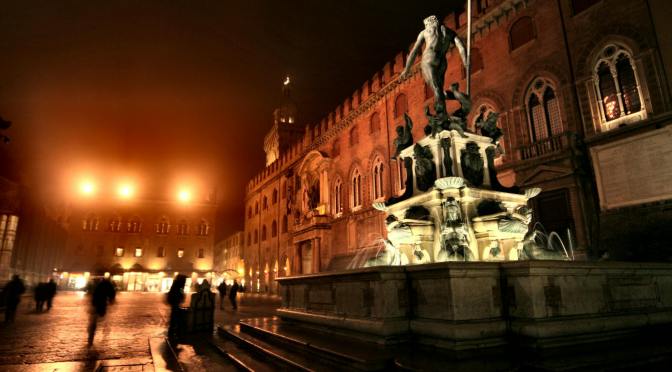
As I’ve mentioned on this blog, I’ve been studying the divination tradition of the Bolognese Tarot (Tarocchino Bolognese, literally the Small Tarot of Bologna) for some months now. I’ve been doing it under the direction of a traditional practitioner of this art, whom I’ve befriended and with whom a wonderful exchange of ideas has started.
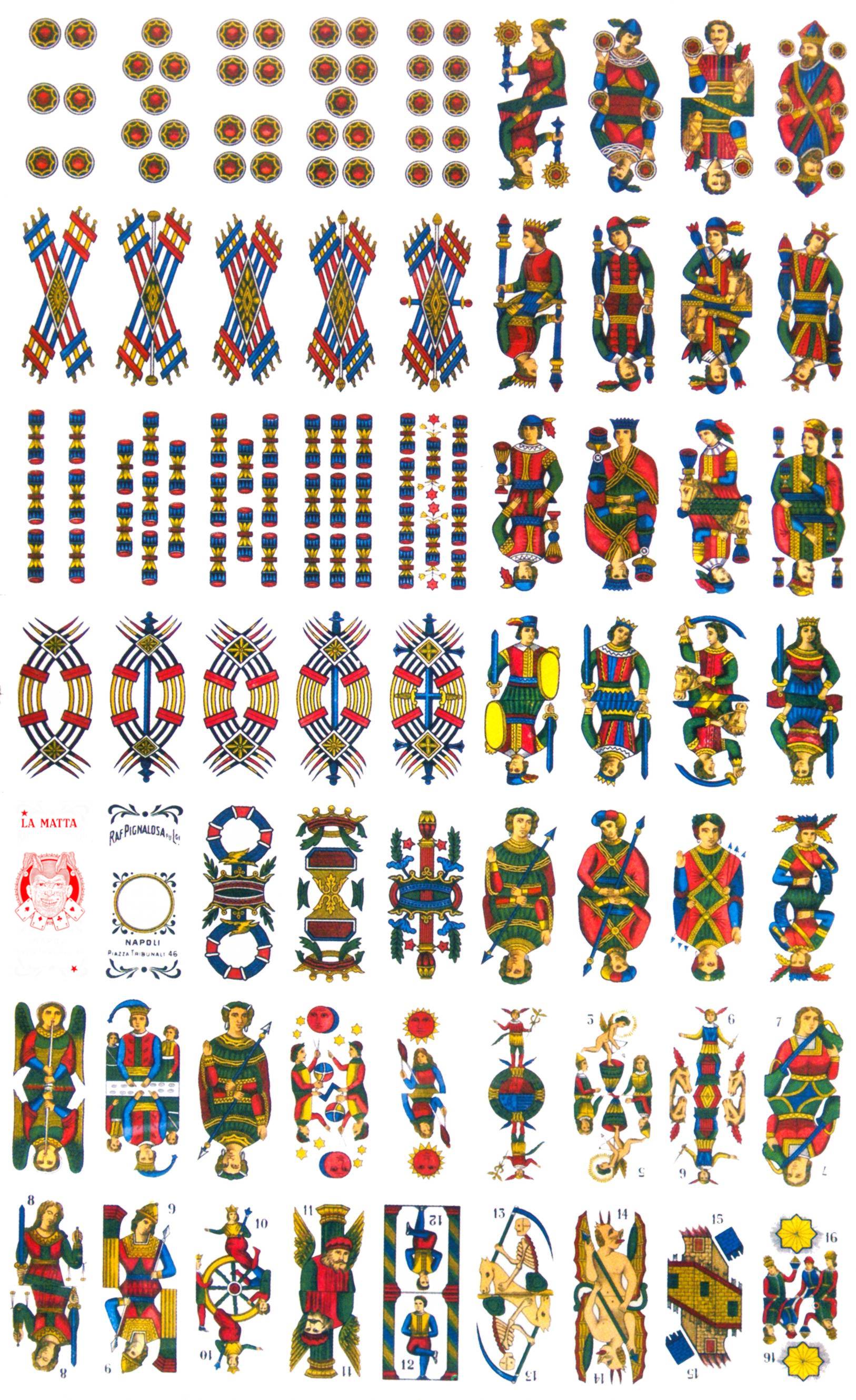
I plan on introducing this form of divination in its main lines for a couple of reasons: 1) it is little known outside of Italy and it deserves some love 2) Its reading techniques are markedly different from the current approach and allow for a very concrete, down-to-earth approach 3) I want to discuss some spreads done with it in the future, and I can’t do it without introducing it first 4) it is the oldest tarot-related divination tradition that we know of, and it is therefore cool from a historical standpoint.1
The Ugly Duckling and Its Quirks
Like the almost totality of very old decks, with a couple of exceptions (the Visconti deck is one) the Bolognese tarot is distinctively unappealing from an esthetic standpoint, largely because, like other popular pre-RWS decks, it was meant to be used by poor people as a playing deck at the local inn.

The reason it is called ‘tarocchino’ (small tarot) has to do with its reduced size, probably to enhance its handlability. However, it is not just the size of the cards that is reduced, but also the number of the cards that comprise the deck: all pip cards from Two to Five are removed, leaving only the Ace of each suit plus the cards from Six to Ten and the court cards.
Furthermore, the Pope (Hierophant), Popess (High Priestess) Empress and Emperor are absent from the deck for political reasons, as Bologna was directly under the control of the Church. Instead, the deck includes four ‘Moors‘ (the Moors were Muslim colonizers that had conquered parts of Italy.)

Finally, the Bolognese Tarot has another peculiarity, in that the Major Trumps are out of order compared to our regular system. This may sound surprising to some, but our current ordering of the trumps is a relatively recent development and has nothing mystical about it (the oldest preserved document with the order of the trumps gives a rather different sequence).
An Old Tradition
The Bolognese Tarot tradition was almost entirely confined to the city of Bologna and the surrounding areas, and was at risk of dying out, until both the card game and the divination tradition were transmitted to a larger public thanks to the power of the Internet.
Interestingly, to this tradition is connected the most ancient set of meanings handed down by old sources. The following list dates back to the pre-Napoleonic period and gives the meanings of a reduced pack of thirty five cards. I’m copying it here for its historical interest, but it does not correspond to the system I have been taught:
- The Juggler (Magician): Married Man
- The Lovers: Love
- The Chariot: Journey
- Temperance: Time
- Strength: Violence
- The Hermit: Old (Person)
- The Hanged Man: Treason
- Death (called ‘Thirteen’): Death
- The Devil: Wrath
- The Star: A Gift
- The Moon: Night
- The Sun: Day
- The Angel (Judgement): Marriage or Agreement
- The World: Long travel
- The Fool: Madness
- King of Wands: A Bachelor
- Queen of Wands: A Prostitute
- Knight of Wands: Something Knocking at the Door
- Page of Wands: Thoughts of the Female Querent
- Ace of Wands: Sexual Escapades
- King of Cups: An Old Man
- Queen of Cups: Married Woman
- Knight of Cups: Reconciliation
- Page of Cups: The Female Querent
- Ten of Cups: The Roof of the House
- Ace of Cups: The House
- King of Swords: An Evil Tongue
- Ten of Swords: Tears
- Ace of Swords: A Letter
- King of Coins: The Male Querent
- Queen of Coins: The Truth
- Knight of Coins: Thoughts of the Male Querent
- Page of Coins: Unmarried Woman
- Ten of Coins: Money
- Ace of Coins: The Table
As I said, this is not the system that I’ve been taught, and it is very likely that even back then more than one system existed (usually, significant differences are found from quarter to quarter in Bologna and from small village to small village in the surrounding areas). Since this cartomantic tradition predates Etteilla’s by at least a quarter of a century, and probably more, and since Etteilla says he learned to read the tarot from an Italian card reader (though he pretends it was Alexis of Piedmont to add to the mystery), it is not to be excluded that the Bolognese tarot had some influence on him.
But this is speculation. What is clear is that tarot divination, whenever it was born, was brought into the world as a way of addressing concrete issues. This series of articles is dedicated to bringing the tarot back to these roots.
MQS
- If you want to read more, you can start with the Wikipedia page. More Information is contained on the webside of the Associazione Le Tarot ↩︎
Discover more from Moderately Quick Silver
Subscribe to get the latest posts sent to your email.

Thank you for sharing this, it is so interesting to ponder upon these systems, it kind of gives a different perspective on the Tarot I know too. The cultural differences which caused the disappearance of some major arcana are also overly intriguing. Nice to know that this peculiar traditional system stays alive!
LikeLiked by 1 person
Thank you for the comment ! I find discovering these little traditions from around the world very stimulating
LikeLiked by 1 person
hey, I’ve just been reading all the articles you’ve done so far on this amazing ancient deck. Very very interesting indeed. I do hope you’ll be doing a few more articles on this subject as I find the much older cartomantic practices far more pragmatic.
And if anything discussing it keeps these older traditions alive and not forgotten or lost from the huge family of cartomantic traditions that are well known today.
After all, tarot was for many years erroneously said to have come from Egypt which has taken quite some time to put that false idea to bed. Without learning about the deeper roots of cartomancy alot of misconceptions may still already be held as truth.
Great articles! I look forward to reading more about this system.
LikeLiked by 1 person
Thank you! I’m definitely going to write more, both about this deck and about tarot cartomancy in general. I’m experimenting a lot with this system and it is a breath of fresh air
LikeLiked by 1 person