One of my favorite books of all times is Ursula Le Guin’s second Earthsea novel, The Tombs of Atuan. Actually, I adore the whole first trilogy. It is one of the few fantasy cycles that can actually inform one’s magical practice quite a lot, if one is observant enough. But The Tombs of Atuan is my absolute favorite, and I find myself rereading it every now and then as a sort of comfort book.
In The Tombs of Atuan, the protagonist Tenar, a young priestess in a remote and almost forgotten place of worship, is tasked with guarding the dark subterranean labyrinth of the Tombs and with worshipping the Old Powers of the Earth that seem to reside there (the Old Powers are never clearly defined in the other Earthsea novels and material, as far as I know, but they seem to be a sort of mix between natural powers, pre-divine titans and incomprehensible amoral entities).
Over the course of the book Tenar comes into contact with Ged, the protagonist of the first Earthsea novel and gradually realizes, thanks to him, not only that there is no point in worshipping the Old Powers, but that her worship of them has actually made her worse. There is a lot more to the novel, but this one key point is worth thinking about.
It is one of the tenets of my devotional, philosophical and magical practice that no power comes from me as an individual. It can, at most, come through me. The way we as individuals become channels for powers greater than us is through our worship of them (whether it be devotional, theurgic or of a different kind.)
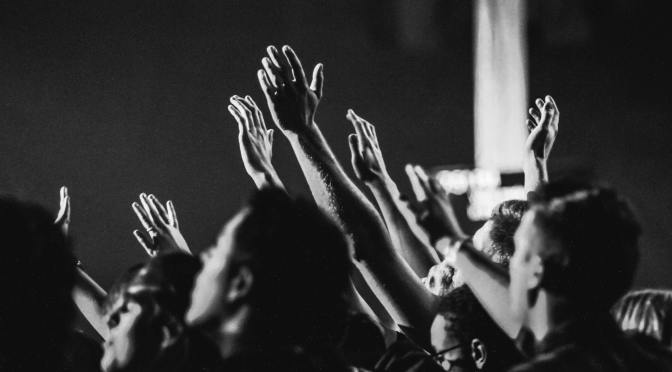
We all worship something, whether it be mystical, philosophical or mundane. And the more we worship it, the more we make space for it in our life and in the world. This has nothing to do with the manifestation or attraction nonsense that is practiced by people online and is to magic what McDonalds is to food. It is, actually, a simple, almost physical fact.
Most, if not all, magical traditions recognize this. For instance, the reciting of the rosary in certain strands of Italian witchcraft, in addition to accomplishing certain magical goals, is also meant to empty the devotee of themselves to make space for the divine. In many so-called High Magic traditions, the aim of initiation is to balance the components of the personal vessel so as to make it a better tool for something much greater than it: “Now be assured that no one can be enlightened unless he be first cleansed or purified and
stripped. So also, no one can be united with God unless he be first enlightened.” (Theologia Germanica, Ch. XIV)
(similarly, in many strands of Chinese magic, Qi Gong and other practices are used to the same effect).
A lot of people, including a lot of magicians, worship God, but this is not enough. What does God mean? How do you define the God that you worship? I feel this sort of clarification is extremely important, not because your definition changes the substance of God in a postmodern fashion, but because there are plenty of powers, objective and real, in the world that are capable of fitting the mold of your definition and seeping through the cracks of your practice, just like the Old Powers in Le Guin’s novel. Clarity, therefore, is extremely important.
Way too often do we see people who think of themselves (and are thought of) as spiritually “evolved”, whatever that means, or magically powerful who, at a second glance, have merely turned themselves into a walking collection of metaphysical parasites.
This process of clarification starts with a rational and philosophical assessment, and rationality is incredibly important (I’ve written a whole article about the importance of reason in occultism). However, keeping the lights on in your head is just the first step. What is needed is a broader cultivation of our vessel.
Can this all be taught? It is a tricky question. It is my belief that few things in life can truly be taught, or rather, most things can be taught, but the ability to be taught is harder to teach than all the rest. When I say that most branches of the occult path are for the few I do not mean to sound elitist. I mean it in the same way that I mean that math is really for few people. Not everything is for everyone.
Yet I believe that at least this one process of clarifying what we worship is important to everyone, whether they be on an occult magical path or not, simply because, as said, everyone worships something.
MQS
Discover more from Moderately Quick Silver
Subscribe to get the latest posts sent to your email.
